
News
Rachael Umahi: 45 Garlands for Humane, Amiable,Philanthropist Par Excellence

By Monica C. Ada Eze,
Preamble
March 23, 1972 will forever remain evergreen in the lives of Ebonyi State people, particularly to the family of Mr and Mrs Chukwu and Eunice Akpa of Umuobuna, Uburu in Ohaozara Local Government Area of Ebonyi State, as that was the day, God in his infinite mercy and wisdom blessed the state with the birth of a golden daughter, Chief (Mrs) Rachael Umahi, who has guided her family to become the first family in Ebonyi State at a time like this. This great lady of the moment, who celebrates her 45 years on earth this 23rd day of March 2017 attended Umuobuna/Uhuaba Community Primary School, Uburu between 1979 and 1985 from where she got her First School Leaving Certificate. She obtained her West African School Certificate (WASC) in 1999, from Immaculate Girls Secondary School, Aba, Abia State. She obtained a Bachelor of Science (BSc) in 2007, from Rivers State University of Science and Technology (RSUST), Port Harcourt, in 2002. She is credited with several post-graduation experiences in human and resource management in the private sector, before she became the wife of the executive governor of Ebonyi State.
Why this treatise?
The main aim of this treatise is to examine and present this exponent of God’s love to humanity and to congratulate her as she turns 45 years.
Thomas Woodrow Wilson, an American politician and academic who served as the 28th President of the United States, from 1913 to 1921, with Rachael Umahi in mind once stated: “There is no higher religion than human service. To work for the common good is the greatest creed.” After a critical observation of the above quote, Mrs Umahi, wife of the Ebonyi State Governor and founder of the Family Succour & Upliftment Foundation Programme, who has through her pet project redefined philanthropy, charity and selfless service to humanity rightly came to my mind.
Thomas S. Monson, in his own reaction after studying Mrs Umahi’s works to humanity, have reason to state: “When faith replaces doubt, when selfless service eliminates selfish striving, the power of God brings to pass His purposes.” Rachael Umahi has through her pet project not only brought succour to the people of Ebonyi State but, most importantly, brought the purpose of God to the people of the state. A critical study of Umahi’s activities in Ebonyi State brought to the fore what the Holy Spirit tried to state in James 1:27: “Pure religion and undefiled before God and the Father is this: To visit the fatherless and widows in their affliction, and to keep himself unspotted from the world.” (KJV)
Succour projects
Kilroy J Oldster once stated: “Our most intense joy comes not from personal feats, but from helping other persons achieve their goals. We become suppler human beings when we find true joy in witnessing other people’s successes and unabashedly share in their joyful accomplishments.”
My auntie, Mrs Umahi, derives joy in helping the needy and to prepare formally her humanitarian services to humanity. She launched her pet project code-named Succour and Upliftment programme, aimed at uplifting the downtrodden in the state. The pet project has four thematic areas bordering on health, education, economic empowerment for women and youths, as well as women liberation.
Mrs Umahi unveiled the pet project at the Akanu Ibiam International Conference Centre, Abakaliki. And, according to her, the programme was aimed at achieving an effective and efficient primary healthcare delivery, adding that the programme would achieve 100 per cent education in the state. She said that the pet project would sustain economic empowerment and job creation for women and youths, through entrepreneurship and agriculture, to put food on the tables of their families, as well as address the problem of poverty.
“In the area of women liberation, the family succour and uplift programme intends to liberate Ebonyi women from all vices against the female folk and ensure the upliftment and enhancement of their general living status. Economic empowerment is a solution to poverty, and this informed my determination to improve upon the family income of our people through entrepreneurship and job creation for our women and youths,” she said.
Mrs Umahi said that the pet project was designed as a business outfit managed profitably to yield revenue to the state government through skills in palm oil processing and palm kernel oil extraction; shoe-making, hair-dressing, fabric weaving/weaving of cardigans, fish farm, soap-making, IT-software development and system maintenance for youth empowerment and entrepreneurship development training.
According to this God’s gift to Ebonyi State, “In the course of my commencing the establishment of the family succour and upliftment programme, and to drive home my resolve to improve upon the socio-economic status of Ebonyi women and youths, I embarked upon advocacy visits to several agencies and organisations, including the UN Economic group led by UN women and United Nations Industrial Development Organisation (UNIDO), and the Society for Family Health, for their support and partnership for the successful actualisation of my programmes on effective development of Ebonyi women, youths and children.
“I, therefore, call on well-meaning individuals, corporate organisations and other agencies for their logistics and other forms of support for the centre, to enable it realise its objectives of enhancing the socio-economic status of our women, children and youths.”
With what the statistics have shown: most of the social malaises prevalent in the society were because of poor or inadequate health-care, school drop-out syndrome, delinquency among youths, waywardness among the girl child, such as prostitution and other anti-social behaviour.
“The economic empowerment is a solution to poverty, and this informed my determination to improve upon the family income of our people through entrepreneurship and job creation for our women and youths. The major activities of the centre include training, retraining and capacity building as well as micro-credit programme of the state government, it will provide graduates of the centre with micro-credit to establish their own enterprises. Plans are underway to link the centre with other micro-credit programmes outside the ones provided by the state government, such as the Central Bank.”
She appreciated all those who contributed in various ways towards the successful actualisation of the family succour and upliftment programme, friends of Ebonyi State and all who have identified with this programme for their kind support, and assured: “We in the family succour and upliftment programme will strive to ensure that the programme achieves the desired result for the overall development of Ebonyi women, youths and children.”
Skills available through the Family Succour And Family Upliftment Programme are:
1. Tailoring (male and female) knitting make-up
2. Head-tie/hair dressing, perfume production
3. Bleach production, liquid detergent and soap, balm
4. Hair cream and powder production
5. Computer and graphics (simple artwork)
6. Tiling/interlocking
7. Confectioneries and juice production.
Reactions to the pet project
In his speech at the event, Governor Dave Umahi said that his wife knew how to give to the less-privilege, and promised to support her pet project in order to empower women and children of the state.
“I want to pledge my commitment and support to the project. My administration will not neglect the women and children’s welfare, and health-care. We will give you support, my administration will give you every support,” he promised.
The representatives of International Fund for Development (IFAD) and UNIDO, Atsuko Toda; UNICEF, Dr Nzuki; Society for Family Health, Sir Bright Ekweremadu; UN and ECOWAS, Dr Desmond Osemahia, pledged their supports for the programme.
They were optimistic that the first lady’s pet project would go a long way in alleviating the suffering of women and children, promising to partner with the wife of the governor for the period.
The international agencies, however, called on the legislature and other stakeholders to support Mrs Umahi to actualise her aim of uplifting the women and children of the state.
In another development, the Peoples Democratic Party (PDP) women leader, Hon Mrs Amaka Igboke, stated that the women were overwhelmed at the interventions of, Deaconess Rachel Umahi, which have given many Ebonyi women positions in this administration. Mrs Igboke said the women have never had it so good. She assured of total support to the administration of Governor Umahi. The PDP women leader said they came to thank Mrs Umahi and her husband for involving them in the scheme of things. The women handed over some gift items to the governor’s wife during the event.
Feats
Through this platform, Her Excellency facilitates numerous social development programmes for Ebonyi women and children, particularly as it relates to primary health-care and welfare programmes. To further drive home her determination to improving upon the socio-economic status of Ebonyi women and children, barely two weeks upon the swearing-in of her husband as the governor, she embarked upon advocacy visits to several agencies and organisations, such as the United Nations Industrial Development Organisation UN Women, WHO, Society for Family Health, and other agencies and organisations, to garner support and partnership for the successful actualisation of her programmes on effective development of Ebonyi women and children.
She donated agricultural support materials, such as fertilisers and herbicides and other farming input to widows and youths of the state, through the support of IFAD project on the day of the launching of her pet project.
She has used her pet project to positively affect and influence lives in the state, through the paying of medical bills of indigent patients, mobilsiation of women towards better family, as well as partnering with USAID/PMI and the Ministry of Health, in sustaining support towards the elimination of malaria and assisting those suffering from VVF in the state.
This United States government crowned net ambassador has continued with advocacy and mobilisation of people towards the fight against malaria. She expressed delight that many people now sleep inside the insecticidal treated bed nets.
Besides, that 18 agro-based cooperative societies were empowered with N1 million each, to enable them enhance agricultural activities through the Sustainable Development Goals (SDGs).The 18 cooperative societies were drawn from six local government areas, namely: Abakaliki, Izzi, Ikwo, Ezza South, Afikpo South and Ishielu.
Speaking while handing over cheques to beneficiaries, Mrs Umahi commended the idea of empowering the people, particularly women through the agro grant. Mrs Umahi charged the benefitting cooperative societies to make judicious use of the funds.
The governor’s wife, who was the chief guest of honour, promised to use her office and her pet project – the Family Succour and Upliftment Foundation – to better the lots of humanity. Chairman of the event and senator representing Ebonyi North, Dr Sam Egwu, commended the wife of Ebonyi State Governor, Mrs Umahi, the Family Succour and Upliftment Foundation and SDG for working together to empower Ebonyi people.
In a welcome address, the focal person, SDG Dr Ngozi Obichukwu, highlighted reasons for the grant and told the cooperative societies that they will be closely monitored. She thanked Mrs Umahi and Egwu for their support.
Her Excellency, Chief Rachel Umahi, in another development at Mile Four Hospital, Abakaliki, put smiles on some faces, as she off-set the hospital bills of indigent mothers who delivered at the hospital but could not pay their bills. Deaconess Umahi who went straight from a church service, said the “Holy Spirit led in her heart to visit Mile Four Hospital and free those mothers.” It was a big relief to these families as some shade tears of joy.
Building 172 houses for widows
Under this strategy, at least 172 widows and non-indigenes in Ebonyi State are to receive two-bedroom bungalow each, as succour to alleviate their sufferings. Mrs Umahi who disclosed this during the foundation- laying of two of the buildings at Uburu in Ohaozara and Amike-Aba councils noted that the beneficiaries were carefully selected from each of the state’s 171 wards, adding that the project is part of the programmes of her pet project, Family Succour and Upliftment Programme. She stated that apart from the fight against female genital mutilation, her office had to embark on the provision of accommodation for the indigent widows, because they were often victims of harmful traditional practices.
She promised to fight until all harmful practices against women were stopped and urged women to stand against such practices that are inimical to their welfare, and participate in politics to lend constructive voices in the issues of governance and welfare of the families.
She explained that society would be better for all if the women are encouraged and consulted in the evolution of policies that concern them and their children. Commissioner for Local Government and Chieftaincy Matters, Mr Samuel Okoronkwo who led the state executive council members, said the government was interested in the projects because of their impact on the lives of those who could ordinarily be forgotten, noting that the major essence of a woman is to be a helper, even in schemes of governance.
International recognition
The International Committee and Advisory Board of McKing’s Media Productions (Publisher of TREK Magazine) officially announced in her 2016 Edition of the Annual Prestigious ‘Trek Africa Awards’ (TAWA) on Sunday September 18, 2016 recognised and appreciated Mrs Umahi, wife of the governor of Ebonyi State, for her humanitarian services in Ebonyi State.
TREK Africa Awards is a continental showpiece geared at acknowledging and celebrating personalities who have excelled in different spheres and made their lifestyles exemplary for the younger generation to emulate. It’s maiden edition in 2014 assembled creme de la crèmes of Nigeria and Ghana with over 600 high profile male and female personalities which cut across various spheres, including politics, banking, industries, judiciary, media, entertainment, pageantry, to name a few.
According to the Publisher of TREK Magazine, Mr Oki Samson Olatunji, the initiative of TAWA is to acknowledge and celebrate Africa’s exemplary personalities with great impact and resilient spirit, who have reached into the slums and hinterlands to break the stronghold of ignorance within the vast populace and empowered their society with opportunities.
Mrs Umahi’s exceptional performance among the 36 states’ first ladies in the country in the last one year in office earned her this award and accolade as the ‘Most Performing First Lady Of The Year’, In The Trek Africa Award TAWA2016.
The award organisers noted: “The tall fair-skinned and beautiful wife of Ebonyi State Governor, Mrs Umahi, was voted as the ‘Most Performing First Lady’ having painstakingly reviewed her distinguished office performance and humanitarian services among the other first ladies in the last one year of office. She has advanced and promoted advocacy on issues affecting the well-being of women, children/youths, coupled with her exemplary leadership style, demonstration of excellence and empowerment initiatives that has improved the standard of living of the good people of Ebonyi State, by extension, Nigeria through her foundation – ‘Family Succour And Upliftment Foundation Programme’ – in consonance with government policy and complementing the very good works of His Excellency, Engr Dave Umahi.”
It is our utmost expectation that, after this highly ranked award, they will continue to be exemplary personality for the younger generation to emulate.
The First Lady Reacts
In one of her numerous outings, she charged Ebonyi women to be good wives and responsible mothers. She gave the charge while receiving a delegation of PDP women at the Governor’s Lodge, Abakaliki.
She stressed that women should always use their numerical strength to enthrone leaders of their choice. She said women have good number to be game-changers. The governor’s wife urged the PDP women to be good examples through positive conduct in their communities. She assured them that she will always carry the women along and charged that they should always give their best to justify their rightful place in government.
Mrs Umahi has not only distinguished herself through hard work and commitment to excellence in all endeavours, she is also a devout Christian, a caring mother in a million. Her marriage is blessed with seven children. She enjoys reading and travelling.
Conclusion
Tony Robbins, with my auntie in mind, stated: “Only those who have learned the power of sincere and selfless contribution experience life’s deepest joy: true fulfillment.”
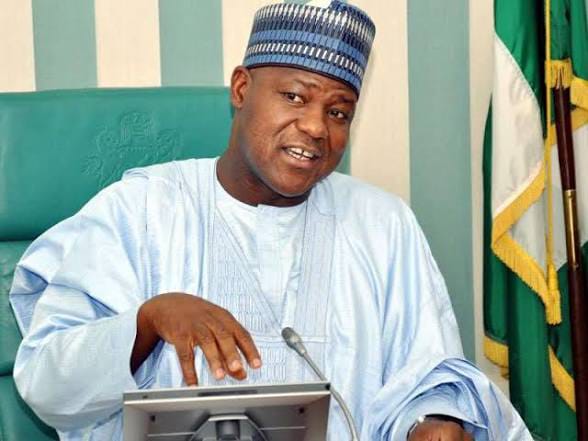
Former Speaker of the House of Representatives and Chairman of the Board of the National Credit Guarantee Company Limited (NCGC), Rt. Hon. Yakubu Dogara, CFR has expressed deep sorrow over the Nigerian Air Force aircraft crash that claimed the lives of 32 persons near Igbokoda, Ondo State. Dogara described the tragedy as a heartbreaking loss to the nation, noting that the deaths of the victims have left a painful void in the country’s defence and security community.
In a statement, the former Speaker extended his condolences to President Bola Ahmed Tinubu, Commander-in-Chief of the Armed Forces, the Nigerian Air Force, and the families of those who perished in the unfortunate incident.
He said the nation shares in the grief of the bereaved families and the Armed Forces at this time of immense sorrow, adding that the sacrifices of those who lost their lives in service to the country will not be forgotten. “The nation mourns with the families of the deceased and stands in solidarity with the Armed Forces during this difficult period,” Dogara stated.
He also commiserated with the Chief of Air Staff, officers and men of the Nigerian Air Force, praying that God grants them the fortitude to bear the painful loss.
According to him, moments such as this call for national unity, reflection and collective support for the families and institutions affected by the tragedy.
Dogara paid tribute to the victims, describing them as patriotic Nigerians whose commitment and service contributed to the security and stability of the nation. He further applauded the efforts of emergency responders, rescue teams and all personnel involved in the aftermath of the crash, commending their courage and professionalism under difficult circumstances.
The former Speaker prayed God to comfort their families, friends and colleagues.
He also offered prayers for the safety and protection of members of the Armed Forces and for continued peace, unity and progress in Nigeria.
The Nigerian Air Force aircraft crashed near Igbokoda, Ondo State, resulting in the death of 32 persons and plunging the nation into mourning. Authorities are yet to make public the cause of the accident as investigations continue.

The Centre for Credible Reforms and Institutional Accountability (CCRIA) has commended the Commissioner for Insurance and Chief Executive Officer of the National Insurance Commission (NAICOM), Mr Olusegun Ayo Omosehin, for promoting transparency and accountability in the ongoing reforms of Nigeria’s insurance industry.
The centre said the implementation of the Nigerian Insurance Industry Reform Act (NIIRA) 2025 had ushered in a new phase of development for the sector, with stronger regulatory standards, improved capitalisation and greater emphasis on protecting policyholders.
Dr Aminu Abubakar Aminu, president of the centre, said this in a statement at the weekend.
Aminu commended President Bola Tinubu and the National Assembly for the enactment of NIIRA, describing the legislation as a major step towards addressing longstanding challenges in the insurance industry.
“The enactment of the Nigerian Insurance Industry Reform Act is a significant milestone in the development of Nigeria’s insurance sector. We commend Mr President and the National Assembly for recognising the need to modernise the legal and regulatory framework governing the industry. NIIRA provides the foundation for an insurance sector that is better capitalised, more accountable, more responsive to policyholders and better equipped to contribute meaningfully to the Nigerian economy,” he said.
The centre also praised Omosehin for his leadership of NAICOM, saying his extensive experience as an insurance professional had positioned him to effectively implement the new regulatory framework.
“We consider the appointment of Mr Olusegun Ayo Omosehin as Commissioner for Insurance and Chief Executive Officer of NAICOM a timely and appropriate decision. He is a seasoned insurance professional with many years of experience in the industry, and his understanding of the sector gives him the practical knowledge required to lead an important reform process of this nature. We commend him for the direction he has provided since assuming office and for his commitment to strengthening the industry,” Aminu said.
According to the centre, the ongoing recapitalisation exercise was among the important steps taken to strengthen the financial capacity of insurance companies and improve their ability to meet obligations to policyholders.
Aminu said the reforms were already producing early gains and should be sustained through consistent implementation.
“The early developments under NIIRA demonstrate that the reform is not merely a legislative exercise but a process capable of producing measurable improvements in the industry. Stronger capital requirements, improved supervision and greater attention to policyholder protection will ultimately create an insurance market that Nigerians can trust. We encourage NAICOM to remain focused on the implementation of the Act and to continue providing clear guidance to operators and other stakeholders,” he said.
The centre noted that the reforms would also help deepen insurance penetration and strengthen the industry’s contribution to national economic development.
It urged insurance companies, brokers, reinsurers, professional bodies and other stakeholders to embrace the new framework and work with NAICOM to achieve the objectives of the legislation.
“The success of NIIRA will require the cooperation of every stakeholder in the insurance ecosystem. Operators must see the reforms as an opportunity to strengthen their institutions, improve their services and regain the confidence of Nigerians. A well-regulated insurance industry can mobilise long-term capital, protect businesses and households against risks and support investment and economic growth. These are benefits that go beyond the insurance industry itself,” Aminu said.
Aminu emphasized that the centre was particularly encouraged by the emphasis on policyholder protection under the new framework, noting that public confidence remained critical to the growth of insurance in Nigeria.
He said Nigerians should be able to purchase insurance products with confidence that operators had the financial capacity and institutional structures required to honour legitimate claims.
The president further urged NAICOM to sustain its engagement with stakeholders while ensuring that the provisions of NIIRA were implemented transparently and consistently.
“What is required at this stage is continuity, professionalism and commitment to the objectives of the law. The reforms must be sustained beyond the initial implementation period so that the gains can become permanent features of the industry. We believe NAICOM, under the leadership of Mr Ayo Omosehin, has an important responsibility to ensure that the momentum is maintained, and we encourage all stakeholders to support the commission in delivering on this mandate,” he said.
The centre said the successful implementation of NIIRA would strengthen confidence in the insurance sector, improve the protection available to policyholders and position the industry to play a greater role in Nigeria’s economic transformation.
It also called for continued collaboration between NAICOM, insurance operators and other stakeholders to ensure that the objectives of the new law were fully achieved.
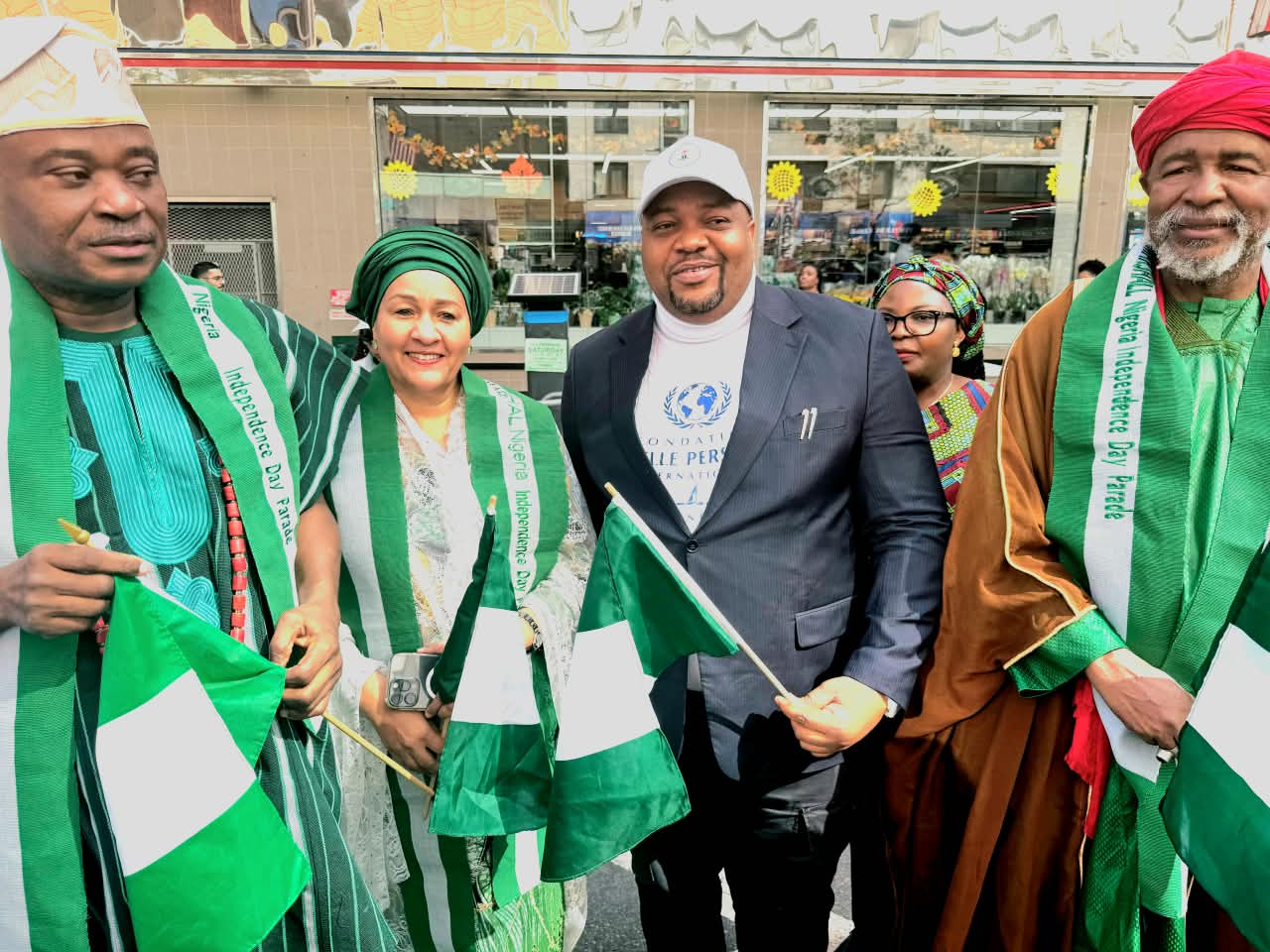
As Nigerians from across the United States gathered in Manhattan to celebrate Nigeria’s Independence Day in grand style, Hon. Amb. Jim Okolo used the occasion to share an inspiring message about Nigeria’s immense possibilities, rich cultural heritage, and promising future.
Speaking with members of the media during the colourful celebration, Hon. Amb. Okolo described Nigeria as one of the most blessed nations in the world, endowed with abundant natural resources, a dynamic population, and a cultural heritage that continues to earn global recognition.
According to him, Nigeria possesses enormous deposits of valuable minerals and other natural resources that, if fully harnessed, can accelerate economic growth and create prosperity for millions of citizens. He noted that the country is strategically positioned to become a leading destination for investment in mining, agriculture, technology, manufacturing, and infrastructure development.
Beyond its natural wealth, Hon. Amb. Okolo emphasized that Nigeria’s greatest strength remains its people. He praised the creativity, resilience, intelligence, and entrepreneurial spirit of Nigerians, pointing out that Nigerian professionals, innovators, academics, and business leaders continue to excel in various sectors across the world.
The respected diplomat also spoke passionately about Nigeria’s unique cultural identity. From the colourful festivals of its diverse ethnic groups to its globally celebrated music, fashion, literature, cuisine, and film industry, he described Nigeria as a nation whose cultural influence extends far beyond its borders.
He noted that Nigeria’s diversity is one of its greatest treasures, bringing together hundreds of ethnic nationalities with distinct traditions and languages that collectively form a vibrant and unified national identity.
While addressing questions on security, Hon. Amb. Okolo maintained that although Nigeria faces certain security challenges, the situation is not always as severe as often portrayed by social media discussions and sections of the international media. He stressed that millions of Nigerians continue to live, work, study, invest, and contribute meaningfully to society every day.
He called on the international community, investors, and members of the diaspora to focus on Nigeria’s strengths, opportunities, and achievements rather than allowing negative narratives to define the country’s image.
“Nigeria remains a land of opportunity, innovation, and hope. It is a nation blessed with extraordinary human capital, abundant resources, a rich cultural heritage, and a people whose determination and resilience continue to inspire the world,” he said.
The celebration was attended by several distinguished personalities, including the United Nations Secretary-General, Hajia Amina Mohammed, the Nigerian Ambassador to the United Nations, diplomats, business leaders, community stakeholders, and prominent members of the Nigerian diaspora.
The event transformed parts of Manhattan into a vibrant showcase of Nigerian pride, featuring cultural exhibitions, traditional performances, business networking sessions, authentic Nigerian cuisine, and displays highlighting the country’s achievements and diversity.
Adding excitement to the festivities were thrilling performances by internationally acclaimed Nigerian music stars Patoranking, Runtown, and BNXN (formerly known as Buju), who entertained thousands of attendees and demonstrated the growing global appeal of Nigerian music.
As the celebration came to a close, the message from Hon. Amb. Jim Okolo resonated strongly among participants: that Nigeria is far more than the challenges often highlighted in headlines. It is a nation blessed with extraordinary talent, vast opportunities, cultural richness, and the potential to achieve even greater success on the global stage.


Bank Cannot Freeze Customer’s Account Without Valid Court Order — Zarewa

Gov AbdulRazaq Inaugurates 464-Unit Housing Estate In Kwara

Scholars Hail Late Sheik Kamalu-deen’s Legacies iN Education, Leadership

-
 Uncategorized6 years ago
FG, states urged to harness flooding for ranching, others with technology – Agbaje
-
 Headlines11 years ago
Breaking: EFCC seals Borno House of Assembly, as Hon members take to their heels
-
 News12 years ago
Nigeria Security Operatives Stage Manhunt For Homosexual Perpetrator
-
 News10 years ago
How 21-year-old Girl fled community over accusation of lesbianism
-
 News11 years ago
Yobe Gov Moves Against Deputy
-
 Opinion7 years ago
7 signs she has friend zoned you
-
Technology5 years ago
Online job placement company headhunts women
-
 Headlines10 years ago
Borno Dep Gov Abducts Another Church Leader