
Uncategorized
Reforms and Why Sustainable Relief Would Elude Nigerians in the Foreseeable Future

Good governance is often discussed as though it were primarily a question of political will, leadership competence or administrative efficiency. Those things matter enormously. But governance also has a material foundation: resources. The capacity of any government to deliver public goods and services is ultimately constrained by the resources available to it, the efficiency with which those resources are deployed, the security environment in which they are deployed, and the degree of public trust that sustains the relationship between the state and its citizens. On these fronts, Nigeria faces a particularly difficult equation.
Successive governments have had to operate within an environment characterised by a relatively small economic base, weak domestic revenue mobilisation, substantial debt obligations, insecurity, institutional inefficiency, corruption, poor expenditure choices and a widening trust deficit. Some of these problems have been consciously perpetuated; others have resulted from institutional weaknesses, political incentives or sheer neglect. Whatever the explanation, the cumulative effect is the same: the Nigerian state is continually expected to deliver more than its resources and institutional capacity can reasonably support.
This reality is often obscured by a popular and understandable argument: Nigeria is a rich country; the problem is corruption. There is considerable truth in that argument. Nigeria has enormous natural, human and economic potential, and the leakage of public resources through corruption, waste and poor management undeniably reduces what citizens receive from government.
Another argument is that Nigeria’s problem is not simply corruption but misplaced priorities. This, too, is valid. Governments can spend enormous sums and still achieve little if expenditure is directed towards projects that have limited developmental value, are poorly conceived or are driven more by political considerations than by measurable public need.
There is also a third argument: that governments have simply not done enough for Nigerians. That criticism is equally legitimate when measured against the country’s enormous developmental deficits.
But beneath all three arguments lies a more fundamental problem that is often overlooked: the Nigerian government, even under the best of circumstances, does not control a sufficiently large pool of resources, relative to the size and needs of the population, to perform many of the functions citizens expect of it. The situation becomes more dire where corruption has become a way of life, literally. That is the uncomfortable Nigerian governance truth: a small economic base for a huge population.
Statistically, Nigeria remains Africa’s most populous country, with a population estimated at well over 230 million people, but with a small available wealth—nominal GDP—and, invariably, a small GDP per capita. This translates into heavy economic burdens on its citizens. Recent international and national estimates (IMF, WB, NBS) have placed Nigeria’s nominal GDP below or around the $300 billion range, depending on the reference year, exchange-rate assumptions and statistical revisions.
The GDP relative to the population gives a nominal GDP per capita of only about $1,556, which places Nigeria at number 162 out of the 190 nations of the world surveyed (IMF, 2025). This is one of the lowest around the world. Worse still, Nigeria arguably has one of the highest disparities in terms of wealth distribution, going by its latest available Gini coefficient score. The IMF and WB gave Nigeria 33%, while World Economics determined Nigeria’s score to be around 57%. Though the former is low, signifying modest income inequality, the figure represents a paradox given the nation’s poverty level and the related range of socioeconomic deprivations.
It should, however, be noted that GDP per capita is not the same thing as household income, disposable income or living standards. Nevertheless, it provides a useful indication of the economic resources available per person. A country with a large population and a comparatively modest economic output per person will inevitably struggle to provide the same level of infrastructure, healthcare, education, social protection and public services as a country with a much larger economic base.
Nigeria therefore faces a basic structural contradiction: the expectations placed on the Nigerian state resemble those of a much richer country, while the economic resources available to finance those expectations remain comparatively limited. A disposition that even some highly placed government functionaries tend to gloss over, even though it has far-reaching consequences for reform outcomes, efficacy and sustainability.
For a fact, the government does not have access to the whole GDP, as small as it is. This is against the common misunderstanding in public discussions of Nigeria’s finances that tends to treat GDP as though it were money belonging to the government. It is not. As a measure of the total value of goods and services produced in the economy over a given period, the government can only access a portion of it through some statutory mechanisms. They include taxation, royalties, dividends, fees, borrowing and other forms of revenue. How much is accrued is a function of both the size of the economy and the effectiveness, and even efficiency, of existing economic policies.
Unfortunately, Nigeria’s capacity to mobilise public revenue remains weak and corruption-ridden. This severely limits what the state can spend on development, even before the government begins dealing with debt servicing, salaries, pensions, security and other recurrent obligations.
The unforgiving arithmetic becomes clear when we consider that the Nigerian government accesses and/or mobilises only between 11% and 13% of its GDP for “governance”, which loosely represents its revenue-to-GDP ratio. This figure is a far cry from the global average of around 36%. Simple arithmetic based on the Nigerian figure indicates how difficult it is for the government to launch the economy onto the path of rapid transformation for a nation of over 230 million people. Take the nation’s 2025 budget, for instance: it was about $36 billion at a time when GDP was around $300 billion. From the budget figure, account has to be made for debt servicing, statutory transfers and deficits.
As is customary, and for political reasons, the government can announce a huge nominal budget, but the reality on the ground remains a different story: an abysmally small pool of developmental resources. It requires an honest government to face such a reality. And this is one of Nigeria’s central governance problems: the revenue problem and government evasiveness; a culture of denial that gives rise to policy reform and outcome interpretations that fuel a vicious cycle of developmental failures.
The government should come to terms with the fact that a low revenue base limits government capacity. Limited capacity produces poor services. Poor services reduce citizens’ willingness to comply with taxes. Low compliance further reduces revenue. The country requires a much deeper fiscal relationship between citizens, businesses and the state, based on trust and transparency, to break the cycle. Unfortunately, the government hasn’t enjoyed much trust from the public because, while they remain economically challenged, they see public wealth expended lavishly on the elites.
This public trust deficit, along with corruption, has had direct economic consequences. This is because a naira lost to corruption is one less naira available for a school, hospital, road, water project, electricity infrastructure, or security operation.
It is also sad that political, rather than economic, considerations tend to largely underline project/programme conception and distribution in Nigeria. Roads, buildings, airports, flyovers, monuments and other physical projects that are more glamorous often command more attention than investments in human capital development in areas such as teachers, healthcare workers, agric extension, water systems, maintenance, research or institutional reforms, etc. This is despite the fact that physical infrastructure and human capital development remain the silver bullet for sustainable development.
Another constraint is the cost of maintaining government itself. Nigeria has a large public bureaucracy spread across federal, state and local institutions. The federal government alone has over 2 million on its nominal payroll. The wage bill, pensions, overheads and administrative costs consume a significant portion of available public resources, as the government remains a major employer of labour in the absence of vibrant industrial and agricultural sectors.
The problem is not that Nigeria has too many public servants in every category. Indeed, several sectors—particularly education, healthcare and security—continue to experience personnel shortages. The deeper problem is how public-sector personnel and institutions are structured and deployed. Nigeria needs to distinguish between an oversized administrative apparatus and genuine human-capital requirements. The objective should therefore not simply be indiscriminate cuts to government employment, but rather productivity and professionalism.
Insecurity is also a fiscal problem. Nigeria’s security crisis adds another layer to the problem. Insurgency, banditry, kidnapping, communal violence and other forms of insecurity do not only threaten lives and property. They impose enormous economic costs on individuals, businesses and governments.
A farmer who cannot safely cultivate his land represents lost economic output.
A business that closes because of insecurity represents lost employment and taxation.
A road that cannot be safely constructed or maintained represents wasted investment.
These and similar challenges call for closer cooperation among the three levels of governance in the country. While there is a constitutional provision to that effect, the reality on the ground seems different. The country needs stronger intergovernmental cooperation to tackle them.
The synergy should also be able to address Nigeria’s twin problems of resource constraints and resource management simultaneously. This is critical because more revenue without institutional reform can simply produce more opportunities for waste. Just as more borrowing without stronger productivity can produce a larger debt burden, more projects without better planning can produce more abandoned infrastructure. Also, an attempt to raise taxation without better public accountability can deepen public resistance.
The solution, therefore, cannot be one-dimensional. The current approach must change. First, the government must communicate more honestly with citizens. Nigerians should be given a clearer picture of what the government earns, what it spends, what it owes and what remains available for development. Public expectations must be managed through facts rather than political rhetoric.
Second, Nigeria must broaden its revenue base without crushing productive economic activity. A modern tax system should capture more economic activity while remaining fair, predictable and administratively efficient.
Third, the country must attack corruption through systems, not slogans. Procurement, payments, project monitoring, public-sector payrolls and government contracting should be subjected to stronger transparency and accountability mechanisms.
Fourth, budgeting must become strategic, intentional, rational and professional. Government should evaluate projects according to economic and social returns rather than political visibility.
Fifth, insecurity must be treated as an economic emergency as well as a security emergency. Restoring productive activity in farming communities, transport corridors, commercial centres and vulnerable regions is essential to rebuilding the country’s economic base.
The more meaningful measure is what happens to the ordinary citizen, against the backdrop of whatever resource constraints it faces. The questions and KPIs that reform outcomes should answer honestly must include improved socioeconomic well-being and security of the people. So far, the results have not been apparent despite the government’s view to the contrary. This is because the key challenges, as outlined below, have not received the needed interventions:
It is a non-starter to drive national development on barely 5,000 MW of accessible electricity for a population of more than 230 million people.
It is a non-starter to prosecute wars against the country’s multiple security threats—secessionists, bandits, insurgents, kidnappers, armed herders and other criminal groups—while relying overwhelmingly on imported weapons, ammunition and other critical defence equipment.
It is unacceptable to stand by and watch the nation’s industrial base being continuously eroded, taking with it jobs, productive capacity and the ability to meet even the most basic needs of the population.
It is equally unacceptable to perpetuate an education system that rewards memorisation at the expense of critical thinking, creativity, problem-solving and innovation—an education system that produces people trained largely to take instructions rather than to question, invent, build and lead.
And it is unacceptable to tolerate a legislature and a judiciary that, instead of being among the strongest institutional bulwarks against corruption, are themselves increasingly perceived as part of the institutional environment in which corruption thrives.
It is yet unacceptable that the nation imports about 70% of its raw materials, while its exports remain largely driven by hydrocarbons (oil and gas). Of the approximately N27 trillion in exports recorded during the first half of 2026, non-oil exports accounted for only about N3.7 trillion (NBS, UNCTAD). The country’s import bill for the same period reached N18 trillion. This structural dependence remains deeply troubling.
A country cannot build a productive economy on inadequate power, defend itself indefinitely with imported military hardware, industrialise while its productive base is being dismantled, compete globally with an education system designed for rote learning, or defeat corruption when the institutions entrusted with checking it are themselves compromised.
These are not peripheral weaknesses. They are structural failures that preceded the current administration. And until they are confronted as such, development will remain more of an aspiration than a reality. This is because the information made available to the public regarding the reforms (forex, subsidy, tax, etc) does not seem to address the deep-rooted challenges adequately, strategically and honestly, either.
It is in view of this that, whatever economic reform hit song the government sings about more economic output, more public revenue, better spending, stronger institutions, greater security, etc., citizens’ well-being still remains desperate and may remain so into the foreseeable future. The realities on the ground say so.
A. G. Abubakar
agbarewa@gmail.com
I hardly know the author of the so-called rejoinder, but I know we are classes apart.
Looking into his peice, it seems he does not have a good tutelage in public communication. And I dare say he needs better tutorials in the art.
For a toddler to attrmempt drawing a qualified athlete into a race, is to me the height of self delussion.
In the first place, what I wrote was neither a letter nor a rejoinder, rather,
it was an opinated analysis, from a partisan viewpoint, because I am a stakeholder, as a member of the APC.
I cannot remember having mentioned the ADC anywhere, and for party’s spokesman to assume the position if the defender of all opposition parties, makes it look desperate in wanting to come out of obsecurity, as the spokesman of a party, in a state.
I did not have to write opinions before I was picked to serve in several capacities in government. I did not need to write one to remain on board. For the svoidance of doubt, I am an insider in government and do not need to court patronage or seek a return into government, because I am into it. Having served as two times commissioner, to two different governors, two times S A Media to two different governors, including one outside Borno:one time media adviser to the national chairman of a party that has history and class, and two times Local Government Chairman, makes me tower above the Ahmed of a man.
I do not need to air an opinion to be noticed, because I did not write an opinion to serve in all these capacities. I can see that, his emotions are not only short on facts, and logic, but for the sake of the public record, let me state clearly, that, I still hold the opinion I expressed and do not owe any political party, including the lameduck ADC, about it.
The so-called rejoinder is a classic case of playing victim while deliberately misrepresenting facts.
It is not my duty to explain the circumstances surrounding Hon. Atom Magira’s Plaza, as that has already been dine by the appripriate authoruties.
The ADC is being economical with the truth, to the effect that, the said property was demolished because he is in the opposition. The Borno State Urban Planning Board (BOSEPA) had issued multiple notices over clear violations of building approval and right-of-way encroachment in that corridor. The government has demolished properties belonging to even staunch APC members who violated the same rules. To reduce an urban renewal enforcement to “opposition witch-hunt” is mischief, no matter what coloration you try to give it.
If ADC has evidence that due process was not followed, let them publish the court judgment in their favour, not social media sentiments.
And on the alleged threat by the Commissioner for Youths, which has since been recanted, I believe no responsible government endorses threats. The video being circulated was an out-of-context political appeal at a youth rally, where the Commissioner warned youths against political violence and thuggery. He has since clarified his statement. The ADC is stretching a political statement into a threat to gain sympathy. If there was a genuine threat, the right place is to report to the Police, not to issue press statements.
The “Tinubu Must Go” protesters, which was the subject of my piece, is to me where the ADC is most mischievous. The arrest of persons carrying placards was done by security agencies in the course of maintaining public order during a period of heightened tension. Professor Zulum did not order any detention, and I chalkebge the ADC to orove otherwise. As you well know, the Governor as Chief Security Officer does not control Police remand processes. The State Government actually facilitated their release after preliminary investigations. Let the spokesman of the ADC, contradict these facts.
To blame Zulum for every Police action in Maiduguri is a sign of political defeatism.
Borno is perhaps the only state in the North-East where opposition parties held their major rallies in 2023 without any attack. ADC is barely four months and should asjed questions, or could have rallied for a joint press statement with other political parties. That may have been more credible, than taking the gaunlet on behalf of small, even as the youngest in the contraption called coalition in Borno.
If they were denied any venue, let them publish the application letter with an official stamp of rejection from the stadium manager or hotel, and the BOSEPA receipt for any billboard they claim was pulled down. Democracy does not mean impunity to deface Maiduguri with unapproved billboards.
Professor Babagana Umara Zulum has shown tolerance that is rare. He has openly told opposition members to criticize his government constructively. He has not sponsored any bill to suppress opposition like we see in other climes.
Governor Zulum’s passion for the Tinubu/Shettima 2027 is not about patronage. It is about conviction that at a time of national challenges, Borno stands with continuity, stability and a Vice President who is our son. That is not anti-democratic. That is political alignment, which the Constitution of Nigeria guarantees.
My advice to ADC Borno, especially this greenhorn spokesman is not built on press statements every week. Build structures in wards, sensitize your members, and stop looking for relevance by attacking Inuwa Bwala or Professor Zulum. Borno people know the difference between governance and propaganda.
Professor Zulum will not be distracted. He is focused on resettlement, security, and rebuilding Borno.
Hon. Inuwa Bwala
Stephen Olufemi Oni, Ilorin
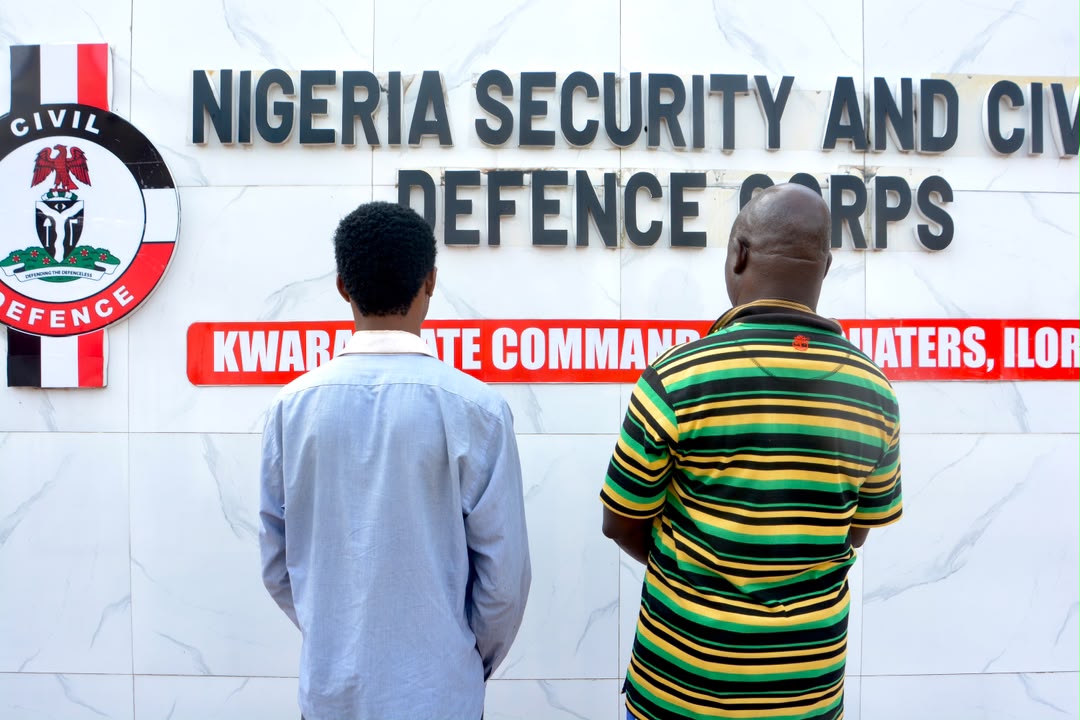
The Nigeria Security and Civil Defence Corps (NSCDC), Kwara State Command, has arrested two suspects in separate operations involving alleged human trafficking and illegal medical practice, reaffirming the Command’s resolve to protect vulnerable persons and tackle criminal activities across the State.
A statement by the spokesman for the NSCDC, ASC 1 Ayoola Michael Shola, said the Command arrested one Victor Barry, 22-year-old, for alleged trafficking of a 17-year-old girl from Amoyo, Kwara State, to Mali under the pretext of securing employment for her in Senegal.
The case, according to the Command’s spokesman, was reported by the victim’s mother at the NSCDC Amoyo Division on the 9th of October 2026 before it was transferred to the State Headquarters in Ilorin.
He said: “Preliminary findings indicate that the suspect allegedly met the girl at his shop on the 5th of October 2026 when she visited to purchase noodles and subsequently offered her an opportunity to travel to Senegal for employment.
“The suspect reportedly took the girl to Lagos on the 7th of October 2026 and handed her over to an unidentified individual at Mile 2 for onward transportation abroad. He later informed NSCDC operatives that the girl had arrived in Mali on the 12th of October 2026.
“The suspect further alleged that an agent identified as Joy redirected the girl’s destination to Mali, contrary to their initial arrangement for her to travel to Senegal.
“The suspect’s parents have pledged to cooperate with the Command to facilitate the girl’s return to Nigeria within two weeks. The Command is pursuing the necessary steps to establish the full circumstances of the case and secure her safe return.”
Also, in another separate operation on the 13th of October 2026, NSCDC operatives, acting on intelligence, arrested Bello Maruf, 56yrs, for allegedly operating an unauthorised medical facility and performing abortions without any recognised medical qualifications or a valid licence.
“During preliminary investigations, the suspect reportedly admitted to performing multiple abortions but failed to produce any certificate or licence authorising him to practise medicine. Medical instruments suspected to have been used in the procedures were recovered during the operation.
“The suspect will be charged to a court of competent jurisdiction upon completion of the investigation,” ASC 1 Ayoola stated.
Meanwhile, the State Commandant, Commandant Abbas Ndah Mohammed, has reaffirmed the Command’s commitment to protecting lives, safeguarding vulnerable persons and ensuring that individuals suspected of criminal activities are brought to justice in accordance with the law.
He urged parents and guardians to exercise caution over overseas employment offers made to young people and called on members of the public to promptly report suspected human trafficking, illegal medical practices and other criminal activities to the nearest NSCDC office.
The Command has, however, assured residents of Kwara State of its continued commitment to public safety and called for credible, timely intelligence to support its operations.
Uncategorized
Kwara: Physically challenged man, two others held for alleged arms supply to criminals
Stephen Olufemi Oni, Ilorin
The Kwara State Police Command has arrested a physically challenged man, Joseph Adeoye, 52, and another suspect, Issa Fatai, 35, for alleged illegal possession and attempted purchase of a locally made pistol.
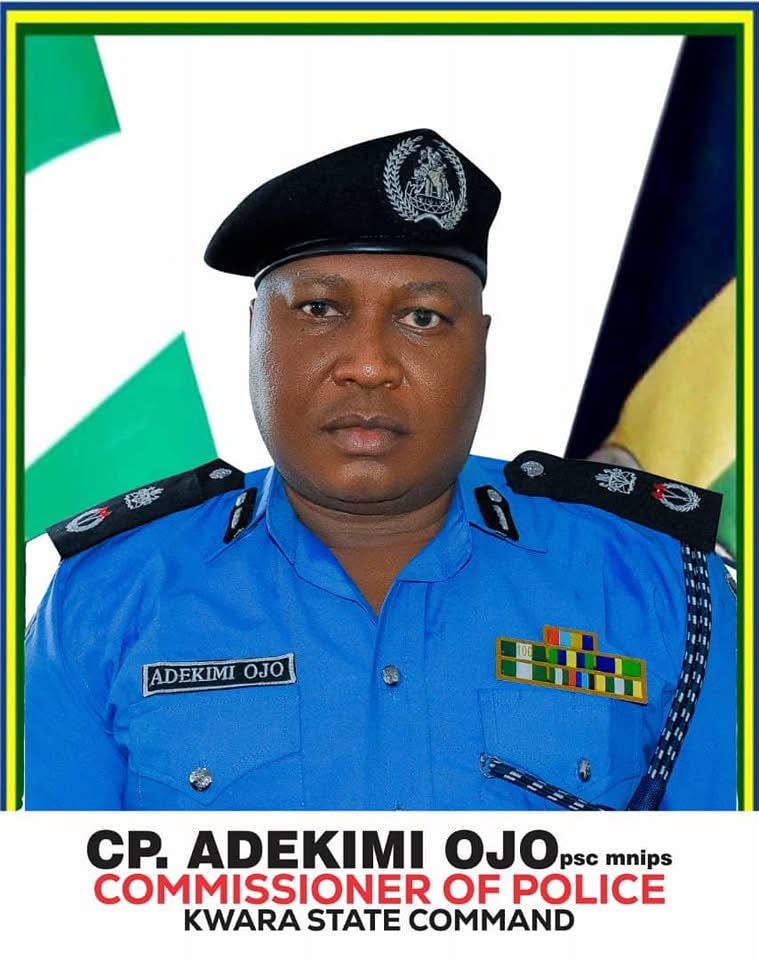
The arrests were among several criminal cases presented by the state Commissioner of Police, Adekimi Ojo, during a press briefing in Ilorin on Tuesday, October 13, 2026.
According to Ojo, police operatives intercepted Adeoye at a drinking spot around Ojatuntun Market during a surveillance operation and recovered a locally made cut-to-size pistol from him.
Further investigations led to the arrest of Fatai, who was allegedly identified as the intended buyer of the firearm.
The Commissioner of Police said both suspects reportedly admitted their involvement in the transaction during interrogation, adding that investigations were ongoing.
The suspects remain in police custody and are expected to be arraigned upon the conclusion of investigations.
Ojo said the arrests formed part of the command’s intensified efforts to tackle illegal firearms possession, kidnapping, armed robbery and other violent crimes across Kwara State.
In another development, the Command arrested Abubakar Usman, also known as Jaye, a wanted suspect allegedly linked to kidnapping incidents in Oke-Ode and Oro-Ago, as well as the killing of members of the Vigilante Group of Nigeria in Oke-Ode, Ifelodun Local Government Area.
The suspect was arrested at Jebba Cattle Market on October 11 following sustained efforts by security operatives.
The Commissioner of Police said investigations also linked him to a May 2025 incident in Labaka village, where four suspected kidnappers arrested by local vigilantes reportedly escaped after a group allegedly led by him arrived and fired gunshots into the air.
Usman was also accused of threatening to kidnap a prominent member of a cattle-rearing association and demanding N10 million.
Ojo said the suspect had reportedly confessed to his involvement in the crimes under investigation and was assisting the police in identifying other persons connected to the incidents.
The Command also arrested Ahamdu Dahiru, a suspected kidnapper allegedly linked to a wanted kidnapping kingpin known as Aro.
According to the commissioner, Dahiru confessed to leading four kidnapping operations in Eruku, Oke-Ode, Idofin and Babanla, during which large sums of money were collected.
The suspect subsequently led police operatives and members of the Vigilante Group of Nigeria to a forest between Bani and Kaiama, where four AK-47 rifles allegedly used in the operations had been buried.
However, the weapons were no longer at the location, as the suspect’s alleged accomplices, identified as Aminu, Sani, Yellow and Dogo, had reportedly moved them to an unknown destination.
A bag containing suspected hard drugs, chains and a padlock believed to have been used to restrain hostages was recovered at the location.
The police said Dahiru remained in custody and was providing information to assist efforts to apprehend the fleeing suspects and recover the firearms.
In another case, two suspects, Kamalden Lukmon and AbdulGaniyu Ibrahim, were arrested along Bakase Road, Alapa, on October 8, following the recovery of two suspected human hands.
Ojo said preliminary interrogation indicated that the suspects allegedly intended to use the body parts for money-making rituals.
The suspects reportedly claimed that a vigilante member, identified as Abdulraf Apata, handed the body parts to them. The police said the allegation was being investigated to establish the circumstances surrounding the incident and determine whether other persons were involved.
The commissioner also disclosed the arrest of three suspected motorcycle thieves, Mohamed Umar, 20; Aliyu Aliyu; and Babuga Umar, 30, at Dankurumi Settlement, Kosa, through an operation involving police operatives, local hunters and vigilantes.
A red Bajaj motorcycle allegedly stolen from the Daba area of Bani was recovered, while efforts were ongoing to arrest another suspected accomplice identified as Hanaruwa.
On child protection, Ojo said three suspects, including a 12-year-old girl’s biological father, stepmother and their neighbour, had been arraigned over alleged cruelty and physical abuse of the child.
The incident came to light on September 30 after a concerned resident of the Idigba area of Adewole, Ilorin, questioned the girl after seeing her buying a solution from a chemist late at night.
The child reportedly disclosed that she had been beaten with an electrical wire and burnt with a hot coal-pot over the loss of N100 while hawking soya beans for her stepmother.
The suspects were subsequently remanded at the Oke-Kura Correctional Centre, according to the police.
The command further reported the arrest of Saba Ismail, 25, over an alleged N10 million kidnapping threat against a resident of Batakan, via Tsaragi, in Edu Local Government Area.
Investigators reportedly traced the telephone number used to make the threat to the suspect, who allegedly confessed to the offence.
Other cases presented by the commissioner included the arrest of Umaru Ahmadu over an alleged kidnapping in Okeya, the arrest of Musa Hussein over suspected kidnapping activities, and the apprehension of three suspects in connection with an armed robbery at Gure Fulani Camp.
The police also arrested three suspects over the alleged exhumation of graves and removal of human heads at a cemetery in Omupo, Kwara State.
Ojo said the investigation into the cemetery incident began after community members discovered in May 2026 that some graves had been disturbed and the heads of bodies buried there were missing.
Two suspects, Abu Jimoh and Ayo Jimoh, were arrested on October 8 while allegedly digging graves at the cemetery. They reportedly identified a herbalist, Mukaila Bello, as the alleged buyer of the missing body parts.
The commissioner urged residents to provide credible information to security agencies, stressing that public cooperation remained critical to preventing crime and bringing suspected offenders to justice.
He also commended Governor AbdulRahman AbdulRazaq for donating 25 brand-new Hilux vehicles to the police, saying the gesture would strengthen operational mobility, improve police visibility and enhance responses to security threats across the state.
Ojo assured residents that the command would continue to pursue intelligence-led operations, professional investigations and community engagement to protect lives and property.
He, however, urged the media to report cases still under investigation accurately and responsibly, while assuring the public that suspects would be dealt with in accordance with due process.


ON BORNO ADC’S LAME REJOINDER: MY RESPONSE.

Alleged Human Trafficking: Two Suspects In NSCDC’s Net

Kwara: Physically challenged man, two others held for alleged arms supply to criminals

-
 Uncategorized6 years ago
FG, states urged to harness flooding for ranching, others with technology – Agbaje
-
 Headlines11 years ago
Breaking: EFCC seals Borno House of Assembly, as Hon members take to their heels
-
 News12 years ago
Nigeria Security Operatives Stage Manhunt For Homosexual Perpetrator
-
 News10 years ago
How 21-year-old Girl fled community over accusation of lesbianism
-
 News11 years ago
Yobe Gov Moves Against Deputy
-
 Opinion7 years ago
7 signs she has friend zoned you
-
Technology5 years ago
Online job placement company headhunts women
-
 Headlines10 years ago
Borno Dep Gov Abducts Another Church Leader