
Uncategorized
Saint Kitts and Nevis Citizenship for Nigerians

Are you a Nigerian looking for golden opportunities to travel worldwide? Do you know Saint Kitts and Nevis citizenship can enable you to get visa-free entry to 156 countries?
And not only that: this passport offers broad opportunities to open bank accounts abroad, start a company and optimise tax burden. Please read the guide to figure out a time-proven way to do it.
Benefits of Saint Kitts and Nevis Citizenship for Nigerians
St. Kitts and Nevis Citizenship-by-Investment (CBI) program is a program that allows individuals to obtain citizenship of St. Kitts and Nevis by making a significant investment of $125,000+ to the state fund, buying a property worth $200,000 or making a public goods investment of at least $175,000.
Nigerians can apply for the program and become citizens of St. Kitts and Nevis.
- Visa-free travel: Saint Kitts and Nevis citizens can enjoy visa-free or visa-on-arrival access to over 150 countries, including the UK, Canada, and the Schengen Area countries.
- Tax benefits: There is no income tax, wealth tax, inheritance tax, or capital gains tax in Saint Kitts and Nevis. This makes it an attractive destination for individuals who want to minimise their tax liability.
- Dual citizenship: Saint Kitts and Nevis allows dual citizenship, which means that individuals can hold citizenship of their home country and Saint Kitts and Nevis at the same time. So, St Kitts and Nevis passport for Nigerian citizens also keeps them citizens of Nigeria.
- Investment and international business opportunities: Saint Kitts and Nevis Citizenship-by-Investment (CBI) program allows individuals to make a significant investment in the country of around $200,000 and obtain citizenship. There is legally established investment opportunities and potential returns. Moreover, citizens can also enjoy working with foreign partners.
- Political stability and safety: Saint Kitts and Nevis is a politically stable country with a democratic government and a low crime rate. Such a situation provides citizens and their families a safe and secure environment.
- Lifestyle benefits: Saint Kitts and Nevis has a warm and tropical climate, beautiful beaches, and a relaxed lifestyle. Weather conditions called “endless summer” can provide a high quality of life for individuals and their families.
Requirements for Nigerians to get Saint Kitts and Nevis citizenship
Saint Kitts and Nevis offers citizenship to individuals who meet the eligibility requirements of their Citizenship-by-Investment (CBI) program. The program is open to individuals from all countries, including Nigeria.
Investment options for Nigerians to get Saint Kitts and Nevis Citizenship. To be eligible for Saint Kitts and Nevis citizenship through the CBI program, an individual must make a qualifying investment in the country. There are three investment options available:
- A non-refundable contribution to the Sustainable Growth Fund. The contribution amount is $125,000 and may vary depending on the number of dependents included in the application. If you are a married couple, you need to invest $150,000. On the other hand, it is $170,000 for a family of 4. Suppose you are a family of 5 or have more people in your family (dependent members). In that case, you must pay $10,000 additional for each dependent under 18 years. If the conditional is over 18, you must pay $25,000 for each dependent.
- An investment in a government-approved real estate project. The minimum investment amount is currently set at $200,000.
- You can also get St. Kitts and Nevis citizenship by investing in the Approved Public Benefit Projects programs. If you are a single investor, you will have to make an investment of at least $175,000. The amount remains the same for a married couple, and their kids, and it is another great benefit.
In addition to the investment requirements, applicants must also pass a due diligence process and meet the following criteria:
- Be of good character and reputation
- Have no criminal record
- Have a high net worth
- Be able to provide proof of the source of their investment funds
- Be able to provide a proof of their health status
It’s important to note that the eligibility requirements for Saint Kitts and Nevis citizenship are subject to change, and potential applicants should seek professional advice before applying.
How to obtain citizenship in St. Kitts and Nevis
To obtain citizenship in St. Kitts and Nevis as a Nigerian, you can follow these step-by-step procedures:
Step 1: Research and choose authorised citizenship by investment (CBI) program provider in St. Kitts and Nevis. These providers are licensed by the government to assist applicants in obtaining citizenship through investment.
Step 2: Choose an investment option that suits you. The two investment options available are:
- Donation to the Sustainable Growth Fund (SGF): This requires a non-refundable contribution of at least US$120,000 for a single applicant and can increase with the addition of family members.
- Real Estate Investment: This requires a minimum investment of US$200,000 in an approved real estate project.
- Public Goods Investment: As a Nigerian, you can also get St. Kitts and Nevis citizenship if you can make a Public Goods Investment of at least $175,000.
Step 3: Submit your application through the authorised CBI program provider. The provider will guide you through the application process, including filling out the required forms and submitting the necessary documents.
Step 4: Pay the required application fee, which includes due diligence fees, processing fees, and other related fees. The fee varies depending on the investment option chosen.
Step 5: Wait for your application to be processed. The processing time varies, but it typically takes about 2-3 months.
Once your application is approved, you will receive a letter of approval. You will then need to make the required investment and provide proof of investment to the government. After providing proof of investment, you will receive your registration certificate and passport.
Note that there are additional requirements for citizenship, including a background check, medical examination, and proof of financial stability. You must also attend an oath of allegiance ceremony in St. Kitts and Nevis or at a designated embassy or consulate.
Investment Options for Saint Kitts and Nevis Citizenship
Saint Kitts and Nevis offers two investment options for obtaining citizenship through its Citizenship by Investment (CBI) program. These options are:
Contribution to the Sustainable Growth Fund (SGF). Under this option, applicants can make a non-refundable contribution to the Sustainable Growth Fund, which was established by the government of Saint Kitts and Nevis to support economic growth and development projects. The minimum contribution required is $150,000 for a single applicant and $195,000 for a family of up to four people. Additional fees may apply for larger families.
Investment in approved real estate. Applicants can invest in approved real estate projects in Saint Kitts and Nevis, such as hotels, resorts, and villas. The minimum investment required is $200,000, and the investment must be held for at least five years.
Applicants may also be required to pay additional fees, such as processing and due diligence fees.
Investment in approved public goods investment program. One of the options available to potential investors is to make a non-refundable donation of at least $175,000 to Public Goods Investment (PGI). The PGI is a government fund that is used to finance public goods and projects in Grenada, such as education, healthcare, infrastructure development, and tourism.
Additional costs associated with obtaining St Kitts and Nevis Citizenship by Investment program
Here’s a list of expenses Nigerians may need to consider when applying for St. Kitts and Nevis Citizenship by Investment Program besides the investment itself:
Due diligence fees: The government of St. Kitts and Nevis requires all applicants to pay due diligence fees. The cost for single applicants is $7,500, and for a family of four is $7,500 plus $4,000 per additional dependent.
- Application fees: Applicants must pay a non-refundable application fee of $250 per person.
- Processing fees: A processing fee of $50 is required for each applicant.
- Real estate investment costs: If applicants choose to invest in real estate, they will need to pay the purchase price of the property, plus other associated costs such as legal fees, property taxes, and maintenance costs.
- Citizenship certificate fees: Applicants will need to pay a fee of around $750 per person for their citizenship certificates.
- Passport fees: Applicants will need to pay a fee of $350 per person for their St. Kitts and Nevis passports.
- Travel costs: Applicants will need to cover their travel costs to and from St. Kitts and Nevis for the application process and citizenship ceremony.
- Legal fees: Applicants may hire a lawyer to assist them with the application process, which will incur additional costs. Immigrant Invest is an excellent option if you want to save on this.
Why obtain St Kitts and Nevis citizenship?
- St Kitts and Nevis Citizenship by Investment Program allow obtaining second citizenship by investing in the country’s economy just in 4 to 6 months.
- St Kitts and Nevis offers visa-free access to over 156 countries, a stable economy, and a “tax heaven”.
- Investor and their family can obtain citizenship of St Kitts and Nevis altogether at the same time.
- The program is attractive for Nigerians looking to expand their global mobility and access to international markets.
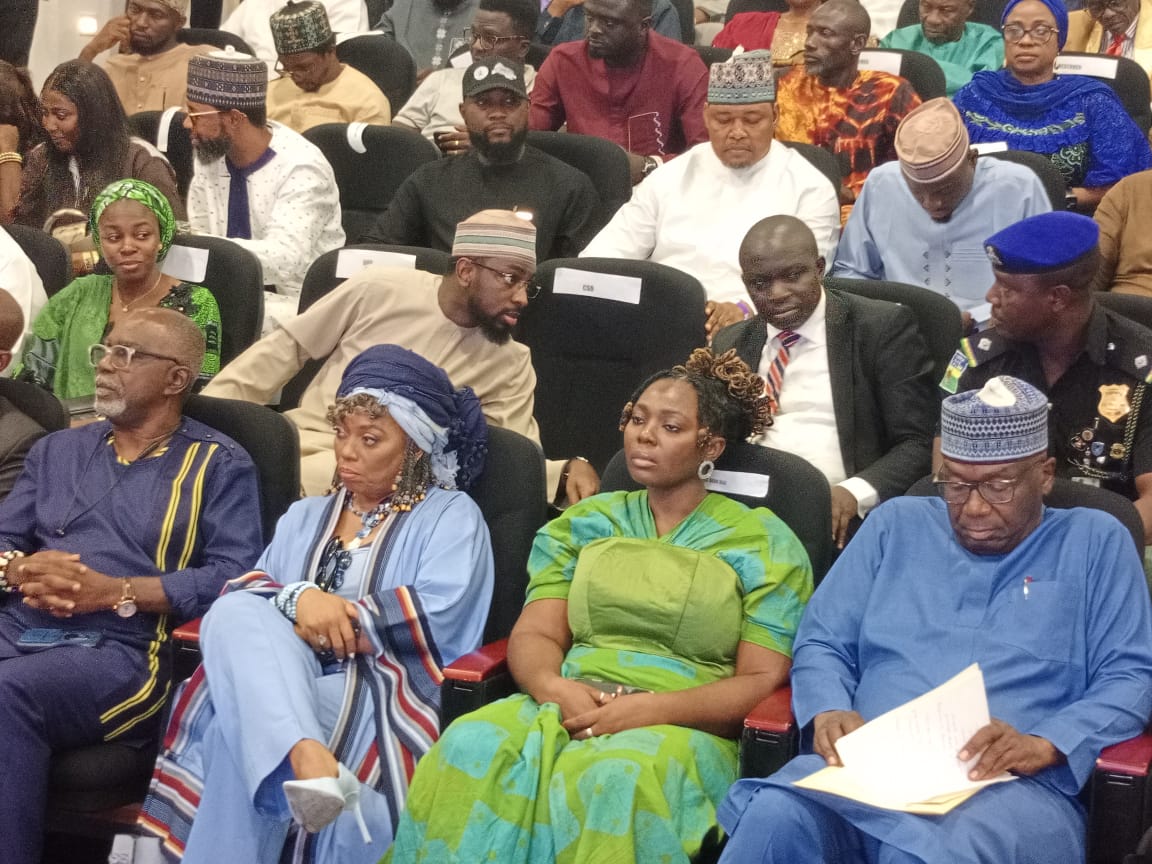
Stephen Olufemi Oni, Ilorin
The Kwara State Government has celebrated the life and enduring influence of Afrobeat legend, Fela Anikulapo-Kuti, with a retrospective exhibition aimed at preserving African cultural heritage and inspiring younger generations.
The exhibition, titled Fela Anikulapo-Kuti: A Retrospective, was opened by Governor AbdulRahman AbdulRazaq at the Institute of Contemporary African Art and Film in Ilorin on Monday.
The Governor said the establishment of the institute reflected his administration’s belief that development should extend beyond physical infrastructure to include spaces that promote creativity, knowledge and economic opportunities.
“When we established the Institute of Contemporary African Art & Film, our vision was clear: development must go beyond roads, bridges and buildings to create spaces for creativity, knowledge and opportunity,” AbdulRazaq said.
According to him, cultural infrastructure plays an important role in connecting people to their history, broadening their imagination and encouraging critical thinking.
“Physical infrastructure connects places; cultural infrastructure connects people to their history, expands their imagination and challenges their thinking,” the Governor said.
AbdulRazaq said the institute was established to preserve African stories, nurture talents and showcase the continent’s artists and thinkers to the world,
describing the decision to open the institution with an exhibition dedicated to Fela as significant, given the musician’s contribution to African music, social commentary and cultural expression.
“Fela was more than a musician. Through his music and artistic expression, he challenged conventions and confronted society with questions about power, freedom, identity and justice,” he added.
The Governor added that the late musician’s life demonstrated the capacity of artistic expression to influence public discourse and inspire social change.
The exhibition, curated by June Creative Art Advisory, led by its founder, Mrs Seun Alli, featured photography, archival materials, film, graphic works and other artistic expressions exploring Fela’s life, times and enduring influence.
AbdulRazaq commended the firm for bringing its curatorial expertise and creative vision to the project, while describing the exhibition as an opportunity for different categories of visitors to engage with the musician’s legacy.
He said the exhibition would provide students with learning opportunities beyond the classroom, inspire artists, support researchers and encourage young people to explore the creative industry.
“For students, this is a classroom beyond the classroom; for artists, inspiration; for researchers, an opportunity for deeper inquiry; and for young people, a reminder that creativity offers both self-expression and economic opportunity,” he said.
The Governor clarified that the state government was not claiming ownership of Fela’s story but was providing a platform for younger generations to encounter and learn from his legacy, adding that the state government is optimistic that the institute would promote cultural education, encourage creative enterprise, attract visitors and strengthen Kwara State’s position in Nigeria’s cultural and creative landscape.
According to him, the institution’s success would be measured by the talents it nurtured, the ideas it inspired and the opportunities it created.
“Governments change, but institutions should endure,” the Governor said, expressing the hope that the exhibition would mark the beginning of sustained cultural engagement at the institute.
“May this exhibition begin sustained cultural engagement at ICAAF and inspire our young people to create, question, discover and contribute to society,” he said.
AbdulRazaq added that the initiative reflected his administration’s commitment to building a state where cultural heritage, innovation and economic opportunities complemented one another.
In her address, the Commissioner for Communications, Hon. Bolanle Olukoju, said: “Today’s exhibition offers us an opportunity to revisit the life and works of Fela
Anikulapo-Kuti and appreciate how his music, ideas and artistic expression continue to influence generations.
“For the Ministry of Communications, this occasion speaks to an important part of our
mandate: promoting the stories, talents and creative expressions that shape our identity as a people.”
The Commissioner particularly noted that under Governor AbdulRazaq’s leadership, the State is creating opportunities for young people through investments in sectors such as film, fashion and technology.
She added: “Projects including
the Sugar Film Factory, the Garment Factory and the Ilorin Innovation Hub reflect the administration’s commitment to developing talent and supporting enterprise.
“The Institute of Contemporary African Art & Film, formerly the Ilorin Visual Arts Centre, adds an important dimension to this effort. It provides a platform for artistic expression, cultural learning and creative collaboration.
“We want young Kwarans who are passionate about painting, photography, filmmaking, fashion and design to see ICAAF as a place where they can explore their interests, learn from others and showcase their talents.
“We also encourage students to engage with art and history beyond the classroom. Fela’s story is a fitting subject for this exhibition. It demonstrates how creativity
can go beyond entertainment to shape cultural identity and influence public conversations. There is much for our young people to learn from his artistic journey and enduring impact.
“It might also interest you that kwara state was also part of Fela’s creative showcase during his lifetime.”
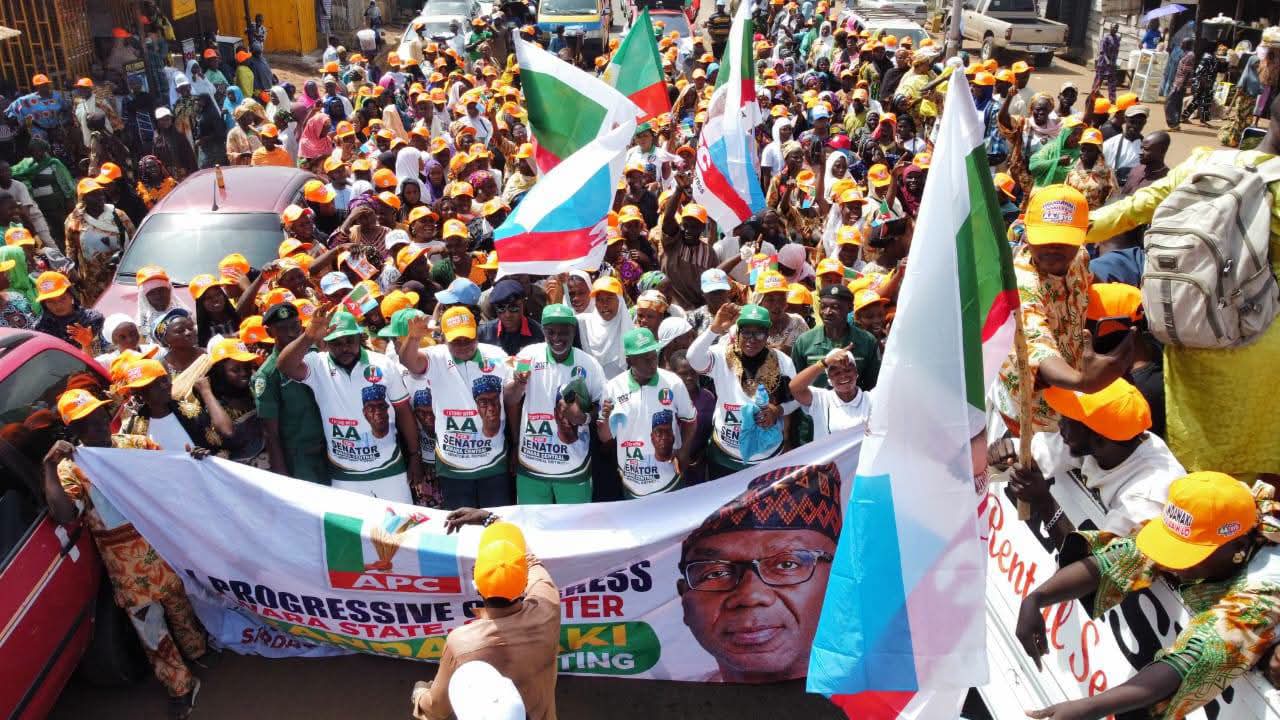
•••Says Ward stands with APC
Stephen Olufemi Oni, Ilorin
The Executive Chairman of the Ilorin West Local Government, Mallam Shehu AbdulRahman Babatunde Ladan, has led an All Progressives Congress (APC) mega rally in Ubandawaki Ward, reaffirming the commitment of party members and supporters to the APC ahead of the 2027 general elections.
The rally attracted party leaders, grassroots mobilisers, youths, women, and other stakeholders who gathered to demonstrate their support for the party.
Addressing the gathering, Chairman Ladan declared that Ubandawaki Ward remains committed to the APC and its political leadership, expressing support for President Bola Ahmed Tinubu’s Renewed Hope Agenda, Kwara State Governor AbdulRahman AbdulRazaq, and the APC governorship candidate, Rt. Hon. Engr. Yakubu Danladi-Salihu (SYD), alongside other party candidates for the 2027 general elections.
The Chairman emphasised the importance of unity, peaceful political engagement, and sustained grassroots mobilisation in strengthening the party’s structure ahead of the forthcoming elections, urging party faithful to remain united, engage constructively with residents, and work collectively towards the party’s political objectives.
Ladan also acknowledged the importance of Ubandawaki Ward in the political landscape of Ilorin West, encouraging party leaders and supporters to maintain cordial relationships, promote inclusive participation, and sustain engagement with the electorate. He stressed that a united party structure would help strengthen internal cooperation and effective grassroots coordination.
The mega rally renewed calls for unity, loyalty, and peaceful political participation among APC members and supporters, underscoring commitment by participants to mobilising support for the party’s candidates ahead of the 2027 general elections, while promoting peace, development, and responsible democratic engagement across Ilorin West Local Government Area.
- Mgt Accuses Union Of Dishing Out False Staff Remuneration Scale
Stephen Olufemi Oni, Ilorin
The staff of the Kwara State Internal Revenue Service (KWIRS) have lamented poor welfare conditions, rising living costs and stagnant salaries they have been subjected to, despite their contributions to the state’s revenue generation.
In a statement issued by the KWIRS chapter of the Association of Senior Civil Servants of Nigeria (ASCSN), the workers lamented that their sacrifice and professionalism, which have helped to place Kwara State among the more self-reliant states in the country, have not been matched with corresponding improvement in their welfare.
The workers questioned the disparity between their contributions to the state’s revenue and their welfare, saying many of them are battling financial hardship.
“We block leakages. We are posted to hospitals and other MDAs to secure government revenue. We work under pressure day and night but we continue to struggle to meet basic needs due to poor salaries.”
The association further expressed concern that personnel costs had remained unchanged for years while other expenditure heads had continued to increase.
It also cited a salary negotiation agreement dated October 11, 2022, which reportedly stated that the adjustment would be implemented “as soon as it can be accommodated in the budget.”
According to the workers, nearly four years after the agreement, there had been no implementation or clear indication of when the adjustment would take effect, despite the rising cost of living.
The staff said expenses on school fees, house rent, transportation and food had increased significantly while their salaries remained unchanged. “We smile outside but the majority of us are bleeding inside. We cannot continue to generate wealth for the state while we wallow in abject poverty,” they declared.
Urging their colleagues to remain united and resolute in pursuing improved welfare, the association said the workers should not expect better conditions without collectively standing up for their interests.
It called on members to remain calm, vigilant and prayerful as a 14-day period beginning October 15, 2026, counts down, without specifying further details in the statement about the expected action at its conclusion.
Reacting to the KW-IRS staff allegations, the Management, while
reaffirm its commitment to professionalism, political neutrality and its statutory mandate, expressed dismay over public speculation on staff remuneration and attempts to politicise unverified internal administrative communications.
“Management is concerned by attempts to exploit unverified internal administrative communications for political purposes, create unnecessary tension and distract the Service from its responsibilities. KWIRS will not be distracted from its mandate by such narratives,” said the Management.
It added: “The isolated salary figures being circulated on social media do not represent the full remuneration structure or total emoluments of KWIRS staff. Staff compensation extends beyond regular monthly salaries and includes the following benefits, in accordance with applicable policies and approved arrangements:
“Annual and Performance-Related Bonuses: Annual, festive, and situational bonuses linked to revenue performance milestones and staff performance and situational economic palliatives are paid periodically to staff members
“Annual Leave Allowance: A separate annual payment in addition to regular monthly remuneration.
Staff Welfare and Operational Support: Structured measures designed to support staff welfare and professional development throughout their careers.
“Accordingly, assessing staff remuneration solely on selectively circulated salary figures presents an incomplete picture of the Service’s compensation and welfare structure.
“Management remains committed to staff welfare, motivation and professional development. The Service will continue to strengthen policies and operational processes that support staff well-being and performance, within government-approved resource allocations and applicable administrative frameworks. The Service remains one of the Government Institutions with the most recruitment requests and this is a testament of Management’s commitment to staff welfare.
“KWIRS urges members of the public, taxpayers and other stakeholders to disregard unverified and misleading narratives, verify information before sharing it, and rely on official Service communications for accurate information about its operations and staff policies.
“All stakeholders are encouraged to refrain from politicising internal administrative matters or spreading claims capable of undermining institutional harmony and public confidence.
“KWIRS remains focused on its statutory responsibilities and committed to mobilising revenue for the economic growth and sustainable development of Kwara State.”


Yakubu Hails China’s Zero-Tariff Initiative as Catalyst for Economic Transformation
THE BOLD SHIFT:BETWEEN REFORMS ANDTHE REALITY OF THE BROKEN EGGS:
WHO: Nigeria Records Zero Ebola Cases After Evacuation of Swiss Couple

-
 Uncategorized6 years ago
FG, states urged to harness flooding for ranching, others with technology – Agbaje
-
 Headlines11 years ago
Breaking: EFCC seals Borno House of Assembly, as Hon members take to their heels
-
 News12 years ago
Nigeria Security Operatives Stage Manhunt For Homosexual Perpetrator
-
 News10 years ago
How 21-year-old Girl fled community over accusation of lesbianism
-
 News11 years ago
Yobe Gov Moves Against Deputy
-
 Opinion7 years ago
7 signs she has friend zoned you
-
Technology5 years ago
Online job placement company headhunts women
-
 Headlines10 years ago
Borno Dep Gov Abducts Another Church Leader