
News
SANKARA’S YOUTHFUL APPEAL RESHAPING KANO CENTRAL POLITICS

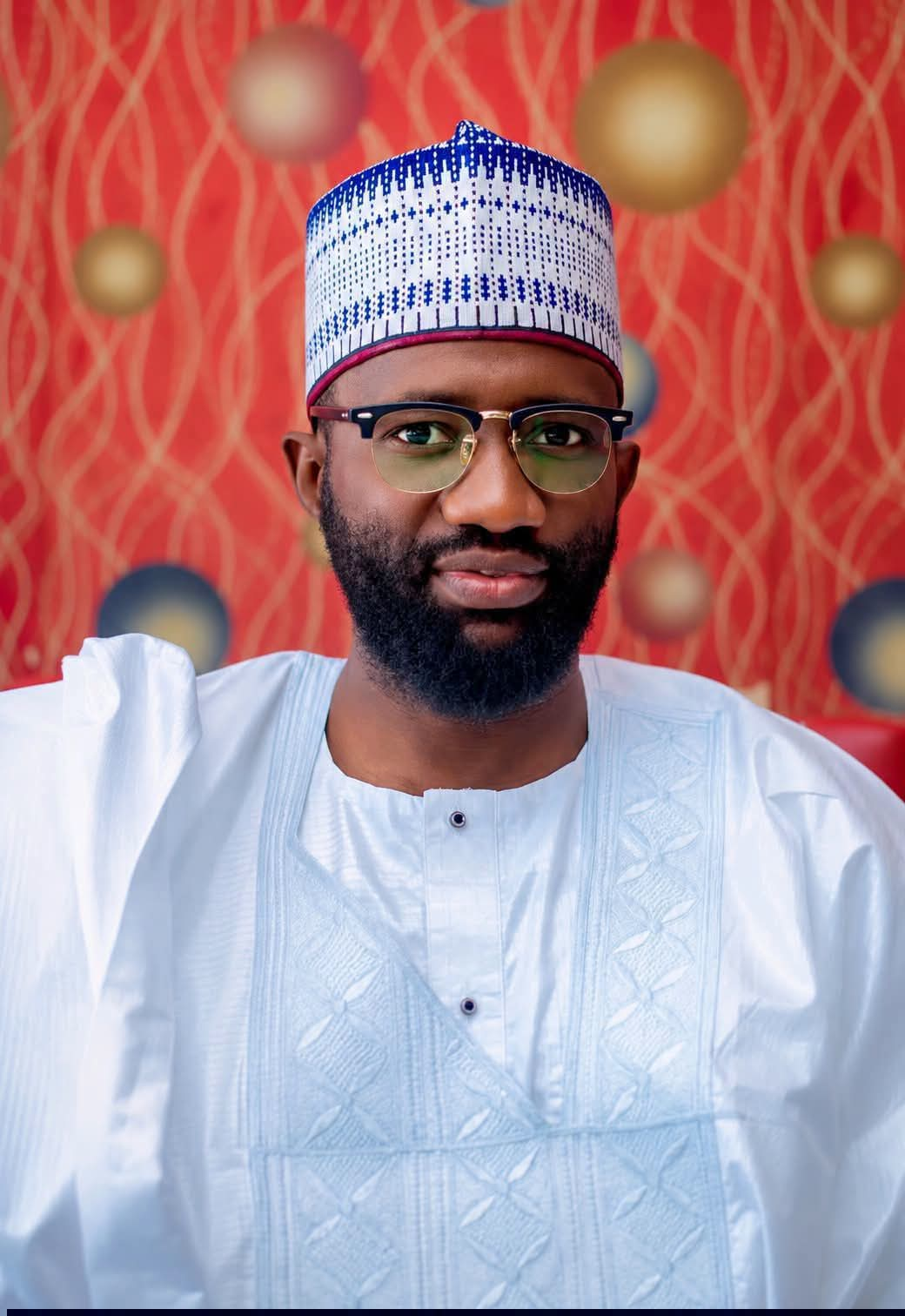
The political landscape in Kano Central Senatorial District is witnessing a gradual but noticeable shift as increasing numbers of young voters, professionals and community stakeholders rally behind the senatorial ambition of Dr. Nafiu Sankara ahead of the next election cycle.
Though the contest is expected to feature some of Kano’s most experienced political figures, discussions across the district are increasingly focused on the emergence of a new generation of leaders and what many describe as a growing demand for fresh ideas, innovation and people-oriented governance.
Dr. Sankara, a renowned development advocate and grassroots mobiliser, has continued to attract attention through his emphasis on youth empowerment, economic development and inclusive representation. Political observers note that his message is resonating strongly among first-time voters and younger residents who believe Kano Central requires a more dynamic approach to leadership.
Across several communities within the district, supporters say Dr. Sankara’s popularity stems from his accessibility and consistent engagement with ordinary citizens. Many argue that voters are becoming more interested in leaders who maintain close contact with their constituents and actively participate in addressing community challenges.
A youth leader in Tarauni Local Government Area described the current political atmosphere as one driven by changing expectations.
“Young people want leaders who understand today’s realities. Issues such as unemployment, digital innovation, education and economic empowerment are becoming major concerns, and many believe these areas require a new approach,” he said.
Analysts also suggest that demographic realities may play a significant role in shaping the upcoming contest. With youths constituting a large percentage of the voting population, candidates perceived as being closer to their aspirations are expected to gain considerable momentum.
Dr. Sankara has repeatedly identified job creation and economic opportunities as major priorities in his campaign. According to him, empowering young people through entrepreneurship support, vocational training and investment-friendly policies remains critical to sustainable development.
He has argued that economic growth can only be achieved when governments create environments that encourage innovation, small business growth and private-sector participation.
Beyond youth-focused policies, Dr. Sankara has also maintained a strong emphasis on infrastructure development. He believes improving roads, healthcare facilities, schools and electricity supply would not only improve living standards but also stimulate economic activities across the district.
Political commentators say this development-focused message is helping him attract support from a wide range of demographic groups, including women, traders, professionals and community leaders.
His campaign activities have also generated conversations about citizen-driven governance, transparency and accountability. Supporters believe these issues have become increasingly important as voters seek leaders they can hold responsible for campaign promises and public commitments.
While established political figures continue to command significant influence within Kano politics, observers note that the growing attention around Dr. Sankara demonstrates an increasing appetite for alternative leadership options among sections of the electorate.
As preparations for the next elections gather pace, the Kano Central Senatorial race is gradually evolving into a contest that may be defined not only by political structures and party affiliations but also by competing visions about the future direction of leadership in the district.
Whether the momentum currently surrounding Dr. Sankara will translate into electoral success remains uncertain. However, what is becoming evident is that conversations about youth participation, generational renewal and development-focused representation are steadily moving to the centre of political discourse in Kano Central.
For many voters, the election may ultimately be less about political history and more about which candidate can best articulate and deliver a vision for the future.
News
2027 PRESIDENCY: AVA WARNS AGAINST POLITICAL GIMMICKS, URGES NIGERIANS TO SCRUTINISE ATIKU’S RECORD
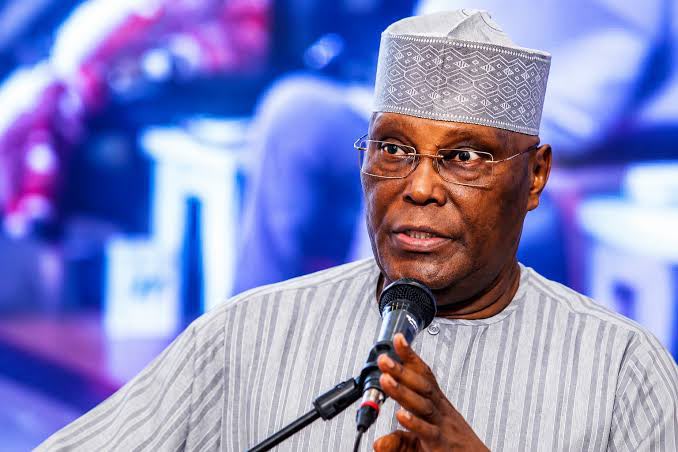
In contemporary Nigeria, the name Atiku Abubakar has become synonymous with relentless presidential ambition, political maneuvering and controversy. His career in the Nigeria Customs Service, where he rose to the rank of Deputy Comptroller-General before retiring, is well known. Equally well known is his transition from a wealthy former customs officer into the political arena through the late General Shehu Yar’Adua-led People’s Front (PF), a formidable political organisation that shaped the careers of several prominent Nigerian politicians.
During that period, Senator Bola Tinubu was also an influential member of the political movement and cut his political teeth within the same political family, although Atiku and Tinubu would later pursue different political paths.
With the return of democratic governance in 1999, their political paths crossed again. While Tinubu became Governor of Lagos State, Atiku emerged as Vice President of Nigeria under President Olusegun Obasanjo.
It was Obasanjo who took the political gamble of selecting Atiku as his running mate and entrusting him with the office of Vice President. However, their relationship deteriorated dramatically, culminating in a prolonged political feud that exposed serious disagreements within the administration and eventually turned into an open struggle for political supremacy.
Indeed, Nigerians witnessed a presidency characterised by internal conflict, political rivalry and a bitter power struggle between the President and his Vice President. Rather than consistently projecting unity and focusing on governance, the administration became embroiled in controversies that distracted from its responsibilities to the Nigerian people.
Atiku’s political trajectory has since been marked by repeated presidential contests against several political leaders and administrations, including Umaru Musa Yar’Adua, Goodluck Jonathan, Muhammadu Buhari and, more recently, Bola Ahmed Tinubu. His persistent pursuit of the presidency raises legitimate questions about whether his ambition is driven primarily by a commitment to national service or by an enduring quest for personal political power.
The problem with Nigeria is not merely that public officials make mistakes; it is the failure to hold political leaders accountable for their actions, decisions, abuse of public trust and alleged financial improprieties. Accountability, integrity and patriotism must be the defining standards of leadership, not political convenience, personal ambition or the manipulation of public sentiment.
Atiku’s association with the controversies surrounding Nigeria’s privatisation programme, particularly the handling of the Nigerian Telecommunications Limited (NITEL) and its eventual transfer to Pentascope, remains a matter of public debate and scrutiny. As a leading figure in the privatisation process during the Obasanjo administration, his role deserves honest examination.
The privatisation programme generated considerable controversy over the fate of public enterprises, workers’ welfare, transparency, accountability and the performance of some of the companies that were transferred to private operators. Nigerians have every right to demand explanations from those who occupied influential positions during that period.
The consequences of poorly executed privatisation exercises were felt by workers, families and communities. Job losses, industrial decline, the collapse or weakening of some enterprises, and concerns about the transparency of transactions became part of the national conversation. Those who presided over such policies cannot simply distance themselves from the outcomes or present themselves as though they had no responsibility for the decisions made.
We must, at this juncture, call a spade a spade. Nigerians cannot continue to be deceived by politicians whose presidential ambitions appear endless, while their records in public office remain subjects of controversy and unanswered questions.
No responsible citizen should ignore the need to scrutinise Atiku’s record, political antecedents, policy positions and past performance before considering entrusting him with the nation’s highest office in 2027.
THE HUSHPUPPI CONTROVERSY
In an episode that attracted widespread public attention, Atiku’s association with the Dubai meeting involving Ramon Abbas, popularly known as Hushpuppi, remains a subject of political controversy. Hushpuppi was subsequently convicted in the United States for his involvement in international fraud schemes.
Atiku, alongside political associates including Dino Melaye and Timi Frank, was publicly associated with the meeting involving Hushpuppi and other political figures, including Bukola Saraki and Yakubu Dogara who were deceived to be part of the meeting. The circumstances and political significance of that encounter attracted considerable criticism and questions from Nigerians.
Let us be clear: association or photographs with an individual do not, by themselves, establish criminal wrongdoing. However, public figures seeking the highest political office must be prepared to answer legitimate questions about their associations, judgment and the circumstances surrounding politically significant encounters.
Nigerians deserve leaders whose relationships, conduct and political engagements inspire confidence, not suspicion, controversy or endless explanations.
Atiku must also demonstrate that he has moved beyond the politics of personal ambition, identity-based mobilisation and political manoeuvring. Nigeria requires a leader with a clear, credible and practical agenda for national development—not another presidential campaign built around promises, political alliances and the assumption that power is a personal entitlement.
A WARNING TO NIGERIANS
We are concerned that Nigerians may once again be subjected to grand promises, political gimmicks and smooth-sailing campaign narratives without a corresponding examination of the candidate’s past record.
The electorate must not allow political propaganda, sentimental appeals or personality-driven campaigns to overshadow the critical questions of competence, accountability, integrity, economic policy, national security and the welfare of ordinary citizens.
A candidate’s record in public office is far more important than campaign rhetoric. Nigerians must examine what those seeking their votes have done when entrusted with power, the policies they supported, the controversies surrounding their tenure, and the lessons that can be drawn from their previous leadership experiences.
We therefore urge Nigerians, particularly young people and the voting public across all regions, to remain vigilant, politically conscious and discerning. The future of our country must not be surrendered to political desperation, empty promises or uncritical loyalty to individuals.
OUR POSITION
The Arewa Voters Assembly (AVA) maintains that Nigeria deserves purposeful, accountable, transparent and patriotic leadership. We reject politics driven solely by personal ambition, political opportunism and the pursuit of power without a demonstrable commitment to national development.
Atiku Abubakar must be judged by his political antecedents, his record as Vice President, his involvement in the policy decisions and controversies of the Obasanjo administration, and the credibility of his present promises—not merely by the sophistication of his campaign rhetoric.
We urge Nigerians to reject political gimmicks and demand accountability from every aspirant seeking their mandate.
Nigeria is too important to be treated as the personal political destination of any individual. The presidency is a public trust, not a birthright.
SIGNED:
Com Iliasu Musa
National Coordinator, AVA.
Com Paul Katuka
Secretary,
AREWA VOTERS ASSEMBLY (AVA).
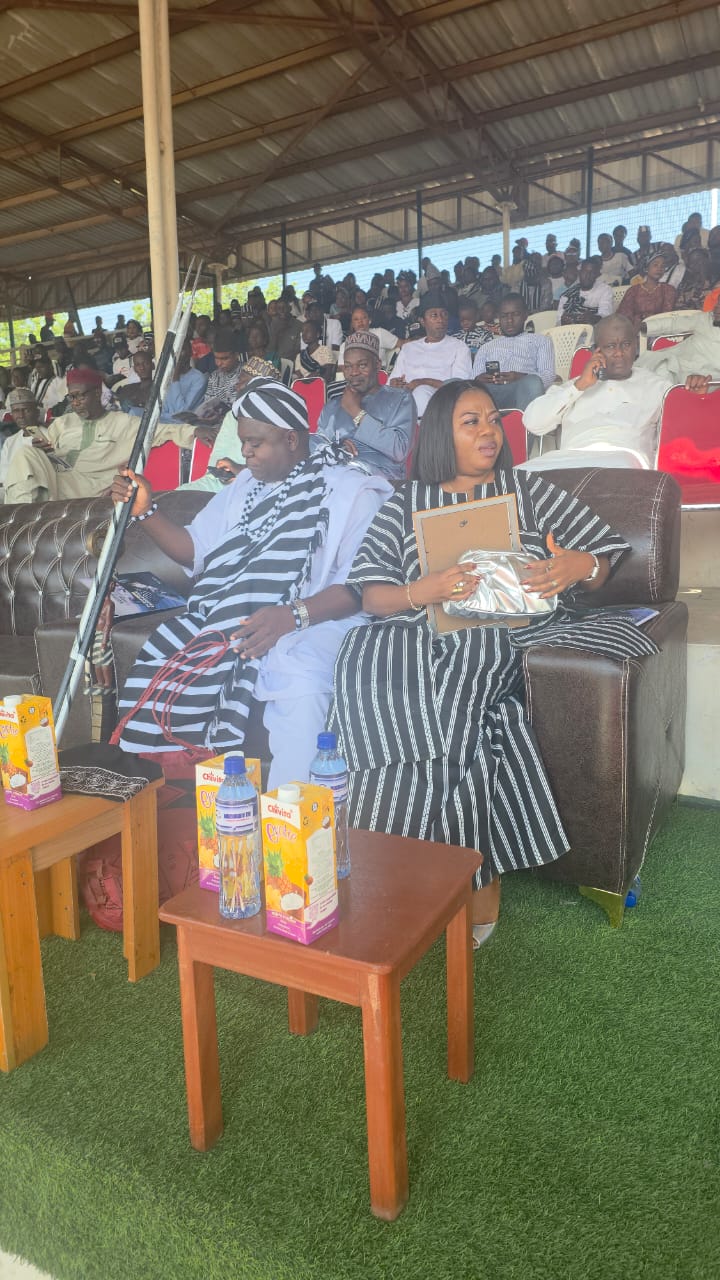
The Tiv community in Adamawa State, operating under the umbrella of Mzough U Tiv Adamawa State (MUTAS), has honoured prominent community leader and the regional controller North West of the Nigerian Mainstream Downstream petroleum Regulatory Authority, NMDPRA, Engineers Barnabas Myaornyi,for recognition of his sustained contributions to community unity, cultural preservation, and grassroots mobilisation across the state.
The recognition formed a major highlight of the 2026 Tiv Day Celebration held at Ribadu Square in Jimeta, Yola on the 14th of November,2026.
The event brought together traditional rulers, socio-cultural leaders, government officials, and members of the Tiv diaspora residing in Adamawa State and neighbouring Benue State.
Leaders at the gathering commended Engineer Myaornyi, for his tireless dedication to fostering peaceful coexistence between the Tiv community and their host communities in Adamawa State. Speakers noted that his leadership has consistently bridged divides, strengthened socio-cultural ties, and provided steady support for Tiv indigenes living and working in the state.
In addition to his professional work in the oil and gas industry serves as the controller in charge of the entire North West zones in the country.
Other personalities honoured at the event include Prof Ibrahim Umar,the 9th substantive Vice-Chancellor of Modibbo Adama University,Yola, ESV Godwin Tyoachimin,a former Gubernatorial aspirant in Benue and Bldr. Martin Terna Gyado, respectively.
The celebration attracted several notable personalities, including the Executive Secretary of the Benue State Emergency Management Agency (SEMA), Sir James Aondoakaa Iorpuu, PhD, who led a delegation from Benue State representing His Excellency, the Executive Governor of Benue state,Rev Fr Hyacinth Alia to Yola to celebrate with the community. Also present were traditional leaders led by the Ter Tiv Adamawa, His Royal Highness, Chief Urbanus Ukor-Ture, alongside executives of Mzough U Tiv Adamawa State, youth groups, and women’s associations.
The President of MUTAS,
Bldr Dr Iorwuese Anum stated that the honour bestowed upon Engineer Myaornyi, reflects the community’s appreciation for individuals who selflessly invest their time, resources, and influence into uplifting their people and projecting the rich heritage of the Tiv nation in positive light.
In his response, Engineer Myaornyi, expressed deep gratitude to Mzough U Tiv Adamawa State, the traditional council, and the entire Tiv community for the recognition.
He dedicated the honour to the collective resilience and unity of the Tiv people in Adamawa State.
“This recognition is a call to greater service,” Engineer Myaornyi, remarked.
“Our strength lies in our unity, our respect for our host communities, and our shared commitment to progress. I remain dedicated to working alongside our traditional and community leaders to ensure that the Tiv community continues to thrive and contribute meaningfully to the peace and development of Adamawa State.”
The ceremony featured vibrant displays of traditional Tiv music, cultural dances, and goodwill messages from partner socio-cultural organisations, marking a memorable milestone for the Tiv community in Adamawa State.
Chief Engr. Barnabas Demnongo Myaornyi was born into the reputable family of Myaornyi Martin Adekpe of Tse Adekpe, Amadu, Takum LGA of Taraba State. He had his primary education at Ternamdoo Nursery and Primary school, Makurdi where he earned his First school leaving certificate in 1989.
He then proceeded to the famous Government College Makurdi where he obtained his Senior Secondary School certificate in 1995.
He was the admitted at the University of Agriculture now Joseph Sarwuan Tarka University, Makurdi where he graduated with the degree of Bachelor of Engineering (B. Eng) in Mechanical Engineering in 2002.
He is a member of the Nigerian Society of Engineers (MNSE), Member, Nigerian Institution of Mechanical Engineers (MNIMechE), and is also registered by the council for the Regulation of Engineering in Nigeria (COREN).
He joined the services of the defunct Department of Petroleum Resources (DPR) in 2008 and through dedication and professional excellence, rose to his current position of Senior Manager.
He currently serves as Regional Controller, Hydrocarbon Processing Plants Infrastructure and Transport Installation (HPPITI) North West Region under the Nigerian Midstream and Downstream Petroleum Regulatory Authority (NMDPRA).
Throughout his educational and professional journey, he has demonstrated exceptional competence, integrity and leadership, earning the respect and admiration of colleagues, associates and members of the wider society.
Beyond his professional accomplishments, Engr. Barnabas Myaornyi has remained deeply committed to the welfare and development of his community.
His contributions to human development, support for the less privileged, promotion of peace and encouragement of community unity stand as enduring testimonies to his generosity and love for his people.
He is widely respected for his humility, wisdom, honesty, compassion and commitment to the preservation of our cultural heritage and traditional values.
He has attended many international courses and trainings in United Arab Emirates, Turkey, Italy, The Netherlands, Ghana, Rwanda etc.
Engr. Baranabas Demnongo Myaornyi is happily married to Chief Mrs. Deborah Mngusuun Myaornyi, and has five (5) children. He is the recipient of the prestigious traditional tittle of AKINDE-U-KWANDE Adamawa State.
Orders APC to forward former Benue governor’s name to INEC
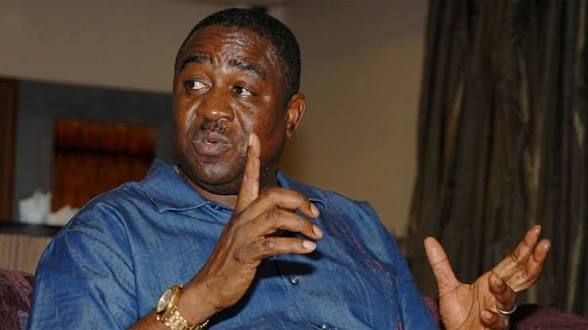
The Federal High Court sitting in Abuja on Wednesday declared former Benue State Governor, Senator Gabriel Torwua Suswam, the lawful candidate of the All Progressives Congress (APC) for the Benue North-East Senatorial District in the 2027 general election.
The court, presided over by Justice Inyang Ekwo, also nullified the APC’s decision to forward the name of Senator Emmanuel Memga Udende to the Independent National Electoral Commission (INEC) as its candidate for the senatorial district.
Delivering judgment in Suit No. FHC/ABJ/CS/1470/2026, Justice Ekwo held that Suswam emerged winner of the APC senatorial primary election conducted on May 18, 2026, with 131,083 valid votes.
The judge consequently ordered the APC to immediately forward Suswam’s name to INEC as its duly nominated candidate for the 2027 general election.
The court further directed INEC to accept, process, publish and recognise Suswam as the APC’s candidate for the Benue North-East Senatorial District.
Justice Ekwo held that the party could not lawfully substitute Suswam, who won the primary election, with Udende, who participated in the exercise but lost, without compliance with the relevant provisions of the Electoral Act, 2026.
The court held that the APC failed to establish any valid withdrawal of candidature by Suswam or the conduct of a fresh primary election to justify the substitution.
It also faulted the party’s Primary Election Appeal Committee for allegedly taking steps that resulted in the replacement of Suswam without affording him an opportunity to defend his position.
The judge noted that the committee’s report, upon which the APC based its decision, was not produced before the court despite evidence that it was in the party’s possession.
Relying on the provisions of the Evidence Act, Justice Ekwo held that the failure to produce the report attracted the presumption that its contents would have been unfavourable to the party.
In resolving the dispute, the court placed significant reliance on INEC’s monitoring report, which identified Suswam as the winner of the primary election with 131,083 votes.
Justice Ekwo held that the report, being an official record of the electoral commission, remained uncontroverted by the APC and Udende.
The judge also rejected the results tendered by the APC and Udende in support of their claim that Udende won the primary, observing that there was no evidence that the documents had been submitted to or certified by INEC, the statutory body responsible for monitoring and keeping records of party primaries.
The court further dismissed preliminary objections filed by the APC and Udende challenging its jurisdiction to entertain the suit.
The defendants had argued, among other things, that the suit was statute-barred, that the dispute concerned the internal affairs of a political party and that Suswam lacked the legal standing to institute the action.
However, Justice Ekwo held that Suswam, having participated in the primary election and complained of non-compliance with the Electoral Act and the party’s guidelines, was an aspirant entitled to seek redress under Section 88(2) of the Electoral Act, 2026.
The court also held that the suit was filed within the 14-day period prescribed by Section 285(9) of the 1999 Constitution, as amended, having been instituted on July 8, 2026, following the APC’s substitution letter dated June 26, 2026.
Consequently, both preliminary objections were dismissed for lacking merit.
The court granted the reliefs sought by Suswam, including declarations that the purported substitution was invalid, null and void, and that the APC’s Appeal Committee could not lawfully displace him without observing the principles of fair hearing.
It also restrained INEC from recognising Udende as the APC’s senatorial candidate for the district.
The judgment effectively places the responsibility on the APC to recognise Suswam’s victory and forward his name to INEC ahead of the 2027 general election.


SANKARA’S YOUTHFUL APPEAL RESHAPING KANO CENTRAL POLITICS

2027 PRESIDENCY: AVA WARNS AGAINST POLITICAL GIMMICKS, URGES NIGERIANS TO SCRUTINISE ATIKU’S RECORD

Adamawa Tiv Community Honours Engr.Barnabas Myaornyi

-
 Uncategorized6 years ago
FG, states urged to harness flooding for ranching, others with technology – Agbaje
-
 Headlines11 years ago
Breaking: EFCC seals Borno House of Assembly, as Hon members take to their heels
-
 News12 years ago
Nigeria Security Operatives Stage Manhunt For Homosexual Perpetrator
-
 News10 years ago
How 21-year-old Girl fled community over accusation of lesbianism
-
 News11 years ago
Yobe Gov Moves Against Deputy
-
 Opinion8 years ago
7 signs she has friend zoned you
-
Technology5 years ago
Online job placement company headhunts women
-
 Headlines11 years ago
Borno Dep Gov Abducts Another Church Leader