
News
SOUTHERN BORNO PEOPLE: ON VICTIMHOOD, COMPARATIVE ADVANTAGES AND THE WAY FORWARD

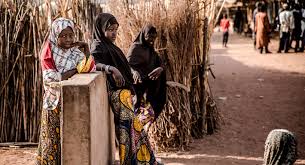
By: A G Abubakar
Fighting against injustice can be likened to being in a ring for a title fight. The boxer uses one hand to jab at the opponent, while keeping the other as a defensive shield. Only an unwise pugilist uses the two hands simultaneously. This strategy equally applies in the struggle for socio-political justice. Here, the defensive mechanism of the “agitator” is his economic independence and/or empowerment. A fallback position in case the process gets long drawn out.
Nothing undermines a victim’s struggle like having to depend on his perceived perpetratior or “marginaliser” for sustenance; the very phenomenon that has made the quest for equity by Borno South region for decades to be very elusive. A situation that has made an otherwise vibrant sets of people to progressively become onlookers in affairs of the very polity they call home. The region needs to rejig, before the agitation becomes all talk, lacking in internal capacity to drive it.
As a refresher, the heyday of the people of Southern Borno was during the era of the North Eastern state (1967-1976). The defunct state was one of the 12 that constituted the entire Federal Republic of Nigeria, and it comprised the current states of Yobe, Adamawa, Taraba, Bauchi, and Gombe. The surface area was so large that no single ethnic group could lord it over others. The Hausa, the Fulani, and the Kanuri in the North Eastern state had almost equal weighting. That provided the smaller groups with a wider surface area and opportunities to operate and thrive with minimum pushback, friction, or discrimination. No one group could claim the ownership of the polity.
Persons of Southern Borno extraction, along other minorities such as Minso Gadzama, Ibrahim Biu, Manasa Daniel, Muhammad Abba Gana, Musa Kida, Azi Nyako, A.D. Mamiso, Abubakar Barɗe, Yerima Balla, Yunusa Kaltungo, Shehu Awak, Maina Waziri, Adamu Fika, Zarma Gogaram, etc, played critical roles in the administrative system of the North Eastern state creditably. They were also never judged by their faith, tribal or idealogical inclinations.They were seen and treated simply as public servants contributing their quotas.
Two subsequent states creation exercises changed the plight of the people but not necessarily for the better. The excision of Bauchi and Gongola into independent states in 1976 invadently made the Kanuri the single most dominant group in successor Borno of 1976 and 1991. With this development came the agenda for the “Kanurisation” of the affairs of the state. It has since been an uneasy relationship between the minority tribes of Southern Borno and their majority Kanuri brothers.
Things came to the fore under the nation’s return to democratic rule in 1999. Democracy, as it were, is a game of numbers, and the Kanuri had left no one in doubt that it is willing to play the game to the fullest. The apparatus of governance and representation have all been skewed away from the South- at times with little sense of proportion or fairness. In a rush to entrench total dominance all known forms of iniquities like quarter, embargo, and suppressions are applied against people of Southern Borno extraction in the state service. Matters of employment, promotion, scholarships and the distribution of both social and physical infrastructure are done in discriminatory fashion.
The development is however consistent with two dictums; power blinds and absolute power blinds absolutely, and the other being, power when acquired, never let go voluntarily. At best, it can be negotiated. But never passed on a platter of gold, even among the minority groups themselves.
Ask the Babur and Bura people of Southern Borno if they would want to cede the deputy governor portfolio to other ethnic groups in the zone, and the answer may turn out to be emphatic, “not yet.” The same thing applies to Gwoza region with regards to the position of a Senator. That’s the reality of politics in Borno State and indeed the entire Federation.
The series of state creation by successive governments instead of addressing marginalisation simply created new tiers of majority groups who oppress some hitherto micro ethnic nationalities with vengeance. Its process unwittingly solved some groups’ problems while subjecting others to greater squeeze, especially under a democratic system, where economic deprivations are rife. As the socioeconomic challenges ensue politics and political power invariably become the most viable, and lucrative, channels of “making it in life” within the shortest possible time. People are forced by circumstances of poverty and ignorance to sell their conscience and rights for a bowl of porridge, called palliative. Voting is simply determined by the stomach.
Concerned individuals have been trying to think of a way out of the stifling situation via a call for a power shift or a new state. Power, can be made, to constitutionally rotate across the three senatorial districts in each or more states to be created. Either move however still requires tinkering with the constitution, which is an onerous task. The glimmer of hope is that Southern Borno is not alone in yearning for a start of its own- Savannah. Other groups (Ogun, Oyo, Imo, Enugu, C/Rivers, Kaduna, Kano, Adamawa etc), who also feel the pinch of marginalisation have been clamouring for a state too. Maybe when such groups team up together an answer can be gotten.The option within reach is to “engage” with the bigger stake holders to see the beauty of being their brothers’ keepers, to allow for power rotation. The current power sharing system in most states doesn’t seem to deliver equitable democratic dividends.
Before this epiphany the affected group (s) needed to get up and make do with their comparative advantages; manpower, fertile land, climatic conditions and drive. The people of the zone should stop playing the victim and leverage these advantages to move on. The journey of redemption may not be easy but many groups facing a similar daunting situation have turned their fortunes around by relying on their innate capacities.The Indians, the Lebanese and back home, the Igbo have been doing just that. It’s a matter of willpower , inspiration and a little shoulder to lean on.
Today, few Igbo chaps graduate and place their hopes on public service jobs. They are also not too fanatical about party politics as they are locked in the pursuit of business interests. They simply move out there and struggle as hard as they can. Most, eventually succeed and as such could lead a convenient life outside politics and politicking. Though at times they could operate unconventionally too, which should be avoided. Regardless, one cannot totally discount the catalytic role of government entirely, especially in the provision of the very basic infrastructure (power, roads, security, etc).These factors are crucial even for persons embracing self development. Be that as it may, people can start and make do with what is locally available, and affordable with the help of those in the “diaspora.”
The opportunities at home are in the areas of agriculture and livestock. Already Southern Borno is the food basket of not only Borno but the other neighbouring states of Yobe and Gombe. A little bit more of support with improved seeds, farm inputs and modern techniques can add enormous value to the local farmers. The culture of keeping birds (chicken), ruminants (goats, sheep etc), and fish farming. The Marghi Special, a fish-based menu is a well-known cousin across the country. In Abuja, a restaurant (Səm Msəra) that is biased towards Biu delicacies pulled a lot of patronage. Such endeavours and many others can be promoted and franchised.
Enhancing the acquisition of vocational skill among the youth in Southern Borno can be a source of both job opportunities and income. Already, major cities in the North like Kaduna, Kano, Abuja, Maiduguri and Jos host many well qualified automotive mechanics and furniture producers. The defunct Santana Furniture Factory in Maiduguri might have inspired the business. We will not forget the famous Ali Pindar Kwajaffah garage in Maiduguri or the Butu Ventures of Ibrahim Butu who pioneered the production of school chalks from local raw materials. The lessons in these areas should not be lost on the young generation. The drive should be maintained, expanded, and pushed further.
Southern Borno people have been trailblazers in the areas of health and education. The famous Mini Haha school in Maiduguri was established by Mr and Mrs. Dikko Askira in the 80s. It was the only private kindergarten in town. The Hərku Hospital in Biu was a pioneering effort too. If persons of Southern Borno extraction could do much things decades ago, there is no reason why the younger generation can not follow suit. The professionals and the well to do individuals should support interested persons to undertake such ventures. It’s a question of counselling, confidence building and access to concessionary resources. It is doable within and outside the State.
For the above initiatives to come to fruition there should be a massive programme of entrepreneurship knowledge impartation in the area. Here the elected members of the zone can play a huge role. Instead of distributing palliative only, they should restrategise their interventions to include well rounded and standard entrepreneurial programmes. They can back it up with starter packs where feasible. The approach can serve double purpose; political visibility and sustainable human development.
Thus, while the politicians keep playing their politics, let the creative energies of the generality of Southern Borno be redirected in economically rewarding activities. The factors and opportunities are all there for the taking. Enough of aspiring for Savannah and Power shift, without doing anything else, especially the much we can collectively do, internally. Let all the endeavours and yearnings go pari passu. It should not be a case of either/or. Again, the region, while acting local, should also keep thinking global.
The icing on the call for Borno South to take the bull by the horn would be the fledgling annual unity festivals of Kiɓaku Day, Marama Day, Minwara of Shani and many more in the pipeline. The yearly Summit too, can provide the necessary intellectual and political touches to the development train. With a prosperous Southern Borno even those hanging on to the status quo for pecuniary interests can afford to join the agitation for equity because they can derive similar benefits on the home front. The people can rise above marginalisation if they so choose to. Let the matching with over two million Southern Borno people begin.
A.G.Abubakar agbarewa@gmail.com
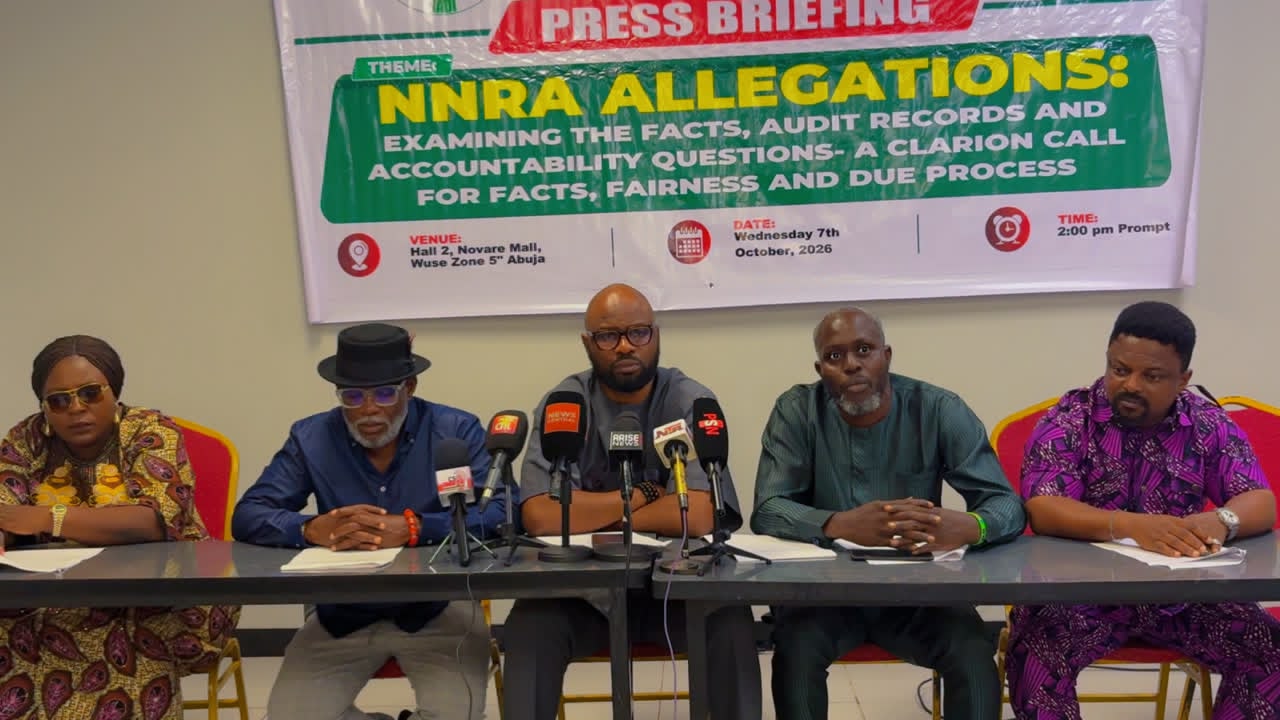
The Integrity Advocacy for Development Initiative (IADI) has called for a thorough, evidence-based examination of allegations of financial misconduct involving the Nigerian Nuclear Regulatory Authority (NNRA), warning against treating audit observations and media reports as established cases of fraud.
IADI Executive Director, Comrade Ofomhi Christopher, made the call on Wednesday at a press briefing in Abuja titled, “On the Allegations Concerning the Nigerian Nuclear Regulatory Authority (NNRA): Facts, Clarifications and the Need for Evidence-Based Accountability.”
The group was reacting to a publication by Secrets Reporters dated October 1, 2026, which alleged that about N6.69 billion was involved in contract fraud and misappropriation at the NNRA.
It also referred to a protest held on October 5 by Global Integrity Watch (GIW) at the NNRA headquarters, where the organisation demanded accountability, responses to audit observations and Freedom of Information requests, as well as changes in the leadership of the regulatory authority.
Christopher said while the allegations deserved scrutiny, they should not be treated as established facts without verification of the underlying records.
According to him, the public deserves to know the specific audit observations, periods and transactions involved, the nature of the contracts, the status of the projects or services, responses provided by the NNRA and whether the issues had been resolved or referred for further investigation.
“An audit observation is a serious matter requiring explanation and verification, but it is not, by itself, a judicial finding of fraud or personal misappropriation,” he said.
The IADI chief also referred to an explanation reportedly provided by the NNRA Director-General concerning the authority’s 2024 capital budget.
He said the explanation put the NNRA’s total 2024 capital budget at about N2.7 billion, comprising approximately N200 million belonging directly to the authority and about N2.5 billion for constituency projects, with an additional N200 million regional project bringing the figure referenced to about N2.9 billion.
Christopher, however, stressed that the explanation should not be regarded as conclusive, urging that it be tested against appropriation documents, budget releases, project records, procurement documents, payment records and audit reports.
“That is how responsible accountability should work: a claim is made, the response is heard, the records are examined, and the evidence determines the conclusion,” he said.
On allegations concerning unexecuted projects, the organisation called for physical verification of the specific projects, while allegations of inflated contract prices should be subjected to scrutiny of contracts, bills of quantities, procurement records and relevant price benchmarks.
It also urged that allegations concerning contractors be examined through relevant procurement and ownership records, while any claim of diversion or misappropriation should be established through the financial trail.
Christopher said where audit authorities had raised observations on expenditure, the public should be informed of the precise observations, the affected institution’s response and the current status of the issues.
The organisation also addressed the October 5 protest by GIW, acknowledging the constitutional right of civil society organisations to peaceful assembly and association under Section 40 of the Constitution.
It, however, urged CSOs to exercise such rights responsibly and within the law.
On Freedom of Information requests, IADI said there should be a distinction between the right to protest and the legal mechanism available where an FOI request is not answered.
The organisation noted that the Freedom of Information Act provides a judicial mechanism for applicants who have been denied access to information, adding that Section 20 allows an applicant to approach the court for a review.
IADI clarified that it was not suggesting that CSOs must obtain a court order before organising peaceful protests.
Rather, Christopher said, where non-compliance with an FOI request was the central grievance, the statutory and judicial mechanisms should be considered alongside legitimate civic action.
“An unanswered FOI request may justify further action to obtain the information. It does not, by itself, establish that fraud, misappropriation or any other wrongdoing has occurred,” he said.
The group also urged organisers of protests at government agencies to take public safety, access to government premises and the safety of protesters, workers and other citizens into consideration.
At the same time, it cautioned government institutions against using the possibility of confrontation as a justification for suppressing lawful civic expression.
“The answer to institutional disagreement should be law, evidence and due process, not intimidation or retaliation,” Christopher said.
He stressed that IADI was neither seeking to shield the NNRA from scrutiny nor dismiss legitimate questions concerning public expenditure at the authority.
He called on relevant audit and oversight bodies to state the status of the observations in question, the responses received from the NNRA and whether the matters had been resolved, sustained or referred for further investigation.
The organisation also encouraged CSOs pursuing accountability to make full use of available legal and institutional mechanisms while retaining their legitimate right to peaceful civic action.
“The public deserves accountability. But the public also deserves accuracy, fairness and evidence.
“A headline is not a verdict. An allegation is not evidence. An audit observation is not automatically a finding of personal guilt,” Christopher said.
He added that public institutions should not expect their expenditure to escape scrutiny merely because questions were raised through the media or civil society.
“Let the records be examined. Let the questions be answered. Let the evidence speak,” he said.
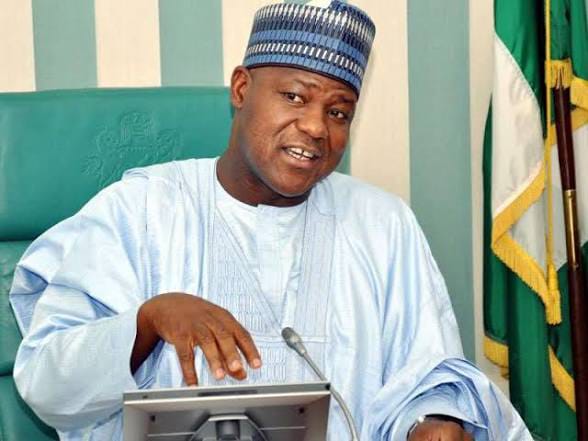
Former Speaker of the House of Representatives and Chairman of the Board of the National Credit Guarantee Company Limited (NCGC), Rt. Hon. Yakubu Dogara, CFR has expressed deep sorrow over the Nigerian Air Force aircraft crash that claimed the lives of 32 persons near Igbokoda, Ondo State. Dogara described the tragedy as a heartbreaking loss to the nation, noting that the deaths of the victims have left a painful void in the country’s defence and security community.
In a statement, the former Speaker extended his condolences to President Bola Ahmed Tinubu, Commander-in-Chief of the Armed Forces, the Nigerian Air Force, and the families of those who perished in the unfortunate incident.
He said the nation shares in the grief of the bereaved families and the Armed Forces at this time of immense sorrow, adding that the sacrifices of those who lost their lives in service to the country will not be forgotten. “The nation mourns with the families of the deceased and stands in solidarity with the Armed Forces during this difficult period,” Dogara stated.
He also commiserated with the Chief of Air Staff, officers and men of the Nigerian Air Force, praying that God grants them the fortitude to bear the painful loss.
According to him, moments such as this call for national unity, reflection and collective support for the families and institutions affected by the tragedy.
Dogara paid tribute to the victims, describing them as patriotic Nigerians whose commitment and service contributed to the security and stability of the nation. He further applauded the efforts of emergency responders, rescue teams and all personnel involved in the aftermath of the crash, commending their courage and professionalism under difficult circumstances.
The former Speaker prayed God to comfort their families, friends and colleagues.
He also offered prayers for the safety and protection of members of the Armed Forces and for continued peace, unity and progress in Nigeria.
The Nigerian Air Force aircraft crashed near Igbokoda, Ondo State, resulting in the death of 32 persons and plunging the nation into mourning. Authorities are yet to make public the cause of the accident as investigations continue.
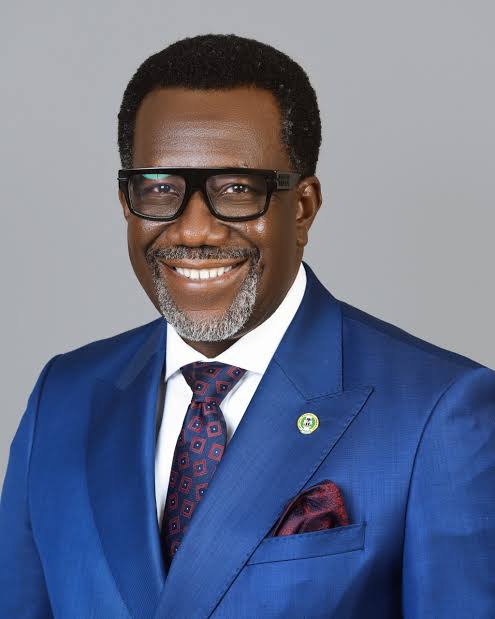
The Centre for Credible Reforms and Institutional Accountability (CCRIA) has commended the Commissioner for Insurance and Chief Executive Officer of the National Insurance Commission (NAICOM), Mr Olusegun Ayo Omosehin, for promoting transparency and accountability in the ongoing reforms of Nigeria’s insurance industry.
The centre said the implementation of the Nigerian Insurance Industry Reform Act (NIIRA) 2025 had ushered in a new phase of development for the sector, with stronger regulatory standards, improved capitalisation and greater emphasis on protecting policyholders.
Dr Aminu Abubakar Aminu, president of the centre, said this in a statement at the weekend.
Aminu commended President Bola Tinubu and the National Assembly for the enactment of NIIRA, describing the legislation as a major step towards addressing longstanding challenges in the insurance industry.
“The enactment of the Nigerian Insurance Industry Reform Act is a significant milestone in the development of Nigeria’s insurance sector. We commend Mr President and the National Assembly for recognising the need to modernise the legal and regulatory framework governing the industry. NIIRA provides the foundation for an insurance sector that is better capitalised, more accountable, more responsive to policyholders and better equipped to contribute meaningfully to the Nigerian economy,” he said.
The centre also praised Omosehin for his leadership of NAICOM, saying his extensive experience as an insurance professional had positioned him to effectively implement the new regulatory framework.
“We consider the appointment of Mr Olusegun Ayo Omosehin as Commissioner for Insurance and Chief Executive Officer of NAICOM a timely and appropriate decision. He is a seasoned insurance professional with many years of experience in the industry, and his understanding of the sector gives him the practical knowledge required to lead an important reform process of this nature. We commend him for the direction he has provided since assuming office and for his commitment to strengthening the industry,” Aminu said.
According to the centre, the ongoing recapitalisation exercise was among the important steps taken to strengthen the financial capacity of insurance companies and improve their ability to meet obligations to policyholders.
Aminu said the reforms were already producing early gains and should be sustained through consistent implementation.
“The early developments under NIIRA demonstrate that the reform is not merely a legislative exercise but a process capable of producing measurable improvements in the industry. Stronger capital requirements, improved supervision and greater attention to policyholder protection will ultimately create an insurance market that Nigerians can trust. We encourage NAICOM to remain focused on the implementation of the Act and to continue providing clear guidance to operators and other stakeholders,” he said.
The centre noted that the reforms would also help deepen insurance penetration and strengthen the industry’s contribution to national economic development.
It urged insurance companies, brokers, reinsurers, professional bodies and other stakeholders to embrace the new framework and work with NAICOM to achieve the objectives of the legislation.
“The success of NIIRA will require the cooperation of every stakeholder in the insurance ecosystem. Operators must see the reforms as an opportunity to strengthen their institutions, improve their services and regain the confidence of Nigerians. A well-regulated insurance industry can mobilise long-term capital, protect businesses and households against risks and support investment and economic growth. These are benefits that go beyond the insurance industry itself,” Aminu said.
Aminu emphasized that the centre was particularly encouraged by the emphasis on policyholder protection under the new framework, noting that public confidence remained critical to the growth of insurance in Nigeria.
He said Nigerians should be able to purchase insurance products with confidence that operators had the financial capacity and institutional structures required to honour legitimate claims.
The president further urged NAICOM to sustain its engagement with stakeholders while ensuring that the provisions of NIIRA were implemented transparently and consistently.
“What is required at this stage is continuity, professionalism and commitment to the objectives of the law. The reforms must be sustained beyond the initial implementation period so that the gains can become permanent features of the industry. We believe NAICOM, under the leadership of Mr Ayo Omosehin, has an important responsibility to ensure that the momentum is maintained, and we encourage all stakeholders to support the commission in delivering on this mandate,” he said.
The centre said the successful implementation of NIIRA would strengthen confidence in the insurance sector, improve the protection available to policyholders and position the industry to play a greater role in Nigeria’s economic transformation.
It also called for continued collaboration between NAICOM, insurance operators and other stakeholders to ensure that the objectives of the new law were fully achieved.


NNRA Allegations: IADI Demands Evidence, Says Audit Queries Not Proof of Fraud

Alao-Akala’s Widow Urges Full Implementation Of LG Autonomy

PRESS STATEMENT BY AREWA DISCUSSION GROUP TITLED; PHRANK SHUAIBU: THE FACE OF A DUBIOUS, ROGUISH MERCHANT OF COUNTERFEITS

-
 Uncategorized6 years ago
FG, states urged to harness flooding for ranching, others with technology – Agbaje
-
 Headlines11 years ago
Breaking: EFCC seals Borno House of Assembly, as Hon members take to their heels
-
 News12 years ago
Nigeria Security Operatives Stage Manhunt For Homosexual Perpetrator
-
 News10 years ago
How 21-year-old Girl fled community over accusation of lesbianism
-
 News11 years ago
Yobe Gov Moves Against Deputy
-
 Opinion7 years ago
7 signs she has friend zoned you
-
Technology5 years ago
Online job placement company headhunts women
-
 Headlines10 years ago
Borno Dep Gov Abducts Another Church Leader