
Crime
THE ELLUSIVE PEACE ON THE PLATEAU AND THE WEAPONIZATION OF RELIGION AND ETHNICITY (A REHASH)

By: A G Abubakar
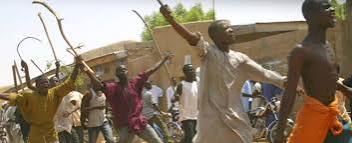
The perennial crisis on the Plateau reared its ugly head once more just days ago, leaving in its trail deaths, destruction, and despair. By the last count, more than 100 people have lost their lives across Bassa, Riyom, Bokkos, and Barkin Ladi areas, with thousands more pushed into protective Camps. An estimated 64 settlements are also believed to have been dislodged and/or razed down.
The jolt in the semblance of peaceful coexistence in Plateau State happened after a couple of years lull; a welcome interlude that many saw it as a harbinger of sustainable peace and the return to normal life. The renewed hope proved short-lived, as politics, economy, and ethnicity kicked in to rupture the growing optimism. Religion in the circumstance is employed as a “smokescreen” largely to cover up the unseen hands of the economic challenges most of the warring communities have been undergoing for decades.
When the essence of religion, such as seeking the Almighty’s eternal salvation and peaceful coexistence, while on earth, are twisted for individual or group interests, the consequences are usually grave. Not surprising, in the league of the top 30 most prayerful countries (Christian and/or Muslim majority), in the world, according to Pew Research Centre, the 10 least developed and least stable are all members. They include, and in no particular order, Ethiopia, Somalia, Haiti, Niger, Nigeria, Bangladesh, Tonga, DRC, Afghanistan, Armenia, Burundi, etc. The exceptions like Indonesia, Iran, Algeria, and Ghana may have imbibed the divine injunctions of “work and worship” instead of trading blame games. It is an established fact that there is a direct causal correlation between poverty (or its perception)and civil strife!
Groups that have axes to grind with each other resort to faiths because it is an emotional thing. It is usually deep seated with a wider scope of appeal. This is unlike the real trigger of such crisis, which is the economy and its attendant challenges of living. Though the phenomenon is pervasive, especially across parts of the North, it became virulent in diverse communities/environments like on the Plateau. It creates a perception of deprivations among one group and a delusion of success in the other. In truth, and like most societies in Nigeria, people are more united by the poverty they experience on a daily basis than by individual or group prosperity. The difference, if any, is without distinction, especially when gauged by the conventional human development indices that include health, education, and standard of living.
There is no empirical evidence that sets the people diametrically different on the Plateau along these parameters. The differences may have to do with worldview or cultural outlook. So why all the bad blood? The answers lie in politics in diversity and economic deprivations! Religion is used as a weapon against imaginary enemies for taking lands and economic opportunities that they shouldn’t. A look at the experience of the Southwest part of Nigeria with regard to religious harmony could offer some vital lessons. The history and the practice of Islam among the Yoruba, to be specific.
The Yoruba Religious Tolerance Model
In matters of ethno-religious relations, the Yoruba model of tolerance comes in handy. With modifications, of course, depending on where one’s sectarian inclination lies. Plus, the fact that poverty is not endemic among the Yoruba. Nor ethnic diversity as well. The bond of kinship and tradition among the Yoruba surpasses that of the Islamic or the Christian faith, in contrast to what obtains in the North even though the two had contact with Islam at about the same period of time.
The Yoruba contact with Islam came through the old Mali Empire, which was why they referred to Islam as “Esin Imale.” That was as far back as the 14th century. In fact, the first set of mosques in Yoruba land was built in Oyo-Ile and Iwo in 1550 and 1655, respectively, earlier than most parts of the present-day Muslim North, except and perhaps Sokoto, Kano, and Borno enclaves. These areas embraced the religion, though nominally in some cases, as far back as the 12th and 14th centuries. Outside the mentioned axis, the effective spread of Islam took place in the 18th and 19th centuries.
In the Yoruba land of western Nigeria, Islam and tradition have been coexisting harmoniously ever since. The reason for this may not be unconnected with the variant (sect) of Islam generally being practised, which is the Sufi Order (Ɗariƙat Ahamadiyya, TijjaniyahQadriyyah etc). A lot of the tenets of the order have been found compatible with the Yoruba cultural dispositions. The Yoruba “Ifa” divination was subtly replaced by the Muslim “Alfa,” a trado-muslim clergyman who, like the Babalawo, prepares charms/ amand concoctions for persons seeking success and protection in life. In the North, they refer to the “Malaman Tsubbu,” and they are commonplace too. The practice of polygamy, equally practised by the Yoruba, was allowed under Islam only that Islam limits the number to a maximum of four.
Thus, today, religious differences never really mattered in Yoruba land. The Yoruba may believe, and rightly too, that the ultimate redemption (shiriya, rahama) of individuals comes from the Almighty Creator.
The Plateau And The Sectarian Experience In The North
To some extent, the same disposition generally obtained in the North until the coming of the Jihadist reform of the Dan Fodio in the 19th century, precisely in the year 1804, who strived for the purification of the Islamic practice in the Hausa land and its environs. A reform that resonated with later day islamic movements in the 20th century in Nigeria. The Izala salafist group based in Jos happened to be one of them.
The two events (the Fulani Jihad and growth of Salafism) reshaped and continue to reshape the practice of Islam in parts of Northern Nigeria. And one of the driving force behind the Salafism philosophy in Nigeria is the Jama’atu Izalatil Bid’ah wa Iqamatus Sunnah (JIBWIS) popularly called the Izala movement, founded in Jos in the late 70s by an Islamic scholar named Sheikh Ismaila Idris (1930-2000). The Movement later got enormous boost through the teachings and tacit support of Sheikh Abubakar Gumi (Kaduna) and later by the likes of Sheikh Ja’afar Mahmud Adam, a Kano-based Islamic claric. Both of blessed memories. The city of Jos was created by the Colonial Administration in aid of the tin mining activities in the area. “It was a virgin land among the Anaguta and the Afizere natives.
Typical of most Hausa and Muslim settlements, a leader called “Sarkin HausawanJos was appointed to manage their (community’s) affairs” (Krause, General Declaration paper, 2011). The native Berom then were living in decentralized clan- based acephalous we settlements on the Jos Plateau with no central authority. In fact, the defunct Jos and Pankshin Divisions up to 1921 (or 1926) were then under Bauchi Providence. The first traditional ruler (Gbong Gwon) of Jos, Da Rwang Pam, a Berom from one of the settlements, was appointed by the then Colonial AD in 1947 and directed to come and settle there (Jos) according to one of his sons, Mr. Pam Rwang Pam (May 2016).
Before the relocation of the Gbong Gwon to Jos, there was already a sprawling “settler” enclave populated by Hausa, Fulani, Igala, Nupe, Igbo, Yoruba and others. It was from this settlement that the Izala Movement was founded. As it were, the Muslim community on the Jos Plateau is a small one amidst the larger non-Muslim Berom natives. The community (Hausa, Fulani, Kanuri, Babur, and others) came to the Jos Plateau largely in pursuit of economic opportunities in the tin mining industry, which the plateau was famous for. With the economic empowerment, the “tiny” Muslim community started turning and terming Jos “home” to the chagrin of the natives who were largely laid back and less involved, business wise. Soon, perception based envy and push-back soon set in.
The Uneasy Calm
A perception soon manifested of a tiny economic emigrant group lording it over a vast sea of less prosperous natives. Thus, the age long peace on the Plateau soon started rupturing, triggering a series of violent crises. The two neighbours increasingly became arch enemies. In the ensuing battle for supremacy, the sides resorted to cultivating platforms and rallying points to secure advantage. Appealing to religious, political sentiments as wall. ethnicity became a potent strategy. The most lethal and effective one turned out to be “religion.” It soon got weaponized.
In a diverse and highly fragmented environment, no single group can successfully push its micro agenda in relation to larger competing interests. Plateau happened to be one of the most diverse states in Nigeria in terms of tribes and faith. Religious fraternity, thus, provides the best source of strength and self-preservation in number for both the autonomous communities and “settlers” alike.
The Izala, the Church/CAN, and other groups took side with their faithfuls in the deadly game of reprisals or “push me I push you” between the “indigenes” and the “settlers” The Berom consider themselves the “hosts” and the Muslim (Hausa, Fulani, Kanuri, Babur, and other faithfuls) community the “guests. ” The former maintained that the guests have no place in the history of Jos, talkless of right. The resultant violent crisis has since pitched entire Muslim against the majority Christian group in the Plateau State as a whole, needlessly. And since then, the Ethno-religious embers have been fanned to in and outside the Plateau. A move that kept exacerbating the conflict in both frequency and intensity. Marauding herdsmen and Christian/local militia soon became integral of the carnage to continue to give it a dangerous religious/ethnic coloration and context, away from the basic root cause which was economic with sprinklings of partisan politics. And the consequence? continuous bloodletting, needlessly.
The Needless Carnage In Figures
The recent bloodbath that took the lives of over 100 people is the latest in the long chain carnage. According to the Plateau State Peace Building Agency (PSPBA Report), between 1994 to 2020 the state witnessed over 70 cycles of violence that consumed tens of thousands of lives aside the destruction of properties worth billions of naira. While the parties to the crisis are fully aware that economic well-being is the issue at stake they chose ethnic-religious sentiments for appeal. And this, they did successfully and effectively as well. They gave a socioeconomic fight a spiritual content that sucked in the innocent in droves, including successive governments in the state.
The failure to appreciate the economic context of the crisis that has largely been responsible for the many rounds of failed Peace Initiatives and Summits regarding the challenges on Plateau. Such initiatives include the Obasanjo interventions and the eventual declaration of state of emergency in 2004 and the appointment Gen. Alli as Administrator. Before then, there was an Arewa Conssultatuve Forum (ACF), Peace Misson led by former IGP Coomassie (rtd) in 2001. Many other low-level initiatives were also mounted, all with a view to finding a lasting solution for the Plateau challenges. The outcomes weren’t cheering.
At a point, Obasanjo, the then President of country in a fit of frustration with the leadership (s) in the state, including that of the CAN and made the unfortunate remark, “CAN-my-foot.” More than one and a half decades down the lines, things have failed to change for the better. Mistrusts, distrust and missteps in governance even on the part of government have undermined the search for peaceful coexistence. For instance the current governor, Mutfwang, in an attempt to address one of the series of convulsions decided to constitute a security committee of about a dozen persons to work but unfortunately failed to include individuals from major groups to the crisis.
He also failed to make the committee reflective of the very religious diversity that was used to fan the embers of problem. The committee thus had all Christians as members with AVM Napoleon Bali (rtd) as Chairman and Arc. Samuel Jatau the Secretary to the Government as Secretary. There was no representation from the other divide (the Hausa, Fulani, and Muslims in general), yet the Committee was tasked with finding a lasting peace between the warring groups. It is simply a case of attempting to fly with one wing. The committee failed. In searching for peace this type of “oversight” should be have been avoided. No matter His Excellency’s misgivings with the other parties, he should position himself as a father to all. That is what leadership is about. A coach may not like some of his best players but he still fields them because he is looking for a positive results- a win. He should rise above petty emotional sentiments bandied around him by the warring parties, and just do the needful.
Economic Empwerment Is The Way To Go
Plateau people deserve peace. Governments at all levels would do well to educate people on this tricky aspect of the conflict to curtail it from becoming a religious war across the country. The move, too, should be backed by a robust program of poverty reduction and political equity. For, poverty, injustice, and ignorance are threats to peace, especially in diverse settings like the Plateau State and indeed anywhere else. They are strange bedfellows.
Jos, the Plateau State capital used to be the third most industrialised enclave in the North after Kano and Kaduna. It was the home of the popular Nasco Group of industries that produced a wide range of household items. The Jos International Breweries (JIB) and other beverage producers were also famous. Jos was also a foremost centre for woodwork where bodies (bodin katako, kpako bodi) for trucks (Benz 911, Ford, Leyland, etc) and allied vehicles were mounted.
The near temperate weather on the Plateau supports agricultural activities all year round where ornamental fruits like apple, berries, grapes, etc. thrive well. With a well tailored empowerment programme in vocational skills acquisition, entrepreneurship in running micro and small businesses, and micro credit, a lot of persons drawn into the conflicts would be pulled away from it. In years gone, the Plateau youth used to come to the top among the Northern states during national sports and games because of its high altitude, especially in the marathon. This is aside being one of the best tourist destinations in the land.
In soccer, the Mighty Jets FC, along with the JIB and Standard teams, made waves in the Nigerian leagues. The Mighty Jets FC was, in fact, part of the three-horse race that dominated the soccer scenes in the 60s, 70s , up to the 80s. The other two teams were the IICC of Ibadan and the Rangers International of Enugu. These and more, shall however, require a generous political willpower on the part of the government and other stakeholders to revive and/or promote. Above all, there was the Nigeria Electricity Supply Company (NESCO) based in Jos, which used to be a very reliable power provider to drive the process.
The government at the centre, too, should enhance its security operations to create the needed enabling environment. The dream of the economic empowerment should be accompanied by the effective degradation of the various criminal elements. All hands should therefore be on deck, in Plateau State and indeed other parts of the country to make this possible. In the same vein the goverment should pay greater attention to the inflow of “third parties” (herdsmen, jihadist-insurgents) from neighbours, Niger, Cameroon, and Chad into the Plateau. The same thing goes for the meddlesome, if not dubious activities of some foreign diplomatic agents – envoys and “doners”- in the theatre of conflicts in and outside the state. Security is the number one directive principle of state policy and governance the world over. Plateau people deserve a sustainable peace.
A.G.Abubakar
agbarewa@gmail.com
Crime
Banditry: Victims’ Families write President Tinubu Over Turji’s Confession, Demand Former Govs Yerima, Bafarawa’s Arrest.

Bothered over persistent insecurity across the country, a coalition of families torn apart by rampant banditry in Northwest Nigeria has appealed directly to President Bola Tinubu to investigate serious allegations against two former governors.
The Coalition of Families Affected by Banditry, representing victims who have lost loved ones, homes, and livelihoods to relentless violence, has written a letter to the President in Abuja.
Exhausted by domestic inaction, they called on the President to help uncover the truth behind claims that policies under former Zamfara Governor Ahmed Sani Yerima and former Sokoto Governor Attahiru Bafarawa laid the groundwork for the region’s insecurity through the seizure of grazing reserves and arming of vigilante groups.
In the letter signed by Chairperson Otuba Rawene, Secretary Sani Usman, PRO Haj. Hadijat Abdullahi, and 20 others, the group said: ” Many of us have lost loved ones in brutal killings, seen family members abducted, or been forced to flee our homes, leaving behind livelihoods and communities destroyed by violence.
“We write to Your Excellency with a profound sense of urgency and responsibility, seeking your support in addressing grave allegations recently made public by notorious bandit leader Bello Turji.
“In a widely circulated video released in December, 2025, Turji accused former Zamfara State Governor Ahmed Sani Yerima and former Sokoto State Governor Attahiru Bafarawa of laying the foundations for the current insecurity crisis.
“Specifically, he claimed that their policies— including the seizure and sale of grazing reserves and the arming of vigilante groups that targeted Fulani communities ignited ethnic tensions and cycles of reprisal violence that evolved into today’s widespread banditry.
“While we acknowledge that Bello Turji is a wanted criminal responsible for countless atrocities, including the deaths of many of our relatives, we believe these allegations warrant serious and impartial scrutiny.
“As the proverb goes, ‘where there is smoke, there is fire.’ Having exhausted domestic avenues for justice often met with inaction or allegations being dismissed we turn to the President, a steadfast champion of human rights and accountability, as our last hope for uncovering the truth and ensuring justice prevails.
“The scale of suffering caused by banditry in Northwest Nigeria is staggering and demands international attention.
Reliable reports indicate thousands of civilian deaths, mass displacements, and profound economic devastation. For instance, between 2018 and 2020 alone, armed banditry caused at least 4,900 deaths.
“In the first half of 2025, over 2,266 people were killed by insurgents and bandits, surpassing the total for all of 2024. Recent data document thousands abducted annually, with verified ransom payments reaching billions of naira (e.g., N2.57 billion between July 2024 and June 2025).
“These attacks have displaced hundreds of thousands, disrupted agriculture and trade, deepened poverty, and inflicted lasting trauma on survivors. Communities live in constant fear, with bandits imposing illegal levies and operating with impunity.
“As victims seeking justice and an end to this cycle of violence, we implore the Nigerian government to publicly to launch a prompt, independent, and thorough investigation into Bello Turji’s allegations against the named former governors. Offer technical assistance or support international oversight to ensure the probe is credible and free from political interference.
“Advocate for broader measures to address impunity, including sanctions if evidence of complicity in serious crimes emerges. We firmly believe that accountability for those who may have contributed to this crisis regardless of their status is essential to breaking the cycle of violence and restoring peace.”

This is certainly not a good time for the Lagos State Police Commissioner, Mr. Moshood Jimoh as he has been dragged to court for commiting contempt by defying a clear court order that he and his men must not go near the business premises of Nestoil Group which belongs to Drawcok Estates LTD.
The fresh suit by Drawcok Estates LTD followed Monday’s deployment of over fifty armed police officers by Mr. Moshood Jimoh to seal off the business premises of Nestoil Group which belongs to Drawcok Estates LTD despite an order by Justice Ofili Ajumogobia.
Also, despite a directive by the federal government that police escorts be withdrawn from VIPs, Mr. Moshood Jimoh illegally allocated several police officers to be guarding Mr. Sulu Gambari, the self-acclaimed Receiver Manager which was appointed by a former judge that was handling the case, Justice Isaac Dipeolu.
Recall that Justice Daniel Osiagor of the Federal High Court in Ikoyi vacated all the orders made by Justice Isaac Deinde Dipeolu who wrongly appointed the Receiver Manager.
Meanwhile, dissatisfied with the action of the Lagos Police Commissioner, Drawcok Estates LTD yesterday filed a case of contempt against the Lagos State Commissioner of Police, Mr. Olohundare Jimoh Moshood (Contemnor) before a Federal High Court in Abuja.
In Suit No: FHC/ABJ/CS/2385/2025, the applicant wants Police Commissioner Moshood Jimoh to be found guilty of contempt of court and also be committed to prison unless he obeys the directives contained in Justice Ofili Ajumogobia’s Order of November 24, 2025.
Recall that Justice Ofili Ajumogobia had on November 24, 2025 ordered that the building in question belongs to Drawcok Estates LTD, adding that no police officer must be seen carrying out orders of the Lagos State Police Commissioner around the premises.
The Orders made by Justice Ofili Ajumogobia on November 24, 2025 in suit number FHC/ABJ/CS/2385/2025 were that:
The applicant has a right to own and possess her properties as mentioned in the addresses above as guaranteed by the 34 Constitution of the Federal Republic of Nigeria, 1999 as amended and the African Charter on Human and People’s Rights..
That the sealing-off and occupation of the applicant’s properties on the addresses mentioned above by the Respondents constitute an infringement on the right of the applicant to own property, as guaranteed by Sections 43 and 44 of the he Constitution of the Federal Republic of Nigeria, 1999 as amended.
That the Respondents, whether by themselves , their agents, agencies and servants, acting for it through them or any other person(s) howsoever described or claiming through them, to vacate the applicant’s properties on the addresses mentioned above, and deliver possession over to the applicant forthwith.
That the Respondents, whether by themselves, their agents, agencies, and servants, acting for or through them or any other person(s) howsoever described or claiming through them, to provide security for the applicant to take back possession of her properties on the addresses mentioned above.
That the Respondents is restrain, whether by themselves, their agents, agencies and servants, acting for or through them or any other person(s) howsoever described or claiming through them, from harassing the applicant and refusing her access to her properties on the addresses mentioned above.
Nigerian Concord Newspapers reporters that visited the business premises yesterday reported that pollice officers have been denying workers of several companies access to their offices located within the Nestoil building in Lagos on the order of Moshood Jimoh, despite a subsisting court order directing that they be allowed into the premises.
The affected workers had resumed duties following a court order delivered by Hon. Justice Ofili Ajumogobia of the Federal High Court, Abuja on November 24, which directed that they be granted access to their offices.
By: Fabian Apechihin
The Kebbi State Police Command has confirmed that 25 female students were abducted and one person killed during an attack on Government Girls’ Comprehensive Secondary School, Maga, in Danko/Wasagu Local Government Area.
Police spokesperson CSP Nafi’u Abubakar said the attack occurred around 4 a.m. on Monday when heavily armed bandits stormed the school, firing sporadically.
According to Abubakar, police tactical teams were deployed immediately after a distress call and engaged the attackers in a gun duel. By the time security operatives arrived, the bandits had already scaled the school fence and abducted 25 students from their hostel.
He confirmed that one person, identified as Hassan Makuku, was shot dead, while another victim, Ali Shehu, sustained a gunshot wound to his right hand.
Abubakar added that additional police units, soldiers, and vigilante groups have been deployed to track the bandits and rescue the abducted students. Security teams are currently combing nearby forests and possible escape routes.
He urged residents to remain calm, stay alert, and cooperate with security agencies as operations continue.

WHO: Nigeria Records Zero Ebola Cases After Evacuation of Swiss Couple

Kwara celebrates Fela’s legacy with retrospective exhibition

2027: Ilorin West LG Boss Leads APC Mega Rally In Ubandawaki

-
 Uncategorized6 years ago
FG, states urged to harness flooding for ranching, others with technology – Agbaje
-
 Headlines11 years ago
Breaking: EFCC seals Borno House of Assembly, as Hon members take to their heels
-
 News12 years ago
Nigeria Security Operatives Stage Manhunt For Homosexual Perpetrator
-
 News10 years ago
How 21-year-old Girl fled community over accusation of lesbianism
-
 News11 years ago
Yobe Gov Moves Against Deputy
-
 Opinion7 years ago
7 signs she has friend zoned you
-
Technology5 years ago
Online job placement company headhunts women
-
 Headlines10 years ago
Borno Dep Gov Abducts Another Church Leader