
China
The intelligent economy: A new engine for China’s development

By Jin Xuan
Artificial intelligence (AI) is reshaping economic and social development at an unprecedented pace and scale, yielding profound and far-reaching impacts.
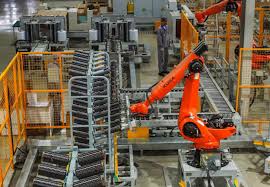
A newly released Chinese large language model draws developers from around the world; smart vehicles travel along urban roads; robotic arms work with precision on factory floors; and driverless mining trucks move through underground mines.
A new form of the economy, driven primarily by AI and encompassing a wide range of activities in production, distribution and application, is taking shape at an accelerating speed.
In recent years, China’s intelligent economy has expanded rapidly, improved significantly in quality and continued to optimize its structure.
On one side, the intelligent economy drives the industrialization of AI, turning advances in AI technology into industrial applications and building a growing core AI industry.
On the other, it promotes the intelligent transformation of industries, using the “AI Plus” initiative to bring AI applications into the real economy and drive its transformation and upgrading.
The intelligent economy is a towering structure, while algorithms, computing power, data and energy form its foundation. Only with a solid foundation can the intelligent economy grow and thrive.
Today, China’s domestic large AI models are advancing rapidly in a competitive race, with homegrown foundation models ranking among the world’s leading offerings. China is helping lead the development of the global open-source AI ecosystem, and Chinese open-source models rank first worldwide in download volume.
The country’s total intelligent computing capacity ranks second globally, while computing clusters with over 10,000 accelerators being deployed at an accelerating rate. China’s data resources system is becoming more robust, with 120,000 high-quality datasets already established.
The country’s energy infrastructure provides ample supply: China generates about 1/3 of the world’s electricity and has built the world’s largest and fastest-growing renewable energy system. Deeper coordination between computing infrastructure and power supply is enabling a steady flow of green electricity, giving China an important advantage in AI development.
China’s AI industry has maintained annual growth of more than 20 percent for consecutive years, building a comprehensive industrial ecosystem spanning foundational resources, technologies and models, and industry applications.
The value of the intelligent economy lies not only in creating new industries, but also in transforming existing ones. While AI first gained widespread adoption in areas such as the internet, it is now rapidly becoming integrated into key production processes across traditional industries.
Intelligent upgrades are enabling large amounts of previously underused production capacity to meet overseas demand for customized products at scale and with greater efficiency. AI cuts power grid dispatch cycles from hours down to minutes, helping tackle the problem of renewable energy consumption amid massive grid integration.
At unmanned ports, massive cargo ships can start operations immediately upon berthing, and cargo gets transferred right after arrival. This embeds “China efficiency” into key global shipping hubs.
Historical evidence shows that breakthroughs in technological capability consistently create new pathways for economic expansion. The next phase of AI industrialization holds substantial promise. AI agents are evolving from content generation tools into autonomous task executors, while humanoid robotics are advancing from demonstration stages to practical industrial deployment.
By combining China’s vast market demand and diverse application scenarios with its strong manufacturing capabilities and varied business models, the country can foster a wider range of industrial applications and nurture more world-class companies. By the end of the 15th Five-Year Plan period (2026-2030), the size of industries related to AI is expected to exceed 10 trillion yuan ($1.49 trillion).
The potential for intelligent transformation across industries is equally significant, with upgrades offering scope for growth many times over.
China’s manufacturing sector has ranked first globally in overall scale for 16 consecutive years. Every one-percentage-point increase in the adoption of AI across manufacturing would bring thousands of industrial enterprises above the designated size into the ranks of intelligent production. Smart cars, smart homes and other applications will also unlock new sources of growth.
According to a policy paper released by the State Council on thoroughly implementing the “AI Plus” initiative, by 2030 AI will comprehensively support high-quality development in China, with adoption rates for next-generation intelligent terminals and AI agents exceeding 90 percent. The intelligent economy will become a major growth driver for China’s economy.
The outline of China’s 15th Five-Year Plan calls for the comprehensive implementation of the “AI Plus” initiative and stresses the need to seize the commanding heights of AI applications in industry and empower industries across the board.
To develop the intelligent economy, China will pursue a coordinated approach that combines targeted breakthroughs, stronger links across the system and broad-based application.
At the level of individual technologies, China will focus on key areas and make breakthroughs in critical core technologies. At the level of industrial coordination, it will strengthen synergies among essential factors of production and establish a robust system of production factors suited to the needs of the intelligent economy. At the level of broad-based application, it will tap into ubiquitous real-world scenarios and leverage the advantages of China’s enormous market to accelerate the deployment of AI solutions.
By strengthening technological capabilities, the supporting ecosystem and real-world applications in an integrated manner, China will continue to expand, improve and strengthen its intelligent economy.
By Hai Sheng
China’s homegrown supercomputer LineShine has retained its title as the world’s most powerful supercomputer in the latest TOP500 ranking, following its debut at No. 1 in June 2026.
The repeat win further underscores the leading edge of Chinese supercomputing, with LineShine outperforming the U.S. runner-up, El Capitan, by roughly 21 percent in sustained double-precision performance.
Hailed as the “crown jewel” of computing and an “engine” of sci-tech breakthroughs, supercomputing is widely applied in weather forecasting, engineering simulation, materials science, and drug discovery, among other fields. As a result, it has consequently become one of the fiercest arenas of international technological competition.
In the 1980s, high-performance computers imported into China had to be housed inside transparent glass rooms, with foreign personnel holding the keys and vetting all computing data. This episode has long served as a driving force behind China’s homegrown supercomputing sector.
Over the following decades, China’s homegrown supercomputers made rapid strides.
With the successive debut of the Sugon, Tianhe, and Sunway series, China joined the small group of nations capable of developing high-end computing systems.
Supercomputers such as Tianhe-2 and Sunway TaihuLight have repeatedly topped the TOP500 ranking. Yet as the external environment changed, China’s supercomputing sector was hit with severe technological blockades, becoming one of the most heavily restricted fields.
Despite these challenges, China’s progress in supercomputing never stalled.
Lu Yutong, chief designer of LineShine, said in an article that the team rebuilt an independent, controllable, secure, reliable, and sustainably evolving technological roadmap for supercomputing through long-term investment and sustained breakthroughs.
LineShine’s systemic innovation spans the entire chain, including chips, networking, storage, system software, and the application ecosystem.
By integrating matrix acceleration units directly into the CPU, the architecture gives processors built-in acceleration capabilities. The design achieved a leapfrog breakthrough without using a single GPU, while offering a new paradigm for next-generation platforms that integrate supercomputing with intelligent computing.
In addition, by combining homegrown high-bandwidth memory, proprietary high-speed networking, and a fully self-developed software system, LineShine has moved beyond isolated breakthroughs into a complete, self-reliant system. Retaining its global No. 1 title once again proves the machine’s real-world performance and stability.
Beyond retaining its title as the world’s most powerful supercomputer, LineShine stands out in other ways.
A homegrown supercomputer’s true strength lies not just in its performance, but also in practical use. LineShine has supported 22 large-scale applications involving more than 10 million processor cores each and has been adapted to run more than 220 specialized software applications.
Looking ahead, efforts will focus on extending the industrial chain, weaving digital technology more deeply into the real economy, and steadily turning the computing strengths into development advantages.

By Han Shuo, People’s Daily
China launched the Shenzhou-24 crewed spaceship on Nov. 25, sending three astronauts, including a Pakistani payload specialist, to its orbiting Tiangong space station.
The joint flight has drawn global attention. As the first foreign astronaut in China’s manned space program, Pakistani astronaut Muhammad Zeeshan Ali served as a payload specialist on the mission. This flight represents a major milestone in China’s efforts to build a community with a shared future in outer space and writes a new chapter in space exploration.
The mission also marks a long-cherished dream finally coming true for 250 million Pakistanis. It represents another step forward for China’s manned space program and a monumental first step in Pakistan’s space history. Pakistani Prime Minister Shehbaz Sharif described the mission as a defining moment in Pakistan’s journey toward space exploration.
In space cooperation, polar expeditions, and deep-sea scientific research, should humanity choose competition or cooperation? The precious ticket to space for the Pakistani astronaut offers China’s answer to the world.
China’s space station opens its doors to the entire world. It is hoped that more international astronauts will follow suit, join the cause of space exploration, and work together for the well-being of all humanity, Ali said.
Since the Soviet cosmonaut ushered in the era of human spaceflight in 1961, astronauts from dozens of countries have traveled to space, yet only a handful of nations possess the full capability to independently conduct manned launches. For the vast majority of developing countries, constraints in technology, funding, and infrastructure create a nearly insurmountable gap on the path to space.
China-Pakistan cooperation in manned spaceflight has forged a model that the international community can draw upon. The two countries have already successfully launched nine satellites together, completing missions in communications, Earth observation, remote sensing, and lunar exploration, laying a solid foundation in the aerospace sector.
Pakistan-China space cooperation fully shows that cutting-edge technology can indeed become a shared asset benefiting all of humanity. It sets a replicable benchmark for the Global South to participate in frontier scientific exploration, said Sultan M. Hali, a Pakistani political and strategic analyst.
The vast universe knows no borders and outer space is the common domain of humankind. Exploring the cosmos is a dream shared by all people. Advancing the aerospace cause is not a race to see who can go faster, but a test of whether we can go further together.
Breaking down barriers to cooperation requires vision and magnanimity. As the ancient Chinese saying goes, “Looking up, I see the immensity of the cosmos; bowing my head, I look at the multitude of the world.”
As crewed spaceflight and deep-space exploration accelerate, growing emphasis must be placed on ensuring equitable access to scientific and technological advancements for developing nations.
China welcomes its international counterparts to join in the flight missions of the country’s space station. This stance reflects the responsibility of a major country.
Expanding the boundaries of cooperation requires capability. China’s space station is open to all United Nations members, with scientific research projects from 17 countries already selected. The BeiDou Navigation Satellite System serves more than 140 countries and regions worldwide.
Meanwhile, China’s lunar research samples are open and shared with global scientific institutions. The country has jointly developed Earth-resource satellites with Brazil, using the data to protect the Amazon rainforest ecosystem. China has assisted Egypt in building capabilities for satellite assembly, integration, and testing.
As China’s space resources and technological capabilities continue to grow, it consistently shares the fruits of its development with other nations.
The stars and the sea are the common wealth of all humanity. Humanity’s march toward scientific and technological progress is, ultimately, a long journey taken hand in hand. As humankind enters an era of more advanced technology, ensuring that public technological goods benefit more developing countries is a pressing imperative in global governance.
Space exploration is for a better future for all humanity and represents a vivid practice of building a community with a shared future for mankind, Ali said, adding that he looks forward to gazing down at Earth from space, searching for the lights of his homeland, and recording the experience to share with everyone.
By Gu Yekai, People’s Daily
Recently, Chinese artificial intelligence (AI) startup Moonshot AI released the full model weights of Kimi K3.1 Pro. This open-source model, the largest in the world by parameter scale, has sparked widespread discussion across the tech community.
Since the beginning of this year, a growing number of Chinese technology companies have launched open-source AI models, achieving continuous breakthroughs in both parameter count and technical depth.
Unlike in traditional software, “open source” in the context of AI models primarily refers to “open weights.” Simply put, if an AI model is a brain holding vast stores of information, “weights” are the hundreds of billions of parameter values wired inside it. These parameters encode the linguistic patterns, reasoning abilities, and knowledge the model acquires through training.
Open-weight models allow users to download the model, run inference on their own computers or servers, and even fine-tune it for specific tasks.
For businesses and developers, this means they can obtain a highly intelligent base model without spending vast sums of money to train one from scratch.
Open-weight models also allow deployment on local servers or private cloud platforms, which is crucial for users with stringent data privacy requirements. Furthermore, an increasingly rich array of open-source models enables developing countries to access frontier capabilities at low cost.
Embracing open source does not mean sacrificing commercial returns. Through cloud-based inference services, AI agent platforms, and model fine-tuning, enterprises can still build sustainable business models.
At present, China’s daily token usage has surpassed 500 trillion. Domestic e-commerce platforms have launched token top-up centers. During livestreaming sessions on the “Double 11” shopping festival, tokens became a hot commodity.
“The measurable, priceable, and tradable attributes of tokens are gradually being tapped. Token usage is becoming a key indicator for observing AI activity, the depth of industrial penetration, and the level of intelligent development,” said Wang Jingtao, deputy director of the Cyberspace Administration of China.
On highly market-oriented model aggregation platforms, the performance of Chinese open-source models is equally prominent.
From Nov. 9 to 15, weekly usage of Chinese AI models on the global open-source model aggregation platform OpenRouter reached 119.1 trillion tokens, holding the No. 1 spot globally for 29 consecutive weeks.
Data from China’s Ministry of Industry and Information Technology shows that Chinese open-source large models have been downloaded more than 10 billion times globally.
The growing competitiveness of homegrown open-source models stems not only from their wide-ranging applications, but also from rapid architectural innovation and continuous technological breakthroughs.
Early last year, Chinese AI tech firm DeepSeek released a series of models that not only achieved performance breakthroughs, but also introduced innovations in the Mixture-of-Experts (MoE) architecture, drastically cutting inference costs and computing demands. This architecture subsequently became a shared focus of exploration across the global AI community.
Kimi K3, released by Moonshot AI this year, introduced innovations such as a proprietary hybrid linear attention mechanism, making ultra-long text processing more economical and ultra-large model training more stable.
Yang Zhilin, founder and CEO of Moonshot AI, noted that Chinese open-source models are becoming evaluation benchmarks for global developers and important research samples for overseas institutions.
Driven by continuous technological advances, homegrown open-source models are finding their way into a growing range of real-world applications.
Late at night on a production line at BOE Technology Group Co., Ltd., display panels move smoothly through successive manufacturing stages. An AI system detects a microscopic defect in real time, immediately generates a repair plan, and coordinates with equipment to complete the fix. This creates a closed-loop quality management system that automates the entire workflow, from defect detection and analysis to execution.
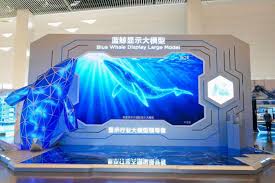
“We independently developed the BOE Blue Whale Display Large Model on top of domestic open-source models, integrating industrial manufacturing expertise with production-line data. Spanning R&D, design, manufacturing, and quality management, it is driving the rollout of multiple AI applications across BOE factories nationwide,” said Jiang Xingqun, senior vice president at BOE.
Chinese open-source models are also transforming workflows for international users and cost structures for overseas enterprises.
Late last year, a multilingual large model named Qwen-SEA-LION-v4 was released in Singapore. Built on Alibaba’s open-source Qwen foundation model, it focuses on Southeast Asia’s complex linguistic environment and has been well received by local users. Leveraging the Qwen open-source model’s support for 119 languages, it was pre-trained on 36 trillion tokens.
According to Leslie Teo, senior director of AI Products at AI Singapore, the collaboration with Alibaba on Qwen-SEA-LION-v4 is an important milestone in advancing AI inclusivity and making it more representative of Southeast Asia.
“The vision of inclusive AI must be built on a solid open-source foundation,” said Zhang Yunquan, a researcher at the Institute of Computing Technology, Chinese Academy of Sciences. Through advances in technology, standards, and public goods, China is translating the vision of inclusivity into tangible action, Zhang added.

LineShine’s repeat TOP500 win highlights China’s homegrown tech strength

First foreign astronaut in China’s manned space program flies to Tiangong space station

China’s homegrown large models power the global open-source ecosystem

-
 Uncategorized6 years ago
FG, states urged to harness flooding for ranching, others with technology – Agbaje
-
 Headlines11 years ago
Breaking: EFCC seals Borno House of Assembly, as Hon members take to their heels
-
 News12 years ago
Nigeria Security Operatives Stage Manhunt For Homosexual Perpetrator
-
 News10 years ago
How 21-year-old Girl fled community over accusation of lesbianism
-
 News11 years ago
Yobe Gov Moves Against Deputy
-
 Opinion8 years ago
7 signs she has friend zoned you
-
Technology5 years ago
Online job placement company headhunts women
-
 Headlines11 years ago
Borno Dep Gov Abducts Another Church Leader