
News
The Resurging Insurgency In Parts Of The North East And Some Of The Challenges: A View Point


By: A G Abubakar
The insurgency in the northeast of the country is estimated to have consumed the lives of more than thirty thousand individuals and displaced millions from their homes since it’s outbreak in 2009. In addition, about a 100 Chibok girls abducted in 2014 are still being held in captivity, with many put in the family way (Amnesty International, 2024).The 109 Dapchi school girls abducted in 2018 were luckier. They got released after a deal with the government, except Ms. Leah Sharibu and one other. Chibok and Dapchi are settlements in Borno and Yobe States, respectively.
The group’s strength, thought to be degraded, seems to have suddenly gotten resuscitated. The execution of more than fifty innocent people, combined, in parts of Kukawa, Baga, Gwoza, Chibok, Damboa local government areas of Borno state is a chilling reminder of the worst of the heyday of the Boko Haram (Jama’at Ahl as-Sunnah lid-Da’wah wa’l-Jihad) insurgency in the Lake Chad region of Nigeria, and indeed, Cameroon, Chad, and Niger republics. It creates a feeling of dejavu.
The new development is a grim reality that the insurgency is still alive and potent after more than one and a half decades, this time under its more organised progeny, the Islamic State in the West Africa Province (ISWAP). The two mutually antagonist entities (ISWAP/Boko Haram) seemed to have renewed their carnage by mounting ceaseless attacks on settlements in Kirawa, Pulka, and even Gwoza township. Also, not spared, were Southern Borno villages of Bamzir, Njilang, Sabon Gari, Shikarkir, Kauji, Whuntaku, Mbalala, Pemi, Wajirko, and many more, in Chibok, and Damboa LGAs, where residents and places of worship were raised down. Even the military was not spared as over half a dozen paid the supreme price during their recent encounters with the insurgents.
Before then, and in the early part of last year, the insurgents murdered about 170 innocent people in Mafa and Sasa rural areas of Yobe State. This was aside the incessant abductions the group (s) carried out along the Damaturu-Buratai-Biu link; a highway of nightmare!
The upsurge in violent activities in Borno State, the birthplace and epicentre of Boko Haram, is coming after years of lull. A lull that made the then Chief of Army Staff, to declare that the insurgency has been “technically defeated.” The optimism, however, now seems to be premature and misplaced. Maybe the short interregnum of peace may not be entirely on account of the military campaigns but rather due to the internal wrangling that ensured between the main Boko Haram and its offshoot, ISWAP.
The latter was led by Abu Musab al’Barnawi, the son of the late founder of the Boko Haram movement, Muhammad Yusuf.
The former was headed by Abubakar Shekau, Yusuf’s ally, and second in command. Shekau was believed to have been killed, or rather, he killed himself during a factional conflict between his group (Boko Haram) and that of Abu Musab’s ISWAP in 2021. Since then, both groups have had a high turnover of leadership. ISWAP is currently thought to be led by either Abu Ubaidah Bako (Bako Gorgore) or Abu Ibrahim, while Boko Haram has allegedly been under one Bakura Doro
Casually, the schism between the two may seem local, but the problem really has something to do with the differences among global jihadist players. Boko Haram and ISWAP just got sucked into the orbit of the Alqa’eda and Islamic State idealogies of Osama Bin Laden and Abubakar Al’baghdadi, both of whom were killed by the US counter insurgency forces. For direction , Boko Haram initially looked up to the ISIL (Islamic Statein Iraq and Lavent), the forerunner of ISIS (Islamic State in Syria) and later Islamic State (IS). The group allegedly switched camps to al’ qaeda, while ISWAP maintains its allegiance to Islamic State (IS). Thus, it has since remained a credible franchise of the IS in West Africa, popularly known as Islamic State in West Africa (ISWAP).
With the two sharing the same cradle, it became apparent that one has to give way. For years, therefore, the two factions have been locked in a war of attrition. A supremacy battle that eventually consumed Shekau (the Boko Haram faction) in 2021. A development which paved the way for ISWAP to gain upper hand in establishing its dominance in the Lake Chad Basin region covering Nigeria, Niger, Chad and Cameroon with its Command and Control Center on the border between Nigeria and Chad. It pushed the remnants of Boko Haram to the fringes of Yobe and Borno States, who still carry out sporadic attacks on soft targets.
ISWAP tried to prove its “military” capability and fire power last year by attacking a Chadian garrison on its Nigerian border where over 40 soldiers were killed. They have since stepped up these attacks in parts of Northern and Southern Borno. This time, in a more coordinated and professional fashion, taking on both the military and hapless civilians alike in a killing spree. According to the Institute for Economics and Peace’s Global Terrorism Index, last year, the ISWAP “perpetrated three of the 20 deadliest terrorist attacks worldwide,” last year.
The insurgents have equally increased their activities in other parts of Borno, and Yobe such as Geidam, Dapchi, Gorgore, Talala, Buni-Yadi etc with a high potential for a spillover into contiguous states of Adamawa, Gombe and Bauchi. As it were, the Sambisa Forest, which serves as a safe haven for the insurgents/terrorists, stretching across some of these states right from the Chad basin region. The forest provides a corridor from Borno, through Yobe, to Gombe before linking the Yankari Game Reserve in Bauchi State.
It’s a highway patronised by negative characters, including armed bandits/herdsmen and illegal arms trafficking that originates from Libya, through the ungoverned spaces in the Sahara and down to the vast unmanned boarder towns of Malamfatori, Abadam and Damasak. Yet, others are trafficked along the Bama-Kawuri-Konduga, “forest belt” that cascade from Waza Game Reserve in Cameroon to the same Sambisa. Poor road networks in affected areas serve as added advantage to insurgency activities.
The ISWAP’s new campaign was to cut Southern Borno from the North. Ditto with Yobe. So far, the insurgents have succeeded in cutting off Biu to Maiduguri road via Damboa. They have been threatening the Gwoza-Maiduguri highway with reasonable success. The Damaturu-Biu, road connecting Southern Yobe and Borno, have remained under constant threats. The high profile abductions along the highway, which included a Chief Judge and a retired engineer, attest to this.
The remnants of the Boko Haram have been busy bringing down public infrastructure like power lines (towers), healthcare centres, and schools in rural Borno and Yobe states. Maiduguri, the Borno State capital, has not been with a constant national grid power source for some years. A special arrangement had to be put in place to energise the city at a huge cost, and which may prove unsustainable in the future. All because ISWAP/BH have found a subtle way of “punishing” the people collectively for not subscribing to their jihadist-ideology and so rising against the government.
The need for a change of approach from containment to dislogement can not be overstated. The military should go on the full offensive. ISWAP/BK operations are no longer clandestine. They move in an open and military fashion. The issue of waiting for “cooperation,” “credible information,” and “actionable intelligence” may no longer be convincing. They are there for all to see! They are bold, daring, and visible.
The military campaigns should include opening up the insurgency enclaves in Borno, especially its cells in Gwoza, Chibok, Damboa, and Katarko (Gujba), in Yobe This could be done by opening the Maiduguri-Damboa-Biu highway that traversed the entire Southern region of the state. The illegal supply routes in Northern parts of Borno and Yobe should be cut off too, to deny the insurgents free access to arms and ammunition. A motorable infrastructure put around the affected areas can go a long way in this regard. After all, experts believe that communication, mobility, troops morale, firepower, infrastructure (roads), etc, are critical success factors (CSFs) in war; conventional or guerrilla.
Keeping the highway open shall deny the insurgents the needed incubation centres. The feeling of invincibility they now have will also evaporate. Leaving the zone for them is sending the wrong message of helplessness on the part of the national government. Imagine, if during the heyday of Boko Haram, the group had succeeded in cutting Borno/Yobe from the westward link with Kano,the nation would have been left with a “Caliphate” next door. Keeping the Maiduguri-Kano road at all costs saved the grim possibility.
ISWAP, currently runs a well structured administrative system in the Lake Chad basin made up of an Executive Council called “Shura” that oversight affairs across five or so governerates/states. one operates a legal system with a Chief Justice that runs on Shari’a and also a financial setup that includes taxation over more than a million people living under its spheres of influence. For defence, ISWAP has an armoury stocked by procured and captured weapons/equipment. This is in addition to a drone (though primitive) technology centre and a cadet training “school” for preparing future fighters that translates as Khalifa Cadet School. It is patterned along Islamic State’s Cubs of the Caliphate.
Taking the war to ISWAP/Boko Haram doorsteps appears now the much needed alternative. Nigeria can borrow a leaf from the experiences of Colombia with FARC , Sri Lanka with the Tamil Tigers, Philippines with Abu Sayyaf Group, and Indonesia in addressing the Jemaa Islam JI, movements. The longer ISWAP/Boko Haram lingers, the more malignant the movement becomes. Already it is believed that ISWAP has a latent but fast crystalising presence in parts Kwara, Oyo and Osun and Niger states. Nigeria has the capacity to rein in them. It’s a question of willpower and taming corruption.
A.G.Abubakar agbarewa@gmail.com


Former Chief of Staff to the Imo State Government and ex-governorship candidate, Uche Nwosu, along with Sir Richard Odibo, a former Federal Commissioner on the Board of the Nigeria Population Commission, Barr. Freedom Friday Ibritam, a Senior Legislative Aide to Senate President Godswill Akpabio, and three others have been awarded Master’s degrees (MSc) in Public Governance and Leadership, as well as in Policy and Strategic Studies. These degrees were conferred by the Abuja Leadership Centre (ALC) at Yakubu Gowon University, previously known as the University of Abuja.
Professor Philip Dahida, the Director of the Centre, disclosed that these achievements were awarded after the recipients completed all requirements, including the successful external defense of their dissertations on Monday, March 16, 2026.
Nwosu, who previously served as Deputy Chief of Staff to the Imo State Government, Ibritam—a former senior police officer—and Odibo received their MSc degrees alongside real estate developer Egbe Oloche Daniel and Gila Ibiere Dikko. Additionally, Dr. Success Tosin Ademeso, a lecturer at the University of Abuja, earned an MSc in Policy and Strategic Studies.
After the event, Professor Dahida praised the external examiner, Professor Charles Nwekeaku from Nasarawa State University, for his thorough and professional evaluation of the MSc candidates. He urged the graduates to strictly adhere to the examiner’s counsel and ensure all suggested corrections are implemented. Dahida also encouraged them to apply the knowledge they gained for the betterment of society.
Reacting to this academic achievement, Sir Richard Odibo explained that he chose the programme (public governance and leadership) because of his interest in the subject. He noted that his research on the census in Nigeria could help the country plan more effectively and take its rightful place among nations. Odibo emphasized that the findings from his academic work could motivate scholars and citizens to advocate for the depoliticization of the census process.
He advised the Federal Government to conduct a new national census, recalling that the last one occurred in 2006. Odibo stated, “For Nigeria to have a good development plan, reliable census data is essential. Without accurate figures, planning becomes impossible. You can’t develop evenly.”
He further explained, “The need for a census is critical for us; it’s like oxygen. Without it, we’ll continue to make misguided plans, and if you fail to plan, you plan to fail.”
Odibo expressed that one major challenge Nigeria faces is obtaining reliable and acceptable census data, a problem that has persisted since before independence. As a former Federal Commissioner, he felt a personal responsibility to investigate these challenges, stating, “This became a challenge that drove me to look deeper into the reasons behind our difficulties with censuses. I believe my research will help persuade citizens and scholars alike that we must remove politics from the census process. If we can achieve that, Nigeria will benefit greatly.”
The Abuja Leadership Centre at the University of Abuja is recognized as a TETFUND Centre of Excellence for Public Governance and Leadership, dedicated to enhancing public governance and leadership in Nigeria and beyond.

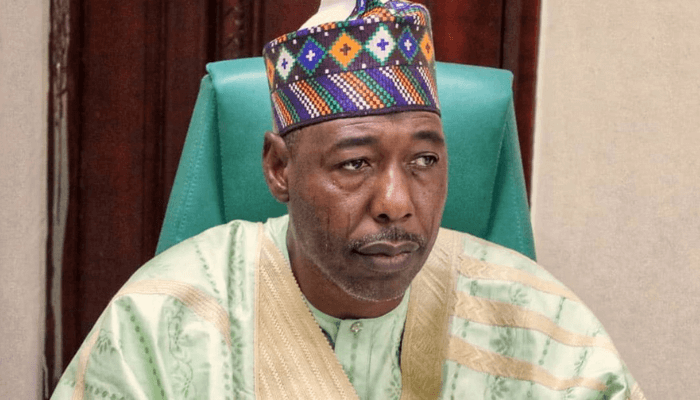
.
☆☆As Reports inficate Possible Insurgent Threats.
By: Special Correspondent.
In apparent response to recent security developments relating to insurgent movements and emerging operational concerns within the Maiduguri, the Borno State Capital and surrounding areas, security operatives have been placed on red alert.
Our correspondent gathered over the past few days indicate that insurgent elements have been attempting to regroup and reorganise their activities in across the state, especially around Maiduguri metropolitan axis.
This is even as the Borno State Government have assured of adequate security arrangements to ward off any possible security threat.
According to findings, these developments have generated growing concern among local communities and security observers, who in turn called the attention of the Borno state government..
Although intelligence monitoring over the last three days,indicates reduction in their vissible activities, owing to patrols by security personnel and frontline defence groups, the city remains under intense watch..l
Further reports available to us indicate that some of the insurgent elements were sighted operating around Duwari village under Konduga Local Government Area, where they appear to be attempting to regroup and reposition themselves, for possible mischief during the upcoming Eid prayer gatherings, which they may perceive as opportunities to exploit large public gatherings.
Highly placed security source told our correspondent that, the current surveillance and intelligence monitoring across the state by soldiers, members of the Civilian Joint Task Force (CJTF), and other frontline defenders remains a capable check against any mischief.
“Our level of preparedness against any mischief remains on high and we are prepared to confront any insurgent threat should the situation call for it”.
“Only a few days ago, insurgent elements made an attempt to regroup in some areas around Maiduguri Metropolitan and Konduga, and upon receiving credible intelligence regarding their presence and movements, we immediately moved in with our swift operational response team”, the source added.
While reassuring that available security assets, including soldiers and members of the Civilian Joint Task Force (CJTF), are capable of confronting any insurgent group, our source, said, any attempt by any group to come into Maiduguri, will amount to “a suicide mission”, on their part.
Our correspondent further reports that, the Borno state Government has in the last few weeks provided enormous logistics and equipment to security operatives in what looks like a renewed fight against Boko Haram and ISWAP elements, who have been attempting a resurgence in activities.
Reports across Borno state indicate that, Boko Haram and ISWAP terrorists, who have been fleeing their enclaves following intense attacks on them by troops, have in the process been attacking vulnerable communities in search of food and other logistics.
Reports say most of their camps have been destroyed, and they are desperately making attempts at re-entering Maiduguri.
Camps around the notorious Sambisa forest are said to have been vacated ahead of oncomming onslaughts and the terrorists have retreated and fled into the Mandara mountains close to Nigeria’s border with Cameroun.
Subsequent surveillance checks conducted through intelligence monitoring channels confirmed that the fleeing elements were attempting to regroup in nearby locations, suggesting a continued attempt to maintain an operational presence within some areas.
Borno state Governor, Professor Babagana Umara Zulum, who recently concluded a statewide tour has expressed concerns about the operational coordination among community-based security groups, with a promuse to ginger them up for more action.
As a result, several community defence formations operate simultaneously, including, the Civilian Joint Task Force (CJTF), Hunters,Vigilante groups
and other local frontline defenders.
He has vowed to flush out, what inteligence observers, described as certain individuals within these formations, who may have indirect alignments or may be responsible for information leakages that could potentially compromise ongoing security operations.
The inteligence circle in Borno has often complained that, insurgent elements appear to have prior knowledge of local security movements and response patterns, even as it raised concerns about possible infiltration or operational compromise within these community security structures.
Governor Zulum, during his recent tour promised to remedy the situation, after a careful institutional review and restructuring in order to strengthen operational discipline and reduce vulnerabilities within the community defence architecture.
Information available to us indicate that, certain
security measures are being contemplateded for Maiduguri during the Eid celeberations, which may include strict monitoring of vehicular and human movements to minimize potential vulnerabilities that hostile elements could exploit to infiltrate the city.
While physical security alert remains in place, this medium gathered that, intelligence gathering is being strengthened and early warning mechanismsactivated across Maiduguri.
In the face of these, uneasy calm still pervade the citizenry as they prepare for the oncoming celeberations.
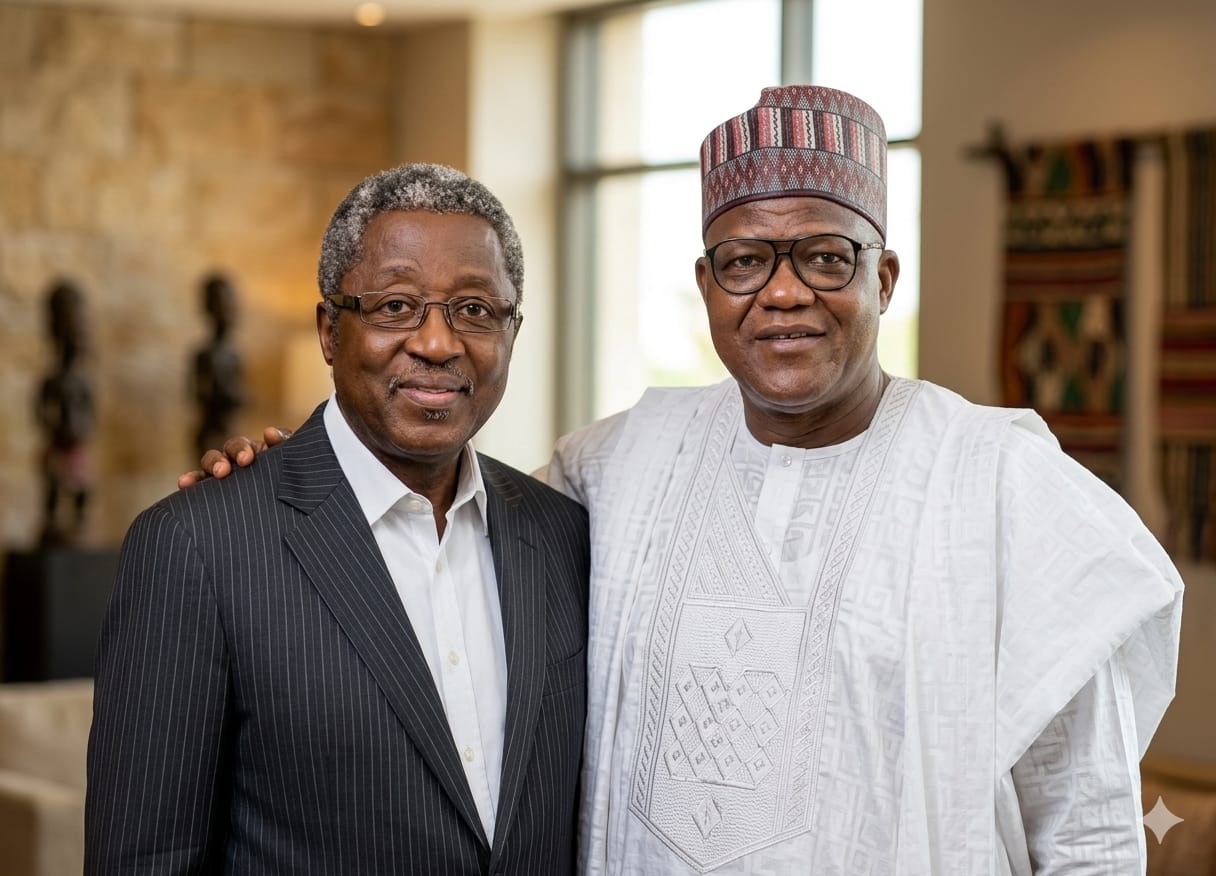
Former Speaker of the House of Representatives and Chairman, Board of Trustees of the National Credit Guarantee Company Limited (NCGC), Rt. Hon. Yakubu Dogara, has joined Nigerians in celebrating Former Governor Jonah Jang, fondly called Baba Jang, as he clocks 82 years.
In a glowing tribute, Dogara described Baba Jang as a visionary leader whose life and service remain a beacon of hope for generations. He noted that Jang’s tenure as Governor of Plateau State was marked by courage, foresight, and an unwavering commitment to peace, unity, and development.
“Baba Jang’s life is a testimony of service and sacrifice. He invested in infrastructure, strengthened institutions, and worked tirelessly to foster unity in Plateau State. His leadership was never about personal gain but about building lasting foundations for progress,” Dogara said.
He further emphasized that Jang’s integrity, resilience, and mentorship have shaped leaders across Nigeria, adding that his legacy continues to inspire beyond the boundaries of Plateau State.
“As he celebrates 82 years, we honor him not just for the offices he has held, but for the enduring impact he has made on countless lives. Baba Jang remains a statesman, a father figure, and a model of quality leadership,” Dogara added.
The tribute underscores Baba Jang’s enduring influence in Nigerian politics and governance, highlighting his role as a leader whose footprints on the sands of time cannot be erased.

Odua People’s Assembly defends NSA Ribadu, criticizes Ishola Williams’ call for removal

75 ISWAP Fighters Killed in Borno Town.

SAN urges collective efforts to tackle societal vices

-
 Uncategorized5 years ago
FG, states urged to harness flooding for ranching, others with technology – Agbaje
-
 Headlines10 years ago
Breaking: EFCC seals Borno House of Assembly, as Hon members take to their heels
-
 News12 years ago
Nigeria Security Operatives Stage Manhunt For Homosexual Perpetrator
-
 News9 years ago
How 21-year-old Girl fled community over accusation of lesbianism
-
 News10 years ago
Yobe Gov Moves Against Deputy
-
 Opinion7 years ago
7 signs she has friend zoned you
-
Technology4 years ago
Online job placement company headhunts women
-
 Headlines10 years ago
Borno Dep Gov Abducts Another Church Leader