
Uncategorized
The Worsining Condition of Nigerians: Can it Ever Change.

By: A G Abubakar
A Nigeria that works for everyone is the dream of every citizen. However, the prospect of achieving such a noble vision has become more illusory by the day, as the material conditions of most Nigerians remain desperate. Change, it is often said, is the only permanent feature of human existence. Yet change, as a concept, is neither inherently good nor bad; it is essentially a neutral phenomenon whose meaning depends on its consequences, and what leadership makes of it.
Change can be social, political, economic, technological, or physical in nature. More importantly, it can be either constructive or destructive, depending on whose interests it advances or whose rights it undermines. In Nigeria – since the collapse of the first Republic – the odds have progressively been stuck against the citizens.
Governance, in its ideal form, exists to guarantee citizens opportunities for self-fulfilment, security, and the pursuit of happiness. The state is meant to create an enabling environment where individuals can pursue livelihoods, develop their talents, and contribute meaningfully to society in a sustainable manner. Scholars such as Charles Tilly and Samuel Huntington have provided lucid definitions of political change in relation to the people. Tilly (1978) sees political change as a people-driven phenomenon—a process in which social movements and collective action shape political outcomes. Huntington, on the other hand, views change largely as a result of institutional shifts (Huntington, 1968). In a country like Nigeria, where institutions have become compromised, the hope for meaningful change in material conditions and security may ultimately rest with the people themselves. They can replace underperforming leaders through the ballot box or the street. In such circumstances, the people themselves become the agents of change.
However, for citizens to effectively play this noble role, certain conditions must exist. Political scientists often argue that meaningful civic participation requires a minimum level of political awareness, education, and economic security. Citizens must be sufficiently enlightened to understand their rights and responsibilities. They must also possess the capacity to make independent political choices free from coercion or desperation, and to ensure that their votes count.
This is where the question of poverty becomes critical. In social science literature, poverty is commonly defined as the condition in which individuals lack the resources necessary to meet basic human needs such as food, clothing, shelter, healthcare, and education. The World Bank describes extreme poverty as living below a minimum income threshold necessary for survival, while sociologists broaden the concept to include relative deprivation—a condition in which individuals lack the resources needed to participate meaningfully in the social and economic life of their society.
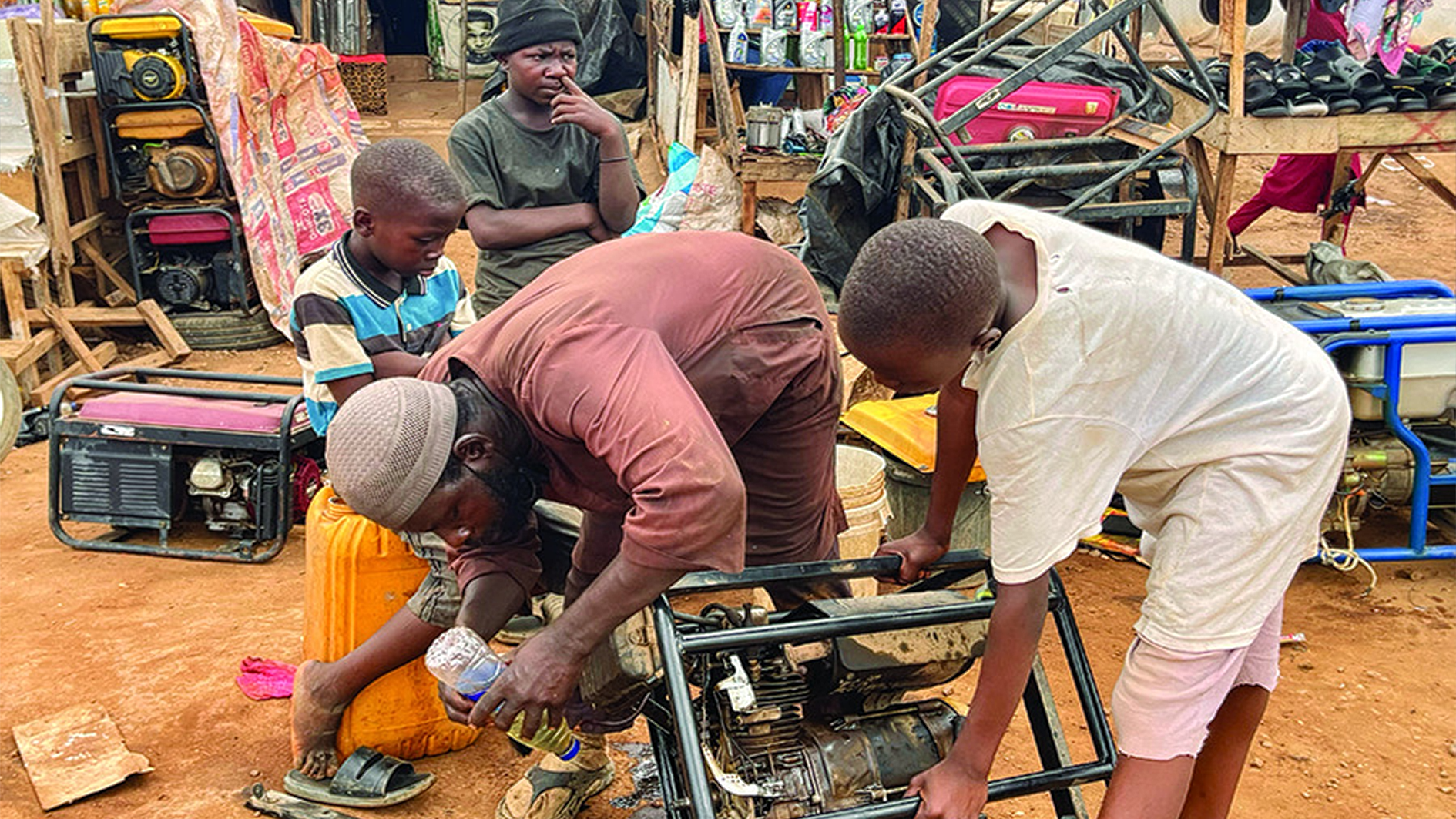
Poverty in Nigeria does more than limit material wellbeing; it also constrains agency. Individuals trapped in chronic poverty often prioritise immediate survival over long-term political considerations. Their vulnerability makes them susceptible to manipulation, patronage, and vote-buying. Many become unsure of themselves and begin to perceive their rights as favours rather than entitlements. As a consequence, they are easily mobilised through divide-and-rule tactics. Political choices therefore become transactional—Indomie, rice, cash inducement, and other primordial appeals—rather than ideological. Their immediate concern is survival, often described in local political parlance as “stomach infrastructure.”
In such circumstances, the poor rarely assert themselves as instruments of systemic change. Their energies are largely consumed by the daily struggle to survive. This reality raises a troubling question in the Nigerian context. If a significant proportion of the population is poor—various studies suggest that over 60 percent of Nigerians live in multidimensional poverty (133 million in 2021, 139 million in 2025), according to the World Bank’s October 2025 report—how can meaningful democratic change occur? If the poor lack the capacity to act as effective agents of transformation, where then does the impetus for change originate? Studies in political sociology and revolutionary theory offer an interesting insight: while poverty alone rarely produces organised change, anger often does.
Anger, from a psychological standpoint, is defined as an emotional response to perceived injustice, threat, or violation of rights and expectations. Social psychologists describe anger as a mobilising emotion—one capable of motivating individuals and groups toward action, particularly when they believe established systems have failed them.
In political contexts, anger becomes a powerful force when it combines with awareness, identity, and a sense of injustice. Unlike the chronically poor, who struggle primarily with survival, the angry citizen often possesses a clearer sense of rights and expectations. Anger frequently emerges when individuals or groups believe they are being denied opportunities, dignity, or fairness that they legitimately deserve.
Such individuals are more likely to organise, protest, mobilise politically, or challenge authority. The angry citizen therefore differs from the poor in critical ways. Anger is often accompanied by awareness, a sense of dignity, and a vision worth defending. In this sense, anger can become a catalyst for political transformation. The 1993 NADECO-inspired protests against the annulment of the June 12 elections; the Arab Spring across North Africa and the Middle East (2010–2012); and the #EndSARS 2020 revolts in Nigeria all bore the hallmark of mobilised anger rather than the quiet resignation of the impoverished.
This distinction is important in understanding societies undergoing political strain. Nigeria today presents a peculiar situation where poverty is widespread while anger is steadily rising, alongside a government many perceive as more concerned with retaining power than responding to public sensibilities. Under such conditions, the potential agents of change may not necessarily emerge from the ranks of the poorest citizens but from the expanding Nigerian community of the aggrieved.
These include angry teachers and lecturers whose salaries and working conditions undermine their dignity; unemployed youths whose aspirations are trapped in an economy unable to absorb their talents; industrialists forced out of business by crippling access costs; farmers unable to access inputs or secure their harvests; politicians who believe electoral outcomes are manipulated; and even security personnel whose welfare is diverted into private pockets.
Other aggrieved groups include Berom farmers who cannot till their potato and acha farms, and Tiv yam farmers who are unable to cultivate their lands because of armed herdsmen. Rural dwellers in states such as Zamfara, Sokoto, Katsina, Niger, Kogi, Kwara, Kaduna, and Kebbi often cannot go to their farms due to insecurity and are sometimes forced to pay taxes or levies to bandits and insurgents. The Boko Haram/ISWAP-terrorised communities of Borno, Yobe, and Adamawa are equally angry. These crises have pushed an estimated 3.7 million people into IDP camps, aside from tens of thousands who have lost their lives (IOM, 2025).
The same frustration is felt by the ordinary traderv in the South-East who has been compelled to observe weekly sit-at-home orders enforced by IPOB. Likewise, communities in the oil-polluted environments of the Niger Delta continue to express deep resentment.
Beyond these growing pockets of anger are moral questions surrounding what many perceive as government insensitivity in national appointments. The rehabilitation of former critics—the Daniel Bwalas, Femi Fani-Kayodes, Reno Omokris, and others—and rewarding them with “plump” appointments sends a troubling signal that “verbal terrorism” pays. Such patronage ultimately erodes public trust in governance. There is nothing wrong in rehabilitating “repentant” foes in politics, but that should not qualify them for undue patronage.
It is okay to appreciate some of the related political wisdom out there, but with a caveat. One says, “you should keep your friends close, but your enemies closer.” Another maintains that “it is better to keep the enemy inside for him to direct his urination outside than to keep him outside for him to urinate inside.” Both adages are meant to facilitate closer monitoring and do not suggest that they should be given either access to the family wardrobe or the key to its safe.
The same concern arises in the case of individuals who are yet to clear serious allegations in court. The retention of the former governor of Zamfara State, now Minister of State for Defence, Bello Matawalle, is one example. More recently, the nomination of Hon. Jimoh Ibrahim as Nigeria’s Permanent Representative to the UN in New York has also generated controversy. Ibrahim has for years faced allegations involving corruption and commercial disputes, including unresolved claims reportedly running into tens of billions of naira involving AMCON. Some say to the tune of N69.4 billion!
Added to the growing pattern of perceived nepotistic federal appointments, such developments help explain why many citizens question the sincerity of the government’s reform agenda and its campaign against insecurity. The perception of ethnic bias in appointments continues to deepen public distrust. Even among many fair-minded South-Westerners, discomfort is growing over the extent to which the Presidency appears willing to pursue what critics describe as an ethnic agenda. Some argue that if earlier governments were criticised for similar tendencies, this administration had an opportunity to demonstrate a higher standard of national leadership.
Nigeria today is gradually producing a formidable population of angry citizens. They may not yet rival the size of the poor, but their numbers are growing steadily. History shows that when anger accumulates in societies without credible institutional outlets for redress, it often manifests in destabilising ways. Some citizens can bottle up their anger for a long while before venting them out. Others, however, resort to more dangerous paths. For those overwhelmed by frustration, criminality sometimes becomes both a form of protest and a desperate means of survival; a trend that could lead to a “state failure.”
Political scientists describe a “failing state” as a country whose government has lost the capacity or struggles to maintain security, enforce laws, provide basic services, control corruption, and command the confidence of their citizens. When these conditions persist, the state gradually loses its monopoly on authority, and non-state actors—criminal gangs, militias, insurgents—begin to fill the vacuum.
Today, none of Nigeria’s six geopolitical zones is entirely free of security flashpoints. Only a handful of the thirty-six states can confidently claim relative safety. The implication is clear: the state’s capacity to guarantee security and justice is being severely tested. This is precisely how states drift toward fragility.
Nigeria still has a window of opportunity to reverse course by restoring the rule of law, rebuilding public institutions, and expanding economic opportunity for all to calm the rising tide of frustration.
But that window will not remain open indefinitely. If those entrusted with power fail to act decisively, the growing nation of angry citizens may eventually impose change in ways that no one can predict or control. And when change comes in that manner, history shows that it rarely asks for permission. As for the poor, the hungry, and the angry in Nigeria, the task is to keep believing that “people’s power” resides within them—and that they can harness this collective strength to hold leaders at all levels accountable. Enough of endless lamentation; it is time to demand good governance.
A.G. Abubakar
agbarewa@gmail.com
Stephen Olufemi Oni, Ilorin
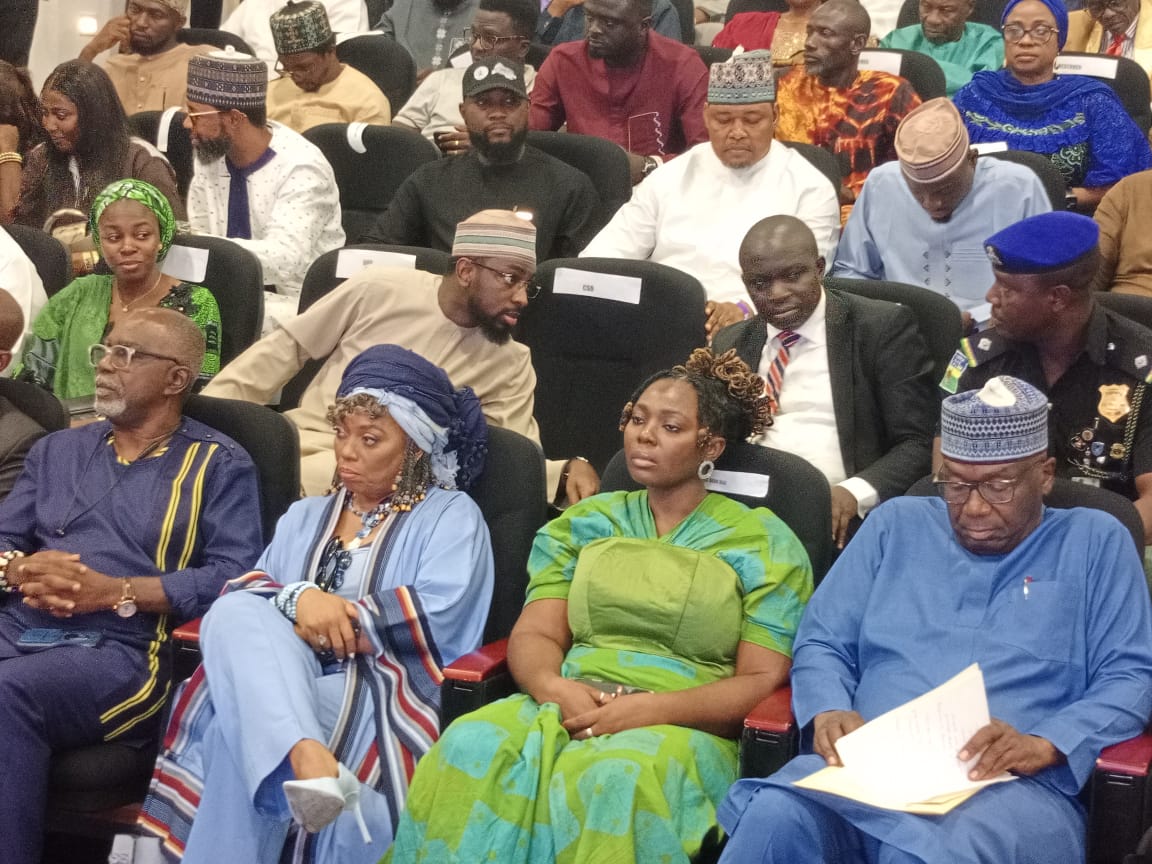
The Kwara State Government has celebrated the life and enduring influence of Afrobeat legend, Fela Anikulapo-Kuti, with a retrospective exhibition aimed at preserving African cultural heritage and inspiring younger generations.
The exhibition, titled Fela Anikulapo-Kuti: A Retrospective, was opened by Governor AbdulRahman AbdulRazaq at the Institute of Contemporary African Art and Film in Ilorin on Monday.
The Governor said the establishment of the institute reflected his administration’s belief that development should extend beyond physical infrastructure to include spaces that promote creativity, knowledge and economic opportunities.
“When we established the Institute of Contemporary African Art & Film, our vision was clear: development must go beyond roads, bridges and buildings to create spaces for creativity, knowledge and opportunity,” AbdulRazaq said.
According to him, cultural infrastructure plays an important role in connecting people to their history, broadening their imagination and encouraging critical thinking.
“Physical infrastructure connects places; cultural infrastructure connects people to their history, expands their imagination and challenges their thinking,” the Governor said.
AbdulRazaq said the institute was established to preserve African stories, nurture talents and showcase the continent’s artists and thinkers to the world,
describing the decision to open the institution with an exhibition dedicated to Fela as significant, given the musician’s contribution to African music, social commentary and cultural expression.
“Fela was more than a musician. Through his music and artistic expression, he challenged conventions and confronted society with questions about power, freedom, identity and justice,” he added.
The Governor added that the late musician’s life demonstrated the capacity of artistic expression to influence public discourse and inspire social change.
The exhibition, curated by June Creative Art Advisory, led by its founder, Mrs Seun Alli, featured photography, archival materials, film, graphic works and other artistic expressions exploring Fela’s life, times and enduring influence.
AbdulRazaq commended the firm for bringing its curatorial expertise and creative vision to the project, while describing the exhibition as an opportunity for different categories of visitors to engage with the musician’s legacy.
He said the exhibition would provide students with learning opportunities beyond the classroom, inspire artists, support researchers and encourage young people to explore the creative industry.
“For students, this is a classroom beyond the classroom; for artists, inspiration; for researchers, an opportunity for deeper inquiry; and for young people, a reminder that creativity offers both self-expression and economic opportunity,” he said.
The Governor clarified that the state government was not claiming ownership of Fela’s story but was providing a platform for younger generations to encounter and learn from his legacy, adding that the state government is optimistic that the institute would promote cultural education, encourage creative enterprise, attract visitors and strengthen Kwara State’s position in Nigeria’s cultural and creative landscape.
According to him, the institution’s success would be measured by the talents it nurtured, the ideas it inspired and the opportunities it created.
“Governments change, but institutions should endure,” the Governor said, expressing the hope that the exhibition would mark the beginning of sustained cultural engagement at the institute.
“May this exhibition begin sustained cultural engagement at ICAAF and inspire our young people to create, question, discover and contribute to society,” he said.
AbdulRazaq added that the initiative reflected his administration’s commitment to building a state where cultural heritage, innovation and economic opportunities complemented one another.
In her address, the Commissioner for Communications, Hon. Bolanle Olukoju, said: “Today’s exhibition offers us an opportunity to revisit the life and works of Fela
Anikulapo-Kuti and appreciate how his music, ideas and artistic expression continue to influence generations.
“For the Ministry of Communications, this occasion speaks to an important part of our
mandate: promoting the stories, talents and creative expressions that shape our identity as a people.”
The Commissioner particularly noted that under Governor AbdulRazaq’s leadership, the State is creating opportunities for young people through investments in sectors such as film, fashion and technology.
She added: “Projects including
the Sugar Film Factory, the Garment Factory and the Ilorin Innovation Hub reflect the administration’s commitment to developing talent and supporting enterprise.
“The Institute of Contemporary African Art & Film, formerly the Ilorin Visual Arts Centre, adds an important dimension to this effort. It provides a platform for artistic expression, cultural learning and creative collaboration.
“We want young Kwarans who are passionate about painting, photography, filmmaking, fashion and design to see ICAAF as a place where they can explore their interests, learn from others and showcase their talents.
“We also encourage students to engage with art and history beyond the classroom. Fela’s story is a fitting subject for this exhibition. It demonstrates how creativity
can go beyond entertainment to shape cultural identity and influence public conversations. There is much for our young people to learn from his artistic journey and enduring impact.
“It might also interest you that kwara state was also part of Fela’s creative showcase during his lifetime.”
•••Says Ward stands with APC
Stephen Olufemi Oni, Ilorin
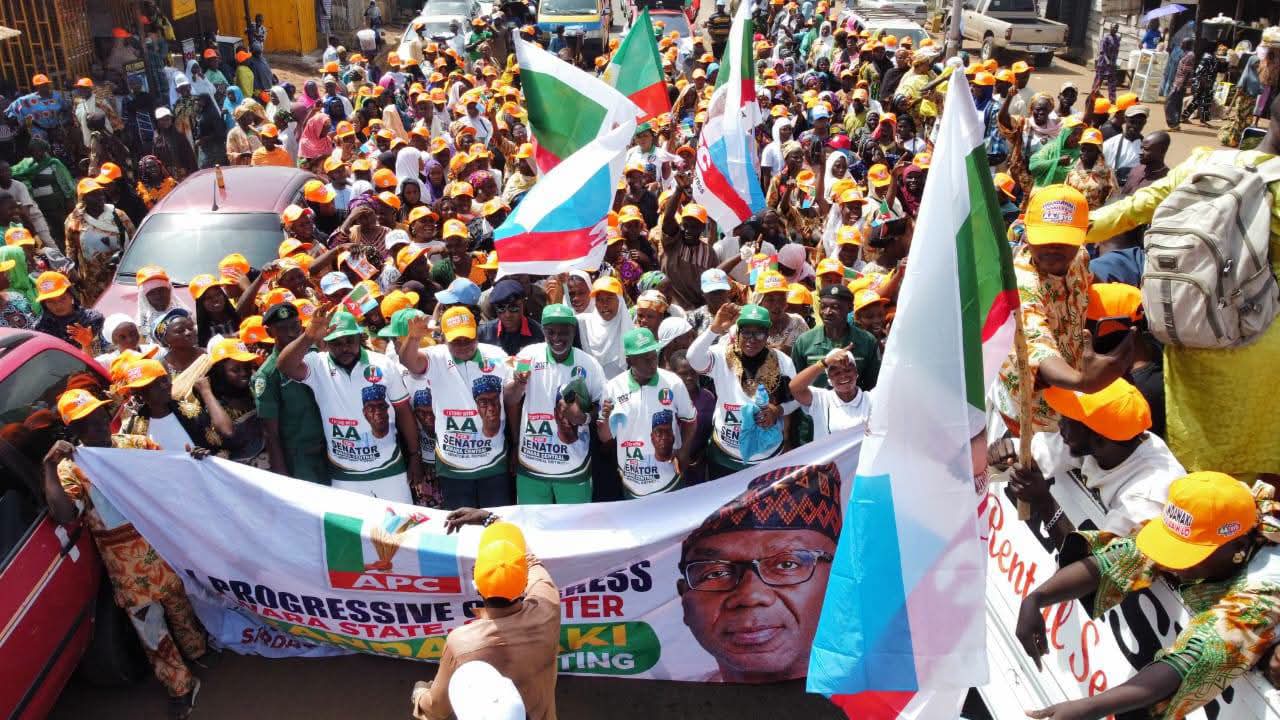
The Executive Chairman of the Ilorin West Local Government, Mallam Shehu AbdulRahman Babatunde Ladan, has led an All Progressives Congress (APC) mega rally in Ubandawaki Ward, reaffirming the commitment of party members and supporters to the APC ahead of the 2027 general elections.
The rally attracted party leaders, grassroots mobilisers, youths, women, and other stakeholders who gathered to demonstrate their support for the party.
Addressing the gathering, Chairman Ladan declared that Ubandawaki Ward remains committed to the APC and its political leadership, expressing support for President Bola Ahmed Tinubu’s Renewed Hope Agenda, Kwara State Governor AbdulRahman AbdulRazaq, and the APC governorship candidate, Rt. Hon. Engr. Yakubu Danladi-Salihu (SYD), alongside other party candidates for the 2027 general elections.
The Chairman emphasised the importance of unity, peaceful political engagement, and sustained grassroots mobilisation in strengthening the party’s structure ahead of the forthcoming elections, urging party faithful to remain united, engage constructively with residents, and work collectively towards the party’s political objectives.
Ladan also acknowledged the importance of Ubandawaki Ward in the political landscape of Ilorin West, encouraging party leaders and supporters to maintain cordial relationships, promote inclusive participation, and sustain engagement with the electorate. He stressed that a united party structure would help strengthen internal cooperation and effective grassroots coordination.
The mega rally renewed calls for unity, loyalty, and peaceful political participation among APC members and supporters, underscoring commitment by participants to mobilising support for the party’s candidates ahead of the 2027 general elections, while promoting peace, development, and responsible democratic engagement across Ilorin West Local Government Area.

- Mgt Accuses Union Of Dishing Out False Staff Remuneration Scale
Stephen Olufemi Oni, Ilorin
The staff of the Kwara State Internal Revenue Service (KWIRS) have lamented poor welfare conditions, rising living costs and stagnant salaries they have been subjected to, despite their contributions to the state’s revenue generation.
In a statement issued by the KWIRS chapter of the Association of Senior Civil Servants of Nigeria (ASCSN), the workers lamented that their sacrifice and professionalism, which have helped to place Kwara State among the more self-reliant states in the country, have not been matched with corresponding improvement in their welfare.
The workers questioned the disparity between their contributions to the state’s revenue and their welfare, saying many of them are battling financial hardship.
“We block leakages. We are posted to hospitals and other MDAs to secure government revenue. We work under pressure day and night but we continue to struggle to meet basic needs due to poor salaries.”
The association further expressed concern that personnel costs had remained unchanged for years while other expenditure heads had continued to increase.
It also cited a salary negotiation agreement dated October 11, 2022, which reportedly stated that the adjustment would be implemented “as soon as it can be accommodated in the budget.”
According to the workers, nearly four years after the agreement, there had been no implementation or clear indication of when the adjustment would take effect, despite the rising cost of living.
The staff said expenses on school fees, house rent, transportation and food had increased significantly while their salaries remained unchanged. “We smile outside but the majority of us are bleeding inside. We cannot continue to generate wealth for the state while we wallow in abject poverty,” they declared.
Urging their colleagues to remain united and resolute in pursuing improved welfare, the association said the workers should not expect better conditions without collectively standing up for their interests.
It called on members to remain calm, vigilant and prayerful as a 14-day period beginning October 15, 2026, counts down, without specifying further details in the statement about the expected action at its conclusion.
Reacting to the KW-IRS staff allegations, the Management, while
reaffirm its commitment to professionalism, political neutrality and its statutory mandate, expressed dismay over public speculation on staff remuneration and attempts to politicise unverified internal administrative communications.
“Management is concerned by attempts to exploit unverified internal administrative communications for political purposes, create unnecessary tension and distract the Service from its responsibilities. KWIRS will not be distracted from its mandate by such narratives,” said the Management.
It added: “The isolated salary figures being circulated on social media do not represent the full remuneration structure or total emoluments of KWIRS staff. Staff compensation extends beyond regular monthly salaries and includes the following benefits, in accordance with applicable policies and approved arrangements:
“Annual and Performance-Related Bonuses: Annual, festive, and situational bonuses linked to revenue performance milestones and staff performance and situational economic palliatives are paid periodically to staff members
“Annual Leave Allowance: A separate annual payment in addition to regular monthly remuneration.
Staff Welfare and Operational Support: Structured measures designed to support staff welfare and professional development throughout their careers.
“Accordingly, assessing staff remuneration solely on selectively circulated salary figures presents an incomplete picture of the Service’s compensation and welfare structure.
“Management remains committed to staff welfare, motivation and professional development. The Service will continue to strengthen policies and operational processes that support staff well-being and performance, within government-approved resource allocations and applicable administrative frameworks. The Service remains one of the Government Institutions with the most recruitment requests and this is a testament of Management’s commitment to staff welfare.
“KWIRS urges members of the public, taxpayers and other stakeholders to disregard unverified and misleading narratives, verify information before sharing it, and rely on official Service communications for accurate information about its operations and staff policies.
“All stakeholders are encouraged to refrain from politicising internal administrative matters or spreading claims capable of undermining institutional harmony and public confidence.
“KWIRS remains focused on its statutory responsibilities and committed to mobilising revenue for the economic growth and sustainable development of Kwara State.”

WHO: Nigeria Records Zero Ebola Cases After Evacuation of Swiss Couple

Kwara celebrates Fela’s legacy with retrospective exhibition

2027: Ilorin West LG Boss Leads APC Mega Rally In Ubandawaki

-
 Uncategorized6 years ago
FG, states urged to harness flooding for ranching, others with technology – Agbaje
-
 Headlines11 years ago
Breaking: EFCC seals Borno House of Assembly, as Hon members take to their heels
-
 News12 years ago
Nigeria Security Operatives Stage Manhunt For Homosexual Perpetrator
-
 News10 years ago
How 21-year-old Girl fled community over accusation of lesbianism
-
 News11 years ago
Yobe Gov Moves Against Deputy
-
 Opinion7 years ago
7 signs she has friend zoned you
-
Technology5 years ago
Online job placement company headhunts women
-
 Headlines10 years ago
Borno Dep Gov Abducts Another Church Leader