
China
‘We remain committed to China, continue to invest for the long term’: Amway CEO

By Gong Ming, People’s Daily
“Over the past 30 years in China, one lesson has stood out: lasting success is built on trust, mutual respect, and strong relationships.”
President and CEO of Amway Michael Nelson recently gave an interview to People’s Daily, prior to Chinese President Xi Jinping’s state visit to the United States.
Nelson emphasized that when businesses prioritize value creation and meaningful connections, they foster deeper understanding, trust, and shared prosperity. Those are outcomes that benefit not only individual companies but also communities, countries, and the broader global economy as well, he noted.
Since entering China over three decades ago, Amway has witnessed the country’s rapid economic ascent and the profound transformation of its consumer landscape.
“China has evolved from an important growth market into one of our most strategic markets,” Nelson told People’s Daily. He stressed that Amway’s relationship with China has always been anchored in a long-term perspective, sustained investment, and a shared commitment to creating value.
“What gives me confidence is not just the scale of opportunity, but the foundation we’ve built over thirty years. We remain fully committed to China, and we will continue to invest for the long term,” he said.
Nelson highlighted four guiding principles for Amway’s journey in China: commitment, shared success, local innovation, and sustainable growth. The company first invested in China in 1992, breaking ground on a manufacturing facility in Guangzhou’s development zone. That Guangzhou base has grown into Amway’s largest production hub worldwide and the only facility capable of manufacturing its entire product portfolio. It supplies more than 50 global markets and accounts for 55 percent of Amway’s total global output value.
To date, Amway has completed 10 rounds of capital investment in China, establishing a fully localized value chain that spans research and development, manufacturing, retail, consumer engagement, and after-sales services, laying a solid foundation for local development.
“These investments reflect our confidence in China’s economic resilience and our enduring commitment to supporting the country’s long-term health, growth, and innovation,” Nelson noted.
“China’s dynamic business environment and collaborative spirit have consistently created opportunities for mutual success,” Nelson noted, adding that local innovation is a key reason the company has been able to grow and adapt over time.
“China’s strong technological capabilities, entrepreneurial energy, and rapidly evolving consumer preferences continue to shape how we innovate, serve consumers, and evolve our business model. We view China not only as a major market, but as a vital innovation center that informs our global strategy,” Nelson said.
Many of the ideas, insights, and capabilities developed here are helping shape the company’s future and strengthen its ability to meet the changing needs of consumers, he added.
Earlier this year, Nelson attended the China Development Forum 2026, where he had in-depth communication with business representatives around the world on China’s 15th Five-Year Plan, opening-up, as well as global cooperation.
He said one aspect of the 15th Five-Year Plan that is especially relevant to Amway is the continued focus on building a Healthy China. He sees strong alignment among relevant policies, the Chinese government’s emphasis on innovation, the constantly upgrading consumption, and Amway’s mission.
“That alignment gives us confidence to continue investing in China,” Nelson said. According to him, Amway will grow its business by investing in healthcare, innovation, digital infrastructure, and supply chain optimization.
The company is continuing to invest in local talent, partnerships, and capabilities, so as to provide solid support for its development in China and share more opportunities with the country, Nelson said.
As a business leader, he places high value on strategic foresight — a quality he finds reflected in China’s long-term planning. “China’s structured approach to development provides the stability companies need to confidently invest in the capabilities required to serve today’s consumers and prepare for tomorrow’s challenges,” he said.
He said Amway China aims at long-term growth, and follows a clear vision for development and a stable framework that supports investment and innovation.
“We have always believed that meaningful success is built through consistency, patience, and a willingness to continue investing through change,” he told People’s Daily.
Projects such as the development of an Amway-owned farm in Pengzhou, southwest China’s Sichuan province, represent a deeper commitment to organic farming practices, botanical excellence, and a vertical supply chain. They reflect the company’s determination to continue building a foundation that can support sustainable growth for decades to come.
“Every trip to China reinforces what has impressed me for many years: the energy, optimism, and commitment people bring to building better lives for themselves, their families, and their communities,” he said. These shared spirits of people foster deep connections that transcend national and cultural boundaries.
Nelson is optimistic about the development of China-U.S. relations, believing the two sides can accomplish big things when they work together.
“Looking ahead, my hope is that there continue to be opportunities for people of the two countries to learn from one another, build relationships, and work together toward common goals,” he said.
By Li Hongxing, People’s Daily
One way to gauge a region’s appeal to investors and entrepreneurs is to listen to those already embedded in its ecosystem. Take a European founder based in Shenzhen, south China’s Guangdong province, who has called the city home for over a decade. He reports receiving daily inquiries from overseas startup leaders eager to visit, explore partnerships, or establish operations in China.
The steady stream of visitors eager to explore Shenzhen and its tech companies offers a glimpse into the growing global interest in China’s innovation ecosystem.
This is no fleeting trend. It underscores investors’ confidence in China and their optimism about the country’s prospects. The steady flow of overseas technology delegations, increasingly regular cross-border business discussions, and growing interest in “looking east” go beyond conventional economic and trade ties. They offer a vivid illustration of how the world is gaining a new understanding of China and seeking opportunities for cooperation and shared development.
Increasingly, entrepreneurs, researchers, and investment institutions from around the world are traveling to China to learn firsthand about its innovation mechanisms, industrial dynamics, and development pathways. Looking back at China’s evolving economic and trade ties with the world, this surging eastward focus marks a profound shift and more comprehensive, objective recognition of China’s development.
This transition from trade-centric partnerships to co-innovation rests on tangible structural advantages. Foremost among them is industrial resilience. While several major economies face deindustrialization pressures and cyclical volatility, China has maintained steady growth alongside continuous upgrading. Its comprehensive manufacturing base, extensive infrastructure networks, and large domestic consumer market provide a natural shock absorber, enabling predictable expansion even amid global headwinds.
Clustering amplifies this advantage. At a robot industrial park in Foshan, Guangdong province, for example, more than 90 percent of the components and other products needed across the supply chain can be sourced within the park. A design revised in the morning can undergo testing on the very same day. Industrial clustering, closely connected supply chains, consistent policies, and an open, inclusive market give investors at home and abroad the confidence to make long-term commitments and develop their businesses in China.
If industrial resilience provides the foundation, China’s vibrant innovation ecosystem and the rapid development of new quality productive forces are what give the country its enduring appeal.
Confidence in China’s development rests on its innovation capabilities. From basic research to practical applications, breakthroughs are emerging across a wide range of technological fields.
These efforts are yielding visible results. In northwestern China, renewable energy projects in the Gobi Desert are powering data centers, transforming cities such as Ulanqab in Inner Mongolia and Qingyang in Gansu province into key nodes in the national computing network.
Meanwhile, in Hefei, east China’s Anhui province, the experimental nuclear fusion device known as an “artificial sun” and the Zuchongzhi 3.0 quantum computing prototype continue to set world records, strengthening China’s position in frontier technologies.
A recent report released by the World Intellectual Property Organization shows that China has 25 of the world’s top 100 innovation clusters, ranking first globally for the fourth consecutive year.
The more China innovates, the more the world stands to benefit. Some international observers have noted China’s increasingly important role in the global innovation ecosystem, while others have praised Chinese developers for pushing the boundaries of innovation every day. From quantitative growth to qualitative breakthroughs, and from individual advances to progress across entire systems, the vitality and rapid development of China’s innovation sector demonstrate that innovation can be made anywhere, and that practical action is what turns pioneers into leaders.
A strong industrial foundation and vibrant innovation are not enough on their own. They also need a favorable environment where they can flourish. By further opening up and continuously building a first-rate business environment that is market-oriented, law-based, and internationalized, China is strengthening the institutional foundations for attracting global resources and building momentum for shared development.
The advantages of this environment are reflected in more targeted services and the effective implementation of practical policies. Across China, for example, policies on entry visas, length of stay, residence, and support for integration are being improved to help foreign professionals put down roots, develop their careers, and grow their businesses.
From more targeted industrial policies and efficient government services to robust intellectual property protection and an open, diverse innovation culture, China is introducing concrete reforms that make its environment more inclusive and its institutions more supportive, further enhancing its appeal as a place to develop and invest.
Looking beyond the surface reveals the deeper reasons behind the growing interest in China’s innovation ecosystem. The visible sign is the steady stream of visiting delegations; beyond that lie expanding opportunities for cooperation; at the deepest level is global confidence in China’s industrial strength, innovation capabilities, and institutional environment. Against the backdrop of global industrial transformation and rapid technological change, this interest reflects a rational assessment by market participants.
Looking ahead, China will continue to consolidate its foundations for development with the same persistence as a craftsman driving a nail, pursue new heights in innovation with the determination of a climber, and expand international cooperation with an open and inclusive mindset. By doing so, China can turn the growing global interest in “looking east” into mutually beneficial outcomes, demonstrating that China’s success can contribute to a better future for the world.
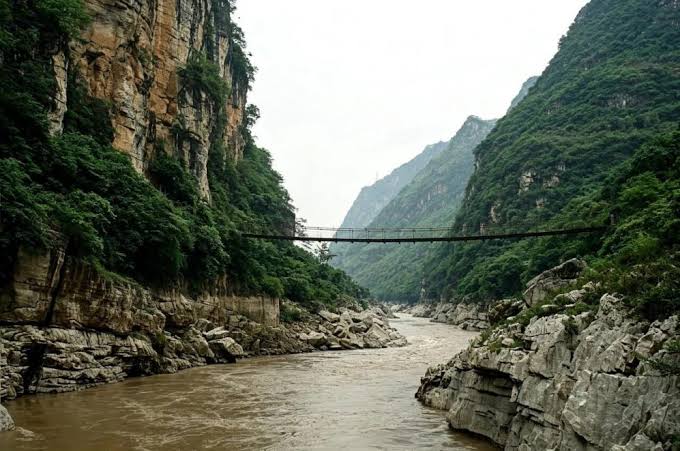
By Li Hongxing, People’s Daily
Two bridges over the Huajiang River in southwest China’s Guizhou province offer a striking glimpse into the remarkable transformation of China’s former revolutionary base areas.
The first is the Huajiang Chain Bridge. With its iron chains and wooden-plank deck, it spans a section of the Beipan River.
In 1935, as the Right-Flank Column of the Central Red Army advanced into southwestern Guizhou, the 11th Regiment of the Third Red Army Corps held its position here, buying precious time for the main force.
This wartime lifeline embodied the determination to overcome every challenge and fight for victory.
The other one, the Huajiang Grand Canyon Bridge, is pushing the boundaries of bridge construction in mountainous terrain through intelligent construction, innovative materials, advanced wind-resistant designs, and environmentally friendly building techniques.
Its construction, which has set multiple world records, has effectively bridged the “gaps” created by the mountains and canyons.
The old and new bridges now stand within sight of each other, offering a vivid picture of how former revolutionary base areas have changed, and Guizhou is far from the only example.
The opening of flights at Ruijin Airport in east China’s Jiangxi province has given people in southern Jiangxi and western Fujian, both former revolutionary base areas, a new “air corridor” linking them with the rest of the country.
The Jiajin Mountain Tunnel in southwest China’s Sichuan province has entered trial operation, turning the arduous journey “over” the mountain into a smooth passage “through” it and freeing local residents from worries about mountain closures caused by winter snow and ice.
Bridges spanning valleys, passenger planes roaring overhead, and tunnels piercing through mountains — the path to modernization for old revolutionary base areas is growing ever broader.
What is driving these once-remote areas to take on a new look?
Major undertakings call for riding the tide of the times. Development anchored in the prevailing trends of the era ensures the right direction and provides a strong driving force. That once-remote regions are no longer isolated, and less-developed areas no longer lag behind, owes much to their ability to seize opportunities of the times and align themselves with broader development trends.
Deep in the mountains of Baisha township in Jishui county, Jiangxi province, fruit farmers are now able to sell their produce through livestreaming. This mountain hamlet, where people once “shouted to communicate and traveled on foot”, is now equipped with 5G base stations, bringing new vitality to rural revitalization.
Today, China boasts nearly 4.6 million 5G base stations and over 30.53 million gigabit-capable network ports, achieving gigabit-level connectivity for every county and 5G coverage in every township.
From snow-capped mountains peaks to seashores, from the depth of dense forests to desert steppes, digital infrastructure functions like an intricate neural network, bridging the digital divide and bringing the benefits of digital and intelligent technologies to every corner of the country.
For many regions, abundant resources and convenient locations offer a head start. Yet experience shows that the availability or scarcity of resources and other factors of production is never an absolute determinant. With the right approach and by building on their own strengths, regions can turn limitations into new advantages and cultivate new growth drivers from what they already have.
During the Chinese People’s War of Resistance Against Japanese Aggression, the people and soldiers of the Shaanxi-Gansu-Ningxia Border Region stepped up production to break the enemy’s blockade, turning Qingyang in Gansu into the “granary of eastern Gansu.”
Today, Qingyang has once again taken stock of its strengths, drawing on its abundant energy resources and cool climate to develop data centers. Massive volumes of data can travel from Shanghai to the city in a matter of seconds, while computing power in Qingyang enables entrepreneurs in Guangdong in south China to render 3D models at high speed.
As server lights replace oil lamps and streams of digital data flow across the land, data and computing power have become a new kind of “grain,” helping drive local development while serving the needs of the country as a whole.
Industrial upgrading and regional development both require a focus on local strengths and core industries, as well as openness to wider cooperation and integration.
The Fujian-Ningxia collaboration is a case in point. New forms of cooperation, such as “Fujian enterprises + Ningxia resources” and “Fujian headquarters + Ningxia production bases,” are deepening and expanding. Freight trains under Ningxia’s multimodal transport “single-document system,” a system featuring one unified transport document covering the entire journey across different transport modes, carry full loads of goods bound for Fujian, Guangdong and beyond.
Mountains and seas no longer stand as barriers. What began as one-way assistance has evolved into two-way mutual collaboration. Cross-regional reconfiguration of production factors has made regional cooperation more resilient and substantive.
From the transformation of former revolutionary base areas to coordinated progress across regions, and from these changes to the steady and high-quality growth of China’s economy, China is continuing along its Long March in the new era, moving forward with courage and opening up new horizons.
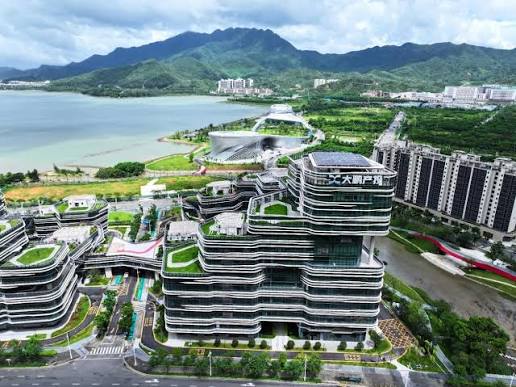
By Gu Yekai, People’s Daily
The World Intellectual Property Organization (WIPO) recently released its 2026 ranking of the world’s top 100 innovation clusters. China accounted for 25 clusters on the list, ranking first globally for the fourth consecutive year. The Shenzhen-Hong Kong-Guangzhou, Beijing, and Shanghai-Suzhou clusters all ranked among the top 10.
The ranking identifies regions with concentrated innovation activity based on indicators including international patent applications, scientific publications, and venture capital transactions. China’s consistent strong showing on the list, with innovation clusters flourishing across multiple regions, demonstrates both the scale and depth of its innovation ecosystem.
This leadership reflects years of strategic investment in coordinated regional tech development. Regional innovation networks have become a key pillar of the national innovation framework and provide a vital foundation for building China into a leading country in science and technology.
Coordinated development in the Beijing-Tianjin-Hebei region has fostered deeper collaboration, with Beijing focusing on research and development while Tianjin and Hebei translate research findings into manufacturing applications.
Meanwhile, the integrated development of the Yangtze River Delta has strengthened links among innovation hubs along the G60 Science and Technology Innovation Corridor, creating a cross-regional collaborative innovation platform spanning nine cities.
Stronger regional collaboration has cultivated a sound pattern of innovation with multiple hubs working in concert.
Beyond sheer numbers, the rankings also signal a comprehensive upgrade across China’s broader innovation system.
Innovation clusters capture the close links among research institutions, businesses, talent, and investment. In recent years, China has accelerated the commercialization of scientific and technological advances while nurturing and expanding new quality productive forces. Many of the innovation clusters on the list are also major industrial hubs.
Wuhan in central China’s Hubei province, ranked 17th, saw the value added of its industrial enterprises above the designated size in high-tech manufacturing rise 65.7 percent year on year in the first half of this year, as its optoelectronics and information technology industries gathered pace. Ningde in Fujian province, meanwhile, climbed 24 places in the rankings, driven in large part by innovation in its power battery industry.
This virtuous cycle between innovation and development is enabling more emerging and future-oriented industries to gain momentum and grow rapidly within these clusters.
China’s leading position in the number of top 100 global innovation clusters is also creating valuable opportunities for global partners.
An increasing number of foreign-invested companies are choosing to conduct research and pursue innovation in China, with many establishing R&D centers in these clusters. In the first seven months of this year, foreign applicants filed more than 42,000 invention patent applications in China. In 2025, foreign investment actually utilized in scientific research and technical services accounted for nearly 1/5 of China’s total utilized foreign investment.
China is also committed to sharing the benefits of innovation through openness and cooperation. In the first half of this year, Chinese developers of innovative drugs reached 81 licensing deals with overseas partners, while industrial robots made in China were exported to 141 countries and regions.
As Carsten Fink, WIPO’s chief economist, noted, Chinese innovation is pushing the frontiers of global science and technology across an expanding range of fields, with countries around the world increasingly benefiting from it.
Today, global innovation resources are increasingly converging on China through its innovation clusters.

Why the world is looking east: The growing global appeal of China’s innovation ecosystem

China’s former revolutionary base areas embrace new chapter of development

China leads the world in innovation clusters

-
 Uncategorized6 years ago
FG, states urged to harness flooding for ranching, others with technology – Agbaje
-
 Headlines11 years ago
Breaking: EFCC seals Borno House of Assembly, as Hon members take to their heels
-
 News12 years ago
Nigeria Security Operatives Stage Manhunt For Homosexual Perpetrator
-
 News10 years ago
How 21-year-old Girl fled community over accusation of lesbianism
-
 News11 years ago
Yobe Gov Moves Against Deputy
-
 Opinion7 years ago
7 signs she has friend zoned you
-
Technology5 years ago
Online job placement company headhunts women
-
 Headlines10 years ago
Borno Dep Gov Abducts Another Church Leader