
China
What makes China’s innovation so cool

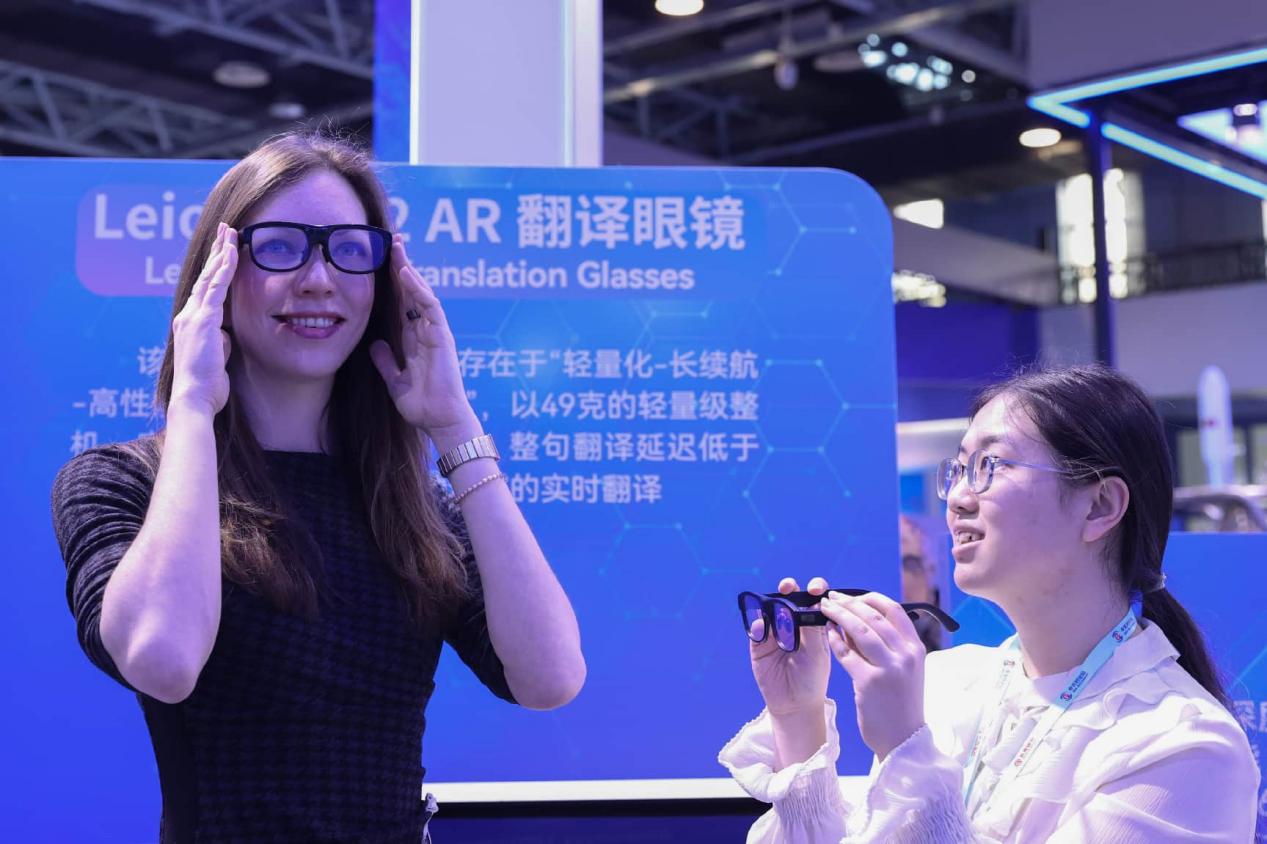
By He Yin, People’s Daily
At the recent 2026 Zhongguancun (ZGC) Forum Annual Conference, Kevin Kelly, founding executive editor of the international tech magazine Wired, stated that China stands at the forefront of technological breakthroughs, including AI, and is poised to emerge as a truly “cool” benchmark that inspires the world.
This view captures something many see happening in China: fueled by a bold, pioneering spirit, China’s tech innovation is stepping up globally. It’s bringing fresh energy to the world’s innovation scene.
What makes China cool is its pioneering spirit to take the lead on the world stage.
There was a time when some outside China saw its innovation as mostly copying others. Not anymore. Look at the facts: China’s leading in electric vehicles, wowing the world with its large AI models, expanding our moon knowledge with the Chang’e-6 far-side samples, and breaking new ground with super-strong carbon fiber materials. More and more “Created in China” achievements are filling gaps in global tech.
The constant stream of innovative outcomes stems from long-term commitment and accumulated strength.
Sustained increases in research and development investment, expansion of the talent pool, and persistent efforts to overcome core key technologies have enabled successive “from zero to one” breakthroughs.
As a British media outlet observed, the power to define “original innovation” is quietly shifting east, and Western enterprises now find themselves needing to keep pace with China in innovation, production and standard-setting.
What makes China “cool” is also how widely and deeply its technologies integrate into daily life.
For instance, “swarm intelligence” dazzled at the 2026 ZGC Forum Annual Conference: robots running food stalls, robotic arms plucking strings and sewing needles, and augmented reality translation glasses enabling real-time interpretation across more than 100 languages and dialects. Attendees marveled that these technologies have been highly mature and have entered a stage of large-scale application.
China possesses the world’s largest, most comprehensive and complete manufacturing system. Coupled with the massive, diverse application scenarios nurtured by its ultra-large market, any proven technology can rapidly iterate, adapt to real-world settings and scale up production. Turning lab breakthroughs into everyday tools and blending cutting-edge science with practical uses — that’s a signature trait of Chinese innovation.
What makes China “cool” is also its commitment to openness and inclusive global sharing.
Scientific and technological progress is a global and epochal endeavor, and opening up and cooperation represent the only right path forward.
While certain countries are building “small yards, high fences” in an attempt to monopolize competitive advantages through technological blockades, China has remained committed to opening up and cooperation, blazing a new trail of bridging divides via open source and achieving win-win results through shared development.
Chinese photovoltaic products have reached Pakistan, meeting local residents’ basic household electricity needs, supporting agricultural production and empowering small businesses.
Applications of China’s BeiDou Satellite Navigation System have been deployed in Sri Lanka, enabling accurate weather monitoring and greatly boosting the efficiency of fishermen’s operations.
China has also opened 10 major national scientific research facilities to the world, turning its self-developed infrastructure into public goods for the benefit of all.
China’s practice demonstrates that the true value of scientific and technological innovation is not to let a handful of countries monopolize advantages, but to enable more people to share the benefits of technological progress and advancing common global development through inclusive technologies.
Looking ahead to the 15th Five-Year Plan period (2026-2030), China’s innovation blueprint is growing clearer. The country will accelerate high-level self-reliance and strength in science and technology, foster new quality productive forces, intensify original innovation and core technological breakthroughs, expand the “AI+” initiative, and build a higher-level framework for international scientific cooperation.
A China that continues to advance original innovation, speed up industrial transformation, and expand opening up will bring even more “cool” technologies and broader opportunities to the world.
To jointly foster an open, fair, equitable and non-discriminatory environment for scientific and technological progress, and to translate the dynamism of cutting-edge innovation into common well-being for all humanity — this is China’s firm commitment, and a shared path leading all countries toward common prosperity.
By Yu Guangjun
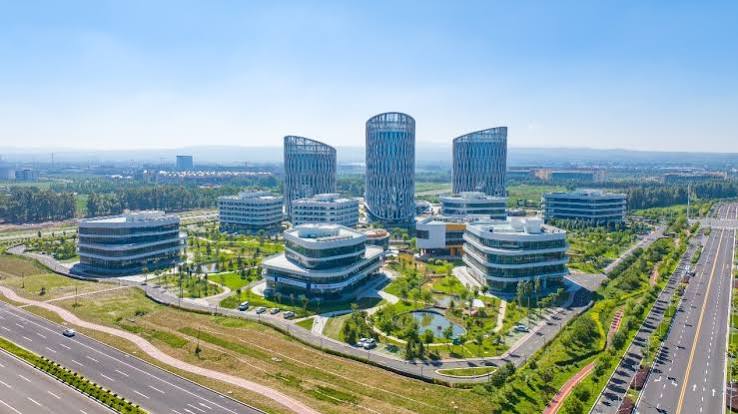
How long does it take to travel from Ulanqab in north China’s Inner Mongolia autonomous region to Beijing? By high-speed rail, roughly 100 minutes. Yet data traverses the same distance — more than 240 kilometers — in just 2.1 milliseconds via high-capacity fiber-optic cables.
Harnessing its abundant wind resources and cool climate, Ulanqab is rapidly emerging as a major computing hub. As of the end of August, the city had secured agreements for 109 computing projects, covering more than 7 million standard server racks, with 190,000 petaflops of computing capacity already in operation.
A Goldman Sachs report says that Ulanqab has emerged as one of the largest and fastest-growing AI computing clusters in the Asia-Pacific region.
How did a once-isolated city with limited industrial diversification become a rising force on the national and global stage?
For generations, Ulanqab’s harsh winters, low rainfall, and brief growing season constrained traditional agriculture. Its economy has long depended on farming and livestock, leaving many communities vulnerable to climatic fluctuations.
The city was once a key target of China’s poverty alleviation campaign. Over the decades, Ulanqab has earned a string of nicknames, including China’s “potato capital,” “oat capital,” and “wind power capital,” each reflecting its distinctive geography and economy.
Times have changed. Driven by the “East Data, West Computing” initiative, Ulanqab, this once austere landscape, is breaking free from the constraints of its traditional development path, rapidly emerging as a hub for cloud computing, AI computing, and token production. Behind this transformation lies a reimagining of how its natural resources can drive development.
Computing infrastructure requires enormous physical facilities. Servers run around the clock, creating two major challenges: securing a reliable power supply and dissipating the heat they generate.
This gives the computing industry different location priorities from traditional manufacturing. It does not necessarily need to be near densely populated cities; instead, it places greater emphasis on energy costs, climate, and available land. In this new equation, Ulanqab’s traditional geographic disadvantages are becoming assets in the digital age.
Take wind energy first. Ulanqab experiences 60 days of strong winds in spring alone. Combined with an annual solar radiation of 5,500-6,200 megajoules per square meter, these conditions give the city abundant wind and solar resources. Its wind and solar farms rank among the nation’s leaders in annual utilization hours, and installed renewable energy capacity has reached 20.67 million kilowatts.
Computing is an electricity-intensive industry. The more servers a data center operates and the greater its computing capacity, the more power it needs. Ulanqab’s wind and solar resources, once of limited use to traditional industries, now align with the massive electricity demand of data centers.
Cold weather carries new meaning here too. For traditional agriculture and livestock farming, low average temperatures and a short frost-free season limit the growing season. For data centers, however, the same cold climate offers a natural source of cooling.
Ulanqab’s average summer temperature is just 18.8 degrees Celsius, and the region enjoys nearly 10 months of natural cooling each year. Large data centers can use cool outdoor air to dissipate heat, reducing energy consumption by an estimated 30 percent. What once constrained agricultural production has become an economic resource that directly lowers computing costs.
Then there’s proximity. “Just a ‘step’ west of Beijing lies Ulanqab” is a slogan that captures the city’s close proximity to the capital. Ulanqab is over 300 kilometers from Beijing. For traditional goods, that distance can mean lengthy transport times and high logistics costs. For data, however, a dedicated 144-fiber, dual-route link to Beijing enables ultra-low-latency transmission.
Powered by green electricity, natural cooling and ultra-low-latency connectivity, Ulanqab is meeting growing demand from the Beijing-Tianjin-Hebei region for AI training, autonomous driving R&D and big data processing.
By converting its natural and geographic advantages into digital hub strengths, the city is emerging as a green computing powerhouse. Leading companies in AI and smart vehicles are setting up operations there, driving the development of a full industrial chain spanning computing infrastructure, hardware manufacturing, cybersecurity, data services and talent training. Ulanqab is emerging as a key hub in China’s integrated national computing network.
Ulanqab is evolving from a transportation hub into a computing hub, unlocking new avenues for growth in the digital economy.

By Chen Yuanyuan, People’s Daily
In 2006, Chinese science fiction writer Liu Cixin’s novel The Three-Body Problem began appearing in serial form in Science Fiction World magazine. Two decades later, the novel has not only made its mark on the world stage but also offered a lens through which to examine real-world developments. Artificial intelligence (AI), commercial spaceflight, and interstellar exploration are advancing at a remarkable pace, as humanity sets its sights on the far reaches of space. Recently, People’s Daily spoke with Liu about science fiction and the future of human civilization.
Q: What were you thinking when you first wrote The Three-Body Problem? How have your perspectives evolved since then?
Liu Cixin: Twenty years ago, as I typed The Three-Body Problem on a computer in my office deep in the mountains, I never imagined it would find such a large readership. First and foremost, The Three-Body Problem is a work of popular fiction, intended above all to tell a story that leaves readers stunned.
If I could step back into that moment, I might hesitate before including some of the darker themes woven into the story. They were originally narrative devices meant to engage readers, yet they have since been widely interpreted as reflections of what I later termed “cosmic sociology.” With such a vast readership today, I sometimes feel I have lit a fire that now burns beyond my control.
My fundamental worldview has remained unchanged over the past two decades. However, writing has grown more difficult. Generating fresh concepts for science fiction is increasingly challenging. On the one hand, AI is advancing rapidly. I am not worried about being replaced just yet, but what about 10 years from now? If AI can produce a superior manuscript in five minutes that would take a human writer five months to craft, what role will authors still play?
On the other hand, science fiction has permeated almost every aspect of our lives and society. Paradoxically, this has diluted its identity as a distinct literary genre, making it harder for science fiction writers to thrive as its influence continues to spread.
Contemporary Chinese science fiction is remarkably diverse. Younger writers often bring broader knowledge, wider perspectives, and a more nuanced understanding of how emerging technologies reshape society and everyday experience.
Q: What is your view of AI?
Liu Cixin: Most people are preoccupied with whether AI will replace or conquer humanity. My attitude is somewhat unconventional: I have a strong affection for AI.
Humans are inherently limited in intelligence, physical endurance, and cognitive capacity. We evolved to survive in the wilderness, not to explore the universe. Given our current capabilities, human civilization will never be able to expand beyond Earth into the wider universe.
AI, however, could help us overcome those innate limitations. Humanity’s grandest aspirations and ultimate goals could ultimately be realized with AI as a catalyst. AI points toward the future of Earth-based civilization. That future may not belong to humans, but it will still be meaningful.
In my personal routine, I rarely use AI. I treat it primarily as an advanced search tool. I have never used it to write fiction. Most of my creative time is devoted to developing story concepts, and AI still falls short in generating genuinely original, paradigm-shifting ideas that have never existed before.
Q: How should we prepare for a potential technological singularity?
Liu Cixin: As I understand it, the singularity refers to a point at which AI’s intelligence rapidly surpasses that of humans, bringing about unimaginable changes to all existing forms of human society, as well as to our political and economic systems. But this scenario may be an oversimplification.
Even if AI does advance at that speed, humanity still has many cards to play and can take various measures to guard against negative consequences. More likely, related technologies, such as human-machine integration and brain-computer interfaces, will also advance rapidly alongside AI. We may then see humans and AI increasingly merge with each other. As the saying goes: if we cannot compete with it, we might learn to integrate with it.
Q: What are your hopes for the future of space exploration?
Liu Cixin: I hope humanity will travel ever farther into space. Since the Apollo 11 moon landing, space has felt increasingly within our reach. I hope we can explore deep space, travel to Mars and the asteroid belt, and reach more distant celestial bodies, including the moons of Jupiter. We must keep looking outward, aiming for the farthest reaches of the observable universe.
If I were to travel to space, my priority would be to press my face against a viewport and gaze back at Earth. If I could witness just one moment in the universe, I would want to see the emergence of a truly intelligent civilization — to confirm that we are not alone and that cross-species communication is possible.
We now find ourselves in 2026, the very year in The Three-Body Problem when humanity is at its most bewildered and fearful in the face of an extraterrestrial crisis. Fortunately, reality has spared us from such a civilizational catastrophe, though new challenges continue to emerge worldwide.
As we navigate toward tomorrow, The Three-Body Problem remains a vital chapter in our cultural history. I eagerly await the next generation of visionary science fiction that captures the spirit of our era, charting a course toward the boundless sea of stars.
By Li Hongxing, People’s Daily
One way to gauge a region’s appeal to investors and entrepreneurs is to listen to those already embedded in its ecosystem. Take a European founder based in Shenzhen, south China’s Guangdong province, who has called the city home for over a decade. He reports receiving daily inquiries from overseas startup leaders eager to visit, explore partnerships, or establish operations in China.
The steady stream of visitors eager to explore Shenzhen and its tech companies offers a glimpse into the growing global interest in China’s innovation ecosystem.
This is no fleeting trend. It underscores investors’ confidence in China and their optimism about the country’s prospects. The steady flow of overseas technology delegations, increasingly regular cross-border business discussions, and growing interest in “looking east” go beyond conventional economic and trade ties. They offer a vivid illustration of how the world is gaining a new understanding of China and seeking opportunities for cooperation and shared development.
Increasingly, entrepreneurs, researchers, and investment institutions from around the world are traveling to China to learn firsthand about its innovation mechanisms, industrial dynamics, and development pathways. Looking back at China’s evolving economic and trade ties with the world, this surging eastward focus marks a profound shift and more comprehensive, objective recognition of China’s development.
This transition from trade-centric partnerships to co-innovation rests on tangible structural advantages. Foremost among them is industrial resilience. While several major economies face deindustrialization pressures and cyclical volatility, China has maintained steady growth alongside continuous upgrading. Its comprehensive manufacturing base, extensive infrastructure networks, and large domestic consumer market provide a natural shock absorber, enabling predictable expansion even amid global headwinds.
Clustering amplifies this advantage. At a robot industrial park in Foshan, Guangdong province, for example, more than 90 percent of the components and other products needed across the supply chain can be sourced within the park. A design revised in the morning can undergo testing on the very same day. Industrial clustering, closely connected supply chains, consistent policies, and an open, inclusive market give investors at home and abroad the confidence to make long-term commitments and develop their businesses in China.
If industrial resilience provides the foundation, China’s vibrant innovation ecosystem and the rapid development of new quality productive forces are what give the country its enduring appeal.
Confidence in China’s development rests on its innovation capabilities. From basic research to practical applications, breakthroughs are emerging across a wide range of technological fields.
These efforts are yielding visible results. In northwestern China, renewable energy projects in the Gobi Desert are powering data centers, transforming cities such as Ulanqab in Inner Mongolia and Qingyang in Gansu province into key nodes in the national computing network.
Meanwhile, in Hefei, east China’s Anhui province, the experimental nuclear fusion device known as an “artificial sun” and the Zuchongzhi 3.0 quantum computing prototype continue to set world records, strengthening China’s position in frontier technologies.
A recent report released by the World Intellectual Property Organization shows that China has 25 of the world’s top 100 innovation clusters, ranking first globally for the fourth consecutive year.
The more China innovates, the more the world stands to benefit. Some international observers have noted China’s increasingly important role in the global innovation ecosystem, while others have praised Chinese developers for pushing the boundaries of innovation every day. From quantitative growth to qualitative breakthroughs, and from individual advances to progress across entire systems, the vitality and rapid development of China’s innovation sector demonstrate that innovation can be made anywhere, and that practical action is what turns pioneers into leaders.
A strong industrial foundation and vibrant innovation are not enough on their own. They also need a favorable environment where they can flourish. By further opening up and continuously building a first-rate business environment that is market-oriented, law-based, and internationalized, China is strengthening the institutional foundations for attracting global resources and building momentum for shared development.
The advantages of this environment are reflected in more targeted services and the effective implementation of practical policies. Across China, for example, policies on entry visas, length of stay, residence, and support for integration are being improved to help foreign professionals put down roots, develop their careers, and grow their businesses.
From more targeted industrial policies and efficient government services to robust intellectual property protection and an open, diverse innovation culture, China is introducing concrete reforms that make its environment more inclusive and its institutions more supportive, further enhancing its appeal as a place to develop and invest.
Looking beyond the surface reveals the deeper reasons behind the growing interest in China’s innovation ecosystem. The visible sign is the steady stream of visiting delegations; beyond that lie expanding opportunities for cooperation; at the deepest level is global confidence in China’s industrial strength, innovation capabilities, and institutional environment. Against the backdrop of global industrial transformation and rapid technological change, this interest reflects a rational assessment by market participants.
Looking ahead, China will continue to consolidate its foundations for development with the same persistence as a craftsman driving a nail, pursue new heights in innovation with the determination of a climber, and expand international cooperation with an open and inclusive mindset. By doing so, China can turn the growing global interest in “looking east” into mutually beneficial outcomes, demonstrating that China’s success can contribute to a better future for the world.

WHO: Nigeria Records Zero Ebola Cases After Evacuation of Swiss Couple

Kwara celebrates Fela’s legacy with retrospective exhibition

2027: Ilorin West LG Boss Leads APC Mega Rally In Ubandawaki

-
 Uncategorized6 years ago
FG, states urged to harness flooding for ranching, others with technology – Agbaje
-
 Headlines11 years ago
Breaking: EFCC seals Borno House of Assembly, as Hon members take to their heels
-
 News12 years ago
Nigeria Security Operatives Stage Manhunt For Homosexual Perpetrator
-
 News10 years ago
How 21-year-old Girl fled community over accusation of lesbianism
-
 News11 years ago
Yobe Gov Moves Against Deputy
-
 Opinion7 years ago
7 signs she has friend zoned you
-
Technology5 years ago
Online job placement company headhunts women
-
 Headlines10 years ago
Borno Dep Gov Abducts Another Church Leader