
Politics
WHY 2027 MAY BE PDP’S EASIEST BENUE VICTORY YET


By: Aondoakaa Tersugh Daniel | 04/06/2026
Benue State has a political record that deserves more honest attention than it usually receives. Three gubernatorial elections stand out, not because they were routine contests, but because they were fought at moments when the stakes went far beyond who would occupy the Government House in Makurdi. In 2003, the PDP faced down a strong ANPP challenge and won. In 2011, the ACN came with considerable momentum and the PDP held. In 2019, in what remains perhaps the most ideologically charged election the state had seen in years, the PDP defeated the APC under circumstances where the outcome carried a meaning that ordinary ballot arithmetic alone could not capture.
What connects those three victories is not campaign funding or party structure, at least not primarily. What connects them is something the Benue electorate appeared to understand at a gut level at each of those moments: the PDP candidate was, whether perfectly or imperfectly, standing between the state and forces that had no interest in Benue’s survival as a territorial and human reality. Voters did not simply choose a party. They chose a shield. That is a distinction worth sitting with.
The configuration going into 2027 is not new. It is, to a degree that should unsettle anyone paying attention, a near replication of the exact conditions that produced those three victories. And this is where the commentary has to be direct.
The allegation that Governor Hyacinth Iormen Alia received substantial Fulani sponsorship ahead of the 2023 election, on an informal understanding that their settlement on Benue land would be facilitated, remains unproven. No court has established it, and fairness requires that distinction to be stated plainly. But what requires no court is what has been happening in Benue communities under this administration.
Under former Governor Samuel Ortom, the herdsmen attacks were vicious and frequent, but they followed a pattern of strike and retreat. The attackers came, killed, and left. There was no lingering. Under Alia, something in the character of these attacks has changed in a way that is difficult to explain away. Communities are not merely raided anymore. They are emptied. People are not just killed. They are displaced, and then the land they fled is occupied. The attackers are staying. They are settling. And the man whose constitutional duty it is to stop all of this has stood before cameras and described what is happening as mere skirmishes, denying with apparent comfort that genocide is taking place inside his own state. That is not a political disagreement. That is a moral catastrophe delivered in a press statement.
That posture alone recreates the precise condition that pushed Benue voters toward the PDP in every previous difficult election: a leading candidate whose relationship with the enemies of Benue territory was, at the very best, one of suspicious ease.
Chief Michael Kaase Aondoakaa SAN enters this race carrying two arguments simultaneously, and both of them are strong. The first is the territorial argument just described. The second is less dramatic but equally felt by ordinary people: the Benue civil service is in a state of near collapse. The bureaucracy is paralysed and the basic machinery of governance is grinding rather than running. This political argument that does not need embellishment.
The arithmetic of Benue political history points in one direction. Every time the conditions aligned to make the PDP the obvious defender of Benue interests against external threat or internal abandonment, the PDP won. The conditions in 2027 are not merely similar to those moments. They are, in critical respects, starker. The administrative failure is not a campaign claim. It is four years of lived reality. The state’s indifference to mass killings and occupation is not a rumour. It is documented in satellite images, funeral photographs, and the testimonies of the displaced.
The PDP does not need to invent a crisis to campaign on. The crisis is already governing the state. And if the Benue pattern holds, and this particular pattern has not broken once in the three elections that mattered most, then 2027 may not be the party’s most gruelling fight. It may, quietly and almost without precedent, be its most straightforward one.

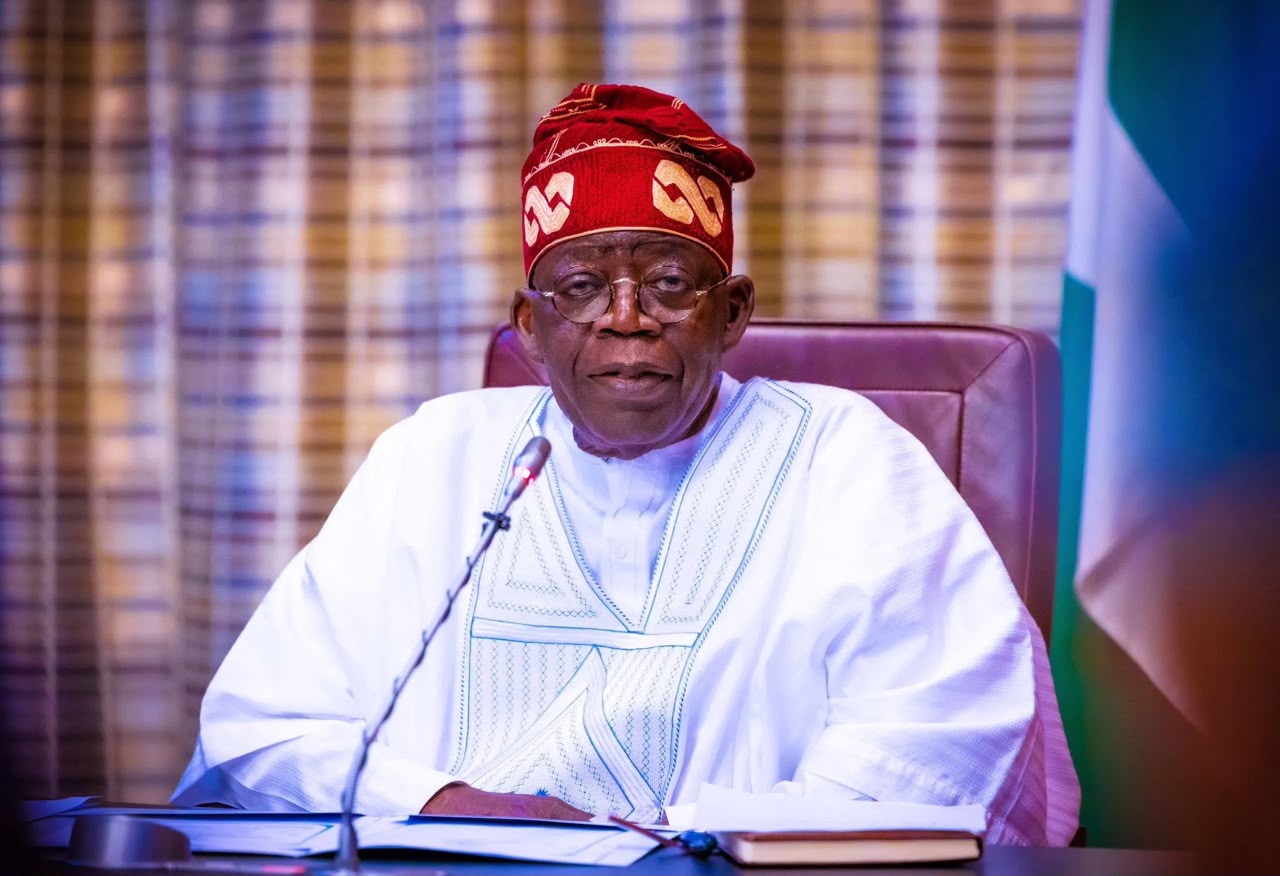
Bauchi Residents Chant ‘Ba Ma Yi Atiku, Sai Tinubu’ as President Intensifies 2027 Campaign Mobilisation
Residents in Bauchi State have reportedly expressed support for President Bola Ahmed Tinubu, chanting “Ba Ma Yi Atiku, Sai Tinubu” (We don’t want Atiku, only Tinubu) during a gathering captured in a video circulating on social media.
The chant, which references former Vice-President Atiku Abubakar, comes amid growing political activities and mobilisation ahead of the 2027 presidential election.
In the footage, a crowd can be seen gathered at what appears to be a public event, chanting the slogan in support of President Tinubu.
The chant, which references former Vice president Atiku Abubakar, comes amid growing political activities, internal wranglings, disputes in court by the other faction led by Nafiu Bala Gombe, lack of focus of the executives and the call for suspension of Rauf Aregbesola by the youths and other short comings confronting the party ahead of the mobilisation of the 2027 presidential election.
The development comes as the ruling All Progressives Congress (APC) intensifies its nationwide mobilisation campaign ahead of the next general election.
President Tinubu is seeking re-election for a second term under the APC platform, while Atiku Abubakar remains one of the opposition figures associated with the emerging 2027 presidential contest.
Bauchi State is politically significant in the North-East, particularly as political parties intensify efforts to consolidate their support bases ahead of the election.
The reported chant has added another dimension to the emerging political contest, particularly as the Tinubu administration continues to highlight its economic reforms, infrastructure investments and social intervention programmes as evidence of progress since assuming office in May 2023.
One of the administration’s notable economic milestones is the reported improvement in Nigeria’s GDP growth. According to the National Bureau of Statistics (NBS), the country’s real Gross Domestic Product grew by 4.43 per cent in the second quarter of 2026, compared with 3.89 per cent in the first quarter.
The growth was supported by improved performance in the oil and non-oil sectors, including agriculture, manufacturing, financial services and information and communications technology.
Similarly, Nigeria’s headline inflation rate declined to 14.63 per cent in September 2026 from 15.39 per cent in August, representing a further easing of inflationary pressure, although the high cost of living remains a major concern for many households but Nigerians are proactive people knowing fully well that the reforms are indeed short term that will eventually turnaround their trajectory for good.
Another significant intervention is the Nigerian Education Loan Fund (NELFUND), established to expand access to tertiary education by providing financial assistance to students who might otherwise struggle to meet their educational expenses.
As of November 9, 2026, NELFUND had disbursed approximately N375.28 billion to students and 320 tertiary institutions, with more than 1.67 million student loan beneficiaries recorded. The initiative represents one of the administration’s major social investment programmes targeting young Nigerians.
On infrastructure, the administration has embarked on major road projects designed to improve transportation, trade and economic integration across the country.
Among the flagship projects are the Lagos-Calabar Coastal Highway, the Sokoto-Badagry Superhighway, the Calabar-Ebonyi-Abuja Highway and the dualisation of the Akwanga-Jos-Bauchi-Gombe-Biu-Maiduguri road corridor.
The latter is particularly significant to the North-East and North-Central regions, as improved connectivity is expected to facilitate agricultural transportation, commercial activities and the movement of people and goods.
The administration has also pursued reforms in the electricity sector through the Electricity Act 2023, which provides a framework for states to establish and regulate their own electricity markets, potentially encouraging investments and improving power supply.
In the petroleum sector, the removal of fuel subsidy and the unification of foreign exchange markets remain among the administration’s defining policy decisions. While the reforms have attracted criticism over their immediate impact on household purchasing power, the government maintains that they are necessary to address longstanding structural weaknesses in the economy.
For the APC, the growing political mobilisation across Northern Nigeria is strategically important, considering the region’s voting strength and influence in presidential elections.
The administration’s infrastructure investments, student loan programme, social intervention initiatives and economic reforms are among the issues likely to feature prominently in its campaign messaging ahead of 2027.
The reported Bauchi chant may therefore be viewed as an indication of the political messaging and support mobilisation taking shape ahead of the election and the people’s endorsement of the policies and programmes of the present administration.
As the political atmosphere gradually intensifies, the APC is expected to rely on its record in government, ongoing development projects and its campaign structures to make the case for another four-year mandate and the recent events have shown that the present administration has mass followership at the grassroots in the North who are desirous to see changes and development percolate to every households.
However, the opposition is also expected to scrutinise the administration’s performance and shortfalls including the overall welfare of Nigerians.
With the 2027 presidential election approaching, the contest is increasingly shaping up around competing arguments over economic management, national development, governance and the future direction of the country. The Chant of ‘Ba Ma Yi Atiku, Sai Tinubu’ as the President Intensifies his 2027 Campaign Mobilisation says a lot of what is to come in the few months ahead and the direction of the North as to who their choice is and what the President really has in stock for the region, coupled with the empirical evidence that the region is ahead in infrastructural development across the country.
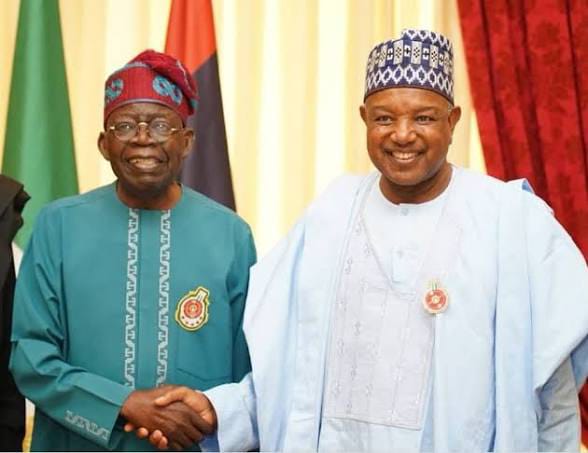
The Atiku Bagudu Grassroots Network for Tinubu 2027 has dismissed claims that a so-called “Tinubu Must Go” campaign is gaining meaningful traction in Northern Nigeria, describing the narrative as exaggerated and disconnected from the realities on the ground.
In a statement signed by Hon. Ali Oriri, the network declared that President Bola Ahmed Tinubu continues to enjoy solid and expanding support across the North due to ongoing infrastructure delivery, security gains and economic reforms that are beginning to yield results for ordinary citizens.
According to the group, attempts to project isolated discontent as a widespread northern revolt ignore the substantial work being done by the administration and the loyalty of key stakeholders who recognise the difficult but necessary decisions taken since 2023.
The network said its mobilisation efforts are already consolidating grassroots structures in preparation for the 2027 elections.
“The so-called Tinubu Must Go movement is making noise, but noise is not the same as organised political strength,” Oriri stated.
“What we see in the North is growing appreciation for the roads being constructed, the power projects advancing, and the renewed focus on security that is gradually restoring confidence in many communities.”
He added: “President Tinubu inherited deep structural problems. The reforms he embarked upon were tough, but they are laying the foundation for a stronger economy.
“Our network is on the ground educating our people on these realities and organising them for 2027.”
The Atiku Bagudu Grassroots Network for Tinubu 2027 emphasised that Northern Nigeria remains a critical political base and that genuine engagement with traditional institutions, youth groups, women organisations and local political actors is already yielding positive responses.
Oriri noted that the network is working closely with like-minded stakeholders to counter misinformation and highlight measurable progress in infrastructure and security across the region.
He pointed to major highway projects, rail developments and increased investment in the security architecture as evidence that the administration is addressing the very concerns being exploited by critics.
The group insisted that any assessment of public mood in the North must go beyond selective voices and examine the broader picture of development and stability efforts.
“We are not blind to the challenges of cost of living and insecurity. No serious person is,” Oriri said.
“But we also see the deliberate investments in roads that link our markets, the push to improve electricity transmission, and the operational successes being recorded by our security agencies. These are not imaginary.”
“The people of the North understand that sustainable progress requires continuity of purposeful leadership.
“That is why the Atiku Bagudu Grassroots Network is mobilising support for President Tinubu’s re-election in 2027,” he continued.
Oriri further accused promoters of the “Tinubu Must Go” campaign of seeking to capitalise on temporary hardships without offering a coherent alternative that addresses the root causes of Nigeria’s economic and security challenges.
He maintained that the network’s approach is rooted in constructive engagement rather than opportunistic agitation.
According to the statement, the group will intensify town-hall meetings, community outreaches and stakeholder consultations across northern states in the coming months to deepen understanding of the administration’s policies and consolidate electoral structures.
“Our loyalty is to the Nigerian people and to the progress that is being made under this administration,” Oriri declared.
“We will not allow a campaign built on frustration alone to define the political conversation in the North.
“President Tinubu has shown the courage to take hard decisions. The Atiku Bagudu Grassroots Network for Tinubu 2027 stands firmly with him because we believe continuity is essential for the gains already recorded in infrastructure and security to be fully realised,” he concluded.

The All Progressives Congress (APC) Presidential Campaign Council (PCC) has appointed Hon. Hafiz Muhammad Kawu Ibrahim, OON, mni, as Director of Grassroots Engagement and Mobilisation, entrusting the former lawmaker and public administrator with the crucial responsibility of strengthening the party’s connection with supporters and voters across the country.
The appointment is widely viewed as a strategic move by the ruling party to reinforce its grassroots structures and deepen engagement at the ward, local government and state levels ahead of future political contests. As Director of Grassroots Engagement and Mobilisation, Kawu is expected to coordinate outreach programmes, grassroots campaigns and stakeholder engagement initiatives aimed at expanding the party’s support base nationwide.
A seasoned politician with extensive experience in governance and public service, Hafiz Kawu previously served as Special Assistant in the Office of former Vice President Yemi Osinbajo before representing Tarauni Federal Constituency in the House of Representatives between 2019 and 2023 under the platform of the APC.
During his time in public office, he earned a reputation for grassroots development, constituency engagement and people-oriented representation. His political journey has been marked by active involvement in community empowerment programmes, youth development initiatives and sustained interactions with party supporters at the grassroots level. Reports on his public service record consistently highlight his commitment to maintaining close ties with constituents and promoting inclusive development.
Political observers say these attributes make him a natural fit for the role. Grassroots mobilisation remains one of the most critical components of electoral success in Nigeria, and many within the APC believe Kawu’s experience, accessibility and understanding of local political dynamics position him well to lead the party’s engagement efforts across diverse communities.
Beyond his legislative experience, Kawu currently serves as Executive Commissioner (Technical) at the National Pension Commission (PenCom), a position that further reflects his administrative competence and policy experience.
Supporters of the APC have expressed confidence that his leadership will further energise the party’s grassroots machinery, particularly among youths, women and first-time voters. They believe his ability to engage communities directly and communicate government policies in relatable terms will help strengthen public participation and reinforce support for the ruling party’s agenda.
A recipient of the national honour of Officer of the Order of the Niger (OON) and a member of the National Institute for Policy and Strategic Studies (NIPSS), Hafiz Muhammad Kawu Ibrahim brings both political experience and institutional knowledge to his new role.
With this appointment, the APC appears to have placed a trusted grassroots operator at the heart of its mobilisation strategy, underscoring the party’s recognition of the pivotal role grassroots engagement will play in shaping its future electoral fortunes. For many within the ruling party, Hafiz Kawu’s emergence as Director of Grassroots Engagement and Mobilisation represents not only a reward for years of service but also an investment in a political figure widely regarded as capable of connecting government policies with the aspirations of the people.


NDIC Takes Deposit Protection, Financial Literacy Campaign to Oyo Corps Members

Orji Kalu: Discipline, Proper Management Made Enyimba Great.

Kwara 2027: I’ll Prioritise Security If Elected – APC Rep Candidate, Ajakaye

-
 Uncategorized6 years ago
FG, states urged to harness flooding for ranching, others with technology – Agbaje
-
 Headlines11 years ago
Breaking: EFCC seals Borno House of Assembly, as Hon members take to their heels
-
 News12 years ago
Nigeria Security Operatives Stage Manhunt For Homosexual Perpetrator
-
 News10 years ago
How 21-year-old Girl fled community over accusation of lesbianism
-
 News11 years ago
Yobe Gov Moves Against Deputy
-
 Opinion8 years ago
7 signs she has friend zoned you
-
Technology5 years ago
Online job placement company headhunts women
-
 Headlines11 years ago
Borno Dep Gov Abducts Another Church Leader