
News
Trend of stable economic performance remains unchanged in China

By Lu Yanan, People’s Daily
“The pandemic made a big impact on economic operations in April, but the impact was short-lived and external. The fundamentals sustaining the steady and long-term growth of the Chinese economy remain unchanged. The overall trends of economic transformation and upgrading and high-quality development remain unchanged,” Fu Linghui, spokesperson of China’s National Bureau of Statistics (NBS), said at a press conference held on May 16.
The country has many favorable conditions for stabilizing the economy and achieving the expected development goals, according to Fu.
“With various policies and measures helping effectively coordinate anti-epidemic responses and social and economic development, the Chinese economy can overcome the impact of the pandemic, gradually achieve stable growth and pick up pace, and maintain stable and sound development”, Fu said.
Due to the resurgence of COVID-19 cases at home, China’s value-added industrial output dropped by 2.9 percent year on year in April, while the country’s index of services production declined by 6.1 percent and the total retail sales of social consumer goods fell 11.1 percent from the same period last year, according to data released by the NBS on the same day.
April witnessed frequent resurgence of local COVID-19 cases in many provinces across the country. As residents shopped in offline stores and ate out less, sales of non-essential goods and the catering sector were significantly affected. In particular, businesses above designated size in the seriously hit Yangtze River Delta region and the northeastern region of the country suffered a year-on-year reduction of more than 30 percent in their retail sales of consumer goods.
“Overall, the decline in consumption in April was mainly due to the temporary impact of the pandemic. The pent-up consumption potential will be gradually unleashed when the pandemic is brought under control and production and life return to normal,” Fu said.
Since mid-to-late April, domestically transmitted COVID-19 infections have been on the decline and the epidemic situation in northeast China’s Jilin province and east China’s Shanghai, two of the worst-hit regions in the latest COVID-19 outbreaks, is gradually improving, which is helpful in creating a favorable environment for consumption, according to Fu.
The country’s efforts to maintain stable macroeconomic performance and strengthen assistance for enterprises to stabilize employment and create more jobs will ensure people’s spending power, Fu said, adding that as policies to promote consumption take effect, the country is expected to continue its consumption recovery.
China’s industrial production was seriously affected by COVID-19 resurgence in April. Impeded transportation and logistics, among other factors, have led to a decline in industrial output, with the value-added industrial output falling by 2.9 percent year on year in the month and that of the manufacturing sector dropping by 4.6 percent.
The poor performance of the manufacturing sector was mainly the result of the impact of the pandemic on equipment manufacturing sector, including automobile industry, according to Fu, who disclosed that the added value of automobile manufacturing fell by 31.8 percent year on year in April.
Regionally, the Yangtze River Delta region and the northeastern region of the country saw their value-added industrial output drop by 14.1 percent and 16.9 percent, respectively, on a year-on-year basis, which was mainly caused by the suspension of production and work in some enterprises affected by the pandemic.
Although China’s overall industrial production slowed down in April, some industries, including energy, basic consumer goods and high-tech manufacturing, still maintained growth and showed strong resilience.
In April, the value added of the high-tech manufacturing sector rose 4 percent year on year. Electronics and communication equipment manufacturing industry, in particular, registered a 9.7-percent growth in added value.
“The trend of industrial upgrading remains unchanged, which mirrors that the trend of sound growth of China’s economy in the long term remains unchanged,” Fu pointed out.
Industrial production is under pressure, which mainly comes from insufficient market demand, weak connection between production and marketing, impeded industrial and supply chains, hindered production cycle, rising production costs as well as declined profitability, Fu noted, stressing that despite these difficulties, the country’s complete industrial system and sound supporting capacity remain unchanged.
With the pandemic being gradually brought under control, traffic and logistics will be smoothened and production cycle will be improved, Fu said. More importantly, the continuous implementation of policies on tax and fee reductions and assistance for enterprises will help shore up business confidence and improve business operations, eventually facilitating continuous recovery of industrial production, Fu added.
Since mid-to-late April, China’s epidemic situation has been generally improving. Some hard-hit regions in the country have been advancing the resumption of production and work in an orderly manner.
So far, nearly 50 percent of the over 9,000 industrial enterprises above designated size in Shanghai have resumed work.
Freight transport services, which were badly affected by the COVID-19 resurgence earlier this year, continued to recover in May, while indicators like electricity generation output also improved.
“Since the beginning of this year, macro-control policies have played a greater role. A new package of tax-and-fee policies have been effectively implemented with liquidity maintaining at a reasonable and ample level. Macro policies have provided greater support for industries facing challenges and key fields and will continue to yield fruits,” said Fu.
On the whole, the impact of the COVID-19 resurgence will not change the trend of stable economic performance in China or the Chinese economy’s strong resilience, huge potential, and broad space for growth, Fu said.
The implementation of various policies will help the national economy recover at a faster pace and realize stable operation and growth, he said.
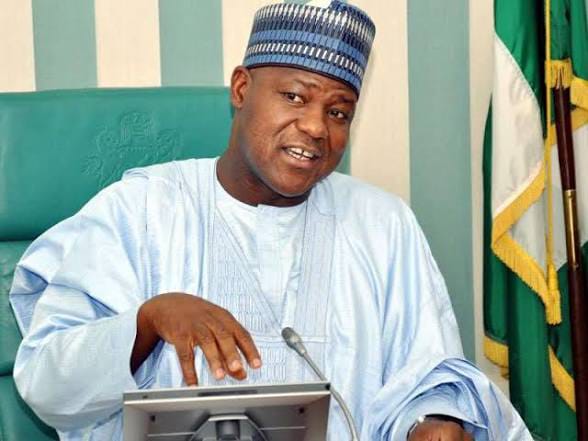
Former Speaker of the House of Representatives and Chairman of the Board of the National Credit Guarantee Company Limited (NCGC), Rt. Hon. Yakubu Dogara, CFR has expressed deep sorrow over the Nigerian Air Force aircraft crash that claimed the lives of 32 persons near Igbokoda, Ondo State. Dogara described the tragedy as a heartbreaking loss to the nation, noting that the deaths of the victims have left a painful void in the country’s defence and security community.
In a statement, the former Speaker extended his condolences to President Bola Ahmed Tinubu, Commander-in-Chief of the Armed Forces, the Nigerian Air Force, and the families of those who perished in the unfortunate incident.
He said the nation shares in the grief of the bereaved families and the Armed Forces at this time of immense sorrow, adding that the sacrifices of those who lost their lives in service to the country will not be forgotten. “The nation mourns with the families of the deceased and stands in solidarity with the Armed Forces during this difficult period,” Dogara stated.
He also commiserated with the Chief of Air Staff, officers and men of the Nigerian Air Force, praying that God grants them the fortitude to bear the painful loss.
According to him, moments such as this call for national unity, reflection and collective support for the families and institutions affected by the tragedy.
Dogara paid tribute to the victims, describing them as patriotic Nigerians whose commitment and service contributed to the security and stability of the nation. He further applauded the efforts of emergency responders, rescue teams and all personnel involved in the aftermath of the crash, commending their courage and professionalism under difficult circumstances.
The former Speaker prayed God to comfort their families, friends and colleagues.
He also offered prayers for the safety and protection of members of the Armed Forces and for continued peace, unity and progress in Nigeria.
The Nigerian Air Force aircraft crashed near Igbokoda, Ondo State, resulting in the death of 32 persons and plunging the nation into mourning. Authorities are yet to make public the cause of the accident as investigations continue.
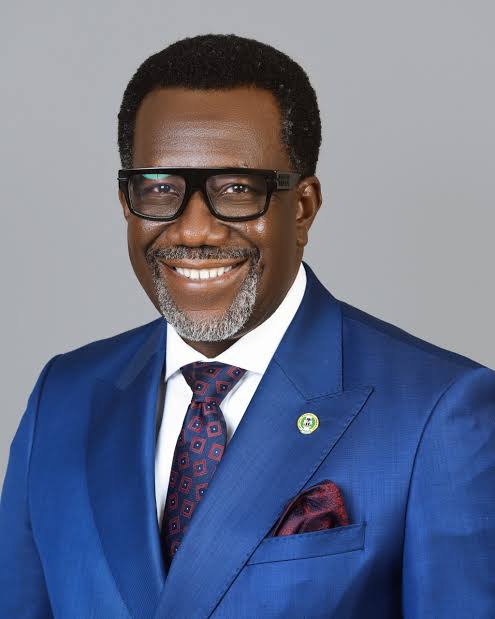
The Centre for Credible Reforms and Institutional Accountability (CCRIA) has commended the Commissioner for Insurance and Chief Executive Officer of the National Insurance Commission (NAICOM), Mr Olusegun Ayo Omosehin, for promoting transparency and accountability in the ongoing reforms of Nigeria’s insurance industry.
The centre said the implementation of the Nigerian Insurance Industry Reform Act (NIIRA) 2025 had ushered in a new phase of development for the sector, with stronger regulatory standards, improved capitalisation and greater emphasis on protecting policyholders.
Dr Aminu Abubakar Aminu, president of the centre, said this in a statement at the weekend.
Aminu commended President Bola Tinubu and the National Assembly for the enactment of NIIRA, describing the legislation as a major step towards addressing longstanding challenges in the insurance industry.
“The enactment of the Nigerian Insurance Industry Reform Act is a significant milestone in the development of Nigeria’s insurance sector. We commend Mr President and the National Assembly for recognising the need to modernise the legal and regulatory framework governing the industry. NIIRA provides the foundation for an insurance sector that is better capitalised, more accountable, more responsive to policyholders and better equipped to contribute meaningfully to the Nigerian economy,” he said.
The centre also praised Omosehin for his leadership of NAICOM, saying his extensive experience as an insurance professional had positioned him to effectively implement the new regulatory framework.
“We consider the appointment of Mr Olusegun Ayo Omosehin as Commissioner for Insurance and Chief Executive Officer of NAICOM a timely and appropriate decision. He is a seasoned insurance professional with many years of experience in the industry, and his understanding of the sector gives him the practical knowledge required to lead an important reform process of this nature. We commend him for the direction he has provided since assuming office and for his commitment to strengthening the industry,” Aminu said.
According to the centre, the ongoing recapitalisation exercise was among the important steps taken to strengthen the financial capacity of insurance companies and improve their ability to meet obligations to policyholders.
Aminu said the reforms were already producing early gains and should be sustained through consistent implementation.
“The early developments under NIIRA demonstrate that the reform is not merely a legislative exercise but a process capable of producing measurable improvements in the industry. Stronger capital requirements, improved supervision and greater attention to policyholder protection will ultimately create an insurance market that Nigerians can trust. We encourage NAICOM to remain focused on the implementation of the Act and to continue providing clear guidance to operators and other stakeholders,” he said.
The centre noted that the reforms would also help deepen insurance penetration and strengthen the industry’s contribution to national economic development.
It urged insurance companies, brokers, reinsurers, professional bodies and other stakeholders to embrace the new framework and work with NAICOM to achieve the objectives of the legislation.
“The success of NIIRA will require the cooperation of every stakeholder in the insurance ecosystem. Operators must see the reforms as an opportunity to strengthen their institutions, improve their services and regain the confidence of Nigerians. A well-regulated insurance industry can mobilise long-term capital, protect businesses and households against risks and support investment and economic growth. These are benefits that go beyond the insurance industry itself,” Aminu said.
Aminu emphasized that the centre was particularly encouraged by the emphasis on policyholder protection under the new framework, noting that public confidence remained critical to the growth of insurance in Nigeria.
He said Nigerians should be able to purchase insurance products with confidence that operators had the financial capacity and institutional structures required to honour legitimate claims.
The president further urged NAICOM to sustain its engagement with stakeholders while ensuring that the provisions of NIIRA were implemented transparently and consistently.
“What is required at this stage is continuity, professionalism and commitment to the objectives of the law. The reforms must be sustained beyond the initial implementation period so that the gains can become permanent features of the industry. We believe NAICOM, under the leadership of Mr Ayo Omosehin, has an important responsibility to ensure that the momentum is maintained, and we encourage all stakeholders to support the commission in delivering on this mandate,” he said.
The centre said the successful implementation of NIIRA would strengthen confidence in the insurance sector, improve the protection available to policyholders and position the industry to play a greater role in Nigeria’s economic transformation.
It also called for continued collaboration between NAICOM, insurance operators and other stakeholders to ensure that the objectives of the new law were fully achieved.

As Nigerians from across the United States gathered in Manhattan to celebrate Nigeria’s Independence Day in grand style, Hon. Amb. Jim Okolo used the occasion to share an inspiring message about Nigeria’s immense possibilities, rich cultural heritage, and promising future.
Speaking with members of the media during the colourful celebration, Hon. Amb. Okolo described Nigeria as one of the most blessed nations in the world, endowed with abundant natural resources, a dynamic population, and a cultural heritage that continues to earn global recognition.
According to him, Nigeria possesses enormous deposits of valuable minerals and other natural resources that, if fully harnessed, can accelerate economic growth and create prosperity for millions of citizens. He noted that the country is strategically positioned to become a leading destination for investment in mining, agriculture, technology, manufacturing, and infrastructure development.
Beyond its natural wealth, Hon. Amb. Okolo emphasized that Nigeria’s greatest strength remains its people. He praised the creativity, resilience, intelligence, and entrepreneurial spirit of Nigerians, pointing out that Nigerian professionals, innovators, academics, and business leaders continue to excel in various sectors across the world.
The respected diplomat also spoke passionately about Nigeria’s unique cultural identity. From the colourful festivals of its diverse ethnic groups to its globally celebrated music, fashion, literature, cuisine, and film industry, he described Nigeria as a nation whose cultural influence extends far beyond its borders.
He noted that Nigeria’s diversity is one of its greatest treasures, bringing together hundreds of ethnic nationalities with distinct traditions and languages that collectively form a vibrant and unified national identity.
While addressing questions on security, Hon. Amb. Okolo maintained that although Nigeria faces certain security challenges, the situation is not always as severe as often portrayed by social media discussions and sections of the international media. He stressed that millions of Nigerians continue to live, work, study, invest, and contribute meaningfully to society every day.
He called on the international community, investors, and members of the diaspora to focus on Nigeria’s strengths, opportunities, and achievements rather than allowing negative narratives to define the country’s image.
“Nigeria remains a land of opportunity, innovation, and hope. It is a nation blessed with extraordinary human capital, abundant resources, a rich cultural heritage, and a people whose determination and resilience continue to inspire the world,” he said.
The celebration was attended by several distinguished personalities, including the United Nations Secretary-General, Hajia Amina Mohammed, the Nigerian Ambassador to the United Nations, diplomats, business leaders, community stakeholders, and prominent members of the Nigerian diaspora.
The event transformed parts of Manhattan into a vibrant showcase of Nigerian pride, featuring cultural exhibitions, traditional performances, business networking sessions, authentic Nigerian cuisine, and displays highlighting the country’s achievements and diversity.
Adding excitement to the festivities were thrilling performances by internationally acclaimed Nigerian music stars Patoranking, Runtown, and BNXN (formerly known as Buju), who entertained thousands of attendees and demonstrated the growing global appeal of Nigerian music.
As the celebration came to a close, the message from Hon. Amb. Jim Okolo resonated strongly among participants: that Nigeria is far more than the challenges often highlighted in headlines. It is a nation blessed with extraordinary talent, vast opportunities, cultural richness, and the potential to achieve even greater success on the global stage.


Dogara Mourns Victims of Air Force Plane Crash, Condole President Tinubu, Military

The changing face of Nasarawa at 30

COALITION OF RENEWED HOPE REACTS TO NATIONAL FRONT BURNER ISSUES: TINUBU IS FIXING NIGERIA, OPPOSITION SHOULD STOP PLAYING POLITICS WITH PAIN.

-
 Uncategorized6 years ago
FG, states urged to harness flooding for ranching, others with technology – Agbaje
-
 Headlines11 years ago
Breaking: EFCC seals Borno House of Assembly, as Hon members take to their heels
-
 News12 years ago
Nigeria Security Operatives Stage Manhunt For Homosexual Perpetrator
-
 News10 years ago
How 21-year-old Girl fled community over accusation of lesbianism
-
 News11 years ago
Yobe Gov Moves Against Deputy
-
 Opinion7 years ago
7 signs she has friend zoned you
-
Technology5 years ago
Online job placement company headhunts women
-
 Headlines10 years ago
Borno Dep Gov Abducts Another Church Leader