
News
Africans should rewrite narrative for progressive Africa – Dabiri-Erewa

Africans should rewrite narrative for progressive Africa – Dabiri-Erewa
By Temitope Ponle
Mrs Abike Dabiri-Erewa, Chairman, Nigerians in Diaspora Commission (NiDCOM), said the onus lies on Africans, at home and in the diaspora, to rewrite the narrative for a progressive Africa.
Dabiri-Erewa said this at a joint world news conference ahead of the Global African Diaspora Symposium (GADS) on Wednesday in Abuja.
The news conference was held virtually for participants from other countries, and physically for participants in Abuja.
The chairman said the narrative for a progressive Africa was because the African Diaspora had proven their talents, vibrancy and competence in all fields, internationally.
She said there was the need for Africans to continue such positive actions to dismiss the negative perception of its citizens abroad.
“It is good to know that efforts are being made by Africa to effectively harness the human and economic potentials of its diaspora, for continental, national and even grassroots development.
“This is demonstrated in the areas of diaspora remittances, skills and knowledge transfer plus socio-economic investments.”
She also said the GADS would take place on April 27 to 28 in the Ministry of Foreign Affairs in Abuja.
She said the symposium was the second after the one held in Nairobi, Kenya, in December 2020.
More so, she said, it was inspired by the Declaration of the 2012 Global Diaspora Summit, which recognised the need for Africa to form impactful engagement with its Diaspora.
She said it was also inspired by the African Union’s (AU) first African Global Diaspora Summit in 2021, in which member states promised to partner with one another politically, socially, economically, and in other aspects.
“This is in consonance with the fifth aspiration of the AU Agenda 2063: “The Africa We Want”, which is Africa with a stronger cultural identity and Pan-African movement.
“Also, the Symposium gives Africa, the chance to engage with its Diaspora, and build upon the first African Diaspora Symposium (ADS-2020), held in Nairobi, Kenya, in December 2020, as well as, the maiden outing of the Organisation of African, Caribbean and Pacific States (OACPS) Diaspora Forum in Luanda, Angola, on December 7, 2022, for its 10th Summit Edition.”
More so, she said, the symposium had as its theme, “Building Stronger Connections between Africa and the Global Diaspora”, and was designed to address and proffer workable solutions to Africa’s most pressing issues.
She also added it would offer strategies and necessary partnerships between important diaspora leaders in business and the professions with leaders, on the African continent, to achieve successful results.
Dabiri-Erewa, however, said few objectives of the symposium were to create an interface for networking among Africans and Diaspora globally, and promote the implementation and institutionalisation of Pan-Africanism at the United Nations.
She said the implantation and institutionalisation would be through the celebration of the “International Decade for People of African Descent”.
She further spoke on other objectives of the symposium, saying “Build bridges between Africa and the Diaspora by deepening relations between the AU, OACPS, among others in realising the Diaspora as the sixth region of the AU.
“Explore and engage the contributions of Diaspora skills, particularly in scientific knowledge and technology transfer.
“Mobilise Diaspora savings and Diaspora philanthropic contributions and harness migration, remittances and Diaspora contributions for suitable development.
“Enhance participation of the Diaspora in Africa’s development process to support the development of the roadmap for the Diaspora as the sixth region of Africa towards the attainment of AU’s Agenda 2063.
“Advocate policy and practice changes conducive for more effective integration of Diaspora-led actions in the national development plans of their countries of origin through organisations such as the OACPS.”
Moreover, she said, GADS was the brain-child of the African Diaspora Alliance, (AfDA), OACPS, NiDCOM, the Directorate for Technical Cooperation for Africa (DTCA) and the Nigerian Ministry of Foreign Affairs.
Dabiri-Erewa said the two-day event would be a hybrid one, geared to bring over 3,000 individuals of African descent, worldwide, to have constructive dialogue for better socio-economic opportunities and favourable policies for Africa.
“The symposium will focus on key areas in: science and technology, agriculture, manufacturing and industry, energy, infrastructure development, tourism and culture, green energy and technology, health, information communication technology, education, finance, and economic development, among others.”
Also speaking, the Director-General, DTCA, Ministry of Foreign Affairs, Amb. Rabiu Dagari, said the symposium was similar to the Festival of Arts and Culture (FESTAC) that was held in Nigeria in 1977.
Dagari, however, said there was more structure in place, like NiDCOM and the DTCA, to promote the Diaspora community in a positive perception.
“When Nigeria hosted FESTAC ’77, it was sponsored by the Nigerian Government. Nigerians built the town for Africans in Diaspora and for foreigners also. It was a huge success.
“There was a lot of cultural displays and exchanges, and it was the turn of Senegal to host next and when the country saw the success of Nigeria, that it built a town, the money invested, the cultural festival died.”
The director-general also reiterated that the symposium would be intellectual, full of cultural exchanges and contribute to Africans wanting to do more to promote development in their different countries. (NAN) (www.nannews.ng)
…As Court Reserves Judgment for November 16
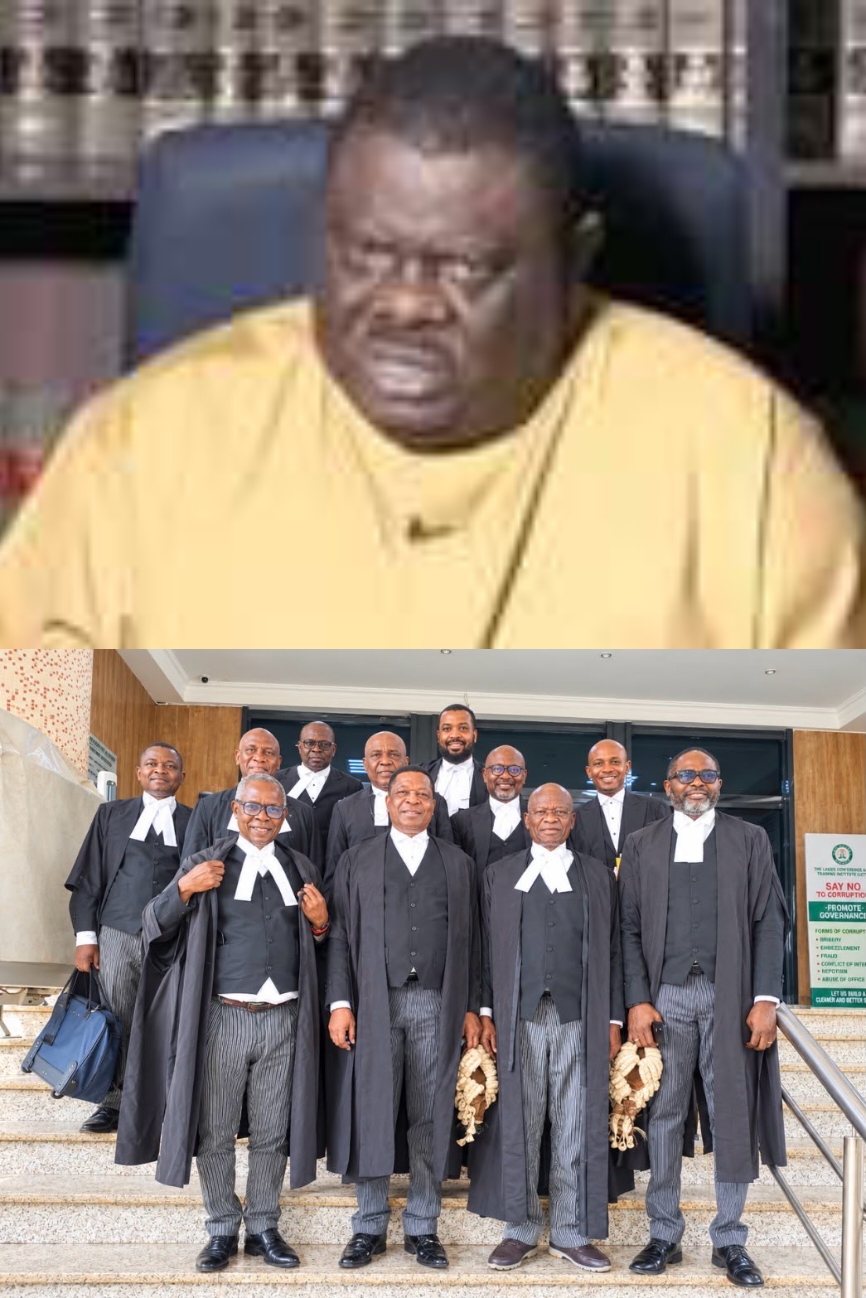
The legal team representing the Peoples Democratic Party (PDP) governorship candidate in Benue State, Chief Michael Kaase Aondoakaa, SAN, has urged the Federal High Court, Abuja, to dismiss a suit challenging his candidacy for the 2027 governorship election for lack of competence.
Led by Prof. Anthony Ijohor, SAN, the legal team adopted Aondoakaa’s preliminary objection and urged the court to dismiss the suit in limine, arguing that it was not competent to proceed with the case.
The legal team headed by Prof. Ijohor, SAN, comprised other Senior Advocates of Nigeria, including Chiesonu I. Okpoko, SAN, Anthony A. Malik, SAN, and Mohammed Said Diri, SAN. Other members of the team were AT Kohol, Esq, Michael Gusa, Esq, Aleichenu Ogwuche, Esq, AJ Apera, Esq,
Matthew Onoja, Esq, DD Asema, Esq, and HT Ijohor, Esq.
The suit, marked FHC/ABJ/CS/2152/2026, was instituted by David Ejembi, Aondoaver Teryila, Joseph Okpanachi and Benedict Akaazua Orkume against the Independent National Electoral Commission (INEC), the PDP and Aondoakaa.
At the proceedings, counsel to the PDP, CT Mue, Esq, also adopted the party’s preliminary objection and urged the court to strike out the suit for lack of competence.
Counsel to the plaintiffs, Feng Pwajok, Esq, adopted the plaintiffs’ counter-addresses and written address in response to the preliminary objections. Prof. Ijohor subsequently adopted Aondoakaa’s further affidavit and reply on points of law, while Mue adopted the PDP’s reply on points of law.
On the substantive suit, counsel to the plaintiffs adopted their originating processes, while counsel representing the defendants adopted their respective processes. The plaintiffs’ counsel thereafter adopted further affidavits and replies on points of law filed in response to the submissions of the PDP and Aondoakaa.
Following the arguments, the court adjourned the matter to November 16, 2026, for judgment.
Aondoakaa, a former Attorney-General of the Federation and Minister of Justice, is the PDP’s duly nominated governorship candidate for the 2027 Benue State election.
News
“WIKE CANNOT CHOOSE A GOVERNOR FOR US!” — Group Rejects Alleged Rainbow Coalition Plot in Benue
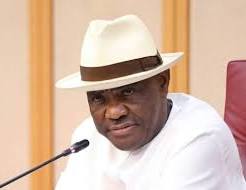
The Benue Alliance for Good Governance and Accountability (BAGA) alleges secret political negotiations involving Wike, Akume and Ortom; insists Governor Alia should be allowed to complete two terms if re-elected.
BAGA has raised concerns over an alleged political arrangement involving prominent political figures, warning against any attempt to influence the outcome of the 2027 Benue State governorship election without the consent of voters.
In a statement signed by its President, Chief John Terfa, the group alleged that the Minister of the Federal Capital Territory (FCT), Nyesom Wike, was involved in discussions with the Secretary to the Government of the Federation (SGF), Senator George Akume, and former Benue State Governor Samuel Ortom over a proposed political alliance reportedly known as the “Rainbow Coalition”.
BAGA further alleged that Wike was seeking political control over five states under the Peoples Democratic Party (PDP) as part of the proposed arrangement to deliver President Bola Tinubu’s re-election in 2027, with Benue reportedly among the states being considered to hand over to Wike through the Rainbow Coalition.
The group also claimed that the alleged discussions were aimed at securing the emergence of former Attorney General of the Federation, Chief Mike Aondoakaa, as a preferred governorship candidate in Benue under the proposed coalition, despite Aondoakaa being banned from holding any political office for life by Supreme Court, due to unprecedented corruption and abuse of office when he was the Attorney General.
BAGA questioned why political actors from outside Benue should have a decisive influence over who governs the state, arguing that the choice of governor must remain with the electorate.
“Benue is not a political commodity to be traded behind closed doors in Abuja. The people of the state must have the final say on who governs them and the direction their state takes,” the group said.
The organisation alleged that Wike had held a series of meetings with Akume and Ortom in recent weeks to discuss the reported arrangement.
It further claimed that tensions arose during one of the alleged meetings at Akume’s residence in Abuja recently, where Wike was said to have questioned why Akume had allowed Governor Hyacinth Alia to become so politically powerful.
It was alleged that Wike demanded that Akume should make sure Governor Alia is not re-elected or declared winner in 2027 whether he wins or not and boast of having the judiciary under his control.
BAGA rejected what it described as an attempt to determine Benue’s political leadership through negotiations among powerful individuals, insisting that Governor Hyacinth Alia should be allowed to complete his constitutionally permitted tenure, if re-elected in 2027.
The group said it believed Alia’s administration was performing well in governance and development, adding that political alliances should not be used to undermine the democratic choices of the electorate.
It also criticised the record of Ortom’s administration and expressed concern about what it described as divisions within Benue’s political space arising from the influence of powerful political interests within and outside the state.
BAGA argued that any coalition seeking to influence the 2027 election should be based on transparent principles, competence, accountability and the interests of the people, rather than personal ambition or political bargaining in Abuja.
The group also challenged political actors seeking the support of President Bola Ahmed Tinubu to pursue their ambitions without attaching conditions that could compromise the democratic choices of the voters.
“Benue people are politically conscious. They will not surrender their future to a coalition of political interests formed without their consent,” the statement said.
The organisation called on voters, civil society groups and political stakeholders to remain vigilant and defend the state’s democratic rights ahead of the 2027 elections.
“Whatever colour it is given; Rainbow, PDP or otherwise, the people will reject any arrangement that threatens their collective interests and development,” BAGA said.
“Benue is not Rivers and we will not allow Wike from Rivers State to choose a governor for us in Benue State,” the group added.
According to BAGA, the central issue is whether political negotiations in Abuja will respect the right of Benue voters to determine their own leadership.
The group maintains that the state’s governorship should not be decided through private agreements among political power brokers, but through a democratic process in which the people have the final say.

The Coalition of Civil Society Organisations Against Corruption (COCSOAC) and 33 partner civil society organisations have expressed confidence in the Independent National Electoral Commission (INEC), urging Nigerians to treat recent reports concerning the commission with caution and rely only on verified facts.
The coalition, in a statement signed and issued in Abuja on Tuesday by its President, Bola Ademola, and National Secretary, Comrade Abdulfatah Aliyu, the group said while INEC must be held accountable where necessary, criticisms of the electoral body should be based on credible evidence, due process and an opportunity for affected parties to respond.
COCSOAC was reacting to an online publication alleging questionable staff redeployments within INEC, including the reported reassignment of a Northern director and the deployment of South-West officials to key departments.
The coalition said it had not independently verified the alleged redeployments or the motives behind them, warning that claims of political interference or ethnic favouritism should therefore not be treated as established facts.
“Assuming without conceding that the redeployments occurred as reported, staff reassignment is a recognised administrative practice that may serve legitimate purposes, including operational efficiency, professional development and improved management,” the group said.
It maintained that the geographical origin or family associations of an INEC official could not, on their own, establish bias or an intention to manipulate elections.
According to the coalition, the more important questions should be whether the decisions complied with applicable rules, received proper authorisation and were based on legitimate administrative considerations.
COCSOAC consequently urged INEC to clarify the circumstances surrounding the reported redeployments where necessary, while appealing to the media and civil society organisations to avoid drawing premature conclusions from unverified reports.
The group also congratulated INEC Secretary, Dr Rose Oriaran Anthony, on her turbaning, describing institutional experience, diligence and administrative continuity as important factors in the management of elections.
It appealed to President Bola Ahmed Tinubu to consider Oriaran Anthony for reappointment as INEC Secretary when her tenure expires, subject to applicable laws and established appointment procedures.
COCSOAC said its appeal was not a demand for an appointment outside the law but was based on the need to preserve institutional knowledge and strengthen coordination ahead of the 2027 general elections.
“Where an experienced incumbent has demonstrated the requisite commitment and competence, continuity may help preserve institutional knowledge, strengthen coordination and support preparations for peaceful, credible and well-organised elections,” the coalition said.
It, however, stressed that any decision on the matter must be guided by legality, INEC’s independence and the integrity of the electoral process.
The coalition called on political actors, civil society organisations, the media and other stakeholders to protect public confidence in Nigeria’s electoral institutions through evidence-based engagement, transparency and respect for due process.
It said its position was not that INEC should be shielded from scrutiny, but that allegations against the commission must be verified and affected institutions given a fair opportunity to respond.
“As the nation approaches another critical electoral cycle, accountability, institutional stability and the rule of law must remain central to the collective pursuit of credible elections,” COCSOAC said.


ON BORNO ADC’S LAME REJOINDER: MY RESPONSE.

Alleged Human Trafficking: Two Suspects In NSCDC’s Net

Kwara: Physically challenged man, two others held for alleged arms supply to criminals

-
 Uncategorized6 years ago
FG, states urged to harness flooding for ranching, others with technology – Agbaje
-
 Headlines11 years ago
Breaking: EFCC seals Borno House of Assembly, as Hon members take to their heels
-
 News12 years ago
Nigeria Security Operatives Stage Manhunt For Homosexual Perpetrator
-
 News10 years ago
How 21-year-old Girl fled community over accusation of lesbianism
-
 News11 years ago
Yobe Gov Moves Against Deputy
-
 Opinion7 years ago
7 signs she has friend zoned you
-
Technology5 years ago
Online job placement company headhunts women
-
 Headlines10 years ago
Borno Dep Gov Abducts Another Church Leader