
Politics
Muslim-Muslim: If Not For El-Rufai, Tinubu Would Have Lost Presidency To Atiku – Fani-Kayode.

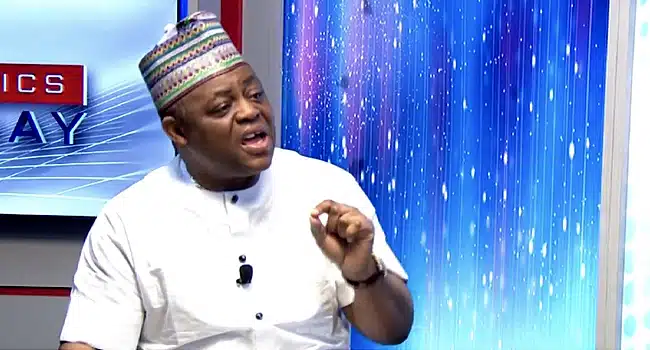
Femi Fani-Kayode, the former Aviation Minister, has claimed that President Bola Tinubu would have been defeated by Atiku Abubakar of the Democratic Party (PDP) in the 2023 presidential election if it wasn’t for the support of former Governor of Kaduna State, Mallam Nasir El-Rufai. Fani-Kayode stated that El-Rufai, along with Bello Matawalle, the former Governor of Zamfara State, and several governors from the All Progressive Congress (APC), rallied behind Tinubu despite opposition.
reports that Fani-Kayode stated this in reaction to the backlash on El-Rufai over a viral video of him on the internet where he spoke on Muslim-Muslim tickets in Kaduna State and Nigeria at large.
In the video, the former governor, who spoke in the Hausa language, noted that their plan for the last eight years in Kaduna is to maintain a political leadership of a Muslim-Muslim ticket.
While asserting that there was no Christian that could say that he or they were marginalized, El-Rufai said the ruling party’s plot is to remain in power with a Muslim-Muslim ticket for the next 20 years.
According to him, by then the Christians would have come to the realization of the reality of Muslim-Muslim leadership in the state.
In a Twitter thread, however, on Thursday morning, Fani-Kayode said El-Rufai is not a religious bigot as many have called him.
He defended the former governor saying he worked closely with him under two administrations and he was never any of the names he is labelled with at the moment.
“When Nasir El Rufai, Bello Matawalle and Yahaya Bello took President Muhammadu Buhari to court and defeated him over the illegal and ill-fated cash grab/new notes policy they were considered to be heroes and the entire world commended them.
“We worked closely together when we were in President Olusegun Obasanjo’s cabinet many years ago and we worked closely together during the presidential campaign for President Bola Ahmed Tinubu. I know him very well indeed.
“He is a down-to-earth, practical, pragmatic politician who speaks his mind boldly, who is deeply calculating and courageous, who knows and understands the game of thrones and the art of acquiring and wielding power very well, who has no fear of his adversaries and who is determined to do whatever it takes to win. These are all virtues and not vices.”
According to the former Minister, many people denigrate El-Rufai because he has proved over and over again that he is far smarter than them.
“Yet love him or hate him I will tell you this: had it not been for him, Matawalle and the Northern Governors of the APC there would have been no power shift to the south, the Presidency would have remained in the North and Atiku, not Asiwaju would be President today.
“Again had it not been for him and Matawalle, the cabal in the Villa that backed, empowered, protected and encouraged Godwin Emefiele and his Agbor Mafia and that worked so hard to stop Asiwaju from winning the election would have prevailed.
“And of course, that is why all the forces of hell gathered together to ensure that Matawalle lost his seat as Governor of Zamfara. That is the price that he had to pay,” Fani-Kayode said.
The APC chieftain argued further that those who insist on launching a crusade, igniting a religious war and assuming the worse about El Rufai today simply because of his comments about religion in the politics of Kaduna state would do well to consider all this as they continue in their asinine behaviour and insidious tomfoolery.
“If there are people that ought to be regarded as the true heroes of the struggle to make Asiwaju President El Rufai and Matawalle must be amongst them.
“I may not agree with everything El Rufai says or does but what a great fighter he is.“He has both my affection and respect. He always did and he always will,” Fani-Kayode insisted.
Politics
Eggon Political Forum Endorses Ombugadu as Consensus Candidate for 2027 Nasarawa Governorship Race

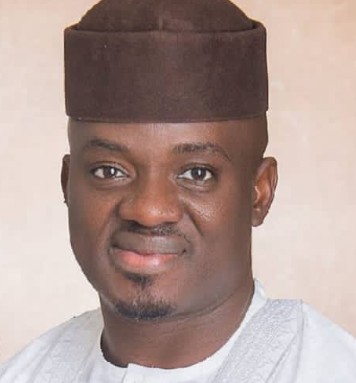
In what many observers are describing as a watershed moment in the political history of Nasarawa State, the Eggon Political Forum has officially endorsed Rt. Hon. Dr. David Emmanuel Ombugadu of the Peoples Democratic Party (PDP) as the consensus candidate of the Eggon Nation for the 2027 governorship election.The announcement was made at a grand assembly held at Albert Event Hall in Nasarawa Eggon Local Government Area, where leaders, stakeholders, and representatives of diverse groups gathered to deliberate on the future of Eggon political aspirations. The Forum, a non-partisan body devoted to fostering unity and political stability among the Eggon people, emphasized that the decision was the product of months of consultations, assessments, and feedback from across the state and beyond.The Forum acknowledged that six prominent Eggon sons had secured party tickets for the governorship contest, namely: Hon. Shuaibu Umaru Kubi (ACCORD), Gen. Nuhu Angbazo (ADC), Hon. Chris Mamman (ADP), Hon. Ibrahim Kassimu Aboh (APGA), Rt. Hon. Dr. David Emmanuel Ombugadu (PDP), and Mr. John Tanko Kigbu (YPP). While commending all six candidates for their courage and commitment to public service, the Forum explained that the need for unity and collective interest compelled them to adopt a single candidate. This, they argued, would prevent the fragmentation of Eggon votes and strengthen the community’s chances of producing the next governor of Nasarawa State.According to the communiqué, the Forum’s assessment was guided by several political considerations: party stability, grassroots presence, popularity across the state, structural strength of the political platforms, track records in previous positions of responsibility, governance experience, and manifesto credibility. On these grounds, Ombugadu was adjudged to be the most suitable candidate, having demonstrated consistency, political maturity, and a broad appeal across Nasarawa State.In a communiqué signed by Alh. Umaru Gwamna (Cingarin Eggon), Chairman of the Forum, and Hon. Chief Istifanus Dennis Abaku (Dan Masani Akun / Uban Garin Ende), Secretary, the Forum appealed to the other five Eggon candidates to rally behind Ombugadu in the spirit of unity. “We respectfully appeal to the five other candidates to kindly support and rally round the adopted candidate to ensure victory in the forthcoming elections,” the Forum declared.The Forum further extended its appeal to other ethnic nationalities in Nasarawa State, urging them to align with the Eggon people in supporting Ombugadu’s candidature. It stressed that while divergent interests are natural in politics, the collective interest of the land must remain supreme.Shortly after the endorsement, the Forum led a high-powered delegation to the palace of the Aren Eggon, His Royal Highness Justice Ahmed Ubangari Alaku, to formally notify him of the resolution. Speaking on behalf of the Forum, Chairman Alh. Umaru Gwamna briefed the paramount ruler on the aims and objectives of the Forum and explained the decision to adopt Ombugadu as the consensus candidate. He emphasized that the Forum deemed it necessary to seek the royal father’s advice and blessings as the Eggon Nation embarks on this united political journey.In his response, the Aren Eggon commended the Forum for its efforts to unite the Eggon people and described Ombugadu as a “blessed son of the Eggon Nation” who has consistently made his people proud. He noted that Ombugadu is not only an asset to the Eggon Nation but to Nasarawa State at large, wishing him success in the forthcoming governorship election. His Royal Highness also admonished all Eggon candidates and their supporters to shun politics of bitterness, propaganda, blackmail, and hatred, reminding them that leadership ultimately comes from God. “We as men can only do our human arrangements, but God alone can make it happen,” he cautioned.The royal father concluded by offering his blessings and wishing Ombugadu well in his political pursuit.The endorsement and royal affirmation are being hailed as a historic opportunity for the Eggon Nation, which has long aspired to produce the governor of Nasarawa State. With unity of purpose and the backing of traditional authority, the Forum expressed optimism that 2027 could mark the realization of this dream. Political analysts note that the move could significantly reshape the dynamics of the forthcoming election, as the Eggon people constitute one of the largest ethnic groups in the state. By consolidating their support behind a single candidate, the Forum hopes to maximize their influence and bargaining power in the wider political landscape.The Eggon Political Forum’s decision underscores the importance of unity, consultation, and collective interest in the pursuit of political power. As the countdown to the 2027 governorship election begins, all eyes will be on Rt. Hon. Dr. David Emmanuel Ombugadu, who now carries not only the weight of Eggon aspirations but also the blessings of their revered traditional ruler.
By Francis Wilfred
President Bola Tinubu has assured local and international investors that Nigeria remains open for business, saying his administration is implementing reforms aimed at creating a more predictable, competitive and investment-friendly environment.
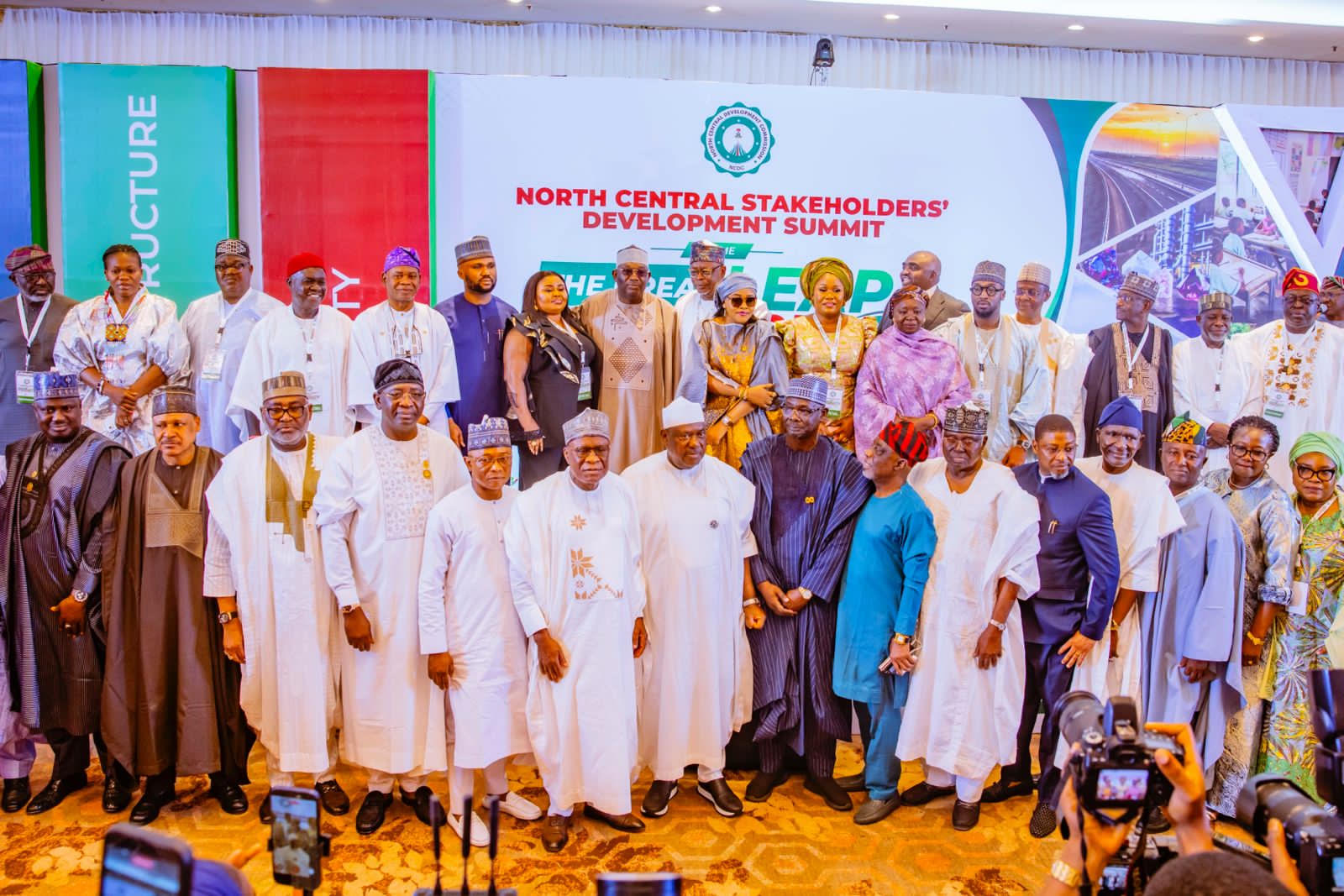
Speaking through the Secretary to the Government of the Federation (SGF), Senator George Akume, at the 75th anniversary celebration of the Nigerian Bottling Company (NBC) in Abuja on Monday, the President said the government is addressing key challenges facing businesses under the Renewed Hope Agenda.
“Our message to investors, both Nigerian and international, is clear: Nigeria is open for business,” Tinubu said,
He noted that reliable infrastructure, efficient logistics, access to foreign exchange, stable regulations and a supportive tax system are critical to attracting investment and expanding production.
According to Yomi Odunuga, the President said ongoing economic reforms are designed to build a more productive and competitive economy, reduce dependence on imports, strengthen local manufacturing and create jobs for Nigerians.
Tinubu welcomed the Coca-Cola System’s proposed $1 billion investment in Nigeria over five years, announced in 2024, describing it as a strong vote of confidence in the country’s economy.
He said the administration is focused not only on the volume of investment attracted but also on its impact on employment, skills development, technology transfer and local sourcing.
“We are interested not only in the amount of capital that comes into Nigeria, but in what that capital does here,” he said.
The President also praised NBC’s continued expansion of production capacity, including new production lines in Oyo and Kano states, describing such investments as vital to strengthening Nigeria’s industrial base.
He reaffirmed the government’s commitment to improving policies, infrastructure and regulations to support businesses, while urging the private sector to complement government efforts through investment, innovation and job creation.
Tinubu further highlighted the importance of human capital development, commending NBC’s Supply Chain Academy for training over 1,400 young Nigerians and supporting women’s empowerment and community development initiatives.
He urged investors to take advantage of opportunities across Nigeria, expressing confidence that the country can build a stronger economy driven by local production, exports and globally competitive industries.
Politics
Kano Governorship: Accord Party Governorship Candidate Gashash Getting More Endorsement From Kano Electorates.

By Jabiru Hassan.


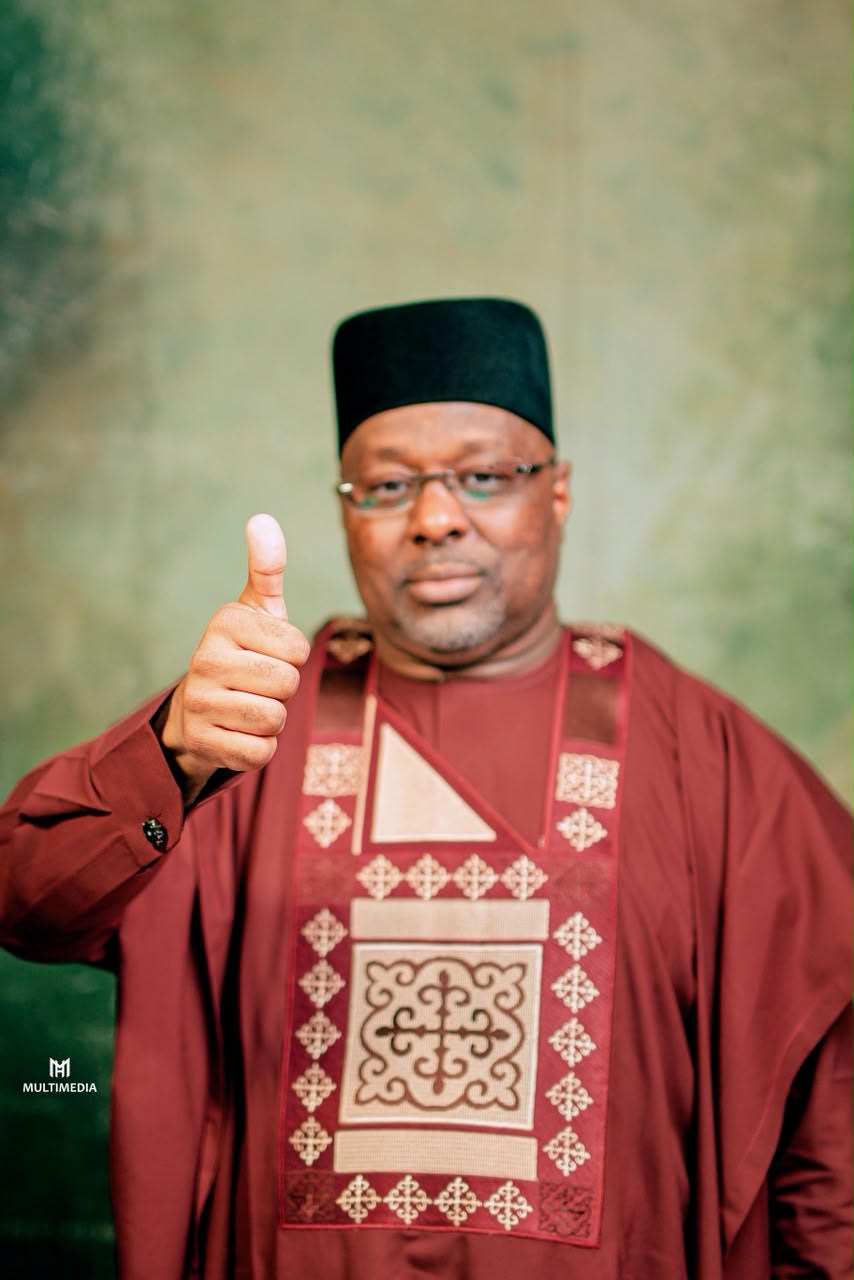
The movement for Democratic Protection and good governance (MDSG) declared it's full support to the Accord Party Governorship Candidate Ambassador Dr. Mukhtar Gashash in the forthcoming general elections.

In a chat with our correspondent in kano, the national president of the movement, Alhaji Dauda Mohammed Ali,  stated that it is time for the people of kano state to bring new steward who is seriously planning to transform the state with highest regard.

He expressed his confidence that Ambassador Dr Mukhtar Gashash will do his best to ensure that kano state becomes more examplary at both sector without bias which is the task previous administrators failed to achieve.

Alhaji Dauda Mohammed Ali reiterated that " this time around, our movement is working day and night to make sure that Kano people mostly youths remained Committed to actualize real change in the state's politics, leadership and transformation under the Accord Party government".

He called on the people of kano state especially the eligible voters to vote Ambassador Dr Mukhtar Gashash due to his Transformation plans for the progress of kano state and it's citizens at both Urban and rural settlements.

Responding to a question about Accord party's strength in kano state, Dauda Mohammed Ali disclosed that in today's democracy, competent candidates should be tipped for an elective positions not the popularity of the political parties stressing that Ambassador Dr Mukhtar Gashash has been found to be the best option for kano state due to his track record on competency, transparency as a real democrat.


Dogara Mourns Victims of Air Force Plane Crash, Condole President Tinubu, Military

The changing face of Nasarawa at 30

COALITION OF RENEWED HOPE REACTS TO NATIONAL FRONT BURNER ISSUES: TINUBU IS FIXING NIGERIA, OPPOSITION SHOULD STOP PLAYING POLITICS WITH PAIN.

-
 Uncategorized6 years ago
FG, states urged to harness flooding for ranching, others with technology – Agbaje
-
 Headlines11 years ago
Breaking: EFCC seals Borno House of Assembly, as Hon members take to their heels
-
 News12 years ago
Nigeria Security Operatives Stage Manhunt For Homosexual Perpetrator
-
 News10 years ago
How 21-year-old Girl fled community over accusation of lesbianism
-
 News11 years ago
Yobe Gov Moves Against Deputy
-
 Opinion7 years ago
7 signs she has friend zoned you
-
Technology5 years ago
Online job placement company headhunts women
-
 Headlines10 years ago
Borno Dep Gov Abducts Another Church Leader