
News
Exhibition highlights cultural imprint of Maritime Silk Road

By Fu Qisheng
The year 2023 marks the 10th anniversary of the Belt and Road Initiative (BRI). Against this backdrop, Fujian Museum in Fuzhou, southeast China’s Fujian province, kicked off an exhibition on the cultural imprint of the Maritime Silk Road in May.
The exhibition is planned to run from May to August. By exhibiting cultural relics, historical materials, and pictures, it aims to highlight the cultural imprint of the Maritime Silk Road and underline the historical and practical significance of harmonious coexistence and the building of a community with a shared future for mankind.
The Maritime Silk Road bore witness to the communication and exchanges between the Chinese nation and the outside world on the vast blue ocean. It left to mankind rich cultural heritage, which reflects the diversified and interactive civilizations of the world like a kaleidoscope.
Since the BRI was proposed by China, the Silk Road-theme exhibition has become a hotspot in the cultural industry.
In 2013, Fujian Museum took the lead in holding a joint exhibition of cultural relics featuring the Maritime Silk Road in collaboration with relevant authorities. The exhibition was held in more than 20 countries and regions as well as the United Nations (UN) headquarters, arousing enthusiastic response.
Today, just in time, Fujian Museum is staging another exhibition featuring the Maritime Silk Road.
Facilitating trade in porcelain, silk, tea, and spices, the Maritime Silk Road also served as a path to cultural exchanges, mutual benefit, peace and friendship for various countries along the road.
The ongoing exhibition at Fujian Museum displays 295 pieces (sets) of cultural relics in 35 museums across China, including important archaeological finds. The exhibits represent essences selected from a large number of heritage resources to restore the trade, people-to-people and cultural exchanges along the Maritime Silk Road from different perspectives.
The exhibition highlights the historical scenes and cultural connotations of exchanges and mutual learning among different civilizations. The area is divided into four sections focusing on distinctive topics, namely China’s maritime history, trade in goods, overseas relics in China, and cultural integration.
The visit begins with the exhibition of China’s maritime history.
The section featuring China’s maritime history serves as the beginning part of the exhibition.
According to ancient books, during China’s Han Dynasty (202 B.C.-A.D. 220), Chinese officials and merchants set sail from Xuwen county in south China’s Guangdong province and Hepu county in south China’s Guangxi Zhuang autonomous region, with gold and silk fabrics to ancient countries in Southeast Asia and South Asia to trade for pearls, glass beads, and other exotic products. It is widely believed as one of the signs of the formation of the Maritime Silk Road.
A lot of archaeological discoveries serve as new evidence for the Maritime Silk Road, such as the cultural relics from West Asia unearthed in ancient tombs of the Han Dynasty in Hepu county, the ancient port site of the starting point of Chinese monk Jianzhen’s sixth voyage to Japan during China’s Tang Dynasty (618-907) – the Huangsipu Site, and the Nanhai No. 1 shipwreck dating back to China’s Southern Song Dynasty (1127-1279).
This section has put on display relevant cultural relics to depict three major historical events in China’s maritime history: Emperor Wu of the Han Dynasty dispatching ships and envoys from Hepu and Xuwen to foreign countries, Chinese envoys’ missions to ancient state Goryeo during China’s Song Dynasty (960-1279), and the famous Chinese navigator Zheng He’s voyages to the Western Seas during China’s early Ming Dynasty (1368-1644).
Among the exhibits in this section, the gold ingots housed by the Hubei Provincial Museum are displayed, which date back to the reign of Emperor Yongle of the Ming Dynasty. The exhibits, engraved with inscriptions of purchase records from the West, are tangible evidence of Zheng He’s voyages to the Western Seas.
The exhibition section for trade in goods mainly focuses on porcelain, silk and tea, three categories of exports from China in ancient times representing the influence of Chinese civilization overseas.
Porcelain has played an important role in trade along the Maritime Silk Road. The porcelains exhibited in this section include celadon porcelain wares made in the famous Yue kilns and Longquan kilns in east China’s Zhejiang province, white porcelain found in kilns in north China’s Hebei province, multi-colored porcelain wares such as the tri-colored glazed pottery of the Tang Dynasty, and blue and white porcelains of different styles.
A wide-sleeve long robe found in the tomb of Huang Sheng, a girl who lived in the Southern Song Dynasty (1127-1279) in Fuzhou, is on display in this exhibition section. The tomb is praised as a treasury of silk in the Southern Song Dynasty for its numerous and diverse silk fabrics unearthed.
Fujian’s silk fabrics manufacturing industry embraced unprecedented prosperity during the Song Dynasty. The decoration techniques including adorning fabrics with gold, colored drawing, and embroidery were widely used to beautify clothes.
Traces of such techniques have also been found in silk fabrics unearthed in China’s neighboring countries, which can fully prove Fujian’s position as one of the major production bases of silk exports in the Song Dynasty.
Various kinds of tea sets from the Tang and Song dynasties are also shown in this section, including a glass saucer and teacup as well as a silver tea roller discovered in the underground palace in Famen Temple in northwest China’s Shaanxi province. The tea roller belonged to Emperor Xizong of the Tang Dynasty, who used it before ascending the throne.
The third exhibition section featuring imported goods from ancient China manifests the inclusiveness of the Chinese civilization. Exhibits include such cultural relics as imported gem ornaments and glass artifacts unearthed from Guangxi, Hunan and Fujian provinces.
Among these exhibits, a peacock blue-glazed pottery bottle from the period of the Five Dynasties and Ten Kingdoms (907-979) is the most precious treasure of Fujian Museum. It is so far the best-preserved peacock blue-glazed ware unearthed in China.
The large pottery bottle is shaped like an olive and evenly covered with blue glaze on its outer surface, conveying a sense of exotic beauty. Experts believe that this pottery ware was likely imported from ancient Persian regions in West Asia.
Various censers and spices are also exhibited in this section. Besides, a special experience zone has been set up through joint efforts of Fujian Museum and Fujian University of Traditional Chinese Medicine, in a bid to create an interactive experience for visitors.
The last section of the exhibition features the integration of diverse cultures. A white-glazed sitting statue of Chinese sea goddess Mazu made in a kiln in Dehua county during the Ming Dynasty is rather representative of the cultural relics exhibited.
The statue is made of white and delicate porcelain and a bright and smooth layer of glaze, with the glaze sparkling with a slight yellow tinge. It depicts the scene of Mazu sitting upright in a grand gown and with a square flat-topped crown on her head, vividly showing the sea goddess’ solicitude for people making a living on the sea.
White porcelains produced by kilns in Dehua enjoyed great popularity in the Ming and Qing dynasties. They were sold to regions as far as Europe.
The Maritime Silk Road is old and yet still vibrant. It is a route on the sea that has helped improve people’s well-being to create a better life, as well as a link that has enhanced exchanges and mutual learning among different civilizations.
Today, new cultural connotations are being injected into the ancient Maritime Silk Road.
By showing the road’s historical and practical significance through relics and storytelling, the exhibition on the cultural imprint of the Maritime Silk Road has unfolded a scroll of harmonious coexistence, common understanding and mutual appreciation between the Chinese civilization and civilizations of various countries around the world.
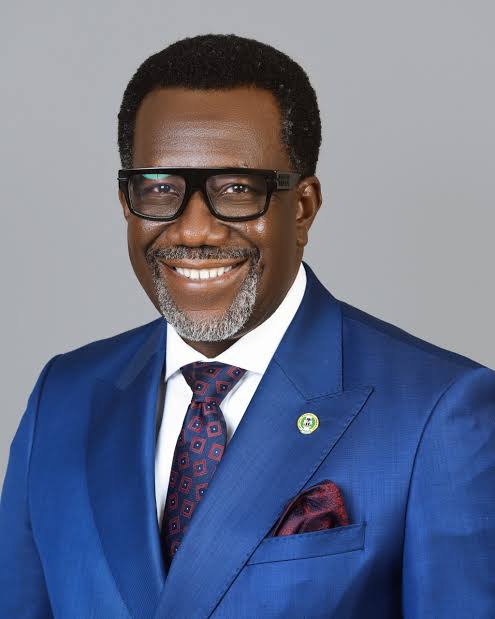
The Centre for Credible Reforms and Institutional Accountability (CCRIA) has commended the Commissioner for Insurance and Chief Executive Officer of the National Insurance Commission (NAICOM), Mr Olusegun Ayo Omosehin, for promoting transparency and accountability in the ongoing reforms of Nigeria’s insurance industry.
The centre said the implementation of the Nigerian Insurance Industry Reform Act (NIIRA) 2025 had ushered in a new phase of development for the sector, with stronger regulatory standards, improved capitalisation and greater emphasis on protecting policyholders.
Dr Aminu Abubakar Aminu, president of the centre, said this in a statement at the weekend.
Aminu commended President Bola Tinubu and the National Assembly for the enactment of NIIRA, describing the legislation as a major step towards addressing longstanding challenges in the insurance industry.
“The enactment of the Nigerian Insurance Industry Reform Act is a significant milestone in the development of Nigeria’s insurance sector. We commend Mr President and the National Assembly for recognising the need to modernise the legal and regulatory framework governing the industry. NIIRA provides the foundation for an insurance sector that is better capitalised, more accountable, more responsive to policyholders and better equipped to contribute meaningfully to the Nigerian economy,” he said.
The centre also praised Omosehin for his leadership of NAICOM, saying his extensive experience as an insurance professional had positioned him to effectively implement the new regulatory framework.
“We consider the appointment of Mr Olusegun Ayo Omosehin as Commissioner for Insurance and Chief Executive Officer of NAICOM a timely and appropriate decision. He is a seasoned insurance professional with many years of experience in the industry, and his understanding of the sector gives him the practical knowledge required to lead an important reform process of this nature. We commend him for the direction he has provided since assuming office and for his commitment to strengthening the industry,” Aminu said.
According to the centre, the ongoing recapitalisation exercise was among the important steps taken to strengthen the financial capacity of insurance companies and improve their ability to meet obligations to policyholders.
Aminu said the reforms were already producing early gains and should be sustained through consistent implementation.
“The early developments under NIIRA demonstrate that the reform is not merely a legislative exercise but a process capable of producing measurable improvements in the industry. Stronger capital requirements, improved supervision and greater attention to policyholder protection will ultimately create an insurance market that Nigerians can trust. We encourage NAICOM to remain focused on the implementation of the Act and to continue providing clear guidance to operators and other stakeholders,” he said.
The centre noted that the reforms would also help deepen insurance penetration and strengthen the industry’s contribution to national economic development.
It urged insurance companies, brokers, reinsurers, professional bodies and other stakeholders to embrace the new framework and work with NAICOM to achieve the objectives of the legislation.
“The success of NIIRA will require the cooperation of every stakeholder in the insurance ecosystem. Operators must see the reforms as an opportunity to strengthen their institutions, improve their services and regain the confidence of Nigerians. A well-regulated insurance industry can mobilise long-term capital, protect businesses and households against risks and support investment and economic growth. These are benefits that go beyond the insurance industry itself,” Aminu said.
Aminu emphasized that the centre was particularly encouraged by the emphasis on policyholder protection under the new framework, noting that public confidence remained critical to the growth of insurance in Nigeria.
He said Nigerians should be able to purchase insurance products with confidence that operators had the financial capacity and institutional structures required to honour legitimate claims.
The president further urged NAICOM to sustain its engagement with stakeholders while ensuring that the provisions of NIIRA were implemented transparently and consistently.
“What is required at this stage is continuity, professionalism and commitment to the objectives of the law. The reforms must be sustained beyond the initial implementation period so that the gains can become permanent features of the industry. We believe NAICOM, under the leadership of Mr Ayo Omosehin, has an important responsibility to ensure that the momentum is maintained, and we encourage all stakeholders to support the commission in delivering on this mandate,” he said.
The centre said the successful implementation of NIIRA would strengthen confidence in the insurance sector, improve the protection available to policyholders and position the industry to play a greater role in Nigeria’s economic transformation.
It also called for continued collaboration between NAICOM, insurance operators and other stakeholders to ensure that the objectives of the new law were fully achieved.
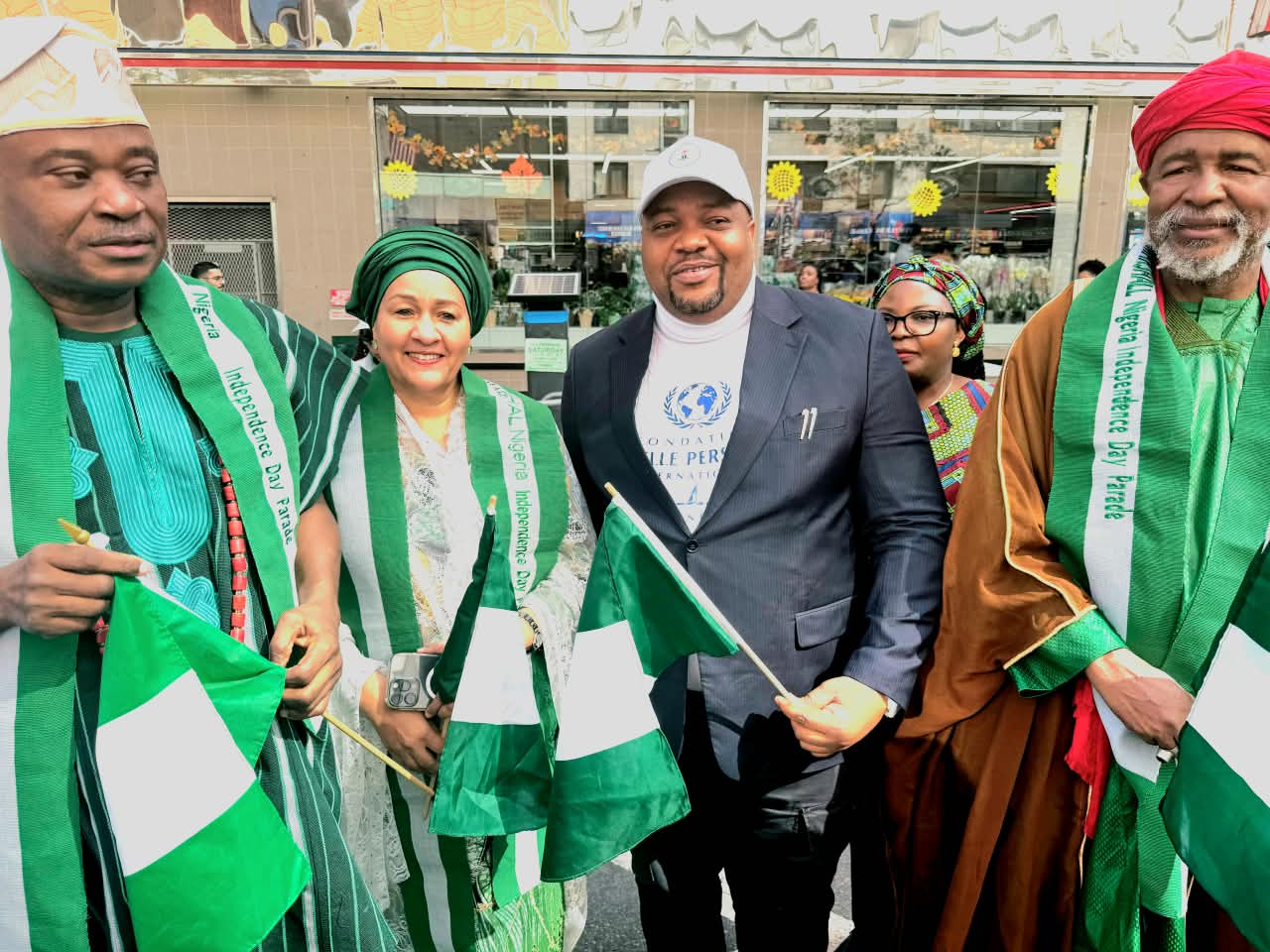
As Nigerians from across the United States gathered in Manhattan to celebrate Nigeria’s Independence Day in grand style, Hon. Amb. Jim Okolo used the occasion to share an inspiring message about Nigeria’s immense possibilities, rich cultural heritage, and promising future.
Speaking with members of the media during the colourful celebration, Hon. Amb. Okolo described Nigeria as one of the most blessed nations in the world, endowed with abundant natural resources, a dynamic population, and a cultural heritage that continues to earn global recognition.
According to him, Nigeria possesses enormous deposits of valuable minerals and other natural resources that, if fully harnessed, can accelerate economic growth and create prosperity for millions of citizens. He noted that the country is strategically positioned to become a leading destination for investment in mining, agriculture, technology, manufacturing, and infrastructure development.
Beyond its natural wealth, Hon. Amb. Okolo emphasized that Nigeria’s greatest strength remains its people. He praised the creativity, resilience, intelligence, and entrepreneurial spirit of Nigerians, pointing out that Nigerian professionals, innovators, academics, and business leaders continue to excel in various sectors across the world.
The respected diplomat also spoke passionately about Nigeria’s unique cultural identity. From the colourful festivals of its diverse ethnic groups to its globally celebrated music, fashion, literature, cuisine, and film industry, he described Nigeria as a nation whose cultural influence extends far beyond its borders.
He noted that Nigeria’s diversity is one of its greatest treasures, bringing together hundreds of ethnic nationalities with distinct traditions and languages that collectively form a vibrant and unified national identity.
While addressing questions on security, Hon. Amb. Okolo maintained that although Nigeria faces certain security challenges, the situation is not always as severe as often portrayed by social media discussions and sections of the international media. He stressed that millions of Nigerians continue to live, work, study, invest, and contribute meaningfully to society every day.
He called on the international community, investors, and members of the diaspora to focus on Nigeria’s strengths, opportunities, and achievements rather than allowing negative narratives to define the country’s image.
“Nigeria remains a land of opportunity, innovation, and hope. It is a nation blessed with extraordinary human capital, abundant resources, a rich cultural heritage, and a people whose determination and resilience continue to inspire the world,” he said.
The celebration was attended by several distinguished personalities, including the United Nations Secretary-General, Hajia Amina Mohammed, the Nigerian Ambassador to the United Nations, diplomats, business leaders, community stakeholders, and prominent members of the Nigerian diaspora.
The event transformed parts of Manhattan into a vibrant showcase of Nigerian pride, featuring cultural exhibitions, traditional performances, business networking sessions, authentic Nigerian cuisine, and displays highlighting the country’s achievements and diversity.
Adding excitement to the festivities were thrilling performances by internationally acclaimed Nigerian music stars Patoranking, Runtown, and BNXN (formerly known as Buju), who entertained thousands of attendees and demonstrated the growing global appeal of Nigerian music.
As the celebration came to a close, the message from Hon. Amb. Jim Okolo resonated strongly among participants: that Nigeria is far more than the challenges often highlighted in headlines. It is a nation blessed with extraordinary talent, vast opportunities, cultural richness, and the potential to achieve even greater success on the global stage.

…as Mailafia 10th Edition Peace Cup set to kick off 10th October
Amb. Dr. Yakubu Agabi Mailafia, organiser of the Mailafia Peace and Unity Football Competition, has said he will not be deterred by criticisms over the resources he commits to the annual grassroots football tournament, insisting that his focus remains on creating opportunities for young talents.
Mailafia stated this on Saturday during the draws for the 10th edition of the competition, where he said he derives peace and fulfilment from organising the tournament because of its contribution to youth development, talent discovery and peaceful coexistence.
He said despite comments by some people that he was wasting his resources on the competition, he remained committed to the initiative because of the opportunities it provides for young footballers.
“People have said that I am wasting my resources in organising the competition, but I am not perturbed by what they are saying,” Mailafia said.
According to him, his major concern is to ensure that young and talented players are given the opportunity to showcase their abilities and pursue football careers, not only in Nigeria but also abroad.
Mailafia said the competition had continued to enjoy grassroots support, describing it as a platform that has attracted attention beyond Nasarawa State and Nigeria.
“I find peace organising this competition,” he said, adding that it was “the only competition that carries grassroots support, not just in Nigeria but in Africa.”
He said the tournament was more than a football competition, stressing that it was intended to provide young people with a platform through which their talents could be identified, developed and exposed to opportunities.
Mailafia therefore charged the organisers of the 10th edition to remain committed and focused, urging them to take ownership of the competition and ensure that it was conducted according to acceptable best practices.
“I want the organisers to be committed and focused and see the competition as their own, to take over ownership of the competition and ensure that it is done with the best practice needed,” he said.
The 10th edition of the Mailafia Peace and Unity Football Competition is scheduled to commence on October 10, 2026, with 32 teams drawn from across Nasarawa State expected to participate in the tournament.
Speaking during the draws, President of the Dedere Progressive Mandate Youth, Comrade Aminu Musa Rilwanu, said the exercise was organised to prepare the teams and officials for the commencement of the competition.
Rilwanu said the competition, hosted annually by Mailafia, Majinkiran Daddere, had contributed to the discovery and development of football talents at the grassroots.
He said thousands of youths had benefited from the competition at the state, national and international levels, citing Anas, a former Nasarawa United player, as one of the players discovered through the tournament.
According to him, Anas was spotted through the competition and has since progressed in his football career abroad.
Rilwanu said the tournament had therefore continued to serve as a platform for young footballers to demonstrate their abilities and pursue opportunities beyond their communities.
“The draws are to prepare the players and organise for the competition proper,” he said.
He urged all the 32 participating teams to approach the tournament with the spirit of peace and unity, stressing that their participation should contribute to peaceful coexistence among youths across Nasarawa State.
“We urge all the 32 teams from across Nasarawa State to ensure that their participation will bring about unity and peace in the state,” Rilwanu said.
He also called on officials involved in the competition to demonstrate commitment and maintain effective communication throughout the tournament.
Rilwanu said dignitaries from within and outside the state were expected to grace the opening ceremony on October 10, as activities begin for the 10th edition of the competition.
According to verifiable reported, the annual tournament has over the years provided a grassroots platform for young footballers to compete, develop their skills and seek opportunities for progression within and outside Nigeria.


The changing face of Nasarawa at 30

COALITION OF RENEWED HOPE REACTS TO NATIONAL FRONT BURNER ISSUES: TINUBU IS FIXING NIGERIA, OPPOSITION SHOULD STOP PLAYING POLITICS WITH PAIN.

OPINIONThe Disturbing Facts Behind the Economy’s Beautiful Statistics and the Path Forward.

-
 Uncategorized6 years ago
FG, states urged to harness flooding for ranching, others with technology – Agbaje
-
 Headlines11 years ago
Breaking: EFCC seals Borno House of Assembly, as Hon members take to their heels
-
 News12 years ago
Nigeria Security Operatives Stage Manhunt For Homosexual Perpetrator
-
 News10 years ago
How 21-year-old Girl fled community over accusation of lesbianism
-
 News11 years ago
Yobe Gov Moves Against Deputy
-
 Opinion7 years ago
7 signs she has friend zoned you
-
Technology5 years ago
Online job placement company headhunts women
-
 Headlines10 years ago
Borno Dep Gov Abducts Another Church Leader