
Uncategorized
OPINIONThe Disturbing Facts Behind the Economy’s Beautiful Statistics and the Path Forward.

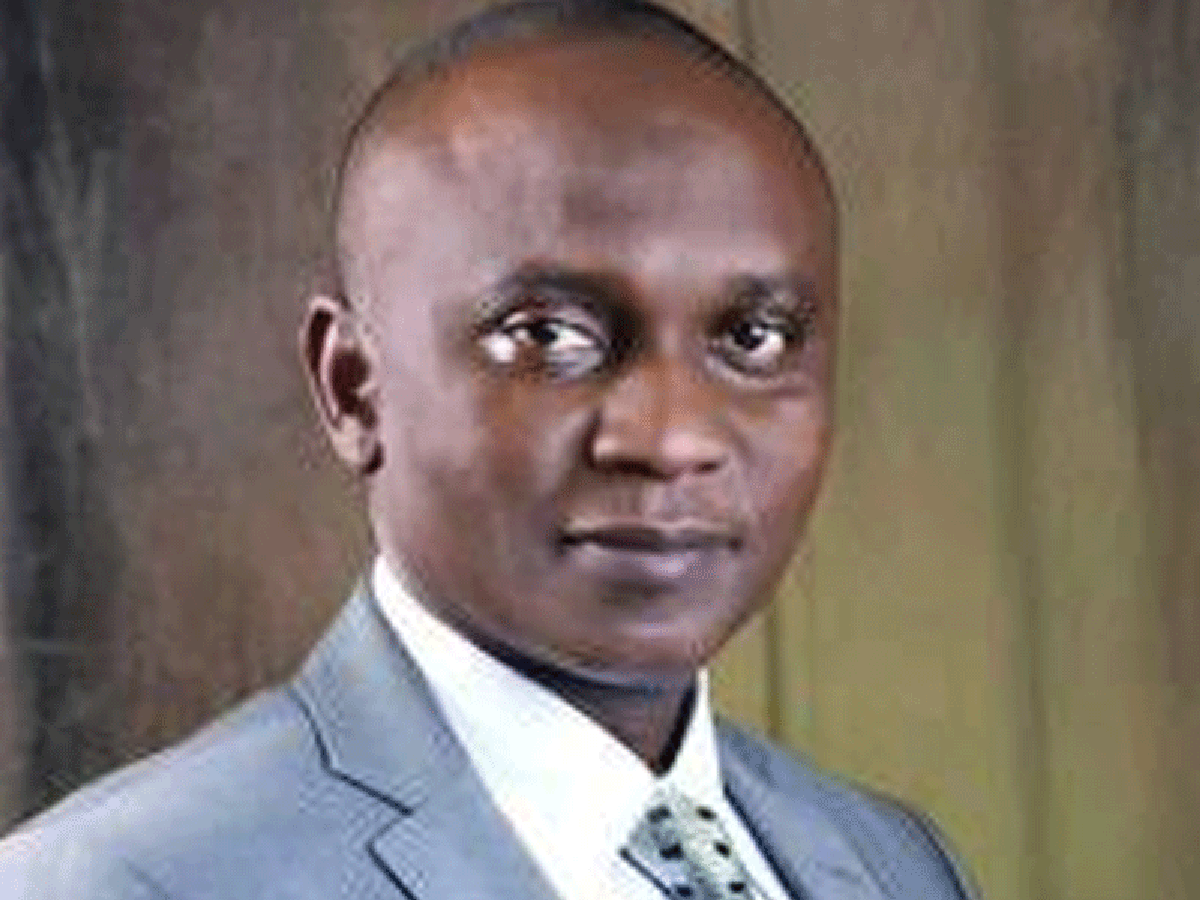
By: A G Abubakar
“Subsidy is gone!” So thundered Alhaji Bola Ahmed Tinubu at Eagle Square immediately after being sworn in as President of the Federal Republic of Nigeria on 29th May 2023. The terse declaration was intended to bring an end to one of the nation’s major cesspools of corruption. Months later came the unification of the various windows of foreign-exchange administration, where impunity, arbitrage and political patronage had held sway for years. That unification, in practical terms, meant the devaluation of the naira. About a year later, a new tax regime was introduced, ostensibly to expand the government’s fiscal space and strengthen its revenue base.
Taken individually and in principle, the three reforms are difficult to fault. They address deep structural distortions that have weakened Nigeria’s economy for decades and created enormous opportunities for rent-seeking, arbitrage and systemic corruption. But economic reforms, however necessary, are not self-executing miracles. Even sound reforms can produce severe and unintended consequences, particularly hyperinflation, joblessness and mass disillusionment, when they are poorly sequenced, inadequately cushioned or implemented without sufficient regard for the productive capacity and welfare of the population.
A reform process is like agriculture. Practitioners know that it is not enough to plant early-maturing, high-yielding seeds and expect a bumper harvest. The whole exercise has to be preceded by land preparation, the acquisition of the right fertiliser and chemicals, and a modicum of good luck—weather and rainfall—from Mother Nature. Otherwise, a potentially high-yielding seed planted in an unprepared field can still produce a disappointing harvest. The same principle applies to economic reform.
Removing subsidies, unifying the foreign-exchange market and expanding the tax base may correct serious distortions, but they do not, by themselves, create food, jobs, productive industries, affordable energy, secure livelihoods or purchasing power. Those outcomes require the productive economy to be strengthened alongside the reforms. Otherwise, the immediate burden of adjustment, such as galloping inflation, can become much heavier than the economy’s capacity to absorb it. Containing inflation and the effects of devaluation in a low-productivity economic environment is one of the hardest policy-management challenges in an economy.
Inflation, in an economy already suffering from weak productive capacity, does not merely raise prices. It erodes purchasing power, destroys savings, increases the cost of survival and pushes millions of people closer to the economic precipice. The problem becomes even more severe when rising prices are accompanied by declining production, high energy costs, currency depreciation and weak household incomes.
The situation is then compounded when the authorities, in an attempt to contain inflation, tighten the money supply through higher interest rates. While such measures may be intended to moderate demand and stabilise prices, their immediate effect is to increase the cost of borrowing, making investment more expensive and, in some cases, virtually prohibitive. Businesses that would otherwise expand production are forced to scale back, postpone investment or close altogether. Productivity consequently suffers, employment opportunities shrink, and the economy becomes even less capable of producing the goods and services its growing population requires.
The usual temptation is to fill domestic production gaps through massive imports. But this, too, places even greater pressure on scarce foreign exchange while simultaneously making local production less competitive and less attractive. The vicious cycle is thereby reinforced: currency depreciation raises the cost of imported inputs and finished goods; high interest rates suppress investment; weak domestic production increases import dependence; import dependence intensifies demand for scarce foreign exchange; and the resulting pressure on the currency pushes prices even higher.
The economy consequently becomes trapped in a cycle in which the very measures intended to restore stability can, in the absence of corresponding increases in production, deepen the pressures facing households and businesses. When these forces are allowed to play out without restoring the critical balance, citizens’ well-being takes the greatest hit: food, transport, housing, healthcare and education become increasingly difficult to afford.
This calls for an elaborate blueprint for safety nets, which is literally the first law of reform. Metaphorically, tents are mounted before the rain starts falling. And the reasons are obvious: reforms usually throw up unintended consequences faster than the antidotes to contain them. On account of time lags, economies normally take time to absorb the shocks created by reforms.
The government has not acknowledged this reality sufficiently. Instead, it has developed a penchant for rolling out statistics to rebut any opinion to the contrary. Functionaries have been too eager to cite improved foreign reserves, rising GDP growth, falling food inflation, increased FAAC allocations to states and even access to NELFUND. And lately, the improved figure for Foreign Direct Investment (FDI) into the country. The truth is that these achievements have not been felt by ordinary citizens. And for some obvious reasons.
The increase in foreign reserves above $54 billion, the highest since 2008, has not been achieved through improved domestic productivity or exports. It has been driven largely by external borrowing and fortuitous developments in the oil market. Records from the DMO indicate that Nigeria’s external debt rose from $45.98 billion to $51.90 billion in 2026, a net increase of $5.92 billion. The war in Iran, too, has pushed oil prices above Nigeria’s budget benchmark of $64.85 per barrel to around $100. The positive difference represents a “windfall” that has improved Nigeria’s external reserves without a corresponding rise in non-oil production. It is like a lottery. Economies are never sustainably run on lotteries.
The GDP growth at 4.43% is equally impressive, but it could just be “paper growth” because it has not translated into a general improvement in citizens’ well-being. It is common to have “jobless growth”—a phenomenon in which growth is concentrated in high-tech sectors or services rather than in industrial production, manufacturing or agriculture. These productive sectors are the major drivers of sustainable economic growth. They provide job opportunities for millions, create wealth and boost exports. This has not been the case with Nigeria’s GDP growth.
Falling food inflation is a welcome development at any time. It becomes a challenge when it is driven by imports. It is on record (CBN, NBS) that between 2024 and 2025, the government imported N6.58 trillion and N6.65 trillion, respectively, worth of food items, particularly grains. While the importation has forced prices down, it has inadvertently discouraged local production, the level of which was already down because of insecurity in most farming communities. This has triggered a fear of hunger, which Mr President had cause to say has been with us since before he was born.
The NELFUND is a good initiative in unqualified terms. The figure being bandied about—that more than a million students have benefited from the scheme—is impressive. But the finer details may indicate a different story. For communities dealing with low school enrolment, such as in the North, where about 16 million are out of school, or poor communities having to deal with poor educational performance, the immediate challenge may not be student loans. It is about putting education on the right footing. NELFUND, for now, could largely benefit the privileged who ordinarily could afford tuition.
Then comes the issue of enhanced FAAC allocations to the states, which may have accrued from tax reforms, improved oil revenues, savings from subsidy removal and other measures. Great as these initiatives have been in improving the government’s fiscal health, the paradox is that inflation arising from currency devaluation has eaten away almost 70% of the value of what is being allocated.
To put it plainly, the naira has lost around 70% of its value against the dollar. State governments are, therefore, now paying multiple times what they used to pay for the same goods and services before the devaluation. The increased FAAC is like adding water to a soup to serve more guests, and still insisting that the taste has improved too.
As for FDI, Nigeria recorded an improved level in the first quarter of 2026, to the tune of $10.37 billion in capital importation. Unfortunately, more than 95%—over $9.85 billion—was portfolio investment. Records indicate that more than 98% of the said portfolio inflows went into money-market instruments, including Treasury bills and government bonds. While such inflows can provide foreign exchange and temporary liquidity, they are inherently more mobile than direct investment. Nigeria needs more foreign capital, but that which a greater proportion should be stable, and long-term to expand productive capacity, creates jobs and strengthens the real economy.
As things stand, the reforms actually call for further reforms to make their outcomes more impactful. The path forward should start by reviewing some of the prescriptions of the neoliberal Bretton Woods institutions (WB/IMF) that emphasise spreadsheet balance over public well-being. The next necessary actions include repossessing aspects of the energy sector, stepping up the war on corruption, optimising the reinvestment of subsidy savings into job creation, and providing sustainable support for the MSME sector.
The 2012 privatisation of aspects of Nigeria’s electricity sector has not worked well. Apart from its abysmally low transmission of about 5,000 MW for a population of over 230 million, the Nigerian power sector is structurally inefficient, operationally constrained and unnecessarily burdened by a maze of encumbering regulatory and institutional arrangements. The transmitted volume is actually less than that of some single cities, such as Beijing (China), Tokyo (Japan), Delhi (India) and the like.
First, the gap between the estimated 12,000 MW or more generation capacity and the roughly 5,000 MW wheeling volume means that more than half of the available generation capacity is either stranded, constrained or otherwise unavailable to consumers. Second, the TCN’s transmission loss factor (TLF), at 7.96%, exceeds NERC’s regulatory threshold of 7%. Third, and more troubling, is the DISCOs’ Aggregate Technical, Commercial and Collection (ATC&C) loss rate of 37.44%, more than twice the regulatory target of 16.92%.
These have inflicted enormous financial losses and severely diminished economic opportunities, with far-reaching consequences for the productive capacity of the economy and the acceleration of its deindustrialisation.
The institutional architecture itself adds another layer of complexity. The sector involves a cacophony of stakeholders and institutions—including the GenCos, TCN, NISO, DISCOs, NERC, NBET, NEMSA, the ECN, the Rural Electrification Agency (REA) and the Federal Ministry of Power (FMP). Their mandates tend to overlap. They should be streamlined to remove bottlenecks.
Energy is an indispensable factor in economic transformation. For instance, in the USA, only 13% of the economy can function without electricity. In general, it is believed that a 1% increase in electricity supply can stimulate between 1.5% and 3% growth in GDP. The government should, therefore, reclaim the distribution segment (DisCos) of the power ecosystem to fast-track national development, as the private-sector-led model has not delivered yet. This is without prejudice to the current Electricity Act, 2023, as amended.
Besides power, greater attention should be paid to agriculture through the provision of subsidies on inputs, chemicals and fertiliser. Agriculture remains a mainstay of the economy, contributing between 20% and 26% to national GDP and employing around 70% of the rural labour force (NBS, 2026). It has been a veritable source of agro-raw materials for both local and foreign industries. Agriculture should be made attractive.
Support for the MSME subsector should be a matter of urgency. It harbours over 40 million units and, according to NBS, constitutes over 90% of the nation’s enterprise stock. These enterprises play a huge role in wealth creation. Poor power supply and limited access to affordable credit have, however, not allowed the sector to thrive as it should.
Another critical priority area that deserves greater support is direct job creation. The concept has been a good complement to macroeconomic reforms the world over. It is an indispensable labour sponge for economies under serious stress, as pronounced by great scholars like Keynes and later modified by Friedman and others. The US government under Roosevelt used it to revive the economy during the Great Depression of the 1930s. Called the New Deal, it aimed to equip jobless youths with skills to undertake various types of economic activities outside government. A similar approach was adopted in the rebuilding of Europe under the Marshall Plan (1948–1951).
Successive governments in Nigeria appreciated this dictum during periods of economic challenges and established agencies such as the NDE, NAPEP, SMEDAN, etc. However, over the years, some of their operations have lost steam when they are needed most. It is believed that, with proper support, the agencies could address the annual rate of 3 million youths discharged by the education system into the labour market, where only 10% are estimated to get formal employment.
The call for rejigging the existing agencies is not to downplay what is on the ground, such as the N75 billion BOI fund, the CBN’s development fund, SMEDAN’s ICSS and GROW Fund, etc., but rather to engender greater impact and reach. This is also without prejudice to existing schemes and/or programmes of NBTE, ITF and others. They should be made to work collaboratively, statutorily, along a national empowerment value chain that links skills development, entrepreneurship, funding and mentoring.
The resources to fund interventions are on the ground. They include redirecting the subsidy savings, a sustained reduction in corruption that currently takes 40% of the nation’s annual budget, and conventional allocations.
In the final analysis, reforms cannot be judged by the comfort of government balance sheets while citizens struggle to put food on their tables. Nigerians do not live on GDP growth, foreign reserves or impressive FAAC figures; they live on wages, jobs, affordable food, electricity, healthcare and purchasing power. The real challenge, therefore, is to move the reforms from the spreadsheets of government into the productive economy and the homes of ordinary Nigerians.
Until that happens, the government may continue to celebrate its numbers, but the people will continue to measure the reforms by the hardship they feel.
A. G. Abubakar
agbarewa@gmail.com
By Hassan Agboola
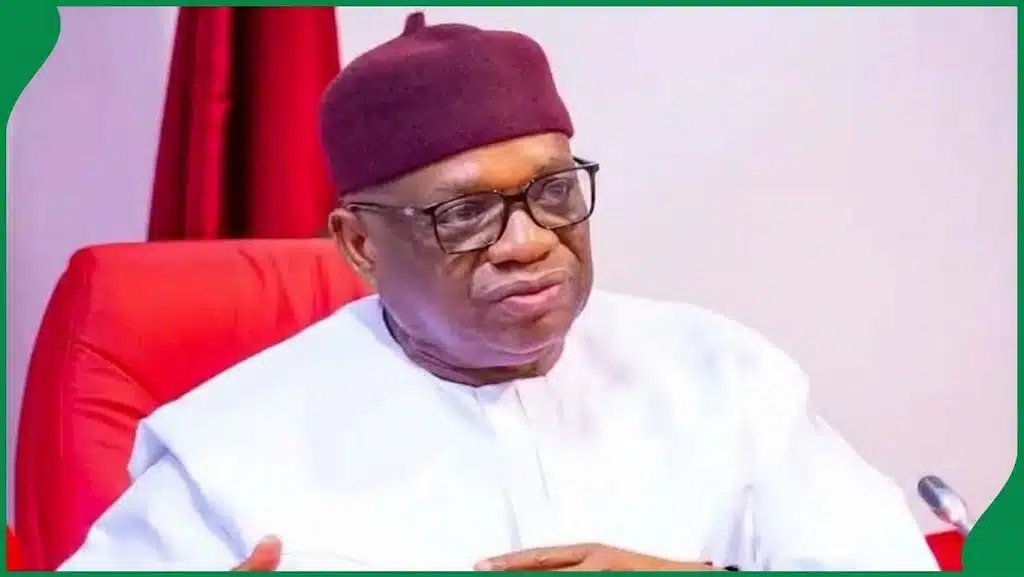
Former Abia State Governor, Senator Orji Uzor Kalu, has attributed the success of Enyimba International Football Club during his tenure as governor to discipline, proper management and commitment to excellence.
Kalu said he made two major promises to the people of Abia State when he sought election as governor in 1998: to build a standard stadium in Aba and to make Enyimba champions of the African Club Championship.
He said he fulfilled both promises, noting that Enyimba subsequently dominated Nigerian football, winning the league title for about five or six seasons and also lifting the FA Cup.
Speaking on the current state of the club, Kalu recalled the level of personal commitment and discipline he demonstrated in ensuring its success.
“When I was going to be governor in 1998, there were two promises I made to Aba and the Nigerian people. I told my people in Aba that I would build a proper stadium, which I did. I also told the people of Aba that we were going to become champions of the African Cup of Champions. I asked them to vote for me, promising that they would get it. And I fulfilled that promise” he said.
He added that discipline was central to the club’s achievements, recalling how he regularly travelled from Umuahia to Aba early in the morning to train with the players before resuming his official duties.
“Discipline is everything. I used to leave Umuahia at quarter to five every morning and arrive in Aba at 5:30am. I would train with the Enyimba players at 7:30am and return by 8am to take my bath and resume work in the office,” he said.
The former governor, however, lamented what he described as a poor working system in the country, saying Nigeria needed a comprehensive reorientation and a fundamental overhaul of its institutions.
“The working system is very bad, not only in football but in every aspect of our national life. We need reorientation and surgical operations in our system, from beginning to end,” he said.
Kalu also expressed appreciation to the Rangers International Football Club for their recent performances on the continent, expressing hope that the Enugu-based club would sustain its progress.
He said he wanted to see another Nigerian club win the continental title, adding that several Nigerian clubs had attempted to achieve the feat.
The senator also recalled Enyimba’s difficult continental encounters, including a controversial match against Al Ahly of Egypt, during which, according to him, his team’s two goals were disallowed.
He said the experience demonstrated the challenges Nigerian clubs faced in continental competitions and the importance of remaining committed to excellence.
Kalu further urged Nigerians, particularly professionals, to take their responsibilities seriously and discharge their duties with dedication.
“Whatever you want to do, do it well. Nigerians should stand up for their responsibilities. If you want to be a journalist, be a journalist properly. People should stand up for their duties. Some people do not give time or commitment to what they are supposed to do. I urge everybody not to do that but to take their jobs seriously” Kalu said.
Stephen Olufemi Oni, Ilorin
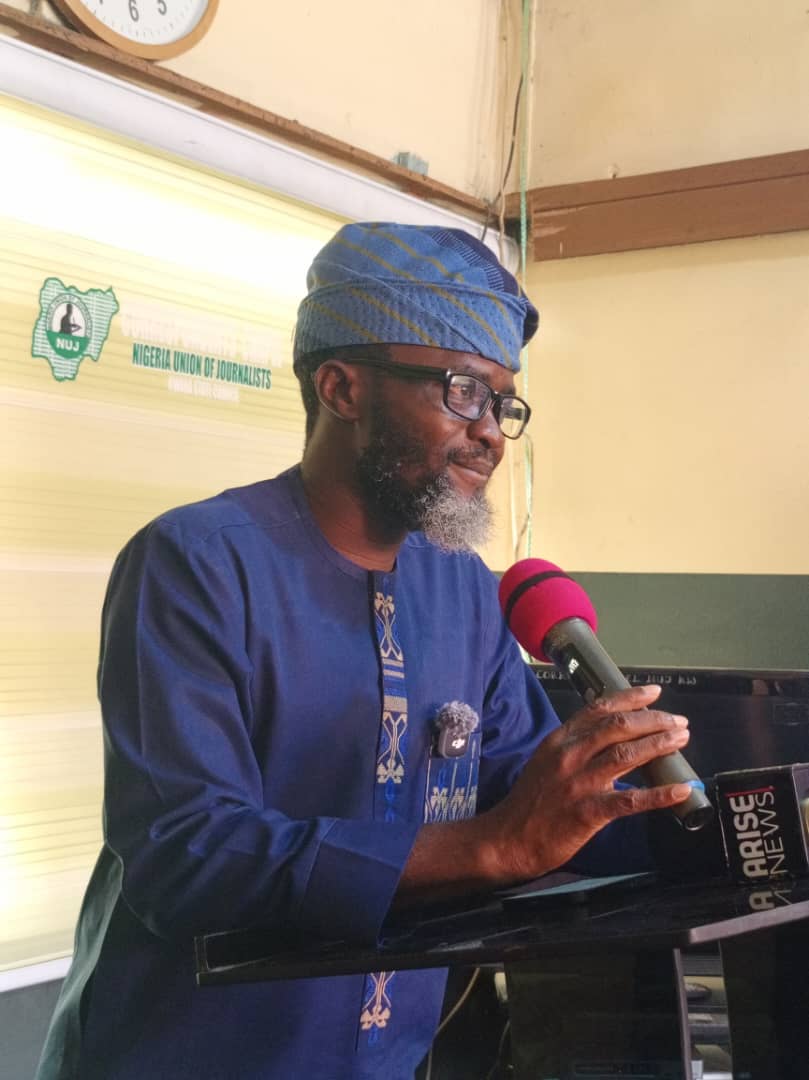
The candidate of the All Progressives Congress (APC) for the Offa/Oyun/Ifelodun Federal Constituency in Kwara State, Dr Rafiu Ajakaye, has pledged to prioritise security, education, youth empowerment and inclusive governance through people-oriented legislation if elected in the 2027 general elections.
Ajakaye, a former Chief Press Secretary to Governor AbdulRahman AbdulRazaq, said effective legislative representation must go beyond attracting constituency projects to include advocacy, accountability, problem-solving and ensuring that the voices of constituents are heard in national decision-making.
He stated this on Tuesday while featuring on the News Keg programme organised by the Correspondents’ Chapel of the Nigeria Union of Journalists (NUJ), Kwara Council, at the chapel’s secretariat in Ilorin.
The APC candidate said his decision to contest was informed by his experience in public service and conviction that political leadership should be driven by the desire to improve people’s lives rather than personal ambition.
“My aspiration is driven not by personal ambition, but by a conviction that public service offers an opportunity to create meaningful impact in society,” he said.
Reflecting on his experience in the AbdulRazaq administration, Ajakaye cited the recruitment of more than 4,700 teachers in 2021 as an example of how transparent governance could expand opportunities and strengthen public confidence in government.
He said the exercise was conducted through an open and competitive process involving online applications, examinations and interviews, insisting that employment opportunities should be based on merit rather than political connections.
“We ensured that people were employed based on their competence and qualifications, not because they knew anybody in government or had political connections,” he said.
On security, Ajakaye described insecurity as a major threat to national development, particularly in communities affected by kidnapping, banditry and other criminal activities.
He advocated stronger legislative oversight of security agencies, improved welfare and equipment for security personnel, increased recruitment and better collaboration between federal and state governments.
He also called for security policies that take into consideration the geographical realities of different communities, including forests, difficult terrain and poorly monitored rural settlements exploited by criminal elements.
“Security remains the foundation upon which every society develops,” he said, stressing that the National Assembly must ensure that security agencies receive adequate resources and are held accountable for their responsibilities.
On education, the former governor’s spokesman called for increased investment in science, technology, technical and vocational education, as well as digital learning to prepare young Nigerians for emerging opportunities in the labour market.
He argued that the education system must evolve with changing economic and technological realities, noting that many traditional occupations had been displaced by technological advancement.
“Our schools should produce innovators, entrepreneurs, professionals, artisans, researchers and responsible citizens capable of competing in an increasingly dynamic world,” he said.
Ajakaye also identified youth empowerment as a major component of his proposed legislative agenda, advocating policies that would expand access to finance, digital entrepreneurship, professional training and agricultural opportunities.
He urged young Nigerians to embrace agriculture as a viable business, rather than regarding it as an occupation of last resort.
On women’s participation in governance, he maintained that inclusive decision-making was essential to developing policies that adequately addressed the needs of different segments of society.
Citing the debate surrounding the proposed six-month maternity leave policy in Kwara State, he recalled how a female participant at a policy discussion advised that the arrangement should be optional rather than compulsory to accommodate the different circumstances of working mothers.
According to him, the experience reinforced the importance of involving women in decisions affecting their welfare.
“That is the advantage of having women at the table where decisions affecting their lives are being made, rather than men sitting down and assuming that what they consider good for women must automatically become policy,” he said.
He further argued that responsible leadership required distinguishing between what people wanted and what they genuinely needed, noting that some decisions might be difficult but necessary for the long-term interest of society.
Ajakaye promised that his approach to legislative representation would be guided by humility, fairness, accessibility, empathy and intellectual rigour, irrespective of the social status, gender, religion or political affiliation of constituents.
“My approach to legislative service will be guided by humility, fairness, intellectual rigour, accessibility and empathy,” he said.
Earlier, Chairman of the News Keg Committee, Ibrahim Alege, commended Ajakaye for his contributions to media development and support for the Correspondents’ Chapel during his tenure as the governor’s spokesman.
Alege described the APC candidate as an experienced media professional whose years in government had equipped him with valuable knowledge of political communication, media relations and public service.
He particularly acknowledged Ajakaye’s support for the chapel’s annual Press Week, acquisition of its bus, end-of-year gifts and financial assistance on different occasions.
“Indeed, there is a popular saying that once a CPS, always a CPS. We believe that experience and those professional instincts remain part of him, even outside the corridors of government,” Alege said.
He, however, stressed that the engagement was not merely an opportunity to celebrate the former CPS but a platform to examine his political ambition, legislative priorities and proposed programmes for the constituency.
Alege urged journalists to ask critical questions and demand clarity to enable the electorate make informed decisions ahead of the 2027 elections.
In his remarks, Chairman of the Correspondents’ Chapel, Alhaji Biola Azeez, appreciated Ajakaye for his support and goodwill towards the chapel, expressing the union’s commitment to sustaining its cordial relationship with him.
Azeez also wished the former CPS success in his political ambition.
By Hassan Agboola
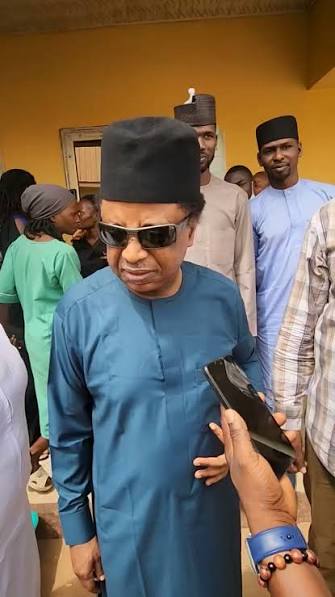
Former Senator representing Kaduna Central Senatorial District, Senator Shehu Sani, has provided and installed a solar power system at Rigasa General Hospital in Kaduna State as part of efforts to improve electricity supply and strengthen healthcare delivery at the facility.
The intervention is expected to enhance the hospital’s capacity to provide essential medical services, particularly during power outages, when uninterrupted electricity is critical for patient care, medical procedures and the operation of vital healthcare equipment.
The initiative is another demonstration of the former lawmaker’s commitment to community development and support for public healthcare institutions.
In October 2026, Shehu Sani also provided a solar power system to Sabo-Tasha General Hospital in Kaduna to support critical medical services, particularly at the special-needs babies unit and part of the maternity ward.
The former senator, a human rights activist and All Progressives Congress (APC) senatorial candidate for the 2027 general election, is said to believe that politicians should not wait until they occupy public office before responding to the needs of their communities, especially in areas where timely intervention could help save lives.
Speaking with journalists shortly after the handing-over ceremony, the Sarki Rigasa, Malam Aliyu Yahaya, expressed appreciation to Senator Shehu Sani for what he described as a laudable intervention that came at the right time.
Yahaya said the gesture demonstrated genuine concern for the welfare of residents and the importance of supporting public healthcare institutions, particularly those serving densely populated communities.
He commended the former lawmaker for responding to a critical need in the community, noting that reliable electricity remains essential for effective healthcare delivery.
The traditional ruler expressed hope that the solar installation would provide lasting benefits to the hospital, improve the working environment for healthcare personnel and enhance the quality of services available to patients.
Reliable electricity is indispensable to modern healthcare delivery, supporting essential services such as laboratory operations, lighting, the preservation of medical supplies and the functioning of critical medical equipment.
The intervention is therefore expected to provide relief to healthcare workers and residents of Rigasa and neighbouring communities who depend on the hospital for medical services.
The development also highlights the importance of collaboration between political leaders, traditional institutions and public healthcare facilities in addressing infrastructure challenges and improving access to essential services.


NDIC Takes Deposit Protection, Financial Literacy Campaign to Oyo Corps Members

Orji Kalu: Discipline, Proper Management Made Enyimba Great.

Kwara 2027: I’ll Prioritise Security If Elected – APC Rep Candidate, Ajakaye

-
 Uncategorized6 years ago
FG, states urged to harness flooding for ranching, others with technology – Agbaje
-
 Headlines11 years ago
Breaking: EFCC seals Borno House of Assembly, as Hon members take to their heels
-
 News12 years ago
Nigeria Security Operatives Stage Manhunt For Homosexual Perpetrator
-
 News10 years ago
How 21-year-old Girl fled community over accusation of lesbianism
-
 News11 years ago
Yobe Gov Moves Against Deputy
-
 Opinion8 years ago
7 signs she has friend zoned you
-
Technology5 years ago
Online job placement company headhunts women
-
 Headlines11 years ago
Borno Dep Gov Abducts Another Church Leader