
Foreign
How close are humanoid robots to everyday life?

By Wang Haonan, People’s Daily
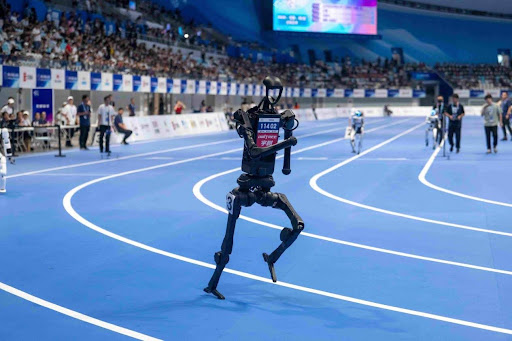
The 2025 World Robot Conference opened in Beijing on August 18, bringing together more than 200 global robotics companies and unveiling over 100 new products. Just days later, the city hosted another event: the 2025 World Humanoid Robot Games, the first of its kind globally, which kicked off on August 14, drawing 280 teams from 16 countries and regions.
At the games, Chinese tech firm Unitree Robotics’s G1 humanoid robot completed the 100-meter obstacle race in 33.71 seconds, while its H1 robot won the 1,500-meter race in 394.40 seconds. Although these results fall short of professional human athletes, Unitree founder Wang Xingxing expressed confidence in the trajectory of progress: “Robots will soon outperform humans.”
Today, humanoid robots extend beyond racing tracks to precision factory tasks. Yet a pressing question persists: how close are they to seamless integration into everyday life?
According to Jia Baoxiong, a researcher at the embodied robotics center of the Beijing Institute for General Artificial Intelligence, humanoid robots have already demonstrated remarkable abilities in specialized tasks such as sprinting and dancing.
But to transition into everyday life, breakthroughs are required in several areas: enhanced autonomy in open environments, greater precision and stability in movement and manipulation, and above all, safe and reliable interaction with humans, Jia added.
“We are seeing continuous breakthroughs in hardware performance, leaps in AI-driven decision-making, and stronger foundations in datasets and virtual simulation,” said Xu Xiaolan, president of the Chinese Institute of Electronics, at the World Robot Conference. Humanoid robots are now at a critical stage, moving from laboratory experimentation toward industrial application, Xu added.
Still, obstacles remain. Why do some robots stray from their lanes in a race or misfire in a boxing match? The explanation often lies in human involvement: many robots are still remotely controlled by humans, making performance dependent on operator skill and vulnerable to electromagnetic interference.
To encourage intelligence and autonomy, the 2025 World Humanoid Robot Games introduced innovative scoring. Few spectators realized that Tiangong Ultra, developed by the Beijing Humanoid Robot Innovation Center, and crowned champion of the 100-meter dash, was not actually the first to cross the finish line. But as the only competitor to complete the race using a fully autonomous navigation system without human control, its recorded time was multiplied by a 0.8 coefficient, giving it the highest overall ranking.
Smarter robots will gradually emerge through incremental breakthroughs, said Xiong Youjun, general manager of the Beijing Humanoid Robot Innovation Center. “Step by step, they will grow in capability until they can truly serve and assist us,” he added.
For now, hardware refinement remains essential, but according to Wang, the larger bottleneck lies in embodied intelligence itself, which has yet to reach maturity. This, he argued, is the key factor holding back large-scale adoption of humanoid robots in daily life.
In Jia’s view, humanoid robots are already delivering value in performance and entertainment, and when combined with wheeled platforms, they can be deployed for sorting and logistics in warehouses, supermarkets, and pharmacies. But moving them into households will require not just technical breakthroughs, but also solutions to ethical and cost concerns.
Price remains a critical challenge. Training embodied AI models requires vast amounts of real-world trajectory data. “High-quality data is scarce and expensive, driving up development expenses,” noted Xiong.
Ethical considerations are equally pressing. “How can we protect our privacy once humanoid robots enter homes? How should we coexist with them?” Such questions sparked vigorous debate at the 2025 World Robot Conference.
Despite challenges, the industry’s outlook is robust. According to the International Federation of Robotics, the global humanoid robot market is projected to grow at a compound annual rate of 71 percent from 2021 to 2030. The Chinese Institute of Electronics predicts that the nation’s humanoid robot market will reach 870 billion yuan (about $122 billion) by 2030.
Humanoid robots continue to evolve at a remarkable speed. The day they “run” into households and integrate into everyday life may not be as far away as it seems.

By: Fabian Apechihin
U.S. President Donald J. Trump has directed lawmakers to launch an immediate investigation into reports of widespread killings of Christians in Nigeria, describing the situation as a “Christian genocide.”
In a statement released Friday evening via his Truth Social platform, Trump expressed grave concern over the violence, blaming radical Islamist groups for what he called a “mass slaughter.”
“Christianity is facing an existential threat in Nigeria. Thousands of Christians are being killed. Radical Islamists are responsible for this mass slaughter,” he wrote.
The U.S. President announced that he is designating Nigeria a “Country of Particular Concern,” citing alarming figures of killings within the country compared to global totals.
“When Christians, or any such group, are slaughtered like is happening in Nigeria — something must be done! I am asking Congressman Riley Moore, together with Chairman Tom Cole and the House Appropriations Committee, to immediately look into this matter and report back to me,” Trump stated.
He added that the United States “cannot stand by while such atrocities are happening,” pledging that his administration remains ready “to protect Christian populations around the world.”

By: Fabian Apechihin
Polish Member of the European Parliament (MEP), Dominik Tarczyński, has once again drawn global attention to what he described as the ongoing persecution and killings of Christians in Nigeria.
In a post on his verified 𝕏 account on Monday, Tarczyński shared an image of a blood-stained Nigerian flag alongside a viral video showing a pastor conducting a burial ceremony for victims of violence.
In the video, the pastor lamented the frequent killings, saying:
“We are tired of performing burial every day, and they expect us to remain silent. It has become an order, and the Nigerian government came out to deny the massacre, saying there is no genocide of Christians in Nigeria. United Nations, you’re watching me. The American Parliament is aware of what we are doing now. My special request is to President Trump to save our lives in Nigeria. They are killing more Christians. If they say they kill Muslims, the Muslims are killed by who? Muslims are killed by Muslims.”
Tarczyński’s post quickly went viral, sparking widespread reactions and renewed calls for the Nigerian government to intensify efforts to combat banditry and terrorism.
However, the Federal Government has repeatedly rejected claims of a religiously targeted genocide. In a recent statement, the Minister of Information and National Orientation, Mohammed Idris, described such allegations as “false, baseless, despicable, and divisive.”
Idris maintained that Nigeria’s security challenges are complex and not driven by religious motives, warning that framing the fight against terrorism as an anti-Christian campaign could deepen existing social and religious divides.
He reiterated the government’s commitment to protecting all Nigerians, regardless of faith or ethnicity, and called on international partners and media outlets to “refrain from narratives that distort the country’s security realities.”
By: Fabian Apechihin
Two airport security officers were killed early Monday after a cargo plane skidded off the runway at Hong Kong International Airport, struck their patrol vehicle, and plunged into the sea.
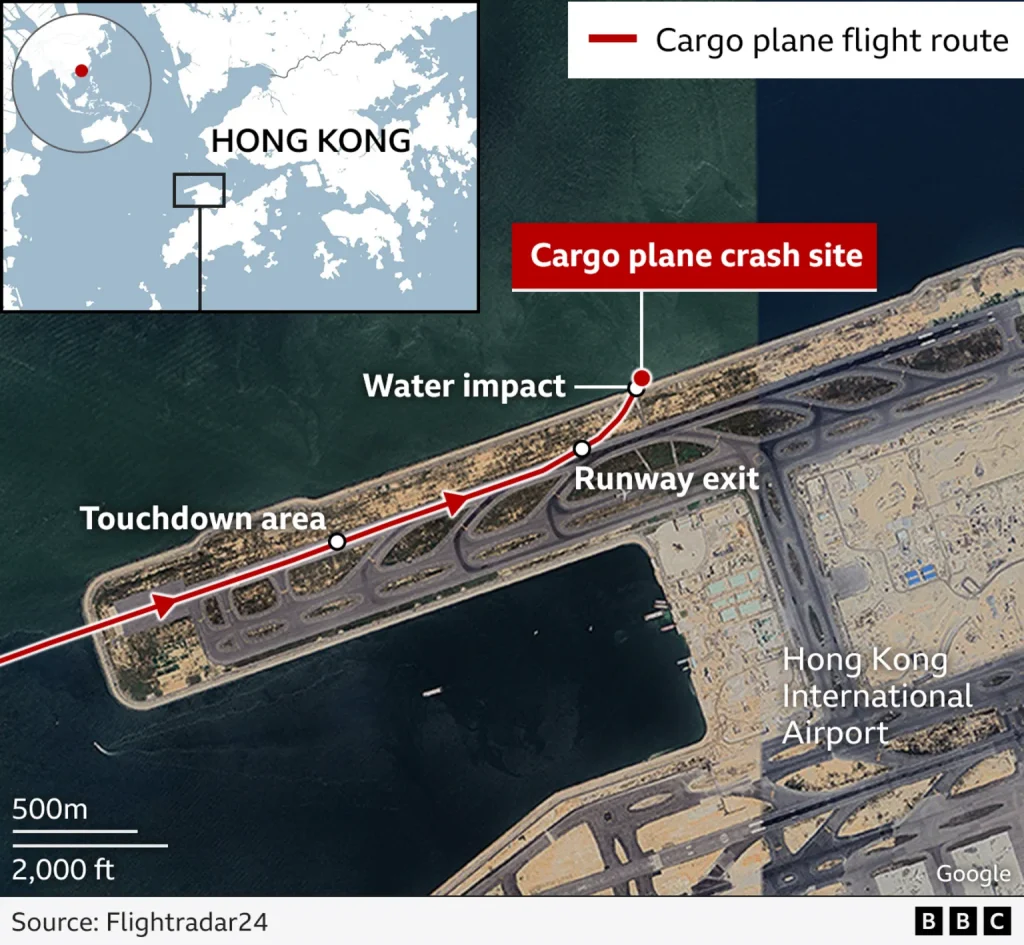
The incident involved Emirates flight EK9788, a Boeing 747 arriving from Dubai around 03:50 local time (19:50 GMT Sunday). The aircraft veered off the north runway, crashed through perimeter fencing, and collided with the patrol vehicle, pushing it into the water. Both occupants of the vehicle died, while the plane’s four crew members survived.
According to officials, the plane ended up partially submerged, making it one of Hong Kong Airport’s deadliest aviation accidents in years. Two other runways remain operational as investigations continue.
Airport operations executive director Steven Yiu said the patrol vehicle had been travelling on a service road outside the runway’s perimeter at a “safe distance” when the plane suddenly turned off course.
“Normally, the plane is not supposed to turn towards the sea,” Yiu said during a press briefing. He emphasized that the patrol car “definitely did not enter the runway” and that the aircraft had not sent a distress signal before landing.
Divers later recovered the bodies of the victims—two men aged 30 and 41—about five meters from the shore and seven meters underwater. One was confirmed dead at the scene, and the other died in hospital.
Hong Kong’s transport bureau expressed condolences to the victims’ families, describing the event as “deeply saddening.”
Emirates confirmed the accident, saying the cargo plane “sustained damage on landing in Hong Kong.” The airline noted there was no cargo onboard and that the aircraft had been wet-leased—meaning operated with crew and insurance—from Turkish carrier ACT Airlines.
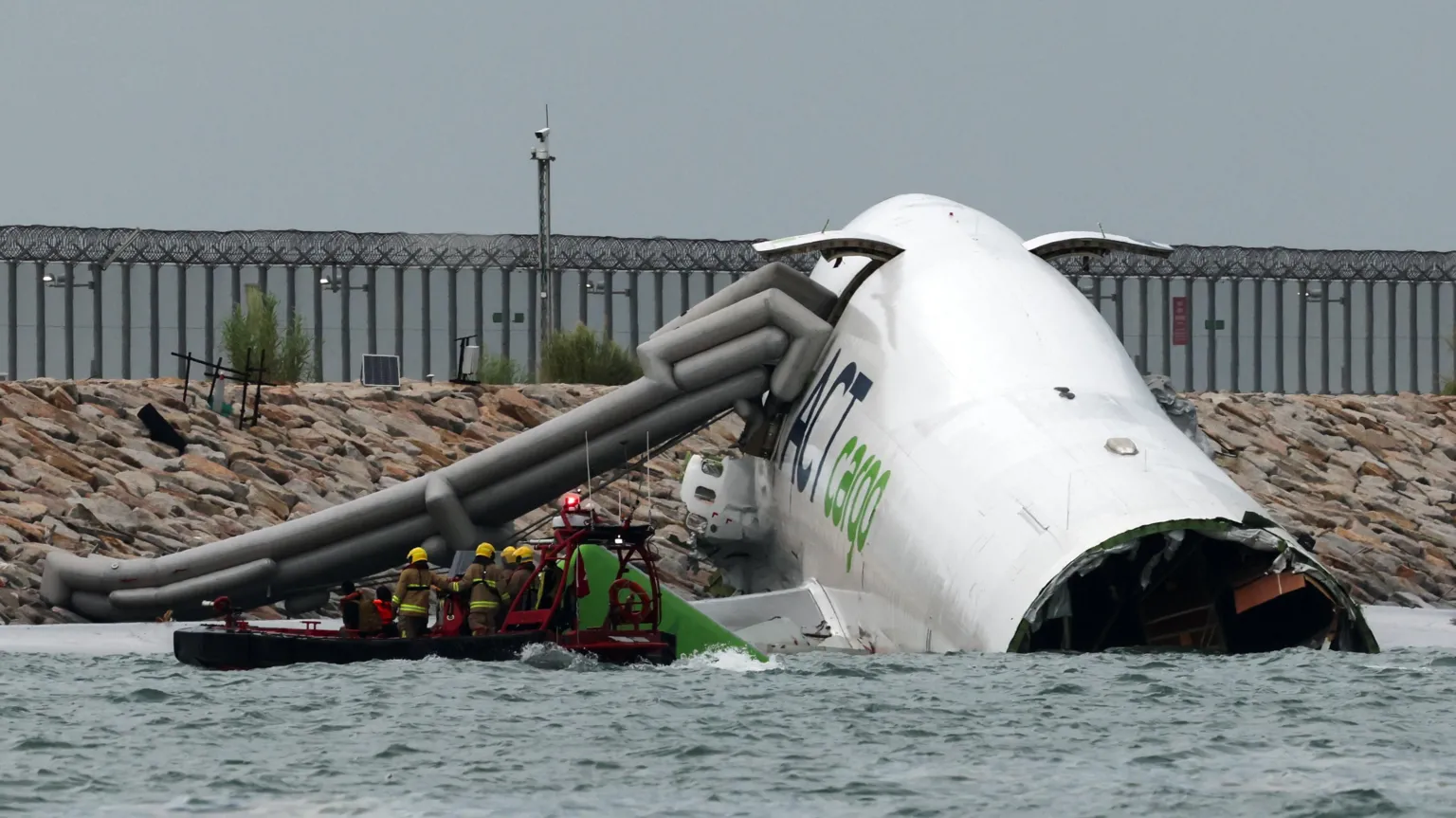
Firefighters reached the scene within two minutes, rescuing all four crew members who had escaped via the aircraft’s emergency slides. Photos from the crash site show the plane broken in half, with part of its fuselage submerged in water.
Authorities are now searching for the plane’s flight data and cockpit voice recorders (“black boxes”). A police spokesperson said criminal investigations have not been ruled out.
The affected runway will remain closed pending the outcome of the investigation. At least 11 incoming cargo flights were cancelled on Monday, according to airport authorities.
This is only the second fatal aviation accident at Hong Kong International Airport since it relocated to Chek Lap Kok in 1998. The previous one occurred in 1999, when a China Airlines jet crash-landed during a typhoon, killing three people.


The changing face of Nasarawa at 30

COALITION OF RENEWED HOPE REACTS TO NATIONAL FRONT BURNER ISSUES: TINUBU IS FIXING NIGERIA, OPPOSITION SHOULD STOP PLAYING POLITICS WITH PAIN.

OPINIONThe Disturbing Facts Behind the Economy’s Beautiful Statistics and the Path Forward.

-
 Uncategorized6 years ago
FG, states urged to harness flooding for ranching, others with technology – Agbaje
-
 Headlines11 years ago
Breaking: EFCC seals Borno House of Assembly, as Hon members take to their heels
-
 News12 years ago
Nigeria Security Operatives Stage Manhunt For Homosexual Perpetrator
-
 News10 years ago
How 21-year-old Girl fled community over accusation of lesbianism
-
 News11 years ago
Yobe Gov Moves Against Deputy
-
 Opinion7 years ago
7 signs she has friend zoned you
-
Technology5 years ago
Online job placement company headhunts women
-
 Headlines10 years ago
Borno Dep Gov Abducts Another Church Leader