
Uncategorized
STATE POLICE IN A PUBLIC SERVICE WHERE ETHOS, AND VALUES LARGELY REMAIN MERE CLICHÉS AND SLOGANS


This is a hearty welcome to Nigeria’s new kid on the nation’s security block — the State Police Service (SPS). It has been a long time coming, but it is finally here, hopefully to take its seat among its older siblings, both state and non-state. They include the Nigeria Security and Civil Defence Corps (NSCDC), the Nigerian Forest Guards, Amotekun, Yan Sa Kai, Ƙato da Gora, Ebube Agu Security Network, Agunechemba, and others. They will eventually join their senior cousin, the Nigeria Police Force, soon to be known as the Federal Police Service (FPS). Perhaps it is a case of “the more, the merrier.”
The debate over the establishment of state police, which has gone on for over a decade, came to an end recently when the National Assembly (NASS) passed the required bill [Ref: Bill No. SB.1055, dated 22/6/26]. The 26-clause bill also places policing on the Concurrent Legislative List.
According to the passed bill, the State Police “shall, within the state for which it is established, be responsible for the enforcement of state laws, the maintenance of public safety and public order, the prevention and detection of offences within its policing competence, the protection of life and property, and such local policing functions as may be prescribed by a law of the State House of Assembly, subject to this Constitution and to national minimum standards prescribed by an Act of the National Assembly.”
During the debate on the desirability or otherwise of the SPS, those not favourably disposed towards the initiative argued that the current crop of Nigerian politicians would abuse the outfit. They see them as still being driven by primordial and self-serving interests, often incapable of subordinating their personal interests to the general good. They operate on the Machiavellian principle of “the end justifies the means,” and are therefore always ready to employ any means — just or foul — to prevail.
The State Police Service could, therefore, become a convenient political weapon against the people. The handwriting is on the wall, in both historical and contemporary terms. In the current Republic, state governors’ penchant for using thugs and willing functionaries of federal security agencies to manipulate or suppress the opposition has grown to ridiculous levels. It is a common occurrence for state governors to compromise federal security functionaries in their states to do their political bidding.
Compromised State Commissioners of Police have allegedly been used to facilitate the rigging of elections for governors. The various State Independent Electoral Commissions (SIECs) have also been protected by the police to deliver 90% to 100% in local council elections in favour of the ruling party in most states of the federation. Where they fail, they resort to using party thugs to intimidate and harass the opposition, often with serious consequences for national stability. The story of “ECOMOG” in Borno and its alleged link to the nascent Boko Haram in its formative years is a practical example. Such may be the risk associated with the state police system.
The protagonists, on the other hand, have cited the need to relieve the overburdened and overstretched Nigeria Police Force and to place local security in the hands of those who know and understand the local environment and terrain best. Ironically, there is no statute in place that prevents the government from recruiting and equipping local indigenes to serve where they know best, instead of introducing this new initiative. The supporters point to the layered policing system of the U.S. as an example.
The U.S. operates a three-tier system: federal, state, and county. For instance, there is the New York State Police (NYSP) and the New York City Police Department (NYPD). Even in Nigeria, before the 1972 police reform, there used to be a Native Authority (NA) police system. They were the baton-wielding local police variously called Ɗandoka in Hausa, Olópà in Yoruba, and Ndi Uwe Ojii in Igbo. Whatever might have led to their abolition is no longer the issue. The urgency of the country’s security challenges has enabled the protagonists to carry the day.
The challenge now is how to make the system work — and work well to a reasonable extent. Citing global best practices is one thing; operating them successfully is another. Therein lies the challenge. Nigeria has a long history of adopting global ideas, only to turn them on their head and reduce them to mere clichés. Nigeria’s challenges are not a matter of lacking institutions or ideas; it is the human factor — the mentality of the operators — which has not changed.
Nigeria readily embraces global ideas, fashionable governance concepts, and internationally accepted best practices. From democracy and constitutionalism to human rights, judicial independence, public accountability, and community policing, the country has never lacked inspiring principles.
Yet Nigeria hardly gets them translated into everyday reality. They simply become mere clichés and slogans — frequently repeated, widely celebrated, but rarely practised. These include: “the police is your friend”; “bail is free”; “we are on top of the situation”; “if you see something, say something”; “soliciting actionable intelligence”; “presumption of innocence”; “the judiciary is the last hope of the common man”, and many more.
“The Police Is Your Friend” is one of them. Few slogans are more familiar to Nigerians than the famous police motto, “The Police Is Your Friend.” For decades, the Nigeria Police Force has promoted this phrase as a symbol of its commitment to public service. Governments have echoed it. Civil society organizations have campaigned for improved police-community relations. International partners have invested heavily in police reform programmes aimed at making law enforcement more citizen-friendly.
Yet the everyday experiences of many Nigerians often tell a different story. One of the most enduring contradictions is the issue of bail. Nigerian law is clear: bail is free. The phrase “Bail Is Free” is displayed in numerous police stations across the country. Despite this, reports of citizens being compelled to make unofficial payments before obtaining bail continue to surface regularly. Likewise, suspects accused of minor or bailable offences are sometimes detained beyond the periods prescribed by law. Such practices have repeatedly drawn criticism from human rights organizations, the National Human Rights Commission, and legal advocacy groups.
The result is a widening gap between the ideal of a citizen-friendly police force and the reality experienced by many Nigerians. As a consequence, between 64% and 70% of the country’s total prison [correctional centre] population are awaiting-trial inmates, according to statistics from the Nigerian Correctional Service (NCoS) and the NBA. That translates to roughly 51,000 out of 80,000 total inmates. Should the state police operate the same way, and in usual cohort with the judiciary, then the crisis will be multiplied.
Another cliché related to the security agencies, including the police, is the collective appeal to the public for cooperation. The military, police, DSS, NSCDC, and other agencies frequently appeal to citizens for cooperation. Public announcements regularly urge Nigerians to provide actionable intelligence regarding criminal activities under slogans such as “If you see something, say something.”
The logic is sound, but not when the terrorists operate in the open, or even attack military and security formations. Some even hold territories and impose taxes and levies. They move in daring convoys. For instance, the last abduction of students sitting for NECO examinations in Lassa, Borno State, was carried out by Boko Haram/ISWAP insurgents riding on over 45 motorcycles. The noise and tracks were too obvious.
It is contradictions of this type that have allowed the various crises in Nigeria to fester for more than a decade — conflicts that have displaced over 3.5 million people from their homes and led to the deaths of over 50,000 people, with massive destruction of socio-economic amenities, while security functionaries kept claiming to be “on top of the situation.” To the affected communities, such pronouncements are just operational clichés or slogans.
In the civil service domain, public functionaries take an oath to do the “right thing” in the course of serving the nation and God. Most swear by the Holy Books, the Qur’an or the Bible. The sanctity of the oath of office or profession is hardly upheld in Nigeria, despite the fact that the nation ranks among the top prayer nations on the planet Earth. Every elected president, governor, legislator, minister, commissioner, and civil servant takes an oath of office before assuming official responsibilities, but most observe them in breach. Today, over 80% of all former governors have accountability allegations against them, to a lesser extent legislators, judges, and captains of industry.
Since a lot of Nigerians do not seem to fear the Lord’s injunctions embedded in oath-taking, the government created sets of secular agencies to fight the scourge. They include the EFCC, established in 2003, and the ICPC, established in 2000, among others. They have prosecuted high-profile cases but with little deterrence success. The institutions too have not been blameless.
This brings the discussion to another hollow cliché in the Nigerian judicial system: the presumption of innocence until proven guilty. It is one of the most cherished principles of modern jurisprudence globally. Section 36(5) of Nigeria’s 1999 Constitution explicitly states that every person charged with a criminal offence shall be presumed innocent until proven guilty. The principle was inherited from English common law. However, in the Nigerian system, citizens literally feel compelled to prove their innocence rather than rely on the constitutional guarantee that the burden of proof rests with the accuser. On the whole, the Nigerian judiciary hasn’t been for the common man. Justice has been monetized beyond his reach. It’s now on sale, literally.
Why do clichés that affect policing and the rule of law work elsewhere but not in Nigeria? The problem is not with the principles themselves. In many successful societies, the same ideas — community policing, judicial fairness, public accountability, constitutional oaths, and anti-corruption safeguards — have helped build stable institutions and prosperous nations. What makes the difference is enforcement.
In countries where institutions function effectively, laws against perjury, obstruction of justice, abuse of office, and corruption are applied consistently. Public officials who violate their oaths face consequences. Law enforcement agencies are held accountable. Judicial decisions are respected. Citizens have confidence that rules apply equally to everyone. The power of these values lies not in their wording but in the certainty that violations will attract sanctions.
Nigeria’s greatest challenge may, therefore, not be the absence of good laws, noble principles, or the existence of the state police system. The country possesses a comprehensive constitution, numerous anti-corruption statutes, a network of courts, security agencies, oversight institutions, and regulatory bodies. On paper, many of these frameworks compare favourably with those of other developing nations. The difficulty lies in the persistence of impunity, which may undermine the state police if left unaddressed.
Nigeria does not need more slogans. It needs more work. It does not need additional clichés, but accountability, transparency, service, and patriotism. It does not need just another institution. It needs institutions that work. The State Police must work, for a change.
As a way forward, it should be leveraged on three critical pillars: training and orientation; funding; and insulation from partisanship.
Proper training and re-orientation: What Nigeria requires is a culture in which institutions function as intended, laws are enforced impartially, and public officials are held accountable for their actions. It requires value reorientation, civic responsibility, and a commitment to law and order that extends beyond speeches and official ceremonies. The ideals themselves remain important. Indeed, no nation develops without embracing such principles. But principles that exist only on paper cannot transform society. Rigorous training and orientation should therefore be the first step.
Funding is equally critical: Until recently, many states could not implement the ₦70,000 minimum wage. Some are still battling with pension payment arrears spanning years. Adding state police service funding will compound the challenges of motivation and corruption among service personnel. Funding should therefore be prescribed and insulated at the FAAC level over a transitional period of ten years.
For instance, starting with a modest strength of 5,000 personnel per state, each paid ₦90,000 per month, together with an indirect operational investment of ₦110,000 per officer for equipment and mobility, the total monthly outlay comes to ₦1 billion. When infrastructure development is included, the average monthly cost rises to about ₦2 billion. States targeting higher numbers could pay three to four times as much monthly. Not many states can bear the burden when due. Yet, the failure to do so may spell doom for the State Police system. The danger is that an unpaid or poorly paid, armed state police officer may end up turning the gun on the people, becoming a new variant of Boko Haram, ISWAP, a kidnapper, or an armed robber.
Insulation from partisanship: The State Police Service should have no role in electoral matters, before, during, or after election cycles. INEC should work with the NPF. The idea is to reduce the extent of impunity by some unscrupulous state governors. The SPS bill is weak on this. It needs to be strengthened. Political contestation remains one of Nigeria’s most volatile frontiers of national peace and cohesion, stretching back to the First Republic. Lessons from the police’s involvement in the political crisis in Western Nigeria and the N.A. Police’s persecution of prominent opposition figures like Gambo Sawaba, P. Bassi of Biu, J.S.Tarka, and Ibrahim Imam of NEPU, UMBC, and BYM respectively during the First Republic should be instructive. The SPS should not have a statutory role in state electoral processes. This will be to forestall chaos.
Until the gap between words and actions is narrowed, many of Nigeria’s finest values will remain what they have increasingly become: beautiful clichés, slogans, and institutions whose practical worth is often no greater than the paper on which they are written. Until that changes, national security will continue to be an existential challenge for a nation that ranked 122nd out of 125 countries (4th worst ) on the World Internal Security and Police Index in 2023, ahead of only Venezuela, Uganda, and the DRC. The goverment shouldn’t be the proverbial “bad workman who blames his tools.” The new policing initiative must succeed.
A.G. Abubakar
agbarewa@gmail.com
Stephen Olufemi Oni, Ilorin
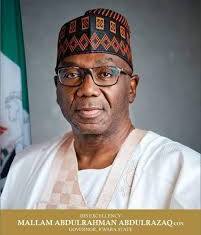
Kwara State Governor AbdulRahman AbdulRazaq has been hailed for the conferment of the prestigious Sadauna of Ilorin Emirate title on him by His Royal Highness, the Emir of Ilorin, Alhaji (Dr.) Ibrahim Sulu-Gambari, CFR.
Giving the commendation on Tuesday in a statement in Ilorin, the state capital, Alhaji Yakubu Garba Gobir, who is the Sarkin Gobir and Madawaki of the Ilorin Emirate, described the recognition and honour on Governor AbdulRazaq as well deserved, timely and apt, giving his huge contributions to the growth and development of Ilorin Emirate and Kwara State as a whole.
Gobir specifically commended the Emir of Ilorin for conferring this distinguished title in recognition of the qualities and contributions of the new Sardauna, noting that it is a solemn call for greater responsibility, leadership, loyalty and devoted service to the Emirate and its people.
He added: “The title of Sardauna occupies a position of profound significance in the history, heritage and traditions of the Ilorin Emirate. I commend His Royal Highness, Alhaji (Dr.) Ibrahim Sulu-Gambari, CFR, the Emir of Ilorin, for conferring this distinguished title in recognition of the qualities and contributions of the new Sardauna.
“The title embodies courage, leadership, loyalty and devoted service to the Emirate and its people. Your elevation is therefore not merely a mark of honour; it is also a solemn call to greater responsibility and continued service.
“As a fellow title-holder in the Ilorin Emirate, I am particularly delighted to welcome you into this distinguished circle of traditional leadership. I am confident that you will bring to the office the same qualities of leadership, dignity and unwavering commitment to public service that have distinguished your tenure and career.
“At a time when our Emirate and our State require men and women of character, wisdom and courage to advance the interests of our people, I am certain that you will make a meaningful contribution to the enduring unity, progress and development of the Ilorin Emirate.”
Gobir offered prayers for a successful, impactful and enduring tenure for the new Sadauna, adding:
“May Almighty Allah grant you wisdom, sound health and strength, and may He make your tenure as Sardauna of Ilorin a source of lasting honour to you, your family and the entire Ilorin Emirate.”
Stephen Olufemi Oni, Ilorin.
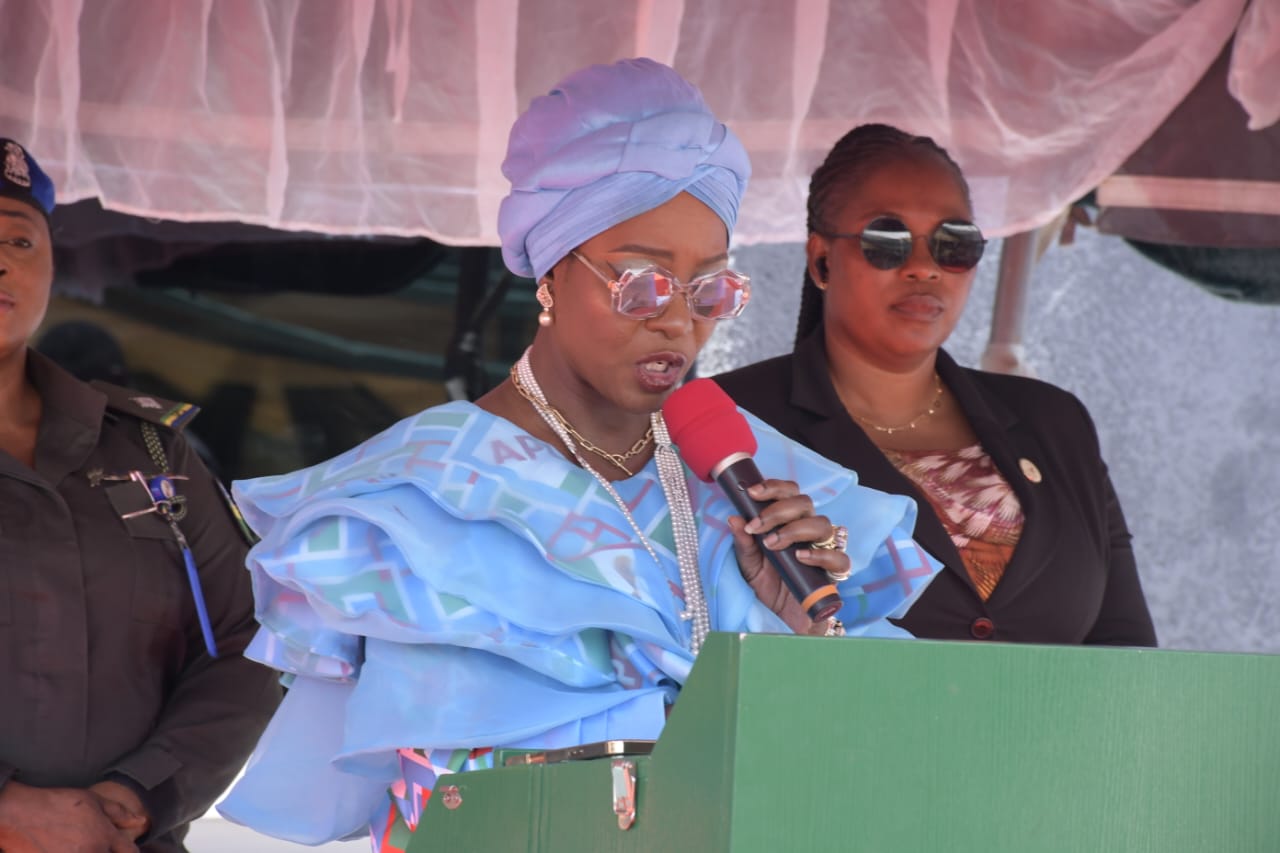
The wife of President Bola Ahmed Tinubu, Senator Oluremi Tinubu, has commissioned a TETFund/Renewed Hope Initiative-backed ICT Experience Centre at the Kwara State University (KWASU), Malete.
It would be recalled that KWASU is one of the six tertiary institutions selected for the pilot phase of this intervention, with one institution representing each of the Nigerian six geopolitical zones.
Represented at the commissioning on Tuesday by the wife of the Vice-President, Nana Shettima, Tinubu said the project is a testament to the federal government’s commitment to advancing education, digital inclusion and enhancing graduate employability.
“The TETFund/Renewed Hope Initiative ICT Experience Centre we are commissioning today represents opportunity, innovation, knowledge, and the future of young people in Kwara State and beyond.
She said: “This initiative aligns with the Renewed Hope Agenda of the administration of His Excellency, President Bola Ahmed Tinubu, GCFR, which places emphasis on youth empowerment, education, innovation, and economic transformation. Mr President is committed to creating opportunities that will equip Nigerian youths with knowledge and skills required to thrive in a modern and competitive world.”
Senator Tinubu said the facility was designed as a modern technology centre equipped with ICT laboratory, interactive digital display, conference facility, and exhibition spaces, adding that it would be an environment for learning, creativity, research, and technology advancement.
According to her, the ICT centres had been commissioned at the Ekiti State University on May 28, University of Cross Rivers State on September 4, Anambra State Polytechnic on September 10, adding that the Centres at Kaduna State University and Taraba State Universities would be commissioned soon.
“The next phase of this intervention will cover 15 institutions in Adamawa, Bayelsa, Borno, Delta, Edo, Enugu, Imo, Katsina, Nasarawa, Niger, Ondo, Osun, Rivers, Yobe, and Zamfara states which construction is currently ongoing. This expansion demonstrates the administration’s commitment to ensuring that more Nigerian youths, irrespective of their locations, have access to digital learning opportunities,” she said.
She encouraged the students to take ownership of the facility, maximise the opportunity it provides, and use technology positively to enhance their lives, community, and the nation.
In his speech, the Executive Secretary of Tetfund, Architect Sonny Echono, said the centres are being established across selected Universities, Polytechnics and Colleges of Education, with the Kwara State University, Malete proudly hosting the facility in the North-Central Zone.
“Through practical training and digital skills acquisition, TETFund seeks to enhance graduate employability, foster innovation and position Nigeria to participate more effectively in the global
technology-driven economy,” he added.
Echono also said that the ICT Experience Centre is designed to equip students and lecturers with critical digital skills in Artificial Intelligence, Cybersecurity, Robotics and Software Development.
He added: “The Centre being commissioned today is one of the foremost ICT Experience Centres being delivered across the country, and the third to be commissioned this year. The Centre is equipped with modern digital devices, Computer systems and relevant software to facilitate training, practical learning and skills development. The facility is appropriately furnished and
fully air-conditioned, with supporting power and municipal infrastructure.”
Also speaking, the Vice Chancellor of the University, Professor Shaykh- Luqman Jimoh, said the new facility represents vision, belief, and an investment in the Nigerian youth to better shape the future of our
nation.
The Vice Chancellor described the ICT Experience Centre as an investment in human capital, in innovation, in entrepreneurship, and, most importantly, it is an investment in the future of Nigeria.
“This Centre will provide opportunities for our students to develop practical digital skills and engage with contemporary technologies. Importantly, it is our hub for interdisciplinary engagement.
“This ICT Experience Centre is therefore a timely, critical, and strategic infrastructure that will definitely enhance research, teaching, learning, entrepreneurship, and community service. This intervention is at the core of what this university seeks from partners and donors: synergies that add value and impact on today and the future,” he started.
KWASU Vice Chancellor also assured that the ICT Experience Centre would be put to maximum use for the benefit of students, researchers, and the University
community, adding that the “KWASU community would engage with the facilities in this Centre, we will use it. We will explore, experiment, learn, and innovate in i
:
Uncategorized
2027: Violent ;Kaduna as ADC, APC Supporters Trade Accusations….APC Calls For Police Investigation into the Vandalisation, attacks on its Office

By Hassan Agboola
Tension is mounting in Kaduna State ahead of the 2027 general elections, following renewed exchanges between supporters of the African Democratic Congress (ADC) and groups backing the administration of Governor Uba Sani.
The latest development came on Tuesday when ADC governorship candidate, Isa Ashiru, addressed supporters in Kaduna and, according to an account of his remarks, declared that the party was prepared to respond to attacks against its members.
Ashiru was also quoted as saying that it was Governor Uba Sani, rather than President Bola Ahmed Tinubu, who was responsible for the continued detention of former Kaduna State Governor, Nasir El-Rufai.
However, available public records show that El-Rufai’s detention followed proceedings before the Independent Corrupt Practices and Other Related Offences Commission (ICPC), with the commission stating that his continued custody was based on a court-issued remand order.
The controversy over El-Rufai’s detention has nevertheless become a major political issue in Kaduna and beyond. The ADC has repeatedly criticised the handling of the former governor’s case and alleged political persecution, while other political actors have made different claims about the circumstances surrounding his detention.
Rising political temperature
Ashiru’s emergence as the ADC governorship candidate has added another dimension to the political contest in Kaduna. He defeated other aspirants at the party’s governorship primary in May 2026 and is now preparing for another governorship contest after previously representing the PDP in the 2019 and 2023 elections.
The political atmosphere has been further complicated by disagreements within the ADC and accusations from different groups over the party’s leadership and candidates.
A Southern Kaduna political group, for instance, recently questioned Ashiru’s candidacy and the choice of his running mate, allegations rejected by an ADC official.
The situation has also produced incidents involving ADC supporters and security personnel. In one recent incident, police dispersed an ADC solidarity walk in Kaduna, while the party subsequently accused opponents of attacking its members and warned that political violence could escalate ahead of the 2027 elections.
The former governor remains an important factor in the emerging political contest. El-Rufai was taken into custody in February 2026 after responding to an invitation from the ICPC. His family subsequently demanded his release, while the anti-graft agency maintained that his detention was authorised by a court.
Since then, the issue has increasingly featured in political statements by the ADC and its supporters, with the party accusing the Federal Government of political persecution and calling for the former governor’s release.
The development has created a new political fault line involving the ADC, the APC-led Kaduna State Government and supporters of the former governor.
While allegations have been exchanged over who is responsible for political violence in Kaduna, the competing narratives should not be confused with established findings. The ADC itself has recently rejected the suggestion that it has a monopoly on political violence and accused unnamed opponents of introducing thuggery into the 2027 political process.
With the 2027 election campaign yet to fully commence, the increasingly combative language from ISA Ashiru and his supporters has raised concerns about the possibility of further confrontation.
The immediate challenge before the political parties, security agencies and community leaders is therefore to ensure that political disagreements do not degenerate into violence, particularly in a state with Kaduna’s history of politically and communally sensitive conflicts.
As at the time of filling tid report the All progressive congress, APC , Kaduna state in a statement has condemned the attacks on its office and called for police investigation
Certainly. I’ll retain the substance of the report while correcting grammar, tightening the structure, and presenting it as a clean newspaper hard-news story.
Writing
APC Condemns Violent Attacks on Members, Party Offices in Kaduna
The Kaduna State chapter of the All Progressives Congress (APC) has condemned alleged violent attacks on its members and the vandalisation of party offices and properties in the state.
The party also called on the police and other security agencies to investigate the incidents and ensure that those responsible are brought to justice.
In a statement, the Kaduna State APC Publicity Secretary, Sani Dan-Azare, alleged that some of the party’s members and supporters had been attacked, while some party and support-group offices were vandalised.
He also alleged that vehicles belonging to some party members were damaged during the incidents.
The APC described the attacks as unacceptable and urged security agencies to conduct a thorough and impartial investigation to establish the circumstances surrounding the incidents.
The party called on its members and supporters to remain calm and law-abiding, stressing that they should not resort to retaliation or take the law into their own hands.
The APC said it remained committed to peaceful political engagement and urged all political actors in Kaduna State to conduct their activities within the bounds of the law.
It further appealed to security agencies to strengthen security around party offices and other sensitive locations to prevent further incidents.


Changsha brings millennia-old heritage into modern life

Gov AbdulRazaq Lauded Over Conferment Of Sadauna Of Ilorin Title

FG Commissions KWASU ICT Centre To Enhance Graduates Employability

-
 Uncategorized6 years ago
FG, states urged to harness flooding for ranching, others with technology – Agbaje
-
 Headlines11 years ago
Breaking: EFCC seals Borno House of Assembly, as Hon members take to their heels
-
 News12 years ago
Nigeria Security Operatives Stage Manhunt For Homosexual Perpetrator
-
 News10 years ago
How 21-year-old Girl fled community over accusation of lesbianism
-
 News11 years ago
Yobe Gov Moves Against Deputy
-
 Opinion7 years ago
7 signs she has friend zoned you
-
Technology5 years ago
Online job placement company headhunts women
-
 Headlines10 years ago
Borno Dep Gov Abducts Another Church Leader