
Uncategorized
Court Reserves Ruling on El-Rufai’s No Case Submission on Wire Tapping Allegations.

The Federal High Court sitting in Abuja has reserved ruling on a no case submission by a former governor of Kaduna State, Mallam Nasir El’Rufai, on a charge of alleged wiretapping brought against him by the Department of State Services (DSS).
The DSS filed an amended five-count charge against el-Rufai following a February 13, 2026, Arise TV interview where he stated that associates had listened to the phone communications of National Security Adviser (NSA) Nuhu Ribadu.
The secret police had told the court that El’Rufai’s actions breached the Cybercrimes and Nigerian Communications laws.
At the resumed hearing, on Tuesday, counsel to El’Rufai, Paul Erokoro, SAN, informed the court that they filed a no case application on 26th August 2026.
A. K. Ekere who held brief for Erokoro, urged the Court to discharge the case filed against El’Rufai and award penalties against the DSS, arguing that no prima-facie evidence was before the court to warrant a defence.
Responding, the prosecuting lawyer, Oluwole Aladedoye, SAN, informed the court that the prosecution filed its reply to the no-case submission on 6th September, 2026. He urged the court to overrule the no case submission filed by the defence and order El’Rufai to begin his defence.
He added that as there was evidence of El’Rufai’s confession which was tendered as evidence in court. That it duly established a case against the former governor.
After listening to lawyer to the DSS, and to the former governor, the presiding judge, Justice Joyce Abdullmalik adjourned the matter to October 26, 2026.
Stephen Olufemi Oni, Ilorin
The Kwara State Government has inaugurated a Joint Management Committee to oversee the coexistence of the duo of the Kwara State University of Education (KWASUED), Ilorin, and the Kwara State College of Education, Ilorin.
The committee was inaugurated at the Ministry of Tertiary Education, Ilorin, with a charge to ensure harmonious relations and effective management and utilisation of resources and facilities shared by the two institutions.
The committee comprises three representatives each from KWASUED and the College of Education, as well as one representative of the Ministry of Tertiary Education.
Representing KWASUED are Prof. Ganiyu Bello, Dr. Bello Okanla Fatai and Dr. (Mrs.) Beatrice Yetunde Olanrewaju, while the College of Education is represented by Mr. Akanbi O. Ayodele, Mr. Lawal L.O. and Mr. Jiyah S.J. The ministry is represented by Mallam Aliyu Abdulsalam.
Inaugurating the committee, the Supervising Commissioner for the Ministry of Tertiary Education and Commissioner for Education and Human Capital, Dr. Lawal Olohungbebe, charged members to ensure that the coexistence arrangement produces tangible results and does not become a mere administrative exercise.
He urged the committee to maintain a harmonious relationship between the two institutions, particularly in the management and utilisation of resources and facilities within the premises of the College of Education.
Dr. Olohungbebe said the government expected impact from the committee rather than just its inauguration, noting that every institution had to start from somewhere before eventually moving to its permanent location.
He reminded members that they understood their respective institutions better than anyone else and were therefore well positioned to develop workable solutions to challenges that might arise in the course of the coexistence arrangement.
According to him, the establishment of KWASUED was not intended to take jobs away from workers at the College of Education but to create additional employment opportunities in the state.
He added that the government was working towards developing KWASUED’s permanent site, after which the university would relocate to the permanent location.
Dr. Olohungbebe also reassured both institutions that KWASUED had come to stay, while the College of Education would equally continue to operate, stressing that the government was committed to ensuring the smooth running of both institutions.
He urged members of the committee to work together and produce practical and implementable recommendations that would guide the ministry in managing the relationship between the two institutions.
Earlier, in his welcome speech, the Director of Continuing Education, Dr. Sunday Akanbi, said the inauguration represented an important step towards establishing a structured relationship between the two institutions and ensuring that the presence of KWASUED and the College of Education within the same environment did not become a source of unnecessary friction.
He stressed the importance of cooperation, mutual understanding and effective communication between the managements of both institutions, particularly in the areas of facility use and day-to-day operations.
The director expressed confidence that the committee, comprising representatives of the two institutions and the ministry, would provide a platform for addressing issues as they arise and developing solutions that would be beneficial to both institutions.
Speaking on behalf of the newly inaugurated committee, Prof. Ganiyu Bello expressed the members’ readiness to take up the responsibility and ensure that the coexistence arrangement succeeds.
Prof. Bello said the committee had accepted the assignment and would do everything possible to achieve its objectives.
He noted that teacher education had recorded progressive growth in Kwara State, adding that the state had established a strong reputation for the training of teachers.
He assured that the committee would work to ensure continued progress in education and teacher training in the state.
The inauguration followed the recommendation of the Committee on the Blueprint for the Coexistence of the Kwara State University of Education and the Kwara State College of Education, Ilorin.
The earlier committee was constituted by the Kwara State Government to develop a framework for the peaceful and effective coexistence of the two institutions, particularly during the transitional period before the development of KWASUED’s permanent site.
Among its recommendations was the establishment of a Joint Management Committee to coordinate the coexistence of the institutions, facilitate the sharing and utilisation of facilities, address transitional challenges and promote harmonious relations.
The inauguration of the new committee therefore marks the commencement of a formal mechanism for managing the relationship between KWASUED and the College of Education as both institutions continue to pursue their respective mandates.
The committee is expected to submit workable recommendations to the Ministry of Tertiary Education to guide the implementation of the coexistence arrangement and ensure that both institutions continue to contribute to the development of teacher education in Kwara State.
- As AbdulRazaq’s family pays thank you visit to monarch
Stephen Olufemi Oni, Ilorin
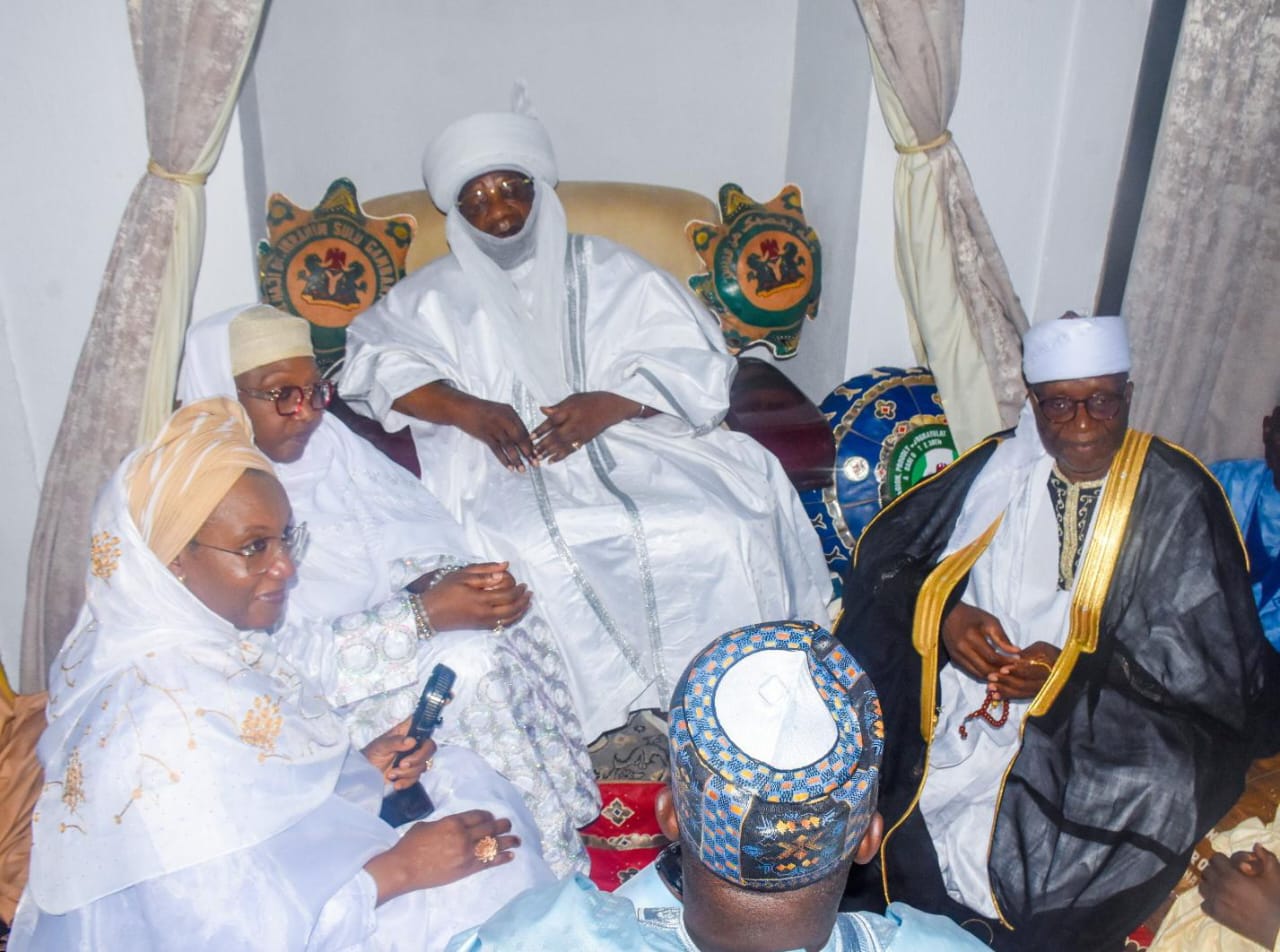
Kwara State Governor AbdulRahman AbdulRazaq’s delegation, comprising family members, top government officials and APC chieftains, has paid a ‘thank you’ visit to the Palace of the Emir of Ilorin, Dr Ibrahim Sulu-Gambari (CFR) on Tuesday over his recent turbaning as the Sardauna of Ilorin.
Led by the Mutawali of Ilorin, Dr Alimi AbdulRazaq, the Governor’s elder brother, the delegation was peopled by Alangua Adewole, Alhaji Yusuf Yakubu, elder sister to the Governor, Senator Khairat AbdulRazaq Gwadabe, former First Lady of Kwara State and younger sister to the Governor, Hajia Aisha Mohammed Lawal, Dr Funsho AbdulRazaq, members of the State House of Assembly, led by the House Leader, Barr. Oba Magaji, Special Adviser to the Governor on Special Duties, Alhaji Abdulrazaq Jiddah, and some elders of the party.
Speaking at the Palace, the Emir, Dr Sulu-Gambari, who was excited by the large turnout, said the choice of Governor AbdulRazaq as another title-holder in the same family rather reflects his depth of gratitude to their parents, who he explained played important roles in his life.
He said both the titles of Mutawali and Sardauna that he graciously conferred on the two brothers, Dr Alimi and Gov AbdulRazaq, are a payback for the good deeds of their parents and their own individual goodwill.
Describing the Governor’s father, late AGF AbdulRazaq (SAN), as one of his only two father-figures, the revered monarch said the Abdulrazaqs share a long standing ties and goodwill with the royal family that he cannot forget in a hurry.
“One of my two father figures is late Mutawali of Ilorin (the Governor’s father). He stood by the family after the death of our father and his friend. Talking about Mamaa, the Governor’s mother, she was the one who chaired the organising committee for my Coronation as Ciroma of Ilorin and my wedding ceremony which we held in 1984. For this and other reasons, I am the one who is indebted to show your family a gratitude,” the Emir said.
“Governor AbdulRazaq is a lucky and befitting leader. His coming on board has answered our earnest prayers for good fortune. He has turned around Ilorin and indeed the entire Kwara. This is an indisputable fact.”
Dr Sulu-Gambari, who praised the Governor for his leadership qualities and for being a good ambassador of the Emirate, prayed to Allah to continue to give him the needed strength and wisdom to succeed in office, including as Chairman of the Nigerian Governors’ Forum.
Addressing reporters on the sideline of the visit, Dr AbdulRazaq said they are overwhelmed by the honour bestowed on their brother, for which he thanked the Emir, promising that both the recipent and indeed the family will not “shirk the responsibility to deliver the expectations of the honour”.
“The essence of this visit today is to thank his royal highness, Dr. Ibrahim Sulu-Gambari, CFR, for the honour (Sardauna of Ilorin) bestowed upon his Excellency, AbdulRahman AbdulRazaq, the Governor of Kwara State. We, the entire family, along with the entire Ilorin community, have come to pay our respects to him, to express our sincere gratitude for the honour bestowed upon us,” he said.
Hajia Aisha Lawal, who appreciated the royal father, said the Governor merits the title he was conferred with, given his outstanding contributions to the development of Ilorin Emirate and beyond.
“The comment made by the Emir on Governor AbdulRahman AbdulRazaq shows that the Emir has seen the great things that His Excellency has done in Ilorin and in Kwara, and in the whole of Nigeria,” she said.
“As the Chairman of the Nigeria Governors’ Forum, he has done tremendously well and represented Ilorin community and Kwara very well. What he has done in Ilorin is amazing.”
Senior Adviser and Counsellor to the Governor and Chairman Central Planning and Coordination Committee for the Turbaning Ceremony, Alhaji Saadu Salau, said the Emir is always proud of the footprint of the administration, calling Governor AbdulRazaq a role model.
“The message is simple, that you must learn from the example of those who are role models. A lot has been said about Governor AbdulRahman AbdulRazaq as a role model in leadership. It is for the younger generation to learn from his simplicity, his patrotism, his love for the commoners, and his selfless service,” he said.
Good governance is often discussed as though it were primarily a question of political will, leadership competence or administrative efficiency. Those things matter enormously. But governance also has a material foundation: resources. The capacity of any government to deliver public goods and services is ultimately constrained by the resources available to it, the efficiency with which those resources are deployed, the security environment in which they are deployed, and the degree of public trust that sustains the relationship between the state and its citizens. On these fronts, Nigeria faces a particularly difficult equation.
Successive governments have had to operate within an environment characterised by a relatively small economic base, weak domestic revenue mobilisation, substantial debt obligations, insecurity, institutional inefficiency, corruption, poor expenditure choices and a widening trust deficit. Some of these problems have been consciously perpetuated; others have resulted from institutional weaknesses, political incentives or sheer neglect. Whatever the explanation, the cumulative effect is the same: the Nigerian state is continually expected to deliver more than its resources and institutional capacity can reasonably support.
This reality is often obscured by a popular and understandable argument: Nigeria is a rich country; the problem is corruption. There is considerable truth in that argument. Nigeria has enormous natural, human and economic potential, and the leakage of public resources through corruption, waste and poor management undeniably reduces what citizens receive from government.
Another argument is that Nigeria’s problem is not simply corruption but misplaced priorities. This, too, is valid. Governments can spend enormous sums and still achieve little if expenditure is directed towards projects that have limited developmental value, are poorly conceived or are driven more by political considerations than by measurable public need.
There is also a third argument: that governments have simply not done enough for Nigerians. That criticism is equally legitimate when measured against the country’s enormous developmental deficits.
But beneath all three arguments lies a more fundamental problem that is often overlooked: the Nigerian government, even under the best of circumstances, does not control a sufficiently large pool of resources, relative to the size and needs of the population, to perform many of the functions citizens expect of it. The situation becomes more dire where corruption has become a way of life, literally. That is the uncomfortable Nigerian governance truth: a small economic base for a huge population.
Statistically, Nigeria remains Africa’s most populous country, with a population estimated at well over 230 million people, but with a small available wealth—nominal GDP—and, invariably, a small GDP per capita. This translates into heavy economic burdens on its citizens. Recent international and national estimates (IMF, WB, NBS) have placed Nigeria’s nominal GDP below or around the $300 billion range, depending on the reference year, exchange-rate assumptions and statistical revisions.
The GDP relative to the population gives a nominal GDP per capita of only about $1,556, which places Nigeria at number 162 out of the 190 nations of the world surveyed (IMF, 2025). This is one of the lowest around the world. Worse still, Nigeria arguably has one of the highest disparities in terms of wealth distribution, going by its latest available Gini coefficient score. The IMF and WB gave Nigeria 33%, while World Economics determined Nigeria’s score to be around 57%. Though the former is low, signifying modest income inequality, the figure represents a paradox given the nation’s poverty level and the related range of socioeconomic deprivations.
It should, however, be noted that GDP per capita is not the same thing as household income, disposable income or living standards. Nevertheless, it provides a useful indication of the economic resources available per person. A country with a large population and a comparatively modest economic output per person will inevitably struggle to provide the same level of infrastructure, healthcare, education, social protection and public services as a country with a much larger economic base.
Nigeria therefore faces a basic structural contradiction: the expectations placed on the Nigerian state resemble those of a much richer country, while the economic resources available to finance those expectations remain comparatively limited. A disposition that even some highly placed government functionaries tend to gloss over, even though it has far-reaching consequences for reform outcomes, efficacy and sustainability.
For a fact, the government does not have access to the whole GDP, as small as it is. This is against the common misunderstanding in public discussions of Nigeria’s finances that tends to treat GDP as though it were money belonging to the government. It is not. As a measure of the total value of goods and services produced in the economy over a given period, the government can only access a portion of it through some statutory mechanisms. They include taxation, royalties, dividends, fees, borrowing and other forms of revenue. How much is accrued is a function of both the size of the economy and the effectiveness, and even efficiency, of existing economic policies.
Unfortunately, Nigeria’s capacity to mobilise public revenue remains weak and corruption-ridden. This severely limits what the state can spend on development, even before the government begins dealing with debt servicing, salaries, pensions, security and other recurrent obligations.
The unforgiving arithmetic becomes clear when we consider that the Nigerian government accesses and/or mobilises only between 11% and 13% of its GDP for “governance”, which loosely represents its revenue-to-GDP ratio. This figure is a far cry from the global average of around 36%. Simple arithmetic based on the Nigerian figure indicates how difficult it is for the government to launch the economy onto the path of rapid transformation for a nation of over 230 million people. Take the nation’s 2025 budget, for instance: it was about $36 billion at a time when GDP was around $300 billion. From the budget figure, account has to be made for debt servicing, statutory transfers and deficits.
As is customary, and for political reasons, the government can announce a huge nominal budget, but the reality on the ground remains a different story: an abysmally small pool of developmental resources. It requires an honest government to face such a reality. And this is one of Nigeria’s central governance problems: the revenue problem and government evasiveness; a culture of denial that gives rise to policy reform and outcome interpretations that fuel a vicious cycle of developmental failures.
The government should come to terms with the fact that a low revenue base limits government capacity. Limited capacity produces poor services. Poor services reduce citizens’ willingness to comply with taxes. Low compliance further reduces revenue. The country requires a much deeper fiscal relationship between citizens, businesses and the state, based on trust and transparency, to break the cycle. Unfortunately, the government hasn’t enjoyed much trust from the public because, while they remain economically challenged, they see public wealth expended lavishly on the elites.
This public trust deficit, along with corruption, has had direct economic consequences. This is because a naira lost to corruption is one less naira available for a school, hospital, road, water project, electricity infrastructure, or security operation.
It is also sad that political, rather than economic, considerations tend to largely underline project/programme conception and distribution in Nigeria. Roads, buildings, airports, flyovers, monuments and other physical projects that are more glamorous often command more attention than investments in human capital development in areas such as teachers, healthcare workers, agric extension, water systems, maintenance, research or institutional reforms, etc. This is despite the fact that physical infrastructure and human capital development remain the silver bullet for sustainable development.
Another constraint is the cost of maintaining government itself. Nigeria has a large public bureaucracy spread across federal, state and local institutions. The federal government alone has over 2 million on its nominal payroll. The wage bill, pensions, overheads and administrative costs consume a significant portion of available public resources, as the government remains a major employer of labour in the absence of vibrant industrial and agricultural sectors.
The problem is not that Nigeria has too many public servants in every category. Indeed, several sectors—particularly education, healthcare and security—continue to experience personnel shortages. The deeper problem is how public-sector personnel and institutions are structured and deployed. Nigeria needs to distinguish between an oversized administrative apparatus and genuine human-capital requirements. The objective should therefore not simply be indiscriminate cuts to government employment, but rather productivity and professionalism.
Insecurity is also a fiscal problem. Nigeria’s security crisis adds another layer to the problem. Insurgency, banditry, kidnapping, communal violence and other forms of insecurity do not only threaten lives and property. They impose enormous economic costs on individuals, businesses and governments.
A farmer who cannot safely cultivate his land represents lost economic output.
A business that closes because of insecurity represents lost employment and taxation.
A road that cannot be safely constructed or maintained represents wasted investment.
These and similar challenges call for closer cooperation among the three levels of governance in the country. While there is a constitutional provision to that effect, the reality on the ground seems different. The country needs stronger intergovernmental cooperation to tackle them.
The synergy should also be able to address Nigeria’s twin problems of resource constraints and resource management simultaneously. This is critical because more revenue without institutional reform can simply produce more opportunities for waste. Just as more borrowing without stronger productivity can produce a larger debt burden, more projects without better planning can produce more abandoned infrastructure. Also, an attempt to raise taxation without better public accountability can deepen public resistance.
The solution, therefore, cannot be one-dimensional. The current approach must change. First, the government must communicate more honestly with citizens. Nigerians should be given a clearer picture of what the government earns, what it spends, what it owes and what remains available for development. Public expectations must be managed through facts rather than political rhetoric.
Second, Nigeria must broaden its revenue base without crushing productive economic activity. A modern tax system should capture more economic activity while remaining fair, predictable and administratively efficient.
Third, the country must attack corruption through systems, not slogans. Procurement, payments, project monitoring, public-sector payrolls and government contracting should be subjected to stronger transparency and accountability mechanisms.
Fourth, budgeting must become strategic, intentional, rational and professional. Government should evaluate projects according to economic and social returns rather than political visibility.
Fifth, insecurity must be treated as an economic emergency as well as a security emergency. Restoring productive activity in farming communities, transport corridors, commercial centres and vulnerable regions is essential to rebuilding the country’s economic base.
The more meaningful measure is what happens to the ordinary citizen, against the backdrop of whatever resource constraints it faces. The questions and KPIs that reform outcomes should answer honestly must include improved socioeconomic well-being and security of the people. So far, the results have not been apparent despite the government’s view to the contrary. This is because the key challenges, as outlined below, have not received the needed interventions:
It is a non-starter to drive national development on barely 5,000 MW of accessible electricity for a population of more than 230 million people.
It is a non-starter to prosecute wars against the country’s multiple security threats—secessionists, bandits, insurgents, kidnappers, armed herders and other criminal groups—while relying overwhelmingly on imported weapons, ammunition and other critical defence equipment.
It is unacceptable to stand by and watch the nation’s industrial base being continuously eroded, taking with it jobs, productive capacity and the ability to meet even the most basic needs of the population.
It is equally unacceptable to perpetuate an education system that rewards memorisation at the expense of critical thinking, creativity, problem-solving and innovation—an education system that produces people trained largely to take instructions rather than to question, invent, build and lead.
And it is unacceptable to tolerate a legislature and a judiciary that, instead of being among the strongest institutional bulwarks against corruption, are themselves increasingly perceived as part of the institutional environment in which corruption thrives.
It is yet unacceptable that the nation imports about 70% of its raw materials, while its exports remain largely driven by hydrocarbons (oil and gas). Of the approximately N27 trillion in exports recorded during the first half of 2026, non-oil exports accounted for only about N3.7 trillion (NBS, UNCTAD). The country’s import bill for the same period reached N18 trillion. This structural dependence remains deeply troubling.
A country cannot build a productive economy on inadequate power, defend itself indefinitely with imported military hardware, industrialise while its productive base is being dismantled, compete globally with an education system designed for rote learning, or defeat corruption when the institutions entrusted with checking it are themselves compromised.
These are not peripheral weaknesses. They are structural failures that preceded the current administration. And until they are confronted as such, development will remain more of an aspiration than a reality. This is because the information made available to the public regarding the reforms (forex, subsidy, tax, etc) does not seem to address the deep-rooted challenges adequately, strategically and honestly, either.
It is in view of this that, whatever economic reform hit song the government sings about more economic output, more public revenue, better spending, stronger institutions, greater security, etc., citizens’ well-being still remains desperate and may remain so into the foreseeable future. The realities on the ground say so.
A. G. Abubakar
agbarewa@gmail.com


Kwara Sets Up Joint Committee For KWASUED, CoEd

Why I gave Gov AbdulRazaq Sardauna title: Emir

Reforms and Why Sustainable Relief Would Elude Nigerians in the Foreseeable Future

-
 Uncategorized6 years ago
FG, states urged to harness flooding for ranching, others with technology – Agbaje
-
 Headlines11 years ago
Breaking: EFCC seals Borno House of Assembly, as Hon members take to their heels
-
 News12 years ago
Nigeria Security Operatives Stage Manhunt For Homosexual Perpetrator
-
 News10 years ago
How 21-year-old Girl fled community over accusation of lesbianism
-
 News11 years ago
Yobe Gov Moves Against Deputy
-
 Opinion7 years ago
7 signs she has friend zoned you
-
Technology5 years ago
Online job placement company headhunts women
-
 Headlines10 years ago
Borno Dep Gov Abducts Another Church Leader