
Uncategorized
ANALYSIS: Caught Between Terrorists and the State: How Insider Mediators Face the Greatest Risks in the Sahel and Lake Chad Basin

By: Aliyu Gebi
In every conflict, there are soldiers who fight, governments that formulate policy, and humanitarian agencies that provide relief. Yet hidden between these visible actors exists another category of individuals whose contribution is rarely acknowledged but whose absence could make many humanitarian breakthroughs impossible. They are the insider mediators.
Across the Sahel and the Lake Chad Basin, where insurgencies by Jama’at Nusrat al-Islam wal-Muslimin (JNIM), Boko Haram, and the Islamic State West Africa Province (ISWAP) continue to challenge state authority, these mediators quietly occupy one of the most dangerous positions in modern conflict.
Unlike diplomats protected by embassies or international organisations operating under diplomatic privileges, insider mediators are ordinary members of the communities engulfed by violence. They include respected Islamic scholars, traditional rulers, village elders, women leaders, businessmen and community influencers whose greatest qualification is not political office but trust.
It is that trust that allows them to speak to men carrying assault rifles in the forests while retaining enough credibility for governments and security agencies to listen. Yet it is the same trust that places them permanently between fire and ice.
Officially, most governments in the Sahel reject negotiations with designated terrorist organisations. Nigeria, Mali, Burkina Faso and Niger have all adopted counter-terrorism policies centred on military pressure, intelligence operations and criminal prosecution.
Publicly, there is little room for political dialogue with organisations responsible for mass killings, kidnappings and attacks on civilians. Yet conflict realities are rarely as absolute as official policy suggests. When humanitarian workers require safe passage into besieged communities. When hundreds of women and children are trapped in insurgent-controlled territory. When local ceasefires become necessary to allow farmers cultivate their land.
When abducted civilians require negotiation before release. Formal diplomacy often gives way to quiet engagement. That engagement is rarely conducted by ambassadors. Instead, governments frequently rely directly or indirectly on trusted intermediaries capable of reaching actors that official representatives cannot approach. These mediators become the invisible bridge connecting two parties who publicly deny any relationship.
Why outsiders often fail
It was argued that foreign diplomats and international organisations rarely possess the cultural legitimacy required to engage violent extremist groups operating in deeply localised environments. For groups such as JNIM or Boko Haram, international actors are frequently viewed through ideological lenses.
Western governments may be seen as enemies.
United Nations personnel may be viewed as extensions of foreign influence. International NGOs may become intelligence suspects or lucrative kidnapping targets. Local mediators enter the same environment with entirely different credentials. Many speak the same dialect. Some belong to the same ethnic group.
Others share religious traditions or ancestral relationships with insurgent commanders.
In central Mali, traditional Fulani values such as Pulaaku often provide a social framework through which dialogue becomes possible. In the Lake Chad Basin, respected Islamic scholars frequently possess a deeper understanding of the ideological and theological arguments influencing Boko Haram factions than external negotiators. More importantly, insider mediators understand local grievances. They know which disputes are ideological. Which is economic.
Which stem from historical land conflicts. Which fighters joined voluntarily. Which joined because of poverty, coercion or revenge. Such nuanced understanding is often beyond the reach of external actors.
Unlike foreign mediators who return to secure compounds after negotiations, insider mediators remain inside the conflict. Their homes remain exposed. Their families remain exposed.
Every of their secrete remain exposed. Every negotiation they undertake carries consequences that follow them back into their villages. One Negotiator who undertook series of engagement with some Nigerian non state actors to secure the release of captured victims, said they came under ambush more than five times in separate encounter. In one instance, a gun was pointed at his head.
If negotiations collapse. It is not an embassy that is attacked. It is often the negotiators, their own home. If insurgents suspect betrayal. Their wives and children or any of their relatives may become legitimate targets. If security agencies question their motives. They themselves risk detention or prolonged investigation. Few occupations carry such immediate personal consequences.
Perhaps the greatest burden insider mediators carry is that neither side fully trusts them. Security agencies frequently question why a civilian should maintain contact with terrorists.
Some mediators have reportedly faced accusations of collaboration simply because they delivered humanitarian messages or attempted to negotiate community access. From the insurgents’ perspective, however, the suspicion is equally intense. A mediator carrying government proposals may easily be branded an intelligence asset or a mile. If military operations occur shortly after meetings, insurgents may assume information was leaked. The consequences can be fatal.
This creates “double suspicion” a condition in which mediators are simultaneously viewed as potential traitors by both the state and the armed groups they seek to engage.
The legal grey zone
Another challenge identified by the report lies in counter-terrorism legislation. International sanctions and domestic anti-terrorism laws understandably prohibit providing material support to designated terrorist organisations.
However, conflict mediation often operates in ambiguous spaces. Suppose a mediator delivers medicine to secure the release of kidnapped civilians. Or transports communication equipment required to arrange humanitarian access. Or facilitates financial arrangements connected to hostage negotiations. Do such actions constitute humanitarian engagement? Or do they amount to material support under anti-terrorism laws? The report argues that many insider mediators now operate without clear legal protections despite performing functions that governments quietly acknowledge are sometimes necessary. The absence of legal clarity increases both operational and personal risk.
Lessons from JNIM
The report draws heavily from developments in Mali and Burkina Faso. In several communities, local mediators successfully negotiated temporary arrangements allowing farmers to cultivate their fields under agreed conditions.
Some agreements reduced attacks. Others facilitated humanitarian access. Yet these agreements often proved fragile. Military offensives sometimes resumed without warning.
Insurgent commanders interpreted such developments as betrayal. The mediator rather than the state often bore the consequences.
Even more challenging has been the inconsistency of government policy.
During one administration, dialogue may receive quiet encouragement. A subsequent administration may criminalise similar contacts.
Several mediators reportedly found themselves under investigation for activities previously tolerated.
Lessons from Boko Haram: Two Different Negotiation Landscapes
The report notes that mediation efforts in Nigeria’s Lake Chad Basin are further complicated by the internal fragmentation of Boko Haram. Although often viewed as a single insurgent movement, Boko Haram today comprises two principal factions with markedly different organisational structures and negotiation dynamics: Jama’atu Ahlis Sunna Lidda’awati wal-Jihad (JAS) and the Islamic State West Africa Province (ISWAP).
JAS presents perhaps the most perilous environment for insider mediators. Unlike more structured insurgent organisations, JAS has historically operated through highly decentralised command structures, where individual field commanders exercise considerable autonomy. This lack of central authority often makes negotiations unpredictable, with agreements depending largely on the disposition of local commanders rather than institutional policy. For mediators attempting to secure the release of abducted civilians or establish safe exit routes for fighters seeking to surrender, every mission carries extraordinary personal risk.
Many are required to travel into remote forest enclaves controlled by commanders whose interpretation of Islamic law, tribal customs and military discipline varies widely. Traditional norms that ordinarily protect emissaries or peace envoys are frequently ignored, leaving mediators vulnerable to detention, execution or prolonged captivity if they are suspected of deception or espionage. The report argues that engaging JAS is therefore less a process of structured negotiation than an exercise in navigating constantly shifting personal relationships, ideological rigidity and battlefield uncertainty.
Engaging ISWAP: Structure Without Flexibility
Negotiating with ISWAP presents a different, though equally demanding, set of challenges.
Unlike JAS, ISWAP maintains a comparatively organised governance system overseen by a Shura Council, with clearer chains of command and administrative procedures. This institutional framework can provide mediators with more predictable points of engagement and a greater likelihood that agreements reached with senior figures will be respected across the organisation.
The group’s strict ideological doctrine therefore leaves very limited room for compromise, and mediators often face intense pressure to produce humanitarian outcomes without violating either the insurgents’ religious expectations or the legal and ethical obligations imposed by the state. This delicate balancing act requires exceptional credibility, deep religious understanding and an ability to maintain the confidence of both sides while making no promises that cannot be fulfilled.
The Quiet Architects of Mass Defections
Despite operating under these extraordinary pressures, insider mediators played a pivotal role during one of the most significant developments in Nigeria’s counter-insurgency campaign. Following the death of Boko Haram leader Abubakar Shekau in 2021, tens of thousands of fighters, women and children began surrendering to Nigerian authorities.
While military pressure created the conditions for this unprecedented wave of defections, the report argues that it was trusted local intermediaries who transformed opportunity into reality. Many insurgents seeking to abandon the conflict distrusted formal government institutions and feared immediate execution or imprisonment. Insider mediators became the first point of contact.
They reassured frightened fighters that surrender pathways existed, explained rehabilitation programmes, communicated with military authorities and community leaders, and helped facilitate safe movement from insurgent-controlled territories to designated reception centres. Without these trusted intermediaries, the report suggests, many potential defectors might never have taken the first step toward disengagement. In this sense, insider mediators became the human bridge between years of violent insurgency and emerging opportunities for rehabilitation and reintegration.
Protecting the Bridge-Builders
The report concludes that if governments across West Africa hope to move beyond perpetual military confrontation toward sustainable peace, they must provide greater institutional support for insider mediators.
Foremost among its recommendations is the establishment of clear legal frameworks that recognise verified mediators operating for humanitarian purposes. Such protections, the author argue, would reduce the risk of arbitrary arrest or prosecution under counter-terrorism legislation while preserving accountability.
The study also calls on regional organisations and international peacebuilding partners to establish dedicated duty-of-care mechanisms, including emergency security assistance, psychosocial support and evacuation arrangements for mediators facing credible threats. Given the psychological burden associated with prolonged engagement in conflict environments, the report argues that mental health support should become an integral component of mediation programmes rather than an afterthought.
The report ultimately presents insider mediators as one of the least visible yet most indispensable pillars of conflict resolution in the Sahel and the Lake Chad Basin. They receive little public recognition, enjoy few institutional protections and often operate without formal legal safeguards. Yet they continue to facilitate hostage releases, humanitarian access, civilian evacuations, local ceasefires and pathways for surrender in places where official diplomacy cannot reach. Their work demonstrates that while military operations remain essential in degrading terrorist capabilities, lasting peace is seldom achieved through force alone. It also depends on trusted local relationships, cultural legitimacy and the courage of individuals willing to engage where others cannot.
As governments refine their counter-insurgency strategies across the region, the report argues that protecting these “bridge-builders” is not merely a humanitarian obligation but a strategic necessity. Without them, opportunities for dialogue, disengagement and civilian protection may diminish, leaving military victories without the social foundations needed to secure enduring peace.
Stephen Olufemi Oni, Ilorin
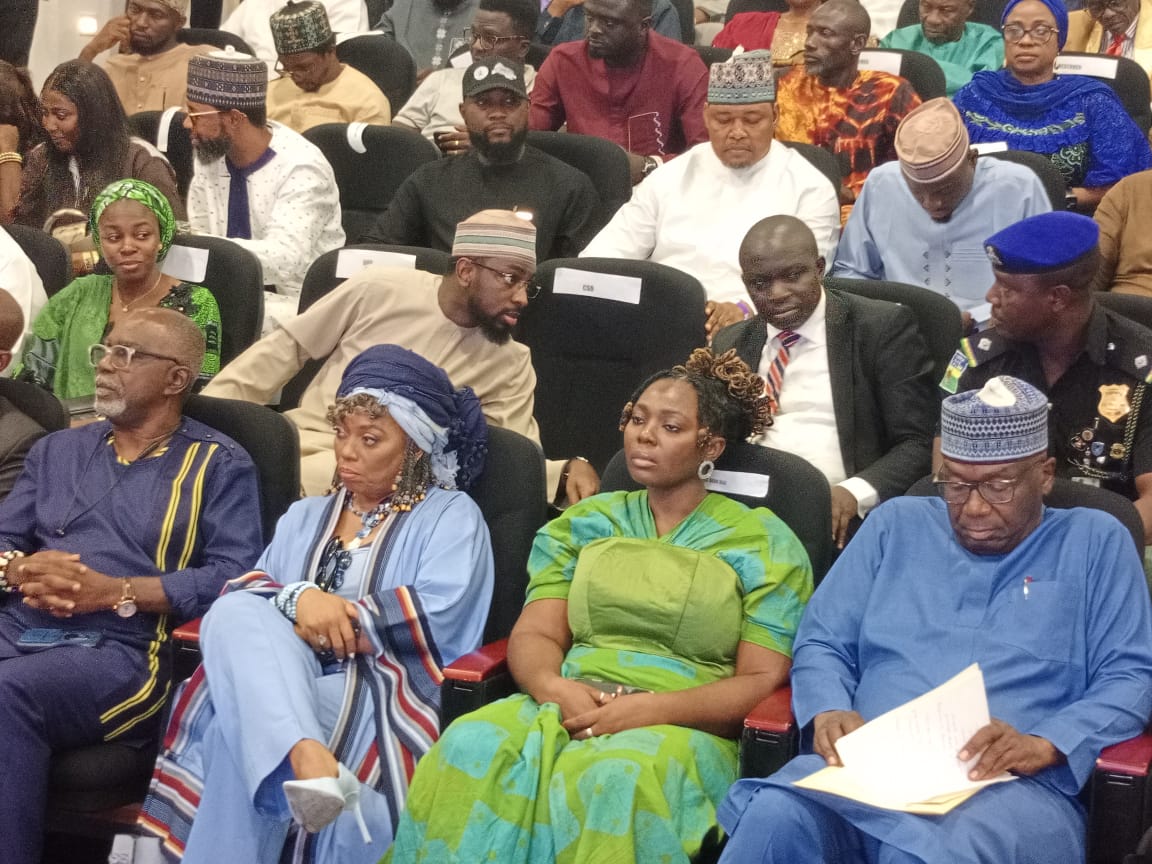
The Kwara State Government has celebrated the life and enduring influence of Afrobeat legend, Fela Anikulapo-Kuti, with a retrospective exhibition aimed at preserving African cultural heritage and inspiring younger generations.
The exhibition, titled Fela Anikulapo-Kuti: A Retrospective, was opened by Governor AbdulRahman AbdulRazaq at the Institute of Contemporary African Art and Film in Ilorin on Monday.
The Governor said the establishment of the institute reflected his administration’s belief that development should extend beyond physical infrastructure to include spaces that promote creativity, knowledge and economic opportunities.
“When we established the Institute of Contemporary African Art & Film, our vision was clear: development must go beyond roads, bridges and buildings to create spaces for creativity, knowledge and opportunity,” AbdulRazaq said.
According to him, cultural infrastructure plays an important role in connecting people to their history, broadening their imagination and encouraging critical thinking.
“Physical infrastructure connects places; cultural infrastructure connects people to their history, expands their imagination and challenges their thinking,” the Governor said.
AbdulRazaq said the institute was established to preserve African stories, nurture talents and showcase the continent’s artists and thinkers to the world,
describing the decision to open the institution with an exhibition dedicated to Fela as significant, given the musician’s contribution to African music, social commentary and cultural expression.
“Fela was more than a musician. Through his music and artistic expression, he challenged conventions and confronted society with questions about power, freedom, identity and justice,” he added.
The Governor added that the late musician’s life demonstrated the capacity of artistic expression to influence public discourse and inspire social change.
The exhibition, curated by June Creative Art Advisory, led by its founder, Mrs Seun Alli, featured photography, archival materials, film, graphic works and other artistic expressions exploring Fela’s life, times and enduring influence.
AbdulRazaq commended the firm for bringing its curatorial expertise and creative vision to the project, while describing the exhibition as an opportunity for different categories of visitors to engage with the musician’s legacy.
He said the exhibition would provide students with learning opportunities beyond the classroom, inspire artists, support researchers and encourage young people to explore the creative industry.
“For students, this is a classroom beyond the classroom; for artists, inspiration; for researchers, an opportunity for deeper inquiry; and for young people, a reminder that creativity offers both self-expression and economic opportunity,” he said.
The Governor clarified that the state government was not claiming ownership of Fela’s story but was providing a platform for younger generations to encounter and learn from his legacy, adding that the state government is optimistic that the institute would promote cultural education, encourage creative enterprise, attract visitors and strengthen Kwara State’s position in Nigeria’s cultural and creative landscape.
According to him, the institution’s success would be measured by the talents it nurtured, the ideas it inspired and the opportunities it created.
“Governments change, but institutions should endure,” the Governor said, expressing the hope that the exhibition would mark the beginning of sustained cultural engagement at the institute.
“May this exhibition begin sustained cultural engagement at ICAAF and inspire our young people to create, question, discover and contribute to society,” he said.
AbdulRazaq added that the initiative reflected his administration’s commitment to building a state where cultural heritage, innovation and economic opportunities complemented one another.
In her address, the Commissioner for Communications, Hon. Bolanle Olukoju, said: “Today’s exhibition offers us an opportunity to revisit the life and works of Fela
Anikulapo-Kuti and appreciate how his music, ideas and artistic expression continue to influence generations.
“For the Ministry of Communications, this occasion speaks to an important part of our
mandate: promoting the stories, talents and creative expressions that shape our identity as a people.”
The Commissioner particularly noted that under Governor AbdulRazaq’s leadership, the State is creating opportunities for young people through investments in sectors such as film, fashion and technology.
She added: “Projects including
the Sugar Film Factory, the Garment Factory and the Ilorin Innovation Hub reflect the administration’s commitment to developing talent and supporting enterprise.
“The Institute of Contemporary African Art & Film, formerly the Ilorin Visual Arts Centre, adds an important dimension to this effort. It provides a platform for artistic expression, cultural learning and creative collaboration.
“We want young Kwarans who are passionate about painting, photography, filmmaking, fashion and design to see ICAAF as a place where they can explore their interests, learn from others and showcase their talents.
“We also encourage students to engage with art and history beyond the classroom. Fela’s story is a fitting subject for this exhibition. It demonstrates how creativity
can go beyond entertainment to shape cultural identity and influence public conversations. There is much for our young people to learn from his artistic journey and enduring impact.
“It might also interest you that kwara state was also part of Fela’s creative showcase during his lifetime.”
•••Says Ward stands with APC
Stephen Olufemi Oni, Ilorin
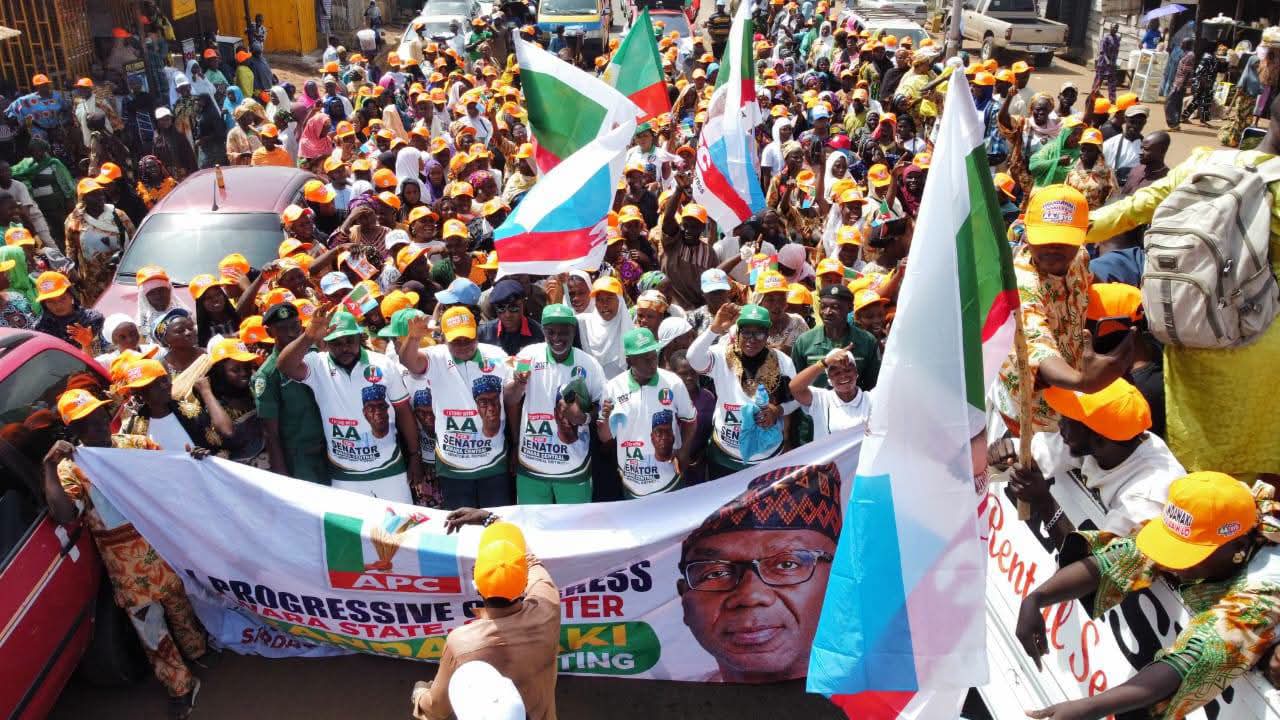
The Executive Chairman of the Ilorin West Local Government, Mallam Shehu AbdulRahman Babatunde Ladan, has led an All Progressives Congress (APC) mega rally in Ubandawaki Ward, reaffirming the commitment of party members and supporters to the APC ahead of the 2027 general elections.
The rally attracted party leaders, grassroots mobilisers, youths, women, and other stakeholders who gathered to demonstrate their support for the party.
Addressing the gathering, Chairman Ladan declared that Ubandawaki Ward remains committed to the APC and its political leadership, expressing support for President Bola Ahmed Tinubu’s Renewed Hope Agenda, Kwara State Governor AbdulRahman AbdulRazaq, and the APC governorship candidate, Rt. Hon. Engr. Yakubu Danladi-Salihu (SYD), alongside other party candidates for the 2027 general elections.
The Chairman emphasised the importance of unity, peaceful political engagement, and sustained grassroots mobilisation in strengthening the party’s structure ahead of the forthcoming elections, urging party faithful to remain united, engage constructively with residents, and work collectively towards the party’s political objectives.
Ladan also acknowledged the importance of Ubandawaki Ward in the political landscape of Ilorin West, encouraging party leaders and supporters to maintain cordial relationships, promote inclusive participation, and sustain engagement with the electorate. He stressed that a united party structure would help strengthen internal cooperation and effective grassroots coordination.
The mega rally renewed calls for unity, loyalty, and peaceful political participation among APC members and supporters, underscoring commitment by participants to mobilising support for the party’s candidates ahead of the 2027 general elections, while promoting peace, development, and responsible democratic engagement across Ilorin West Local Government Area.

- Mgt Accuses Union Of Dishing Out False Staff Remuneration Scale
Stephen Olufemi Oni, Ilorin
The staff of the Kwara State Internal Revenue Service (KWIRS) have lamented poor welfare conditions, rising living costs and stagnant salaries they have been subjected to, despite their contributions to the state’s revenue generation.
In a statement issued by the KWIRS chapter of the Association of Senior Civil Servants of Nigeria (ASCSN), the workers lamented that their sacrifice and professionalism, which have helped to place Kwara State among the more self-reliant states in the country, have not been matched with corresponding improvement in their welfare.
The workers questioned the disparity between their contributions to the state’s revenue and their welfare, saying many of them are battling financial hardship.
“We block leakages. We are posted to hospitals and other MDAs to secure government revenue. We work under pressure day and night but we continue to struggle to meet basic needs due to poor salaries.”
The association further expressed concern that personnel costs had remained unchanged for years while other expenditure heads had continued to increase.
It also cited a salary negotiation agreement dated October 11, 2022, which reportedly stated that the adjustment would be implemented “as soon as it can be accommodated in the budget.”
According to the workers, nearly four years after the agreement, there had been no implementation or clear indication of when the adjustment would take effect, despite the rising cost of living.
The staff said expenses on school fees, house rent, transportation and food had increased significantly while their salaries remained unchanged. “We smile outside but the majority of us are bleeding inside. We cannot continue to generate wealth for the state while we wallow in abject poverty,” they declared.
Urging their colleagues to remain united and resolute in pursuing improved welfare, the association said the workers should not expect better conditions without collectively standing up for their interests.
It called on members to remain calm, vigilant and prayerful as a 14-day period beginning October 15, 2026, counts down, without specifying further details in the statement about the expected action at its conclusion.
Reacting to the KW-IRS staff allegations, the Management, while
reaffirm its commitment to professionalism, political neutrality and its statutory mandate, expressed dismay over public speculation on staff remuneration and attempts to politicise unverified internal administrative communications.
“Management is concerned by attempts to exploit unverified internal administrative communications for political purposes, create unnecessary tension and distract the Service from its responsibilities. KWIRS will not be distracted from its mandate by such narratives,” said the Management.
It added: “The isolated salary figures being circulated on social media do not represent the full remuneration structure or total emoluments of KWIRS staff. Staff compensation extends beyond regular monthly salaries and includes the following benefits, in accordance with applicable policies and approved arrangements:
“Annual and Performance-Related Bonuses: Annual, festive, and situational bonuses linked to revenue performance milestones and staff performance and situational economic palliatives are paid periodically to staff members
“Annual Leave Allowance: A separate annual payment in addition to regular monthly remuneration.
Staff Welfare and Operational Support: Structured measures designed to support staff welfare and professional development throughout their careers.
“Accordingly, assessing staff remuneration solely on selectively circulated salary figures presents an incomplete picture of the Service’s compensation and welfare structure.
“Management remains committed to staff welfare, motivation and professional development. The Service will continue to strengthen policies and operational processes that support staff well-being and performance, within government-approved resource allocations and applicable administrative frameworks. The Service remains one of the Government Institutions with the most recruitment requests and this is a testament of Management’s commitment to staff welfare.
“KWIRS urges members of the public, taxpayers and other stakeholders to disregard unverified and misleading narratives, verify information before sharing it, and rely on official Service communications for accurate information about its operations and staff policies.
“All stakeholders are encouraged to refrain from politicising internal administrative matters or spreading claims capable of undermining institutional harmony and public confidence.
“KWIRS remains focused on its statutory responsibilities and committed to mobilising revenue for the economic growth and sustainable development of Kwara State.”

WHO: Nigeria Records Zero Ebola Cases After Evacuation of Swiss Couple

Kwara celebrates Fela’s legacy with retrospective exhibition

2027: Ilorin West LG Boss Leads APC Mega Rally In Ubandawaki

-
 Uncategorized6 years ago
FG, states urged to harness flooding for ranching, others with technology – Agbaje
-
 Headlines11 years ago
Breaking: EFCC seals Borno House of Assembly, as Hon members take to their heels
-
 News12 years ago
Nigeria Security Operatives Stage Manhunt For Homosexual Perpetrator
-
 News10 years ago
How 21-year-old Girl fled community over accusation of lesbianism
-
 News11 years ago
Yobe Gov Moves Against Deputy
-
 Opinion7 years ago
7 signs she has friend zoned you
-
Technology5 years ago
Online job placement company headhunts women
-
 Headlines10 years ago
Borno Dep Gov Abducts Another Church Leader