
Uncategorized
From Political Mobility to Public Communication: Daniel Bwala’s Burden – Sympathy or Pity?

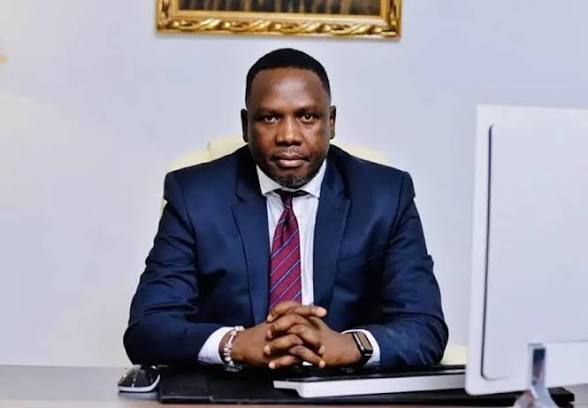
By: A G Abubakar
The commendable rescue of the Oriire, Oyo schoolchildren and teachers after nearly two months in terrorist captivity provided the spin doctors in Aso Villa with an opportunity to ingratiate themselves with their employer and chastise those who believe that the government is not doing enough to tackle the worsening insecurity across the country. Daniel Bwala, in particular, was all over the media ecosystem, granting interviews to both local and international media outlets. Speaking in both Hausa and English, he told anyone who cared to listen that security has improved significantly across the country.
He also introduced an economic dimension to his argument, asserting that the economic condition of ordinary citizens has equally improved. According to him, people have returned to their farms, even in long-standing flashpoints. He attributed these developments to President Bola Ahmed Tinubu’s dexterity in combating insecurity and the positive impact of his economic reforms. At the end of the media rounds, however, one is left with the impression that Bwala’s primary audience was the government itself rather than the wider public, much of whom remain more sceptical than ever about the administration’s claimed achievements.
No sooner had the media engagements ended than a fresh wave of insecurity swept across parts of the country. The serving Chairman of Bungudu Local Government Area in Zamfara State was abducted. A Kebbi State High Court judge was kidnapped at his residence in Bunza Local Government Area. About 23 farmers were killed by bandits in Sauna District of Talata Mafara Local Government Area, also in Zamfara State. In Naridon Village, Chawai Chiefdom, Kauru Local Government Area of Kaduna State, armed men killed more than two dozens of people.
Similarly, lives were lost in attacks on several communities in the Sankera axis of Benue State. In Borno, too, the rural communities of Mandaragirau, Buratai and Maza remain under constant threat from Boko Haram/ISWAP. And not long ago students of the Federal Polytechnic, Monguno, still in Borno State narrowly escaped abduction by the insurgents, though three of them, unfortunately lost their lives in the process. These incidents were in addition to the hundreds of victims still being held captive by armed groups across the country. They include those abducted in Woru (Kwara State), Lassa and Mussa (Borno State), and Mayanchi (Zamfara State), among many others.
These crises, aside from the loss of lives and the forced displacement of thousands of people, have crippled economic activities, especially farming. In fact, the Food and Agriculture Organisation (FAO) and the World Food Programme (WFP) have projected that about 35 million Nigerians in various conflict hotspots may face hunger. Perhaps the government’s claims of improvements in security and the economy were made rather too hastily.
Since joining President Tinubu’s camp, Bwala’s rhetoric has often appeared designed to demonstrate unwavering loyalty, sometimes stretching beyond the bounds of reason, especially against the backdrop of his earlier acerbic criticisms of the President. His frequent movement across party lines may also have contributed to the credibility gap that continues to shadow his public communication. It often appears as though Bwala is operating in a constant state of atonement for his “past sins.”
Around the world, many prominent political figures have crossed party lines in pursuit of what they describe as principle, opportunity, or national interest. Nigeria’s political landscape is no different. Defections have become almost routine since the country’s return to democratic rule in 1999. Yet, while political migration may be understandable, public credibility is much harder to rebuild. Every previous statement becomes part of a politician’s permanent record, and every new position is measured against past convictions. It is against this background that one cannot help but pity Daniel Bwala.
Daniel Bwala, a lawyer and political commentator, first gained national prominence as one of the vocal defenders of the All Progressives Congress (APC) and President Muhammadu Buhari. During Buhari’s administration, he regularly appeared on television to defend government policies and programmes.
However, his political journey soon took a dramatic turn. He fell out with the APC and became one of the most visible spokespersons for former Vice President Atiku Abubakar and the Peoples Democratic Party (PDP) ahead of the 2023 presidential election.
When the APC nominated Senator Kashim Shettima as Bola Ahmed Tinubu’s running mate in July 2022, Bwala openly opposed the Muslim-Muslim ticket. He argued repeatedly on television and social media that the decision was insensitive to Nigeria’s religious diversity and had the potential to deepen national divisions.
Following the 2023 general election, however, another political turn followed. Bwala eventually aligned himself with President Bola Ahmed Tinubu’s administration. In November 2024, President Tinubu appointed him Special Adviser to the President on Media and Public Communication before the office was redesignated as Special Adviser to the President on Policy Communication. The reasons for the redesignation have since remained a matter of conjecture.
The appointment surprised many Nigerians because of the intensity of Bwala’s previous criticisms of Tinubu. Nevertheless, every administration is entitled to recruit talent from different political backgrounds. The real challenge begins after the appointment. As it is, government communication is one of the most demanding assignments in public service. A government communicator must possess deep knowledge of public policy, understand security realities, appreciate public sentiment, anticipate criticism, and communicate facts with credibility rather than emotion.
Since assuming office, Bwala appears determined to demonstrate absolute loyalty to President Tinubu. That, in itself, is understandable. Every presidential spokesman owes loyalty to the administration he serves. However, loyalty alone is not enough. Public communication requires preparation, restraint, evidence and careful judgement. Unfortunately, some of Bwala’s public interventions have generated controversy rather than confidence. Rather than strengthening the government’s messaging, several of his appearances have exposed him to unnecessary criticism and public ridicule.
Three incidents particularly illustrate this challenge. His exchanges with Senator Ali Ndume, the APC Senator representing Borno South, attracted considerable public attention. Ndume, despite belonging to the ruling party, has repeatedly criticised aspects of the Tinubu administration, especially on insecurity and economic hardship. Bwala’s responses often appeared more combative than persuasive. Similarly, his televised disagreement with ARISE Television anchor Rufai Oseni generated widespread reactions on social media. Instead of winning the argument through evidence and persuasion, the exchanges became increasingly personalised. In both cases, the engagements degenerated into personality clashes.
His interview with internationally respected journalist Mehdi Hasan also exposed the difficulty of defending complex government positions before a highly informed global audience. Such interviews demand extensive preparation and mastery of facts. The encounter exposed Bwala’s inconsistent opportunism on two counts. First, it revealed his naivety in attempting to defend the integrity of his principal, President Bola Ahmed Tinubu. Second, it exposed his refusal to stand by his past statements in this age of the internet and social media, where previous comments remain permanently accessible.
Bwala should have realised that, when it comes to issues of character and integrity, of President Tinubu, and some of his close associates, such as Femi Gbajabiamila, Bello Matawalle and Atiku Bagudu, not even their spouses can vouch for them in all honesty. These are individuals who have allegedly, and severally been linked to issues relating to money laundering, corruption, forgery and even illicit drugs—matters that have been stored in the institutional memory of the global judicial system, for whoever cares to access. To stand before the public and attempt to defend or dismiss such issues without credible evidence is both risky and naïve.
The same applies to his attempts to disown his earlier statements against Tinubu when they belonged to opposing political camps. Bwala became personal and often derogatory in his attacks on the then-presidential candidate. Among the statements he made on record was: “Even if Tinubu remains in power for 30 years, Nigeria’s fortunes will never change.”
He did not stop there. He went on to allege that Tinubu “created a militia” for use during elections. He also claimed that Tinubu did nothing in Lagos but merely took credit for what others had accomplished. Furthermore, he argued that Tinubu’s leadership style was so monarchical that, during his two terms as Governor of Lagos State, he had three deputy governors. Above all, he insinuated that Tinubu received bullion vans loaded with cash, the source of which he suggested was questionable.
In each instance, the conversation shifted away from government achievements to the spokesperson himself. That is rarely a good communication strategy.
Perhaps the greatest weakness in some of Bwala’s interventions concerns insecurity, particularly in North-East Nigeria. Official optimism is understandable, but optimism must never replace reality: of closed down markets and abandoned farms.
Road transportation tells a similar story. The Maiduguri–Damboa–Biu highway, once one of the most important economic arteries in Borno State, has remained closed, with civilian movement subjected to difficult detours. The Gombi–Madagali–Gwoza corridor and sections of the Biu–Buni Yadi–Damaturu road also remain risky for travellers. For residents of these communities, insecurity is not an abstract policy discussion; it is a daily reality. It is doubtful that Daniel Bwala himself would risk travelling to his home local government area of Hawul through any of these corridors.
In this respect, even Bwala’s colleagues, such as Abdulaziz Abdulaziz, have not been spared the public’s distrust. Abdulaziz’s attempts to portray an improved security situation across the country during his frequent interviews with correspondents of Hausa-language foreign broadcasting organisations such as the BBC, Deutsche Welle (DW) and Radio France Internationale (RFI), among others, also illustrate the difficulty of convincing the public of what many believe is not entirely true. Consequently, when public officials paint an overly optimistic picture, affected citizens naturally react with anger.
Even Mohammed Idris, the Minister of Information and National Orientation, and Bayo Onanuga, the Special Adviser to the President on Information and Strategy, contend with public cynicism, judging by the often patronising tone of their media engagements. Their body language betrays the burden of selling policies and narratives that many Nigerians do not consider entirely credible. Onanuga, however, is somewhat better placed, as he largely communicates through official presidential statements rather than frequent live media engagements. On the whole, it is never easy to “sell bitter kola as dabino (dates).
Communication scholars often remind governments that credibility is built not by claiming perfection but by acknowledging challenges while demonstrating a genuine commitment to solving them. As American journalist Walter Lippmann once observed, “Where all think alike, no one thinks very much.” Similarly, former U.N Sec. General Kofi Annan remarked, “Knowledge is power. Information is liberating.”
Accurate information strengthens governments far more than exaggerated claims. A spokesperson who appears insufficiently briefed inadvertently weakens the very administration he intends to defend. Instead of generating public confidence, he generates public backlash. Daniel Bwala is undoubtedly intelligent, articulate and energetic. Those qualities are valuable, but needs to adopt a more measured and informed communication style.
This would involve:
- taking adequate time to understand evolving economic and social realities before making public interventions;
- obtaining comprehensive security briefings from the armed forces and relevant agencies before commenting on military operations;
- listening more carefully to the experiences of affected communities rather than relying solely on official reports;
- avoiding emotional exchanges with journalists, political opponents and critics; and
- allowing facts, rather than passion, to carry government arguments.
These steps would improve both his personal credibility and the effectiveness of the government’s communication strategy. The office of a presidential spokesman is not merely about defending the government. It is about building trust between government and citizens. Trust grows when public communication reflects facts, humility and empathy.
Daniel Bwala still has the opportunity to evolve into an effective government communicator. His success will however depend more on his ability and willingness to listen, study, verify, and communicate with greater restraint. And, in this respect, his principal should encourage the needed transformation. Doing so would not only help Daniel Bwala but would also strengthen the credibility of the Tinubu administration’s public communication at a time when Nigerians are demanding honesty as much as they are demanding results.
Public communication is not a contest of volume, aggression or theatrical performance. It is the disciplined art of informing, persuading and reassuring the public with facts, context and credibility. A presidential spokesman does not strengthen an administration by dismissing genuine public concerns or engaging in unnecessary verbal battles. He strengthens it by narrowing the gap between official narratives and citizens’ lived realities.
Daniel Bwala still has time to reinvent himself. He can become less combative and more persuasive; less emotional and more evidence-driven; less eager to score political points and more committed to informing the public. Such a transformation would serve both him and the government far better. Because in the end every inaccurate claim, every poorly researched intervention, and every avoidable confrontation hands fresh ammunition to the government’s critics and undermines the very message he is employed to communicate.
There is an old saying that when your spokesman becomes the story, the government has lost control of its message. President Tinubu would do well to rein him in—not to silence him, but to ensure that he is better prepared. A better-briefed, more restrained and more credible Daniel would be an asset to the Presidency. His current communication style, however, risks becoming a liability by undermining the government’s public policy and its handling of security issues.
A. G. Abubakar
agbarewa@gmail.com
Stephen Olufemi Oni, Ilorin
The Kwara State Government has celebrated the life and enduring influence of Afrobeat legend, Fela Anikulapo-Kuti, with a retrospective exhibition aimed at preserving African cultural heritage and inspiring younger generations.
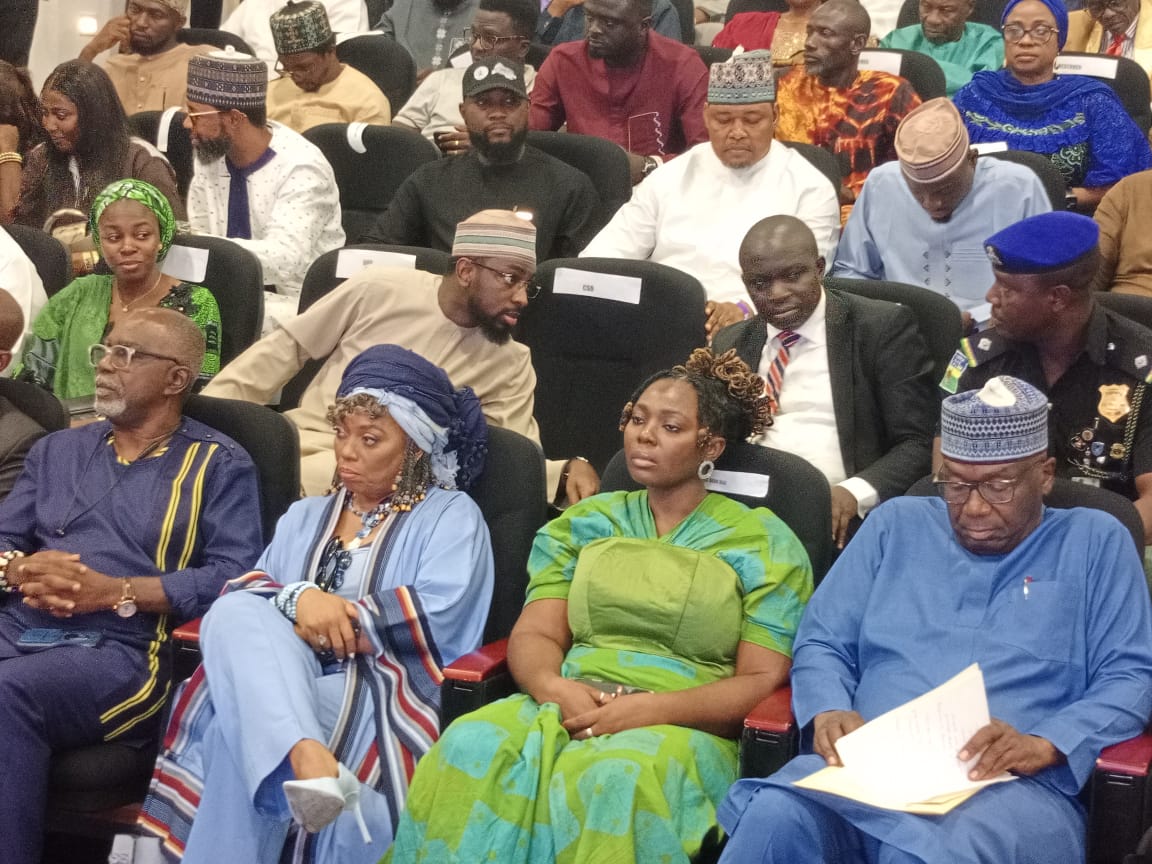
The exhibition, titled Fela Anikulapo-Kuti: A Retrospective, was opened by Governor AbdulRahman AbdulRazaq at the Institute of Contemporary African Art and Film in Ilorin on Monday.
The Governor said the establishment of the institute reflected his administration’s belief that development should extend beyond physical infrastructure to include spaces that promote creativity, knowledge and economic opportunities.
“When we established the Institute of Contemporary African Art & Film, our vision was clear: development must go beyond roads, bridges and buildings to create spaces for creativity, knowledge and opportunity,” AbdulRazaq said.
According to him, cultural infrastructure plays an important role in connecting people to their history, broadening their imagination and encouraging critical thinking.
“Physical infrastructure connects places; cultural infrastructure connects people to their history, expands their imagination and challenges their thinking,” the Governor said.
AbdulRazaq said the institute was established to preserve African stories, nurture talents and showcase the continent’s artists and thinkers to the world,
describing the decision to open the institution with an exhibition dedicated to Fela as significant, given the musician’s contribution to African music, social commentary and cultural expression.
“Fela was more than a musician. Through his music and artistic expression, he challenged conventions and confronted society with questions about power, freedom, identity and justice,” he added.
The Governor added that the late musician’s life demonstrated the capacity of artistic expression to influence public discourse and inspire social change.
The exhibition, curated by June Creative Art Advisory, led by its founder, Mrs Seun Alli, featured photography, archival materials, film, graphic works and other artistic expressions exploring Fela’s life, times and enduring influence.
AbdulRazaq commended the firm for bringing its curatorial expertise and creative vision to the project, while describing the exhibition as an opportunity for different categories of visitors to engage with the musician’s legacy.
He said the exhibition would provide students with learning opportunities beyond the classroom, inspire artists, support researchers and encourage young people to explore the creative industry.
“For students, this is a classroom beyond the classroom; for artists, inspiration; for researchers, an opportunity for deeper inquiry; and for young people, a reminder that creativity offers both self-expression and economic opportunity,” he said.
The Governor clarified that the state government was not claiming ownership of Fela’s story but was providing a platform for younger generations to encounter and learn from his legacy, adding that the state government is optimistic that the institute would promote cultural education, encourage creative enterprise, attract visitors and strengthen Kwara State’s position in Nigeria’s cultural and creative landscape.
According to him, the institution’s success would be measured by the talents it nurtured, the ideas it inspired and the opportunities it created.
“Governments change, but institutions should endure,” the Governor said, expressing the hope that the exhibition would mark the beginning of sustained cultural engagement at the institute.
“May this exhibition begin sustained cultural engagement at ICAAF and inspire our young people to create, question, discover and contribute to society,” he said.
AbdulRazaq added that the initiative reflected his administration’s commitment to building a state where cultural heritage, innovation and economic opportunities complemented one another.
In her address, the Commissioner for Communications, Hon. Bolanle Olukoju, said: “Today’s exhibition offers us an opportunity to revisit the life and works of Fela
Anikulapo-Kuti and appreciate how his music, ideas and artistic expression continue to influence generations.
“For the Ministry of Communications, this occasion speaks to an important part of our
mandate: promoting the stories, talents and creative expressions that shape our identity as a people.”
The Commissioner particularly noted that under Governor AbdulRazaq’s leadership, the State is creating opportunities for young people through investments in sectors such as film, fashion and technology.
She added: “Projects including
the Sugar Film Factory, the Garment Factory and the Ilorin Innovation Hub reflect the administration’s commitment to developing talent and supporting enterprise.
“The Institute of Contemporary African Art & Film, formerly the Ilorin Visual Arts Centre, adds an important dimension to this effort. It provides a platform for artistic expression, cultural learning and creative collaboration.
“We want young Kwarans who are passionate about painting, photography, filmmaking, fashion and design to see ICAAF as a place where they can explore their interests, learn from others and showcase their talents.
“We also encourage students to engage with art and history beyond the classroom. Fela’s story is a fitting subject for this exhibition. It demonstrates how creativity
can go beyond entertainment to shape cultural identity and influence public conversations. There is much for our young people to learn from his artistic journey and enduring impact.
“It might also interest you that kwara state was also part of Fela’s creative showcase during his lifetime.”
•••Says Ward stands with APC
Stephen Olufemi Oni, Ilorin
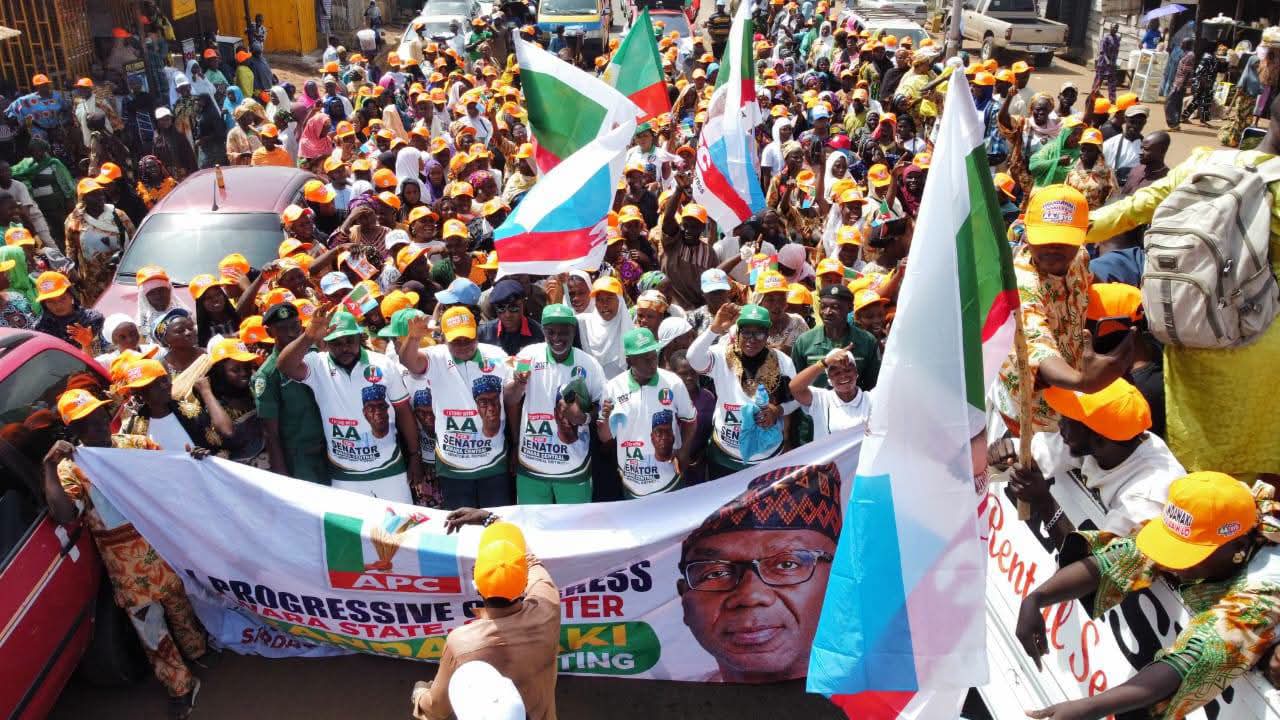
The Executive Chairman of the Ilorin West Local Government, Mallam Shehu AbdulRahman Babatunde Ladan, has led an All Progressives Congress (APC) mega rally in Ubandawaki Ward, reaffirming the commitment of party members and supporters to the APC ahead of the 2027 general elections.
The rally attracted party leaders, grassroots mobilisers, youths, women, and other stakeholders who gathered to demonstrate their support for the party.
Addressing the gathering, Chairman Ladan declared that Ubandawaki Ward remains committed to the APC and its political leadership, expressing support for President Bola Ahmed Tinubu’s Renewed Hope Agenda, Kwara State Governor AbdulRahman AbdulRazaq, and the APC governorship candidate, Rt. Hon. Engr. Yakubu Danladi-Salihu (SYD), alongside other party candidates for the 2027 general elections.
The Chairman emphasised the importance of unity, peaceful political engagement, and sustained grassroots mobilisation in strengthening the party’s structure ahead of the forthcoming elections, urging party faithful to remain united, engage constructively with residents, and work collectively towards the party’s political objectives.
Ladan also acknowledged the importance of Ubandawaki Ward in the political landscape of Ilorin West, encouraging party leaders and supporters to maintain cordial relationships, promote inclusive participation, and sustain engagement with the electorate. He stressed that a united party structure would help strengthen internal cooperation and effective grassroots coordination.
The mega rally renewed calls for unity, loyalty, and peaceful political participation among APC members and supporters, underscoring commitment by participants to mobilising support for the party’s candidates ahead of the 2027 general elections, while promoting peace, development, and responsible democratic engagement across Ilorin West Local Government Area.

- Mgt Accuses Union Of Dishing Out False Staff Remuneration Scale
Stephen Olufemi Oni, Ilorin
The staff of the Kwara State Internal Revenue Service (KWIRS) have lamented poor welfare conditions, rising living costs and stagnant salaries they have been subjected to, despite their contributions to the state’s revenue generation.
In a statement issued by the KWIRS chapter of the Association of Senior Civil Servants of Nigeria (ASCSN), the workers lamented that their sacrifice and professionalism, which have helped to place Kwara State among the more self-reliant states in the country, have not been matched with corresponding improvement in their welfare.
The workers questioned the disparity between their contributions to the state’s revenue and their welfare, saying many of them are battling financial hardship.
“We block leakages. We are posted to hospitals and other MDAs to secure government revenue. We work under pressure day and night but we continue to struggle to meet basic needs due to poor salaries.”
The association further expressed concern that personnel costs had remained unchanged for years while other expenditure heads had continued to increase.
It also cited a salary negotiation agreement dated October 11, 2022, which reportedly stated that the adjustment would be implemented “as soon as it can be accommodated in the budget.”
According to the workers, nearly four years after the agreement, there had been no implementation or clear indication of when the adjustment would take effect, despite the rising cost of living.
The staff said expenses on school fees, house rent, transportation and food had increased significantly while their salaries remained unchanged. “We smile outside but the majority of us are bleeding inside. We cannot continue to generate wealth for the state while we wallow in abject poverty,” they declared.
Urging their colleagues to remain united and resolute in pursuing improved welfare, the association said the workers should not expect better conditions without collectively standing up for their interests.
It called on members to remain calm, vigilant and prayerful as a 14-day period beginning October 15, 2026, counts down, without specifying further details in the statement about the expected action at its conclusion.
Reacting to the KW-IRS staff allegations, the Management, while
reaffirm its commitment to professionalism, political neutrality and its statutory mandate, expressed dismay over public speculation on staff remuneration and attempts to politicise unverified internal administrative communications.
“Management is concerned by attempts to exploit unverified internal administrative communications for political purposes, create unnecessary tension and distract the Service from its responsibilities. KWIRS will not be distracted from its mandate by such narratives,” said the Management.
It added: “The isolated salary figures being circulated on social media do not represent the full remuneration structure or total emoluments of KWIRS staff. Staff compensation extends beyond regular monthly salaries and includes the following benefits, in accordance with applicable policies and approved arrangements:
“Annual and Performance-Related Bonuses: Annual, festive, and situational bonuses linked to revenue performance milestones and staff performance and situational economic palliatives are paid periodically to staff members
“Annual Leave Allowance: A separate annual payment in addition to regular monthly remuneration.
Staff Welfare and Operational Support: Structured measures designed to support staff welfare and professional development throughout their careers.
“Accordingly, assessing staff remuneration solely on selectively circulated salary figures presents an incomplete picture of the Service’s compensation and welfare structure.
“Management remains committed to staff welfare, motivation and professional development. The Service will continue to strengthen policies and operational processes that support staff well-being and performance, within government-approved resource allocations and applicable administrative frameworks. The Service remains one of the Government Institutions with the most recruitment requests and this is a testament of Management’s commitment to staff welfare.
“KWIRS urges members of the public, taxpayers and other stakeholders to disregard unverified and misleading narratives, verify information before sharing it, and rely on official Service communications for accurate information about its operations and staff policies.
“All stakeholders are encouraged to refrain from politicising internal administrative matters or spreading claims capable of undermining institutional harmony and public confidence.
“KWIRS remains focused on its statutory responsibilities and committed to mobilising revenue for the economic growth and sustainable development of Kwara State.”

WHO: Nigeria Records Zero Ebola Cases After Evacuation of Swiss Couple

Kwara celebrates Fela’s legacy with retrospective exhibition

2027: Ilorin West LG Boss Leads APC Mega Rally In Ubandawaki

-
 Uncategorized6 years ago
FG, states urged to harness flooding for ranching, others with technology – Agbaje
-
 Headlines11 years ago
Breaking: EFCC seals Borno House of Assembly, as Hon members take to their heels
-
 News12 years ago
Nigeria Security Operatives Stage Manhunt For Homosexual Perpetrator
-
 News10 years ago
How 21-year-old Girl fled community over accusation of lesbianism
-
 News11 years ago
Yobe Gov Moves Against Deputy
-
 Opinion7 years ago
7 signs she has friend zoned you
-
Technology5 years ago
Online job placement company headhunts women
-
 Headlines10 years ago
Borno Dep Gov Abducts Another Church Leader