
News
BAVCCA to submit bill against misinformation, backs IGP Egbetokun’s stance on spread of falsehood

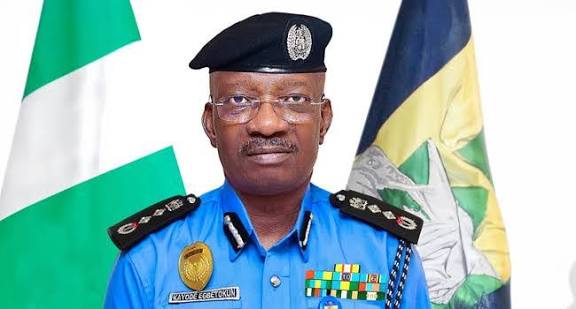
The Bloggers and Vloggers, Content Creators Association of Nigeria (BAVCCA) has backed the Stance of the Inspector-General of Police, IGP Kayode Egbetokun, following his warning on the devastating impact of misinformation in the country.

The development was made known in a statement jointly signed by BAVCCA’s National President and Secretary, Ikechukwu Chukwunyere and Tabuko Kennedy on Thursday in Abuja.
Ikechukwu, while quoting IGP Kayode Egbetokun verbatim, “Misinformation has become a silent bomb; it does not destroy buildings; it destroys trust. A single false post can cause chaos faster than a bullet can travel.” – stressed that the Police Chief’s comment is a clarion call to every Nigerian, creator, sharer, or citizen.
He further warned that the spread of falsehoods is not a bloggers-only problem; it is a national security threat that demands collective action.
BAVCCA also disclosed plans to formally submit the Digital Content Practitioners (Registration and Regulation) Bill, 2025, to the National Assembly, a bill that seeks mandatory registration of all bloggers, vloggers, podcasters, social media influencers, and online journalists with a National Digital Content Registry.
The group also vowed to name, shame, and prosecute any creator—inside or outside its fold—who weaponizes lies, set up a fact-checking platform, while pledging full support to law enforcement.
The statement reads in part:
The Bloggers and Vloggers, Content Creators Association of Nigeria (BAVCCA) stands united with the Inspector-General of Police, IGP Kayode Adeolu Egbetokun, in sounding the alarm on the devastating impact of misinformation.
This is a clarion call to every Nigerian—creator, sharer, or citizen. The spread of falsehoods is not a bloggers-only problem; it is a national security threat that demands collective action.
LANDMARK LEGISLATIVE INITIATIVE
BAVCCA shall be formally submitting the Digital Content Practitioners (Registration and Regulation) Bill, 2025 to the National Assembly. The bill seeks:
Mandatory registration of all bloggers, vloggers, podcasters, social media influencers, and online journalists with a National Digital Content Registry.
Annual licensing tied to verifiable identity, ethics training, and compliance with the Cybercrimes (Prohibition, Prevention, etc.) Act 2015, Nigerian Data Protection Act 2023, and NUJ Code of Ethics.
Criminal penalties for unregistered operators who publish content that incites violence, spreads health disinformation,
Universal Pre-Publication Fact-Check Mandate
Every individual or platform publishing content on security, health, religion, or politics must verify with at least two independent, credible sources before posting. BAVCCA launches the #VerifyWith2 public campaign to enforce this standard.
National Misinformation Rapid Response Network (MRRN)
A coalition of fact-checkers, tech platforms, and civil society, led by BAVCCA, will operate a 24/7 hotline (0700-VERIFY-NG) and app for real-time debunking. Any viral false claim will trigger automated community notes on X, Facebook, Instagram, and TikTok.
Prosecution Without Fear or Favor
BAVCCA pledges full support to law enforcement. Under Section 24 of the Cybercrimes Act, any person—member or non-member—who knowingly spreads false information that endangers public safety will face arrest and prosecution. We shall submit a list of 47 repeat offenders to the Nigeria Police Cybercrime Unit.
Free Annual Ethics & AI Literacy Training
Starting 1 January 2026, BAVCCA will offer nationwide free workshops (physical and virtual) on spotting deepfakes, algorithmic bias, and responsible content creation. Certification will be required for registration under the new bill.
₦50 Million Whistleblower Reward Fund
Open to all Nigerians. Report verified fake news via verify@bavcca.org.ng and earn up to ₦100,000 per confirmed case. Funds are seeded by BAVCCA and corporate partners.
Tech Platform Accountability Pact
BAVCCA has secured commitments from Meta, Google, TikTok, and X to:
Prioritize fact-checked content in Nigerian feeds
Demonetize accounts with 3+ verified misinformation strikes
Share anonymized data on viral falsehoods with the MRRN
A CALL TO EVERY NIGERIAN
Creators: Register now at registry.bavcca.org.ng. Your license is your shield and your duty.
Citizens: Pause. Verify. Report. Use #BAVCCAVerify to tag suspicious posts.
Parents & Teachers: Teach digital literacy—misinformation starts in group chats.
Government & Platforms: Fast-track the Digital Content Bill. The time for voluntary compliance is over.
BAVCCA will name, shame, and prosecute any creator—inside or outside our fold—who weaponizes lies. Truth is not negotiable,” the statement concluded.
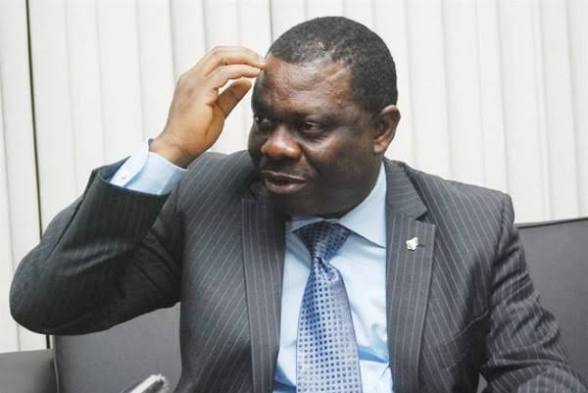
The Frontline runner of the Benue State governorship election come 2027 in Benue State under the platform of the Peoples Democratic Party, PDP and former Attorney General of the Federation, Chief Michael Kaase Aondoakaa, SAN has top the list of the final flagbearers to run for the poll come 2027.
The Benue State governor and candidate of the All Progressives Congress (APC), Rev. Fr. Hyacinth Alia and Prof. Terhemba Shija of the Nigeria Democratic Congress (NDC) have made the final list of governorship candidates released by the Independent National Electoral Commission (INEC) for the February 6, 2027, governorship election.
Other candidates on the list are Herman Iorwase Hembe of the African Democratic Congress (ADC), Nyibiam Kwaghshir of the Action Democratic Party (ADP), Adagba Iorhen of the Allied Peoples Movement (APM), Mercy Ujah Engole of the Action Peoples Party (APP), Dominic Ochenehi of the Democratic Leadership Alliance (DLA), Mathias Terwase Byuan of the Labour Party (LP), Terese Paul Wombo of the National Rescue Movement (NRM), Roseline Ada Chenge of the People’s Redemption Party (PRP), and Simon Ocheme Ogbe of the Zenith Labour Party (ZLP) respectively.
Chief Michael Aondoakaa, SAN, had promised to establish specialised geriatric units in hospitals across the state to provide free basic healthcare and minor surgical procedures for elderly citizens if elected governor in 2027.
He maintained that the the initiative would form part of his administration’s broader agenda on healthcare, security, pensioners’ welfare, infrastructure development and prudent management of public resources.
The PDP candidate said government had both a moral and constitutional responsibility to cater for citizens who had spent their productive years contributing to the development of the state.
According to him, the proposed geriatric units would be specially equipped to provide elderly people with quality and specialised medical care in a conducive environment.
He said basic healthcare services and minor surgical procedures would be provided free of charge to senior citizens under the proposed programme.
“We have a duty to care for our elderly people who are in their late 60s, 70s, 80s and older.
“Beyond government responsibility, it is part of our African culture to honour and support those who have worked hard and sacrificed for society. They deserve access to quality healthcare and dignity in old age,” Aondoakaa said.
He said his administration, if elected, would place healthcare and security among its foremost priorities, stressing that the two sectors were fundamental to the wellbeing and development of the state.
“Our healthcare system must be responsive to the needs of ordinary people, especially the vulnerable and the elderly.
“At the same time, government must take seriously its responsibility to protect lives and property because security is the foundation of development,” he stated.
On the recurring debate over livestock management and ranching in the state, Aondoakaa maintained that ranching should primarily remain a private business venture, with government creating the necessary environment for private investors and livestock owners to operate.
“Ranching is a private enterprise. Government’s role is to create an enabling environment, not to take over the business itself,” he said.
The PDP candidate also expressed concern over the hardship faced by retired civil servants in the state, particularly those affected by outstanding pensions and gratuities.
Aondoakaa argued that workers who dedicated several decades to the service of the state should not face hardship and uncertainty after retirement.
“Those who spent their productive years serving the state should not be abandoned in retirement.
“Pensioners are entitled to their benefits and should be treated with dignity and respect,” he said.
He further argued that the payment of salaries, pensions and gratuities should not be portrayed as extraordinary achievements by any government, describing them as fundamental obligations arising from the relationship between the state and its workforce.
“Salaries and pensions are not favours. They are obligations arising from the relationship between government and its workers.
“Fulfilling those obligations should be routine and not something that is celebrated as an extraordinary achievement,” Aondoakaa added.
On infrastructure, the PDP governorship candidate promised to adopt a more consultative, professionally driven approach to conceiving and executing major government projects.
He said his administration would subject major projects to rigorous scrutiny while involving relevant ministries, technical experts and other stakeholders to ensure that public funds were properly utilised.
“There will be proper consultation before major projects are undertaken. Our focus will be on infrastructure that improves the lives of the people and delivers measurable value for public funds,” he stated.
Aondoakaa also pledged to make greater use of the expertise and institutional knowledge available within the state’s civil service.
He described career civil servants as a reservoir of technical competence and institutional memory, saying their knowledge should be better utilised in government planning and project implementation.
“Our civil servants possess invaluable knowledge and experience. They understand how government works and should be actively involved in planning and implementing development projects. We must make better use of that expertise,” he said.
The former Attorney General said his administration would also prioritise policies capable of translating public resources into tangible improvements in the lives of residents.
News
ENGR. BELLO BABAYO BELLO CELEBRATES GOVERNOR INUWA YAHAYA AT 65, COMMENDS HIS LEGACY OF TRANSFORMATION

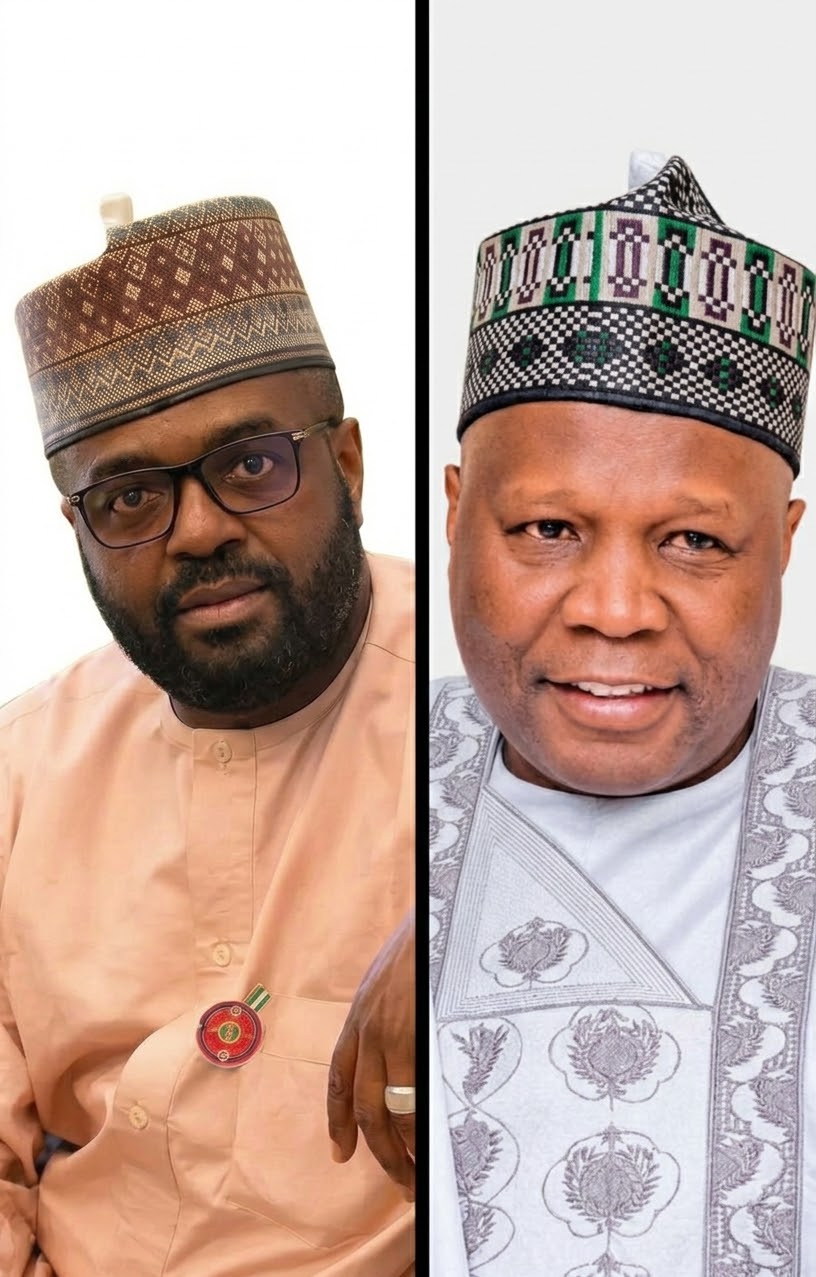
The Executive Director, Network, Niger Delta Power Holding Company (NDPHC), Engr. Bello Babayo Bello, has paid glowing tribute to the Governor of Gombe State, His Excellency Muhammadu Inuwa Yahaya, on the occasion of his 65th birthday, describing him as a visionary leader whose administration has redefined governance and accelerated development across the state.
Engr. Bello, in a congratulatory message made available to journalists, said Governor Inuwa Yahaya’s journey in public service has been marked by discipline, integrity, and an unwavering commitment to the progress of Gombe State and its people.
According to him, the Governor’s leadership has produced measurable improvements in critical sectors of the state’s economy while fostering a culture of transparency, accountability, and prudent resource management.
“As Governor Inuwa Yahaya celebrates his 65th birthday, Gombe State has every reason to celebrate a leader whose vision has continued to shape the future of the state. His commitment to good governance, infrastructural renewal, economic diversification, and human capital development has laid a strong foundation for sustainable growth and prosperity.”
Engr. Bello noted that beyond physical projects and policy achievements, the Governor’s greatest strength lies in his ability to inspire confidence, unite diverse interests, and build consensus around the collective aspirations of the people.
He described Governor Inuwa Yahaya as a statesman whose calm disposition, strategic thinking, and inclusive leadership style have earned him widespread respect across political, business, and community circles.
“The Governor represents a rare blend of experience, wisdom, humility, and courage. His leadership has demonstrated that genuine development is achieved not merely through promises but through deliberate actions and a clear sense of purpose. His accomplishments today stand as enduring testimony to his dedication to public service.”
The NDPHC Executive Director further stated that the Governor’s developmental strides have elevated the profile of Gombe State and strengthened the confidence of investors, development partners, and stakeholders in the state’s future.
He added that Governor Inuwa Yahaya’s administration has become a reference point for effective governance, with policies designed to create opportunities, improve livelihoods, and promote long-term economic stability.
“As he marks this remarkable milestone, we celebrate not only the years he has spent on earth but the positive impact he has made in the lives of countless people. His legacy is one of service, vision, and transformational leadership.”
Engr. Bello prayed for Almighty God to continue to bless the Governor with sound health, greater wisdom, and renewed strength as he continues to serve the people of Gombe State and contribute to Nigeria’s development.
“On behalf of my family, associates, and well-wishers, I extend heartfelt congratulations to His Excellency, Governor Muhammadu Inuwa Yahaya, on his 65th birthday. May the years ahead bring even greater accomplishments, fulfillment, and continued service to humanity.”
Signed:
Engr. Bello Babayo Bello
Executive Director, Network
Niger Delta Power Holding Company (NDPHC)
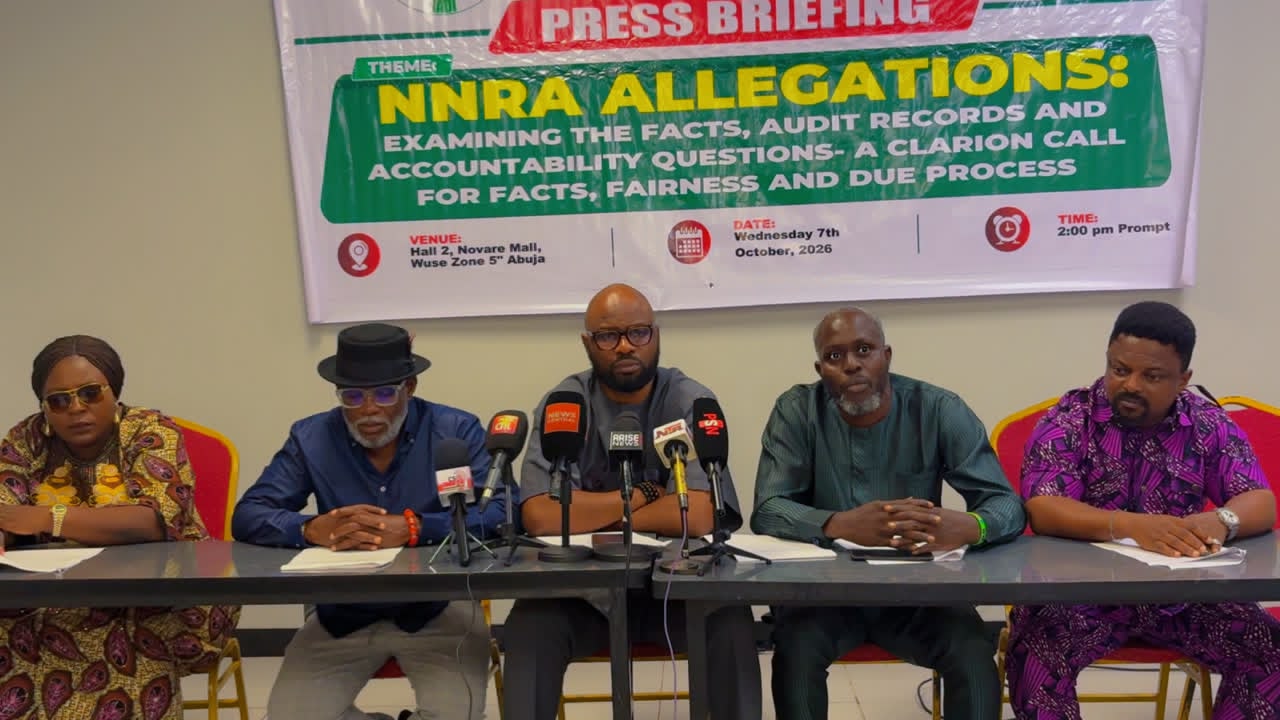
The Integrity Advocacy for Development Initiative (IADI) has called for a thorough, evidence-based examination of allegations of financial misconduct involving the Nigerian Nuclear Regulatory Authority (NNRA), warning against treating audit observations and media reports as established cases of fraud.
IADI Executive Director, Comrade Ofomhi Christopher, made the call on Wednesday at a press briefing in Abuja titled, “On the Allegations Concerning the Nigerian Nuclear Regulatory Authority (NNRA): Facts, Clarifications and the Need for Evidence-Based Accountability.”
The group was reacting to a publication by Secrets Reporters dated October 1, 2026, which alleged that about N6.69 billion was involved in contract fraud and misappropriation at the NNRA.
It also referred to a protest held on October 5 by Global Integrity Watch (GIW) at the NNRA headquarters, where the organisation demanded accountability, responses to audit observations and Freedom of Information requests, as well as changes in the leadership of the regulatory authority.
Christopher said while the allegations deserved scrutiny, they should not be treated as established facts without verification of the underlying records.
According to him, the public deserves to know the specific audit observations, periods and transactions involved, the nature of the contracts, the status of the projects or services, responses provided by the NNRA and whether the issues had been resolved or referred for further investigation.
“An audit observation is a serious matter requiring explanation and verification, but it is not, by itself, a judicial finding of fraud or personal misappropriation,” he said.
The IADI chief also referred to an explanation reportedly provided by the NNRA Director-General concerning the authority’s 2024 capital budget.
He said the explanation put the NNRA’s total 2024 capital budget at about N2.7 billion, comprising approximately N200 million belonging directly to the authority and about N2.5 billion for constituency projects, with an additional N200 million regional project bringing the figure referenced to about N2.9 billion.
Christopher, however, stressed that the explanation should not be regarded as conclusive, urging that it be tested against appropriation documents, budget releases, project records, procurement documents, payment records and audit reports.
“That is how responsible accountability should work: a claim is made, the response is heard, the records are examined, and the evidence determines the conclusion,” he said.
On allegations concerning unexecuted projects, the organisation called for physical verification of the specific projects, while allegations of inflated contract prices should be subjected to scrutiny of contracts, bills of quantities, procurement records and relevant price benchmarks.
It also urged that allegations concerning contractors be examined through relevant procurement and ownership records, while any claim of diversion or misappropriation should be established through the financial trail.
Christopher said where audit authorities had raised observations on expenditure, the public should be informed of the precise observations, the affected institution’s response and the current status of the issues.
The organisation also addressed the October 5 protest by GIW, acknowledging the constitutional right of civil society organisations to peaceful assembly and association under Section 40 of the Constitution.
It, however, urged CSOs to exercise such rights responsibly and within the law.
On Freedom of Information requests, IADI said there should be a distinction between the right to protest and the legal mechanism available where an FOI request is not answered.
The organisation noted that the Freedom of Information Act provides a judicial mechanism for applicants who have been denied access to information, adding that Section 20 allows an applicant to approach the court for a review.
IADI clarified that it was not suggesting that CSOs must obtain a court order before organising peaceful protests.
Rather, Christopher said, where non-compliance with an FOI request was the central grievance, the statutory and judicial mechanisms should be considered alongside legitimate civic action.
“An unanswered FOI request may justify further action to obtain the information. It does not, by itself, establish that fraud, misappropriation or any other wrongdoing has occurred,” he said.
The group also urged organisers of protests at government agencies to take public safety, access to government premises and the safety of protesters, workers and other citizens into consideration.
At the same time, it cautioned government institutions against using the possibility of confrontation as a justification for suppressing lawful civic expression.
“The answer to institutional disagreement should be law, evidence and due process, not intimidation or retaliation,” Christopher said.
He stressed that IADI was neither seeking to shield the NNRA from scrutiny nor dismiss legitimate questions concerning public expenditure at the authority.
He called on relevant audit and oversight bodies to state the status of the observations in question, the responses received from the NNRA and whether the matters had been resolved, sustained or referred for further investigation.
The organisation also encouraged CSOs pursuing accountability to make full use of available legal and institutional mechanisms while retaining their legitimate right to peaceful civic action.
“The public deserves accountability. But the public also deserves accuracy, fairness and evidence.
“A headline is not a verdict. An allegation is not evidence. An audit observation is not automatically a finding of personal guilt,” Christopher said.
He added that public institutions should not expect their expenditure to escape scrutiny merely because questions were raised through the media or civil society.
“Let the records be examined. Let the questions be answered. Let the evidence speak,” he said.

APC BLASTS ATIKU OVER ‘BOLA’ REMARK ABOUT TINUBU

2027: OPCI President Cautions Against Fake Prophesies

THE SLOW DEATH OF DEMOCRACY

-
 Uncategorized6 years ago
FG, states urged to harness flooding for ranching, others with technology – Agbaje
-
 Headlines11 years ago
Breaking: EFCC seals Borno House of Assembly, as Hon members take to their heels
-
 News12 years ago
Nigeria Security Operatives Stage Manhunt For Homosexual Perpetrator
-
 News10 years ago
How 21-year-old Girl fled community over accusation of lesbianism
-
 News11 years ago
Yobe Gov Moves Against Deputy
-
 Opinion7 years ago
7 signs she has friend zoned you
-
Technology5 years ago
Online job placement company headhunts women
-
 Headlines10 years ago
Borno Dep Gov Abducts Another Church Leader