
Foreign
China’s underwater archaeology breaks new ground in deep sea

By Sun Haitian, People’s Daily
During the summer vacation, the China (Hainan) Museum of the South China Sea in Qionghai, south China’s Hainan province, welcomed record crowds, with daily visitor numbers nearly 50 percent higher than usual.
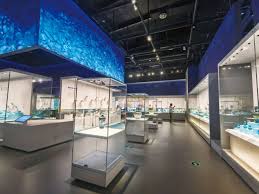
Since September last year, the museum has hosted a special exhibition titled Deep Blue Marvels, showcasing selected artifacts recovered from the No. 1 and No. 2 shipwrecks discovered on the northwestern slope of the South China Sea. The exhibition hall has since become the most popular attraction at the museum.
Inside the gallery, a large gilt-decorated Fahua jar, adorned with peacock-and-peony motifs in openwork designs, stands in quiet magnificence. Its brilliant glaze, intricate latticework, and exquisite gilding capture the eye. Yet as recently as last year, this masterpiece still lay undisturbed on the seabed, some 1,500 meters below the surface, alongside more than 100,000 pieces of porcelain and ebony logs.
“The first time we saw the No. 1 and No. 2 shipwreck sites at the northwest continental slope of the South China Sea on the submersible’s monitor, everyone was stunned. It was like discovering a ‘treasure chest’ sealed by time, preserved in extraordinary integrity,” said Xin Lixue, director of the China (Hainan) Museum of the South China Sea.
This archaeological discovery, which began in 2022, represents a historic breakthrough in China’s underwater archaeology, from the shallow seas into the deep sea, Xin added.
Breaking through core technologies to explore the deep
The breakthrough came during the 500th dive of China’s Deep Sea Warrior submersible on October 23, 2022. As it operated 150 km southeast of Sanya, researchers suddenly observed a seabed scattered with thousands of ceramic jars at 1,500 meters depth – the world’s first identified Ming Dynasty (1368-1644) shipwrecks in such extreme conditions.
But what does 1,500 meters mean? It is a realm of perpetual darkness, a “no-man’s zone” under immense pressure far beyond what any human diver could withstand. “Before 2018, China’s underwater archaeology was largely confined to shallow waters no deeper than 40 meters,” Xin explained. “Deep-sea archaeology is fundamentally different. Without advanced technology, the deep sea remained a blind spot for us.”
The extreme environment posed unprecedented challenges. “This discovery was exceptionally rare. At such depths, there was no precedent for us to follow,” said Song Jianzhong, head of the archaeological survey project of the shipwreck sites. Meeting this challenge was made possible by cutting-edge technologies that had been in the making for more than a decade.
In 2009, China launched the development of its second manned deep-sea submersible, Shenhai Yongshi. After eight years of intensive research and trials, it was delivered in October 2017 to the Institute of Deep-Sea Science and Engineering under the Chinese Academy of Sciences.
With more than 95 percent of its components domestically produced, the submersible overcame critical hurdles in titanium alloy pressure sphere, deep-sea buoyancy materials, and low-noise thrusters. Capable of operating at depths of up to 4,500 meters, it gave Chinese archaeologists for the first time the ability to explore the ocean world 1,000 meters below the surface.
Sixty-three dives to recover centuries-old relics
“October 1, 2023, the second phase of archaeological investigation at the northwest continental slope shipwrecks of the South China Sea. Average wind speed: about 13 knots. Dive depth: over 1,500 meters.”
So reads the mission log of Zhang Ninghao, dive scientist and deputy leader of the archaeological survey project.
After detaching from its mothership Tansuo-2, Shenhai Yongshi began its descent at a steady 35 meters per minute. As daylight faded, darkness enveloped the vessel, and the cabin temperature gradually dropped. After more than 40 minutes, the submersible touched down on the seabed. Its lights revealed the No. 2 shipwreck site, about 21 meters long and 8 meters wide, with rows of ebony logs neatly arranged from north to south.
The No. 1 shipwreck carried porcelain from Jingdezhen in east China’s Jiangxi province, destined for overseas markets, while the No. 2 was laden with ebony logs being brought back to China. “One outbound, one inbound, together they provide tangible evidence of the vibrant two-way trade along the ancient Maritime Silk Road, filling in a missing link in the historical chain of the South China Sea routes,” Song explained.
Guided by the pilot, the submersible carefully maneuvered over the relics. Preselected artifacts were retrieved using its robotic arms. One manipulator, padded with soft material, gently grasped centuries-old relics. Though it resembled a “claw machine,” the operation was highly sophisticated: high-definition cameras recorded every move; high-precision positioning, high-resolution imagery, 3D scanning, and geophysical survey data were integrated to create a detailed archaeological map of the shipwreck sites.
From 2023 to 2024, across three phases of investigation totaling 70 working days at sea, the team carried out 63 dives. From the depths, they retrieved 928 sets of artifacts, a fraction of the immense trove that still lies undisturbed on the seabed, silently bearing witness to the maritime exchanges of centuries past.

By: Fabian Apechihin
U.S. President Donald J. Trump has directed lawmakers to launch an immediate investigation into reports of widespread killings of Christians in Nigeria, describing the situation as a “Christian genocide.”
In a statement released Friday evening via his Truth Social platform, Trump expressed grave concern over the violence, blaming radical Islamist groups for what he called a “mass slaughter.”
“Christianity is facing an existential threat in Nigeria. Thousands of Christians are being killed. Radical Islamists are responsible for this mass slaughter,” he wrote.
The U.S. President announced that he is designating Nigeria a “Country of Particular Concern,” citing alarming figures of killings within the country compared to global totals.
“When Christians, or any such group, are slaughtered like is happening in Nigeria — something must be done! I am asking Congressman Riley Moore, together with Chairman Tom Cole and the House Appropriations Committee, to immediately look into this matter and report back to me,” Trump stated.
He added that the United States “cannot stand by while such atrocities are happening,” pledging that his administration remains ready “to protect Christian populations around the world.”

By: Fabian Apechihin
Polish Member of the European Parliament (MEP), Dominik Tarczyński, has once again drawn global attention to what he described as the ongoing persecution and killings of Christians in Nigeria.
In a post on his verified 𝕏 account on Monday, Tarczyński shared an image of a blood-stained Nigerian flag alongside a viral video showing a pastor conducting a burial ceremony for victims of violence.
In the video, the pastor lamented the frequent killings, saying:
“We are tired of performing burial every day, and they expect us to remain silent. It has become an order, and the Nigerian government came out to deny the massacre, saying there is no genocide of Christians in Nigeria. United Nations, you’re watching me. The American Parliament is aware of what we are doing now. My special request is to President Trump to save our lives in Nigeria. They are killing more Christians. If they say they kill Muslims, the Muslims are killed by who? Muslims are killed by Muslims.”
Tarczyński’s post quickly went viral, sparking widespread reactions and renewed calls for the Nigerian government to intensify efforts to combat banditry and terrorism.
However, the Federal Government has repeatedly rejected claims of a religiously targeted genocide. In a recent statement, the Minister of Information and National Orientation, Mohammed Idris, described such allegations as “false, baseless, despicable, and divisive.”
Idris maintained that Nigeria’s security challenges are complex and not driven by religious motives, warning that framing the fight against terrorism as an anti-Christian campaign could deepen existing social and religious divides.
He reiterated the government’s commitment to protecting all Nigerians, regardless of faith or ethnicity, and called on international partners and media outlets to “refrain from narratives that distort the country’s security realities.”
By: Fabian Apechihin
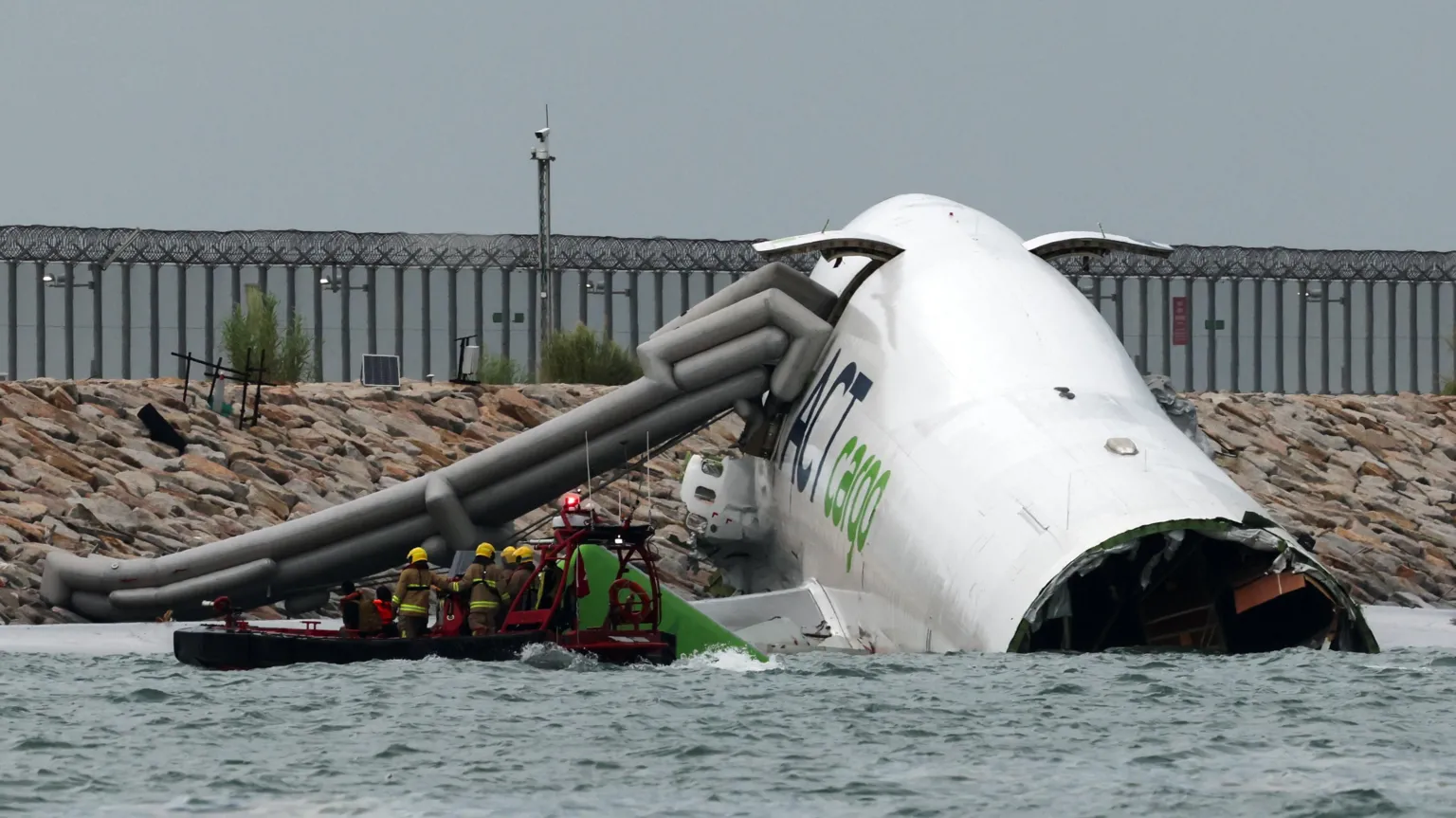
Two airport security officers were killed early Monday after a cargo plane skidded off the runway at Hong Kong International Airport, struck their patrol vehicle, and plunged into the sea.
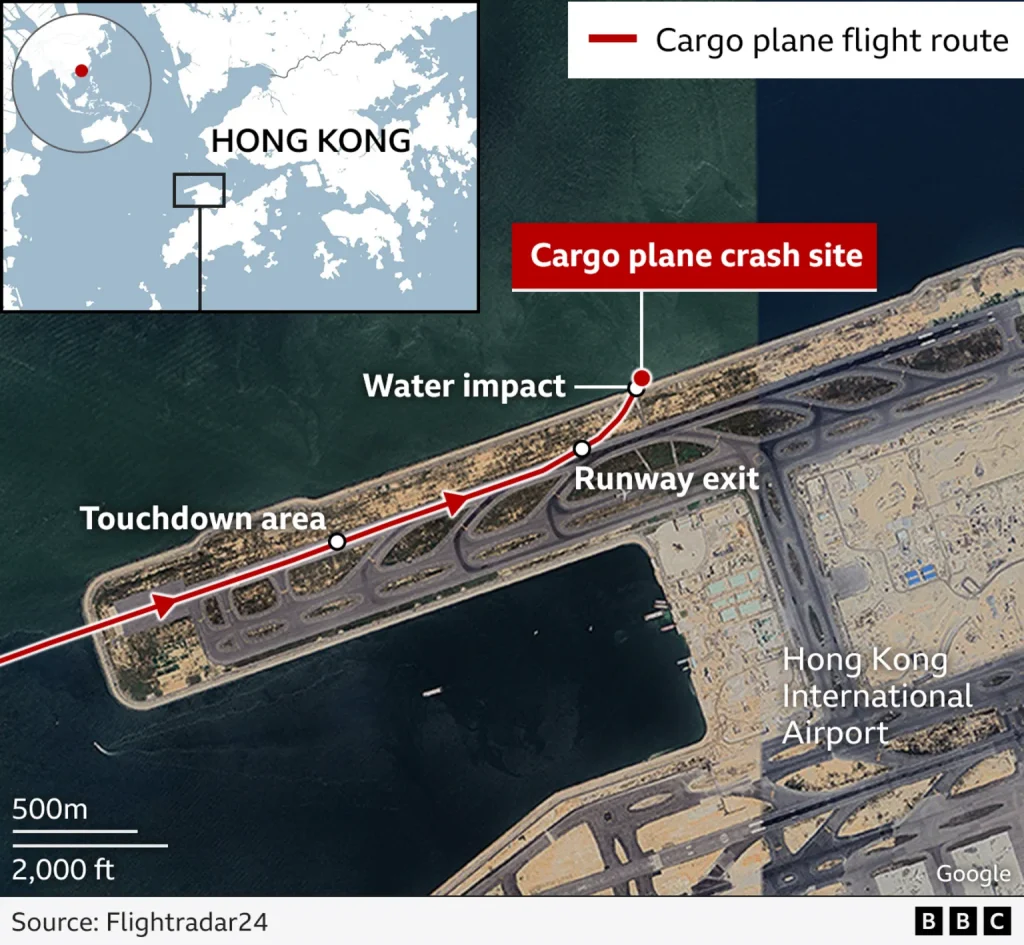
The incident involved Emirates flight EK9788, a Boeing 747 arriving from Dubai around 03:50 local time (19:50 GMT Sunday). The aircraft veered off the north runway, crashed through perimeter fencing, and collided with the patrol vehicle, pushing it into the water. Both occupants of the vehicle died, while the plane’s four crew members survived.
According to officials, the plane ended up partially submerged, making it one of Hong Kong Airport’s deadliest aviation accidents in years. Two other runways remain operational as investigations continue.
Airport operations executive director Steven Yiu said the patrol vehicle had been travelling on a service road outside the runway’s perimeter at a “safe distance” when the plane suddenly turned off course.
“Normally, the plane is not supposed to turn towards the sea,” Yiu said during a press briefing. He emphasized that the patrol car “definitely did not enter the runway” and that the aircraft had not sent a distress signal before landing.
Divers later recovered the bodies of the victims—two men aged 30 and 41—about five meters from the shore and seven meters underwater. One was confirmed dead at the scene, and the other died in hospital.
Hong Kong’s transport bureau expressed condolences to the victims’ families, describing the event as “deeply saddening.”
Emirates confirmed the accident, saying the cargo plane “sustained damage on landing in Hong Kong.” The airline noted there was no cargo onboard and that the aircraft had been wet-leased—meaning operated with crew and insurance—from Turkish carrier ACT Airlines.
Firefighters reached the scene within two minutes, rescuing all four crew members who had escaped via the aircraft’s emergency slides. Photos from the crash site show the plane broken in half, with part of its fuselage submerged in water.
Authorities are now searching for the plane’s flight data and cockpit voice recorders (“black boxes”). A police spokesperson said criminal investigations have not been ruled out.
The affected runway will remain closed pending the outcome of the investigation. At least 11 incoming cargo flights were cancelled on Monday, according to airport authorities.
This is only the second fatal aviation accident at Hong Kong International Airport since it relocated to Chek Lap Kok in 1998. The previous one occurred in 1999, when a China Airlines jet crash-landed during a typhoon, killing three people.


Scholars Hail Late Sheik Kamalu-deen’s Legacies iN Education, Leadership

Dogara Mourns Victims of Air Force Plane Crash, Condole President Tinubu, Military

The changing face of Nasarawa at 30

-
 Uncategorized6 years ago
FG, states urged to harness flooding for ranching, others with technology – Agbaje
-
 Headlines11 years ago
Breaking: EFCC seals Borno House of Assembly, as Hon members take to their heels
-
 News12 years ago
Nigeria Security Operatives Stage Manhunt For Homosexual Perpetrator
-
 News10 years ago
How 21-year-old Girl fled community over accusation of lesbianism
-
 News11 years ago
Yobe Gov Moves Against Deputy
-
 Opinion7 years ago
7 signs she has friend zoned you
-
Technology5 years ago
Online job placement company headhunts women
-
 Headlines10 years ago
Borno Dep Gov Abducts Another Church Leader