
News
CWAI Names NITDA As Dev’t, Regulatory Agency that Encapsulates Other Sectors


The National Information Technology Development Agency (NITDA) established by the NITDA Act of 2007 to regulate standards, guidelines and frameworks for the development and standardization of Information Technology practices in Nigeria, is also clamouring for the actualization of the Bill at the National Assembly for the last five years (since 2021).
The NITDA Bill, first proposed in 2021, seeks to repeal the National Information Technology Development Act No. 28 of 2007, and enact the National Information Technology Development Agency Act.
The amendments in the proposal include provisions for new license categorizations, licensing fees, 1% profit-before-tax levies for companies with revenues higher than 100 million naira, and prison sentences for defaulting parties.
In 2022, the Federal Executive Council (FEC) considered the Bill and moved a step further for its entry to the National Assembly. On December 23, 2022, at the National Assembly, a public hearing was held where stakeholders in Nigeria’s technology ecosystem weighed in on the Bill.
Since its announcement that year, the Bill has generated a healthy amount of controversy surrounding its purpose and compatibility with other technology-related bills, most notably the recently proposed startup bill.
Among the various submissions at the National Assembly are that Section 6(a) of the existing Act provides that NITDA is both a development and regulatory agency in the ICT sector.
However, the argument that NITDA is not a regulator was noted to be incorrect, and a total of thirty-one (31) stakeholders made submissions and presentations on the Bill. But out of this number, seventeen (17) were in support of the Bill, while fourteen (14) were opposed to it.
Those in favour based their support on the reason that the Bill provided for the development of the measures that would adequately regulate digital infrastructure, fast-track Nigeria’s transition into a leading digital economy, foster innovation and creativity, empower businesses in the country, improve the process of issuing and authenticating good character certificates and promote the use of technology in education and other sectors.
The Committee recommended to the Senate that the Bill be passed after considering the comments and opinions of stakeholders therein. The Bill states that the Senate Committee on ICT and Cyber Security was referred to as “A Bill for an Act to Repeal the National Information Technology Development Agency Act No. 28, 2007 and Enact the National Information Technology Development Agency Act to provide the Administration, Implementation and Regulation of Information Technology Systems and Practices, as well as the Digital Economy in Nigeria and for Related Matters, 2023 (SB1082), having considered the same, report favourably thereon recommended that the Senate pass the Bill as amended,” as stated in the Committee’s report during the second reading.
There was no time that the Bill was meant to usurp the powers of other regulators and make NITDA a super regulator in the ICT industry. A lot of stakeholders also said the Bill has the potential to reverse the gains delivered and made in the digital economy already. However, some stakeholders, on the other hand, agreed that the Bill has a lot of merit and that it would sanitize the industry and bridge the knowledge gap between Nigeria and other developed nations in digital economy.
The Citizens Watch Advocacy Initiative (CWAI), a civil society organization that champions accountability, good governance and transparency in Nigeria, believes that the Bill, if passed into law, has the enormous positive impact to the telecommunication and ICT industry in Nigeria, as it will ultimately lead to increase in the confidence of both local and international investors in the telecom and ICT sector of the Nigerian economy, thereby transforming the development agency to a regulator which will enhance the activities of other sectors concerned like the banking, financial services, insurance, healthcare, commerce education, agriculture, telecommunications, etc.
The role of NITDA under the proposed Act would have no direct conflicts with other regulators in the industry as being canvassed by naysayers. Accordingly, NITDA 2022 Bill will stabilize the regulatory environment in the telecom sector in Nigeria and attract the much needed foreign direct investments as well as domestic investments in the telecom and ICT sector in the country.
In a press release signed by the Executive Secretary of CWAI, Omoba Kenneth Aigbegbele, he asserted that from their investigation, the Bill seeks to enact an Act that will empower NITDA to provide for the administration, implementation and regulation of information technology systems and practice in Nigeria, which will automatically transform NITDA from a mere development agency to a regulatory agency in the sector that needs all the support, cooperation of Nigerians and stakeholders.
It is the first of its kind in the annals of history that will bridge the digital knowledge base of the country and impact the growth of the sector holistically in all spheres. The statement further added that the essence and purpose of the Bill is to create an effective, impartial, and independent regulatory framework for the development of the Nigerian information technology sector and digital economy.
Having been convinced about the proactive essence of the Bill, CWAI categorically states that the proposed NITDA Bill is focused on tax startups and in Part VI, Section 16, the Bill provides for the creation of the NITDA Fund, which will be used holistically for the “advancement of digital economy and related purposes,” and nothing more.
CWAI also notes that the skills deficit in human capital that hinders the country from thriving in the global digital economy would be overcome once and for all, as well as this would raise global digital competence in the country in the future, thereby expanding the service sector.
In view of this, CWAI enjoins the tech-ecosystem and techpreneurs to raise their voices and join the clarion call for all hands to be on deck for Nigeria to be able to achieve a large value chain that facilitates youth engagement, entrepreneurship development, the MSME development and women empowerment; which will provide and empower a rich, vibrant local industry of digital training providers with globally recognized standards attainable that can best compete anywhere. Therefore, recognizing and giving NITDA the required stakeholders’ support and engagement to drive this new initiative that will make the actualization of the Bill possible and acceptable to all.
CWAI therefore recognizes that NITDA has consistently driven an information technology policy that is geared towards the enhancement of Nigeria’s global acceptability and certification in the digital economy, where the country’s local, foreign partners and stakeholders are carried along in an effective, efficient and affordable value chain for the growth of the ICT sector and the telecom industry, creating and empowering Nigeria’s digital potentials and creating jobs for millions of youths in the country and the economic diversification for emerging technologies.
CWAI is holistically in support of NITDA’s drive, innovation, and ideas in the formulation of digital policies that will put Nigeria on the global arena and marketplace of the future. CWAI, therefore, advocates for NITDA’s regulatory status so as to accelerate other growing sectors of the economy.
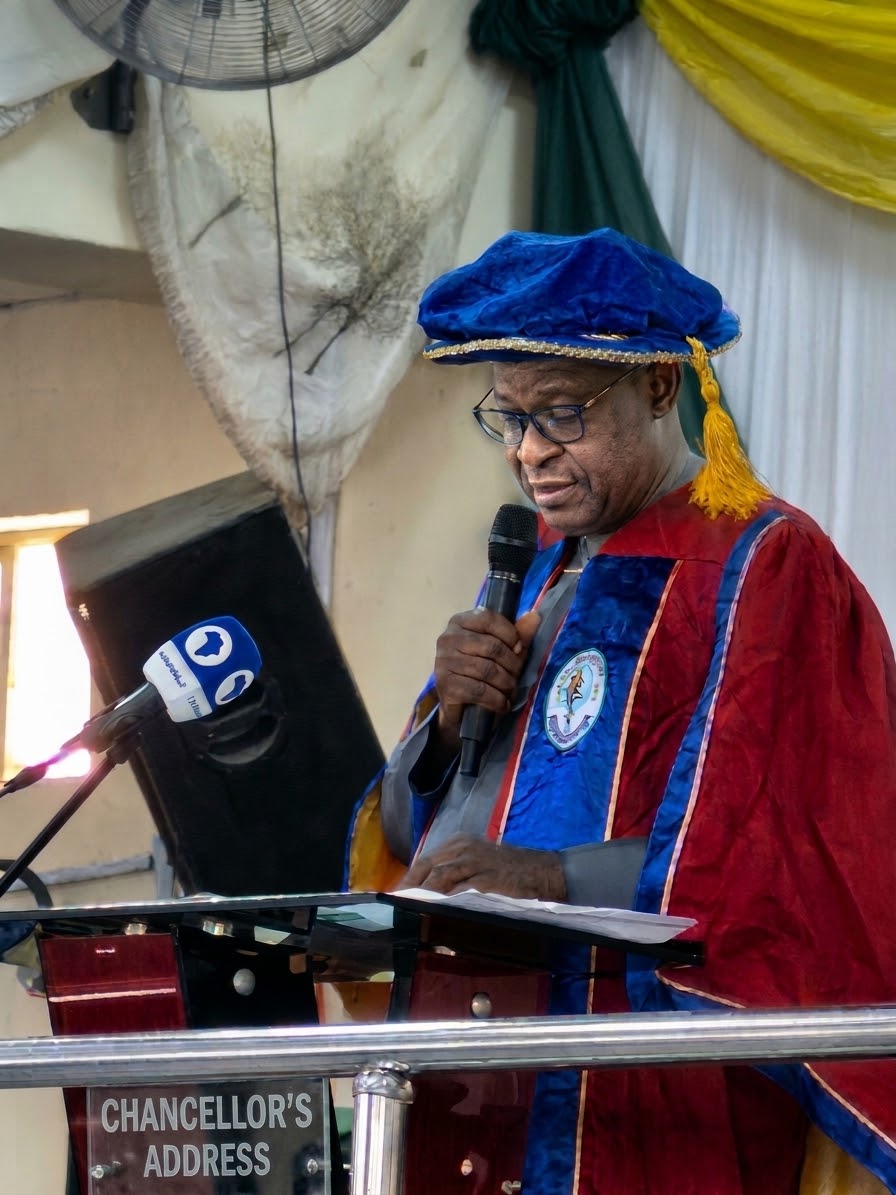
Former Speaker of the House of Representatives, Chancellor of Achievers University, and Chairman of the Board of Trustees of the National Credit Guarantee Company Limited (NCGC), Rt. Hon. Yakubu Dogara, CFR, has commended President Bola Ahmed Tinubu’s reform initiatives in the education and security sectors, urging Nigerians to unite behind efforts aimed at driving sustainable development and national renewal.
Dogara made the call while delivering the Convocation Address at the 16th Convocation Ceremony of Achievers University, Owo, where he spoke on the theme, “Rethinking National Security for Sustainable Peace, Development and National Renewal.”
The former Speaker described education and security as critical foundations for nation-building, noting that the Tinubu administration has taken important steps to expand educational opportunities and strengthen Nigeria’s security architecture.
He particularly praised the Federal Government’s Student Loan Programme under the Nigerian Education Loan Fund (NELFUND), saying the initiative has provided thousands of Nigerian youths with access to higher education regardless of their financial circumstances.
According to Dogara, investing in education remains one of the most effective strategies for empowering young people and preparing them to contribute meaningfully to national growth and development.
He also applauded government efforts aimed at improving the welfare of university lecturers, describing quality education as indispensable to the country’s progress and future competitiveness.
Speaking on security, Dogara said no nation can achieve meaningful economic development without guaranteeing the safety of lives and property. He emphasized that security remains the foundation upon which investment, agriculture, commerce and social stability thrive.
While acknowledging that insecurity remains a challenge, he commended the Federal Government’s ongoing efforts to tackle terrorism, insurgency, banditry and kidnapping through enhanced military operations, intelligence-driven interventions and strengthened coordination among security agencies.
He noted that recent measures, including the expansion of security personnel recruitment and efforts to secure forested and rural communities, demonstrate government’s determination to create safer environments for citizens and businesses.
Dogara urged Nigerians to support these efforts through active citizenship, community cooperation and a shared commitment to national unity.
“Government alone cannot achieve lasting security and development. Every citizen has a role to play in building a peaceful, prosperous and united Nigeria,” he said.
The former Speaker stressed that national development requires collaboration among government, traditional institutions, faith-based organisations, educational institutions, the private sector and civil society groups.
As Chairman of the Board of Trustees of the National Credit Guarantee Company Limited, Dogara also highlighted the importance of creating an enabling environment where businesses can access opportunities, investments can flourish and entrepreneurs can contribute to economic expansion and job creation.
He noted that sustainable economic growth depends largely on peace, stability and confidence in public institutions.
Addressing the graduating students, Dogara challenged them to become agents of positive change by applying their knowledge, skills and talents toward solving societal problems and advancing national development.
He urged the graduates to embrace integrity, innovation and service as they embark on the next phase of their lives.
“If you become a lawyer, serve justice. If you become a doctor, serve life. If you become an engineer, build what our country needs. If you become an entrepreneur, create opportunities and jobs for others,” he said.
The former Speaker expressed optimism about Nigeria’s future, describing the country as a resilient nation blessed with abundant human and natural resources capable of achieving greater heights through visionary leadership and collective effort.
He called on citizens to remain hopeful and support ongoing reforms designed to strengthen institutions, expand opportunities and improve the welfare of the people.
Dogara concluded by congratulating the graduating students and encouraging them to use their education as a tool for service, leadership and national transformation.
The convocation ceremony attracted members of the university’s Governing Council, management, staff, alumni, parents and other dignitaries who gathered to celebrate the achievements of the graduating class and reaffirm Achievers University’s commitment to producing future leaders for Nigeria and beyond.
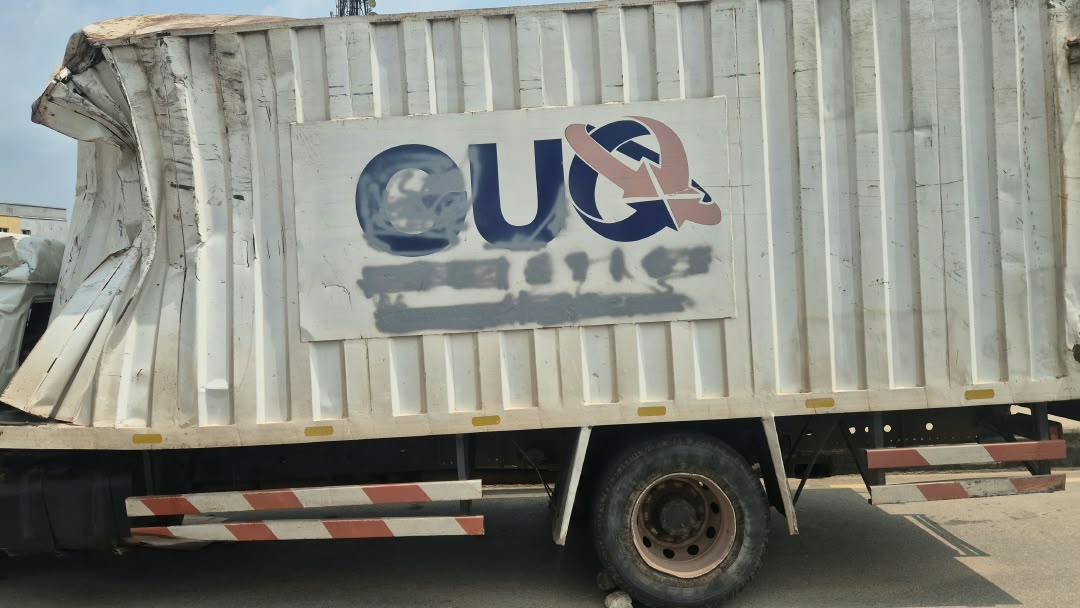
A civil society organisation, Citizens for Good Governance, Rule of Law & Anti-Corruption Initiative, has issued a 72-hour ultimatum to GUO Logistics, demanding immediate engagement with the families of victims of a fatal road accident that reportedly claimed five lives and left several others critically injured.
The organisation, in a statement signed by its Director-General, Comr. Danesi Momoh Prince, expressed sorrow and outrage over the accident, which occurred at about 3:30 a.m. on August 28, 2026, involving a Toyota Hiace bus conveying more than 23 passengers from Gombe State to Lagos State.
According to the statement, the accident occurred after a truck reportedly belonging to GUO Logistics rammed into the passenger bus, resulting in the deaths of five persons, including students travelling to Lagos for their mandatory industrial training.
The deceased were identified as Isiyaku Sa’idu, Maigana Mohammed, popularly known as Abbati, Anas Abubakar, reportedly the driver of the bus, Zaiyanu Bajoga and Abubakar Ibrahim.
Describing the incident as devastating, the organisation said the victims were Nigerians pursuing education, employment and better opportunities, adding that the tragedy had cut short the dreams and aspirations of the deceased while leaving other passengers fighting for survival.
It called on GUO Logistics to demonstrate genuine concern for the victims and their families, warning that corporate reputation must not take precedence over human lives.
The group also expressed concern over allegations that efforts were being made to protect the company’s public image rather than adequately address the suffering of the victims and their families.
It consequently demanded that the management of GUO Logistics, within 72 hours, establish immediate contact with the families of the deceased and injured passengers through available passenger manifests, booking records and other travel documentation.
Other demands include urgent assistance for survivors, engagement with medical facilities to address their healthcare needs, and discussions with bereaved families on appropriate support and compensation in accordance with applicable laws and the outcome of investigations.
The organisation further demanded a public statement from the company outlining the steps being taken to address the incident, including an official communication channel through which affected families could seek assistance.
It also urged GUO Logistics to cooperate fully with relevant authorities investigating the circumstances surrounding the accident and ensure that all applicable legal responsibilities were addressed.
Clarifying the purpose of the ultimatum, the group said it was demanding immediate engagement and demonstrable humanitarian support, not the conclusion of a comprehensive accident investigation within three days.
The organisation warned that failure by the company to demonstrate meaningful engagement within the stipulated period could trigger nationwide mass picketing of its offices and operational facilities.
It said it would consider mobilising concerned citizens and relevant stakeholders for peaceful and lawful protests at GUO offices across the country, subject to applicable legal requirements.
The group also threatened to petition relevant regulatory and law enforcement authorities to ensure that the incident received the necessary attention.
While acknowledging that the precise circumstances of the accident and legal responsibility must be established through a thorough investigation, the organisation maintained that immediate humanitarian assistance to the survivors and their families should not be delayed.
It called on relevant government authorities, civil society organisations, student bodies and well-meaning Nigerians to support efforts to secure assistance for the injured and accountability for the lives lost.
The statement reaffirmed the organisation’s commitment to monitoring developments and engaging relevant stakeholders to ensure that the victims and their families were not forgotten.
“Our position is unequivocal: human lives must never be sacrificed at the altar of corporate reputation. The dead deserve dignity, the injured deserve urgent assistance, and the bereaved families deserve answers,” the statement said.
News
FG Borrowing Justified By Huge Investment In Infrastructure, Improvements in Security Sector – Opposition Rep Agbese


Hon. Philip Agbese, Labour Party leader in Benue State and member representing Ado/Okpokwu/Ogbadibo Federal Constituency, has strongly defended the Federal Government’s proposed $21.7 billion supplementary external borrowing plan.
According to Agbese, the funds are fully justified by the Tinubu administration’s massive investments in critical infrastructure and the gains recorded in the security sector.
The lawmaker described the borrowing as strategic financing for productive national assets rather than consumption spending.
Speaking against the backdrop of intense public debate over the 2026-2027 external borrowing proposal, the opposition figure argued that Nigerians must look beyond partisan lenses and assess the tangible returns already visible across roads, power, rail and defence.
He noted that the plan prioritises productive assets rather than consumption, aligning with the administration’s broader Renewed Hope agenda of rebuilding national capacity after years of underinvestment.
“This is not borrowing for the sake of borrowing. It is investment in the future of Nigeria,” Agbese stated.
“When you look at the allocation—over $10 billion for transport infrastructure alone, including the Lagos-Calabar Coastal Highway, Sokoto-Badagry Super Highway and key rail corridors—you see a government deliberately creating assets that will generate long-term economic value far exceeding the cost of the loans.”
He continued: “The same applies to the significant portion dedicated to defence and security. Any serious nation prioritises the safety of its citizens.
“The Federal Government is putting resources behind the men and women in uniform so they can finish the job against bandits, terrorists and kidnappers.”
Agbese further highlighted the administration’s track record of project delivery under the Ministry of Works, citing the accelerated completion of major sections of the Abuja-Kaduna-Zaria-Kano highway using durable concrete pavement, the commissioning of initial segments of the Lagos-Calabar Coastal Highway, and hundreds of other road projects completed or advanced nationwide.
He pointed to parallel progress in the power sector, including approvals for East and West Super Grids aimed at raising transmission capacity dramatically, as evidence that borrowed funds are being channelled into real, visible development.
The lawmaker stressed that states and the Federal Capital Territory stand to benefit substantially from the package, with a sizeable share earmarked for subnational projects on largely concessional terms.
According to him, this structure ensures that the borrowing strengthens the federation rather than concentrating benefits solely at the centre.
“Look at what has been achieved in just over three years: major highways moving from paper to asphalt and concrete, rail lines advancing, and power infrastructure receiving the attention it has long been denied,” Agbese said.
“That is why the borrowing is justified. On security, the Armed Forces have recorded significant operational successes—neutralising thousands of terrorists and bandits, facilitating large-scale surrenders, and rescuing abducted citizens.
“Continued investment is necessary to consolidate these gains and expand the capacity of our security agencies,” he added.
Turning to the terms of the proposed financing, Agbese noted that a substantial portion comes from multilateral and bilateral partners at concessional rates, while commercial components remain competitive relative to previous market conditions.
He dismissed critics who focus solely on the headline figure without examining the quality of the underlying projects or the improved fiscal space created by earlier reforms such as subsidy removal.
The Benue lawmaker argued that opposition to the plan on purely political grounds ignores the infrastructure deficit inherited by the current administration and the urgent need to close it if Nigeria is to achieve sustainable growth and improved living standards.
He called on colleagues across party lines to prioritise national interest when the National Assembly considers the request.
“Every progressive country borrows to build. What matters is whether the money creates lasting assets and strengthens national security. On both counts, this plan passes the test,” Agbese declared.
“We in the opposition must be honest enough to acknowledge progress where it exists. The people of Ado, Okpokwu and Ogbadibo, like Nigerians everywhere, want better roads, reliable power and safer communities.
“The Federal Government is taking concrete steps in that direction, and supporting the necessary financing is the responsible thing to do,” he concluded.

Women and the Nobel peace prize
The story behind ‘people’s apples’

China taps digital technology to advance integrity education

-
 Uncategorized6 years ago
FG, states urged to harness flooding for ranching, others with technology – Agbaje
-
 Headlines11 years ago
Breaking: EFCC seals Borno House of Assembly, as Hon members take to their heels
-
 News12 years ago
Nigeria Security Operatives Stage Manhunt For Homosexual Perpetrator
-
 News10 years ago
How 21-year-old Girl fled community over accusation of lesbianism
-
 News11 years ago
Yobe Gov Moves Against Deputy
-
 Opinion7 years ago
7 signs she has friend zoned you
-
Technology5 years ago
Online job placement company headhunts women
-
 Headlines10 years ago
Borno Dep Gov Abducts Another Church Leader