
News
Full speech: Buhari proposes N20.5tr budget for 2023

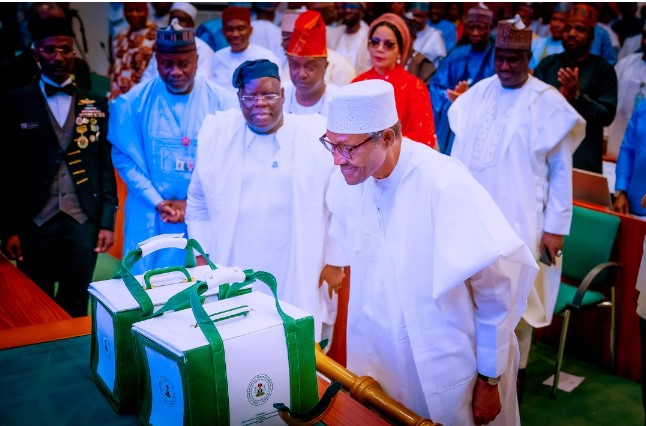
*2023 BUDGET SPEECH PRESENTATION BY PRESIDENT MUHAMMADU BUHARI*
*BUDGET OF FISCAL CONSOLIDATION AND TRANSITION*
Delivered By:
His Excellency, President Muhammadu Buhari,
President, Federal Republic of Nigeria At the Joint Session of the National Assembly, Abuja
Friday, 7TH October, 2022
*PROTOCOLS:*
I am very pleased to be here today to present the 2023 Budget Proposals at this Joint Session of the National Assembly. This is the last time I will be laying the budget of the Federal Government of Nigeria before the National Assembly.
2. Mr. President; Mr. Speaker: As I address this Joint Session on the Budget for the last time, let me highlight some of the progress that we have made in last seven and half years, in just two important areas of Critical Infrastructure and Good Governance.
3. We have made transformational investments in Infrastructure, notably:
a. Establishing the Infrastructure Corporation of Nigeria (‘InfraCorp’), in 2021, seed capital of N1 trillion from the Central Bank of Nigeria (‘CBN’), the Nigeria Sovereign Investment Authority (‘NSIA’) and the Africa Finance Corporation (‘AFC’);
b. Leveraging finance through the NSIA into the Presidential Infrastructure Development Fund (‘PIDF’) to facilitate the accelerated completion of the Second Niger Bridge, Lagos-Ibadan Expressway and Abuja-Kano Road;
c. Through the Road Infrastructure Tax Credit Scheme pursuant to Executive Order #7 of 2019, incentivised responsible companies to invest billions of Naira in constructing over 1,500km critical roads in key economic corridors. Under this Scheme, the Dangote Group has substantially completed the Reconstruction of 34km Apapa-Oworonshoki-Ojota Expressway and the 43km Obajana-Kabba Road. Similarly, Nigeria LNG Limited is on track to complete the 38km Bodo-Bonny Road and Bridges Project by the end of 2023;
d. Under our Sukuk Bonds scheme, since 2017, over N600 billion has been raised and invested in 941km for over 40 critical road projects nationwide, complement the Ministry of Works and Housing’s Highway Development and Management Initiative and other interventions;
e. Investing significantly to restore our national railways, completing and commissioning the 156km Lagos-Ibadan Standard Gauge Rail (and its 8.72km extension to Lagos Port); the 186km Abuja-Kaduna Standard Gauge Rail; and 327km Itakpe-Warri Standard Gauge Rail. These completed projects complement our ongoing investments in Light Rail, Narrow and Standard Gauge Rail, Ancillary Facilities Yards, Wagon Assembly Plants, E-Ticketing infrastructure as well as the training and development of our rail engineers and other workers;
f. We have completed New Airport Terminals at Lagos, Abuja, Kano and Port Harcourt, and reconstructed the Abuja Airport Runway in its first overhaul since its construction in the early 1980s.
g. Other investments in airports safety facilities, aeronautical meteorological services delivery complement ongoing development of seaports and ancillary infrastructure at the Lekki Deep Sea Port, Bonny Deep Sea Port, Onitsha River Port, as well as the Kaduna, Kano and Katsina Inland Dry Ports to create a truly multimodal transport system;
h. We have transformed Nigeria’s challenging power sector, through bespoke interventions such as the Siemens Power Program, with the German government under which over 2 billion US Dollars will be invested in the
*TRANSMISSION GRID.*
i. We have leveraged over billions of US dollars in concessional and other funds from our partners at the World Bank, International Finance Corporation, African Development Bank, JICA as well as through the Central Bank of Nigeria, working with the Finance Ministry, to support the power sector reforms.
j. The Central Bank has also been impactful in its interventions to roll out over a million meters to on-grid consumers, creating much needed jobs in assembly and installation. Our financing interventions have recently been complemented with the takeover of four electricity distribution companies and the constitution of the Board of the Nigeria Electricity Liability Management Company.
k. On the generation side, we have made significant investments in and incremental 4,000MW of power generating assets, including Zungeru Hydro, Kashimbila Hydro, Afam III Fast Power, Kudenda Kaduna Power Plant, the Okpai Phase 2 Plant, the Dangote Refinery Power Plant, and others.
l. Our generation efforts are making the transition from a reliance on oil and diesel, to gas as a transitional fuel, as well as environmentally friendly solar and hydro sources. Under the Energising Education Programme, we have commissioned solar and gas power solutions at Federal Universities and Teaching Hospitals at Kano, Ebonyi, Bauchi and Delta States. Similarly, our Energising Economies Programme has taken clean, sustainable power solutions to the Sabon-Gari Market in Kano, Ariaria Market in Aba, and Sura Shopping Complex in Lagos.
4. In terms of Good Governance, one significant challenge this Administration met at our inception was the inability of successive Governments to institutionalise reforms to ensure their sustainability. We inherited an archaic set of corporate, banking and capital markets laws; draft but unenacted Bills to reform the critical petroleum sector; an unimplemented Oronsaye White Paper to reform our civil service, amongst others.
5. I was therefore committed, at the onset of this Administration’s Good Governance and Fighting Corruption Reforms, to focus on the much-neglected area of law reform, to bequeath a better legacy to the succeeding Administration, than the one we met. Our innovative, encompassing and historically significant legislative interventions include:
a. Critical corporate and financial laws to enhance our countries’ global competitiveness, including the repeal and re-enactment of Companies and Allied Matters Act (‘CAMA’) 2020 – the first comprehensive reform since 1990; enacting the Federal Competition and Consumer Protection Commission (FCCPC) Bill, the first legislation in Nigeria’s history focused on curbing anti-competition practices; establishing the Federal Competition and Consumer Protection Commission; re-pealing and re-enacting the Banks and Other Financial Institutions Act (BOFIA) 2020; enacting the Asset Management Corporation of Nigeria, AMCON (Amendment) Acts of 2019 and 2021; enacting the Credit Reporting Act (CRA) 2017 and Secured Transactions in Movable Assets Act (STMAA) 2017, to mention our major legislative interventions;
b. Fundamental anti-corruption, anti-money laundering and financial intelligence laws, such as the Nigeria Police Act, 2020 (being the first comprehensive reform of Police legislation since the Police Act of 1943); the Nigerian Financial Intelligence Unit Act 2017 (which resolved the longstanding impediments to Nigeria’s full participation in the global efforts to combat illicit financing of terrorism and crime under the auspices of the global Egmont Group); the Money Laundering (Prevention and Prohibition) Act, 2022; the Terrorism (Prevention and Prohibition) Act 2022, Proceeds of Crime (Recovery and Management) Act, 2022; Mutual Assistance in Criminal Matters Act, 2019; Nigerian Correctional Services Act, 2019; Suppression of Piracy and other Maritime Offences Act, 2019; amongst others.
c. Historic reforms to our Constitutional and other public laws, including the first ever amendments to the Constitution of the Federal Republic of Nigeria to support the engagement of young persons in our politics by passing Not Too Young to Run legislation, as well as to improve the funding and independence of States’ Legislatures and Judiciaries; enacting overdue reforms through the Electoral Act, 2022;
d. Finally enacting into law the Petroleum Industry Act, 2021 after close to two decades of drafting, debates and delays – leading to the commercialization of NNPC Limited, and other much needed reforms to our energy sector. This important law also complements other landmark legislations such as the Deep Offshore and Inland Basin Production Sharing Contracts Act, 1993 (Amendment) Act, 2019, to increase oil and gas revenues accruing to the Federation;
e. Enacting annual Finance Acts of 2019, 2020 and 2021 to support our annual Budgets and respond to emerging tax, fiscal and economic issues, including:
I. reducing headline corporate tax rates for Small and Medium-Sized Enterprises;
II. reforming archaic tax legislation in line with global best practices to combat Base Erosion and Transfer Pricing;
III. reforming the taxation of securities lending and real estate investment trusts to spur increased investments on our capital markets;
IV. empowering the Federal Inland Revenue Service and the Nigeria Customs Service to optimize their use of technology to more efficiently collect taxes and levies; Andrew
V. increasing VAT revenues predominantly to support our States and Local Governments’ precious finances during and after the impact of the COVID-19 Pandemic on the economy;
f. Furthermore, we have issued eleven Presidential Executive Orders on a range of important issues, including the Promotion of Transparency and Efficiency in the Business Environment, 2017;
I. Promoting Local Procurement by Government Agencies, 2017;
II. the Submission of Annual Budgetary Estimates by all Statutory and non-Statutory Agencies, including Incorporated Companies wholly owned by the Federal Government of Nigeria, 2017;
III. the Voluntary Assets and Income Declaration Scheme, 2017;
IV. Planning and Execution of Projects, Promotion of Nigerian Content in Contracts, Science, Engineering and Technology, 2018;
V. the Voluntary Offshore Assets Regularization Scheme (VOARS), 2018;
VI. Open Defecation and enhanced sanitation, 2019;
VII. the innovative Road Infrastructure Development and Refurbishment Investment Tax Credit Scheme, 2019; and
VIII. the National Public Buildings Maintenance, 2022.
6. We could not have made these historical achievements without the exceptional partnership this Administration has had with the Leadership, and Members of the National Assembly. So may I pause here, to once again, thank the Senate and the House of Representatives for your engagement, support and contribution to these successes, which history will remember us all favourably for.
RECENT ECONOMIC DEVELOPMENTS
7. The 2023 Budget was prepared amidst a very challenging world economy that is weakened by the lingering effects of the COVID-19 pandemic, high inflation, high crude oil prices resulting in huge cost of PMS Subsidy and negative spill over effects of the Russia-Ukraine war.
8. Many economies around the world are currently contending with fiscal instability, slow growth, food crisis, and high interest rates. Like many other countries, our economy faces headwinds from low revenues, high inflation, exchange rate depreciation and insecurity.
9. However, Nigeria’s real Gross Domestic Product grew by 3.54 percent in the second quarter of 2022, marking the seventh consecutive quarter of growth. Our interventionist and reflationary measures have been very effective and impactful. We must however continue to work towards achieving much higher levels of growth, especially given our high population growth rate, so that the average Nigerian can truly feel the impact of planned economic growth.
10. Distinguished Senators and Honourable Members, despite continuing efforts, unemployment, underemployment, and poverty rates remain high. We are currently implementing several skills development programmes and work opportunity programmes to enhance the employability of our youths and tackle the troubling level of youth unemployment.
11. While it is evident that our economy still faces significant challenges, what could have happened without the implementation of some of the measure we introduced, would have been much worse for the country.
REVIEW OF 2022 BUDGET IMPLEMENTATION
12. Distinguished and Honourable Members of the National Assembly, the implementation of the 2022 ‘Budget of Economic Growth and Sustainability commenced on the first day of the year. It was, however, necessary to forward an amended budget proposal to address some exigent issues, especially the significant increase in fuel subsidy.
13. The amended 2022 Budget was based on a benchmark oil price of 73 US Dollars per barrel, oil production of 1.60 million barrels per day, and exchange rate of 410.15 Naira to US Dollar.
14. As at 31st July 2022, Federal Government’s retained revenues was 3.66 trillion Naira, excluding the revenue of Government-Owned Enterprises. Thus, revenue collection was only 63 percent of our target, largely due to the underperformance of oil and gas revenue sources.
15. Despite higher oil prices in 2022, oil revenue was below target due to significant oil production shortfalls and high petrol subsidy cost resulting from the significant rise in Crude prices which ultimately increased PMS prices worldwide.
16. Oil output stood at an average of 1.30 million barrels per day as at June 2022, while the sum of 1.59 trillion Naira was spent on fuel subsidy between January and June 2022. The NNPC, working in collaboration with security and other relevant agencies, is putting in place additional measures to curb the incidence of pipeline vandalism and crude oil theft in order to meet our crude oil production quota.
17. On the expenditure side, the sum of 8.29 trillion Naira had been spent by July 31 2022 out of the total appropriation of N17.32 trillion. Despite our revenue challenges, we have consistently met our debt service commitments. Staff salaries and statutory transfers have also been paid as and when due.
18. Total non-debt recurrent expenditure in January to July 2002 was 3.24 trillion Naira, of which 2.87 trillion Naira was for Salaries, Pensions and Overheads. A total of 3.09 trillion Naira was spent on debt service obligations during the period.
19. Furthermore, about 1.48 trillion Naira had been released to MDAs for capital expenditure as at the end of July 2022. I am pleased to inform you that we expect to fund MDAs’ capital budget fully by the end of the fiscal year 2022.
20. To further address structural problems in the economy and drive growth, capital releases thus far have been prioritised in favour of critical ongoing projects in the power, roads, rail, agriculture, as well as health and education sectors.
21. As at the end of July 2022, the fiscal operations of the Federal Government resulted in an estimated budget deficit of 4.63 trillion Naira. This represents 63 percent of the estimated deficit for the full year. This is largely attributable to revenue shortfalls and higher debt service obligations resulting from rising debt levels and interest rates.
22. The deficit was mainly financed through domestic borrowing amounting to N4.12 trillion. Hence, total public debt stock increased from 39.6 trillion Naira as at the end of December 2021 to 42.8 trillion Naira as at the end of June, 2022.
23. However, our debt position remains within cautious and acceptable limits compared to peer countries. As at the end of June 2022, total public debt is within our self-imposed limit of 40 percent of GDP, which is significantly below the 55 percent international threshold for comparator countries, and a global average of 99 percent post-COVID-19.
24. Nonetheless, our debt-service-to-revenue ratio needs close attention. The current low revenue performance of government, as reflected in the lowly revenue-to-GDP ratio of just about 8 percent. Our medium-term objective remains to raise this ratio to 15 percent, at which the debt service to revenue ratio will cease to be a concern.
25. Mr. Senate President and Rt. Honourable Speaker, revenue shortfalls remain the greatest threat to Nigeria’s fiscal viability. We have therefore accelerated efforts towards ensuring that all taxable Nigerians declare income from all sources and pay taxes due to the appropriate authorities. We are also monitoring the internally generated revenues of MDAs to ensure they are appropriately accounted for and remitted to the Consolidated Revenue Fund.
26. The 50 percent cost-to-income ratio in the Finance Act 2020 has significantly improved operating surplus remittances by Government Owned Enterprises (GOEs). I therefore solicit the continuing cooperation of the National Assembly in enforcing the legal provision and other prudential guidelines imposed on the GOEs during the consideration of the budget proposals of the GOEs.
27. I am happy to report that the revenue collection and expenditure management reforms we are implementing are yielding positive results, with recent significant improvements in non-oil revenue performance. However, while we continue to implement revenue administration reforms and improve our collection efficiency, we urgently need to find new ways of generating revenue.
28. As we seek to grow our government revenues, we must also focus on the efficiency of utilization of our limited resources. Critical steps we are taking include immediate implementation of additional measures towards reducing the cost of governance and the discontinuation of fuel subsidy in 2023 as announced earlier. We are however mindful of the fact that reducing government spending too drastically can be socially destabilizing, and so will continue to implement programmes to support the more vulnerable segments of society.
29. Petrol subsidy has been a recurring and controversial public policy issue in our country since the early eighties. However, its current fiscal impact has clearly shown that the policy is unsustainable. As a country, we must now confront this issue taking cognizance of the need to provide safety nets to cushion the attendant effects on some segments of society.
RECENT ACHIEVEMENTS
30. Over the last year, this Administration has implemented several priority projects. Our focus has been on the completion of key road and rail projects; the effective implementation of power sector projects; the provision of clean water; construction of irrigation infrastructure and dams across the country; and critical health projects such as upgrading Primary Health Care Centres across the six geopolitical zones.
31. We have also gone further on the implementation of several power generation, transmission, and distribution projects, as well as off-grid solutions, all aimed towards achieving the national goal of optimizing power supply by 2025.
32. In the determination to ramp up grid electricity supply to at least 7,000 megawatts by 2024, we have procured purpose-built critical power equipment under the Presidential Power Initiative with Siemens as we promised. These projects will have multiplier effects on the economy.
33. Under the Road Infrastructure Tax Credit Scheme, we are undertaking the construction and rehabilitation of about two thousand kilometres of roads and bridges, nationwide, to be financed by the grant of tax credits to investing private companies.
34. As I mentioned earlier, we have made appreciable progress in the rehabilitation and reconstruction of key road networks like the Lagos – Ibadan expressway, Abuja-Kaduna-Kano expressway and East-West Road in Niger Delta. Work has also reached completion stage on the Apapa – Oworonsoki expressway, Loko-Oweto Bridge and the Second Niger Bridge. We hope to commission these projects before the end of our tenure in 2023.
35. Furthermore, we have awarded several contracts to rehabilitate, reconstruct and construct major arterial roads to reduce the hardship to commuters and increase economic activity.
36. Regarding personnel costs, we have extended the coverage of the Integrated Payroll and Personnel Information System (IPPIS) to all MDAs to automate personnel records and the process by which salaries are paid and eliminate the incidence of ghost workers. The system is currently being reviewed to enhance its functionality and applicability to MDAs in the different sectors.
37. Distinguished Senators and Honourable Members, although we have recorded more achievements over the last year, I will now proceed with an overview of the 2023 Budget proposal.
THEME AND PRIORITIES OF THE 2023 BUDGET
38. The 2023 Budget proposal is the eighth and final budget of this Administration. It reflects the serious challenges currently facing our country, key reforms necessary to address them, and imperatives to achieve higher, more inclusive, diversified and sustainable growth.
39. The expenditure policy of Government in 2023 is designed to achieve the strategic objectives of the National Development Plan 2021 to 2025, including macroeconomic stability; human development; food security; improved business environment; energy sufficiency; improving transport infrastructure; and promoting industrialization focusing on Small and Medium Scale Enterprises.
40. Against the backdrop of the challenging global and domestic economic environment, it is imperative that we strengthen our macroeconomic environment and address subsisting challenges as a country. The 2023 Appropriation therefore is a Budget of Fiscal Sustainability and Transition. Our principal objective in 2023 is to maintain fiscal viability and ensure smooth transition to the incoming Administration.
2023 BUDGET PARAMETERS AND FISCAL ASSUMPTIONS
41. Distinguished Members of the National Assembly, the 2023 to 2025 Medium Term Expenditure Framework and Fiscal Strategy Paper sets out the parameters for the 2023 Budget as follows:
a. Oil price benchmark of 70 US Dollars per barrel;
b. Daily oil production estimate of 1.69 million barrels (inclusive of Condensates of 300,000 to 400,000 barrels per day);
c. Exchange rate of 435.57 Naira per US Dollar; and
d. Projected GDP growth rate of 3.75 percent and 17.16 percent inflation rate.
2023 REVENUE ESTIMATES
42. Based on these fiscal assumptions and parameters, total federally-collectible revenue is estimated at 16.87 trillion Naira in 2023.
43. Total federally distributable revenue is estimated at 11.09 trillion Naira in 2023, while total revenue available to fund the 2023 Federal Budget is estimated at 9.73 trillion Naira. This includes the revenues of 63 Government-Owned Enterprises.
44. Oil revenue is projected at 1.92 trillion Naira, Non-oil taxes are estimated at 2.43 trillion Naira, FGN Independent revenues are projected to be 2.21 trillion Naira. Other revenues total 762 billion Naira, while the retained revenues of the GOEs amount to N2.42 trillion Naira.
45. The 2023 Appropriation Bill aims to maintain the focus of MDAs on the revenue side of the budget and greater attention to internal revenue generation. Sustenance of revenue diversification strategy would further increase the non-oil revenue share of total revenues.
PLANNED 2023 EXPENDITURE
46. A total expenditure of 20.51 trillion Naira is proposed for the Federal Government in 2023. This includes 2.42 trillion Naira spending by Government-Owned Enterprises. The proposed 20.51 trillion Naira 2023 expenditure comprises:
a. Statutory Transfers of N744.11 billion;
b. Non-debt Recurrent Costs of N8.27 trillion;
c. Personnel Costs of N4.99 trillion;
d. Pensions, Gratuities and Retirees’ Benefits of N854.8 billion;
e. Overheads of N1.11 trillion;
f. Capital Expenditure of N5.35 trillion, including the capital component of Statutory Transfers;
g. Debt Service of N6.31 trillion; and
h. Sinking Fund of N247.73 billion to retire certain maturing bonds.
FISCAL BALANCE
47. We expect total fiscal operations of the Federal Government to result in a deficit of 10.78 trillion Naira. This represents 4.78 percent of estimated GDP, above the 3 percent threshold set by the Fiscal Responsibility Act 2007.
48. As envisaged by the law, we need to exceed this threshold considering the need to continue to tackle the existential security challenges facing the country.
49. We plan to finance the deficit mainly by new borrowings totalling 8.80 trillion Naira, 206.18 billion Naira from Privatization Proceeds and 1.77 trillion Naira drawdowns on bilateral/multilateral loans secured for specific development projects/programmes.
50. Over time, we have resorted to borrowing to finance our fiscal gaps. We have been using loans to finance critical development projects and programmes aimed at further improving our economic environment and enhance the delivery of public services to our people.
51. As you are aware, we have witnessed two economic recessions within the period of this Administration. A direct result of this is the significant decline in our revenue generating capacity.
52. In both cases, we had to spend our way out of recession, resulting in higher public debt and debt service. It is unlikely that our recovery from each of the two recessions would have been as fast without the sustained government expenditure funded by debt.
FINANCE BILL 2022
53. In line with our plan to accompany annual budgets with Finance Bills, partly to support the realization of fiscal projections, current tax and fiscal laws/regulations are being reviewed to produce a draft Finance Bill 2022.
54. It is our intention that once ongoing consultations are completed, the Finance Bill 2022 would be submitted to the National Assembly to be considered alongside the 2023 Appropriation Bill.
ENSURING FISCAL SUSTAINABILITY
55. To ensure fiscal sustainability, we will further improve our business-enabling environment, accelerate current revenue-based fiscal consolidation efforts and strengthen our expenditure and debt management.
BUDGET OF GOVERNMENT-OWNED ENTERPRISES
56. Distinguished Senators, Honourable Members, you may recall that we earlier integrated the budget of Government-Owned Enterprises into the FGN’s 2019 budget submission. This has helped to enhance the comprehensiveness and transparency of the FGN budget. It has however come to my attention that Government-Owned Enterprises liaise directly with relevant NASS committees to have their budget passed and issued to them directly.
57. I would like to implore the leadership of the National Assembly to ensure that the budget I lay here today, which includes those of the GOEs, be returned to the Presidency when passed. The current practice where some committees of the National Assembly purport to pass budgets for GOEs, which are at variance with the budgets sanctioned by me, and communicate such directly to the MDAs is against the rules and needs to stop.
FINANCING INFRASTRUCTURE GAP
58. Nigeria requires a huge outlay of resources to close current infrastructure gaps and boost its economic performance. Government will develop projects that are good candidates for Public Private Partnership (PPP) by their nature for private sector participation.
BUDGET PROCESS BILL 2022
59. Distinguished Senators, Honourable Members, ladies and gentlemen. Over the course of this Administration, we have embarked on a number of reforms in the Public Finance Management space. These reforms are bearing fruits and we have seen some of the benefits of the return to a predictable January to December fiscal year for the FGN budget.
60. Earlier this year, I was briefed of the impressive performance of Nigeria in the Open Budget Survey, as the third best or most improved country in the world, matching the global average score in budget transparency and exceeding the global average in public participation.
61. I commend the Budget Office of the Federation and the Supervising Ministry of Finance Budget and National Planning, the National Assembly Leadership, the relevant Appropriation and Finance Committees as well as non-state actors who have worked tirelessly in pushing for greater transparency and accountability in our budget process.
62. We need to sustain and institutionalize the gains of these reforms. To this end, I have directed the Minister of Finance, Budget and National Planning to immediately work on mainstreaming these reforms and work with the National Assembly on passing an Organic Budget Law, which I hope to assent to before the end of this Administration.
HUMAN CAPITAL DEVELOPMENT
63. The Government notes with dismay the crisis that has paralysed activities in the public universities in the country. We expect the staff of these institutions to show a better appreciation of the current state of affairs in the country. In the determined effort to resolve the issue, we have provided a total of 470.0 billion in the 2023 budget from our constrained resources, for revitalization and salary enhancements in the tertiary institutions.
64. Distinguished Senators and Honourable members, it is instructive to note that today Government alone cannot provide the resources required for funding tertiary education.
65. In most countries, the cost of education is jointly shared between the government and the people, especially at the tertiary level. It is imperative therefore that we introduce a more sustainable model of funding tertiary education.
66. The Government remains committed to the implementation of agreements reached with staff unions within available resources. This is why we have remained resolute that we will not sign any agreement that we would be unable to implement. Individual institutions would be encouraged to keep faith with any agreement reached in due course to ensure stability in the educational sector.
67. Government is equally committed to improving the quality of education at other levels. Recently, we implemented various incentives aimed at motivating and enhancing teachers’ development in our schools.
68. In the health sector, the Government intends to focus attention on equipping existing hospitals and rehabilitating infrastructure. Emphasis will also be on local production of basic medicines/vaccines.
69. As human capital is the most critical resource for national development, our overall policy thrust is to expand our investment in education, health and social protection.
WOMEN’S EMPOWERMENT
70. To harness the potentials of all Nigerian women and enable them to productively contribute to the economy, we will continue to prioritise women’s empowerment programmes across various MDAs in 2023.
FOOD PRICES
71. Government is very concerned about the high food prices in the country. Various measures are being implemented to address structural factors underlying the issue. We will also step-up current efforts aimed at boosting food production and distribution in the country. You will recall our efforts in improving production of fertilizer, rice, maize cassava among other earlier initiatives.
BOOSTING MANUFACTURING PERFORMANCE
72. Government is not unaware of the challenges confronting the manufacturing sector. We will ensure effective implementation of policy measures aimed at positioning the manufacturing sector to generate more foreign exchange in the near future. We are also committed to improving the business environment to stimulate local and foreign investment.
SAFE SCHOOLS INITIATIVE
73. We ratified the Safe Schools Declaration in 2019. We remain committed to the effective implementation of our Safe Schools Policy. A total of 15.2 billion Naira has been specifically provided in the 2023 Budget to scale up current measures to provide safer and conducive learning environment in our schools.
DEFENCE AND INTERNAL SECURITY
74. The Government remains firmly committed to the security of life, property and investment across the country. Accordingly, defence and internal security continue to be accorded top priority in 2023. Current efforts to properly equip and motivate our valiant personnel in the armed forces, police and paramilitary units will be sustained.
75. I assure you, insecurity, especially banditry and kidnapping, will be significantly curtailed before the end of this Administration. We will redouble our efforts to ensure we leave a legacy of a peaceful, prosperous and secured nation.
76. Mr. Senate President, Mr. Speaker, Distinguished and Honourable Members of the National Assembly, let me conclude my address today by again expressing my deep appreciation for your enormous support, patriotic zeal, and cooperation in our efforts to accelerate the socio-economic development of our country and improve the lives of our people.
77. I appreciate the efforts and commitment of the leadership and staff of the Federal Ministry of Finance, Budget and National Planning, especially the Budget Office of the Federation, who have worked hard to achieve early submission of the 2023 Appropriation Bill.
78. The 2023 budget proposal is a product of inter-agency collaboration, extensive stakeholder consultations and productive engagements. I would therefore like to acknowledge the efforts of the media, the organized private sector, civil society organizations and our development partners for their contributions in the process of preparing the Budget.
79. Considering the challenging situation in our country presently, we must continue to cooperate and collaborate to ensure fiscal sustainability, macroeconomic stability and smooth transition to the incoming Administration.
80. This Administration remains resolutely committed to our goals of improving the living standard of our people and effective delivery of public services.
81. Distinguished and honourable members of the National Assembly, although no single government can solve all the problems of a country during its own tenure, I have no doubt that you share our aspiration that the 2023 transition budget is designed to address critical issues and lay a solid foundation for the incoming Administration.
82. It is with great pleasure therefore, that I lay before this distinguished Joint Session of the National Assembly, the 2023 Budget Proposals of the Federal Government of Nigeria.
I thank you most sincerely for your attention. May God bless the Federal Republic of Nigeria.

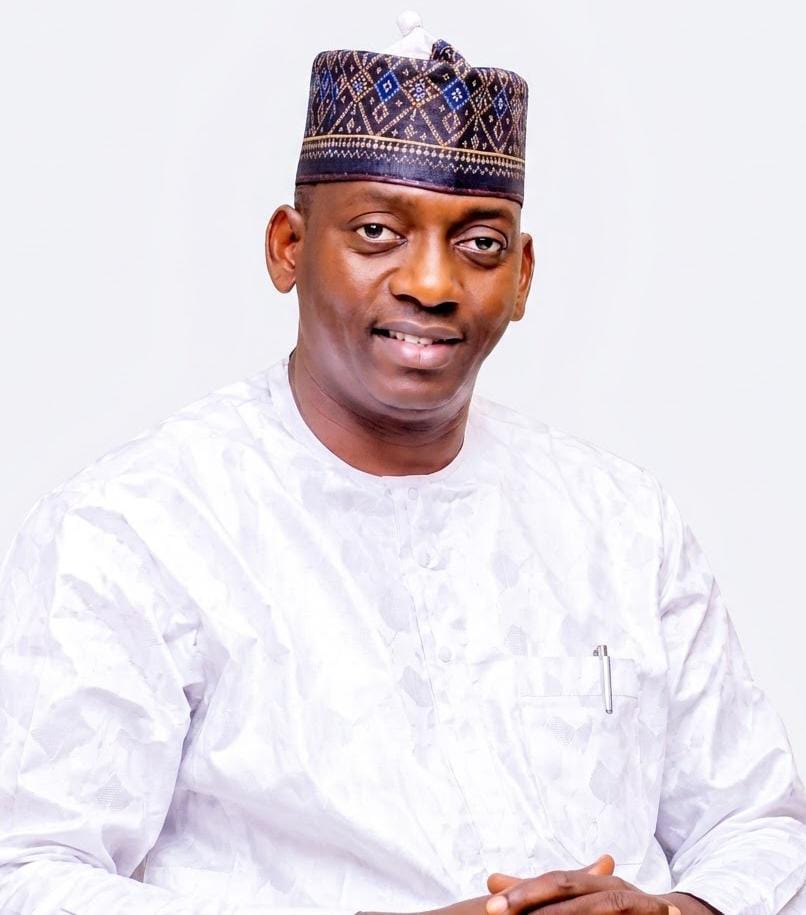
Chairman of the House of Representatives Committee on China-Nigeria Parliamentary Relations, Hon. Jaafaru Yakubu, has applauded the Chinese Government’s expanded zero-tariff policy for African countries, describing it as a catalyst for Nigeria’s economic transformation and a major opportunity for export growth, industrialisation and job creation.
In a statement, Yakubu said China’s decision to extend its zero-tariff policy to 53 African countries, including Nigeria, demonstrates Beijing’s commitment to supporting Africa’s economic development and strengthening South-South cooperation.
He noted that the policy offers Nigerian businesses unprecedented access to one of the world’s largest consumer markets and provides a platform for expanding exports, attracting investment and enhancing economic competitiveness.
“China’s zero-tariff initiative represents a strategic opportunity for Nigeria to accelerate economic growth, strengthen domestic industries and deepen our economic cooperation with one of the world’s most important trading partners,” Yakubu said.
According to the lawmaker, early indicators suggest that the policy is already producing positive outcomes. He disclosed that Chinese imports from Nigeria rose significantly during the first half of 2026, while total trade volume between both countries reached approximately $18 billion, reflecting growing economic engagement.
Yakubu said the encouraging figures demonstrate the enormous potential of the Nigeria-China partnership and highlight the importance of improved market access in driving economic prosperity.
He stressed that Nigeria must seize the opportunity by expanding production capacity, improving product quality and strengthening export-oriented industries capable of competing in the international marketplace.
The committee chairman noted that Nigerian products such as liquefied propane, sesame seeds, nuts, hides and skins are already benefiting from improved access to the Chinese market. However, he emphasized that the country’s long-term objective should be to move beyond the export of raw materials and focus on value-added products.
“We must leverage this opportunity to promote domestic manufacturing, industrialisation and job creation. Increased market access should translate into stronger local industries and greater economic opportunities for Nigerians,” he stated.
Yakubu urged Nigerian manufacturers and exporters to take advantage of the tariff-free regime by improving standards, certification processes, packaging and supply chain efficiency in order to meet the demands of Chinese consumers.
He also called on relevant government agencies to strengthen the infrastructure and institutional support necessary to help local businesses compete effectively in international markets.
The lawmaker further encouraged Chinese investors to expand their presence in Nigeria through investments in manufacturing, agro-processing, technology development and logistics infrastructure.
According to him, increased Chinese investment would support industrial growth, facilitate technology transfer and create much-needed employment opportunities for Nigeria’s growing youth population.
While welcoming the growth in trade relations, Yakubu acknowledged the need to address the trade imbalance between Nigeria and China, stressing that efforts must be made to increase the country’s export capacity and diversify its export basket.
“Our goal should not merely be to trade more, but to trade better. Nigeria must become a producer and exporter of more finished and semi-finished goods if we are to fully benefit from our relationship with China,” he said.
Yakubu also expressed appreciation to the Government of the People’s Republic of China for its RMB200 million grant to support Nigeria’s development projects, describing the gesture as further evidence of the strong friendship and cooperation between both nations.
He said the grant would contribute to efforts aimed at improving infrastructure, strengthening public services and advancing national development priorities.
The chairman commended China’s longstanding support for Nigeria through infrastructure cooperation, technical assistance, capacity building and other development initiatives, noting that such partnerships have contributed significantly to the country’s growth.
Looking ahead, Yakubu called for greater collaboration in key sectors including manufacturing, agriculture, technology, logistics and industrial development.
He reaffirmed his commitment to strengthening parliamentary engagement and promoting policies that will advance the mutual economic interests of Nigeria and China.
“As Nigeria and China continue to deepen their partnership, our focus must remain on translating opportunities into tangible economic benefits for our people. Together, we can build a relationship that is mutually beneficial, economically productive and supportive of sustainable development,” he added.
Yakubu concluded by expressing gratitude to the Chinese Government and the Chinese Ambassador to Nigeria, His Excellency Yu Dunhai, for their continued friendship, support and commitment to Nigeria’s development aspirations.
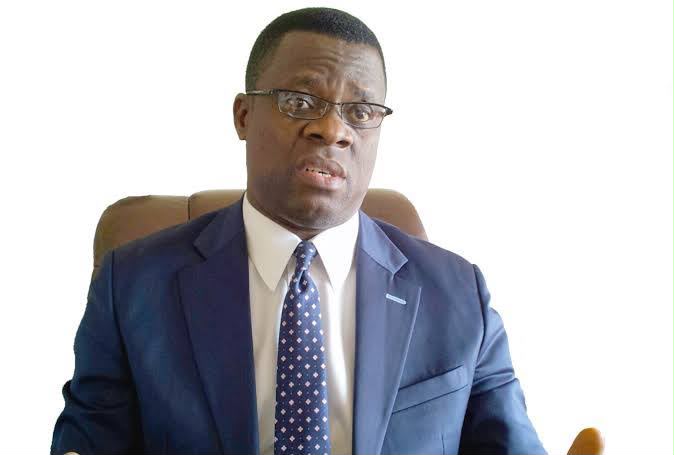
THE FALLACIES OF MIKE IGINI
“It is mean and cowardly and an evidence of weakness and utter demerit, for any group of people to attempt to commend themselves to the public by the negative process of belittling and condemning others.”_
- Chief Obafemi Awolowo, 28th April, 1951.
The attention of the Progressives Alliance for Justice, Unity and Democracy (PAJUD) has been drawn to the barrage of insults heaped by Mike Igini, former Resident Electoral Commissioner of the Independent National Electoral Commission (INEC), against every perceived and imaginary obstacle to his personal agenda.
We posit that since the return of democracy in 1999, the Nigerian political and electoral firmament has been overdosed with different genres of characters – the good, the bad and the ugly.
We state categorically and without fear of contradiction that President Bola Ahmed Tinubu is NOT responsible for the non-appointment of Mike Igini as either Chairman of INEC or National Commissioner since he left office in disgrace and engulfed in controversies in the South-South.
Igini must understand that such appointments are not done willy-nilly. They are based on several criteria. He has served two full terms as Resident Electoral Commissioner. For him to be nominated as National Commissioner, a vacancy must exist for his state. This is apart from the principle of rotation of the position among states in the geo-political zone.
Those who know President Bola Ahmed Tinubu closely know he is a leader who does not deliberately shut the door against competence and capacity. Anyone holding him in contempt on this matter is either being mischievous or acting out the script of the opposition, just like the present issue at stake.
It is unfortunate that Igini has allowed himself to be taken advantage of, dancing to the rhythm of anti-Tinubu and anti-Amupitan rogue agents.
We find it compelling to state unequivocally that Igini is blatantly scheming to discredit the present government and the Amupitan-led leadership of INEC in anticipation of reward by opposition elements and spent forces, if they ever win in the post-2027 general elections.
Over the years, we have watched the transformation of Igini from lawyer, to public affairs commentator, to agitator, until the PDP government appointed him Resident Electoral Commissioner.
We are amused at Igini’s feeble attempts at returning to public reckoning, using barefaced criticism, outright lies, mischief and fallacies against the Renewed Hope and reformative agenda as a springboard to relevance and prominence.
For an egocentric, self-seeking bigot and Mr. Know-All like Igini, he wants to remain relevant as a bride for any juicy INEC Election Management Committee headship or membership, which we know will never happen in this dispensation as a result of his antecedents while in office – an era marred by allegations of partisanship, disloyalty and endless controversies.
Your tenure as REC in Cross River State was characterised by mudslinging between you and a political party over unethical conduct unbecoming of an electoral officer. Similarly, your flexing of muscles and one-sided narratives during your tenure as REC of Akwa Ibom State is still very fresh in our memory. Till date, you are still spewing negative narratives against one of the politicians you fought in that state to high heavens.
Nigerians from all strata continue to wonder where the monies for the live telecast of Igini’s exit as Resident Electoral Commissioner of Akwa Ibom State originated from. In the history of INEC – from Dr. Ephraim Akpata, Alhaji Shehu Musa, Dr. Abel Guobadia, the much-vilified Prof. Maurice Iwu, Prof. Attahiru Jega reputed to be Igini’s benefactor, to Prof. Mahmood Yakubu – none of them had the temerity for such lavish display and grandeur during their exit. What was witnessed in the last days of Igini as REC in Akwa Ibom evokes serious questions about collective decency, decorum, moral rectitude and values.
Any argument in support of such an extravagant exit lacks integrity, for the simple reason that the pay slip of INEC Resident Electoral Commissioners and even National Commissioners is not a hidden document. It is known to the Nigerian public.
We believe that if we are sincere in this country, Igini should focus on more important non-partisan issues than chasing shadows. Igini should also address his own record, including the troubling episode of a Kenyan national engaged by INEC as a consultant some years ago, where the voter register fingerprints of Nigerians were allegedly compromised and handed to foreign interests. That despicable act is still fresh in our memory.
As overwhelming majority of Nigerians with voting rights are aware, there is an uncanny lust for power by desperate opposition politicians lurking on the horizon. They are deploying everything on earth just to grab power in 2027, and for no just cause but simply for selfish personal aggrandizement. They have recruited former staff, Directors, Resident Electoral Commissioners and National Commissioners to help execute their warped agenda and barefaced propaganda to deceive gullible Nigerians who will swallow every hook, line and sinker narrative framed by them.
We unreservedly agree with many who have suggested that as a believer in God, Igini should not allow his mind to be poisoned by the notion that any power outside the influence of God could have been responsible for the failure of his emergence as either National Commissioner or Chairman of the Commission.
Whatever it is, there seems to be more to it than meets the eye. The process of creating anarchy starts with incitement against the government, the electoral empire and security agencies. It often appears so smooth as to be imperceptible, hence those who engineer it enjoy the process at the initial stage, only to be consumed at the end of the day.
Elements in the class of Igini, who are acting out the script of falsehood purveyors and peddlers, will be put to shame at the end of the day. There is no doubt that Nigerians are going to have a well-deserved, credible, transparent, free and fair election in the 2027 general elections.
Above all, nobody can dispute the fact that President Bola Ahmed Tinubu nominated people with impeccable ability, capacity, loyalty, patriotism and honesty as members of the election management structure that will drive our democracy forward, in a manner that both Nigerians and the international community will be proud of like never before in our annals.
The focus of the Tinubu administration remains its much stronger determination to protect and respect the sanctity and fidelity of the ballot during the forthcoming elections.
We implore Mike Igini to stop the rabble-rousing, negative framing, mischief, mudslinging and casting of aspersions against the electoral umpire and Mr. President, and find something reasonable to do to earn a living just like other Nigerians, instead of going from one radio station to television stations across the country. His antics are already known to Nigerians who are far more sophisticated and politically savvy than before.
A word is enough for the wise… “WHEN YOU CONDEMN PEOPLE, YOU BRING JUDGEMENT ON YOURSELF.”
Signed:Comrade Yakubu Dan Abba
Country Representative, PAJUD.
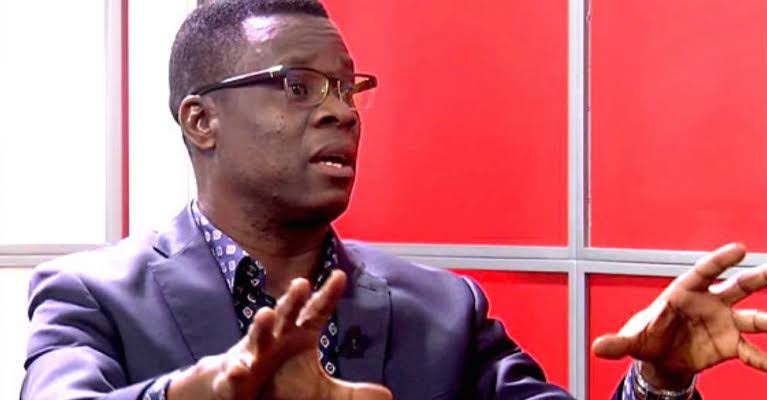
The Progressives Alliance for Justice, Unity and Democracy (PAJUD) has accused former Independent National Electoral Commission (INEC) Resident Electoral Commissioner, Mike Igini, of attempting to discredit President Bola Tinubu’s administration and the leadership of the electoral body, describing his criticisms as politically motivated.
The group, in a statement signed by its Country Representative, Comrade Yakubu Dan Abba, alleged that Igini was seeking to regain public relevance through persistent criticism of the government and the leadership of INEC under its current chairman, Prof. Joash Amupitan.
PAJUD, however, did not provide independent evidence to substantiate its allegations about Igini’s motives.
The group maintained that Tinubu was not responsible for Igini’s non-appointment as INEC chairman or national commissioner after completing his tenure as a Resident Electoral Commissioner, arguing that such appointments were subject to established criteria, vacancies and rotation arrangements among states within geopolitical zones.
“Those who know President Bola Ahmed Tinubu closely know he is a leader who does not deliberately shut the door against competence and capacity,” the statement said.
The group further alleged that Igini’s criticisms were intended to undermine the current administration and INEC’s leadership in anticipation of political rewards from opposition elements following the 2027 general elections.
PAJUD also questioned Igini’s record during his service as Resident Electoral Commissioner in Cross River and Akwa Ibom states, citing past disagreements with political actors and what it described as controversies surrounding his conduct in office.
It also raised questions about the cost and circumstances of the live television broadcast of Igini’s exit from office in Akwa Ibom State, comparing the event with the departures of previous INEC chairmen and other senior electoral officials.
The group did not provide documentary evidence to establish wrongdoing in connection with the broadcast.
In another allegation, PAJUD called on Igini to address what it described as concerns surrounding the engagement of a Kenyan national as an INEC consultant and the alleged compromise of Nigerian voters’ fingerprint data. The statement, however, did not present evidence establishing that Igini was personally responsible for any compromise of the data.
The alliance accused opposition politicians of attempting to discredit the electoral system ahead of the 2027 elections, alleging that some former electoral officials were being used to advance political interests. It did not identify the individuals allegedly involved or provide evidence supporting the claim.
PAJUD, meanwhile, expressed confidence in the ability of the current INEC leadership to conduct credible, transparent, free and fair elections in 2027.
It said the Tinubu administration remained committed to protecting the integrity of the ballot, adding that the president had nominated individuals it described as capable, patriotic and committed to the country’s democratic development.
The group urged Igini to refrain from what it characterised as inflammatory criticism of the president and the electoral commission, insisting that public discourse on electoral reform should be guided by responsibility and respect for democratic institutions.
Quoting former Premier of the Western Region, Chief Obafemi Awolowo, the alliance recalled his statement of April 28, 1951, that it was “mean and cowardly” for any group to seek public approval by belittling and condemning others.
PAJUD concluded by urging Nigerians to remain confident in the electoral process ahead of the 2027 general elections, while reiterating its support for the Tinubu administration and the current leadership of INEC.


Yakubu Hails China’s Zero-Tariff Initiative as Catalyst for Economic Transformation
THE BOLD SHIFT:BETWEEN REFORMS ANDTHE REALITY OF THE BROKEN EGGS:
WHO: Nigeria Records Zero Ebola Cases After Evacuation of Swiss Couple

-
 Uncategorized6 years ago
FG, states urged to harness flooding for ranching, others with technology – Agbaje
-
 Headlines11 years ago
Breaking: EFCC seals Borno House of Assembly, as Hon members take to their heels
-
 News12 years ago
Nigeria Security Operatives Stage Manhunt For Homosexual Perpetrator
-
 News10 years ago
How 21-year-old Girl fled community over accusation of lesbianism
-
 News11 years ago
Yobe Gov Moves Against Deputy
-
 Opinion7 years ago
7 signs she has friend zoned you
-
Technology5 years ago
Online job placement company headhunts women
-
 Headlines10 years ago
Borno Dep Gov Abducts Another Church Leader