
China
Innovation fuels China’s manufacturing momentum

By Chang Jin, People’s Daily
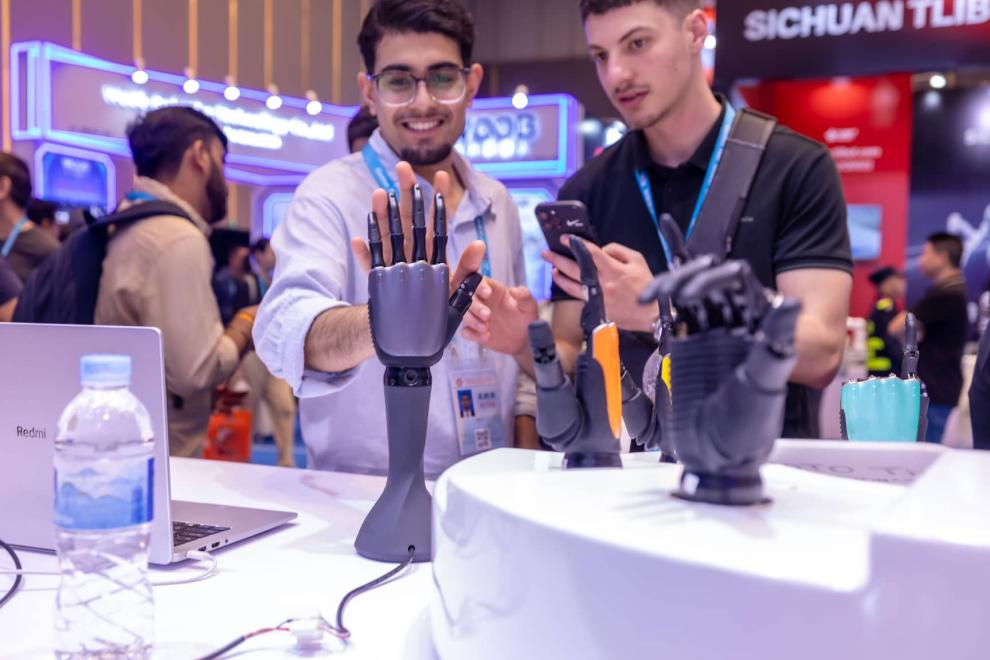
A touching moment at the 139th edition of the China Import and Export Fair, widely known as the Canton Fair, recently went viral on social media both in China and abroad.
Assisted by an exoskeleton robot developed by Hangzhou-based Taixi Robot, an Argentine patient with muscular weakness slowly rose from a wheelchair and took several steps — a milestone long awaited. Witnesses wept with joy as cutting-edge technology and profound human compassion converged in a powerful moment.
“This is the tangible strength of Chinese smart manufacturing,” observed one online commentator..
The critical leap from conceptualization to breakthrough — the journey from “0 to 1” — relies on a vibrant, interconnected innovation ecosystem.
The development of exoskeleton robots, once confined to science fiction, spans multiple cutting-edge fields including artificial intelligence and human-machine interaction. Such advances require years of dedicated research by companies, but breakthroughs are never achieved in isolation. Behind Taixi Robot stands a network of coordinated support: angel investment led by the Zhejiang University Alumni Fund, close collaboration among universities, enterprises, research institutions, and end users, plus a fast-track patent approval pathway launched by Hangzhou’s Gongshu district.
This fertile ground for innovation allows new ideas to take root and scale rapidly.
Today, a growing number of Chinese companies achieving technological breakthroughs reflects the strengths of China’s system for mobilizing resources and coordinating innovation efforts on a national scale.
The recently released preview version of DeepSeek-V4, for example, is compatible with domestically developed chips such as the Huawei Ascend AI processors. Such progress would not have been possible without coordinated efforts to overcome technological bottlenecks in the semiconductor sector. Nor would today’s massive computing power be possible without earlier strategic investments in energy infrastructure and green electricity.
This system-level coordination is accelerating China’s innovation engine and continuously generating new breakthroughs in advanced technologies.
The subsequent leap from invention to affordability — moving from “1 to 100” — is underpinned by China’s comprehensive industrial system
For years, exoskeleton robots remained prohibitively expensive. Yet the products showcased at the Canton Fair came with a significantly lower price tag. That shift owes much to highly integrated and efficient supply chains.
In Zhejiang province in east China, industries producing sensors, servo motors, and other intelligent hardware components are already well established, helping reduce manufacturing costs and making advanced technologies more affordable and accessible.
And Zhejiang is far from an isolated case.
Across China, local governments are actively removing barriers to production factors and enhancing industrial coordination, fostering opportunities for corporate growth and innovation.
In Shenzhen, south China’s Guangdong province, companies can source 90 percent of the components needed for robotics production within just a few kilometers. Today, the city is home to more than 74,000 enterprises in the industry.
In east China’s Anhui province, nearly all parts for a new energy vehicle can be sourced within a three-hour drive. This supports seven major automakers and helps the province rank first nationwide in annual automobile production.
These highly efficient industrial clusters have become powerful catalysts for business growth.
In today’s China, the technological strength of innovation hubs is increasingly merging with the manufacturing capabilities of the “world’s factory,” allowing flashes of inspiration in laboratories to be transformed into continuous output on production lines.
The final leap — scaling from domestic success to global reach, moving from “100 to 10,000” — reflects China’s commitment to shared global development. China’s innovation journey is not about isolation, but about forging connections for mutual benefit.
After the exoskeleton video from the Canton Fair gained global attention, Taixi Robot proactively contacted the foreign patient and offered follow-up support. Over and over, she said “thank you” in Chinese, voicing her hope that more of the company’s products could be brought to Argentina to help others living with similar conditions.
This spirit of shared development and global solidarity has become deeply embedded in China’s approach to innovation.
In the field of artificial intelligence, for instance, China has become one of the world’s major contributors to open-source software and open models. The goal of “advancing the development of open-source ecosystems” has even been included in the outline of China’s 15th Five-Year Plan.
Bloomberg noted in an article that while some of the West’s tech giants are racing to build increasingly powerful AI systems while tightly restricting access, Chinese research labs continue to share technological advancements openly and free of charge.
From Juncao technology benefiting countries around the world, to Chinese-built power grids illuminating remote communities in Brazil, to the Five-hundred-meter Aperture Spherical radio Telescope opening its facilities to global researchers, China’s innovation has never been aimed at “holding others back.” Instead, it seeks to “build roads for everyone,” helping more countries cross development barriers and improve people’s quality of life.
Persevering through hard work while embracing cooperation and mutual benefit — this is one of the deepest, most powerful, and most inspiring forces shaping modern China.
By Liu Zhonghua, People’s Daily
German management scholar Hermann Simon coined the term “hidden champions” to describe small and medium-sized enterprises (SMEs) that operate below the public radar yet dominate their niche markets — typically ranking among the top three globally in their sector. These firms are distinguished by deep specialization, relentless innovation, and a fundamentally global mindset.
Having visited China over 70 times and closely tracked its industrial evolution, Simon remains deeply optimistic about the vitality of its SME sector. In an exclusive interview with People’s Daily in Hasborn, Germany, he noted that China has systematically cultivated a new generation of “hidden champions” through a phased support framework tailored to different stages of enterprise development.
He spoke highly of China’s achievements in technological innovation, industrial upgrading, and through a phased support framework tailored to different stages of enterprise development. He emphasized that Chinese companies have already emerged as global innovators across several cutting-edge industries.
“The outdated notion that China merely replicates foreign technology no longer holds,” he said. “Chinese enterprises are now leading the way in innovation within multiple advanced fields.”
According to Simon, China’s approach centers on long-term strategic commitment. “The country guides its specialized firms to focus on foundational technologies and pursue continuous, incremental innovation. This disciplined approach is essential for overcoming core technological bottlenecks and securing dominant positions in global niche markets.”
He highlighted China’s five-year plans as a key driver of industrial clarity and strategic foresight. “Well-calibrated assessments of emerging sectors provide businesses with clear developmental pathways, showcasing strong institutional coordination,” Simon explained.
Strategic top-down planning, he added, helps consolidate resources, foster fair competition, and nurture globally competitive leaders. Strategic top-down planning, he added, helps consolidate resources, foster fair competition, and nurture globally competitive leaders. For other developing nations seeking to industrialize, he suggested studying China’s long-term strategy: leveraging domestic strengths to target distinctive niche industries and cultivate high-value-added champion enterprises offers a practical, scalable model.
Beyond macroeconomic growth, Simon underscored the role of these specialized firms in advancing balanced regional development and shared prosperity.
While large corporations typically concentrate in megacities, many “hidden champions” are rooted in counties, smaller cities, and townships.
He pointed to Shandong Moris Tech, based in Shouguang, east China’s Shandong province, which expanded its specialty chemical operations across regions while remaining rooted locally. “Nurturing these highly specialized enterprises distributes high-skilled jobs and value creation across broader urban and rural areas,” Simon observed.
“This provides a viable pathway toward more equitable regional development and inclusive prosperity.” Simon also pointed to China’s unparalleled industrial ecosystem as a major competitive advantage. With over 2,000 German firms operating manufacturing facilities in the country, he noted that dense supply chains and clustered industrial parks remain powerful draws.
“Comprehensive infrastructure, a vast talent pool of engineers, and a massive domestic market make China an ideal testing ground for advanced manufacturing technologies and their large-scale deployment,” he said. “Ignoring the Chinese market would mean forfeiting access to one of the world’s largest industrial hubs, which accounts for nearly one-fifth of global industrial output.”
He added that China’s resilient domestic demand offers multinational companies valuable medium- to long-term certainty.
Consequently, many German “hidden champions” have established R&D centers and integrated value chains in China, leveraging the country’s open, dynamic ecosystem to extend their corporate lifecycles.
China’s well-developed and open market is not only a growth engine for “hidden champions” worldwide, but also an important source of their core competitiveness, Simon said.
As competition intensifies across niche industries worldwide, greater coordination and collaboration among specialized companies in Europe and China could become an important force in reshaping the global industrial landscape, Simon said.
Two-way investment between Europe and China can help improve structural imbalances in trade and economic ties. As Chinese companies accelerate their localization efforts in Europe by establishing R&D and production bases and creating local tax revenue and jobs, economic and trade cooperation between China and Europe can evolve from one-way trade in goods toward joint industrial development, helping mitigate the risks posed by trade barriers.
Regular in-person exchanges can also strengthen business trust, stabilize expectations for industrial investment and help reduce misperceptions arising from geopolitical competition, Simon said.
Reflecting on the past two decades, Simon acknowledged that China’s manufacturing sector has undergone profound transformation. Many specialized enterprises have significantly upgraded their technological capabilities and product quality, successfully surmounting key innovation challenges.
Looking forward, he cautioned that Chinese companies still face hurdles in three areas: deepening their international footprint, building globally recognized brands, and executing localized overseas investments.
“I hope more Chinese manufacturers will expand into European and U.S. markets, achieving tangible progress in brand globalization; promote balanced and mutually beneficial industrial investment between China and Europe; and help preserve a stable, predictable global trade environment while safeguarding supply chain continuity,” Simon said.
“By deepening cooperation between Chinese and foreign real-economy sectors on the basis of openness, connectivity, mutual benefit and win-win outcomes, we can help safeguard the long-term stability and development of global industrial and supply chains,” he concluded.
By Li Xinping, People’s Daily
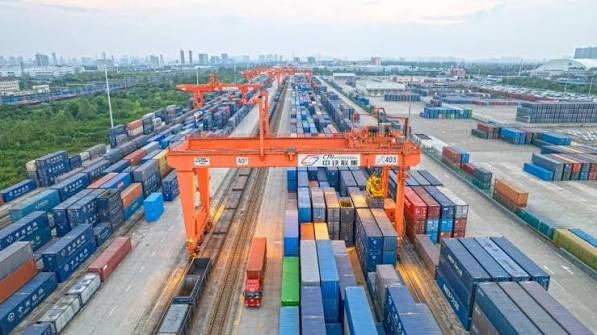
This year marks the 10th anniversary of the China-Europe Railway Express operating under a unified brand. Over the past decade, the service has completed more than 130,000 journeys, transporting cargo valued at over $520 billion. What began as a regional freight initiative has evolved into a globally recognized logistics network.
Why has the China-Europe Railway Express developed so rapidly? Its unified brand has been crucial.
When the inaugural China-Europe freight train departed Chongqing in 2011, followed by subsequent services from Wuhan, Hunan, and Zhengzhou, growth was steady but fragmented. Annual departures rose from 80 in 2013 to 815 in 2015.
However, independently operated local services led to duplicated efforts, elevated costs, inconsistent standards, and weak market recognition — bottlenecks that threatened further scaling.
On June 8, 2016, the China-Europe Railway Express officially launched its unified brand. Featuring a streamlined emblem that combines railway and silk motifs in red and black, the new identity standardized train naming, visual design, and marketing across all participating regions.
By consolidating resources and aligning operational protocols, the network significantly strengthened its overall competitiveness. Annual train journeys jumped from 1,702 in 2016 to 20,022 in 2025 — a 10.8-fold increase, reflecting an average annual growth rate of 31.5 percent.
Today, the China-Europe Railway Express is increasingly recognized by countries along its routes for its advantages of speed, punctuality, safety, reliability, and environmental sustainability.
Connectivity remains the foundation of modern logistics. With unified branding and planning, service now operates three primary corridors — western, central, and eastern — spanning 96 scheduled routes at an average speed of 120 km/h.
At present, 129 Chinese cities connect to 236 cities in 26 European countries. Compared to 2016, the network has expanded by 113 cities domestically and 216 internationally, effectively covering much of the Eurasian landmass and providing a reliable backbone for cross-border trade.
Efficiency drives competitiveness. Transit speeds have been consistently optimized: trains cover approximately 1,600 km daily on Chinese territory and 1,000-1,300 km overseas, making them roughly one-third faster than conventional rail-sea intermodal alternatives.
Capacity has also scaled up; upgraded rolling stock now supports trains of up to 55 cars and a maximum trailing weight of 3,000 tons, enabling heavier loads without compromising speed.
Customs clearance has also become more efficient. In recent years, with the adoption of a “railway express” customs clearance model and the development of digital ports, customs clearance at China-Europe freight train ports has been reduced to as little as 30 minutes.
To simplify the supply chains, the service offers a centralized digital portal for end-to-end logistics management. For example, a Hangzhou-based equipment manufacturer executive recently used the platform to coordinate door-to-door transport, customs declaration, and integrated logistics. His shipment, dispatched from Zhengzhou, reached central Europe in just 17 days. Upon arrival, customer service teams remotely guided overseas partners through unloading to ensure a secure and efficient handover.
The model’s flexibility proved critical during a recent urgent shipment handled by a Xi’an-based logistics operator. A European chemical manufacturer needed 310 containers (18,600 tons) of raw materials delivered within 35 days. Ocean freight would take 45 to 60 days, while trucking would require over 600 vehicles and expose costs to volatile fuel prices.
“The China-Europe Railway Express took just 10 to 20 days for the full journey and had a large carrying capacity. It reduced total logistics costs by 29 percent, ensuring that the overseas chemical enterprise could start production on schedule,” said Su Lu, general manager of the Xi’an company.
As operations matured, transportation costs along both domestic and international segments have dropped by more than 40 percent since launch. Cargo diversity has expanded dramatically: trains now carry goods across 53 categories, covering more than 50,000 types of products. High-value-added goods, including automobiles and auto parts, machinery equipment, and electronics dominate outbound shipments, while inbound cargo includes timber, pulp, specialty agricultural products, and consumer goods.
Today, the China-Europe Railway Express continues to evolve.
On June 24, the first “zero-carbon” China-Europe freight train from the Yangtze River Delta successfully arrived at Yiwu West Railway Station in Zhejiang province. Operating under the Duisburg-Yiwu full-route timetable, the train used 100 percent green electricity on electrified sections. On non-electrified sections, it offset its remaining emissions through Gold Standard certified carbon offset projects, achieving net-zero carbon dioxide emissions during train operations.
As electrification upgrades continue along railway routes and clean transport vehicles, including new-energy heavy trucks, are increasingly deployed for cargo collection and distribution, the “steel camel caravan” spanning Eurasia is taking on an increasingly distinct green character.
After a decade of development, the “steel camel caravan” has grown far beyond a single transport route. With reliable capacity, efficient coordination and a commitment to green development, it has become a widely welcomed international public good.
By He Yin, People’s Daily
Veteran participants of China-U.S. “ping-pong diplomacy,” now well over seventy years of age, have returned to China, passing on to a younger generation the torch of friendship lit by the “little ball” that helped set the “big ball” of China-U.S. relations in motion.
Today, that tradition continues on the pickleball courts, where young Chinese and American players are forging new bonds. Embodying the ethos of “sportsmanship before victory,” they are proving that shared passion can transcend borders.
From table tennis, which helped open the door to China-U.S. exchanges 55 years ago, to pickleball, now increasingly popular among young people in both countries, this passing of the “little ball” from one generation to the next over more than half a century vividly demonstrates the enduring vitality of people-to-people exchanges between China and the United States and the deep, lasting friendship between the two peoples.
This year marks the 55th anniversary of China-U.S. “ping-pong diplomacy.” In 1971, a modest table tennis match shattered years of diplomatic isolation, reopening channels of communication and laying the groundwork for normalized relations. The event remains a landmark moment in modern diplomatic history.
Over the decades, numerous initiatives have deepened mutual understanding. Pioneering cultural missions, including performances by the Philadelphia Orchestra, helped lay the foundation for sustained artistic exchange. Meanwhile, the historic Kuliang friendship keeps alive a people-to-people friendship spanning a century. Together, these efforts have woven a rich tapestry of shared experiences.
In the new era, the spirit of engagement embodied in “ping-pong diplomacy,” which brought the Chinese and American peoples closer together, is taking on new forms and gaining new vitality.
Games like pickleball, known for their accessibility and social nature, effortlessly bridge linguistic, cultural, and geographical divides. For young Chinese and American athletes meeting for the first time, the court becomes a space for mutual learning, teamwork, and genuine connection.
These interactions reaffirm a fundamental truth: sustained people-to-people ties remain the bedrock of resilient China-U.S. relations, providing the trust necessary to navigate challenges and steer bilateral engagement forward.
Strong interpersonal connections are essential to stable diplomatic relations. Looking to the long-term development of friendship between the Chinese and American peoples, in San Francisco in 2023, Chinese President Xi Jinping proposed an initiative to invite 50,000 young Americans to China for exchange and study programs in a five-year span.
In just over two years, the number of young Americans who have visited China for exchanges has surpassed 50,000, achieving the target ahead of schedule. Driven by the initiative, a growing wave of American youth are traveling to China to explore its landscapes, engage with emerging technologies, and experience daily life firsthand.
By witnessing China’s developments directly, these visitors are moving beyond media narratives and algorithmic echo chambers, replacing stereotypes with nuanced, personal insights about mutual potential as partners and friends.
Many returnees have taken to social media to share their journeys, offering unfiltered perspectives to audiences back home. Their posts highlight how China’s rich heritage coexists with rapid innovation, while emphasizing the warmth, hospitality, and openness of its people.
As young Chinese and American travelers continue to bridging vast distances, they are planting seeds of mutual respect and shared curiosity. With time and cultivation, these connections will take root, fostering a more resilient, pragmatic, and constructive future for China-U.S.relations.
Today, China-U.S. relations once again stand at a critical juncture in history, and the strategic choices made by the two countries will once again shape the course of the world.
By making friends and competing within the rules on the pickleball court, young people from China and the United States are offering valuable lessons for the two countries on how to interact with each other.
Just as players on the court must follow the rules, China and the United States must coexist peacefully on this planet and refrain from crossing red lines or overstepping boundaries on issues concerning each other’s core interests.
And just as athletes improve through learning from and competing with one another, China and the United States should explore ways to expand areas of cooperation and do more things that benefit both countries and the wider world.
In recent years, young people from China and the United States have worked side by side aboard research vessels to unlock the mysteries of the ocean and joined forces at maker competitions to explore solutions to global challenges, demonstrating through action the enormous potential for cooperation between the two countries.
Looking ahead, the steady and sustained development of the “big ball” of China-U.S. relations will continue to depend on countless “little balls” of people-to-people friendship. People from all sectors of both countries, especially the younger generation, should draw wisdom and strength from history, get to know and grow closer to each other through exchanges and cooperation, and move forward together by learning from one another. By strengthening the bonds of friendship, they can make new contributions to stable, healthy and sustainable China-U.S. relations.
A small ball can connect people across mountains and seas; a bond of friendship can transcend time and space.
Just as pickleball draws on the strengths of several sports, the vast planet we share has ample room for China and the United States to pursue their respective development and achieve common prosperity, and for different civilizations to complement and enrich one another.
China remains committed to expanding people-to-people and cultural exchanges with the United States, writing a new chapter of friendship between the two peoples, and injecting a steady stream of people-to-people strength into building a constructive China-U.S. relationship of strategic stability.


The changing face of Nasarawa at 30

COALITION OF RENEWED HOPE REACTS TO NATIONAL FRONT BURNER ISSUES: TINUBU IS FIXING NIGERIA, OPPOSITION SHOULD STOP PLAYING POLITICS WITH PAIN.

OPINIONThe Disturbing Facts Behind the Economy’s Beautiful Statistics and the Path Forward.

-
 Uncategorized6 years ago
FG, states urged to harness flooding for ranching, others with technology – Agbaje
-
 Headlines11 years ago
Breaking: EFCC seals Borno House of Assembly, as Hon members take to their heels
-
 News12 years ago
Nigeria Security Operatives Stage Manhunt For Homosexual Perpetrator
-
 News10 years ago
How 21-year-old Girl fled community over accusation of lesbianism
-
 News11 years ago
Yobe Gov Moves Against Deputy
-
 Opinion7 years ago
7 signs she has friend zoned you
-
Technology5 years ago
Online job placement company headhunts women
-
 Headlines10 years ago
Borno Dep Gov Abducts Another Church Leader