
Business
Manufacturers and Labor Unions Demand Urgent Action from Tinubu on Forex Crisis and Inflation

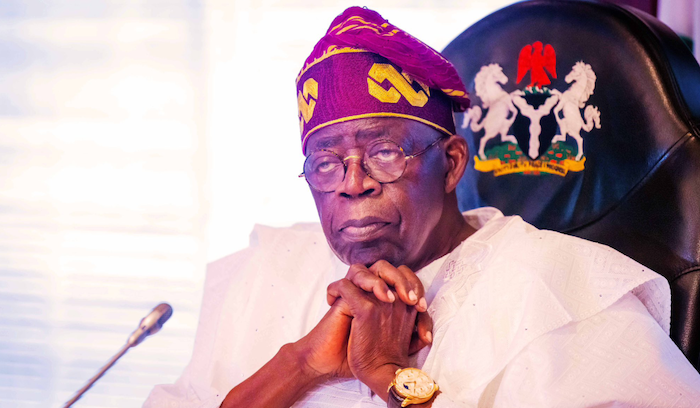
As President Bola Ahmed Tinubu’s administration marks one year in office today, manufacturers and labor unions across Nigeria are calling on the federal government to urgently address the instability in the forex market and rising inflation, which are severely impacting both citizens and businesses.
In interviews with LEADERSHIP, industry stakeholders highlighted numerous issues such as policy inconsistencies affecting foreign exchange, diminishing working capital for businesses, unreliable power supply, and widespread insecurity—all contributing to job losses over the past year. They emphasized the need for the government to resolve these challenges to achieve economic growth.
Manufacturers’ Perspective
Segun Ajayi-Kadir, Director-General of the Manufacturing Association of Nigeria (MAN), described the past year under Tinubu’s administration as marked by uncertainty, deterring both potential and existing investors. Ajayi-Kadir stressed the importance of prioritizing the manufacturing sector, which he sees as crucial for sustainable economic growth and foreign exchange inflow. He urged the government to implement sector-specific recommendations, provide necessary policy support, and offer incentives to revitalize the sector.
Ajayi-Kadir also called for a comprehensive overhaul of the power sector, investment in renewable energy, and a focus on patronizing made-in-Nigeria products. He advocated for local sourcing of raw materials, boosting energy security through the Electricity Act 2023, maintaining liquidity in the forex market, and managing the floating exchange rate system within acceptable bounds.
Labor Unions’ Concerns
Comrade Garba Ibrahim, President of the National Union of Food, Beverages, and Tobacco Employees (NUFBTE), criticized policies leading to multiple taxation, high electricity tariffs, and the removal of fuel subsidies, which have driven many businesses to relocate to neighboring countries. Ibrahim highlighted how these challenges have turned Nigeria into a dumping ground for foreign products and exacerbated the high cost of doing business.
Comrade Gbenga Komolafe, General Secretary of the Federation of Informal Workers of Nigeria (FIWON), noted the adverse effects of fuel subsidy removal and exchange rate liberalization on inflation, significantly increasing prices of basic goods and services. This has resulted in decreased consumer purchasing power and a sharp decline in real incomes.
Economic Analysis
The Lagos Chamber of Commerce and Industry (LCCI) acknowledged the resilience of the manufacturing sector amidst recent reforms. However, Director-General Dr. Chinyere Alumona emphasized the need for a systematic review of policies to achieve desired outcomes. She pointed out that despite some bold policy decisions, such as removing fuel subsidies and harmonizing exchange rates, the expected positive effects have yet to materialize.
Alumona highlighted several challenges over the past year, including high inflation, a weakening naira, supply chain disruptions due to insecurity, and a weak production base. She called for fixing the forex crises, adopting lower exchange rates for import duties on raw materials, offering manufacturers concessionary interest rates, and ensuring a stable and predictable policy environment.
Conclusion
As President Tinubu’s administration completes its first year, stakeholders in Nigeria’s manufacturing and labor sectors are urging the government to address critical economic issues. By tackling forex instability, inflation, and other structural deficiencies, the administration can help stabilize the economy, support businesses, and improve the overall well-being of Nigerians.
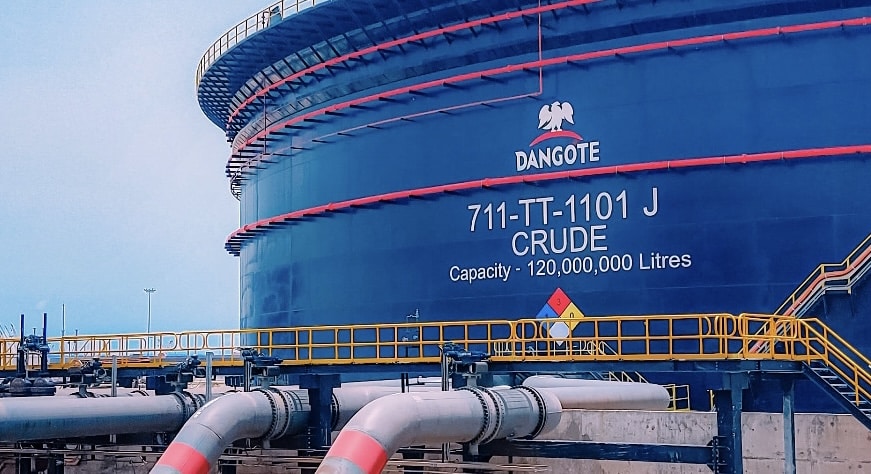
The public offer for shares in Dangote Petroleum Refinery and Petrochemicals has officially started on the Nigerian Exchange (NGX).
The shares are being offered at N525 each.
Dangote Industries Limited President and CEO, Aliko Dangote, officially launched the offer on Monday by ringing the opening bell at the NGX trading floor in Lagos.
This is a major development for Nigeria’s capital market because Dangote Refinery is the first refinery in the 66-year history of the Nigerian Exchange to offer its shares to the public.
A total of 4.1 billion new shares are available for investors to buy. Both individual and institutional investors, including eligible investors across Africa, can participate.
Investors can buy a minimum of 10 shares, which will cost N5,250 at the offer price.
The public offer opened on September 14, 2026, and will close on October 13, 2026, based on the terms in the offer prospectus.
Speaking at the launch, Dangote said the move is part of his plan to give more people the opportunity to own shares in his companies.
The event was attended by several important figures, including Lagos State Governor Babajide Sanwo-Olu, members of the Dangote family and other business representatives.

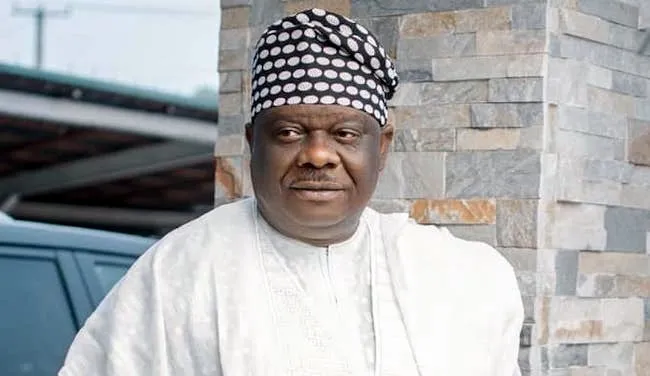
Justice Daniel Osiagor of a Federal High Court, Lagos, has granted an interim orders restraining Nigeria’s former Attorney-General of the Federation/Minister of Justice, Mr. Michael Kaase Aondoakaa (SAN) and his company, Mikap Nigeria Limited, from tampering, dealing with the company’s properties and funds over an alleged unpaid N2 billion debt.
Others affected by the interim orders include:
Samuel Iorhen Aondoakaa; Professor Godwin Abu; Nguvan Susanna Aondoaka; Engr. John Tsav; Innocent Igbalagh Aondoakaa; Venda Joseph and Lausa Samuel, listed as former AGF’s codefendants in the debt recovery suit marked FHC/L/CS/06/2026, instituted by Keystone Bank Limited, through its lawyer, Adekunle Babatunde Ogunba (SAN).
Justice Osiagor made the restraining order while granting an Exparte Motion filed by the bank through Ogunba (SAN)
Other orders made by the Justice Osiagor include: “that an order of interim injunction is granted restraining the defendants/respondents, the Defendants’ Directors, Staff, Employees, Officers, Agents. Privies or any other person or group of persons whatsoever under the defendants/respondents’ authority or any other authority (however derived or sourced) from interfering with, obstructing or otherwise disturbing the Receiver/Manager appointed by the Plaintiff/Applicant over the affair and endeavours of the 1st defendant/respondent, in the execution of his statutory duties or tasks ancillary there to pending the hearing and final determination of the Motion on Notice for Interlocutory Injunction.
“That an interim order is granted authorising the plaintiff/applicant herein and/or its duly appointed Receiver/Manager to take over and preserve all the assets, funds, shares, etc. of the 1st defendant, pending the hearing and final determination of the Motion on Notice; particularly the under-listed pledged properties/assets:
“That an order is granted directing all companies dealing with the 1st defendant (Mikap Nigeria Limited) “to recognize and only deal with the duly appointed Receiver/Manager appointed by the plaintiff/applicant as the only one vested with the requisite powers to act on behalf of the 1st Defendant forthwith pending the hearing “a and final determination of the Motion on Notice.
“That an order of interim injunction is granted restraining Mikap Nigeria Limited RC-160854 (the 1st Defendant) with their funds in any bank and financial institution within the jurisdiction.
“That an order is granted directing all the banks and/or financial institution in Nigeria and other company contractually obligated to the 1st defendant, Mikap Nigeria Limited, to furnish the Receiver/Manager and /or office the details of any sums outstanding to the credit of the 1st defendant, Mikap Nigeria Limited within seven (7) days of being furnished/availed the Interim order of court in this suit.
“That an order of interim injunction is granted restraining the 1st to 9th defendants/respondents, their agents, servants, cronies, assigns and/or privies by whatsoever name called from disposing of, selling, mortgaging, pledging or otherwise transferring, appropriating or dealing with the pledged assets of the 1st to 9th defendants/respondents and properties/assets or any other assets/funds of the 1st to 9th defendants, without regard to the vested tight of the plaintiff/applicant, the Appointor of the duly appointed Receiver/Manager over the pledged Assets of the 1st to 9th defendants/respondents pending the hearing and final determination of the he Motion on Notice.
“That an order is granted directing the Assistant Inspector General of Police Zone 2, Lagos, Commissioner of Police, Lagos State, Commandants, Nigerian Civil Defence Corps Lagos of State Command, their Deputies, Assistants and all other officers under them or other Law Enforcement officers/Personnel as may be deemed appropriate by the Receiver/Manager, to assist the said Receiver/Manager in his Lawful duties, function, responsibilities and performance of his lawful duties as Receiver/Manager over the pledged Assets of the 1st to 9th defendants/respondents in accordance with the tenure of the subsisting instruments pending the hearing and final determination of the Motion on Notice filed along herewith.
“That an order for leave is granted to the Plaintiff/Applicant to effect service of the following to wit; (1) the Order of this Honourable Court, (2) the Originating Summons, (3) Motion on Notice, and ali other subsequent processes to be filed in this suit on the 2nd-9th Defendants by posting same at their last known address being KM 5, gboko Road, Makurdi, Benue State.
“That an order is granted deeming the service of the processes listed in prayer 8 above, and all other subsequent processes to be filed in this suit on the 1st- 9th Defendants as good and proper service aforesaid processes.”
Hearing of the substantive suit has been adjourned to March 5, 2026.
Meanwhile, counsel to the defendants, Mr. M. S. Diri (SAN), has petitioned the Chief Judge of the Federal High Court, seeking a transfer of the case from Lagos to the Makurdi Judicial Division.
The defendants argue that all parties reside and conduct their businesses in Makurdi, Benue State, and that the alleged debt arose from transactions at the bank’s Makurdi branch. While further contend that related suits are already pending before the Benue State High Court and the Federal High Court in Makurdi.
However, the plaintiff, Keystone Bank, through its counsel, Adekunle B. Ogunba (SAN) opposed the transfer request, describing it as procedurally defective for being made via correspondence rather than a formal application.
Ogunba (SAN) insists that the loan facility originated from its Lagos Head Office under a Central Bank of Nigeria scheme and that the Receiver/Manager operates principally from Lagos.
Ogunba SAN also cited constitutional and statutory provisions, stating that the Federal High Court is a single court with nationwide jurisdiction, rendering the choice of division largely administrative.
A legal dispute has emerged between Mikap Nigeria Limited and Keystone Bank over claims of indebtedness and alleged abuse of court process.
The company has accused the bank of initiating receivership proceedings despite allegedly being indebted to Mikap Nigeria Limited. According to sources familiar with the matter, the action filed in Lagos State has been described as malicious and an abuse of court process.
A source close to the company questioned the bank’s decision to file a suit in Lagos instead of Makurdi, where Mikap Nigeria Limited is based. “How can Keystone Bank leave Makurdi, where the company operates, to institute an action in Lagos against the same company? It clearly raises concerns about abuse of court process,” the source said.
Court documents reviewed by this newspaper indicate that in Suit No. MHC/119/2024, the bank did not state that Mikap Nigeria Limited was indebted to it during its defence.
Further findings show that the Federal High Court sitting in Makurdi, in Suit No. FHC/CS/M/117/2025, restrained Keystone Bank from tampering with the bank accounts of the directors of Mikap Nigeria Limited. The Makurdi suit reportedly predates the fresh action subsequently filed by the bank in Lagos.
Investigations also reveal that Mikap Nigeria Limited has maintained a strong credit standing in Benue State since commencing operations in 2011. The company is said to have repaid facilities previously obtained from Access Bank and the Bank of Industry.
Sources further claim that the facility at the centre of the dispute remains active and that the company has not been declared in default.
Efforts to obtain official comments from Keystone Bank were unsuccessful as of the time of filing this report.

WHO: Nigeria Records Zero Ebola Cases After Evacuation of Swiss Couple

Kwara celebrates Fela’s legacy with retrospective exhibition

2027: Ilorin West LG Boss Leads APC Mega Rally In Ubandawaki

-
 Uncategorized6 years ago
FG, states urged to harness flooding for ranching, others with technology – Agbaje
-
 Headlines11 years ago
Breaking: EFCC seals Borno House of Assembly, as Hon members take to their heels
-
 News12 years ago
Nigeria Security Operatives Stage Manhunt For Homosexual Perpetrator
-
 News10 years ago
How 21-year-old Girl fled community over accusation of lesbianism
-
 News11 years ago
Yobe Gov Moves Against Deputy
-
 Opinion7 years ago
7 signs she has friend zoned you
-
Technology5 years ago
Online job placement company headhunts women
-
 Headlines10 years ago
Borno Dep Gov Abducts Another Church Leader