
Uncategorized
MKU VC charges youths to embrace innovation, entrepreneurship

Stephen Olufemi Oni, Ilorin
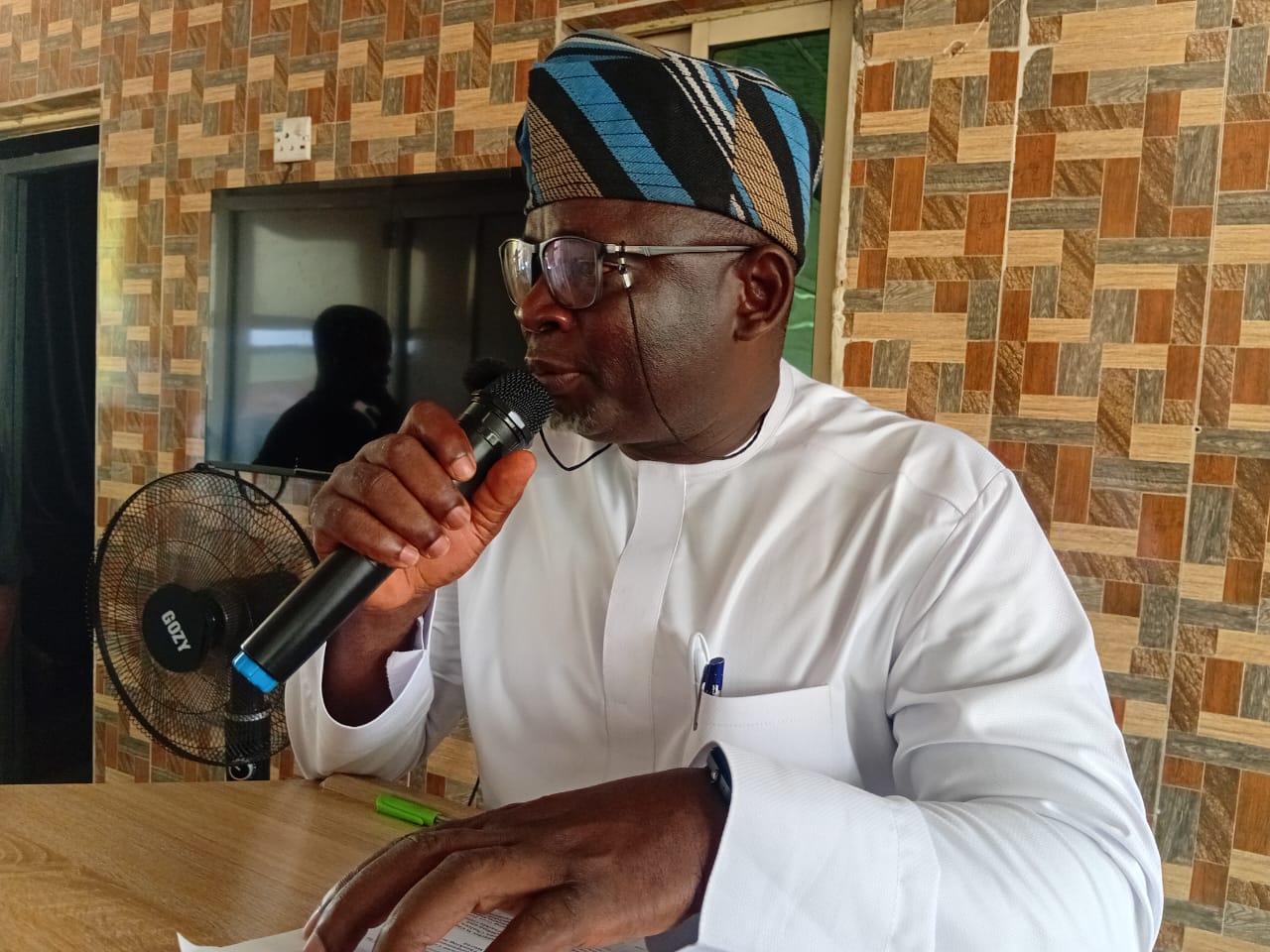
The Vice Chancellor of Muhammad Kamalud-deen University (MKU), Ilorin and a distinguished University of Ilorin Ambassador, Prof. Rasheed Gbenga Jimoh, has urged Nigerian youths to embrace education, innovation, entrepreneurship and ensure productive use of evolving technology rather than dissipating their energies on drug abuse, excessive social media consumption and other unproductive activities.
Prof. Jimoh, who gave the admonition on Monday in Ilorin, the Kwara State capital, while speaking at the CRAFT Innovation Hub and Kuliya Ngari of Ilorin Emirate National Youth Mentorship workshop, challenged the youths to change their negative mindsets and take advantage of emerging opportunities in the knowledge and gig economies.
He was among the speakers at the programme, which focused on equipping young people with the knowledge, skills and values required to navigate an increasingly competitive and rapidly changing world.
Prof. Jimoh, who spoke on the need to look beyond conventional academic credentials, challenged the participants to develop competence, critical thinking, innovation and practical skills that could enable them to remain relevant in a changing world.
He commended the organisers of the programme and acknowledged the efforts of the National Drug Law Enforcement Agency (NDLEA), the National Orientation Agency (NOA), the Fourth Estate and other stakeholders in addressing challenges confronting young people.
The Vice Chancellor particularly praised the NDLEA for its efforts in combating drug abuse among youths, saying that the situation could have been worse without the agency’s interventions.
“If not for NDLEA, maybe it would have been 100 per cent youth involvement in drug abuse. So, we believe that you can do better, and we are ready to partner with you to ensure that the expected impact is realised,” he said.
Prof. Jimoh said the decline in societal values had become a major concern, recalling that during his youth, certain behaviours were considered unacceptable and attracted strong social disapproval.
He recalled how people could leave their goods by the roadside with confidence that they would remain untouched, noting that the level of trust and communal responsibility in the past was significantly higher.
According to him, young people in his generation were also actively engaged in productive activities, games and other forms of social interaction that helped develop their sense of responsibility and community development.
He urged the younger generation to learn from the past while adapting positively to present realities.
Prof. Jimoh cautioned youths against the misconception that formal education was unnecessary because some content creators and entrepreneurs were making money without conventional academic qualifications.
He said: “Don’t be among those that will say, ‘Schooling is a scam, I can be rich without schooling.’ There is a difference between money and power. Knowledge and skills give you power, while richness can be achieved by anybody.”
He explained that the essence of education was not merely to acquire wealth but to develop knowledge, skills, values and the capacity to contribute meaningfully to the society.
“You are not going to school because of richness; you are going to school because you want to be a transformed human being,” he said.
The Vice-Chancellor disclosed that he had produced not less than 20 Ph.D. holders who are now spread across countries including South Africa, Turkey, Uganda, Rwanda and Nigeria, with one of them heading a unit at the Central Bank of Nigeria.
He described the development of people and the transformation of lives through education as one of his major accomplishments, stressing that the impact of education goes beyond financial rewards.
Prof. Jimoh said Muhammad Kamalud-deen University had introduced Innovative Thinking and Idea Creation I at the 100 level and Innovative Thinking and Idea Creation III at the 200 level to expose students of our University to the process of identifying problems, generating ideas and transforming those ideas into sustainable ventures.
According to him, the courses are designed to enable students to study their environment, identify opportunities, develop ideas, nurture and scale them, and eventually build businesses and create jobs.
“It has gone beyond certification; it is now the era of innovation,” he said.
He urged young Nigerians to take advantage of the opportunities available in the knowledge economy instead of relying solely on government for employment.
The Vice-Chancellor also highlighted the growing importance of the gig economy, saying that technological advancement had removed many of the geographical barriers that previously restricted access to opportunities.
“We have migrated from the conventional world to the gig world,” he said.
According to him, Nigerians can now work for clients and organisations across the world without leaving the country.
“You can be in Nigeria and be earning dollars, you can be earning pounds, you can be earning any currency from any country because your location is no longer a barrier to tapping opportunities,” he said.
Prof. Jimoh recalled that the first innovation hub at the University of Ilorin was conceived and developed through partnership and institutional commitment during his tenure as Director of University of Ilorin ICT unit.
He disclosed that discussions were ongoing with captain of industries to establish a similar innovation hub at Muhammad Kamalud-deen University so as to create enabling environment for growing ideation.
The Vice-Chancellor said he had visited and studied innovation hubs in different parts of the world, including Epicenter in Sweden, Craft Silicon in Kenya and Konza City in Kenya, noting that such initiatives had demonstrated the importance of creating environments where young people could innovate and develop businesses.
He said the knowledge economy had become increasingly important in determining the future of nations.
“The knowledge economy is the real thing, and this is where the money is. It is no longer oil,” he said.
Prof. Jimoh described Nigerian youths as intelligent and capable, saying that what they often needed was the right motivation, facilitation and enabling environment to turn their abilities into productive ventures.
He also cautioned young people against spending excessive amounts of time on social media platforms such as Facebook, Instagram and TikTok without deriving meaningful value from them.
He advised them to use their data and time to acquire knowledge, develop skills and pursue opportunities.
“What is the value I am deriving from my engagement? Always do this critical evaluation of your engagement because time is very, very valuable. The way we spend it will determine how far we go in life,” he said.
The Vice-Chancellor, who became a professor eight years ago, said he was the first Professor of Computer Science produced by the University of Ilorin.
He recalled the sacrifices he made to pursue his postgraduate education, including travelling to the University of Ibadan for his master’s degree and later to Malaysia for his PhD without a scholarship. He advised the youths to make meaningful sacrifices towards achieving their set goals and to always invest in future. He urged young people to make timely sacrifices for their education and personal development, stressing that “a stitch in time saves nine.”
Speaking on the programmes offered by Muhammad Kamalud-deen University, Prof. Jimoh said the institution was a private university in Ilorin running conventional academic programmes.
He disclosed that the university currently had 15 take-off programmes spread across two faculties.
The Faculty of Humanities, Management and Social Sciences offers seven programmes: B.Sc. Accounting, B.Sc. Business Administration, B.Sc. Economics, B.A. Arabic, B.A. Islamic Studies, B.A. History and International Studies, and B.A. English.
He said the programmes commenced in 2023 and that the pioneer students would be proceeding to their final year by October.
The Faculty of Science, Computing and Information Technology offers eight programmes: B.Sc. Computer Science, B.Sc. Cybersecurity, B.Sc. Software Engineering, B.Sc. Plant Science and Biotechnology, B.Sc. Chemistry, B.Sc. Physics with Electronics, B.Sc. Mathematics, and B.Sc. Statistics and Data Science.
Prof. Jimoh disclosed that additional programmes were being introduced in the current academic session.
He said the National Universities Commission (NUC) had approved the university’s Bachelor of Laws (LL.B.) programme, while the institution was awaiting clearance from the Council for Legal Education.
According to him, the institution is set to invite the Council for routine inspections and he is hopeful that clearance will be given within the 2026/2027 admissions window given the institution’s preparations, after which interested candidates would be able to apply for admission into the Law programme.
He stressed that the university would follow all regulatory procedures before commencing her law programme.
The Vice-Chancellor also announced nine new programmes under the College of Health Sciences. They are B.Sc. Nursing Science, B.Sc. Medical Laboratory Science, Doctor of Physiotherapy (DPT), B.Sc. Complementary and Alternative Medicine, B.Sc. Environmental Health, B.Sc. Public Health, B.Sc. Community Health, B.Sc. Health Information Management, and B.Sc. Information Technology and Health Informatics.
He said admission into the programmes would commence within one or two weeks, adding that the programmes were expected to appear on the Joint Admissions and Matriculation Board (JAMB) Central Admissions Processing System (CAPS) within about a week.
He explained that candidates who had earlier chosen another institution could change their institution on the JAMB platform to Muhammad Kamalud-deen University.
Prof. Jimoh said the cut-off mark and other admission requirements including school fees will be made available on the University’s website www.mku.edu.ng after Council approval this coming week. He encouraged participants to share the information with other prospective students.
On tuition fees, he said Muhammad Kamalud-deen University had some of the most affordable fees among private universities in Kwara State.
He attributed the relatively low fees to the mandate of the Ansar-ul-Islam Society and the vision of the founder of the university, Dr. Sheikh Muhammad Kamalud-deen Habebullahi Al-Adaby, who, according to him, wanted people from poor backgrounds to have access to quality education.
Responding to questions on how indigent students could be assisted, Prof. Jimoh said the Proprietor of the University, the Ansarul Islam Society of Nigeria had provided automatic scholarships and subsidies for some programmes at the university.
He listed B.A. Arabic, B.A. Islamic Studies, B.Sc. Chemistry, B.Sc. Statistics and Data Science, and B.Sc. Physics with Electronics among the programmes benefiting from the subsidised fees.
According to him, students in the listed programmes pay ₦200,000 per session, or ₦100,000 per semester.
He said the subsidised fees were intended to make university education accessible to students from less-privileged families.
Prof. Jimoh recalled that scholarship support had previously been provided for 100
He added that other scholarship opportunities would be announced as they became available.
The Vice-Chancellor further explained that graduates of the subsidised programmes could pursue diverse career paths, stressing that university education provides a foundation that allows graduates to navigate different professional fields.
He said: “A university degree is about having a university degree! Anybody from those disciplines can navigate to any career in life.”
Earlier in his welcome address, the Founder and Chief Operating Officer of CRAFT Innovation Hub (CIH), Mr Abdulrasaq Ahmed Abiodun, highlighted the importance of ensuring that competence is supported by sound judgement, character and reputation.
The National Orientation Agency (NOA), Kwara State Directorate, also addressed the participants on “Character Is Capital: Values, Choices, Reputation, and Responsible Citizenship,” with emphasis on values, personal choices, reputation and responsible citizenship.
The National Drug Law Enforcement Agency (NDLEA), Kwara State Command, in its presentation titled “Protecting Your Future: Peer Pressure, Substance Abuse, Decision-Making, and Consequences,” examined the influence of peer pressure, the dangers of substance abuse, responsible decision-making and the consequences of individual choices.
Other highlights of the programme included a moderated interactive session and question-and-answer segment involving guests and students, as well as a practical exercise titled “My Decision & Reputation Framework.”
The exercise enabled participants to apply a simple decision-making framework to real-life academic, workplace and social situations.
In attendance were stakeholders in education, orientation and drug control, as well as selected students who shared their reflections and personal commitments and appreciated the organisers for engaging them on the importance of competence, critical thinking, character, values and responsible citizenship.
- We pleaded for power rotation, we’ll back President, all APC candidates: Kwara South monarchs
Stephen Olufemi Oni, Ilorin
Kwara State Governor AbdulRahman AbdulRazaq on Wednesday led the APC campaign train to Kwara South, hinging his call for support for the party on the many achievements of the government in the region over the last seven years.
The Governor said the administration has delivered at least 219.5km of state roads — apart from the 42-kilometre Eiyenkorin-Ojoku-Offa Road which he had also facilitated to the region or other forms of infrastructure like bridges and river crossings.
He also said the APC tickets satisfied the calls for equity, fairness, and justice, referring to the party ceding its governorship ticket to Kwara North and senatorial ticket to the Igbomina bloc in Kwara South after 12 years of the Ibolo bloc.
“There is no opposition party here. Who is the presidential candidate of PDP? Basically, no opposition in this state. This state is clearly open for President Bola Ahmed Tinubu. Now, let’s not be complacent that we have this in the bag. Let’s make sure we all come out to vote. We must make our vote count. We want to surpass the previous vote. We want to make sure we get more votes than in the previous elections,” the Governor said.
“As we all know, the Presidential and National Assembly elections will hold first. We must make sure we double our votes. We double our efforts. We double our canvassing. We double our door-to-door campaigns. Make sure you knock on your neighbors’ doors and go to the next door and the next door after that. I urge you all to become canvassers today.
“This is a government with a visionary leader, a leader of purpose, a leader that is leading Nigeria in the right direction. In Kwara State, you have seen the effect of leadership of President Tinubu. And you have seen what has been done in this state, from healthcare to education.”
He enjoined all Kwarans to reflect on the roles the previous government had played in promoting thuggery, saying kwara must not entrust ‘irresponsible’ people with power.
Held at the Ajase-ipo Comprehensive High School, in Irepodun LGA, the party stalwarts gathered in their large numbers in solidarity for re-election of President Bola Ahmed Tinubu, the governorship ticket of Rt Hon Salihu Yakubu Danladi and other national and state assembly candidates from that axis.
Top attendees included the Deputy Governor Mr Kayode Alabi; Rt. Hon Danladi; his running mate Hon Seun Oguniyi Adato; National and State House of Assemblies candidates; cabinet members; APC chieftains led by the state party Chairman Prince Sunday Fagbemi; Director General APC Campaign Committee (South), Engr Nurudeen Adeyemi Balogun; and Chairman Federal Character Commission (FCC), Dr. Muheeba Farida Dankaka; Founder Thomas Adewumi University Teaching Hospital Omu-aran, Dr Johnson Adewumi; and Oloriewe Raheem Adedoyin; among others.
“What we are going to do is APC, APC is the only party in this state. APC is the party with a clear leader. We are going to vote APC from top to bottom. I want to thank the people of Kwara South for this mammoth crowd. We saw what happened last week in Kwara North, it was unprecedented, and this one is huge,” the Governor said
“This mammoth crowd is due to the policies of the Federal Government, which has impacted wonderfully on the state, releasing funds to the state for us to execute the beautiful projects that we see, the functional projects we see, and the needful projects that we see across the state, especially in Kwara South.
“In Kwara South, we’ve done about 219 kilometres of road, which I must say is more than the kilometers the last administration did in the entire Kwara State. We will continue to do more. We will continue to invest in healthcare and education.”
AbdulRazaq pledged to upgrade the International Vocational, Technical & Entrepreneurship College (IVTEC) in Ajase-ipo to a tertiary institution, having commissioned the Kwara State University campus (KWASU) in Osi, Ekiti LGA.
On the security challenge in the district, AbdulRazaq appreciated the efforts of the Federal Government to salvage the situation, noting that things have significantly improved.
The Governor earlier paid homage to the Palace of the Olupo of Ajase-ipo Oba Ismail Yahaya Alebiosu, where all Kwara South Traditional rulers were largely present.
“We are here to seek your blessing and support, and the support of your communities in the journey ahead with respect to the elections. We are here to seek support for the national leader of our party, President Bola Ahmed Tinubu, who is also the presidential candidate of the APC,” the Governor said at the Palace.
“Now, the journey so far has been good for us, if I must say it myself. We are campaigning on our record, on what we have done so far, because I’d like you to reflect on what existed before we came in 2019.
“At some point, I had announced a candidate from Kwara Central as a candidate of our party. But the party was superior, and the party insisted on rotation. That’s why our candidate is now from Kwara North. And that candidate is Engineer Salihu Yakubu Danladi. On this note, I beg you for support for all our candidates.”
Olupo of Ajase-ipo, Oba Alebiosu attested that the idea of power shift to the Kwara North was initiated by the traditional institution in the state, recalling how the northern monarchs sought their (Southern Kings) support for equity, fairness and justice.
He thanked Mr President and the Governor for acceding to their request.
“Today. We have seen it all. Where is equity, justice and fairness being done? It is up to us. Our destiny is in our various hands. It is for us to vote and vote rightly. The traditional institution has mandated me to thank His Excellency for doing what is right at this point in time in the history of the state of harmony,” Olupo said, praying to God to continually protect and strengthen the Governor.
“It is our resolve as a region that this good job by Governor AbdulRahman AbdulRazaq should continue. Let’s continue to pray and support our God-sent Messiah in the person of Governor AbdulRazaq.”
Prince Fagbemi, while at the Palace, said the Kwara South for Kwara North campaign is for mutual benefits of both regions, specifically the southerners, who he declared, will produce governor after the northerners will have served out their terms.
He told the royal fathers to support the arrangement and help speak to their subjects to key in by voting massively for all APC candidates.
The party Chairman presented Rt. Hon Danladi and other candidates of the party from district to the royal fathers, and did the same later to the party faithful at the venue of the flag off ceremony.

Stephen Olufemi Oni, Ilorin
Three inmates of the Okekura Correctional Centre, Ilorin, Kwara State, have died from the injuries they sustained while attempting to escape from the facility alongside five other inmates.
The Controller-General of the Nigerian Correctional Service (NCoS), Sylvester Nwakuche, who visited the facility on Wednesday confirmed that three inmates died from the injuries they sustained while trying to escape from the Ilorin Correctional Centre .
Nwakuche told journalists after inspecting the Ilorin Correctional Centre that:” Yes, three inmates out of the seven inmates that tried to escape from the Ilorin Correctional Centre last Wednesday have died. They died from the injuries they sustained while trying to escape.
He said the other two inmates that sustained injuries while trying to escape from the facility were receiving treatment at government hospitals.
He added: “I left Abuja to come in here to assess the situation and you recall that I addressed you and I left to Abuja. I’m here back again under the directive of the Hon. Minister of Interior, Dr. Lubomitun Jojo because we had a disturbing incident and news . So he asked me to immediately come over to find out what happened to assess the situation and report back to him and that is why I’m here. What I’ve discovered was that seven condemned inmates tried to breach security of this custodial facility and they couldn’t make their way out. Seven of them, two succeeded in making their way out of the facility. The remaining five could not based on the intervention of our personnel . So they were taken back, but unfortunately we were informed that three out of the five that could not access the scene lost their lives and that’s an unfortunate incident and the minister wanted us to come immediately to assess the situation.
“So a team has been set up to investigate the matter thoroughly and report back and if we find out that anybody was involved in that, naturally the law will take its course and we need to subject also this matter to both clinical and medical and intelligent processes. That is the situation.
“We have over 70 waiting trial, I mean sorry, condemned inmates, inmates on death row and some of them unfortunately have stayed over 10 years as inmates on death row. That is a terrible situation. You can see that this facility that is built during the colonial era is locking almost 685 inmates. The place is congested, terribly congested.
We are also making plans. We’ve been talking actually about this inmates on death row. Throughout the federation we have over 4,000 plus inmates on death row and we’ve been appealing to the necessary authorities, the governors, to do what the law permits them to do but eventually they can’t.
“Can they commute them into life sentences so that we’ll be able to distribute them to less congested facilities where we can also subject them to treatment regime to learn a trade, to be useful to the society upon discharge.
“So I want to believe that also the necessary authorities, the governors will listen and come to our rescue because it’s not the easiest of things to take care of a congested facility. It puts stress on the personnel, it puts stress on the infrastructure, it puts stress in classification, it’s putting stress also in the separation and training.”
On the two inmates that escaped, the Controller General said: “Naturally, we are following them. We are working with other sister security agencies on their trail and we can assure the intruders that they have no hiding place. It might take time but we’ll get them. There are two inmates who tried to escape but couldn’t make it. They are also being taken care of very well within the government hospital which we cannot disclose now for security reasons but they are being well medically taken care of.”

By: A G Abubakar.
In broad terms, a political campaign is a series of organised activities undertaken to achieve a specific goal, primarily by influencing public opinion to support a candidate, ticket, or measure. In politics, it is an organised and deliberate effort by an individual, political party, group or coalition to persuade voters and secure public support for a candidate, political party, policy or political objective, particularly during an election.
Political campaigning in Nigeria has its roots in the nationalist movement and the struggle for self-government during the colonial period. However, its evolution into a recognisable electoral and party-based activity began in the 1920s and became more pronounced in the 1940s and 1950s, as political consciousness, organised political parties and demands for independence gained momentum.
Unlike in older nations with longer democratic histories, where campaigns largely centred on competition for public office, political campaigning in Nigeria initially developed around two interconnected objectives: the struggle for political independence and the mobilisation of Nigerians behind competing visions of political leadership and constitutional development. The process gained momentum after independence, particularly with the adoption of the presidential system in the Second Republic.
The major political parties after the short-lived First Republic were the NPN, UPN, NPP, GNPP and PRP. These parties were formed with little colonial influence. The PRP, a radical left-wing party, held sway in the political heartland of the North, particularly Kaduna State. The NPN, with its greater national spread, enjoyed aggregate dominance in the region generally.
The PRP had a photograph of a door key as its symbol, while the NPN adopted a house. The PRP wanted to unlock the masses (talakawa) from oppression and poverty, particularly oppression by feudal lords, as it asserted. The NPN, on the other hand, promised to provide Nigerians with houses and their accompanying entanglements.
Now, to the campaigns. The PRP observed that the NPN’s house had no windows, which signified either a prison or a warehouse. It argued that the NPN wanted to consign Nigerians to a warehouse or prison of poverty. The electorate, therefore, should reject the party. In response, the NPN argued that owning a key without having a house meant that the holder was a thief. It asked Nigerians to beware of the party. Besides, if the party’s leadership could not improve their own circumstances, how could they improve those of an entire nation? This was a reference to Aminu Kano’s chosen modest lifestyle.
Within the PRP itself, the “yabis” never ceased. When a faction led by Rimi left the party, its members were referred to as those swept away by a slippery surface (santsi). In turn, Rimi referred to his estranged political colleagues as ‘yan taɓo (mud), suggesting that they were responsible for creating the slippery surface. It might also have implied persons with soiled hands or thoughts. When the party formed governments in Kano and Kaduna, those who had hoped to secure appointments but were overlooked, despite their critical contributions to nurturing the PRP to electoral success, lamented their fate through parables and metaphors.
One famous expression, which I believe was coined by Malam Musa Musawa, was to the effect that they had pushed the car they were supposed to travel in, only for it to speed off, leaving them behind in a cloud of dust. In Hausa: “Mun tura mota an bar mu da ƙura.”
In Biu, Borno State, the leader of the PRP, Mal.P.Bassi, told supporters after losing to the GNPP that they should not despair. He told them that the PRP was like local potash: if you refused to include it among the ingredients for soup, people would one day need it to treat stomach pains (ma mda gəla kəlbu akwa səkwar, mda dzə bara nə ka kəra kudzuku). It was a way of motivating his followers to keep hope alive.
Down South, Mbadiwe referred to the executive members of the NPN, to which he belonged, as “Men of Timber and Calibre.” He also called the party a political “juggernaut” and a moving “train.” When K. O. Mbadiwe, fondly called K. O., lost his electoral contest in his home state of Imo, newspaper headlines screamed poetically: “K.O. Is Not O.K.!” Later, when his party tried to forge an alliance with the dominant NPP in the region, K. O. told Nigerians that they were working on an “accord concordial.”
Across the Niger to the West, overtures to the UPN to work with the NPN were rebuffed by its leader, Awo. The party said it did not want to be part of a “leprous finger.” He also referred to the NPN’s victory as a sign of an “ominous cloud over Nigeria.” These were fun and colourful expressions that made political campaigns and interactions interesting, despite the usual pockets of crisis that sometimes spilled over into serious violence.
The fun extended to the electoral courts, too. Lawyers who lost cases claimed that “it was a setback that would facilitate their comeback even stronger.” Another counsel said their client “was down but not out.” In challenging FEDECO’s declaration of the NPN’s Shagari as the duly elected president, following the declaration that he had won in 12 and 2/3 of the then 19 states of the federation, the UPN’s counsel contested the interpretation.
A non-legal mind, but a world-renowned Professor of Engineering and Applied Mathematics, Ayodele Awojobi, was invited by Awo to challenge Shagari’s victory, which was based on the controversial interpretation of 12⅔ of the then 19 states of the federation. Awojobi set out to prove that the decision was mathematically wrong.
To paraphrase him, he argued that “states are a legal whole, just as the human being is a single biological organic entity. If you can not have two-thirds of a human being and still consider it complete, then you can not have two-thirds of a state and consider it a whole.” As a result, he maintained that the decision to interpret 12⅔ states as constituting the required two-thirds was wrong. The Court was not convinced, and the UPN lost the case.
In the realm of alliance-building, the NPP, under Zik, kept talking to both the NPN and the UPN. When challenged over his apparent inconsistency, he declared that he was “the beautiful bride of Nigerian politics.” Newspapers, in their graphic cartoons, loved depicting him as such. When the pact with the NPN eventually collapsed, he told Nigerians that “they agreed to disagree.” The GNPP leader, Waziri Ibrahim, was an articulate man of few words who preached political moderation and understanding. He eventually became the apostle of “politics without bitterness.”
Again, part of the GNPP logo featured a palm tree. A witty journalist wanted to know whether it was an oil palm or a date palm (dabino), given that the former is generally cultivated in the South (also part of the Central Region), while the latter is predominantly found in the North. Sensing the trap, Waziri responded by asking, “Did I hear you say oil palm and date palm?” The journalist answered in the affirmative. “Which word is common to both?” Waziri asked. “Palm,” the journalist replied. “Do they both bear fruits? And what do they look like?” he continued.
The journalist explained that both bore nuts of similar sizes. Waziri then told him to consider his own palm a hybrid: he could regard it as an oil palm if he was in the South or a date palm (dabino) if he resided in the North. Both the interviewer and the interviewee laughed it off.
During the impeachment trial of Governor Balarabe Musa of Kaduna State, the judge asked his lead counsel why his client was not in court. The witty but technically sound legal response was: “The summons was issued to Balarabe Musa, whereas his client is Abdulƙadir Balarabe Musa, the Governor of Kaduna State.”
When Ojukwu returned to Nigeria after years in exile and joined the NPN, a party perceived as Northern-dominated—the very region that had fought and crushed his Biafran dream—he was asked why. The Ikemba philosophically replied: “If the Creator had wanted us to keep looking at the past, He would have placed our two eyes at the back of our heads.” Terse, profound and final.
Prior to all these, during the 1978 Constituent Assembly debate on the provision for Sharia in the Nigerian Constitution, Aminu Kano joined other Muslim faithful in the now-famous “Sharia walkout.” A journalist accosted him, asking whether his action was not contrary to his nationalist credentials. Aminu Kano retorted:
“Nigeria ɗaya ce, amma kowa ya san gidan ubansa.”
Meaning, “Nigeria is one, but everyone knows where he comes from.” Simple.
In general, aside from colourful language, campaign seasons in Nigeria provided fun and economic opportunities. As campaign trains moved from one location to another, party faithful danced along the streets and on floats, often decorated with banners and posters. Flags waved, flyers were tossed into the air, and juveniles watched in excitement. At the podium, party programmes and manifestos were reeled out with pomp and pageantry. And, above all, convictions. As the fun continued, petty food vendors, cold-drink sellers, party souvenir hawkers and others did brisk business. Transporters, hoteliers and tailors also enjoyed huge patronage.
Party members were, in general, ideologically grounded. UPN and PRP supporters were proud to be identified as progressives or socialists, while NPN members felt dignified by the capitalist or conservative label. The GNPP and NPP, on the other hand, were comfortable being seen as operating “a little to the left and a little to the right,” as Zik famously put it. There was a discernible level of political consciousness, even when society was supposedly less “educated.” This was an era when it was humorously alleged that Governor Bakin Zuwo had listed Coke, Fanta and Maltina as some of the minerals found in Kano. Or Adegoke Adedibu’s reference/reading of the words “peculiar mess” as “penkelemesi.”
Beneath the somewhat colourful, fun-filled, and sometimes acrimonious dispositions, the governors, in general, worked and delivered. Very few governors nowadays could match the performances of Rimi (PRP) in Kano, Goni (GNPP) in Borno, Tatari Ali (NPN) in Bauchi, Jakande (UPN) in Lagos, Nwobodo (NPP) in Anambra, among others. Apart from infrastructure development, they developed human capital and maintained peace and stability to an appreciable degree. Many states are alleged to be largely following the development blueprints of those early leaders.
The story has now changed. Campaign outings have lost their lustre. They have become mere rituals performed to fulfil electoral requirements. They are conducted without excitement, inspiring speeches, or enthusiasm, often under the shadow of insecurity. All those involved are usually eager to get them over with.
Campaign venues usually assume the ambience of military zones. Police officers, civil defence personnel, vigilantes, party thugs and rented crowds tend to outnumber the party faithful present. This sad development and the lack of enthusiasm at electoral campaign venues are symptomatic of what happens even before the occasions themselves.
The build-up to campaigns has been characterised by ethno-religious bigotry, lies, corruption, and the absence of meaningful improvements in people’s living conditions. In short, economic deprivation, insecurity of life and property, and the poor performance of elected officials have undermined what used to be exciting milestones in electoral journeys: campaigns for votes.
You hear statements such as:
“Even if he brings a bad candidate, we will vote for him.”
“Our candidate can do no wrong.”
“Whether he performs or not, we stand by him.”
“We will vote for him even if he does not campaign.”
“He is our choice, and that is final.”
“We don’t need a manifesto; we know our leader.”
“Anybody who criticises our leader is our enemy.”
“Our leader is the only hope of the country.”
“Whether by trouble or by violence, deliver your ballot box.”
“Cut off or break the fingers of those who oppose us and the party.”
“Either support the party or leave the area.”
“The monkey and baboon will be soaked in blood.”
“If you don’t agree, let’s meet in court.”
“Kill them.”
Even the humour sounds dry these days. Consider these expressions:
“Our turn to chop!”
“The opposition is in disarray!”
“We are not desperate for power; we are only desperate to serve!”
“The mandate is non-negotiable!”
“We have the structure!”
“The masses are with us!”
“The election is already won!”
“We are going to shock them!”
“The votes are already secured!”
The discussions have become pedestrian and primordial, often ending with such expressions as: “Your people did the same thing, so why not us now?” It is never about bringing positive change. There is no longer a serious desire to perform better or take the nation to a higher level.
Rather than focusing on critical issues such as putting food on the table, childcare programmes, accessible and affordable healthcare and medical services, subsidising production, and securing the nation, campaigns have become marketplaces for the worship of candidates and political leaders.
Nowadays, one hears expressions such as:
“No vacancy!”
“It’s a do-or-die affair.”
“Emilokan!”
“I have no shoes.”
“Sai Baba!”
“Atikulated!”
“Obidient!”
“Jagaba!”
“O to ge!”
“Gida-Gida!”
“Four plus four!”
“On your mandate!”
“Ba mu yi (Bamayi)!”
These expressions are actually detached from the serious issues affecting the people and the need to galvanise them to be part of the solutions. Nigerian slogans cannot compare favourably with motivational ones such as “Leave No Citizen Behind” (China), “India on the Rise” (India), “Make America Great Again” (USA), and “Yes, We Can!” (USA), among others. It is understandable if the young and exuberant sing those hollow songs, but certainly not individuals in their 60s, 70s and 80s. Ordinarily, the responsibility of nation-building should not allow them to be so unserious. Well, Nigerian politicians are no ordinary species. Things, however, have got to change.
The change should start with the political class because its members are relatively few and easier to rein in. A perceived change at the top would devolve downwards more effectively than the reverse. Waiting for the larger population to change on its own first is, therefore, not the way to go. When people rise under pressure, the result can be a mass uprising with unpredictable outcomes, as happened in Sudan, Libya, Somalia, and elsewhere. That is why the unacceptable spates of stone-throwing and aspersions must be stopped while not ignoring the root causes.
Nigeria can avoid such a cataclysm by tackling corruption, religious extremism, iniquities, injustice, and other factors that threaten security. Nigerians are missing the fun, glamour, and inspiring messages aimed at addressing the challenges. Pragmatic messages that arouse the citizens’ sense of patriotism and also elicit their support for building good governance, based on equity. Political campaigns should be about a vision for a better society under a new or renewed social contract.
A. G. Abubakar
agbarewa@gmai.com


2027: Kwara South APC Campaign Flagged Off

Kwara Jailbreak: Three Inmates Die

Political Campaigns: A Nolstagic View.

-
 Uncategorized6 years ago
FG, states urged to harness flooding for ranching, others with technology – Agbaje
-
 Headlines11 years ago
Breaking: EFCC seals Borno House of Assembly, as Hon members take to their heels
-
 News12 years ago
Nigeria Security Operatives Stage Manhunt For Homosexual Perpetrator
-
 News10 years ago
How 21-year-old Girl fled community over accusation of lesbianism
-
 News11 years ago
Yobe Gov Moves Against Deputy
-
 Opinion8 years ago
7 signs she has friend zoned you
-
Technology5 years ago
Online job placement company headhunts women
-
 Headlines11 years ago
Borno Dep Gov Abducts Another Church Leader