
News
Nigeria Cannot Afford Another Civil War, Gambari Warns

By Steve Oni, Ilorin
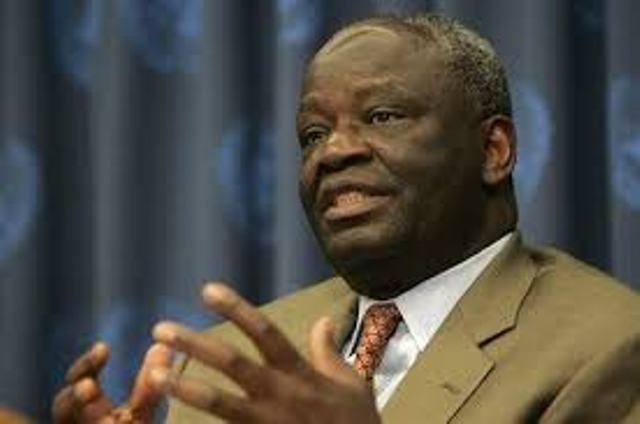
Former Nigeria Permanent Representative to the United Nations, Prof Ibrahim Agboola Gambari, has cautioned that recent developments in the country were reminiscent of the antecedent situation of the 1967 civil war.
He lamented that hate speech is growing, ethnic and regional irredentism is increasing, while intolerance is deepening, resulting in seeming not ready and unwillingness to live together in peace. “This nonsense must stop because Nigeria cannot afford it,” cautioned Gambari.
The former envoy, who is also the Chancellor of Kwara State University, Malete, spoke at the 5th Convocation of the eight-year old institution.
He said: “We can’t afford it because it is distractive. At a time when we seek to reposition our country for stronger national cohesion and economic resurgence, to play our destined role in Africa and the world, we do not need this distraction. Governments across the country need a peaceful political and security atmosphere that allows them to concentrate on delivering the promised dividends of democracy to the people.”
“We can’t afford it because it is disruptive and dangerous. Divisive agitations and violent conduct, or call to violent conduct, can result in unexpected and undesirable consequences. The little fires starting to burn across the country must not be allowed to result in a conflagration from which none can escape.
“We can’t afford it because it hurts our image in the region, in Africa and around the world. What investor, donor or ally would confidently associate with a country under threat of disintegration, confusion or instability? None. If we are to leverage on our considerable economic potential and human capital, we have no choice but to demonstrate to the world that we are a viable destination and ally. Our size and diversity should therefore, be taken as advantages that help us to build a great economy with huge political influences”, he noted.
He added: “I seized this opportunity to comment on recent developments in our country, which should be of concern to all well-meaning Nigerians. It worries me that some of our compatriots seem to have forgotten so soon the great prize we paid fighting the civil war; lives were lost, properties were destroyed and nation building was stunted.
“I appeal to our leaders, political, traditional, religious and business, to not only speak out against the negative developments, but also to take immediate positive action to bring an end to them. Otherwise, their actions could be interpreted as collusion with the forces of division and violence”, he added.
He, however, praised governments at all levels as well as individuals for their efforts to calm the situation, saying that such efforts were necessary to prevent a breakdown of law and order,imbue confidence in government by citizens across the country, and , thereby, strengthen national unity .
Gambari who noted that there was clamour for discussions on various national issues including the review of the structures of the nation’s governance, recommended that “the 2014 national conference document is a useful starting point for such review and the federal government should provide enabling environment for such open discussion that will lead to review to commence and reduce tension in the polity.
“In this regard, I must also call on agitators for the review to continue to pursue this objective in the context of dialogue and law and order. I believe that government is presented with a great opportunity to develop a strategy, platform, legislation or policy for kick starting the dialogue”, he said.
On the administration of KWASU, Gambari asked the state government to ensure adequate funding of the institution.
He noted that “the university is, however, presently enmeshed in financial difficulties. I have been constrained to mention this because I believe that an open and honest assessment of the situation is the most helpful way forward.
“KWASU is the pride of Kwara state and to have become an institution borrowing a staggering sum of close to a billion naira just to pay staff salary, at its tender age, is a worrying development and unsustainable.
“If we can only pay staff salaries, how can the university management provide other facilities for teaching and research as well as welfare for students? We must not be reduced to a situation whereby all collections will obviously be diverted to servicing loans. The end result is definitely half- baked graduates.
” While acknowledging that the state government is trying to give the necessary support, this is a clarion call to all stakeholders in this KWASU project to come to the aid of this great citadel of learning that has been making not only Kwara state proud but the country as well”, Gambari noted.
However, the state governor, Alh Abdulfatah Ahmed described KWASU as the emerging world class university, noting that within the space of time of its existence it has been blazing the trail leaving indelible mark on the sand of history.
“No doubt, then, that the university has come of age among the comity of universities worldwide and it is neither by its power nor might but by the grace of God, he noted”.
The visitor to KWASU ,equally acknowledged that” the journey so far in the last one year has not been that particularly rosy, especially with the global economic downturn that has affected the nation’s economy. The unwavering commitment of this administration and indeed individuals to make things better has nonetheless made the difference,”
The Vice Chancellor of the University, Prof AbdulRasheed Na’Allah said a total of 1,010 students were graduated, with 31 of them bagging first class.
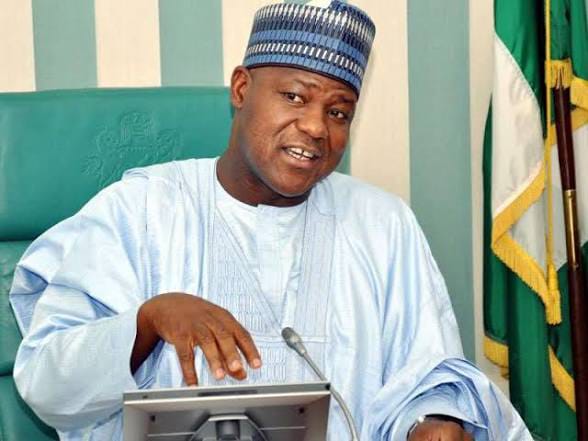
Former Speaker of the House of Representatives and Chairman of the Board of the National Credit Guarantee Company Limited (NCGC), Rt. Hon. Yakubu Dogara, CFR has expressed deep sorrow over the Nigerian Air Force aircraft crash that claimed the lives of 32 persons near Igbokoda, Ondo State. Dogara described the tragedy as a heartbreaking loss to the nation, noting that the deaths of the victims have left a painful void in the country’s defence and security community.
In a statement, the former Speaker extended his condolences to President Bola Ahmed Tinubu, Commander-in-Chief of the Armed Forces, the Nigerian Air Force, and the families of those who perished in the unfortunate incident.
He said the nation shares in the grief of the bereaved families and the Armed Forces at this time of immense sorrow, adding that the sacrifices of those who lost their lives in service to the country will not be forgotten. “The nation mourns with the families of the deceased and stands in solidarity with the Armed Forces during this difficult period,” Dogara stated.
He also commiserated with the Chief of Air Staff, officers and men of the Nigerian Air Force, praying that God grants them the fortitude to bear the painful loss.
According to him, moments such as this call for national unity, reflection and collective support for the families and institutions affected by the tragedy.
Dogara paid tribute to the victims, describing them as patriotic Nigerians whose commitment and service contributed to the security and stability of the nation. He further applauded the efforts of emergency responders, rescue teams and all personnel involved in the aftermath of the crash, commending their courage and professionalism under difficult circumstances.
The former Speaker prayed God to comfort their families, friends and colleagues.
He also offered prayers for the safety and protection of members of the Armed Forces and for continued peace, unity and progress in Nigeria.
The Nigerian Air Force aircraft crashed near Igbokoda, Ondo State, resulting in the death of 32 persons and plunging the nation into mourning. Authorities are yet to make public the cause of the accident as investigations continue.
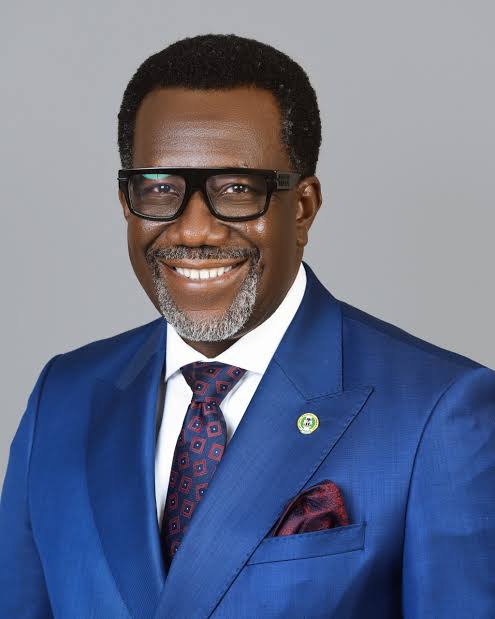
The Centre for Credible Reforms and Institutional Accountability (CCRIA) has commended the Commissioner for Insurance and Chief Executive Officer of the National Insurance Commission (NAICOM), Mr Olusegun Ayo Omosehin, for promoting transparency and accountability in the ongoing reforms of Nigeria’s insurance industry.
The centre said the implementation of the Nigerian Insurance Industry Reform Act (NIIRA) 2025 had ushered in a new phase of development for the sector, with stronger regulatory standards, improved capitalisation and greater emphasis on protecting policyholders.
Dr Aminu Abubakar Aminu, president of the centre, said this in a statement at the weekend.
Aminu commended President Bola Tinubu and the National Assembly for the enactment of NIIRA, describing the legislation as a major step towards addressing longstanding challenges in the insurance industry.
“The enactment of the Nigerian Insurance Industry Reform Act is a significant milestone in the development of Nigeria’s insurance sector. We commend Mr President and the National Assembly for recognising the need to modernise the legal and regulatory framework governing the industry. NIIRA provides the foundation for an insurance sector that is better capitalised, more accountable, more responsive to policyholders and better equipped to contribute meaningfully to the Nigerian economy,” he said.
The centre also praised Omosehin for his leadership of NAICOM, saying his extensive experience as an insurance professional had positioned him to effectively implement the new regulatory framework.
“We consider the appointment of Mr Olusegun Ayo Omosehin as Commissioner for Insurance and Chief Executive Officer of NAICOM a timely and appropriate decision. He is a seasoned insurance professional with many years of experience in the industry, and his understanding of the sector gives him the practical knowledge required to lead an important reform process of this nature. We commend him for the direction he has provided since assuming office and for his commitment to strengthening the industry,” Aminu said.
According to the centre, the ongoing recapitalisation exercise was among the important steps taken to strengthen the financial capacity of insurance companies and improve their ability to meet obligations to policyholders.
Aminu said the reforms were already producing early gains and should be sustained through consistent implementation.
“The early developments under NIIRA demonstrate that the reform is not merely a legislative exercise but a process capable of producing measurable improvements in the industry. Stronger capital requirements, improved supervision and greater attention to policyholder protection will ultimately create an insurance market that Nigerians can trust. We encourage NAICOM to remain focused on the implementation of the Act and to continue providing clear guidance to operators and other stakeholders,” he said.
The centre noted that the reforms would also help deepen insurance penetration and strengthen the industry’s contribution to national economic development.
It urged insurance companies, brokers, reinsurers, professional bodies and other stakeholders to embrace the new framework and work with NAICOM to achieve the objectives of the legislation.
“The success of NIIRA will require the cooperation of every stakeholder in the insurance ecosystem. Operators must see the reforms as an opportunity to strengthen their institutions, improve their services and regain the confidence of Nigerians. A well-regulated insurance industry can mobilise long-term capital, protect businesses and households against risks and support investment and economic growth. These are benefits that go beyond the insurance industry itself,” Aminu said.
Aminu emphasized that the centre was particularly encouraged by the emphasis on policyholder protection under the new framework, noting that public confidence remained critical to the growth of insurance in Nigeria.
He said Nigerians should be able to purchase insurance products with confidence that operators had the financial capacity and institutional structures required to honour legitimate claims.
The president further urged NAICOM to sustain its engagement with stakeholders while ensuring that the provisions of NIIRA were implemented transparently and consistently.
“What is required at this stage is continuity, professionalism and commitment to the objectives of the law. The reforms must be sustained beyond the initial implementation period so that the gains can become permanent features of the industry. We believe NAICOM, under the leadership of Mr Ayo Omosehin, has an important responsibility to ensure that the momentum is maintained, and we encourage all stakeholders to support the commission in delivering on this mandate,” he said.
The centre said the successful implementation of NIIRA would strengthen confidence in the insurance sector, improve the protection available to policyholders and position the industry to play a greater role in Nigeria’s economic transformation.
It also called for continued collaboration between NAICOM, insurance operators and other stakeholders to ensure that the objectives of the new law were fully achieved.
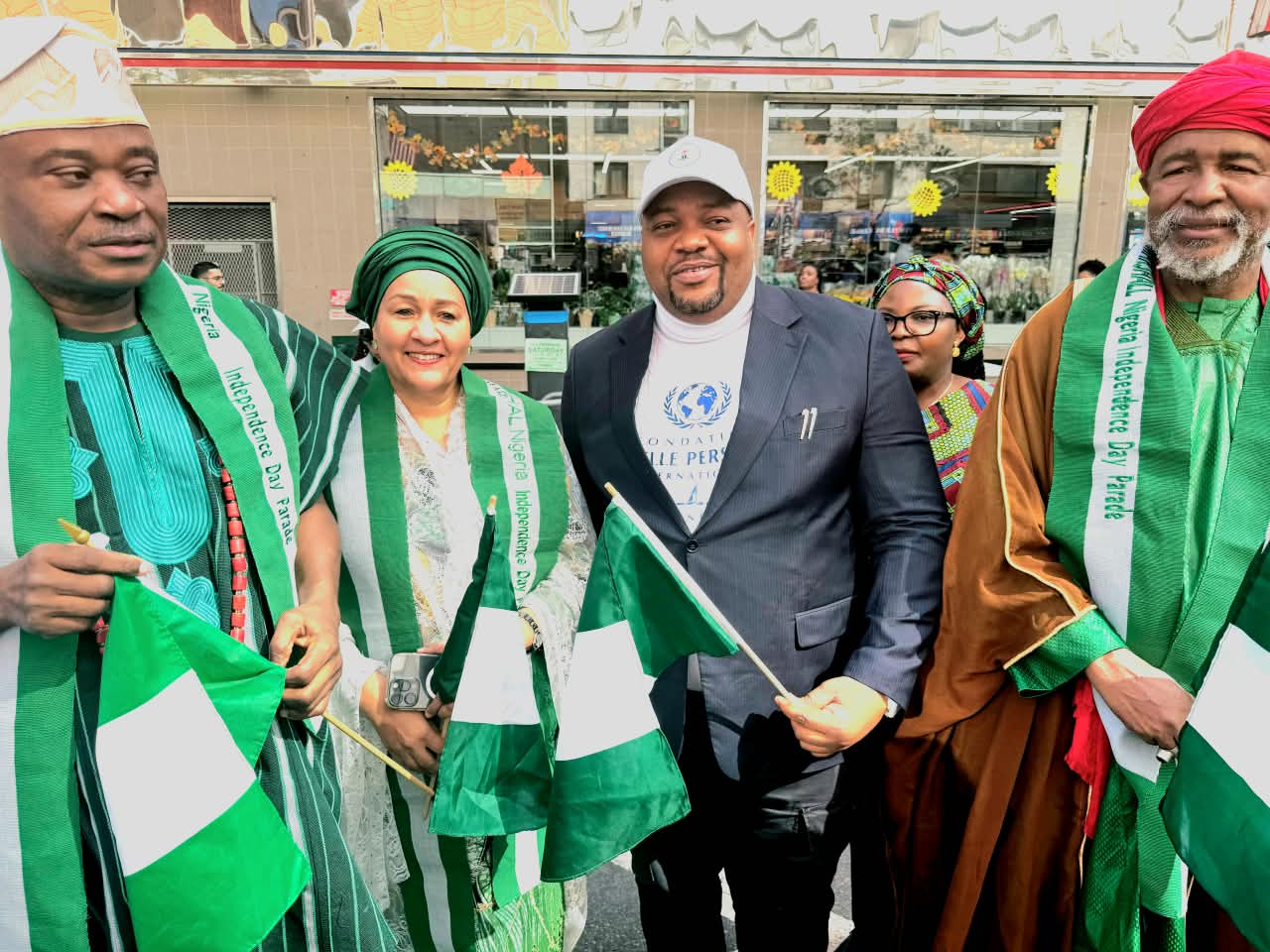
As Nigerians from across the United States gathered in Manhattan to celebrate Nigeria’s Independence Day in grand style, Hon. Amb. Jim Okolo used the occasion to share an inspiring message about Nigeria’s immense possibilities, rich cultural heritage, and promising future.
Speaking with members of the media during the colourful celebration, Hon. Amb. Okolo described Nigeria as one of the most blessed nations in the world, endowed with abundant natural resources, a dynamic population, and a cultural heritage that continues to earn global recognition.
According to him, Nigeria possesses enormous deposits of valuable minerals and other natural resources that, if fully harnessed, can accelerate economic growth and create prosperity for millions of citizens. He noted that the country is strategically positioned to become a leading destination for investment in mining, agriculture, technology, manufacturing, and infrastructure development.
Beyond its natural wealth, Hon. Amb. Okolo emphasized that Nigeria’s greatest strength remains its people. He praised the creativity, resilience, intelligence, and entrepreneurial spirit of Nigerians, pointing out that Nigerian professionals, innovators, academics, and business leaders continue to excel in various sectors across the world.
The respected diplomat also spoke passionately about Nigeria’s unique cultural identity. From the colourful festivals of its diverse ethnic groups to its globally celebrated music, fashion, literature, cuisine, and film industry, he described Nigeria as a nation whose cultural influence extends far beyond its borders.
He noted that Nigeria’s diversity is one of its greatest treasures, bringing together hundreds of ethnic nationalities with distinct traditions and languages that collectively form a vibrant and unified national identity.
While addressing questions on security, Hon. Amb. Okolo maintained that although Nigeria faces certain security challenges, the situation is not always as severe as often portrayed by social media discussions and sections of the international media. He stressed that millions of Nigerians continue to live, work, study, invest, and contribute meaningfully to society every day.
He called on the international community, investors, and members of the diaspora to focus on Nigeria’s strengths, opportunities, and achievements rather than allowing negative narratives to define the country’s image.
“Nigeria remains a land of opportunity, innovation, and hope. It is a nation blessed with extraordinary human capital, abundant resources, a rich cultural heritage, and a people whose determination and resilience continue to inspire the world,” he said.
The celebration was attended by several distinguished personalities, including the United Nations Secretary-General, Hajia Amina Mohammed, the Nigerian Ambassador to the United Nations, diplomats, business leaders, community stakeholders, and prominent members of the Nigerian diaspora.
The event transformed parts of Manhattan into a vibrant showcase of Nigerian pride, featuring cultural exhibitions, traditional performances, business networking sessions, authentic Nigerian cuisine, and displays highlighting the country’s achievements and diversity.
Adding excitement to the festivities were thrilling performances by internationally acclaimed Nigerian music stars Patoranking, Runtown, and BNXN (formerly known as Buju), who entertained thousands of attendees and demonstrated the growing global appeal of Nigerian music.
As the celebration came to a close, the message from Hon. Amb. Jim Okolo resonated strongly among participants: that Nigeria is far more than the challenges often highlighted in headlines. It is a nation blessed with extraordinary talent, vast opportunities, cultural richness, and the potential to achieve even greater success on the global stage.


Two German writers retrace the Long March by bicycle
To translate the vision of a constructive China-U.S. relationship of strategic stability into action

China’s express delivery industry shifts toward higher-quality growth

-
 Uncategorized6 years ago
FG, states urged to harness flooding for ranching, others with technology – Agbaje
-
 Headlines11 years ago
Breaking: EFCC seals Borno House of Assembly, as Hon members take to their heels
-
 News12 years ago
Nigeria Security Operatives Stage Manhunt For Homosexual Perpetrator
-
 News10 years ago
How 21-year-old Girl fled community over accusation of lesbianism
-
 News11 years ago
Yobe Gov Moves Against Deputy
-
 Opinion7 years ago
7 signs she has friend zoned you
-
Technology5 years ago
Online job placement company headhunts women
-
 Headlines10 years ago
Borno Dep Gov Abducts Another Church Leader