
News
U.S. cruel treatment of illegal migrants reveals hypocrisy of so-called “human rights guardian”

By Zhong Sheng, People’s Daily
The U.S. practice of detaining illegal migrants at holding cells with poor and unpleasant conditions has seriously violated the human rights of the individuals and is triggering wide concern from the international society.
According to the U.S. Customs and Border Protection, U.S. border authorities arrested 210,000 migrants attempting to cross the border with Mexico in March, the highest monthly total since March 2000, and another over 200,000 were apprehended in the following month.
The abuse of asylum seekers by American law enforcement officials have led to exacerbating humanitarian crisis at the borders.
According to The New York Times, U.S. authorities arrested apprehended 1.7 million illegal migrants along the U.S.-Mexico border in the fiscal year 2021, the biggest amount recorded since at least 1960.
Additionally, the violence of U.S. law enforcement officers is upgrading. For instance, U.S. border agents on horseback were seen chasing Haitian migrants back to a river in a footage exposed last September.
The detention facilities for illegal migrants in the U.S. were mostly built by private companies. As a result of the terrible living circumstances and lack of oversight, human rights abuses are prevalent.
According to official data released by the U.S., 557 deaths of migrants were recorded at the southern border in the fiscal year 2021. The figure was more than double that of a year earlier and the highest since relevant statistics were recorded in 1998. Some media outlets said the true figure might be larger than what had been reported.
The violations of illegal migrant children’s human rights by U.S. law enforcement departments were even more astonishing.
The last U.S. administration adopted a “family separation” policy for illegal migrants, which resulted in the separation of vast numbers of children from their parents. As a result, many children are still looking for their parents today.
Despite public pressure for the U.S. government to put an end to the policy, the U.S. did not significantly change its treatment of illegal migrant children.
USA Today said in an article published last November that after the outbreak of COVID-19, the U.S. government, citing relevant terms in the public health law, attempted to evict all the migrants and refugees seeking to cross the border, which was literally a 2.0 version of the “family separation” policy.
Statistics indicate that among the 266,000 migrant children detained by the U.S., 25,000 have been detained for more than 100 days. The relevant detention facilities operate under chaotic management with frequent abuses, forced labor, and other violations of human rights. The children held in custody are suffering from serious physical and mental trauma.
The issue of illegal migrants faced by the U.S., is to a large extent, an outcome of the country’s long-term hegemonic practice. In the nearly 200 years since the Monroe Doctrine was adopted, the U.S. has had over 30 cases of military intervention in Latin American countries, which placed the latter in lasting turbulence and poverty.
The U.S. newspaper Liberation said many migrants arriving at the U.S. border are “double victims” of the U.S. policy. They fled the violence and coups supported by the U.S., but when they arrived in the U.S., they went through violent arrests, imprison, and sex assault.
What the newspaper said profoundly reveals the historical and realistic responsibility that the U.S. has to take regarding the migrant issue. The country refuses to tackle the problem at the source and fulfill its promise of supporting the development of regional countries for solving the migrant issue. On the contrary, it is asking Latin American countries to be responsible.
Such a negative attitude has triggered criticism from regional countries. Mexican President Andres Manuel Lopez Obrador has once expressed his dissatisfaction with the U.S. attitude.
The U.S. government’s politicizing of migrant policy is also one of the major reasons for the migrant crisis. To pander to the voters, the last U.S. administration adopted harsh migrant policy and built walls along the U.S.-Mexico border. The incumbent administration once promised to roll out an ordered and humane migrant policy, but it broke its promise to end removal orders just 8 months after it came into power.
Given the upcoming U.S. midterm elections, the migrant issue will once again become a bargain chip for the Republicans and Democrats. The Journal of Politics of the U.S. noted that the issue of migrants is just a political tool of American politicians. The Republicans and Democrats, placing their political interests above humanitarianism, have made migrants pawns on their political chessboard.
The cruel treatment of illegal migrants, who have already been in a very hard position, reveals the hypocrisy of the U.S. that claims to be a “human rights guardian.”
Facing international concerns, the White House should adopt responsible measures, practically protect migrants’ rights to life and health, as well as other basic human rights, and fulfill its promises made to regional countries, so as to avoid more humanitarian tragedies.
(Zhong Sheng is a pen name often used by People’s Daily to express its views on foreign policy and international affairs.)

.
☆☆As Reports inficate Possible Insurgent Threats.
By: Special Correspondent.
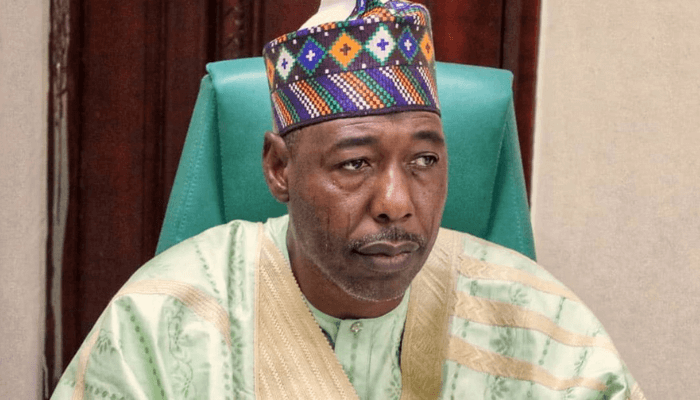
In apparent response to recent security developments relating to insurgent movements and emerging operational concerns within the Maiduguri, the Borno State Capital and surrounding areas, security operatives have been placed on red alert.
Our correspondent gathered over the past few days indicate that insurgent elements have been attempting to regroup and reorganise their activities in across the state, especially around Maiduguri metropolitan axis.
This is even as the Borno State Government have assured of adequate security arrangements to ward off any possible security threat.
According to findings, these developments have generated growing concern among local communities and security observers, who in turn called the attention of the Borno state government..
Although intelligence monitoring over the last three days,indicates reduction in their vissible activities, owing to patrols by security personnel and frontline defence groups, the city remains under intense watch..l
Further reports available to us indicate that some of the insurgent elements were sighted operating around Duwari village under Konduga Local Government Area, where they appear to be attempting to regroup and reposition themselves, for possible mischief during the upcoming Eid prayer gatherings, which they may perceive as opportunities to exploit large public gatherings.
Highly placed security source told our correspondent that, the current surveillance and intelligence monitoring across the state by soldiers, members of the Civilian Joint Task Force (CJTF), and other frontline defenders remains a capable check against any mischief.
“Our level of preparedness against any mischief remains on high and we are prepared to confront any insurgent threat should the situation call for it”.
“Only a few days ago, insurgent elements made an attempt to regroup in some areas around Maiduguri Metropolitan and Konduga, and upon receiving credible intelligence regarding their presence and movements, we immediately moved in with our swift operational response team”, the source added.
While reassuring that available security assets, including soldiers and members of the Civilian Joint Task Force (CJTF), are capable of confronting any insurgent group, our source, said, any attempt by any group to come into Maiduguri, will amount to “a suicide mission”, on their part.
Our correspondent further reports that, the Borno state Government has in the last few weeks provided enormous logistics and equipment to security operatives in what looks like a renewed fight against Boko Haram and ISWAP elements, who have been attempting a resurgence in activities.
Reports across Borno state indicate that, Boko Haram and ISWAP terrorists, who have been fleeing their enclaves following intense attacks on them by troops, have in the process been attacking vulnerable communities in search of food and other logistics.
Reports say most of their camps have been destroyed, and they are desperately making attempts at re-entering Maiduguri.
Camps around the notorious Sambisa forest are said to have been vacated ahead of oncomming onslaughts and the terrorists have retreated and fled into the Mandara mountains close to Nigeria’s border with Cameroun.
Subsequent surveillance checks conducted through intelligence monitoring channels confirmed that the fleeing elements were attempting to regroup in nearby locations, suggesting a continued attempt to maintain an operational presence within some areas.
Borno state Governor, Professor Babagana Umara Zulum, who recently concluded a statewide tour has expressed concerns about the operational coordination among community-based security groups, with a promuse to ginger them up for more action.
As a result, several community defence formations operate simultaneously, including, the Civilian Joint Task Force (CJTF), Hunters,Vigilante groups
and other local frontline defenders.
He has vowed to flush out, what inteligence observers, described as certain individuals within these formations, who may have indirect alignments or may be responsible for information leakages that could potentially compromise ongoing security operations.
The inteligence circle in Borno has often complained that, insurgent elements appear to have prior knowledge of local security movements and response patterns, even as it raised concerns about possible infiltration or operational compromise within these community security structures.
Governor Zulum, during his recent tour promised to remedy the situation, after a careful institutional review and restructuring in order to strengthen operational discipline and reduce vulnerabilities within the community defence architecture.
Information available to us indicate that, certain
security measures are being contemplateded for Maiduguri during the Eid celeberations, which may include strict monitoring of vehicular and human movements to minimize potential vulnerabilities that hostile elements could exploit to infiltrate the city.
While physical security alert remains in place, this medium gathered that, intelligence gathering is being strengthened and early warning mechanismsactivated across Maiduguri.
In the face of these, uneasy calm still pervade the citizenry as they prepare for the oncoming celeberations.

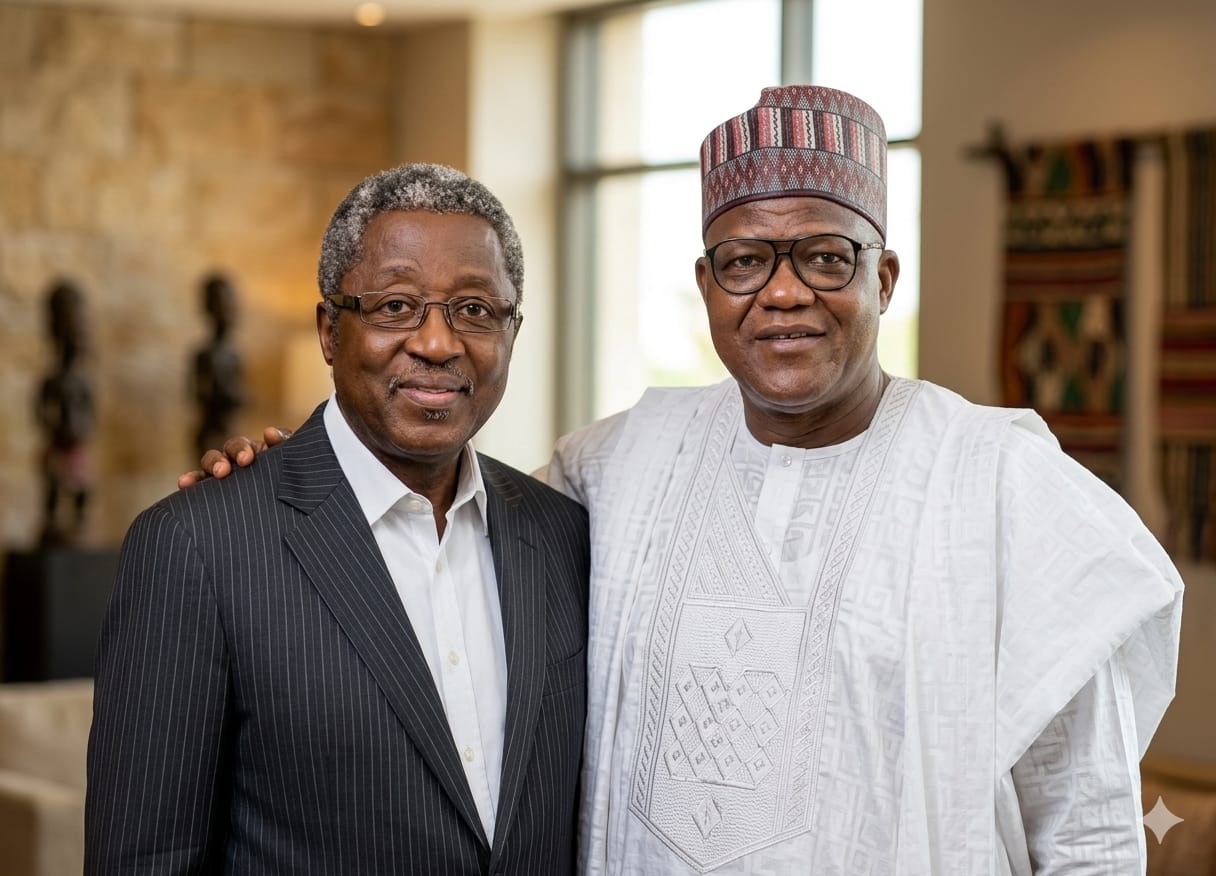
Former Speaker of the House of Representatives and Chairman, Board of Trustees of the National Credit Guarantee Company Limited (NCGC), Rt. Hon. Yakubu Dogara, has joined Nigerians in celebrating Former Governor Jonah Jang, fondly called Baba Jang, as he clocks 82 years.
In a glowing tribute, Dogara described Baba Jang as a visionary leader whose life and service remain a beacon of hope for generations. He noted that Jang’s tenure as Governor of Plateau State was marked by courage, foresight, and an unwavering commitment to peace, unity, and development.
“Baba Jang’s life is a testimony of service and sacrifice. He invested in infrastructure, strengthened institutions, and worked tirelessly to foster unity in Plateau State. His leadership was never about personal gain but about building lasting foundations for progress,” Dogara said.
He further emphasized that Jang’s integrity, resilience, and mentorship have shaped leaders across Nigeria, adding that his legacy continues to inspire beyond the boundaries of Plateau State.
“As he celebrates 82 years, we honor him not just for the offices he has held, but for the enduring impact he has made on countless lives. Baba Jang remains a statesman, a father figure, and a model of quality leadership,” Dogara added.
The tribute underscores Baba Jang’s enduring influence in Nigerian politics and governance, highlighting his role as a leader whose footprints on the sands of time cannot be erased.
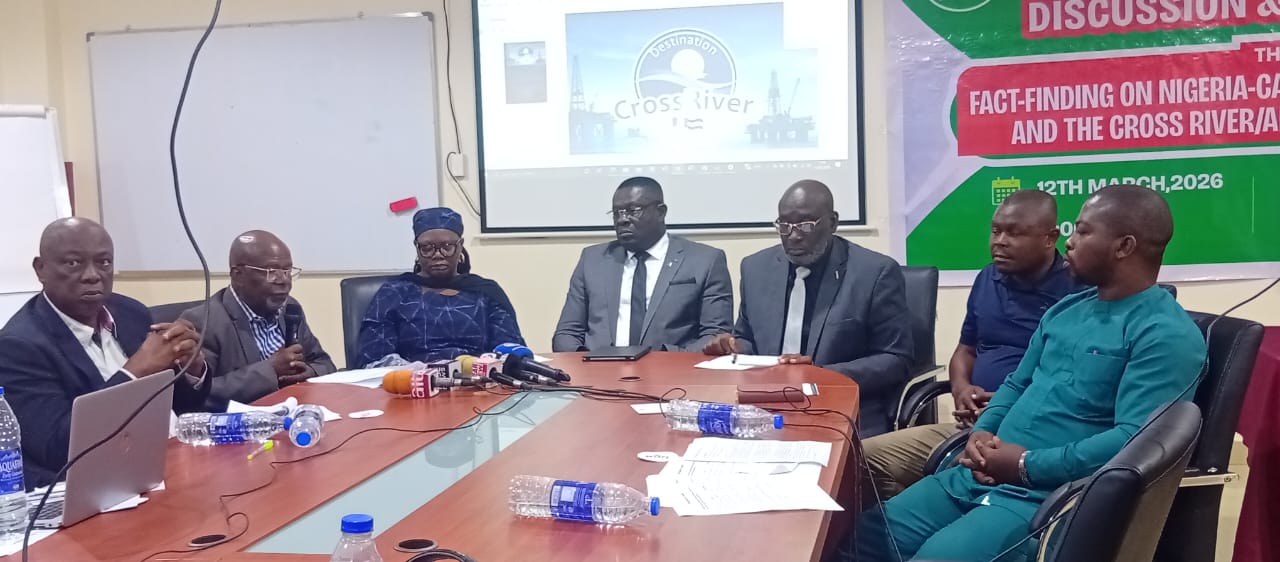
A coalition of Civil Society Organizations (CSOs), maritime experts and policy advocates has raised serious concerns over Nigeria’s maritime boundary management and the allocation of offshore oil wells, calling for urgent intervention by the Federal Government.
The concerns were presented on Thursday in Abuja during a civil society roundtable where the coalition leader, Dr. Gabriel Nwambu, addressed stakeholders and unveiled the communiqué issued after a recent verification mission to Nigeria’s offshore maritime corridor bordering Cameroon and Equatorial Guinea.
The communiqué followed a technical fact-finding and verification exercise conducted at sea on February 28, 2026, focusing on Nigeria’s offshore hydrocarbon blocks OML 114, OML 115 and OML 123 as well as the maritime boundary areas involving Nigeria, Cameroon and Equatorial Guinea.
Dr. Nwambu explained that the mission involved maritime governance stakeholders, mapping professionals and public policy experts who undertook physical observation of the maritime corridor, technical mapping verification and consultations with relevant authorities.
According to the coalition, the mission sought to independently verify the status of Nigeria’s maritime boundaries, offshore hydrocarbon entitlements and the implications of administrative and regulatory decisions affecting the Cross River maritime corridor.
ICJ Judgment Clarified
Presenting the findings, the coalition noted that the 2002 judgment of the International Court of Justice (ICJ) between Nigeria and Cameroon ceded only specific settlements in the southern Bakassi Peninsula — Atabong, Akwabana and Archibong Town — to Cameroon.
The coalition stressed that several areas often assumed to have been ceded were not included in the ruling.
“The Cross River Estuary and the western Bakassi peninsular islands of Dayspring I and II, Abana and Kwa Island were not ceded under the ICJ judgment,” the communiqué stated.
The group further emphasized that Nigeria still maintains maritime boundary continuity between the Cross River Estuary and the Akwayefe River Estuary based on the ICJ cartographic evidence and the physical geography of the region.
Dr. Nwambu also clarified that the Cross River Estuary remains Nigeria’s natural maritime gateway to the Atlantic Ocean and provides Cross River State with direct offshore access.
Questions Over Boundary Management
A major concern raised by the coalition relates to the actions of the National Boundary Commission (NBC) in implementing the Offshore/Onshore Dichotomy Abrogation Act using what it described as a temporary implementation map.
According to the communiqué, the baseline drawn from Tom Shot into the Cross River Estuary effectively closed the estuary’s mouth to the sea, thereby rendering Cross River State non-littoral.
The coalition warned that this development raises serious constitutional, economic and national security concerns.
It further criticized the NBC for failing to demarcate the Nigeria–Cameroon maritime boundary more than two decades after the ICJ ruling, stating that continued reliance on the temporary map could jeopardize Nigeria’s territorial integrity.
The report also alleged that the situation has effectively resulted in the ceding of about 780 hectares of maritime waters within the Cross River Estuary toward the Akwayefe River Estuary to Cameroon.
Oil Wells and Revenue Concerns
Beyond boundary issues, the civil society coalition raised alarm over oil revenue allocation and the management of transboundary oil fields.
According to the findings, the failure of relevant institutions to brief the President on key inter-agency reports could prevent Nigeria from exploiting 49 identified transboundary oil wells located within OML 114 in the Cross River Estuary.
The coalition also raised concerns over alleged financial irregularities relating to the Ekanga and Zafiro transboundary oil fields jointly developed by Nigeria and Equatorial Guinea.
It alleged that more than ₦33 billion may have been approved from the Federation Account in favour of Akwa Ibom State without clear presidential authorization.
The group further questioned whether revenues from the Ekanga and Zafiro fields — estimated at over $8 billion — had been properly remitted into the Federation Account.
Call for Presidential Intervention
To address the concerns, the coalition recommended several urgent measures, including a presidential review of the 2024 and 2025 inter-agency oil verification reports affecting Cross River and Akwa Ibom states.
It also called for the proper demarcation of the Nigeria–Cameroon maritime boundary in line with the ICJ judgment and the establishment of a Presidential Special Investigation Panel to probe the alleged loss of Nigerian maritime waters.
Other recommendations include a forensic audit of revenues from the Ekanga and Zafiro oil fields, investigation into the alleged ₦33 billion payment approvals, and diplomatic engagement with Cameroon to develop transboundary reservoir agreements.
The coalition also urged the Federal Government to restore and recognize Cross River State’s littoral status based on the geographic and legal status of the Cross River Estuary.
National Security Implications
In its concluding remarks, the coalition warned that the issues uncovered during the verification mission have far-reaching implications for Nigeria’s territorial integrity, maritime sovereignty, national security and oil revenue accountability.
Dr. Nwambu called on the President to treat the matter with urgency, stressing that transparent management of maritime boundaries and offshore resources remains critical to Nigeria’s economic stability and geopolitical standing.
The communiqué was jointly signed by representatives of the coalition of civil society organizations, maritime policy experts, technical observers and economic governance accountability groups.


The Central Bank of Nigeria (CBN) has issued a fresh warning to bank customers across the country, urging them to protect their financial information and avoid sharing their Personal Identification Numbers (PINs), passwords, or other sensitive banking details with anyone.

The futility of gender equality

photo speaks

-
 Uncategorized5 years ago
FG, states urged to harness flooding for ranching, others with technology – Agbaje
-
 Headlines10 years ago
Breaking: EFCC seals Borno House of Assembly, as Hon members take to their heels
-
 News12 years ago
Nigeria Security Operatives Stage Manhunt For Homosexual Perpetrator
-
 News9 years ago
How 21-year-old Girl fled community over accusation of lesbianism
-
 News10 years ago
Yobe Gov Moves Against Deputy
-
 Opinion7 years ago
7 signs she has friend zoned you
-
Technology4 years ago
Online job placement company headhunts women
-
 Headlines10 years ago
Borno Dep Gov Abducts Another Church Leader