
Interview
Any Govt That Don’t Invest In Youth Invest In Crime And Vices – Hon Awude


Honourable Dayo Awude is currently the Commissioner for Youth and Sports in Ondo State. In this interview with nationalTRAIL the youthful Commissioner who was Head of the State Scholarship Board, says his party, the Peoples Democratic Party (PDP) would still win the coming governorship election in the state, despite All Progressives Congress, APC‘s threat, he also said that all who have decamped to APC would remain tenants in the party, just as he also spoke on many other issues. Excerpts:
Can you tell us your blueprint as the Commissioner for Youths and Sports in Ondo State? You know I just came in December last year, and that is about six months ago. Of course, there were a number of issues to be resolved even though I met a functional Ministry with two Parastatals. That is the Ondo State Football Agency and the Ondo State Sports Council. They were functional at the time I came. There were challenges. Number one is in the area of sports, the Akure stadium was banned because of some issues that came up during a League Match. The stadium was banned, and Sunshine Football Club was banished to Lagos State, and I felt that shouldn’t continue. For me, that was the first thing to attend to, because as footballers, if you are playing your Home matches as away. One of the first things we did was to ensure that the stadium was unbanned, and our team restored back to Akure, and within a month, we were able to accomplish that. As for my blueprint, Ondo state is noted for excellence in term of sports, and generally, you will recall that Sunshine Stars Football Club played Continental matches two years consecutively. Last year, we missed winning the League narrowly; we came sixth, because of some distractions. We were on top of the League for several weeks until about three weeks to the end of the league. Our blueprint is to ensure that we maintain a steady position in terms of being number one in Football and other sports. As I speak today, we have five of our Sunshine Stars players in the camp of the Super Eagles, and they are not just in the camp, the five of them start matches with the Super Eagles currently as I speak with you. That means we have qualities in the Sunshine Stars Football Club, and we will continue in that light to attract the best. We have a Soccer Academy which we intend to improve upon. That Soccer Academy produced the likes of Godfrey Oboabona who is now an international football star. Also, Adeniji who is a member of the Super Eagles is a product of our Soccer Academy in Ondo state. Seun Olulayo, a member of the Under-23 team that just played recently, is another product of the Academy. We have quite a number of them ditto other sports. Odunayo Adekuoroye is also a product of the academy, and today is doing exploit all over the world. She won Gold medal in the Commonwealth Games recently. She was in India recently. In fact, she is been all over and doing very well. Also, Anike Adeniyi is another star that we raised from the academy. She is a Gold medallist of the All African Games. So we are focused on raising them and not just poaching them, but we raise and make them stars. You are also to oversee the affairs of the youth. Can you brief us on the plans you have for youth empowerment in the State? Any government that doesn’t invest in the youth is investing directly in crime and vices. That we know, and it is very clear. So, investment in youth is not an option, it is the only way to go. If we fail to invest in young people, we are directly investing in crisis, because if we don’t build them, they will destroy the system, and this is a matter of time. My ministry is committed to youth empowerment. I have always said this, and I will say it again that one of the plans we have in this ministry is to change the orientation of the young people. That is the number one empowerment. Young people must begin to think right. It is not enough to sit down and bemoan the past, or the present. It is not enough to sit down and blame other generations. We may not be responsible for the way we got into this mess, but we must be responsible for the way we get out of the mess. So young people must begin to think towards that direction; they must begin to think that we must collectively find solutions to these problems. Nigeria today is a nation in crisis whether we like it, or not. Nigeria is a nation in crises, and as it is, unless something drastic happens, it is not going to be a good news. Our economy is getting worse day in day out, and those most affected are the young ones. The jobs are not there anymore, and looking for jobs has become a job itself. To some, looking for jobs for two, three, four, or five years has become an occupation, and this shouldn’t be allowed to continue. I met two guys recently, they are running fish ponds. These guys are graduates from FUTA for almost six years now, and they said they had been doing the job since they were in 200 Level. Today, they turn out 40,000 pieces of fish every four months. This means they turn out 120,000 pieces of fish every year, and the price of one fish is about 500 Naira, or more. When you calculate you will see that they make like 60 million Naira every year. All that will be required to raise those fishes is about 36 million Naira, and this means they make nothing less than 24 million Naira profit every year. These are graduates, so we must begin to think of work in that light. No youth should put on his shirts every morning and start looking for what that doesn’t exist. One of the primary things that we want to do is to re-focus the youth. If you empower a man from within, it truly means that you have empowered him. If a man is not empowered from within, if you give it to him in his hands, he will soon lose it. So we want to see how we can strengthen them, as well work on their minds. The time has changed so our thinking must always change. In the build up to the October governorship election in Ondo State, some loyalists of Governor Mimiko like Pius Osunyikanmi, Pius Akinyelure, Cecilia Ifayase, and a host of others decamped to the APC, do you think your party, PDP, will be able to win the election in the light of this development? Well politics is a
game of numbers, and everyone is free to talk. Anybody can say anything, but what is important is how connected you are to the people. APC can brag that they will take over power in Ondo State, because it is their free right to talk, but let us compare what we have here in Ondo State under PDP with any of the APC states, then that will form the basis of our argument. Of course they bragged and took over power from Dr. Goodluck Jonathan. They said he was a lame dug, they said he was clueless, and they took over power with all sorts of propaganda, but is the system moving forward today? Has Nigeria moved forward since Buhari took over in May last year? These are questions we have to ask ourselves. Today, a Dollar is 385 Naira, but when Jonathan left, it was 190 Naira. This means our Naira has lost its value 100%. We know how much things are sold now compared to what was obtained in the past. Our people are wiser now. Those who were shouting the Change slogan then are regretting now, because rather than seeing a positive change what they are seeing is hardship. Now the question is what do they want to offer here in Ondo State that is better than what we already have?. I believe that when the time of politics comes, we will play it, we will talk to the people, we will bring fact for fact and then the people will take a decision. I believe that PDP in Ondo State will still carry the day. In 2014, you tried to run for a seat at the House of Representatives, but you were asked to withdraw from the race. Many people, who didn’t get PDP’s ticket in Ondo State then, decamped to either APC or SDP but, in your own case, you stood your ground and remained in the PDP, and even delivered your Ward to your party. Can you tell us why you decided not to decamp? We have our different reasons for joining politics. I came into politics for a reason. That reason is to offer myself for service, and you cannot serve your people by force. Yes, it was my right to aspire, and i did so, but in the wisdom of the leaders of the party, they felt it should go elsewhere. I felt bad as a human being, and I expressed my disappointment to the governor, but it didn’t go beyond that. All I said was between me and him. I never went out to destroy the party, or to destroy him. You are not considering others if you want to destroy a party, because of your personal interest. Whoever has defected would have remained in the PDP if Jonathan had won the presidential election then. I am not saying they don’t have the right to defect, but the bottom line is that they defected because, they saw power shifting to the APC at the national level. It means they will still leave APC if by tomorrow another party wins at the central. To me, it is because of their selfish interest. In politics, we have the men and we also have the boys. As a landlord, you cannot say that you want to leave your house, because there is a crisis there. As a landlord, if you leave your house and run to your neighbour’s house because of an internal crisis, then you will become a tenant there. All you need to do is to stay in your house and salvage it. As far as i know, those that defected from PDP will always remain tenants in APC. Can you tell us why you are embarking on projects in some schools like; Alakunre Comprehensive High School, here in Akure with your personal funds? Everyone has a source. Nobody just happens to exist, he must have a beginning and that Alakunre that you talked about is one of my beginnings. That place moulded me to be whatever i am today, and i cannot forget my beginning. So when i got there seven years ago and saw that the toilet facility we used in 1983 was the one still in use 26 years after, I felt bad. It had gotten dilapidated, and i did it for them, and some other projects. I also reconstructed their Hall. I remember i was called to the stage of that same Hall every week as one of the best students in my class when i was a student there. I had a nostalgic attachment to that hall, so that was why I gave it a total reconstruction. The philosophy behind that is to give back to the system, and to tell others that this is the right thing to do
Interview
From Commercial Practice in France to Comparative Contract Law Scholarship in the United States: A Conversation with Folake Atchade
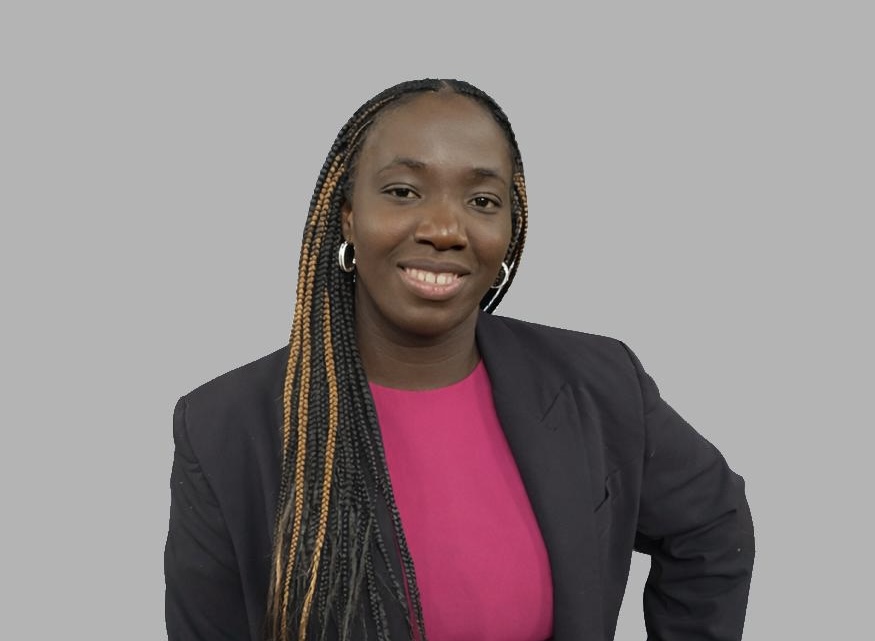
1. Can you tell us about your professional journey and what brought you to legal academia in the United States?
My professional path has spanned different legal systems and dimensions of legal practice. I received my initial legal education in France and began my career in commercial practice, spending nearly five years as in-house counsel for a financial institution. My work involved negotiating and drafting commercial financing agreements and advising on contractual and transactional matters.
After moving to the United States, I earned an LL.M. from Boston University School of Law. I later returned to Boston University School of Law as a Visiting Assistant Professor, where I taught Contract Drafting and served as a guest lecturer in Negotiation. I was admitted to practice in New York and Massachusetts.
That combination of transactional practice, dual legal training, and teaching ultimately shaped my scholarly interests. I became particularly interested in how legal systems allocate contractual risk and how differences in legal doctrine affect parties when circumstances change dramatically after a contract is formed.
2. What is the central focus of your scholarship?
My research primarily focuses on contract law, comparative contract law, and the allocation of contractual risk in the context of extraordinary events.
One question that particularly interests me is what happens when circumstances change fundamentally after the parties agree. The COVID-19 pandemic illustrated the practical importance of that question. Businesses suddenly faced government shutdowns, supply-chain disruptions, labor shortages, and other circumstances that made contractual performance impossible or substantially more difficult.
My scholarship examines how American contract law responds to those situations and allocates risks, and compares that response with the French legal framework, particularly the codified doctrine of force majeure.
More broadly, I am interested in how contract law can preserve commercial predictability and freedom of contract while providing sufficiently clear rules for circumstances that parties cannot reasonably anticipate or control.
3. Why compare French and American contract law?
Comparative law provides a unique opportunity to question assumptions that can become almost invisible when we study only one legal system.
France and the United States offer a particularly interesting comparison because they approach contract law from different legal traditions. French law provides a statutory definition of force majeure in Article 1218 of the Civil Code. In contrast, American law addresses similar problems through a combination of contract language and common-law doctrines such as impossibility and impracticability.
I am not interested in arguing that one legal system should copy the other. Rather, comparison allows us to identify the advantages and limitations of each approach and ask whether particular features could improve predictability, risk allocation, and judicial administration in another system.
4. Why is force majeure still important now that the COVID-19 emergency has passed?
Because COVID-19 exposed a much broader contractual problem.
The next systemic disruption need not be another pandemic. Businesses increasingly operate in an environment affected by geopolitical conflict, natural disasters, supply chain disruptions, government restrictions, technological disruptions, and other events that can interfere with contractual performance.
The fundamental legal question remains the same: Who should bear the risk when an extraordinary event disrupts performance?
That question has consequences not only for litigation after a crisis occurs, but also for how lawyers draft contracts beforehand. Clearer legal rules can affect bargaining, pricing, insurance, contractual drafting, and ultimately transaction costs.
5. Recent tariff changes imposed by the United States have created uncertainty for businesses operating under existing contracts. How does that connect with your research on force majeure and contractual risk?
Tariffs illustrate the broader problem at the center of my research: how contract law allocates the risk of extraordinary changes after parties agree.
Imagine a business that enters into a long-term supply contract at a fixed price and subsequently faces a substantial new tariff on an essential imported component. Performance may still be possible, but the transaction’s economics may change dramatically. That raises an important question: who should bear that additional cost?
The answer may depend first on the contract itself, whether the parties addressed tariffs, changes in law, price adjustments, or governmental actions. But when the agreement does not clearly allocate that risk, the uncertainty exposes the importance of the background legal rules.
That is where tariffs connect directly with my research. I am interested in whether contract law provides sufficiently predictable rules for allocating extraordinary risks while still respecting the parties’ freedom to allocate those risks differently through their agreements.
6. Can a new tariff implemented by the United States constitute force majeure, and might French and American law approach that problem differently?
A new tariff does not automatically constitute force majeure. That distinction matters because an event that makes performance significantly more expensive (usually characterized as hardship) is not the same as an event that prevents performance (impossibility of performance).
Under American law, much depends on the contract language and the governing law. A court may examine whether the force majeure clause encompasses governmental action or changes in law, whether the parties allocated tariff risk elsewhere in the agreement, and whether doctrines such as impossibility or impracticability are potentially relevant.
French law offers an interesting comparison because Article 1218 of the Civil Code codifies force majeure, while Article 1195 separately addresses imprévision, or changed circumstances, where an unforeseeable change makes performance excessively onerous for a party that did not accept that risk. A tariff that primarily changes the economic burden of performance therefore raises an especially interesting question about the distinction between force majeure and hardship. In addition, absent a provision allocating this risk in the agreement, French law does not recognize an event as force majeure if it was foreseeable at the time of contracting because it had previously occurred.
Comparing the two systems does not necessarily tell us that one approach is superior. Instead, it helps illuminate a broader question at the center of my scholarship: whether clearer distinctions among force majeure, impossibility, impracticability, and hardship could improve predictability in American contract law while preserving freedom of contract.
7. What have you identified as one of the difficulties with the American approach?
One difficulty is fragmentation.
American law lacks a single, comprehensive statutory force majeure doctrine applicable to contracts generally. Parties often depend heavily on the language of their agreements and overlapping doctrines such as impossibility, impracticability, and frustration of purpose. Although the doctrine of impossibility serves as the functional equivalent of force majeure in American law, its relationship with contractual force majeure clauses, commercial impracticability, and frustration of purpose has become increasingly blurred. The result is a body of law characterized by inconsistent judicial reasoning and diminished predictability.
My research paper proposes not adopting an entirely new doctrine, but codifying an existing one. Codification would provide a uniform legal framework that defines force majeure, clarifies its relationship with existing doctrines, and establishes consistent standards for its application.
8. Does that mean you believe the United States should adopt the French model?
No. Comparative scholarship is most useful when it avoids that type of assumption.
French law has its own complexities and limitations. The important question is not whether French law is categorically “better,” but what the American system can learn from another mature legal system that has made different institutional choices.
For example, codification can increase accessibility and provide a common doctrinal starting point. At the same time, excessive rigidity may prevent courts from responding appropriately to unusual circumstances.
The challenge is finding the appropriate balance among predictability, flexibility, freedom of contract, transaction costs, and judicial administrability.
9. How did your experience as in-house counsel influence this research?
It profoundly influenced the questions I ask.
As in-house counsel, I saw contracts as more than abstract legal documents. They allocated real economic risks between businesses. Negotiating financing arrangements required thinking prospectively about what could go wrong, which party should bear which risks, and how to reflect that allocation in the contractual language.
That experience continues to influence my scholarship. When I examine a doctrine, I am interested not only in what courts say after a dispute has occurred but also in how the rule affects lawyers and businesses when they structure transactions before a dispute exists.
10. How does your scholarship influence your teaching?
I see teaching, scholarship, and practice as closely connected.
When co-teaching Contract Drafting, I want students to understand that drafting is not simply about producing elegant language. A transactional lawyer must identify risks, determine how to allocate those risks, understand the client’s objectives, anticipate potential disputes, and translate those decisions into precise contractual provisions.
My comparative background also allows me to encourage students to question why a particular legal rule exists rather than memorize it. Looking at another legal system can reveal that rules we sometimes regard as inevitable are, in fact, policy and institutional choices.
11. What does your international background contribute to your work as a scholar?
It allows me to move between legal traditions and understand legal problems from multiple institutional perspectives.
Having studied and worked within a civil-law environment before developing my academic and professional career in the United States, I have experienced firsthand how lawyers trained in different systems conceptualize similar contractual problems differently.
That perspective is particularly valuable in commercial law because modern transactions are often cross-border. Lawyers need to understand not only the law governing a transaction but also how counterparties from different legal traditions may approach concepts such as contractual interpretation, good faith, hardship, and force majeure.
12. What do you hope your scholarship will contribute to American contract law?
I hope it contributes to a broader discussion about how American contract law should respond to systemic disruption.
Rather than treating extraordinary events as isolated anomalies, I think contract scholars and practitioners should consider how legal rules influence risk allocation before, during, and after major disruptions.
My objective is to examine whether aspects of comparative law can help develop rules that provide greater predictability while preserving contractual autonomy and appropriate flexibility.
Ultimately, good contract law should help parties understand the consequences of their agreements before disputes arise, not merely give courts tools to resolve disputes afterward.
13. What are the broader implications of this research for businesses and practicing lawyers?
The implications are quite practical.
When the law is uncertain, lawyers may respond by drafting increasingly detailed provisions to address potential contingencies. That can increase transaction costs, and even very sophisticated contracts cannot anticipate every possible event.
Conversely, clear default rules can provide a background against which parties negotiate. Parties who prefer a different allocation of risk can still contract around appropriate default rules where the law permits.
That is why questions about force majeure and contractual risk are not merely theoretical. They affect contract drafting, negotiation strategy, pricing, litigation risk, and commercial planning.
14. Where do you see your research developing next?
My broader research agenda examines how contract law allocates risk in increasingly complex and standardized commercial environments.
Force majeure provides one important entry point, but similar questions arise with boilerplate provisions, standardized agreements, technological contracting, and potentially AI-assisted contract formation and drafting.
I am interested in examining how contract law can maintain predictability and freedom of contract while responding to changes in the way agreements are negotiated, drafted, and performed.
15. What perspective does your combination of transactional practice and comparative legal training bring to American contract-law scholarship?
I hope to contribute a perspective that combines comparative scholarship, transactional experience, and practical legal education.
My professional experience taught me how contractual rules operate inside actual commercial relationships. My comparative background allows me to examine those rules across legal systems. Teaching also lets me translate both perspectives for the next generation of lawyers.
I see those dimensions as mutually reinforcing. Scholarship can identify problems in doctrine; practice can reveal their real-world consequences; and teaching can prepare lawyers to address those problems more effectively.
16. How has your scholarship and work in contract law been recognized within the academic and legal communities?
My scholarship has increasingly created opportunities for engagement and recognition within academic and legal communities. I presented my research on comparative contract law and force majeure at academic conferences, where I discussed the work with scholars in the field, and my article examining the French and American approaches to force majeure has been accepted for publication in the South Carolina Journal of International Law & Business.
My work has also extended into legal education. At Boston University School of Law, I co-taught Contract Drafting and was invited to contribute as a guest lecturer in Negotiation, bringing my transactional experience and comparative perspective into the classroom.
As I continue developing this research agenda, I hope to deepen that engagement through publication, scholarly exchange, and continued participation in academic and professional legal communities.
Interview
From Commercial Practice to Comparative Contract Law Scholarship: A Conversation with Folake Atchade
- Can you tell us about your professional journey and what brought you to legal academia in the United States?
My professional path has spanned different legal systems and dimensions of legal practice. I received my initial legal education in France and began my career in commercial practice, spending nearly five years as in-house counsel for a financial institution. My work involved negotiating and drafting commercial financing agreements and advising on contractual and transactional matters.
After moving to the United States, I earned an LL.M. from Boston University School of Law. I later returned to Boston University School of Law as a Visiting Assistant Professor, where I taught Contract Drafting and served as a guest lecturer in Negotiation, and I was admitted to practice in New York and Massachusetts.
That combination of transactional practice, dual legal training, and teaching ultimately shaped my scholarly interests. I became particularly interested in how legal systems allocate contractual risk and how differences in legal doctrine affect parties when circumstances change dramatically after a contract is formed. - What is the central focus of your scholarship?
My research primarily focuses on contract law, comparative contract law, and the allocation of contractual risk in the context of extraordinary events.
One question that particularly interests me is what happens when circumstances change fundamentally after the parties enter into an agreement. The COVID-19 pandemic illustrated the practical importance of that question. Businesses suddenly faced government shutdowns, supply-chain disruptions, labor shortages, and other circumstances that made contractual performance impossible or substantially more difficult.
My scholarship examines how American contract law responds to those situations and allocates risks, and compares that response with the French legal framework, particularly the codified doctrine of force majeure.
More broadly, I am interested in how contract law can preserve commercial predictability and freedom of contract while providing sufficiently clear rules for circumstances that parties cannot reasonably anticipate or control. - Why compare French and American contract law?
Comparative law provides an opportunity to question assumptions that can become almost invisible when we study only one legal system.
France and the United States offer a particularly interesting comparison because they approach contract law from different legal traditions. French law provides a statutory definition of force majeure in Article 1218 of the Civil Code, whereas American law addresses similar problems through a combination of contract language and common-law doctrines such as impossibility and impracticability.
I am not interested in arguing that one legal system should simply copy the other. Rather, comparison allows us to identify the advantages and limitations of each approach and ask whether particular features could improve predictability, risk allocation, and judicial administration in another system. - Why is force majeure still important now that the COVID-19 emergency has passed?
Because COVID-19 exposed a much broader contractual problem.
The next systemic disruption need not be another pandemic. Businesses increasingly operate in an environment affected by geopolitical conflict, natural disasters, supply chain disruptions, government restrictions, technological disruptions, and other events that can interfere with contractual performance.
The fundamental legal question remains the same: Who should bear the risk when an extraordinary event disrupts performance?
That question has consequences not only for litigation after a crisis occurs, but also for how lawyers draft contracts beforehand. Clearer legal rules can affect bargaining, pricing, insurance, contractual drafting, and ultimately transaction costs. - Recent tariff changes have created uncertainty for businesses operating under existing contracts. How does that connect with your research on force majeure and contractual risk?
Tariffs illustrate the broader problem at the center of my research: how contract law allocates the risk of extraordinary changes after parties enter into an agreement.
Imagine a business that enters into a long-term supply contract at a fixed price and subsequently faces a substantial new tariff on an essential imported component. Performance may still be possible, but the transaction’s economics may change dramatically. That raises an important question: who should bear that additional cost?
The answer may depend first on the contract itself, whether the parties addressed tariffs, changes in law, price adjustments, or governmental actions. But when the agreement does not clearly allocate that risk, the uncertainty exposes the importance of the background legal rules.
That is where tariffs connect directly with my research. I am interested in whether contract law provides sufficiently predictable rules for allocating extraordinary risks while still respecting the parties’ freedom to allocate those risks differently through their agreements. - Can a new tariff constitute force majeure, and might French and American law approach that problem differently?
A new tariff does not automatically constitute force majeure. That distinction matters because an event that makes performance significantly more expensive (usually characterized as hardship) is not the same as an event that prevents performance (impossibility of performance).
Under American law, much depends on the contract language and the governing law. A court may examine whether the force majeure clause encompasses governmental action or changes in law, whether the parties allocated tariff risk elsewhere in the agreement, and whether doctrines such as impossibility or impracticability are potentially relevant.
French law offers an interesting comparison because Article 1218 of the Civil Code codifies force majeure, while Article 1195 separately addresses imprévision, or changed circumstances, where an unforeseeable change makes performance excessively onerous for a party that did not accept that risk. A tariff that primarily changes the economic burden of performance therefore raises an especially interesting question about the distinction between force majeure and hardship. In addition, absent a provision allocating this risk in the agreement, French law does not recognize an event as force majeure if it was foreseeable at the time of contracting because it had previously occurred.
Comparing the two systems does not necessarily tell us that one approach is superior. Instead, it helps illuminate a broader question at the center of my scholarship: whether clearer distinctions among force majeure, impossibility, impracticability, and hardship could improve predictability in American contract law while preserving freedom of contract. - What have you identified as one of the difficulties with the American approach?
One difficulty is fragmentation.
American law lacks a single, comprehensive statutory force majeure doctrine applicable to contracts generally. Parties often depend heavily on the language of their agreements and overlapping doctrines such as impossibility, impracticability, and frustration of purpose. Although the doctrine of impossibility serves as the functional equivalent of force majeure in American law, its relationship with contractual force majeure clauses, commercial impracticability, and frustration of purpose has become increasingly blurred. The result is a body of law characterized by inconsistent judicial reasoning and diminished predictability.
The solution proposed in my research paper is not to adopt an entirely new doctrine but to codify an existing one. Codification would provide a uniform legal framework that defines force majeure, clarifies its relationship with existing doctrines, and establishes consistent standards for its application. - Does that mean you believe the United States should simply adopt the French model?
No. Comparative scholarship is most useful when it avoids that type of assumption.
French law has its own complexities and limitations. The important question is not whether French law is categorically “better,” but what the American system can learn from another mature legal system that has made different institutional choices.
For example, codification can increase accessibility and provide a common doctrinal starting point. At the same time, excessive rigidity may prevent courts from responding appropriately to unusual circumstances.
The challenge is finding the appropriate balance among predictability, flexibility, freedom of contract, transaction costs, and judicial administrability. - How did your experience as in-house counsel influence this research?
It profoundly influenced the questions I ask.
As in-house counsel, I saw contracts as more than abstract legal documents. They allocated real economic risks between businesses. Negotiating financing arrangements required thinking prospectively about what could go wrong, which party should bear which risks, and how to reflect that allocation in the contractual language.
That experience continues to influence my scholarship. When I examine a doctrine, I am interested not only in what courts say after a dispute has occurred but also in how the rule affects lawyers and businesses when they structure transactions before a dispute exists. - How does your scholarship influence your teaching?
I see teaching, scholarship, and practice as closely connected.
When co-teaching Contract Drafting, I want students to understand that drafting is not simply about producing elegant language. A transactional lawyer must identify risks, determine how to allocate those risks, understand the client’s objectives, anticipate potential disputes, and translate those decisions into precise contractual provisions.
My comparative background also allows me to encourage students to question why a particular legal rule exists rather than simply memorize it. Looking at another legal system can reveal that rules we sometimes regard as inevitable are, in fact, policy and institutional choices. - What does your international background contribute to your work as a scholar?
It allows me to move between legal traditions and understand legal problems from multiple institutional perspectives.
Having studied and worked within a civil-law environment before developing my academic and professional career in the United States, I have experienced firsthand how lawyers trained in different systems conceptualize similar contractual problems differently.
That perspective is particularly valuable in commercial law because modern transactions are often cross-border. Lawyers need to understand not only the law governing a transaction but also how counterparties from different legal traditions may approach concepts such as contractual interpretation, good faith, hardship, and force majeure. - What do you hope your scholarship will contribute to American contract law?
I hope it contributes to a broader discussion about how American contract law should respond to systemic disruption.
Rather than treating extraordinary events as isolated anomalies, I think contract scholars and practitioners should consider how legal rules influence risk allocation before, during, and after major disruptions.
My objective is to examine whether aspects of comparative law can help develop rules that provide greater predictability while preserving contractual autonomy and appropriate flexibility.
Ultimately, good contract law should help parties understand the consequences of their agreements before disputes arise, not merely give courts tools to resolve disputes afterward. - What are the broader implications of this research for businesses and practicing lawyers?
The implications are quite practical.
When the law is uncertain, lawyers may respond by drafting increasingly detailed provisions to address potential contingencies. That can increase transaction costs, and even very sophisticated contracts cannot anticipate every possible event.
Conversely, clear default rules can provide a background against which parties negotiate. Parties who prefer a different allocation of risk can still contract around appropriate default rules where the law permits.
That is why questions about force majeure and contractual risk are not merely theoretical. They affect contract drafting, negotiation strategy, pricing, litigation risk, and commercial planning. - Where do you see your research developing next?
My broader research agenda examines how contract law allocates risk in increasingly complex and standardized commercial environments.
Force majeure provides one important entry point, but similar questions arise with boilerplate provisions, standardized agreements, technological contracting, and potentially AI-assisted contract formation and drafting.
I am interested in examining how contract law can maintain predictability and freedom of contract while responding to changes in the way agreements are negotiated, drafted, and performed. - What perspective does your combination of transactional practice and comparative legal training bring to American contract-law scholarship?
I hope to contribute a perspective that combines comparative scholarship, transactional experience, and practical legal education.
My professional experience taught me how contractual rules operate inside actual commercial relationships. My comparative background allows me to examine those rules across legal systems. Teaching also gives me the opportunity to translate both perspectives for the next generation of lawyers.
I see those dimensions as mutually reinforcing. Scholarship can identify problems in doctrine; practice can reveal their real-world consequences; and teaching can prepare lawyers to address those problems more effectively. - How has your scholarship and work in contract law been recognized within the academic and legal communities?
My scholarship has increasingly created opportunities for engagement and recognition within academic and legal communities. I presented my research on comparative contract law and force majeure at academic conferences, where I discussed the work with scholars in the field, and my article examining the French and American approaches to force majeure has been accepted for publication in the South Carolina Journal of International Law & Business.
My work has also extended into legal education. At Boston University School of Law, I co-taught Contract Drafting and was invited to contribute as a guest lecturer in Negotiation, bringing my transactional experience and comparative perspective into the classroom.
As I continue developing this research agenda, I hope to deepen that engagement through publication, scholarly exchange, and continued participation in academic and professional legal communities.

Honorable Bernard Mikko, a former member of the House of Representatives from Ogoni, Rivers State from 1999-2003 spoke to ourcorrespondent the merits of the Federal Governments fiscal and economic policies, especially the controversies surrounding the tax reform bills.
Excerpts:
- The Federal Government has introduced far reaching economic reforms, the latest being the four tax reform bills, which seems to be generating controversies, what is your take on the fiscal and economic policies of the Tinubu administration generally?
(1)The Federal Government is an APC government that succeeded itself. From President Muhammadu Buhari to President Ahmed Bola Tinubu. They both campaigned on the change mantra, and the president vowed to continue from where his predecessor stopped. After sixteen years of the PDP administration, Nigerians were desperately in the mood for change. Including the change of economic, social, and political well-being of the people. The APC touted itself as that agent of change. Politics and political leadership set economic renewals and growth, even as the former dwindles, while the latter will still be subsisting. Change, they say, is inevitable in an active society. The tax reform bill is a major policy instrument for socio-economic change. It defines the essence of commitment to our unity, political development, and economic growth. As you know change anywhere in the world comes with innitial pains, apprehension and fear, it creates anxiety and generates controversies, sometimes founded on primordial identities and filial pieties and cleavages, particularly in diverse and multi racial societies like Nigeria. Interestingly, controversy is the nature of politics, and expectedly so in Nigeria, with the introduction of the four tax reform bills as a measure of the fiscal policy of the new administration of President Ahmed Bola Tinubu
- Let us talk about the tax reform bills in particular. Would you say they are timely, given the socio- economic realities of the country?
(2) Nigeria inherited a colonial administration based imperial adventure and exploitation. Economic development and social welfare weren’t on the agenda of the colonial regime. Since 1933, there hasn’t been any major tax reform or fiscal policy that will put Nigeria on the path of economic growth and development. So, the reform isn’t only timely but long overdue. With hindsight, there could be no other time than now as time waits for no one. Anytime is God’s time. - But some sections of the country expressed reservations about the bills, alleging that they were targeted to estrange them. Taking a critical look at the bills, is it possible that any one of them may tend to target a particular section of the country?
(3) The so-called reservations expressed by some sections of the country are generally a symptom of the geopolitical nature of our country. Anytime the political leadership of the country is from one section, the opposite section appears to be nervous, sometimes in mischief. Looking at the gradients of the bills, I would say that the economy and the general well-being of the people are the target. But looking critically at the data from NBS provided by the Chairman of the Tax reform committee, Lagos and Rivers states appear to be on losing side, falling from over 80% threshold in the current tax regime to less than 15% in the envisaged fiscal policy administration. This is one of the sacrifices we have to make as a nation going forward, to be our brothers’ keeper in time of need and support. - The Senate had earlier passed the bills for second reading, only to suddenly turn around and set up a committee that will study the bills’ advice on their desirablility or not. As a former lawmaker, would you say the manner with which the bills are being handled are procedurally correct?
(4) The suspension of legislative action on bills by the Senate is strange, authoritarian, and undemocratic. In civilised parliamentary debates, critical stakeholders will be encouraged to present their views , which would enable parliamentary committees to reach a near consensus or cause a vote on clause by clause basis. The Senate presiding officer acted in error by suspending further legislative action and abdicating her constitutional responsibility to the executive arm that formulated the bills and sent them to the National Assembly. In proper parliamentary procedures, once a bill is introduced and read for the second time, it can’t be suspended based on speculations or sentiments expressed outside the chambers but can be withdrawn by the president in consultation with the leadership of the National Assembly. As a politician with cognate parliamentary experience, if the Senate in particular or the National Assembly in general is unable to carry out their functions of law making and representation, let the bills be withdrawn for the executive to conduct a referendum on the desirability of taxation as a major policy item on exclusive list in our Constitution. In this context, states, principalities, and regional governments would be a position to determine their fiscal priorities based on their culture and socio-economic understanding.
- Given the contro easy the bills seem to be generating, what would you suggest as the best approach to solving this serming quagmire?
(5) Political debates in most times ignite tensions and controversy. Stakeholders should engage in healthy debate with empirical data to support their claims. Without data and facts, it’ll amount to speculation and mischief. My suggestions are:
(a) allow full parliamentary debates without hindrance in the National Assembly.
(b) If the National Assembly is unwilling to continue deliberation on the bills timeously( as in the case of the Petroleum Industry Bill that lasted over 20 years in the the National Assembly), the bills should be withdrawn, and the issue of taxation presented directly to the Nigerian people through a referendum, not through our representatives in the National Assembly.
- Some analysts feel that the general mood of the country could make President Bola Ahmed Tinibus re- election in 2027 suffer as a result of these bills in particular. Do you think that could be the case?
(6) The bait of possible scenarios in the next general election is highly speculative and apparently mischievous. It takes a committed and courageous leader to move a nation out of economic quagmire, and such decisions are unpopular and painful. Patriotic leaders make painful decisions and not smear campaigns that would be appreciated decades later. Our heritage and prosperity provide the foundation of our power, not docile followship, weak leadership, or a fragmented population.


Changsha brings millennia-old heritage into modern life

Gov AbdulRazaq Lauded Over Conferment Of Sadauna Of Ilorin Title

FG Commissions KWASU ICT Centre To Enhance Graduates Employability

-
 Uncategorized6 years ago
FG, states urged to harness flooding for ranching, others with technology – Agbaje
-
 Headlines11 years ago
Breaking: EFCC seals Borno House of Assembly, as Hon members take to their heels
-
 News12 years ago
Nigeria Security Operatives Stage Manhunt For Homosexual Perpetrator
-
 News10 years ago
How 21-year-old Girl fled community over accusation of lesbianism
-
 News11 years ago
Yobe Gov Moves Against Deputy
-
 Opinion7 years ago
7 signs she has friend zoned you
-
Technology5 years ago
Online job placement company headhunts women
-
 Headlines10 years ago
Borno Dep Gov Abducts Another Church Leader