
Uncategorized
Makarfi PDP faction as the real terror group



BY VICTORIA NGOZI IKEANO
victoriangozii@gmail.com 08033077519
Some 26 years after Nigeria’s Independence, a state named Nasarawa in the old northern region now in north central zone of Nigeria was established by then Head of state, General Sani Abacha. Nasarawa thus, shares same birth day as Nigeria, October 1. While Nigeria at 66 is a full, grown-up adult that is heading towards being an elder, Nasarawa state is now a young adult, well past adolescent age. The state itself is maturing gradually. Recall that time was when Lafia its state capital used to be referred to as a ‘one street capital’, defined by the very long stretch of Jos/Makurdi road. Before the state came into being, Lafia, was a sleepy city renowned more as a transit stop for long distance travelers and as a food market (melon, rice, yam, etc.) for big-time traders from especially the eastern part of our country. Then on October 1, 1996 it suddenly found itself bestowed with the status of a state capital; the responsibility seemingly heavy for it’s apparently naïve shoulders then. Findings showed that Akwanga which was considered more cosmopolitan at the time, was to be named the state capital but that General Sani Abacha brought his primordial links to bear in selecting Lafia for the prized crown. Whatever it is, I think the choice of Lafia is not misplaced because there is more value-added when a virgin or semi virgin land is developed than one that is already on the development highway.
Nasarawa state shares boundary with the Federal capital territory (FCT), Plateau, Benue, Kogi and Taraba states. It was carved out of Plateau state. Before then it was part of Benue-Plateau state. It was one of the six states established by late General San Abacha from Nigeria’s six zones on that fateful day of October 1 ,1996 while delivering his 36th Independence Anniversary speech. Others are, Ekiti (South West), Ebonyi (South East), Bayelsa (South South), Gombe (North East) and Zamfara (North West). Wing Commander Abdullahi Ibrahim superintended over the new state in its early years. On May29, 1999 Nasarawa got its first democratically elected governor in person of Alhaji Abdullahi Adamu, Turakin Keffi. The sole administrator’s main task was setting up administrative machinery for the new state. Notable is his construction of the Government House on Shendam road. This was later completed by then Governor Adamu enabling him to depart the two bedrooms flat at the presidential lodge that had served as his office. Over the years Nasarawa’s Government House which serves as both residence and office of the governor has undergone some touches and additions by the various administrations on its expansive land. It now accommodates a 1000-capacity banquet hall named after its second civilian governor, late Aliyu Akwe Doma. There is also now a Press Centre mainly for correspondents covering Government House activities, guest rooms, etc.
Each of the succeeding governments after the military administrator did the best as they could, adding their own unique building blocks to the now 30 year-old edifice called Nasarawa. Abdullahi Adamu laid the foundation stone. His efforts are most noticeable in construction of rural roads and education sector. Some 30 years ago, Nasarawa state had no institution of higher learning save the College of Education, Akwanga, inherited from old Plateau state. Alhaji Adamu (later Senator) established the Nasarawa state Polytechnic (now Mustapha Agwai Polytechnic) College of Health Technology, School of Nursing and of course, Nasarawa state University. There have been additional tertiary schools since then. Among them, the Federal Polytechnic (to be converted to Federal Institute of Mining Technology), Federal University, Lafia (FULAFIA). Federal University Teaching Hospital. Unlike all other governors that completed two terms, late Alhaji Aliyu Akwe Doma who took over from Adamu spent only one term. Nevertheless, he made a mark with especially his Badakoshi programme in which Nasarawa state was exporting yams to foreign lands, notably United Kingdom, thereby boosting the state’s agricultural sector.
Enter Governor Tanko Al-makura (later Senator) after Doma’s time. Alhaji Al-makura opened up the state’s capital with infrastructure, especially roads, giving Lafia a semblance of a capital city. The modernization of Lafia started with him. Current governor, Engineer Abdullahi Sule, a former managing director of Dangote Sugar company is taking Nasarawa state to the next level which is industrialization. In this connection he has attracted some industries to Nasarawa state, particularly in areas where the state has comparative advantage, namely agriculture. As a state that is endowed also with solid minerals (from where it derives the name, ‘Home of Solid Minerals’) Governor Sule is now turning attention to this sector. His legacy project here is the lithium factory built by investor. It is said to be the biggest in Africa and is yielding the government humongous amount of money in revenue. Indeed solid minerals a.k.a. rare minerals, is the future ‘black gold’ that would replace oil which is now gradually losing its importance as nations seek for cleaner energy. Lithium is used for the new technology of the 21st century as for example, chips of smart phones that are constantly evolving. Thus, states that are rich in various mineral deposits shall rank amongst the richest in future. Quite a number of states in northern Nigeria are so blessed. But the challenge is getting capable investors that would exploit these rare minerals for commercialization. And Governor Sule has set a precedent in this direction with establishment of the first and biggest lithium factory in Africa. Nasarawa’s landscape is changing from a mainly civil service state to one that is becoming an industrial hub with accompanying hustle and bustle of a thriving state.
Uncategorized
OPINIONThe Disturbing Facts Behind the Economy’s Beautiful Statistics and the Path Forward.
By: A G Abubakar
“Subsidy is gone!” So thundered Alhaji Bola Ahmed Tinubu at Eagle Square immediately after being sworn in as President of the Federal Republic of Nigeria on 29th May 2023. The terse declaration was intended to bring an end to one of the nation’s major cesspools of corruption. Months later came the unification of the various windows of foreign-exchange administration, where impunity, arbitrage and political patronage had held sway for years. That unification, in practical terms, meant the devaluation of the naira. About a year later, a new tax regime was introduced, ostensibly to expand the government’s fiscal space and strengthen its revenue base.
Taken individually and in principle, the three reforms are difficult to fault. They address deep structural distortions that have weakened Nigeria’s economy for decades and created enormous opportunities for rent-seeking, arbitrage and systemic corruption. But economic reforms, however necessary, are not self-executing miracles. Even sound reforms can produce severe and unintended consequences, particularly hyperinflation, joblessness and mass disillusionment, when they are poorly sequenced, inadequately cushioned or implemented without sufficient regard for the productive capacity and welfare of the population.
A reform process is like agriculture. Practitioners know that it is not enough to plant early-maturing, high-yielding seeds and expect a bumper harvest. The whole exercise has to be preceded by land preparation, the acquisition of the right fertiliser and chemicals, and a modicum of good luck—weather and rainfall—from Mother Nature. Otherwise, a potentially high-yielding seed planted in an unprepared field can still produce a disappointing harvest. The same principle applies to economic reform.
Removing subsidies, unifying the foreign-exchange market and expanding the tax base may correct serious distortions, but they do not, by themselves, create food, jobs, productive industries, affordable energy, secure livelihoods or purchasing power. Those outcomes require the productive economy to be strengthened alongside the reforms. Otherwise, the immediate burden of adjustment, such as galloping inflation, can become much heavier than the economy’s capacity to absorb it. Containing inflation and the effects of devaluation in a low-productivity economic environment is one of the hardest policy-management challenges in an economy.
Inflation, in an economy already suffering from weak productive capacity, does not merely raise prices. It erodes purchasing power, destroys savings, increases the cost of survival and pushes millions of people closer to the economic precipice. The problem becomes even more severe when rising prices are accompanied by declining production, high energy costs, currency depreciation and weak household incomes.
The situation is then compounded when the authorities, in an attempt to contain inflation, tighten the money supply through higher interest rates. While such measures may be intended to moderate demand and stabilise prices, their immediate effect is to increase the cost of borrowing, making investment more expensive and, in some cases, virtually prohibitive. Businesses that would otherwise expand production are forced to scale back, postpone investment or close altogether. Productivity consequently suffers, employment opportunities shrink, and the economy becomes even less capable of producing the goods and services its growing population requires.
The usual temptation is to fill domestic production gaps through massive imports. But this, too, places even greater pressure on scarce foreign exchange while simultaneously making local production less competitive and less attractive. The vicious cycle is thereby reinforced: currency depreciation raises the cost of imported inputs and finished goods; high interest rates suppress investment; weak domestic production increases import dependence; import dependence intensifies demand for scarce foreign exchange; and the resulting pressure on the currency pushes prices even higher.
The economy consequently becomes trapped in a cycle in which the very measures intended to restore stability can, in the absence of corresponding increases in production, deepen the pressures facing households and businesses. When these forces are allowed to play out without restoring the critical balance, citizens’ well-being takes the greatest hit: food, transport, housing, healthcare and education become increasingly difficult to afford.
This calls for an elaborate blueprint for safety nets, which is literally the first law of reform. Metaphorically, tents are mounted before the rain starts falling. And the reasons are obvious: reforms usually throw up unintended consequences faster than the antidotes to contain them. On account of time lags, economies normally take time to absorb the shocks created by reforms.
The government has not acknowledged this reality sufficiently. Instead, it has developed a penchant for rolling out statistics to rebut any opinion to the contrary. Functionaries have been too eager to cite improved foreign reserves, rising GDP growth, falling food inflation, increased FAAC allocations to states and even access to NELFUND. And lately, the improved figure for Foreign Direct Investment (FDI) into the country. The truth is that these achievements have not been felt by ordinary citizens. And for some obvious reasons.
The increase in foreign reserves above $54 billion, the highest since 2008, has not been achieved through improved domestic productivity or exports. It has been driven largely by external borrowing and fortuitous developments in the oil market. Records from the DMO indicate that Nigeria’s external debt rose from $45.98 billion to $51.90 billion in 2026, a net increase of $5.92 billion. The war in Iran, too, has pushed oil prices above Nigeria’s budget benchmark of $64.85 per barrel to around $100. The positive difference represents a “windfall” that has improved Nigeria’s external reserves without a corresponding rise in non-oil production. It is like a lottery. Economies are never sustainably run on lotteries.
The GDP growth at 4.43% is equally impressive, but it could just be “paper growth” because it has not translated into a general improvement in citizens’ well-being. It is common to have “jobless growth”—a phenomenon in which growth is concentrated in high-tech sectors or services rather than in industrial production, manufacturing or agriculture. These productive sectors are the major drivers of sustainable economic growth. They provide job opportunities for millions, create wealth and boost exports. This has not been the case with Nigeria’s GDP growth.
Falling food inflation is a welcome development at any time. It becomes a challenge when it is driven by imports. It is on record (CBN, NBS) that between 2024 and 2025, the government imported N6.58 trillion and N6.65 trillion, respectively, worth of food items, particularly grains. While the importation has forced prices down, it has inadvertently discouraged local production, the level of which was already down because of insecurity in most farming communities. This has triggered a fear of hunger, which Mr President had cause to say has been with us since before he was born.
The NELFUND is a good initiative in unqualified terms. The figure being bandied about—that more than a million students have benefited from the scheme—is impressive. But the finer details may indicate a different story. For communities dealing with low school enrolment, such as in the North, where about 16 million are out of school, or poor communities having to deal with poor educational performance, the immediate challenge may not be student loans. It is about putting education on the right footing. NELFUND, for now, could largely benefit the privileged who ordinarily could afford tuition.
Then comes the issue of enhanced FAAC allocations to the states, which may have accrued from tax reforms, improved oil revenues, savings from subsidy removal and other measures. Great as these initiatives have been in improving the government’s fiscal health, the paradox is that inflation arising from currency devaluation has eaten away almost 70% of the value of what is being allocated.
To put it plainly, the naira has lost around 70% of its value against the dollar. State governments are, therefore, now paying multiple times what they used to pay for the same goods and services before the devaluation. The increased FAAC is like adding water to a soup to serve more guests, and still insisting that the taste has improved too.
As for FDI, Nigeria recorded an improved level in the first quarter of 2026, to the tune of $10.37 billion in capital importation. Unfortunately, more than 95%—over $9.85 billion—was portfolio investment. Records indicate that more than 98% of the said portfolio inflows went into money-market instruments, including Treasury bills and government bonds. While such inflows can provide foreign exchange and temporary liquidity, they are inherently more mobile than direct investment. Nigeria needs more foreign capital, but that which a greater proportion should be stable, and long-term to expand productive capacity, creates jobs and strengthens the real economy.
As things stand, the reforms actually call for further reforms to make their outcomes more impactful. The path forward should start by reviewing some of the prescriptions of the neoliberal Bretton Woods institutions (WB/IMF) that emphasise spreadsheet balance over public well-being. The next necessary actions include repossessing aspects of the energy sector, stepping up the war on corruption, optimising the reinvestment of subsidy savings into job creation, and providing sustainable support for the MSME sector.
The 2012 privatisation of aspects of Nigeria’s electricity sector has not worked well. Apart from its abysmally low transmission of about 5,000 MW for a population of over 230 million, the Nigerian power sector is structurally inefficient, operationally constrained and unnecessarily burdened by a maze of encumbering regulatory and institutional arrangements. The transmitted volume is actually less than that of some single cities, such as Beijing (China), Tokyo (Japan), Delhi (India) and the like.
First, the gap between the estimated 12,000 MW or more generation capacity and the roughly 5,000 MW wheeling volume means that more than half of the available generation capacity is either stranded, constrained or otherwise unavailable to consumers. Second, the TCN’s transmission loss factor (TLF), at 7.96%, exceeds NERC’s regulatory threshold of 7%. Third, and more troubling, is the DISCOs’ Aggregate Technical, Commercial and Collection (ATC&C) loss rate of 37.44%, more than twice the regulatory target of 16.92%.
These have inflicted enormous financial losses and severely diminished economic opportunities, with far-reaching consequences for the productive capacity of the economy and the acceleration of its deindustrialisation.
The institutional architecture itself adds another layer of complexity. The sector involves a cacophony of stakeholders and institutions—including the GenCos, TCN, NISO, DISCOs, NERC, NBET, NEMSA, the ECN, the Rural Electrification Agency (REA) and the Federal Ministry of Power (FMP). Their mandates tend to overlap. They should be streamlined to remove bottlenecks.
Energy is an indispensable factor in economic transformation. For instance, in the USA, only 13% of the economy can function without electricity. In general, it is believed that a 1% increase in electricity supply can stimulate between 1.5% and 3% growth in GDP. The government should, therefore, reclaim the distribution segment (DisCos) of the power ecosystem to fast-track national development, as the private-sector-led model has not delivered yet. This is without prejudice to the current Electricity Act, 2023, as amended.
Besides power, greater attention should be paid to agriculture through the provision of subsidies on inputs, chemicals and fertiliser. Agriculture remains a mainstay of the economy, contributing between 20% and 26% to national GDP and employing around 70% of the rural labour force (NBS, 2026). It has been a veritable source of agro-raw materials for both local and foreign industries. Agriculture should be made attractive.
Support for the MSME subsector should be a matter of urgency. It harbours over 40 million units and, according to NBS, constitutes over 90% of the nation’s enterprise stock. These enterprises play a huge role in wealth creation. Poor power supply and limited access to affordable credit have, however, not allowed the sector to thrive as it should.
Another critical priority area that deserves greater support is direct job creation. The concept has been a good complement to macroeconomic reforms the world over. It is an indispensable labour sponge for economies under serious stress, as pronounced by great scholars like Keynes and later modified by Friedman and others. The US government under Roosevelt used it to revive the economy during the Great Depression of the 1930s. Called the New Deal, it aimed to equip jobless youths with skills to undertake various types of economic activities outside government. A similar approach was adopted in the rebuilding of Europe under the Marshall Plan (1948–1951).
Successive governments in Nigeria appreciated this dictum during periods of economic challenges and established agencies such as the NDE, NAPEP, SMEDAN, etc. However, over the years, some of their operations have lost steam when they are needed most. It is believed that, with proper support, the agencies could address the annual rate of 3 million youths discharged by the education system into the labour market, where only 10% are estimated to get formal employment.
The call for rejigging the existing agencies is not to downplay what is on the ground, such as the N75 billion BOI fund, the CBN’s development fund, SMEDAN’s ICSS and GROW Fund, etc., but rather to engender greater impact and reach. This is also without prejudice to existing schemes and/or programmes of NBTE, ITF and others. They should be made to work collaboratively, statutorily, along a national empowerment value chain that links skills development, entrepreneurship, funding and mentoring.
The resources to fund interventions are on the ground. They include redirecting the subsidy savings, a sustained reduction in corruption that currently takes 40% of the nation’s annual budget, and conventional allocations.
In the final analysis, reforms cannot be judged by the comfort of government balance sheets while citizens struggle to put food on their tables. Nigerians do not live on GDP growth, foreign reserves or impressive FAAC figures; they live on wages, jobs, affordable food, electricity, healthcare and purchasing power. The real challenge, therefore, is to move the reforms from the spreadsheets of government into the productive economy and the homes of ordinary Nigerians.
Until that happens, the government may continue to celebrate its numbers, but the people will continue to measure the reforms by the hardship they feel.
A. G. Abubakar
agbarewa@gmail.com
Stephen Olufemi Oni, Ilorin
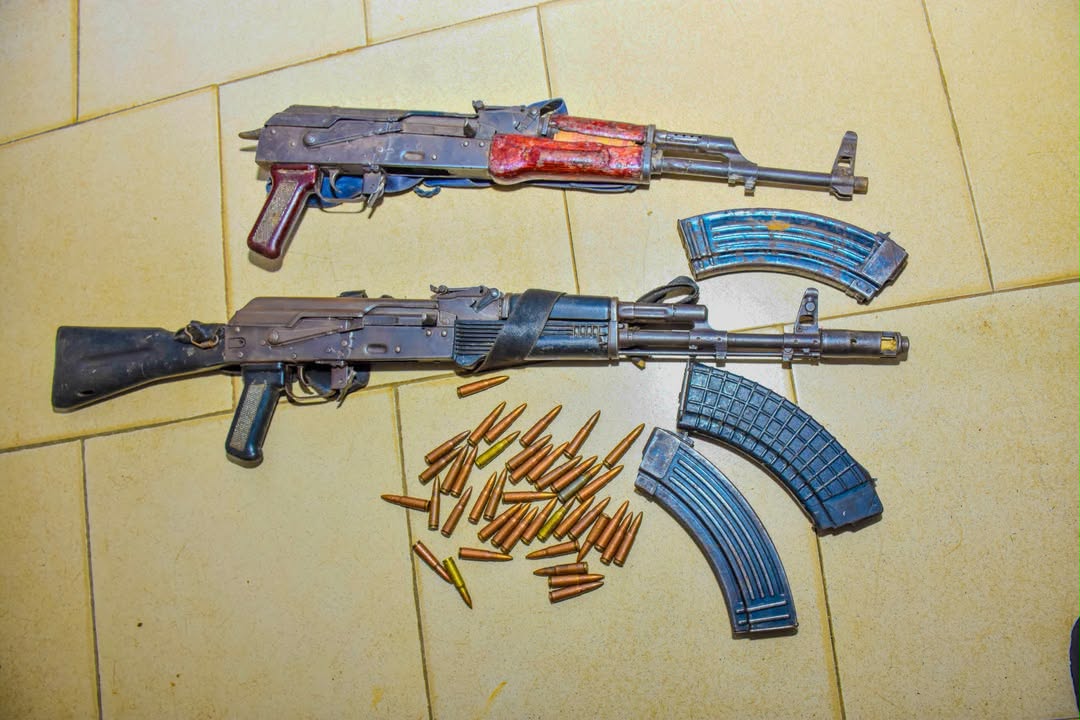
The Kwara State Police Command has recovered two AK-47 rifles, three magazines and 42 rounds of live ammunition from a commercial vehicle in Ilorin, leading to the discovery of a suspected gun-running network.
The weapons were intercepted during a stop-and-search operation along the Alapa–Okolowo axis of Ilorin, where police operatives reportedly found a bag containing the firearms and ammunition inside the passenger vehicle.
The police said a 30-year-old suspect, identified as Umaru M., initially denied ownership of the bag but later admitted to conveying the firearms and ammunition during interrogation.
According to the Command, the suspect’s statement provided a major breakthrough in the investigation, as he allegedly linked the weapons to another suspected member of the gun-running network, identified as Dan Yarubawa.
Umaru reportedly told investigators that Yarubawa handed the firearms to him for onward delivery to another individual, identified as Dahiru, outside Kwara State.
The Police Public Relations Officer, SP Adetoun Ejire-Adeyemi, in a statement issued on Monday, said efforts have been intensified to apprehend the other suspects and unravel the full extent of the alleged gun-running network.
The development, she said, was in line with the strategic policing vision of the Inspector-General of Police, IGP Olatunji Rilwan Disu, particularly the emphasis on proactive policing, intelligence-led operations and sustained efforts to disrupt criminal activities.
The Commissioner of Police, Kwara State Command, CP Adekimi Ojo, assured residents that the Command would continue to take proactive measures to identify and neutralise threats to public safety.
Ojo urged members of the public to support the police by providing credible and timely information, stressing that the Command remained committed to protecting lives and property across the state.


The changing face of Nasarawa at 30

COALITION OF RENEWED HOPE REACTS TO NATIONAL FRONT BURNER ISSUES: TINUBU IS FIXING NIGERIA, OPPOSITION SHOULD STOP PLAYING POLITICS WITH PAIN.

OPINIONThe Disturbing Facts Behind the Economy’s Beautiful Statistics and the Path Forward.
-
 Uncategorized6 years ago
FG, states urged to harness flooding for ranching, others with technology – Agbaje
-
 Headlines11 years ago
Breaking: EFCC seals Borno House of Assembly, as Hon members take to their heels
-
 News12 years ago
Nigeria Security Operatives Stage Manhunt For Homosexual Perpetrator
-
 News10 years ago
How 21-year-old Girl fled community over accusation of lesbianism
-
 News11 years ago
Yobe Gov Moves Against Deputy
-
 Opinion7 years ago
7 signs she has friend zoned you
-
Technology5 years ago
Online job placement company headhunts women
-
 Headlines10 years ago
Borno Dep Gov Abducts Another Church Leader