
Opinion
NIGERIA POWER SECTOR CHALLENGES AND ITS GENERATOR-DRIVEN ECONOMY: MORE THAN A TARIFF AND SUBSIDY ISSUE.

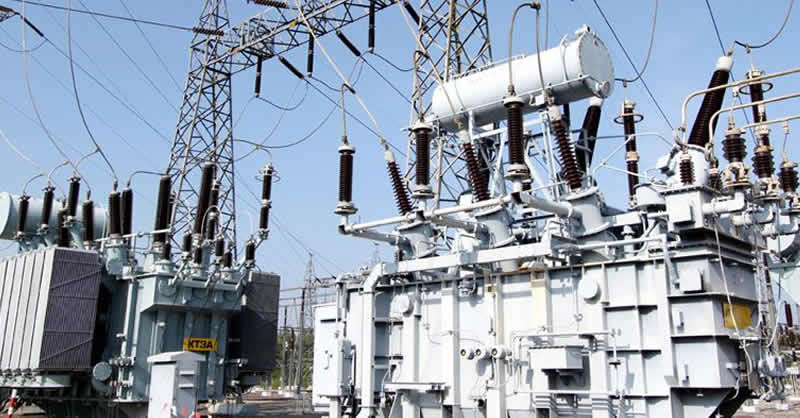
“A Nation In Darkness” so screamed the cover story of the defunct NewsWatch weekly magazine edition of 30th May, 1988. Nigerians may wish to inform the ghost of that great magazine that the narrative has not changed since. A paradox of motion without movement as efforts by successive governments failed to reasonably move the electricity industry forward.
During the 80s and 90s the power sector in Nigeria had an installed capacity of about 5,000mw. From this, close to 2,000mw was distributed to the then population of 120 million. Thirty five years down the line the story remains the same in relative ratio; 2,000mw for 120 million, is almost the same as 5,000mw distributed to 230 million. This is despite the colossal resources that has been poured into the sector along with series of “reforms”. The current generation capacity oscillates between 22,000 and 33,000mw while installed capacity stands at 13,000mw. From this about 5,000mw is delivered to consumers (NERC, 2023). The international standard as regards power supply ratio is 1,000mw to one million people. Hypothetically, therefore Nigeria should be generating a minimum of 200,000mw. Or at least 100,000mw by the turn of 21st century with capacity to transmit and distribute fifty percent of it to power the economy.
Nigeria’s contemporaries with lesser population and factor endowments (sources of electricity) have been doing pretty impressive in this regard. Such countries include ; Egypt (pop. 109m) 60,000mw, South Africa (pop.62m) 50,000mw, Brazil (pop.214m) 577,000mw and Malaysia (pop.34m) 34,000mw to cite but a few, in rough magnitudes. It is humbling too, to note establishments like the Heathrow Airport in UK and the Haram in Mecca KSA are provide with more electricity than Nigeria’s 5,000mw.
Electricity, for a fact remains the backbone of modern economies. Studies may not have come up with a precise numerical contribution of electricity to the Gross Domestic Product (GDP) in terms of percentage, but there is causal correlation between economic development and a sustainable power sector. No nation in modern times has achieved greatness without viable power sector. Nigeria’s $450 billion economy is no exception.
A Case Of Growth Without Development.
The Nigerian economy was rebased about a decade ago; in the year 2014 to be precise. The exercise saw the economy becoming the largest in Africa, with a GDP in the region of $510 billion, an impressive leap from the figure of $270 billion in 2014. Nigeria shoved the Republic of South Africa (RSA) to a second place. The rebasing formula so applied, more variables. Instead of using only “production”, but also “revenue” and “expenditure” were included. The rebased GDP however experienced sluggish growth since then (2014), due largely to macroeconomic challenges of which electricity (power) has been an internal part.
Rebased GDP could in actual sense be likened to “paper” expansion or basically a ” growth without development” in that its impact on national productive capacity and citizens wellbeing has always been minimal. In case of Nigeria despite the impressive leap, the phenomenon came with worsening levels of poverty (63%), mass unemployment (33%, among the youth) galloping inflation (29%), unstable interest and exchange rates with precipitous 2% average annual GDP growth between 2019 and 2023 (nbs,2024).
This is certainly consistent with the phenomenon of “growth without development” as espoused in the works of such greats scholars as Michael Tadaro and Andre Gunder Frank. Leveraging a nation of 230 million people with a $450 billion economy, projected to hit $1trillion in no distance future (curtesy: Tinubu’s Renewed Hope Agenda) on a five thousand megawatts of electricity could only mean strangulation, economically. The sector needs to be holistically overhauled in terms of policy and structure, to drive the economy with high efficiency.
The power sector structure at a glance.
Nigeria structured its electricity industry on a value chain comprising, generation, transmission and distribution segments. The stakeholders in the chain include; eight (8) generation companies (Gencos), one (1) state-owned Transmission Company (TCN) and eleven (11) distribution companies (DisCos). In addition about half ( 1/2 ) a dozen regulatory and support services agencies are also part of the system. These are the Nigerian Electricity Regulatory Commission (NERC), Nigerian Electricity Management Services Agency (NEMSA), Nigerian Electricity Liability Management Company (NELMCO), Nigerian Bulk Electricity Trading (NBET), National Power Training Institute (NAPTIN) and a Rural Electrification Agency (REA). These establishments constitute the Nigerian Electricity Supply Industry (NESI) ecosystem.
Two enabling Acts, the Electric Power Sector Act of 2005 (repealed) and reformulated as the Electricity Act of 2023 provided the necessary legal backings for the operations of the various agencies. Earlier in 2021, the Electric Power Sector Reform (EPSR), among others, created a semi autonomous outfit in aid of transmission stability called the Independent System Operator (ISO). The ISO complements the the TCN’s other core activities such as system operations and transmission services provider. The goal of these elaborate policy and institutional frameworks was to create the necessary enabling environment for the power sector to harness the various sources (coal, hydro, gas, solar etc) of electricity in the country to leverage Nigeria’s rapid economic transformation.
Array of interventions.
Beyond the elaborate institutional setup and “rich” policy instruments, the government periodically undertake the reviews and interventions to strengthen routine performance. Some of these interventions include, ordinary change of names, ownership structure and bailouts. For instance, the dominant establishment driving the electricity sector in 60s and 70s was called the ECN. The name was changed to NEPA in the 80s & 90s and PHCN in the 2000s. The industry was unbundled, segmented into (generation, transmission distribution) and largely privatised in 2013.
Before the partial privatisation the government wholly owned and run the electricity sector as the a quasi social service. It still intervenes once in a while to address gaps by holding equities, stabilising liquidity and facilitating access to loans. To boost consumption, government provided subsidy which until recently was to the tune of 67%. For the industry to maintain a stable liquidity base, the government took 40 percent of the equity in the Discos, aside the provision of financial guarantees to cushion revenue losses. And to boost consumption, the government provided subsidy to the tune of 67%.
Available information indicate that about seven billion and five hundred million dollars ($7.5 billion) was secured in the last couple of years to improve the operations of electricity industry, especially transmission network expansion. Not long ago, the transmission network system, (which was highly inadequate) comprised about 5,000km of 330kv and 7,000km of 132kv lines plus about 19,000km of 11kv for distribution. The loan portfolios include the IMF/World Bank, the Chinese, AfDB, Japan etc. Internally too, the government expended over N1.6 trillion since the privatisation exercise and still counting in aid of the sector. Global best practices were provided through the engagement reputable contractors and consulting firms project execution and technical support. Some of the reputable external firms so involved the sector’s operations include, the Concraft, General Electric (GE), Manitoba, Siemens GA etc. These array of periodic interventions were effected to reposition the Nigerian Electricity Supply Industry for better performance. And to oil the wheels of the process, the government grants the stakeholders right latitude to review and hike tariffs occasionally. Thus in the last decade tariffs moved from N12 kwh in (2015), N40 kwh (2020) to N66 and eventually N226 kwh for band (category) “A” consumers in 2024. On account of these exercises, the revenue accruing to the DisCos hit over a trillion naira by the end of 2023.
The Crisis Of Performance.
Despite all of these interventions and reforms, the performance sector remains lacklustre, serving Nigerians with darkness and frustrations instead. The debilitating experiences are legendary. For a start the available power of 5,000mw is too low to make appreciable impact on the economy, by constraining access to only 54% of Nigeria’s 230 million citizen. The industry too has as small as 12 million registered consumers out of which only 5.8 million are metered according to nbs and NERC (2023). With this the industry could supply power to consumers for an average of 12 – 16 hours. Many claim the figure is far less and suggest 6 hours instead. Even at that, consumers are subjected to frequent and annoying outages, poor quality currents, voltage fluctuations etc. And so Nigerians, for most part have to depend on generators for up to 48.6% of their power needs at a huge cost to the nation and the citizens’ wellbeing. Various statistics estimate that Nigeria spent as much as $5 billion on generator import in 2020 and 2021with much on fuel and maintenance to run them annually.
In the field the sector has to contend with increasing frequency of national grid collapse and the vandalisation of critical installations. Between 2017 and 2023 the grid system collapsed over 46 times by the end of 2023. Since then about 1/2 a dozen more. No thanks to aging facilities, code compromises and the use of sub standard materials on account of corruption. This is aside rising incidences of vandalism. The NERC reported as many as 117 cases of vandalisation of power installations (towers, cables, transformers etc) took place in the years 2020 and 2021. These ugly developments degrade the the power sector’s capacity enormously to the extent that about 8,000mw could not be wheeled from the Gencos. TCN’s wheeling capacity limitations plus aging infrastructure complete the industry’s woes. And not discounting the massive corrupt practices among the generality of the employees in the electricity industry. Extortion, cover up for illegal connections, connivance to steal power and wipe out bills are the order of the day.
The precarious state of the power sector was captured by ex-Governor El Rufai during a Senate screening exercise where he made it known that 5 out of the 11 DisCos were under receivership by creditors, while 3 were seriously stressed. Only 3 were managing to stay stable. Many of the investors too liked financia and technical competence to run power firms successfully. That the Gencos depend on gas for over 85% of their operations and so easily got bogged down when scarcity sets. These challenges and more have literally conspired to reduce the power sector to a national liability and a big setback to the economy and people’s happiness.
On account of this some state governments have openly come out to castigate the service providers. Just recently the Niger State house of assembly passed a motion asking the state government to pull out of the AEDC. A few years back, the Edo State Governor literally worked out the functionaries of BEDC from his office for non performance and also stifling the economy of the state. Many industries have closed down or relocated to more business friendlier environments out the country while those still hanging on are producing at prohibitive and uncompetitive costs.
Corporate bodies like MAN and NACIMA have claimed that around 800 enterprises in Nigeria have either closed down or relocated to other countries, especially the Multinationals on account of harsh business environment particularly dearth of power supply.
The missteps.
How did NESI come to be so challenged? The privatisation was done in haste with little due diligence on the buyers who turned out to be technically and financially deficient. This much insiders like former top government functionaries like El-rufai and Shamsudeen who were part of the process from inception have acknowledged.
Besides the hasty pace, the processes seemed to have dispensed with the elementary laws of demand and supply in crafting the operations of the various stakeholders along the power value chain. Simple economics tells that for effective equilibrium to be achieved what is produced (supply) and consumed (demand) should be projected right from planning stage. In such a case, the incongruous situation in which TCN/DisCos could only wheel/ off-take less than 50% of Gencos output smacks of poor planning. The relationships among the stakeholders should have been more seamless and properly synchronised.
The existence of too many regulatory agencies may serves as unnecessary “check points” especially where some of their functions overlap or operational decisions and directives conflict.
Relying on a single source of electricity like has its down side. Nigeria should diversify its sources to include viable alternatives like coal, hydro, and solar. Over reliance on an underdeveloped gas sector by Gencos has been one the drawbacks of the power sector.
Half hearted war to contain corrupt practices by successive governments been part of the power sector’s undoing Monumental corruption has permeated most, if not all aspects of the electricity industry. From the “fault man” with a ladder to the Ministerial Boardrooms where multi billion dollar contracts are influenced and awarded. Usually underlined by political patronage and/or clique interest. The alleged $6 billion Mambila Power Project comes readily to mind among others. At the lowest rang a lot of field officials from the DisCos have made it a habit to either extort or connive with consumers to short change their respective establishments. They facilitate illegal connections, wipe out bills, and pilfer accessories for pecuniary interest. A case of monumental corruption from top to bottom.
With benefits of hindsight a couple of architects of the Nigeria’s model of privatisation like El Rufai and Shamsudeen Usman had come to recognise capacity deficiency as one of the major gaps in the exercise. Political exigency and self-serving interests for instance handed over the distribution of power to entities (DisCos) that were technically and financially ill-equipped. It is therefore instructive that Government and its development partners should place high premium on the human factor when it does reform exercises.
Adopting the Breton Woods “advice” (structural adjustment programme) line, hook and sinker has a lot of down sides. Structural adjustment programmes from the West, conventionally presuppose or are based on certain assumptions, some of which include citizens’ patriotism and transparency. So also merits and competencies. These attitudes are taken for granted or as given. Unfortunately they are in short supply in environments like Nigeria. And so when the IMF/WB comes with SAP that focus on economic variables such as exchange rate, subsidy, tariff hikes, etc they hardly succeed. The take off point for donor support such as those in the power sector should instructively be the human factor, especially content of character. Else both the national and donor resources that come with such interventions/programmes would simply disappear; a basket case, which has become a recurrent feature of Nigeria-IMF/WB and indeed other externally funded bilateral projects.
Way Forward
The task of closing up 100,000mw power deficit is certainly a daunting one. But Nigeria has no option but brace up to target a respectable level of 50,000mw in the short run. And for that goal to be achieved immediate steps should be taken to address the obvious drawbacks encumbering the electricity industry.
So for a way forward, considerations for the issues herein after identified would be crucial.
a) Government should be wary of using tariff hikes and removal of subsidy as basic tools of reform. Emphasis should be placed on enhancing national investment in the power sector. The entire revenue that could accrue from the sale of 5,000mw without subsidy would be too small to turn the fortune of the sector around. Yet it has the needless potential to create widespread disillusionment in the society is massively required. Government should turn to part of the savings from the petrol subsidy withdrawal, excess crude funds, new taxation bands, etc to generate the required investment funds.
b) The human factor is of essence too. The technical and managerial capacity gaps in the TCN and the Discos at all levels should be addressed through massive technical training and retraining, plus reorientation for attitudinal change. To achieve this goal, the Government should take back the DisCos. The bane of the DisCos has been inadequate investment and inefficient management. Consumers should not be made to pay for such inefficiencies
c) Attention should be paid to coal and alternative sources of power generation like the hydro in Mambila and other parts of the country, solar and even wind energy that are equally in abundance. The West that have been preaching against fossil fuel are busy using same in national interest
d) As regards the about 8,000mw “unevacuated” stock of electricity from the Gencos, government should explore the possibility of acquiring an industrial “power bank” that could store huge amounts of energy for a long while. A special purpose vehicle (SPV) could be put in to transmit the stored energy to industrial cluster who consume power in bulk. The strategy is being adopted in many Asian and M.E countries.
e) The Nigerian government initiative on nuclear power development for electricity should be stepped up. New technologies and processes are making nuclear power plants safer and more efficient. National interest and options should be be brought to bear on this vision. But it’s worth being kept at the front burner.
f) The regulatory agencies are too many with some of them seemingly having overlapping functions. A case of too many cooks spoiling the stew. This is notwithstanding the theoritical division of functions provided for, in their respective enabling acts. The sector is top-heavy and constituting needless drain on the system.
g) The phenomenon of corruption has become malignant and also a way of life or second nature in Nigeria. It poses existential threats to communities and nation. The power represents one of cesspit of this ugly vice. It has almost succeeded in killing the sector. And so given the centrality of power in the lives of ordinary folks and the national economy, government should establish a special power court (SPC) to deal with culprits. In many other climes, corruption and the vandalisation of critical national installations/infrastructure like electricity are considered treasonable felonies. Nigeria should take a cue.
h) With time the government should explore the possibility of fast trucking the acquisition of nuclear power technology for peaceful purpose such as generating electricity. i) The Federal government too should fast truck the participation of the state governments in the power industry in the spirit of the Electricity Act of the 2023. States should be free to produce and deliver electricity to their citizens to boost economic activities.
j) The nation needs a robust strategy beyond the externally inspired narrow praxis of tariff hikes, subsidy withdrawal and free market forces.
A. G. Abubakar
agbarewa@gmail.com
Opinion
A Malicious Fabrication Dressed As Analysis: The Defamation Of Justice John Tsoho And Justice Peter Lifu
By Danjuma Lamido
Mr Chidi Odinkalu’s write up is not journalism. It is not analysis. It is not even credible criticism but modus of mob/ touting, orchestrated to sway the hoi polloi and his myrmidons.
It is a scurrilous, tendentious, and intellectually bankrupt concoction, designed to assassinate character, desecrate the judiciary, and intimidate independent cum unbiased judges into submission to political hysteria.
It deserves not applause, but categorical repudiation, with hereinafter analytical reasoning:
- THE PREMISE IS PREPOSTEROUS AND PROFOUNDLY IGNORANT
Mr Chidi Odinkalu, begins with a fundamental misapprehension of judicial administration, and proceeds to build an edifice of calumny/ his shangri-la
Case assignment is an administrative function, exercised under established rules, workload considerations, expertise, availability, and the exigencies of the division.
To transmogrify routine administrative discretion into a conspiracy is the hallmark of a mind intoxicated by paranoia and multi faceted mischief.
The insinuation that assignment equals predetermination is an insult to every judge who has ever decided a case on its merits. It is an insult to the intelligence of Nigerians. It suggests that judges are automatons, incapable of independent reasoning, and that judgments are dictated rather than reasoned.
That is false. That is libellous. That is ludicrous.
- THERE IS NO CLOSED LIST, ONLY A CLOSED MIND
The fanciful invention of a “closed list of acolytes” and a “coven of political hitmen” reveals more about the Mr Chidi Odinkalu than about the court.
Where is the evidence? Where is the document? Where is the witness? Where is the proof?
There is none. There is only innuendo, embellishment, and the reckless deployment of sinister adjectives to mask an embarrassing absence of facts.
To label cerebral honourable judicial officers as acolytes, surrogates, and hitmen is not criticism. It is character assassination of the most despicable kind. It is an attempt to delegitimise judgments simply because they are unfavourable to a preferred political faction.
Disagreement with a judgment is legitimate. Demonisation of the judge is despicable.
- JUDICIAL DECISIONS ARE JURISPRUDENCE, BUT NOT JOBBERY AS CAPTURED IN THE WORLD OF MR CHIDI ODINKALU
The catalogue of decisions attributed to Justice Lifu is presented as though deciding a case is itself a crime.
It is not.
A judge is appointed to decide. A judge is bound to interpret the law, evaluate evidence, and pronounce judgment, even when that judgment displeases powerful politicians and their vociferous apologists, and in recognition of the immutable facts- that no two cases are identical.
To declare a leadership illegal, to nullify an emergence, or to invalidate a nomination is not rascality. It is adjudication. If a party believes a decision is wrong, the law provides a remedy: appeal. It does not provide a licence for public lynching on social media (court of public opinion).
The author conveniently ignores the existence of appellate remedies, because appellate remedies require legal argument. Social media calumny requires only vitriol.
Furthermore, the claim that Justice Lifu disregarded the Court of Appeal and the Supreme Court is a gross/ deliberate distortion of facts. Judicial hierarchy is a matter for appellate courts to determine, through reasoned judgments, not for commentators to declare through hashtags. If any error occurred, it will be corrected on appeal, as the system contemplates. It will not be corrected by mob intimidation.
- THE ATTACK ON CHIEF JUDGE TSOHO IS AN ATTACK ON THE INSTITUTION ITSELF
Chief Judge John Terhemba Tsoho is a jurist of considerable learning, experience, and unimpeachable integrity. To accuse him of collusion, corruption, and servicing an unnamed patron, without a shred of verifiable evidence, is an act of unmitigated recklessness.
It is easy to allege a patron. It is easy to whisper about political wind. It is cowardly to do so without naming, proving, or substantiating anything.
What the author calls a pattern is, in reality, a pattern of his own prejudice cum imagination: every decision against his favoured party is corrupt, every judge who rules against them is compromised, and every administrator who assigns the case is a conspirator.
That is not the language of justice. That is the language of entitlement. It is the language of those who believe the court exists to validate their political ambitions, rather than to uphold the law.
It unequivocal self evident that this Mr Chidi Odinkalu’s venomous virtupuration and vilification of most revered profession that raised him to prominence and relevance, is not only derisory and cretinous but an inane, asinine, fatuous and preposterous display of obtuse nescience.
Let the courts decide cases. Let appellate courts correct errors. Let commentators learn restraint. And let the masquerade of malicious falsehood be unmasked for what it truly is: -a disgraceful assault on the rule of law.
Opinion
OPINIONImams and Islamic Scholars in Partisan Politics and the Weight of Religious Conviction.
.
By: A G Abubakar
It was the late Sardauna, Ahmadu Bello, who told Nnamdi Azikiwe, fondly called Zik, that they should understand their differences rather than forget them. That was in reaction to Zik’s call on the Sardauna to forget their differences in order to move the then nascent Federal Republic of Nigeria forward.
The message in Sardauna’s reply was that differences are what naturally define and distinguish one society or group from another. These differences may be rooted in faith, culture, or tradition. They constitute the sociological makeup of a people and are often difficult to abandon or merge into one another. Understanding one another makes it easier to identify common ground and leverage it to build a strong, virile and united entity.
More than half a century later, Nigerian society has yet to achieve even an adequate understanding among its diverse constituent groups, let alone forget their differences. The lesson here is that, as Imams plunge into the murky waters of Western liberal democracy, they should be mindful of the burden of understanding differences and the challenge of forgetting them.
There is practically nothing that says Imams should not participate in politics, constitutionally or otherwise. However, because of the demands of democracy, which have a high probability of clashing with their Islamic values, many have stayed away from partisanship. That attitude seems to have changed. Open declarations of political support, campaigns to secure party tickets, and the use of pulpits to advance partisan interests have increasingly come to define the relationship between Muslim clerics in Northern Nigeria and partisan politics.
Many clerics have become cheerleaders for political figures, often openly declaring their partisan support for politicians and political parties, sometimes with reckless abandon. In return for such endorsements, political actors and governments have extended assorted forms of patronage to them. Cash donations running into millions of naira, as witnessed in Jos; privileged access to Aso Rock; bulk allocations of palliatives; and sponsorship of Hajj pilgrimages illustrate some of the material benefits associated with political loyalty.
Some have gone a step further by abandoning the pulpit for the political arena and throwing their hats into the ring. They are no longer content with counselling their followers on such issues as piety, civic responsibilities, and “voting wisely.” They want to be voted into political office, too. They have that inalienable right.
The Nigerian Constitution enshrines this right. Sections 65 and 66, 106 and 107, 131 and 137, and 177 and 182 of the 1999 Constitution of the Federal Republic of Nigeria (as amended) prescribe the qualifications and disqualifications for membership of the National Assembly and State Houses of Assembly, as well as for the offices of governor and president, respectively. These provisions do not discriminate on the basis of faith.
Why single out Imams for scrutiny for seeking elective positions? Or generally for becoming partisan? Why are their counterparts, the pastors, not subjected to the same scrutiny? The answers are simple: leadership contexts and principles differ, sometimes so fundamentally that it takes uncommon willpower to suppress and reconcile one’s intrinsic beliefs with the dictates of Western liberal democracy. The Islamic political system and democratic practice may share a common vision of liberty (‘yanci) and justice (adalci), but they differ in their fundamental political processes and jurisprudence.
Most clerics have been schooled in the Islamic system of governance—the Sharia. Divesting themselves of deeply ingrained Islamic political convictions while discharging their democratic responsibilities may not be the easiest task.
A Christian cleric participating in democratic politics may arguably be seen as making a homecoming because of the historical relationship between the Church and the state. Christianity emerged in the eastern Mediterranean, within a world shaped by Jewish religious traditions and Greco-Roman civilisation.
As it spread across Europe, it encountered societies whose cultural and religious identities had already been shaped by Greek, Roman, Germanic, Celtic, and other pre-Christian traditions. Its expansion did not simply erase everything that preceded it. Rather, the encounter between Christianity and these traditions produced a complex process of religious transformation and cultural adaptation.
On the other hand, Christianity has also played a significant role in shaping Western political thought, particularly through Christian ideas and values. It all started when the Church found itself filling the political vacuum following the collapse of the Western Roman Empire. The Church was inadvertently drawn into playing both secular political and spiritual roles at the same time. That was between 500 and 1000 AD. In the second era, between 1000 and 1300 AD, kings and the Church shared leadership. It was during this period that the former claimed the “divine right” to rule.
After centuries of turmoil within the Church and the monarchy, the two institutions were separated, ushering in an era of secular democracy and the rule of law. This process, particularly from 1789 onwards, was preceded by a long period during which the Church and the state mutually shaped each other in many respects. For instance the Church influenced the democratic concepts of equality before God (Law); freedom of conscience; separating religious and political authority (things of Caesar and things of God); universal suffrage (Benedictine orders); and institutional unconditional care for the vulnerable (agape), etc.
The theological and jurisprudential relationship between Islam and democracy has a different historical background. Islam developed a political and legal tradition in which religious and political authority were historically interconnected, a relationship that has continued to influence Muslim societies to this day. The process of Islamic governance started with the early Muslim community under the Prophet Muhammad (SAW). He was guided by wah’y (devine inspiration), an aspect of which gave rise to the Constitution of Medina (622 AD). The subsequent institution of the caliphate after his death, developed an Islamic jurisprudence, and traditions concerning political leadership, justice, consultation (shura), allegiance (bay’ah), and public responsibility, based on the Prophet’s teachings.
In classical Islamic jurisprudence, political authority is generally understood to be subject to divine law and moral obligations derived from Islamic sources. In liberal democracy, political authority is ordinarily constituted and limited by a constitutional order grounded in popular sovereignty, individual rights, and the rule of law. These principles can conflict, particularly where interpretations of religious law differ from constitutional guarantees of individual liberty, religious equality, or popular legislative authority. The two systems, however, overlap in such areas as justice, accountability, consultation, and the welfare of society.
The dilemma facing an Imam who enters democratic politics is the challenge of reconciling his background with the demands of the Western democratic system within which he must operate. He knows that the sources of Islamic jurisprudence are generally identified as the Qur’an and Sunnah, with ijma’ (juristic consensus) and qiyas (analogical reasoning) among the principal methods recognised in Islam. This contrasts with democracy, where people and institutions formulate laws.
He also understands that political leadership is not merely an electoral contest between individuals seeking popularity. Rather, it is guided by certain qualifications, including maturity, soundness of mind, sufficient religious knowledge for the responsibilities of leadership, justice or uprightness, competence, and the ability to discharge the functions of governance. Some classical jurists also prescribed conditions such as male sex, lineage (Shi’a Imamate), among others, though with certain nuances.
The underlying principle, however, is significant: leadership is conceived as a trust and responsibility, not merely a badge of honour to be won. The Qur’anic concept of amanah—trust—therefore has profound implications for political leadership. The leader is not simply accountable to voters. He is ultimately accountable to God. That theological dimension distinguishes Islamic political ethics from the secular constitutional conception of political authority, where sovereignty, authority, and legitimacy rest with the people.
The Nigerian secular Constitution, for example, begins with the words: “We the people of the Federal Republic of Nigeria…” It establishes a constitutional order in which governmental authority is exercised through institutions created by the Constitution. In Islamic political theology, however, ultimate sovereignty belongs to Allah. The Qur’an states:
“The command is for none but Allah.” Qur’an 12:40.
Muslim scholars have interpreted the political implications of such verses differently. Some Islamist thinkers have used the concept of hakimiyyah,divine sovereignty,to argue that legislation cannot legitimately contradict divine law. Others have argued that democracy can be reconciled with Islam if it is understood as a mechanism for consultation, accountability, and the peaceful selection of rulers rather than as an assertion that human beings possess unlimited authority to legislate against God’s commands.
Beyond the religious injunctions is the more difficult question of conscience and the burden of knowing. A cleric who enters politics must operate within a constitutional system whose laws, institutions, and political culture may not always correspond perfectly with his understanding of Islamic jurisprudence.
A politician may have to negotiate with individuals whose lifestyles, beliefs, or political positions he strongly disagrees with. He may have to defend constitutional rights for people whose choices he personally considers morally wrong. He may have to work with political parties whose internal practices and the character of some of their members are far removed from his religious ideals.
One of the most significant areas of potential tension is the meaning of freedom. Liberal democracy protects freedom of expression, association, religion, and political participation. These freedoms extend to citizens with whom the cleric may profoundly disagree. A democracy does not merely protect popular or respectable opinions. It also protects unpopular opinions, minority viewpoints, and, within constitutional limits, conduct that sections of society may consider offensive or immoral.
Other dilemmas include: is political freedom absolute?
Can citizens publicly criticise religion?
Should people be permitted to advocate lifestyles that a cleric regards as sinful?
Can a Muslim politician defend the constitutional rights of people whose personal conduct violates his religious convictions?
What about theft, inheritance, adultery, murder, and treason, among other matters?
A typical Nigerian Muslim cleric may have been exposed to three or more historically related theological models of political leadership and governance. The first is based on the Constitution of Medina, promulgated by the Prophet to establish a harmonious community. The second is the Pact of Umar, associated with Caliph Umar, the second of the four Rightly Guided Caliphs. It essentially structured society along the lines of the ruling class/religion and the ruled (Dhimmis), subject to specified conditions and obligations.
The third is the Millet (Milla) system, which was used during the Ottoman period. Under this system, leadership and control were devolved to accommodate distinct social and religious formations, which remained answerable to the Caliph. These three or more models are not mutually exclusive, as they evolved as part of the Sharia state system.
Challenges arise when the setting is diverse, with Muslim and non-Muslim populations being almost equal, and governance is based on Western liberal democracy, as is currently the case in Nigeria. Muslim scholars venturing into politics with a mindset shaped by any of the three systems may find it highly challenging, and delicate to navigate.
Perhaps that is why three groups have emerged among the clerics on this matter. The first comprises those who choose to distance themselves from democratic politics. The second encourages participation as a means of minimising potential harm to Muslims (maslahah and wasilah). The third comprises those who consider participation in democratic governance unacceptable and will stop at nothing to oppose it, including the use of violence. They argue that sovereignty belongs to God (hakimiyyah) and that human-made legislation (democracy) inherently contradicts divine law (Sharia).
Those who choose to participate in the democratic dispensation on a partisan basis belong to the second category, but they carry the burden of understanding the other dispensations and the implications of their decisions. To begin with, they must have a high degree of intellectual clarity about the two systems: they must understand their obligations under Sharia, understand constitutional democracy, and know where the two converge and where they diverge.
They must also acknowledge that the ulama cannot absolve themselves of responsibility for some of the persistent challenges confronting the North in particular and the nation at large. Their sectarianisn, complicity, internal divisions, or failure to provide the necessary moral and intellectual leadership may have, in no small measure, contributed to the problems the society faces. The same challenges a section of them is trying to address through full participation in partisan politics.
It is also obvious that they need to know, as a matter of fact, that once elected to public office in Nigeria, their oath is to the Constitution and the people, not to a personal clerical constituency. This is particularly important as they deal with issues such as political legitimacy under non-Islamic jurisprudence; legislation by democratic institutions in relation to divine injunctions; and political and moral accountability under Islam and democracy, among others.
The turban can enter the ballot box. It can even enter the Government House or the National Assembly. But once inside, it must confront the full demands of constitutional democracy. That is where clerical politics will ultimately be tested: what to forget, what to understand, and what to hold on to, without compounding the challengeson the ground. .
It will take uncommon patriotism to rise above Zik’s “let’s forget our differences” and Sardauna’s “let’s understand our differences” to embrace and defend a system that challenges the very foundations of one’s theological convictions. It is no small undertaking. Wishing the clerics well, provided their motivations are genuinely driven by the interests of the people and a sense of accountability to the Almighty.
A. G. Abubakar
agbarewa@gmail.com
BY VICTORIA NGOZI IKEANO
victoriangozii@gmail.com 08033077519
For the second consecutive year women have won the Nobel Peace Prize. Altogether 69 women have since its inception in 1901 won the Nobel Prize which is in five categories, namely, Physics, Chemistry, Medicine, Literature and Economics. Understandably, there are more male laureates than female. However, this columnist is more interested in the female laureates and more specifically in women winners of the Nobel prize for peace. I consider the peace prize as the most important of all five types of prizes because peace is the fulcrum for order and harmony from which ensue undisturbed development in joyous activity that makes for upwards progress and leads to real happiness.
Let us delve into some statistics about the Nobel Prize for peace as it relates to women. Overall, 21 females have been awarded this particular prize. The very first woman to win the peace prize was Bertha von Suttner, also described as the first Austrian Laureate, that is, the first female from Austria to be awarded a Nobel Prize. Bertha von Suttner was given the prize in 1905 “for her influential anti-war activism, her leadership in international peace movement and her authoring the famous pacifist novel, ‘Lay down your arms”’. Among other women Nobel peace prize winners are, Mother Teresa, Malala Yousafzai and Narges Mohammadi. Mother Teresa, a nun clinched the prize in 1979, “ for her work for bringing help to suffering humanity”, According to the awarding body this involves, “building homes for orphans, nursing homes for lepers and hospices for the terminally ill” in Calcutta, India through founding a new sisterhood, Missionaries for Charity.
Malala Yousafzai, at just age 17 (the youngest laureate) was awarded the Nobel peace prize in 2014 alongside Kailash Sayarthi (as joint winners), “for their struggle against the suppression of children and young people and for the right of all children to education”. Specifically, Malala, a Pakistani was honoured “for her fight for every child to receive education”. In 2012 she literally cheated death when she was shot in the head in a school bus, thereafter fleeing to England to live in exile. She was named among the ‘100 most influential people’ by Time magazine in 2013. “On her 16th birthday she spoke in the United Nations. In her speech Malala called for equal right to education for girls all over the world and became a symbol of this cause”.
With the latest award to South African Navi Pillay, there are now three female African Nobel peace laureates; the others being Wangari Maathai of Kenya (2004) and Ellen Johnson Sirleaf. Sirleaf was joint winners with Leymah Gbowee and Tawakkoi Karman for “for their non violent struggle for the safety of women and for women’s rights to full participation in peace-building work”. In particular Ellen Johnson Sirleaf, a former Liberian president is described as Africa’s first female democratically elected head of state that “came to power in 2005, creating peace and economic progress in the country. She strengthened women’s rights, expanded freedom of speech and became an example for other African leaders”. On her part, Wangari Maathai clinched it “for her contribution to sustainable development, democracy and peace via the Green Belt Movement”.
Narges Mohammadi won it in 2023 for fighting the oppression of women and promoting human rights in Iran. She is said to have been arrested 13 times, sentenced to 31 years in prison with 154 lashes between 1998 and 2023. She was named Nobel peace prize winner whilst still in prison. Also, Venezuela opposition leader Maria Corina Machado won it last year, 2025. Machado had to be smuggled out of Venezuela with help of United States to be able to receive her prize because of restrictions placed on her by her home government. The latest female Nobel peace prize winner (2026) is Navi Pillay, a former South African High Court Judge who also served as head of the United Nations Human Rights court. She was so honoured for “being instrumental in ensuring war crimes against humanity and genocide are prosecuted”.
All 21 female Nobel Peace winners were mostly activists in one way or other. Their activities are exemplary, worthy of emulation and praise. They were brought to limelight through exposure by the international media which in turn helped propel them to recognition. Still, efforts of all the Nobel laureates, male and female as well as others working externally in public domains in quest for global peace is like a drop in the ocean. One area that can contribute maximally to world peace is the HOME. The home from where all of us take the first steps into the larger society, the outside world, is the very first place to nurture peaceful citizens in whom is rooted peaceful disposition in all its ramifications. Here, the woman holds sway, here is her high office. She has been imbued by the Creator with the ability to influence every fruit of her womb through high guidance as a guide, guardian and teacher. Unfortunately, we women have trampled and neglected the gifts bestowed on us by the Almighty in pursuit of worldly recognitions; we have neglected the home, turned away from our sacred callings, chasing vainglorious sham instead. The result is that we have through our wayward living, unworthy of genuine womanhood, masked by false piety literally stretched our hands to the under-world, dark regions and begetting human beings who are no more than agents of darkness, tormenting everyone with their evil deeds everywhere and peace is eluding mankind. We women bear the greater blame for this sad state of affairs!


2027: ‘You Must Be Sick’ — Senator Orji Kalu Rejects Calls to Back Peter Obi

31 Years On Throne: Al-Hikmah Varsity Founder Hails Emir Of Ilorin’s Legacy Of Peace, Unity

Kwara 2027: APC Can’t Use Offa Tragedy To Escape Defeat – PDP

-
 Uncategorized6 years ago
FG, states urged to harness flooding for ranching, others with technology – Agbaje
-
 Headlines11 years ago
Breaking: EFCC seals Borno House of Assembly, as Hon members take to their heels
-
 News12 years ago
Nigeria Security Operatives Stage Manhunt For Homosexual Perpetrator
-
 News10 years ago
How 21-year-old Girl fled community over accusation of lesbianism
-
 News11 years ago
Yobe Gov Moves Against Deputy
-
 Opinion8 years ago
7 signs she has friend zoned you
-
Technology5 years ago
Online job placement company headhunts women
-
 Headlines10 years ago
Borno Dep Gov Abducts Another Church Leader