
Opinion
OPINION( BOKO HARAM): A Time To Look Beyond The Obvious.

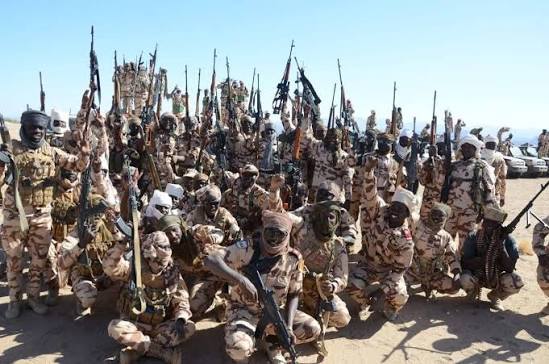
By: A G Abubakar
The book, Scars: Nigeria’s Journey and the Boko Haram Conundrum, written by General Leo Irabor, rtd, was launched recently. The occasion was graced by a galaxy of who is who is in Nigeria’s contemporary leadership. The General pulled it off by having two former heads of state in attendance: Olusegun Obasanjo and Goodluck Jonathan. The serving one Bola Tinubu was represented by his Minister of Defence, Badaru. Former President Olusegun Obasanjo, who wrote the book’s Forward, was also the Chairman of the occasion.
The clergy wasn’t left out. The author was able to bring His Eminence, the Sultan of Sokoto, and His Royal Highness, the Etsu Nupe, to the occasion, too. The Catholic Bishop of Sokoto, Mathew Hassan Kukah, the book reviewer, was a strategic compliment to the royal fathers; a conclave of the secular and the spiritual
A former National Security Adviser, General B.M.Monguno, was tasked with the keynote remarks, tilted ” Reflections on National Security,” with messages from the Chief of Defence Staff, CDS, the National Security Adviser (NSA), and a host of other serving and retired security-related stakeholders. Why give this roll call? The answer is, since the subject matter of the book was security and how it has become elusive over the last one and a half decades, there is no better dramatis personae than the collection at the book launch. One would expect that at the end of the occasion, a glimpse of the roadmap for solutions would have been more discernible. A holy grail would have been discovered, so to say! And, this optimism could not be a misplaced one either. Yours faithfully, was privileged to be part of the occasion on account of the author’s personal invitation.
Under Their Command And Watch
Obasanjo was at the helm of the nation’s affairs twice. One as a military head of state in the late 70s. His second coming was in agbada/farar hula (civilian) in 1999. The Boko Haram (Jama’at Ahl al-Sunna li Al-Da’wa wal Jihad) struck about the same time in Kanamma the headquarters of Yunusari LGA, of Yobe Yobe, in the year 2000. He was there until 2007 when ‘Yar Adua took over and susequently Goodluck Jonathan, who took over in 2009, after the death of his boss. He had his baptism of fire by Boko Haram in 2014, following the abduction of over 250 secondary school girls in Chibok town, a local government area in Borno State.
President Buhari rode on the back of the insecurity, among others, to win power but could only do much in 2015. The trend of abductions continued with Buni Yadi students and Dapchi girls. The Boko Haram became more sophisticated and more potent. Its mutant outfit Islamic State in West Africa Province (ISWAP), became more formidable. The duo, though mutually antagonistic to each other due to differences on ideological inclination, were able to expand their operations beyond the North East region of Nigeria by the year 2020. They were able to establish cells in both the Central and North Western zones, where they worked in alliance with other insurgency groups like the Ansar, Lakurawa, Mahmuda etc in such states as Niger, Kaduna, Kogi, Kebbi and lately Kwara.
General Monguno, who was the NSA throughout Buhari’s eight years, is a “son of the soil” (indigene) of Borno State, where Boko Haram insurgency started. The author, whose recollection and assessment of the crisis via the book that was launched, served as President Muhammadu Buhari’s (PMB)Chief of Defence Staff (CDS). He worked closely with the National Security Adviser (NSA), Monguno. Ordinarily, there was no single group in Nigeria’s history that should have a greater depth of the nation’s problems than those present at the book launch.
The author tried very much in dissecting the raisons d’etre of Boko Haram and its modus operandi. He also proffered workable solutions based on his field and personal experience. But that’s where the discourse stopped. One by one, the men that are being looked up to for clearer vision came across as almost banal. Though the occasion may not be appropriate for war room ideas, the ideological interrogation of the historical manifestation of the Boko Haram insurgency or any other could hqve bene of great help.
Still Dwelling On The Usual Suspects
The recognition and appreciation of this fact could go a long way in finding a sustainable solution to the ugly phenomenon. Unfortunately, most eminent speakers dwelled on the usual suspects; poverty, politics, porous borders, and ignorance. As relevant as these factors are, they remain as symptoms and not causes. They are enablers that can reduce the foothold of insurgency but not keep it at bay sustainably. Islamic insurgency is an ideological movement with a long history, which should be of essence when it comes searching for solutions. Wisdom says that “it is easier to fight an invasion army more successfully than that of a belief system.”
Obasanjo spoke of “better life” for the youth. Kukah dwelled on ethno-religious schism, the nation’s challenged security architecture and the likes. The Sultan, as retired General of the Nigerian army tried to distance the Muslim ummah (faithfuls) from the insurgency, including the wrong notion being widely held regarding the Islamic context of Jihad. According to him, Jihad generally means “to strive” to “struggle” for good, in both personal and social realms. Monguno took his listeners down the lane of Nigeria’s history and security challenges since independence in 1960 and blamed some of the crises on attitudes and bad governance.
Jonathan, in his brief remarks, saw the Boko Haram phenomenon from the political prism, even though he recognised the millions of out-of-school kids as part of the enablers. That’s why his Administration introduced the Al’majiri school that couldn’t get traction after he left office. In the final analysis was the collective call on all sundry to turn a new leaf also for the governments to be guided by justice. Unfortunately, these elements are not given. They are usually cultivated, especially by leadership. But here we were, before three or more generations of political leadership, which people looked up to for solutions, ironically pontificating on “change” and “justice.”
The takeaways from the esteemed interventions are two-fold. One, leadership in Nigeria is yet to contextualise the phenomenon of religious insurgency and easily gets preoccupied by fighting the symptoms basically. Secondly, and drawing from the first drawback, the successive governments seemed “trapped” when it comes to appropriating appropriate strategies for dealing with the historical phenomenon of faith-based insurgency.
Governments can build all the schools, improve the people’s well-being, create job opportunities that are needed, but they may still go only as far, with insurgents. Such interventions needed to be taken in tandem with encouraging a shift in the acquisition of religious knowledge, from the extremist perspective to the mainstream. This should be done right from the primary school level, with a view of producing der-adicalised future generations. By necessity, therefore, the content of learning and the needed power (quantity and quality) should be developed, especially across the Muslim majority states.
The learning system should be able to expose learners to the evolution of sects and sectarianism in Islam. To interrogate the various experiences and their implications for individuals and society. Nations that were able to do so have become less prone to insurgencies that could pose existential threats. Such countries include Malaysia, Indonesia, Morocco, Turkey, Kazakhstan, UAE etc.They succeeded partly because they were able to come to navigate the nuanced complexity of Islamic and modern day political systems as relates to both the adherents and other non Muslims in a given setting.
Shari’a Is Islamic But Not The Violence
The challenge in the search for a faith-based political system in Islam dates back to few decades after the death of the Prophet of Islam, Muhammad in the year 632 AD. The choice of a successor after the first three, gave rise to what has come to be known as Shi’a sect, now dominant in Iran, Iraq, Lebanon, Yemen and few others. They have over a dozen sub-sects. Shia’a vests political leadership in a supreme/spiritual leader, the Imam, and the system is thus generally referred to as, Imamate. The Imams are believed to be descendants of the Prophet of Islam, allegedly.
The Sunni went on to device a political system that was based on Islam’s Holy Book, the Qur’an and the Hadith (sayings and way of life) of the Prophet. The prominent clerics in this endeavour included Al’Mawardi (972-1058), Al’Ghazali (1058-1111), Ibn Taymiyya (1263-1328), Ibn Khaldun (1332-1406), among others. Their works among other developments at the time gave rise to two branches of the Sunni – those hanging onto the ideals and ideas of the forerunners who shared the prophetic era and those that were philosophically inclined. The former is today referred to as Sunni-Salafi, and the latter known as the Sufi. Both groups have subgroups.
The Sufi Sunni, loosely called Ɗariƙa, has such sub sects as the Tijjaniyah, Ahmadiyah, Qadriyyah etc, so named after their spiritual founders or prominent leaders. The Sufi are generally more laid back and accommodating.
The Jihadists In The Midst
The Sunni-Salafi may be divided into three or more formations, largely driven by the works of Ibn Taymiyyah, an theocratic purist of the first order. The Sheik is alleged to never believe in a secular leadership system. He believes that the Muslim world should be ruled by Muslims using the Shari’a law. His strong aversion of external sources of law outside Islam was rooted in the tyrannical era of the Mongols (Mouguls) who ruled his part of the world that time. It seems he used the pulpit in energising his compatriots against the “invaders.” A liberation theology of sorts.
Ibn Taymiyya influenced later Islamic clerics like the Muhammad ibn Abd al-Wahab (1703-1792) of Saudi Arabia, who is still being revered as the father of Wahabism (theocratism). He in turn influenced the late Grand Muftis of the Kingdom of Saudi Arabia, such as Abd al-Aziz ibn Baz (1910-1999), Muhammad ibn Uthaymeen and many others. In Egypt, Hassan al Banna, and Sayyid Qutb used the Wahabism philosophy to found the Muslim Brotherhood (1928) to fight against British colonial rule and the subsequent constitutional administrations in Egypt.
Within the ranks of the Salafi movement there are moderates, modernists, and the firebrand (jihadist). They all draw inspirations from Ibn Taymiyya, Wahabism and the Muslim Brotherhood in varying degrees and appreciation. Ibn Taymiyyah’s notable works included Al-Siyasah al-Shar’iyyah and Al-Hisbah fi al-Islam. The former is a touchstone in Islamic governance, principles and rules for Shari’a-based state) while the latter deals with the role of the state in promoting good and forbidding evil.
Many Sunni-Salafi in Nigeria have participated in government. They include Abubakar Gumi snr, the Grand Khadi of defunct Northern Nigeria, Prof/Sheik Pantami, a Minister in Buhari’s government, to mention but a few. Others who subscribe to harmless aspects of modernisation and use the religion to promote same, include individuals like Professors/Sheikhs, Rijiyar Lemo, Mansur Sokoto, and Jabir Mai Hula. These gentlemen are lecturers in conventional universities. Yet there was Sheikh Ja’s afar, a gifted intellectual who preached balance between Islam and western education.
Then came the extremist branch of the Sunni-Salafi; the Jihadist. They come in with various names and platforms such as al-Qaida, Taliban, Al’shabab, ISWAP, Ansar, Mahmuda, Lakurawa, Abu Sayab, Jama’a Islamiyy, etc. They are united by one vision; a Shari’a State anywhere Muslims are in majority. To them, democracy is an aberration. Muhammad Yusuf and his co-travellers in the Boko Haram are the promoters of this visiona; a vision they are prepared to enforce at all cost, including violence. As Sunni-Salafi Jihadist movements, they arguably rely on aspects of ibn Taymiyya’s works from where they continue to draw inspiration. The demolished centre/mosque of the Sect in Maiduguri was actually named after the great Sunni cleric ibn Taymiyya as a mark of honour and reverence.
Insulating The Next Generation,Young
From the above rundown on the Jihadist movement, it is evident that the combined number of subscribers to their brand of Islam is very negligible . Unfortunately, they seem to define Islam with its over 2 billion faithfuls, just behind Christianity, which has 2.5 billion followers. The fact that Jihadists communicate with violence, make them grab the headlines faster. A case of “the head that bleeds gets the headlines or better still if it bleeds, it leads.” Maybe it’s with this in mind that insurgents android made carnage and disregard for the sanctity of life wrapped up in religion, as their stock in trade. Notwithstanding, the fact that the Holy Qur’an is against such a practice, where it unequivocally says in Surah Al-Ma’idah (5:32) that “whoever kills a soul, unless for a soul or for corruption in the land, it is as if he had slain mankind entirely.” Insurgents care less about such divine injunctions.
To keep them at bay, two-pronged approaches should be adopted. The here and now is to degrade them while putting in place holistic educational systems that can equip and insulate future generations from being vulnerable to religious extremism. Governments in Muslim majority states should start growing the next generation of Gumi, Pantami, Maqari, Dahiru Bauchi, Sanusi Lamiɗo Sanusi, Rijiyar Lemo, Aliyu, Umar, Mansur, Adam Al-Ilori, Alfa Oranaike, Ja’afar, etc now. This shall, however, call for paradigm shift away from bogus projects to the development of quality education and innovation with a view to evolving a humane and just society.
General Irabor rtd, CFR, and former CDS, has cast the first stone or better still a “projectile” with his seminal book, “Scars.” It’s left for governments at all levels working together with major stakeholders in the society to increase the “propulsion and range” by redoubling efforts in rolling back the Boko Haram and indeed any other form of terrororist acts. The immediate task before the army is to degrade them, while governments at all levels reform and prime the educational system to secure society in the future.
In the short run, the rule of law should be decisively exercised to check the mind-boggling corruption in the system – a national scourge that partly fuels inequality and deprivation in the society. The government, along with relevant stakeholders, should also act in a similar vein to check the excesses of charlatans that hide under religion to spew hatred and sow discord among the people.
It’s only in Nigeria and maybe parts of the sub saharan region that individuals are free to erect a place of worship, equip same with public address system and commence preaching or start conducting religious classes without the necessary pre-qualification by relevant body of experts/councils. Society can never be stable and reforms sustainable in an environment of lawlessness. Law and order should be brought to bear effectively on the affairs of society, especially a traumatised one like Nigeria. The appreciation of this challenge should, however, be backed with a robust social safety net that works, including easy access to both secular and less divisive forms of religious education/knowledge. These have the potential to make society less vulnerable and also insulate the young from religious extremism.
History indicates that outside the Middle East, Christianity received traction across the world through education (chalk, blackboard, books, the Bible) and not through the Crusaders or Knights Templar on horseback So is mainstream Islam. A well-rounded educational system can be the silver bullet. Through the instrumentality of education, religious harmony has made enormous contributions in leveraging development in such Muslim majority nations like Indonesia, Malaysia, the UAE, Turkey, etc. Insurgency shouldn’t be allowed to do the opposite in Nigeria. It should be denied a permanent foothold.
Nigerians have suffered enough from the vagaries of terrorism that has lasted for about one and a half decades. The nasty experiences shouldn’t become a way of life. However, getting out of the cuagmire would entail looking deeper into the ideological roots of the phenomenon of faith-based insurgency. Therefore, the search for solutions should be more encompassing and deep rooted, beyond the obvious symptoms and enablers.
A.G.Abubakar agbarewa@gmail.com
Opinion
A Malicious Fabrication Dressed As Analysis: The Defamation Of Justice John Tsoho And Justice Peter Lifu
By Danjuma Lamido
Mr Chidi Odinkalu’s write up is not journalism. It is not analysis. It is not even credible criticism but modus of mob/ touting, orchestrated to sway the hoi polloi and his myrmidons.
It is a scurrilous, tendentious, and intellectually bankrupt concoction, designed to assassinate character, desecrate the judiciary, and intimidate independent cum unbiased judges into submission to political hysteria.
It deserves not applause, but categorical repudiation, with hereinafter analytical reasoning:
- THE PREMISE IS PREPOSTEROUS AND PROFOUNDLY IGNORANT
Mr Chidi Odinkalu, begins with a fundamental misapprehension of judicial administration, and proceeds to build an edifice of calumny/ his shangri-la
Case assignment is an administrative function, exercised under established rules, workload considerations, expertise, availability, and the exigencies of the division.
To transmogrify routine administrative discretion into a conspiracy is the hallmark of a mind intoxicated by paranoia and multi faceted mischief.
The insinuation that assignment equals predetermination is an insult to every judge who has ever decided a case on its merits. It is an insult to the intelligence of Nigerians. It suggests that judges are automatons, incapable of independent reasoning, and that judgments are dictated rather than reasoned.
That is false. That is libellous. That is ludicrous.
- THERE IS NO CLOSED LIST, ONLY A CLOSED MIND
The fanciful invention of a “closed list of acolytes” and a “coven of political hitmen” reveals more about the Mr Chidi Odinkalu than about the court.
Where is the evidence? Where is the document? Where is the witness? Where is the proof?
There is none. There is only innuendo, embellishment, and the reckless deployment of sinister adjectives to mask an embarrassing absence of facts.
To label cerebral honourable judicial officers as acolytes, surrogates, and hitmen is not criticism. It is character assassination of the most despicable kind. It is an attempt to delegitimise judgments simply because they are unfavourable to a preferred political faction.
Disagreement with a judgment is legitimate. Demonisation of the judge is despicable.
- JUDICIAL DECISIONS ARE JURISPRUDENCE, BUT NOT JOBBERY AS CAPTURED IN THE WORLD OF MR CHIDI ODINKALU
The catalogue of decisions attributed to Justice Lifu is presented as though deciding a case is itself a crime.
It is not.
A judge is appointed to decide. A judge is bound to interpret the law, evaluate evidence, and pronounce judgment, even when that judgment displeases powerful politicians and their vociferous apologists, and in recognition of the immutable facts- that no two cases are identical.
To declare a leadership illegal, to nullify an emergence, or to invalidate a nomination is not rascality. It is adjudication. If a party believes a decision is wrong, the law provides a remedy: appeal. It does not provide a licence for public lynching on social media (court of public opinion).
The author conveniently ignores the existence of appellate remedies, because appellate remedies require legal argument. Social media calumny requires only vitriol.
Furthermore, the claim that Justice Lifu disregarded the Court of Appeal and the Supreme Court is a gross/ deliberate distortion of facts. Judicial hierarchy is a matter for appellate courts to determine, through reasoned judgments, not for commentators to declare through hashtags. If any error occurred, it will be corrected on appeal, as the system contemplates. It will not be corrected by mob intimidation.
- THE ATTACK ON CHIEF JUDGE TSOHO IS AN ATTACK ON THE INSTITUTION ITSELF
Chief Judge John Terhemba Tsoho is a jurist of considerable learning, experience, and unimpeachable integrity. To accuse him of collusion, corruption, and servicing an unnamed patron, without a shred of verifiable evidence, is an act of unmitigated recklessness.
It is easy to allege a patron. It is easy to whisper about political wind. It is cowardly to do so without naming, proving, or substantiating anything.
What the author calls a pattern is, in reality, a pattern of his own prejudice cum imagination: every decision against his favoured party is corrupt, every judge who rules against them is compromised, and every administrator who assigns the case is a conspirator.
That is not the language of justice. That is the language of entitlement. It is the language of those who believe the court exists to validate their political ambitions, rather than to uphold the law.
It unequivocal self evident that this Mr Chidi Odinkalu’s venomous virtupuration and vilification of most revered profession that raised him to prominence and relevance, is not only derisory and cretinous but an inane, asinine, fatuous and preposterous display of obtuse nescience.
Let the courts decide cases. Let appellate courts correct errors. Let commentators learn restraint. And let the masquerade of malicious falsehood be unmasked for what it truly is: -a disgraceful assault on the rule of law.
Opinion
OPINIONImams and Islamic Scholars in Partisan Politics and the Weight of Religious Conviction.
.
By: A G Abubakar
It was the late Sardauna, Ahmadu Bello, who told Nnamdi Azikiwe, fondly called Zik, that they should understand their differences rather than forget them. That was in reaction to Zik’s call on the Sardauna to forget their differences in order to move the then nascent Federal Republic of Nigeria forward.
The message in Sardauna’s reply was that differences are what naturally define and distinguish one society or group from another. These differences may be rooted in faith, culture, or tradition. They constitute the sociological makeup of a people and are often difficult to abandon or merge into one another. Understanding one another makes it easier to identify common ground and leverage it to build a strong, virile and united entity.
More than half a century later, Nigerian society has yet to achieve even an adequate understanding among its diverse constituent groups, let alone forget their differences. The lesson here is that, as Imams plunge into the murky waters of Western liberal democracy, they should be mindful of the burden of understanding differences and the challenge of forgetting them.
There is practically nothing that says Imams should not participate in politics, constitutionally or otherwise. However, because of the demands of democracy, which have a high probability of clashing with their Islamic values, many have stayed away from partisanship. That attitude seems to have changed. Open declarations of political support, campaigns to secure party tickets, and the use of pulpits to advance partisan interests have increasingly come to define the relationship between Muslim clerics in Northern Nigeria and partisan politics.
Many clerics have become cheerleaders for political figures, often openly declaring their partisan support for politicians and political parties, sometimes with reckless abandon. In return for such endorsements, political actors and governments have extended assorted forms of patronage to them. Cash donations running into millions of naira, as witnessed in Jos; privileged access to Aso Rock; bulk allocations of palliatives; and sponsorship of Hajj pilgrimages illustrate some of the material benefits associated with political loyalty.
Some have gone a step further by abandoning the pulpit for the political arena and throwing their hats into the ring. They are no longer content with counselling their followers on such issues as piety, civic responsibilities, and “voting wisely.” They want to be voted into political office, too. They have that inalienable right.
The Nigerian Constitution enshrines this right. Sections 65 and 66, 106 and 107, 131 and 137, and 177 and 182 of the 1999 Constitution of the Federal Republic of Nigeria (as amended) prescribe the qualifications and disqualifications for membership of the National Assembly and State Houses of Assembly, as well as for the offices of governor and president, respectively. These provisions do not discriminate on the basis of faith.
Why single out Imams for scrutiny for seeking elective positions? Or generally for becoming partisan? Why are their counterparts, the pastors, not subjected to the same scrutiny? The answers are simple: leadership contexts and principles differ, sometimes so fundamentally that it takes uncommon willpower to suppress and reconcile one’s intrinsic beliefs with the dictates of Western liberal democracy. The Islamic political system and democratic practice may share a common vision of liberty (‘yanci) and justice (adalci), but they differ in their fundamental political processes and jurisprudence.
Most clerics have been schooled in the Islamic system of governance—the Sharia. Divesting themselves of deeply ingrained Islamic political convictions while discharging their democratic responsibilities may not be the easiest task.
A Christian cleric participating in democratic politics may arguably be seen as making a homecoming because of the historical relationship between the Church and the state. Christianity emerged in the eastern Mediterranean, within a world shaped by Jewish religious traditions and Greco-Roman civilisation.
As it spread across Europe, it encountered societies whose cultural and religious identities had already been shaped by Greek, Roman, Germanic, Celtic, and other pre-Christian traditions. Its expansion did not simply erase everything that preceded it. Rather, the encounter between Christianity and these traditions produced a complex process of religious transformation and cultural adaptation.
On the other hand, Christianity has also played a significant role in shaping Western political thought, particularly through Christian ideas and values. It all started when the Church found itself filling the political vacuum following the collapse of the Western Roman Empire. The Church was inadvertently drawn into playing both secular political and spiritual roles at the same time. That was between 500 and 1000 AD. In the second era, between 1000 and 1300 AD, kings and the Church shared leadership. It was during this period that the former claimed the “divine right” to rule.
After centuries of turmoil within the Church and the monarchy, the two institutions were separated, ushering in an era of secular democracy and the rule of law. This process, particularly from 1789 onwards, was preceded by a long period during which the Church and the state mutually shaped each other in many respects. For instance the Church influenced the democratic concepts of equality before God (Law); freedom of conscience; separating religious and political authority (things of Caesar and things of God); universal suffrage (Benedictine orders); and institutional unconditional care for the vulnerable (agape), etc.
The theological and jurisprudential relationship between Islam and democracy has a different historical background. Islam developed a political and legal tradition in which religious and political authority were historically interconnected, a relationship that has continued to influence Muslim societies to this day. The process of Islamic governance started with the early Muslim community under the Prophet Muhammad (SAW). He was guided by wah’y (devine inspiration), an aspect of which gave rise to the Constitution of Medina (622 AD). The subsequent institution of the caliphate after his death, developed an Islamic jurisprudence, and traditions concerning political leadership, justice, consultation (shura), allegiance (bay’ah), and public responsibility, based on the Prophet’s teachings.
In classical Islamic jurisprudence, political authority is generally understood to be subject to divine law and moral obligations derived from Islamic sources. In liberal democracy, political authority is ordinarily constituted and limited by a constitutional order grounded in popular sovereignty, individual rights, and the rule of law. These principles can conflict, particularly where interpretations of religious law differ from constitutional guarantees of individual liberty, religious equality, or popular legislative authority. The two systems, however, overlap in such areas as justice, accountability, consultation, and the welfare of society.
The dilemma facing an Imam who enters democratic politics is the challenge of reconciling his background with the demands of the Western democratic system within which he must operate. He knows that the sources of Islamic jurisprudence are generally identified as the Qur’an and Sunnah, with ijma’ (juristic consensus) and qiyas (analogical reasoning) among the principal methods recognised in Islam. This contrasts with democracy, where people and institutions formulate laws.
He also understands that political leadership is not merely an electoral contest between individuals seeking popularity. Rather, it is guided by certain qualifications, including maturity, soundness of mind, sufficient religious knowledge for the responsibilities of leadership, justice or uprightness, competence, and the ability to discharge the functions of governance. Some classical jurists also prescribed conditions such as male sex, lineage (Shi’a Imamate), among others, though with certain nuances.
The underlying principle, however, is significant: leadership is conceived as a trust and responsibility, not merely a badge of honour to be won. The Qur’anic concept of amanah—trust—therefore has profound implications for political leadership. The leader is not simply accountable to voters. He is ultimately accountable to God. That theological dimension distinguishes Islamic political ethics from the secular constitutional conception of political authority, where sovereignty, authority, and legitimacy rest with the people.
The Nigerian secular Constitution, for example, begins with the words: “We the people of the Federal Republic of Nigeria…” It establishes a constitutional order in which governmental authority is exercised through institutions created by the Constitution. In Islamic political theology, however, ultimate sovereignty belongs to Allah. The Qur’an states:
“The command is for none but Allah.” Qur’an 12:40.
Muslim scholars have interpreted the political implications of such verses differently. Some Islamist thinkers have used the concept of hakimiyyah,divine sovereignty,to argue that legislation cannot legitimately contradict divine law. Others have argued that democracy can be reconciled with Islam if it is understood as a mechanism for consultation, accountability, and the peaceful selection of rulers rather than as an assertion that human beings possess unlimited authority to legislate against God’s commands.
Beyond the religious injunctions is the more difficult question of conscience and the burden of knowing. A cleric who enters politics must operate within a constitutional system whose laws, institutions, and political culture may not always correspond perfectly with his understanding of Islamic jurisprudence.
A politician may have to negotiate with individuals whose lifestyles, beliefs, or political positions he strongly disagrees with. He may have to defend constitutional rights for people whose choices he personally considers morally wrong. He may have to work with political parties whose internal practices and the character of some of their members are far removed from his religious ideals.
One of the most significant areas of potential tension is the meaning of freedom. Liberal democracy protects freedom of expression, association, religion, and political participation. These freedoms extend to citizens with whom the cleric may profoundly disagree. A democracy does not merely protect popular or respectable opinions. It also protects unpopular opinions, minority viewpoints, and, within constitutional limits, conduct that sections of society may consider offensive or immoral.
Other dilemmas include: is political freedom absolute?
Can citizens publicly criticise religion?
Should people be permitted to advocate lifestyles that a cleric regards as sinful?
Can a Muslim politician defend the constitutional rights of people whose personal conduct violates his religious convictions?
What about theft, inheritance, adultery, murder, and treason, among other matters?
A typical Nigerian Muslim cleric may have been exposed to three or more historically related theological models of political leadership and governance. The first is based on the Constitution of Medina, promulgated by the Prophet to establish a harmonious community. The second is the Pact of Umar, associated with Caliph Umar, the second of the four Rightly Guided Caliphs. It essentially structured society along the lines of the ruling class/religion and the ruled (Dhimmis), subject to specified conditions and obligations.
The third is the Millet (Milla) system, which was used during the Ottoman period. Under this system, leadership and control were devolved to accommodate distinct social and religious formations, which remained answerable to the Caliph. These three or more models are not mutually exclusive, as they evolved as part of the Sharia state system.
Challenges arise when the setting is diverse, with Muslim and non-Muslim populations being almost equal, and governance is based on Western liberal democracy, as is currently the case in Nigeria. Muslim scholars venturing into politics with a mindset shaped by any of the three systems may find it highly challenging, and delicate to navigate.
Perhaps that is why three groups have emerged among the clerics on this matter. The first comprises those who choose to distance themselves from democratic politics. The second encourages participation as a means of minimising potential harm to Muslims (maslahah and wasilah). The third comprises those who consider participation in democratic governance unacceptable and will stop at nothing to oppose it, including the use of violence. They argue that sovereignty belongs to God (hakimiyyah) and that human-made legislation (democracy) inherently contradicts divine law (Sharia).
Those who choose to participate in the democratic dispensation on a partisan basis belong to the second category, but they carry the burden of understanding the other dispensations and the implications of their decisions. To begin with, they must have a high degree of intellectual clarity about the two systems: they must understand their obligations under Sharia, understand constitutional democracy, and know where the two converge and where they diverge.
They must also acknowledge that the ulama cannot absolve themselves of responsibility for some of the persistent challenges confronting the North in particular and the nation at large. Their sectarianisn, complicity, internal divisions, or failure to provide the necessary moral and intellectual leadership may have, in no small measure, contributed to the problems the society faces. The same challenges a section of them is trying to address through full participation in partisan politics.
It is also obvious that they need to know, as a matter of fact, that once elected to public office in Nigeria, their oath is to the Constitution and the people, not to a personal clerical constituency. This is particularly important as they deal with issues such as political legitimacy under non-Islamic jurisprudence; legislation by democratic institutions in relation to divine injunctions; and political and moral accountability under Islam and democracy, among others.
The turban can enter the ballot box. It can even enter the Government House or the National Assembly. But once inside, it must confront the full demands of constitutional democracy. That is where clerical politics will ultimately be tested: what to forget, what to understand, and what to hold on to, without compounding the challengeson the ground. .
It will take uncommon patriotism to rise above Zik’s “let’s forget our differences” and Sardauna’s “let’s understand our differences” to embrace and defend a system that challenges the very foundations of one’s theological convictions. It is no small undertaking. Wishing the clerics well, provided their motivations are genuinely driven by the interests of the people and a sense of accountability to the Almighty.
A. G. Abubakar
agbarewa@gmail.com
BY VICTORIA NGOZI IKEANO
victoriangozii@gmail.com 08033077519
For the second consecutive year women have won the Nobel Peace Prize. Altogether 69 women have since its inception in 1901 won the Nobel Prize which is in five categories, namely, Physics, Chemistry, Medicine, Literature and Economics. Understandably, there are more male laureates than female. However, this columnist is more interested in the female laureates and more specifically in women winners of the Nobel prize for peace. I consider the peace prize as the most important of all five types of prizes because peace is the fulcrum for order and harmony from which ensue undisturbed development in joyous activity that makes for upwards progress and leads to real happiness.
Let us delve into some statistics about the Nobel Prize for peace as it relates to women. Overall, 21 females have been awarded this particular prize. The very first woman to win the peace prize was Bertha von Suttner, also described as the first Austrian Laureate, that is, the first female from Austria to be awarded a Nobel Prize. Bertha von Suttner was given the prize in 1905 “for her influential anti-war activism, her leadership in international peace movement and her authoring the famous pacifist novel, ‘Lay down your arms”’. Among other women Nobel peace prize winners are, Mother Teresa, Malala Yousafzai and Narges Mohammadi. Mother Teresa, a nun clinched the prize in 1979, “ for her work for bringing help to suffering humanity”, According to the awarding body this involves, “building homes for orphans, nursing homes for lepers and hospices for the terminally ill” in Calcutta, India through founding a new sisterhood, Missionaries for Charity.
Malala Yousafzai, at just age 17 (the youngest laureate) was awarded the Nobel peace prize in 2014 alongside Kailash Sayarthi (as joint winners), “for their struggle against the suppression of children and young people and for the right of all children to education”. Specifically, Malala, a Pakistani was honoured “for her fight for every child to receive education”. In 2012 she literally cheated death when she was shot in the head in a school bus, thereafter fleeing to England to live in exile. She was named among the ‘100 most influential people’ by Time magazine in 2013. “On her 16th birthday she spoke in the United Nations. In her speech Malala called for equal right to education for girls all over the world and became a symbol of this cause”.
With the latest award to South African Navi Pillay, there are now three female African Nobel peace laureates; the others being Wangari Maathai of Kenya (2004) and Ellen Johnson Sirleaf. Sirleaf was joint winners with Leymah Gbowee and Tawakkoi Karman for “for their non violent struggle for the safety of women and for women’s rights to full participation in peace-building work”. In particular Ellen Johnson Sirleaf, a former Liberian president is described as Africa’s first female democratically elected head of state that “came to power in 2005, creating peace and economic progress in the country. She strengthened women’s rights, expanded freedom of speech and became an example for other African leaders”. On her part, Wangari Maathai clinched it “for her contribution to sustainable development, democracy and peace via the Green Belt Movement”.
Narges Mohammadi won it in 2023 for fighting the oppression of women and promoting human rights in Iran. She is said to have been arrested 13 times, sentenced to 31 years in prison with 154 lashes between 1998 and 2023. She was named Nobel peace prize winner whilst still in prison. Also, Venezuela opposition leader Maria Corina Machado won it last year, 2025. Machado had to be smuggled out of Venezuela with help of United States to be able to receive her prize because of restrictions placed on her by her home government. The latest female Nobel peace prize winner (2026) is Navi Pillay, a former South African High Court Judge who also served as head of the United Nations Human Rights court. She was so honoured for “being instrumental in ensuring war crimes against humanity and genocide are prosecuted”.
All 21 female Nobel Peace winners were mostly activists in one way or other. Their activities are exemplary, worthy of emulation and praise. They were brought to limelight through exposure by the international media which in turn helped propel them to recognition. Still, efforts of all the Nobel laureates, male and female as well as others working externally in public domains in quest for global peace is like a drop in the ocean. One area that can contribute maximally to world peace is the HOME. The home from where all of us take the first steps into the larger society, the outside world, is the very first place to nurture peaceful citizens in whom is rooted peaceful disposition in all its ramifications. Here, the woman holds sway, here is her high office. She has been imbued by the Creator with the ability to influence every fruit of her womb through high guidance as a guide, guardian and teacher. Unfortunately, we women have trampled and neglected the gifts bestowed on us by the Almighty in pursuit of worldly recognitions; we have neglected the home, turned away from our sacred callings, chasing vainglorious sham instead. The result is that we have through our wayward living, unworthy of genuine womanhood, masked by false piety literally stretched our hands to the under-world, dark regions and begetting human beings who are no more than agents of darkness, tormenting everyone with their evil deeds everywhere and peace is eluding mankind. We women bear the greater blame for this sad state of affairs!


WHEN THE MOUTH THAT CURSES IS NOW PRAISING.

2027: ‘You Must Be Sick’ — Senator Orji Kalu Rejects Calls to Back Peter Obi

31 Years On Throne: Al-Hikmah Varsity Founder Hails Emir Of Ilorin’s Legacy Of Peace, Unity

-
 Uncategorized6 years ago
FG, states urged to harness flooding for ranching, others with technology – Agbaje
-
 Headlines11 years ago
Breaking: EFCC seals Borno House of Assembly, as Hon members take to their heels
-
 News12 years ago
Nigeria Security Operatives Stage Manhunt For Homosexual Perpetrator
-
 News10 years ago
How 21-year-old Girl fled community over accusation of lesbianism
-
 News11 years ago
Yobe Gov Moves Against Deputy
-
 Opinion8 years ago
7 signs she has friend zoned you
-
Technology5 years ago
Online job placement company headhunts women
-
 Headlines10 years ago
Borno Dep Gov Abducts Another Church Leader