
China
A 26-year green promise: cross-ocrean friendship blooms in Maowusu sandy area

By Zhao Jingfeng, Li Zhiyao, People’s Daily
For 26 years, a heartfelt promise forged amid desert sands and young trees has quietly endured across oceans and continents. Now, this long-standing bond has finally been rekindled — first online, and soon, hopefully, with a long-awaited in person reunion.
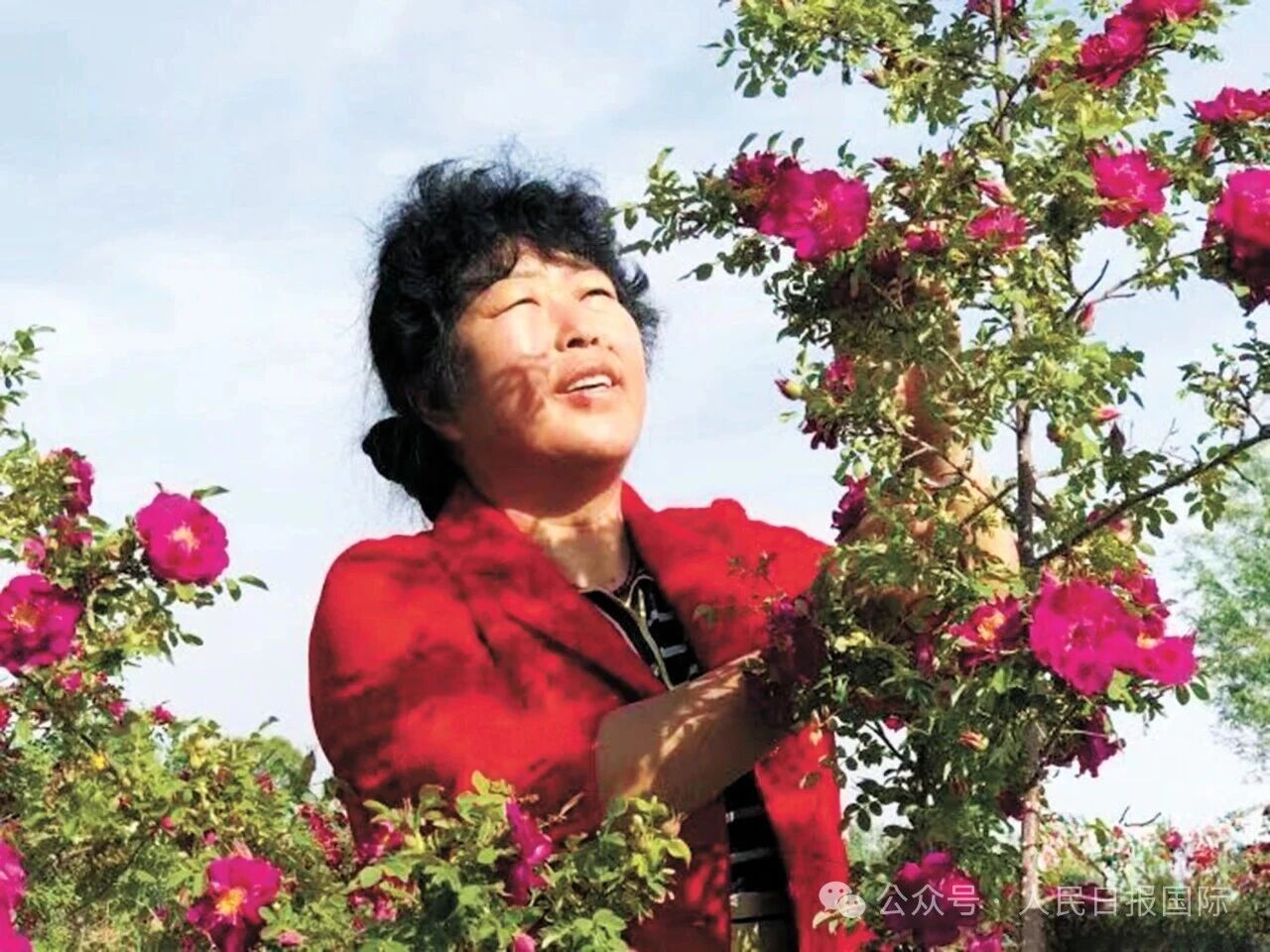
A touching video recently went viral online. In it, Yin Yuzhen, a national model worker in China who has dedicated decades to combating desertification in Maowusu sandy area, north China’s Inner Mongolia autonomous region, sends a heartfelt message in search of an American friend, hoping he would see the video and come back to China to visit.
The man Yin was searching for is Ronald Sakolsky. Back in 1999, Sakolsky raised $5,000 through a foundation to support Yin’s tree-planting work. A year later, he traveled all the way to Maowusu sandy area to meet her in person. Though brief, that encounter left a lasting impression on Yin.
Thanks to widespread support from people across society, this green connection spanning 26 years finally led to a long-awaited reunion online.
“The trees you helped fund all those year ago have grown into a vast forest. When will you come and see them? I really want to meet you again,” Yin says sincerely in the video.
Across the Pacific, 69-year-old Sakolsky was deeply moved after seeing the video. He replied that he would do his best to come and wanted to plant a tree with Yin together. The two have agreed to meet again in China in the near future.
People’s Daily reporters recently visited Yin’s home in Uxin banner, Ordos, Inner Mongolia autonomous region, deep within Maowusu sandy area, to hear firsthand the story behind this cross-border friendship and decades-long fight against desertification.
As the vehicle traveled through the Maowusu sandy area, fresh green shrubs flashed past on either side of the asphalt road.
“Come and take a look first — this is all thanks to that $5,000!” Yin laughed, pointing toward a dense stretch of woodland outside the car window.
“Most of these trees were planted with that money. There are more than 50,000 of them,” she noted.
In 1985, Yin married into Salawusu village in Uxin banner. Situated deep in the heart of Maowusu sandy area, the village was surrounded by endless dunes.
Yin understood from the beginning that if she wanted to tame the shifting sands, there was only one solution: planting trees.
In 1986, she sold one of the family’s sheep to buy 600 saplings and planted them around her house. A violent sandstorm soon swept through, leaving fewer than ten trees standing.
“If around 10 survived, later it might be 100, then 1,000,” Yin recalled.
Undaunted, she and her husband Bai Wanxiang headed deep into the sand dunes, bringing saplings and tools along.
In 1999, Sakolsky, who was then teaching at Luoyang Foreign Languages School in central China’s Henan province, happened to see a television show about Yin’s efforts and was deeply moved.
After watching the show, he kept thinking about how he could help.
That October, he emailed numerous organizations in the U.S. to raise funds for Yin’s project. Eventually, an institution based in Boston donated $5,000 to support her afforestation efforts.
Yin was astonished when she received the donation.
“A complete stranger raised such a large amount of money for me without even verifying who I was,” she recalled. “I had to plant those trees well. I couldn’t let that trust down.”
Yin carefully planned every detail: which species had the best survival rates, where trees should be planted to stabilize shifting sands, and how irrigation could conserve more water.
Several months later, seedlings began appearing across what had once been barren dunes.
In 2000, Sakolsky and his colleague Bai Fan came to China and met with Yin. With Bai serving as an interpreter, the Sakolsky and Yin exchanged simple conversations while the latter showed them the newly planted saplings.
When Sakolsky entered Yin’s home, all he saw were simple tools: hoes, shovels and little else.
“He kept saying ‘impossible’ again and again,” Bai recalled.
Although Sakolsky admired Yin’s determination, he had little confidence at the time that the saplings would survive.
Yin, however, made up her mind. One day, she thought, Sakolsky would return and see that those tiny saplings had grown into towering trees.
Over the past four decades, supported by government-led efforts and inspired by desertification fighters like Yin, dramatic changes have taken place.
More than 4,600 hectares of sandy land around Yin’s home has been rehabilitated, with over 8 million trees planted.
Today, 85 percent of Maowusu sandy area within Uxin banner, or nearly 560,000 hectares, has been brought under control, with forest coverage rising to 32.92 percent.
Sakolsky is far from the only person drawn to Yin’s story. Over the years, volunteers from more than 20 countries and regions have traveled to visit her, establishing lasting friendships with this Chinese woman.
One of them is Donald Ashton Jones, another American.
In 2015, while teaching English at a school in Harbin, northeast China’s Heilongjiang province, Jones watched a documentary about Yin’s work and decided to seek her out to learn tree planting.
He began calling Yin his elder sister and even gave himself a Chinese name Yin Yifan.
Since then, he has returned almost every year whenever possible, joining Yin in planting trees and stabilizing the sands.
“With more people worldwide showing concern, I came to understand that this is a dream shared by all humanity,” Yin said.
Further down the tree-lined road stands a stone monument inscribed with the words “Citizens of Earth”. Its back bears the names of people from home and abroad, all of whom have lent their support to this woodland in their own ways.
Inspired by Yin’s persistence, more than 240 major tree-growing households have emerged in surrounding areas, each having planted over 200 hectares of trees.
“I hope to encourage more people to join tree planting,” Yin said. “Together, we can make our shared planet a better home for everyone.”
By Guo Jiping, People’s Daily
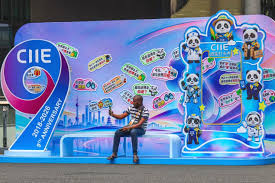
The 9th China International Import Expo (CIIE) opens in Shanghai on Nov. 5 and will run through Nov. 10.
This year’s exhibition space exceeds 370,000 square meters for the first time, drawing participants from 162 countries, regions, and international organizations. More than 4,100 overseas companies are participating, and over 480 products are expected to make their debut at the expo, hitting a record high.
At a time when unilateralism and protectionism continue to disrupt the international economic and trade order, the CIIE, now in its ninth consecutive year, has become an irreplaceable international public good in the global economic and trade system.
A closer look at the exhibition layout of the 9th CIIE reveals six major exhibition areas and an Innovation Incubation Special Section, each with its own highlights.
Pavilions dedicated to medical equipment and health care products, consumer goods, and food and agricultural products have all been expanded. More than 2,000 companies are participating in the event for the first time.
Among the newcomers are the U.S.-based Project Management Institute and Germany’s Caparol, a leading producer of architectural coatings.
For the first time, the CIIE will feature a global consumer brands showcase to help expand and upgrade consumption of quality products.
“The CIIE stands as a clear demonstration of China’s commitment to expand opening up,” said Carl Fey, professor of strategy at BI Norwegian Business School. As he has observed, China’s opening up is geared toward pursuing shared development with the rest of the world, and the CIIE highlights China’s key role in global trade.
Over the years, the range of exhibits at the CIIE has expanded from consumer goods and components to high-end equipment, core technologies, and quality services.
This evolution reflects the deeper integration of global industrial and supply chains. Today, exhibitors, including industry giants, emerging players, small and medium-sized enterprises, and specialized businesses, can all connect with market demand more precisely and explore growth opportunities across the entire industrial chain.
The CIIE is increasingly attracting international buyers. Ahead of this year’s event, trade delegations from Shanghai, Guangdong, and other regions secured a number of major buyers with strong purchasing power, well-established brands, and substantial demand.
Dedicated matchmaking events were held in Egypt, Germany, the UK, and other countries, bringing negotiations closer to China’s trading partners. During the expo, a buyers’ corridor will help connect quality products and services directly with the Chinese market.
In the first three quarters of 2026, China’s imports reached 16.74 trillion yuan (about $2.5 trillion), representing a 22.3 percent year-on-year increase. September alone saw monthly imports surpass 2 trillion yuan for the first time.
The CIIE offers a window into China’s vast domestic market, where growing demand is creating more opportunities for business around the world.
The expo is also becoming an increasingly attractive platform for foreign investors.
Through the CIIE, exhibitors including ZEISS Group, Schneider Electric and AstraZeneca have established R&D centers, regional headquarters and advanced manufacturing bases in China.
As global companies unveil debut products, many are simultaneously accelerating plans to deepen local R&D, increase investment, and consolidate regional operations.
Over the past three years, the number of foreign-invested enterprises in China has grown steadily. Between January and April 2026 alone, more than 3,000 foreign-invested firms announced additional capital commitments.
The CIIE continues to witness how exhibits become marketable products and exhibitors become investors, and more global companies deepen their presence in China and create benefits for the world.
Beyond commerce, the expo is strengthening cultural and people-to-people ties. More than a marketplace for goods and services, it serves as a cross-cultural forum. The distinctive Country Exhibition area hosts performances and exhibitions that offer visitors a rich tapestry of global traditions.
This year introduces several firsts: the Premium Collection will feature intangible cultural heritage workshops, the Gourmet Festival will launch a global tasting zone, and the Arts Carnival will collaborate with China Fashion Week. These initiatives foster mutual understanding and enrich economic partnerships with stronger societal connections.
The CIIE provides a broader multilateral platform for open cooperation. In step with the trend of economic globalization, it has established an authoritative platform for high-level dialogue and multilateral economic and trade cooperation.
For the first time, more than 300 Fortune Global 500 companies and industry leaders are participating. Nearly 200 firms and institutions have attended all nine editions, while five countries, including Moldova and Romania, as well as the United Nations Development Programme, are joining for the first time, demonstrating the strong appeal of openness and cooperation.
China advances high-level opening up with the aim of expanding the pie of cooperation with the rest of the world. Its stories of opening up have sent a message to the world that China is not only the world’s factory but also a global market. It is not only a “super seller” but also a “super buyer.”
The two-way engagement does not marginalize other stakeholders; rather, it creates tangible benefits for neighboring economies and fosters regional prosperity.
At this year’s expo, pavilions dedicated to Asian and African products will be expanded, featuring higher-quality displays and enhanced programming. These enhancements aim to help African countries with diplomatic ties to China leverage tariff-free access and encourage more Global South countries to fully utilize the CIIE.
Stephen Jackson, United Nations Resident Coordinator in China, noted that the CIIE offers developing economies a practical pathway to integrate more deeply into global value chains and share the benefits of trade.
China will harness the momentum of opening up and pool strength for win-win cooperation. It will firmly uphold multilateralism and continue to make the CIIE a success, helping steer economic globalization toward greater openness, inclusiveness, balance and shared benefits.
By Li Zong, People’s Daily
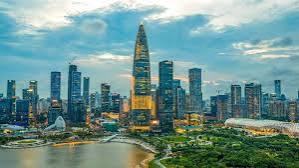
At Qianhai in Shenzhen, south China’s Guangdong province, the bonded maintenance center of German health tech company Siemens Healthineers provides global after-sales support for magnetic resonance imaging (MRI) equipment.
Simultaneously, next-generation digital elevator technology from Finnish manufacturer KONE is quickly reaching markets across the Guangdong-Hong Kong-Macao Greater Bay Area. Foreign banks and financial institutions from the UK, Singapore, and elsewhere are establishing operations in the Qianhai Shenzhen-Hong Kong International Financial City.
With its high degree of openness and strong economic vitality, Shenzhen continues to strengthen its appeal as a global investment destination.
Throughout the 14th Five-Year Plan period (2021-2025), Shenzhen registered 44,000 new foreign-invested enterprises, and the volume of foreign investment actually utilized in the city surpassed 300 billion yuan (about $45.05 billion). More than 340 Fortune Global 500 companies have invested in the city.
The latest figures show that Shenzhen’s actual utilization of foreign investment exceeded 44 billion yuan in the first nine months of this year, up more than 60 percent year on year.
“When I first came here more than a decade ago, workers were still lining the production lines,” said Zhang Hongliang, vice president of operations for Flex’s Industrial Products business in Asia-Pacific, beside an automated production line at Flextronics Electronics Technology (Shenzhen) Co., Ltd.
Today, the facility is the company’s only pilot “future factory” in Asia. Automated equipment, integrated digital systems, and AI algorithms drive its production lines, doubling productivity per employee.
In the early years of reform and opening-up, Shenzhen’s flexible policies as a special economic zone and convenient port access attracted large numbers of foreign manufacturers. In 1987, Flex, a technology company founded in Silicon Valley in the U.S., established its first factory in the Chinese mainland in Shekou, Shenzhen. The company has continued to expand its investment in the city ever since.
“Shenzhen’s highly efficient supply chains, robust digital ecosystem, and proactive government support for technological upgrades have laid a solid foundation for the company’s transition to intelligent manufacturing,” Zhang said. The achievements made in Shenzhen are now being rapidly replicated across Flex’s manufacturing facilities worldwide.
As Shenzhen steps up efforts to build a world-class automotive hub, French auto parts maker Valeo is becoming increasingly integrated into the local automotive industry chain, advancing technological upgrades and optimizing production in intelligent driving and smart cockpit systems.
“China is no longer just the world’s largest automotive market. It has also become a global ‘fitness center’ for the automotive industry and a demanding testing ground,” said Zhou Song, president of Valeo China.
Around 30 percent of the value of intelligent connected vehicles comes from the information technology industry, which aligns closely with Shenzhen’s industrial foundation and innovation ecosystem, Zhou added.
At Siemens Healthineers’ Shenzhen base, more than a dozen MRI systems stand in rows as they undergo final testing before being shipped to Australia, Japan, Thailand and other markets. By the end of 2025, the facility had delivered more than 10,000 MRI and angiography equipment to over 120 countries and regions.
Siemens Healthineers established its Shenzhen operations in 2002. Back then, China’s medical device industry was still in its early stages. An MRI system involves thousands of components, and a local supply chain was yet to be established.
“We have remained committed to localizing our operations and helped develop more than 300 local suppliers. Locally sourced components now account for 80 percent of our finished products,” said Ma Tianshi, general manager of Siemens Shenzhen Magnetic Resonance Ltd.
“We remain committed to investing in Shenzhen and deepening our presence in China, strengthening our intelligent manufacturing capabilities to serve both the Chinese and global markets,” said Ma.
As more foreign companies establish and expand their operations in Shenzhen, the city is evolving from a manufacturing base into an important center for global innovation.
In the first half of this year, foreign investment in actual use in Shenzhen’s high-tech industries accounted for more than 70 percent of the city’s total utilized foreign investment. The city is now home to more than 200 foreign-funded R&D centers, employing over 30,000 researchers.
In March this year, KONE officially opened its southern China headquarters in Qianhai.
“KONE’s presence in China has evolved from sales and manufacturing to R&D and, more recently, innovation,” said Xie Jijun, senior vice president of KONE Greater China. The company is now introducing digital, green and energy-efficient technologies in the Chinese market before taking them global.
The rapid growth of emerging and future industries in Shenzhen is also drawing international financial institutions to the city.
HSBC Bank (China) Co., Ltd. has set up a team in Shenzhen to provide financial services for technology and innovation companies. The team focuses on cross-border fintech innovation in the Greater Bay Area and has launched a range of innovative products that leverage digital technology and are tailored to the needs of technology and innovation companies.
“This reflects our confidence in Shenzhen’s technology and innovation companies and its emerging industries, as well as our commitment to supporting their growth,” said Li Qile, general manager for the Greater Bay Area at HSBC Bank (China) Co., Ltd.
Shenzhen has consistently worked to attract and utilize high-quality foreign investment while further opening up its economy. In December 2025, the city introduced measures to further attract and utilize foreign investment, strengthening policy support for opening up key sectors, improving the business environment and facilitating investment.
Going forward, Shenzhen will actively advance institutional opening-up and develop itself into a high-level international trade hub, said an official from the Investment Promotion Bureau of Shenzhen Municipality.
By Zhang Yunhe, People’s Daily
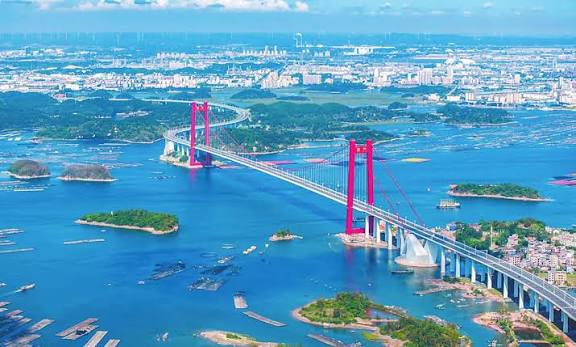
Situated on the Beibu Gulf coast in south China’s Guangxi Zhuang autonomous region, Qinzhou has served as a maritime gateway since ancient times, linking inland waterways with the open sea.
Today, propelled by the expansion of the Beibu Gulf International Gateway Port, the New International Land-Sea Trade Corridor, and the China-Malaysia Qinzhou Industrial Park, the city is forging a dynamic new path toward deeper maritime engagement and global integration.
A modern maritime hub: Streamlining connectivity and multimodal transport
At the automated container terminal of Beibu Gulf Port, cargo operations run continuously around the clock.
Nearby, at a bulk cargo berth, the vessel Dubai Nature — carrying imported soybeans — has just docked. On deck, Bangladeshi crew member Rajib oversees mooring operations. Watching giant vessels pass one after another along the channel, he said: “The port is spacious. Operations run in an orderly manner, and the staff are friendly and responsible. It has left a deep impression on me.”
Qinzhou Port currently has 96 operational berths, including berths capable of accommodating vessels of up to 300,000 tonnes. It operates 92 container shipping routes, connecting with more than 200 ports in over 100 countries and regions worldwide.
In June this year, Moiz Farooq, executive editor of Pakistan Economic Network, visited Qinzhou. At the Smart Port Innovation Center of Beibu Gulf, he watched demonstrations of smart port operations, including the precise dispatching of autonomous container trucks.
“Qinzhou has world-class port facilities, and landmark projects such as the Pinglu Canal give it outstanding advantages in developing foreign trade,” Farooq said.
“I hope to see more Pakistani companies come to Qinzhou and explore cooperation opportunities in areas such as logistics, port development, maritime trade, and the digital economy.”
On September 16, the landmark Pinglu Canal opened for navigation. “The waterway establishes a new link between the inland waterway network and the sea, effectively shortening transport distances and reducing costs. It will also spur industrial clustering and port-related economic development in Qinzhou, enhancing regional competitiveness,” said Philippe Gourbesville, president of the International Association for Hydro-Environment Engineering and Research, after visiting the canal.
Fostering industrial growth and streamlining business services
To support business development, Qinzhou has set up dedicated service teams at both municipal and county levels to assist enterprises in the real economy. Staff members regularly visit businesses and follow up on concerns raised through online platforms, providing ongoing support to help businesses resolve operational difficulties.
Han Seong Woo, a South Korean manager at Guangxi Lingshan Delin Toys Co., Ltd. in Lingshan county, Qinzhou, once encountered difficulties with identity verification when applying to change his company’s business address.
Recognizing the complexity, staff members promptly coordinated across departments and guided him through the necessary steps. What he anticipated would be a lengthy bureaucratic process was resolved efficiently.
Thanks to multiple opening-up platforms, including the China-Malaysia Qinzhou Industrial Park and the Qinzhou Port area of the China (Guangxi) Pilot Free Trade Zone, Qinzhou is now home to 211 foreign-invested enterprises. Foreign-funded projects in light industry, aquatic products and port-related industries are steadily being implemented, injecting fresh impetus into local development.
“Qinzhou offers not only a highly supportive business environment but also a rich historical and cultural heritage. Lingshan county, for example, is home to ancient buildings such as those in the ancient Dalu Village,” Han said.
“As Qinzhou continues to open up, it will attract more South Koreans to work and invest here, further strengthening economic, trade and cultural ties between South Korea and China,” he added.
Bridging cultures through education and people-to-people exchange
Inside a classroom at Beibu Gulf University in Qinzhou, students practice conversational Thai under the guidance of instructor Orawee Wei. Standing beside their desks, she uses expressive gestures to help learners master intonation and rhythm.
“After living in Qinzhou for many years, I have come to regard this place as my second home,” she said.
Over recent years, schools in Qinzhou have established sister-school partnerships with their counterparts in Malaysia and other ASEAN countries, organizing a range of people-to-people exchange activities, including cultural and tourism exchange activities and study programs for young people.
Wei, who grew up in a family of teachers in Nakhon Sawan province, Thailand, and joined Beibu Gulf University in 2020.
“When I first arrived, only 80 students were studying Thai. Today, that number has grown to more than 200, with an increasing number of young Chinese people eager to learn the language,” she said.
Wei teaches specialized courses such as Business Thai and Practical Thai for International Trade. She has seen five cohorts of her students graduate.
“My students are actively involved in Thailand-China economic and trade exchanges. They work as accompanying interpreters, business secretaries and foreign trade accountants for Thai and Chinese companies, helping strengthen economic and trade ties between Qinzhou and ASEAN,” she said.
From an ancient port once bustling with sailing ships to a modern gateway now traversed by giant vessels, Qinzhou has become a key hub of the New International Land-Sea Trade Corridor.
Linking mountains and seas and creating opportunities, the city keeps goods moving, businesses thriving and people connected, offering a vivid example of cooperation and exchanges between China and the rest of the world.


Suspected Fulani Bandit killed Four Motorcycles Recovered in Plateau.

WHEN THE MOUTH THAT CURSES IS NOW PRAISING.

2027: ‘You Must Be Sick’ — Senator Orji Kalu Rejects Calls to Back Peter Obi

-
 Uncategorized6 years ago
FG, states urged to harness flooding for ranching, others with technology – Agbaje
-
 Headlines11 years ago
Breaking: EFCC seals Borno House of Assembly, as Hon members take to their heels
-
 News12 years ago
Nigeria Security Operatives Stage Manhunt For Homosexual Perpetrator
-
 News10 years ago
How 21-year-old Girl fled community over accusation of lesbianism
-
 News11 years ago
Yobe Gov Moves Against Deputy
-
 Opinion8 years ago
7 signs she has friend zoned you
-
Technology5 years ago
Online job placement company headhunts women
-
 Headlines10 years ago
Borno Dep Gov Abducts Another Church Leader