
China
How China is building the backbone of a modern industrial system

By Li Xinping, Wang Zheng, Gu Yekai
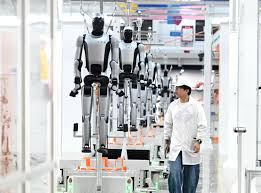
China vigorously develops advanced manufacturing and takes innovation as its guide. With higher technological sophistication and accelerated transition toward smarter, greener, and more integrated development, the country seeks to modernize production methods. It coordinates traditional, emerging, and future industries.
These coordinated efforts are driving Chinese manufacturing toward a comprehensive leap forward, establishing advanced manufacturing as the foundational pillar of a modern industrial system.
At the heart of this transformation lies innovation.
In September, Chinese tech giant Huawei unveiled its second-generation flagship tri-fold smartphone, and Xiaomi released its first “mid-fold” handset. Chinese smartphone makers are thus competing fiercely in the high-end segment.
The confidence stems from domestically driven breakthroughs. In recent years, China has achieved mass production of ultra-thin flexible glass. Just 30 micrometers thick, it can withstand more than one million folds without damage.
By late July, China held 5.74 million valid domestic invention patents. The number of international patent applications filed under the Patent Cooperation Treaty has ranked first in the world for seven consecutive years.
To accelerate commercialization, China is strengthening the linkage between scientific research and industrial application, improving the efficiency of turning innovations into market-ready products.
For instance, while computed tomography (CT) imaging has evolved over a century to offer increasingly precise detection, the rapid surge in new energy vehicle production created a bottleneck in battery quality control.
Responding to this challenge, Sunwoda Electronic Co., Ltd., in collaboration with Dalian University of Technology, has successfully developed high-speed, multimodal CT equipment for online battery inspection. The system enables non-destructive testing and significantly boosts evaluation efficiency.
Since the beginning of this year, China has accelerated the development of a full-chain service system for translating scientific and technological advances into practical applications.
At the R&D stage, two new national manufacturing innovation centers have been established. At the pilot-testing stage, a national network now includes 21 top-tier manufacturing platforms and over 1,800 reserve facilities. In the incubation stage, the country has recognized its first batch of 14 excellence-level and 402 standard-level technology business incubators, which have incubated more than 425,000 enterprises and teams.
Reflecting these gains, the World Intellectual Property Organization’s 2026 Global Innovation Index reports that China hosts 25 of the world’s top 100 innovation clusters, the highest number globally for the fourth year running.
What distinguishes an advanced manufacturing facility from a conventional factory?
Consider Lenovo’s production hub in Shenzhen, south China’s Guangdong Province, which processes over 5,000 daily orders, 60 percent of which are highly customized across more than 50 product lines and 20,000 configurations. Despite this complexity, the 100-meter production line operates with remarkable agility. Equipped with machine-vision-guided robotic arms, it performs precision assembly at millimeter-level accuracy and switches between product models with minimal downtime. Ninety percent of orders ship within 24 hours.
What makes advanced manufacturing “advanced” lies in the modernization of production methods.
“Compared with traditional manufacturing, advanced manufacturing has generally shifted toward digitalized, intelligent, lean, and green production,” said Li Yan, deputy head of the department responsible for researching the industrial economy with the Development Research Center of the State Council.
China now operates 35,000 basic-level smart factories, more than 8,200 advanced-level smart factories, and more than 500 excellence-level smart factories. More than 30 percent of manufacturing enterprises above designated size with an annual revenue exceeding 20 million yuan (about $2.98 million) are now applying artificial intelligence technologies.
Global industrial competition is no longer limited to production capacity; it now encompasses integrated manufacturing and service ecosystems. Chinese leading heavy machinery manufacturer Xuzhou Construction Machinery Group, for example, expanded beyond equipment sales to deliver comprehensive green mining solutions, securing major contracts with global firms such as BHP.
Similarly, Haier Smart Home provides tailored smart home appliance packages, with revenue generated from scenario-based applications continuing to grow.
“Going forward, we will promote deeper integration between advanced manufacturing and modern services, accelerate the development of new models and new forms of business such as platform-based design and personalized customization, and advance the development of service-oriented manufacturing,” said Xin Guobin, vice minister of the Ministry of Industry and Information Technology.
Ultimately, what makes advanced manufacturing “advanced” is the optimization of the industrial structure.
What else can an embroidery machine do besides embroidery?
It can serve embodied intelligence. The machine interweaves sensing yarn and base yarn, knitting embodied intelligence data gloves as one piece and enabling more precise capture of hand motion data.
“The essence of advanced manufacturing is comprehensive innovation and upgrading across the manufacturing sector,” Li said. Advanced manufacturing includes both manufacturing industries created by new technological breakthroughs and traditional manufacturing industries that have been comprehensively transformed and reshaped through the application of advanced technologies, processes and production and management methods.
Driven by this momentum, traditional industries are experiencing renewed vitality. In the first half of this year, sales revenue in food manufacturing, garment manufacturing, and papermaking grew 11.6 percent, 9.2 percent, and 8.9 percent year on year, respectively. Meanwhile, emerging and future industries are expanding rapidly: China accounts for nearly 70 percent of global sales of quadruped robots; more than 400 humanoid robot models have been developed in China, accounting for more than half of the global total; and the preclinical R&D cycle for new drugs such as targeted anticancer therapies has been shortened by 40 percent.
As China boosts advanced manufacturing, it presses forward with a commitment to pursuing excellence and speeds up the development of a modern industrial system, where this sector serves as its backbone.

By Liu He, People’s Daily
The hall of the Chinese Cultural Center in Berlin was filled with anticipation. Many local residents arrived early to hear German writers Volker Haering and Christian Y. Schmidt share the story of their bicycle journey retracing the route of the Long March (1934-1936), a military maneuver by the Chinese Workers’ and Peasants’ Red Army that later became a defining chapter in modern Chinese history.
In 2023 and 2024, the two men set out from Ruijin, east China’s Jiangxi province. Cycling westward and then northward, they followed the path taken by the Central Red Army, eventually reaching Wuqi county in Yan’an, northwest China’s Shaanxi province, after more than four months on the road.
“If you don’t understand the spirit of the Long March, you cannot truly understand China.”
Haering still vividly remembers hearing those words more than two decades ago from a veteran Red Army soldier.
“From that moment on, I knew I had to make this journey myself,” he said with conviction.
Following in the footsteps of the Red Army
The pair began their story at Jiajin Mountain in Sichuan Province, known locally as the “Mountain of Death.”
In June 1935, the Central Red Army arrived at its foot — the first snow-covered mountain they encountered during the Long March.
“As we climbed higher, the vegetation gradually disappeared. Steep cliffs stretched into the distance, and icy winds mixed with rain and snow cut through us,” Haering recalled.
Schmidt, then 67 years old, suffered severe altitude sickness and could only continue with medication. By the time the two cyclists reached the 4,114-meter pass, they were completely exhausted.
“Ninety-one years ago, Red Army soldiers — wearing thin cotton uniforms and straw sandals, while under enemy pursuit — crossed these snow-covered mountains over seven days and nights,” Haering said. “We were riding electric bicycles and dressed in modern outdoor gear, yet we felt we had reached our physical limits.”
Schmidt agreed. “Only after experiencing it yourself can you truly understand how dangerous the snow mountains were, and only then can you fully appreciate the Red Army’s resilience and courage.”
Haering first learned about the Long March at the age of 15 and was deeply fascinated by its history. Over the following decades, he read extensively about its history.
What has enabled the spirit of the Long March to inspire generations of Chinese people?
Driven by that question, Haering, at age 54, embarked on the journey with his friend Schmidt.
The nearly 7,000-kilometer trip was far more than an adventure. It became a test of both physical endurance and determination.
During freezing nights, they often struggled to sleep. In western Sichuan province, bitter cold, strong headwinds, high altitudes, and continuous mountain roads made even downhill riding extremely difficult. In the latter half of the trip, their electric bicycles also suffered frequent mechanical failures.
Haering told People’s Daily that cycling the route helped him better understand the hardships the Red Army endured, and also gave him a greater appreciation of China’s transformation over the decades.
Encounters along the Route
If the snow mountains, grasslands and gorges revealed the harsh realities of the Long March, the people they met along the route showed them another side of China.
“We’re constantly invited to meals,” Haering joked. As they cycled through China, once locals learned they were retracing the Long March, initial reserve and wariness quickly gave way to hospitality and respect.
In a small-town restaurant, while the two were eating, a group of curious children gathered around their table. Before long, the children had become their Chinese-language teachers, patiently helping them practice pronunciation.
“The children’s smiling faces remain among the most touching memories of the entire trip,” Haering recalled.
In Xichang, Sichuan province, an experienced bicycle shop owner surnamed Dai, who had run his business for more than 30 years, helped replace their chains and tires and offered practical cycling advice. In Yan’an, an English-speaking local tour guide surnamed Li showed them around many revolutionary heritage sites.
Sharing China’s story through personal experience
“Meeting so many kind and genuine Chinese people was the greatest reward of the journey,” Haering said.
In October 2025, the two published the book Der lange Fahrrad-Marsch: 7.000 Kilometer durch das Reich der Mitte in Germany.
They subsequently held book-sharing events in Hamburg, Leipzig, Berlin, and other German cities, where many readers lined up with copies, waiting for the authors’ signatures.
“Books and articles alone are not enough if you want to help Western audiences truly understand China. First-hand experience is essential,” Haering said.
He noted that since China expanded its visa-free entry policies, increasing numbers of overseas tourists and content creators have traveled to China, documenting what they see through photos and videos.
“That is a very positive change,” he said. “When people see China with their own eyes, they can form their own judgments.”
This was far from Haering’s first effort to introduce China to Western audiences.
When he first visited China in the 1990s, he knew little about the country. More than three decades later, he has cycled over 60,000 kilometers across China, leading numerous cycling tours through both cities and rural areas. Among his friends, he has become known as a “China expert.”
During their journey across the Dadu River in Sichuan, Haering saw many newly built dams, while elevated bridges and high-speed rail lines were under construction.
Infrastructure in China has improved tremendously, he said. “Today, digital technologies such as mobile payment and electronic maps have become deeply integrated into every aspect of travel, making journeys much more convenient.”
Schmidt shared the same impression. He recalled that traveling to remote areas, especially plateau regions, once involved long and difficult journeys. Today, China’s expanding high-speed rail network has made many destinations far more accessible.
When asked how he understands the spirit of the Long March, Haering said it lies in the strength of unity and the unwavering commitment to a shared goal.
“It is a spirit of solidarity,” he added. “When people share the same purpose, work together, and pool their efforts toward a common goal, there is no obstacle that cannot be overcome.”
He believes that this spirit continues to shape today’s China. “Drawing strength from the spirit of the Long March to overcome challenges, deliver concrete results, and pursue long-term development is, in my view, one of the important reasons behind China’s remarkable achievements,” Haering said.
China
To translate the vision of a constructive China-U.S. relationship of strategic stability into action
By Zhong Sheng, People’s Daily
From Sept. 23 to 25, Chinese President Xi Jinping paid a state visit to the United States at the invitation of U.S. President Donald Trump. The visit reinforced longstanding friendship, expanded areas of mutual cooperation, and advanced the shared prosperity of both countries’ peoples.
The two heads of state held candid, in-depth discussions on key bilateral and global issues, reaching a series of new agreements. Their meeting enriched the substance of building a constructive China-U.S. relationship of strategic stability and provided new strategic guidance for bilateral ties.
The international community generally believes that the meeting between the two presidents in Washington sent “a clear signal of predictability” amid global uncertainties. The meeting is expected not only to bolster the welfare of citizens in both countries but also to strengthen prospects for international peace and sustainable development.
This rapid succession of presidential visits — occurring within a span of less than six months — is unprecedented in the long history of China-U.S. relations.
The two heads of state have maintained close exchanges and fostered a pattern of interaction marked by mutual respect and sincerity, which has become the most valuable strategic asset in China-U.S. relations. Over the past year, they have sustained regular communication through multiple channels, jointly steering the course of the China-U.S. relationship.
During Trump’s visit to China this May, the two heads of state agreed to build a constructive China-U.S. relationship of strategic stability. This new positioning reflects the realities of China-U.S. relations while expressing aspirations for their future. It marks an important step toward finding the right way for China and the United States to get along, and has been widely welcomed by the peoples of both countries and the international community.
During his visit to the United States this time, Xi urged the two sides to translate that vision into action. He made clear that China and the United States should, and fully can, achieve mutual benefit and win-win results through practical cooperation, help each other succeed through healthy competition, properly manage differences by seeking common ground while respecting differences, and build peace by fostering mutual trust, so that a constructive China-U.S. relationship of strategic stability can better benefit the two peoples and people around the world.
This important statement charted a clear course for turning the vision of building a constructive China-U.S. relationship of strategic stability into action and injected fresh impetus into the long-term development of bilateral ties.
China and the United States have deeply intertwined interests and vast potential for cooperation. Cooperation is a two-way street. A stable China-U.S. economic and trade relationship requires both expanding the list of cooperation, and shortening the list of problems.
Ahead of the meeting between the two heads of state, Chinese and U.S. economic and trade teams held a new round of consultations and reached new agreements. These outcomes offer timely benefits for businesses and consumers in both nations, while contributing to global economic stability.
It once again shows that the essence of China-U.S. economic and trade relations is mutual benefit and win-win cooperation, and that in the face of differences and frictions, equal-footed consultation is the only right choice.
As long as both sides uphold the spirit of equality, respect and mutual benefit, they can find a way to resolve their problems and thus keep China-U.S. economic and trade relations stable and moving in a positive direction.
Defining principles and respecting bottom lines is an important prerequisite for building a constructive China-U.S. relationship of strategic stability. The Taiwan question is at the very core of China’s core interests and is the first red line that must not be crossed in China-U.S. relations.
There is only one China in the world, and Taiwan is an inalienable part of China’s territory. China’s position on safeguarding national unity and territorial integrity is clear. China hopes the U.S. side will adhere to the correct position of opposing “Taiwan independence,” and handle the Taiwan question with prudence to lay a solid foundation for bilateral strategic cooperation and the development of China-U.S. ties.
Facing the changes in the world, in the times, and of historical significance today, China and the United States, as two major countries, shoulder a historic responsibility of advancing human development and progress.
Both China and the United States are leading nations in artificial intelligence (AI). While they compete in AI, they have even more reasons to cooperate, Xi said, urging the two sides to leverage respective strengths in AI rather than guard against each other.
The two sides can continue to engage in dialogue on AI, exchange views on its risks and benefits, and work together to prevent the misuse and abuse of AI. They should also maintain human control over AI technologies. A people-centered approach should be upheld, and AI should be developed for the positive and for good, so that AI will serve human progress.
Calling AI the technology that bears on the future of humanity, Trump said the United States and China should maintain dialogue and strengthen cooperation on AI.
The two presidents agreed to support each other in successfully hosting the APEC Economic Leaders’ Meeting and the G20 Summit, aiming to amplify collaborative efforts in tackling transnational challenges and strengthening multilateral governance.
Working together to accomplish more great and concrete things for the good of the two countries and the whole world is precisely what should be part of efforts to build a constructive China-U.S. relationship of strategic stability.
This year marks a pivotal juncture for both China and the United States, placing bilateral relations at a new historical threshold. The two sides should demonstrate the sense of responsibility expected of major countries, respond to the aspirations of their peoples and the trend of the times, and jointly implement the important consensuses reached by the two heads of state.
They should turn the vision of a constructive China-U.S. relationship of strategic stability into action and work toward a relationship featuring cooperation as the mainstay, moderate competition, manageable differences, and promises of peace, so that they can find the right path for the two great countries to get along on this planet they both call home.
(Zhong Sheng is a pen name often used by People’s Daily to express its views on foreign policy and international affairs.)
By Han Xin, People’s Daily
China’s express delivery industry is shifting toward a new stage of transformation and upgrading. In the first half of 2026, the industry processed 100 billion parcels, up 5 percent year on year, while business revenue surpassed 770 billion yuan ($114.82 billion), up 7.3 percent. Notably, revenue growth outpaced parcel volume growth for the first time in a six-month period, signaling a structural realignment in the market.
This trend is clearly reflected in recent financial reports from major publicly listed couriers. SF Express reported a 9.3 percent year-on-year increase in core net profit (excluding one-time gains and losses), while YTO Express, Yunda Express, and STO Express each posted shareholder net profit growth exceeding 70 percent during the same period.
As profitability consistently outpacing volume expansion, the sector’s traditional strategy of sacrificing margins for market share is giving way to a more sustainable model. This marks a decisive pivot toward operational efficiency and value-driven growth.
But how is this transition unfolding, and what will drive the next phase of expansion? Major logistics providers have outlined their strategic adaptations in response to these questions.
Technological innovation is at the forefront of this shift. In June, JD Logistics — the supply chain arm of e-commerce giant JD.com — deployed China’s largest rural drone delivery network in Zizhong county, Sichuan province. The system now serves 131 administrative villages, delivering packages to remote mountain communities in as little as seven minutes.
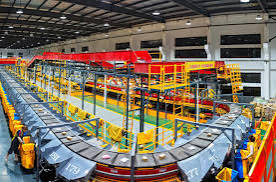
At the Jianggao mail processing center in Guangzhou, south China’s Guangdong province, human workers collaborate with eight humanoid robots on automated sorting lines. These machines seamlessly pick, rotate, and position packages at a rate of 800 units per hour.
“A significant portion of the industry’s profit surge in the first half of 2026 stems from the maturation of digital infrastructure investments made in prior years,” explained Yu Rao, senior engineer at the Development & Research Center of the State Post Bureau. He noted that artificial intelligence is increasingly integrated across the logistics chain, with widespread adoption of drones and autonomous delivery vehicles serving as key catalysts for cost optimization and operational efficiency.
For example, YTO Express has implemented an AI-driven routing platform that analyzes historical shipment data and real-time operational costs to optimize delivery paths. During the first half of 2026 alone, the system reduced the company’s operating expenses by approximately 90 million yuan.
ZTO Express has similarly leveraged automation in customer support. Its AI-powered system now autonomously resolves roughly 90 percent of merchant after-sales requests and 70 percent of recipient inquiries from initiation to closure. “More than 60 percent of routine customer issues are now handled end-to-end by our intelligent service platform, substantially cutting labor expenditures,” said Yang Wen, chief technology officer of ZTO Express.
Fleet automation is also scaling rapidly. By the end of June, Yunda Express had more than 1,500 autonomous delivery vehicles across its network, an increase of more than 1,000 from last year. Standardizing large-scale autonomous operations has lowered transport costs at local distribution hubs by 30 percent.
Across the broader postal and courier sector, advanced technologies — including AI customer service, automated sorting, smart security screening, computer vision-based surveillance, and dynamic route optimization — are accelerating deployment. Nationwide, the industry now operates more than 16,000 autonomous delivery vehicles and over 400 drones dedicated to last-mile logistics.
“Throughout the 15th Five-Year Plan period (2026-2030), we will accelerate the integration of frontier technologies across the logistics sector and cultivate new engines of economic growth,,” said Xu Huarong, deputy director-general of the department of policy and regulation of the State Post Bureau.
Financial performance metrics further indicate that average revenue per parcel has risen across the board since the start of 2026.
“Sustained regulatory efforts to curb cutthroat price competition have been instrumental in reversing this trend,” Yu added. Following a July 2025 symposium convened by the State Post Bureau, which mandated compliance with fair competition regulations, the sector’s notorious price wars have steadily subsided. Average delivery rates have climbed incrementally, enabling firms to restore healthy profit margins.
Industry analysts observe that the sector’s traditional reliance on e-commerce-driven volume surges has plateaued. Consequently, diversifying revenue streams beyond online retail has emerged as a top strategic imperative for major couriers.
So where is the next wave of growth originating? Two key avenues stand out:
–Expanded service scenarios
JD Logistics is increasingly moving beyond basic parcel delivery to offer tailored supply chain solutions. The company now provides customized fulfillment strategies for home appliance manufacturers and integrated warehousing and last-mile delivery for supermarkets and retailers managing omnichannel sales. During the first half of 2026, its integrated supply chain division generated 59.4 billion yuan in revenue — a 18.5% year-on-year increase — positioning it as a primary growth engine.
Similarly, SF Express has pioneered specialized logistics offerings, including dedicated transport for winter sports gear and a door-to-door luggage forwarding service that enables tourists to travel unencumbered. By targeting unmet consumer demands, the company has successfully penetrated niche segments such as cultural tourism, trade exhibitions, and specialty retail. These differentiated, high-value services are establishing what executives call a “second growth curve.”
— Global and domestic market expansion
Internationally, YTO Express is broadening its cross-border footprint, launching 170 air cargo routes that span most of Asia and reach into Eastern Europe. JD Logistics is also rapidly expanding its overseas warehousing network. It now operates more than 200 overseas warehouses and direct-mail warehouses in 26 countries and regions, driving sustained rapid growth in its international business.
Domestically, couriers are targeting underserved lower-tier and more remote markets. J&T Express is penetrating remote western provinces, notably modernizing its Yinchuan distribution facility in Ningxia into a regional smart logistics hub to stimulate parcel volume in less developed areas. Yunda Express is doubling down on rural commerce, establishing village-level collection points in key agricultural production zones and deploying dedicated freight corridors to capture growing grassroots demand.
He emphasized that as competition shifts toward value creation, technological advancement, customer experience, and market diversification will define the next generation of industry leaders.
“After more than a decade of hyper-growth driven by sheer volume, the industry is transitioning away from speed-at-all-costs expansion toward a balanced model that equally prioritizes service quality and operational efficiency,” Yu concluded.


Two German writers retrace the Long March by bicycle
To translate the vision of a constructive China-U.S. relationship of strategic stability into action

China’s express delivery industry shifts toward higher-quality growth

-
 Uncategorized6 years ago
FG, states urged to harness flooding for ranching, others with technology – Agbaje
-
 Headlines11 years ago
Breaking: EFCC seals Borno House of Assembly, as Hon members take to their heels
-
 News12 years ago
Nigeria Security Operatives Stage Manhunt For Homosexual Perpetrator
-
 News10 years ago
How 21-year-old Girl fled community over accusation of lesbianism
-
 News11 years ago
Yobe Gov Moves Against Deputy
-
 Opinion7 years ago
7 signs she has friend zoned you
-
Technology5 years ago
Online job placement company headhunts women
-
 Headlines10 years ago
Borno Dep Gov Abducts Another Church Leader