
China
China continues to strengthen and expand advanced manufacturing


By Jin Sheping, People’s Daily
Globally, one in three cars sold today is manufactured in China. Since 2013, sales of new energy vehicles in China have surged more than 930-fold, while their share of the auto market has grown more than 590-fold, giving rise to a rapidly expanding emerging industry worth trillions of yuan.
The automotive sector exemplifies the broader growth and upgrading of China’s advanced manufacturing sector.
China’s manufacturing value added has ranked first in the world for 16 consecutive years, accounting for nearly 30 percent of the global total.
Over the past decade, value-added output in high-tech and equipment manufacturing has grown at average annual rates of approximately 10 percent and 8 percent, respectively.
China now holds a leading global position in sectors such as photovoltaics, telecommunications, high-speed rail, and shipbuilding, while robotics, AI, and innovative pharmaceuticals are accelerating rapidly.
As the Chinese economy pivots toward innovation-driven, high-quality growth, advanced manufacturing has become a central pillar of this transition.
Against a backdrop of unprecedented global shifts and a new wave of industrial transformation, China is navigating a pivotal phase of economic restructuring. To ensure long-term stability and sustainability, the country is doubling down on the expansion and refinement of its advanced manufacturing capabilities.
Even a single sheet of ultra-thin steel foil illustrates the sophistication of China’s manufacturing evolution.
In Shanxi province, a subsidiary of Taiyuan Iron & Steel (Group) Co., Ltd. produces precision stainless steel strips through fully automated processes — rolling, cleaning, polishing, leveling, slitting, and packaging. These materials, colloquially known as “hand-rip steel,” have seen their minimum thickness reduced from 0.02 mm to 0.015 mm. Having moved seamlessly from research and development to full-scale commercial production, these high-end alloys now trade at prices rivaling precious metals.
To sustain this progress, China is targeting the core drivers of “advanced” manufacturing, strategically moving beyond mid-stream assembly to capture greater value at both ends of the global supply chain — from innovation and design to branding and services.
Intelligence is reshaping China’s industrial landscape.
Leveraging cutting-edge digital technologies, the country has established over 56,000 basic-level smart factories, over 9,000 advanced-level smart factories and more than 500 excellence-level smart factories, while cultivating 15 flagship smart factories. Integrated with next-generation AI, big data analytics, and cloud infrastructure, these operations place China at the vanguard of global industrial digitization.
Global innovation in AI is now entering an exceptionally active period. Focusing on intelligent transformation, China is making next-generation intelligent manufacturing a key direction, advancing the “AI + manufacturing” initiative in greater depth and promoting comprehensive digital and intelligent transformation across more industries and enterprises.
Sustainability is equally critical to unlocking new growth trajectories.
Green development has become a hallmark of advanced manufacturing. China now hosts over 8,000 nationally recognized green factories, while sectors such as solar panels, electric vehicle batteries, and energy-saving and environmental equipment have secured early-mover advantages in emerging competitive markets.
Guided by a firm commitment to ecological conservation, China is simultaneously advancing green industrial upgrading, technological innovation, and structural optimization. This integrated approach is steadily reinforcing the country’s competitive edge in clean technology and sustainable industries.
New growth drivers for industry are also cultivated through deepening integration.
Cross-sector integration is another vital catalyst for industrial advancement. Take AI-powered eyewear, for instance: it merges machine learning, micro-sensors, and wireless connectivity to deliver real-time translation, navigation, and voice recognition.
Similarly, Luogang Park in Hefei, Anhui province, serves as a living testbed, hosting over ten distinct application scenarios — from cultural tourism to high-speed rail inspection — where emerging technologies can prove their commercial viability.
Recent years have witnessed significant breakthroughs across information technology, advanced materials, and biotechnology. These innovations are increasingly converging, giving rise to highly integrated products and multifaceted application ecosystems.
Through strategic integration, China is fostering closer ties between advanced manufacturing and modern service industries. This synergy accelerates the commercialization of novel technologies and use cases, elevating value creation across the entire production chain, stimulating cross-industry spillovers, and injecting sustained dynamism into the broader economy.
Expanding advanced manufacturing requires a coordinated, systemic approach. China is implementing targeted policies and institutional frameworks designed to translate strategic objectives into measurable outcomes.
Fundamental research remains the foundation of scientific progress and technological problem-solving. Recognizing that modern manufacturing depends on robust scientific backing, China is refining its research architecture and ramping up funding to bolster foundational science and original innovation.
Concurrently, the country is intensifying efforts to overcome bottlenecks in critical and core technologies. By accelerating the translation of research findings into commercial applications, China is helping innovative solutions transition from laboratories to production lines and consumer markets, thereby converting scientific breakthroughs into tangible economic productivity.
Ultimately, the success of this industrial transformation hinges on millions of enterprises. The challenge lies in unlocking the full creative and operational potential of diverse market participants.
To address this, China is aligning market efficiency with strategic government guidance, refining institutional frameworks to ensure coherence across fiscal, tax, financial, industrial, and science-and-technology policies. High-value resources — including capital, skilled talent, and data — are being strategically channeled into advanced manufacturing. By cultivating a business environment that is market-driven, rule-based, and aligned with international standards, China aims to build a resilient, innovation-friendly ecosystem capable of sustaining long-term industrial advancement.
By Zhang Yang, Liu Hongchao, People’s Daily
During the summer vacation, the Liaoshen Campaign Memorial in Jinzhou, northeast China’s Liaoning province, has seen a constant flow of visitors. Hanging quietly on the wall inside the Hall of Martyrs is a time-worn silk banner bearing the words “An Army of Benevolence and Righteousness,” behind which lies a poignant historical tale.
Behind the banner is a moving story.
During the 1948 Liaoshen Campaign, orchards surrounding Jinzhou were heavy with ripe apples. Passing through the area, People’s Liberation Army soldiers were exhausted and thirsty, but not a single one picked an apple. The people’s army, under the leadership of the Communist Party of China, won the hearts of the people through its strict discipline.
“Here the fighters were conscious that not eating the apples was noble, whereas to eat them would have been ignoble. They knew the apples belonged to the people,” Chinese President Xi Jinping quoted late Chairman Mao Zedong’s comments on the story during an inspection tour to Liaoning in 2022.
Decades later, the tale endures as a powerful symbol of integrity.
Today, as China deepens its efforts to promote clean governance and institutional accountability, the story is being actively revived to inspire contemporary officials.
About a 20-minute drive from the Liaoshen Campaign Memorial is the Jinzhou Apple Integrity Education Base, where a sculpture entitled the “People’s Apples” stands out. Inside the special‑themed exhibition hall, docent Sun Yimeng was giving a vivid account, guiding visitors through historical photos and precious cultural relics.
“We take the ‘People’s Apples’ as our underlying theme to convey to every visitor the Communist Party of China’s fine conduct, strict discipline and original aspiration to serve the people, ” said Sun.
“Declining the apples reflects discipline; avoiding even the smallest exploitation of citizens demonstrates dedication to public service. We must carry forward the revolutionary heritage, uphold our revolutionary legacy, foster and put into practice a correct approach to evaluating political performance, exercise power with integrity, and effectively protect and advance the interests of the people,” said Guan Hua, an official with the Jinzhou municipal people’s congress, during a study visit.
Jinzhou has translated this historical lesson into actionable governance. On one front, the city enforces a zero-tolerance stance toward corruption in sectors directly impacting livelihoods, including rural collective assets, healthcare, and education. Targeted campaigns have been launched to root out misconduct that harms ordinary citizens. On another, Jinzhou focuses on “growing apples for the people” by improving the business climate. The local government has institutionalized dialogue with enterprises, established direct policy-delivery channels, and implemented 32 regulatory frameworks to streamline operations and support sustainable growth.
Clean governance, officials stress, is not merely about restraint — it is a foundation for effective public service. To embed accountability into daily operations, inspectors from Jinzhou’s Municipal Commission for Discipline Inspection now work alongside staff at the city’s 12345 public service hotline and government service centers. A QR code-based oversight system has been rolled out across all 283 service windows, enabling real-time feedback and monitoring. The results are tangible: government services in Jinzhou have become increasingly standardized and efficient. Over 900 administrative procedures can now be completed on the same day, with many finalized in under two hours.
From a wartime promise of restraint to a modern blueprint for transparent administration, the “People’s Apples” story continues to remind officials that true authority flows from serving the people with integrity.
“The tests of the times keep evolving, yet our original aspiration to serve the people remains unchanging,” said Zhao Yu, an official with the Jinzhou municipal commission for discipline inspection. “We unswervingly uphold rigorous discipline, nurture a sound and upright political climate to edify the public and bolster high-quality development. We must never take the people’s apples.”
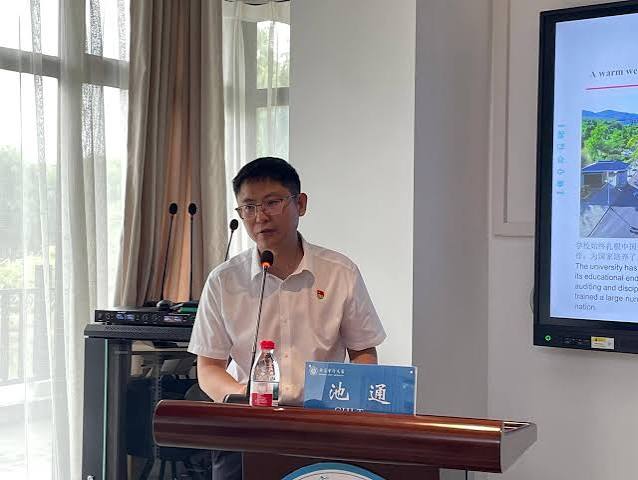
By Yang Wenming, Bai Guangdi, Su Bin, People’s Daily
Integrity has long been a cornerstone of Chinese cultural tradition. Throughout the more than 100-year history of the Communist Party of China (CPC), a commitment to integrity, public service, and serving the people has remained a defining part of its endeavors.
In recent years, local governments across China have increasingly turned to digital tools to strengthen integrity education. By consolidating resources and designing interactive online platforms, authorities are helping anti-corruption and ethical governance principles take deeper root among both civil servants and the general public.
Not long ago, Chen Zhaomeng, an official with the Zhujie subdistrict in Qilin district, Qujing, southwest China’s Yunnan province, needed to organize an integrity education activity for her Party branch. Using a mobile mini-program called “Map of Integrity in Yunnan,” she quickly found a suitable venue in Shizong county, about a 90-minute drive from Qilin district, and booked a visit to the former residence of Dou Xu in Zhuji township.
The former residence of Dou Xu is a traditional courtyard compound. Dou Xu was an upright and incorruptible official during the Qing Dynasty (1644-1911) who strictly enforced the law and handled cases impartially. Stories of his integrity have been passed down among local people.
Guided by an exhibition docent, the group toured the former residence in an orderly manner and learned about the virtues of Dou Xu’s good family tradition.
To facilitate integrity education at the grassroots level, the Yunnan provincial commission for discipline inspection launched the “Map of Integrity in Yunnan” mini-program. It provides detailed information on venues and facilities dedicated to integrity culture across the province.
Historical stories associated with each integrity education base are brought to life through short videos, while map navigation, recommended routes, opening hours, and reservation information are also provided.
Yunnan’s initiative reflects a broader national trend. Similar digital platforms have been rolled out in Lianyungang, Jiangsu province, and Guiyang, Guizhou province.
In Lianyungang, municipal disciplinary authorities have linked 16 distinct integrity education sites into a unified network, establishing a citywide “Integrity and Clean Governance Map.”
Meanwhile, Guiyang’s disciplinary commission has catalogued local heritage sites related to ethical governance and launched the “Guiyang Integrity Map” via the city’s official website and WeChat channel. The platform organizes provincial, municipal, county, and community-level education centers into a single searchable interface, offering practical guides and essential visiting information for officials and citizens alike.
Launching these digital platforms is only the beginning; their real value lies in how they are activated. The Lianyungang municipal commission for discipline inspection has worked with local publicity authorities, universities and other institutions to transform these mapped sites into key hubs for civil servant training, thematic party-building activities, and cautionary case studies.
At the same time, the city has expanded the reach and influence of the map by producing a series of short videos, developing online virtual reality exhibition halls and designing high-quality learning routes. Since its launch, the platform has attracted more than 200,000 Party members, officials and members of the public for visits and study.
By He Yin, People’s Daily
On Oct. 23, Chinese President Xi Jinping sent a letter to the 2026 Global Governance Forum (Xiong’an), further elaborating on the importance of reforming and improving the global governance system and charting the course for advancing the implementation of the Global Governance Initiative (GGI). The letter demonstrated China’s sense of responsibility and its willingness to work with other countries to build a more just and equitable world.
Xi put forward the GGI in September 2025, a much-needed initiative that offers solutions to bridge the governance deficit and build a better future. In just over a year, the initiative has gained the support of more than 160 countries and international organizations. Over 60 countries have joined the Group of Friends of Global Governance. Its core elements have been incorporated into the documents of multilateral fora such as the G20, the Shanghai Cooperation Organization, and BRICS.
The past year has underscored the great contemporary value of the GGI, with its appeal and influence continuing to grow. The initiative has become an important public good warmly embraced by the international community.
The international community regards the GGI as a stalwart for multilateralism as the international landscape is undergoing a profound shift, and a safeguard for fairness and justice as the law of the jungle makes a comeback. To many in the world, the GGI provides a clear pathway to shared development and security and much-needed certainty for a turbulent world.
Beyond championing the GGI, China has taken decisive steps to translate its vision into practice. Since its launch, China has advanced multiple proposals to promote peace and stability in conflict zones such as the Middle East, voluntarily waived demands for additional special and differential treatment in World Trade Organization negotiations, and introduced new forms of international public goods, such as the International Organization for Mediation and the World Artificial Intelligence Cooperation Organization.
The GGI is widely regarded by people of foresight around the world as a remedy for and improvement on the existing international system, and a crystallization of Chinese wisdom that will shape a fairer, more inclusive, and more sustainable world.
The 2026 Global Governance Forum (Xiong’an), held in Xiong’an New Area in north China’s Hebei province, marked a major step by China in working with other countries around the world to put the GGI into practice.
Under the theme “Rebuilding Confidence and Cooperation: Reforming and Improving Global Governance in a Transforming World,” participants exchanged ideas and learned from one another. Their discussions addressed both the need to uphold the international system with the United Nations at its core and the governance of emerging fields such as artificial intelligence, cyberspace, and outer space.
Through dialogue and communication, they sought to build consensus and develop joint solutions, contributing to international efforts to tackle governance challenges and reform and improve global governance.
More than a policy dialogue, the forum offers the international community a tangible look at China’s governance philosophy. In just nine years, Xiong’an New Area has transformed from a planned development zone into a dynamic innovation hub and a showcase of high-quality urban development. By engaging with this “city of the future,” attendees witnessed firsthand how China’s governance model — centered on people-first development, ecological sustainability, technological innovation, and long-term planning — has translated into measurable progress.
This year marks the 55th anniversary of the restoration of the People’s Republic of China’s lawful seat in the United Nations. As a founding member of the United Nations and a permanent member of its Security Council, China has consistently upheld and practiced multilateralism.
At the forum, China announced eight practical actions to advance global governance. These include ensuring the success of the Asia-Pacific Economic Cooperation (APEC) Economic Leaders’ Meeting in November, continuing to engage deeply in United Nations reform and encouraging the Group of Friends of Global Governance to play a bigger role.
The country called on all parties to uphold the central role of the United Nations, practice the values of fairness and justice, bolster the strength of the Global South for better global governance, advance in the direction of openness and development, and improve the rules of governance in emerging fields.
These measures clearly demonstrate China’s firm resolve to work with other countries to steer global governance toward greater fairness and equity. They also provide a roadmap for joint efforts to implement the GGI in the next stage.
An African media outlet commented that the forum’s significance lies in its efforts to foster a more open, balanced and constructive dialogue on the future of international relations.
Global governance serves the common interests of all nations, and requires the collective effort of the international community. China stands ready to work with all parties to uphold a vision of global governance featuring extensive consultation and joint contribution for shared benefit, build strength through confidence and overcome challenges through cooperation.
Together, the international community can advance the implementation of the GGI, bring greater certainty and positive energy to a world fraught with change and turbulence, and work hand in hand toward a community with a shared future for humanity.


PAJUD Questions Lawal Daura’s Recent Comments on President Tinubu

Aondoakaa’s move to bribe Judiciary ahead of Nov 16 ruling on eligibility suit uncovered

GROUP SLAMS ATIKU’S BIZARRE NARRATIVE OF “KAABA HAS NO SPIRITUAL PURPOSE”

-
 Uncategorized6 years ago
FG, states urged to harness flooding for ranching, others with technology – Agbaje
-
 Headlines11 years ago
Breaking: EFCC seals Borno House of Assembly, as Hon members take to their heels
-
 News12 years ago
Nigeria Security Operatives Stage Manhunt For Homosexual Perpetrator
-
 News10 years ago
How 21-year-old Girl fled community over accusation of lesbianism
-
 News11 years ago
Yobe Gov Moves Against Deputy
-
 Opinion8 years ago
7 signs she has friend zoned you
-
Technology5 years ago
Online job placement company headhunts women
-
 Headlines10 years ago
Borno Dep Gov Abducts Another Church Leader