
China
The making of a Chongqing brother: teaching, service, and building a life in China

By Shen Jingran, People’s Daily
Francis Stonier never anticipated that a brief academic exchange would ultimately lead him to build a life thousands of miles from home.
Today, the American professor teaches at the Faculty of Education, Southwest University in southwest China’s Chongqing municipality, where he has lived for nearly seven years. For him, China has long ceased to be merely a workplace; it is now his second home.
His connection with China began in 2008 during his first visit, as part of an academic exchange program led by his mentor, the late American educator Dr. Dwight Allen. A longtime observer of China, Allen told him before departure: “You’re going to love this place.”
He was right.
“The people I met and the experiences I had here exceeded anything I could have imagined,” Stonier recalled.
Though he returned to the United States afterward, his connection with China never faded. While teaching at a U.S. university, he formed close friendships with visiting scholars from China’s Southwest University. They repeatedly encouraged him to join their campus in Chongqing.
“Come to Chongqing, Stonier! You’ll find your ideal research environment at Southwest University,” they told him.
Stonier’s research focuses on interdisciplinary education, an area the university aimed to strengthen — he accepted the invitation.
In autumn 2019, he officially joined Southwest University, marking the beginning of a new chapter.
One of his earliest initiatives was ambitious: designing a comprehensive STEAM (Science, Technology, Engineering, Arts, and Mathematics) education framework tailored specifically to China’s educational landscape. While STEAM pedagogy — which emphasizes cross-disciplinary problem-solving — had gained traction internationally, systematic implementation within Chinese universities was still emerging. Stonier dedicated countless hours to reviewing literature and developing curriculum materials, ultimately crafting a cohesive program spanning kindergarten through university levels.
What distinguishes his teaching is his ability to translate abstract scientific principles into tangible, experiential learning.
“You cannot simply overwhelm young students with theoretical definitions,” he explained.
When introducing X-rays, for instance, he avoids complex physics equations. Instead, he asks students to recall personal experiences, such as a recent dental visit or a cast after a broken bone. He then uses simple materials like black construction paper and white cotton swabs, guiding students to arrange the swabs into skeletal shapes to visually simulate radiographic imaging.
By the end of the lesson, an intangible concept becomes concrete and memorable.
Stonier adheres to a clear classroom principle: every 3D-printed model and student-crafted project belongs to the learner.
“Students must hold their own creations,” he said. “That tactile moment is often where genuine scientific curiosity takes root.”
His coursework has since expanded beyond 3D printing to include computer programming, robotics, and other emerging technologies. Recognized for his broad expertise and innovative methods, students affectionately dub him the “magic professor.”
He is currently establishing a dedicated 3D printing laboratory at Southwest University.
“The value of education lies in bringing cutting-edge technology into the classroom and giving every student the opportunity to create with it,” he said.
Yet for many in Chongqing, Stonier is remembered not only for his academic contributions but also for his actions during the devastating 2022 wildfires in Jinyun Mountain, Beibei District.
As the blaze spread across the mountains, thousands of local residents braved temperatures approaching 40 degrees Celsius, transporting supplies uphill on motorcycles with baskets strapped to their backs.
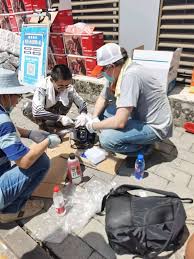
Upon seeing online appeals for volunteers, Stonier recognized an urgent need. A large number of donated chainsaws had arrived to help establish firebreaks, but most remained unassembled in shipping crates. Rescue teams desperately required personnel capable of quickly assembling and operating them. This proved to be familiar territory.
Raised in the forested hills of Missouri, Stonier spent much of his youth helping his family prepare firewood for wood-burning stoves, mastering chainsaw assembly and maintenance along the way.
After coordinating with a translator, he drove directly to the logistics hub. Confronted with mounds of disassembled parts, he worked alongside two Chinese volunteers, rapidly assembling and testing four chainsaws. He then demonstrated efficient assembly techniques to other responders. To transport the equipment toward the fire zone, he and his translator flagged down a taxi until the road grew too steep. There, they joined a convoy of volunteer motorcyclists ascending the mountain. With a heavy backpack secured, Stonier climbed onto the rear of a motorcycle and headed toward the smoke-choked ridgeline.
Despite hazardous conditions, his resolve never wavered. Upon reaching a staging area near the primary firebreak, he personally handed over the assembled chainsaws, flashlights, and other critical supplies to frontline firefighters. Once the blaze was contained, a photograph of Stonier seated on a motorcycle, chainsaw in hand, en route to the fire zone, quietly went viral across Chinese social media. Residents praised his courage and selflessness, gradually bestowing upon him the affectionate moniker “Chongqing brother.”
“I love that nickname,” he said with a smile. “I’ve always felt deeply connected to this community. When our shared home faces danger, it’s only natural to step forward and help.”
The experience profoundly shaped his understanding of the local spirit. “When disaster struck, no one asked, ‘What can I get?’ Instead, everyone asked, ‘How can I help ?'” he reflected. “It was those countless small, determined acts that revealed the profound mutual care embedded in this community.”
Since relocating to China, Stonier has also dedicated substantial time to supporting education in rural areas.
“I don’t track expenses or seek recognition when volunteering,” he stressed. “I do it because I want to. It’s always been part of my life, and now it’s woven into my life here.”
Over the years, he has visited nearly 100 schools in and around Chongqing. Beyond teaching, he has worked to connect rural students with social resources, creating opportunities for them to broaden their horizons. He has brought them to Southwest University, as well as museums of natural history, science and technology centers, and many other educational venues.
At the close of our conversation, I asked what he would say to his late mentor, Dr. Allen, if he could see him today.
After a thoughtful pause, Stonier smiled.
“In 2008, he told me that China would become a place where talented people from around the world would want to study and work. At the time, I thought, ‘Maybe.'”
“Now his prediction has come true,” he said. “More and more international scholars and young professionals are choosing to study and build their lives in China. I’m fortunate to be one of them — to have found a home here and a purpose in sharing what I’ve learned with more young generations.”
Looking back on the journey, Stonier added with a smile: “When he sees everything I’ve done over the years, I think he’d be proud of me.”
By Zhang Yang, Liu Hongchao, People’s Daily
During the summer vacation, the Liaoshen Campaign Memorial in Jinzhou, northeast China’s Liaoning province, has seen a constant flow of visitors. Hanging quietly on the wall inside the Hall of Martyrs is a time-worn silk banner bearing the words “An Army of Benevolence and Righteousness,” behind which lies a poignant historical tale.
Behind the banner is a moving story.
During the 1948 Liaoshen Campaign, orchards surrounding Jinzhou were heavy with ripe apples. Passing through the area, People’s Liberation Army soldiers were exhausted and thirsty, but not a single one picked an apple. The people’s army, under the leadership of the Communist Party of China, won the hearts of the people through its strict discipline.
“Here the fighters were conscious that not eating the apples was noble, whereas to eat them would have been ignoble. They knew the apples belonged to the people,” Chinese President Xi Jinping quoted late Chairman Mao Zedong’s comments on the story during an inspection tour to Liaoning in 2022.
Decades later, the tale endures as a powerful symbol of integrity.
Today, as China deepens its efforts to promote clean governance and institutional accountability, the story is being actively revived to inspire contemporary officials.
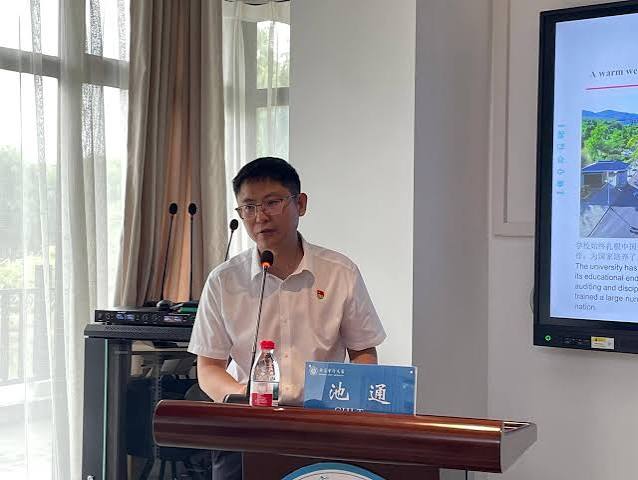
About a 20-minute drive from the Liaoshen Campaign Memorial is the Jinzhou Apple Integrity Education Base, where a sculpture entitled the “People’s Apples” stands out. Inside the special‑themed exhibition hall, docent Sun Yimeng was giving a vivid account, guiding visitors through historical photos and precious cultural relics.
“We take the ‘People’s Apples’ as our underlying theme to convey to every visitor the Communist Party of China’s fine conduct, strict discipline and original aspiration to serve the people, ” said Sun.
“Declining the apples reflects discipline; avoiding even the smallest exploitation of citizens demonstrates dedication to public service. We must carry forward the revolutionary heritage, uphold our revolutionary legacy, foster and put into practice a correct approach to evaluating political performance, exercise power with integrity, and effectively protect and advance the interests of the people,” said Guan Hua, an official with the Jinzhou municipal people’s congress, during a study visit.
Jinzhou has translated this historical lesson into actionable governance. On one front, the city enforces a zero-tolerance stance toward corruption in sectors directly impacting livelihoods, including rural collective assets, healthcare, and education. Targeted campaigns have been launched to root out misconduct that harms ordinary citizens. On another, Jinzhou focuses on “growing apples for the people” by improving the business climate. The local government has institutionalized dialogue with enterprises, established direct policy-delivery channels, and implemented 32 regulatory frameworks to streamline operations and support sustainable growth.
Clean governance, officials stress, is not merely about restraint — it is a foundation for effective public service. To embed accountability into daily operations, inspectors from Jinzhou’s Municipal Commission for Discipline Inspection now work alongside staff at the city’s 12345 public service hotline and government service centers. A QR code-based oversight system has been rolled out across all 283 service windows, enabling real-time feedback and monitoring. The results are tangible: government services in Jinzhou have become increasingly standardized and efficient. Over 900 administrative procedures can now be completed on the same day, with many finalized in under two hours.
From a wartime promise of restraint to a modern blueprint for transparent administration, the “People’s Apples” story continues to remind officials that true authority flows from serving the people with integrity.
“The tests of the times keep evolving, yet our original aspiration to serve the people remains unchanging,” said Zhao Yu, an official with the Jinzhou municipal commission for discipline inspection. “We unswervingly uphold rigorous discipline, nurture a sound and upright political climate to edify the public and bolster high-quality development. We must never take the people’s apples.”
By Yang Wenming, Bai Guangdi, Su Bin, People’s Daily
Integrity has long been a cornerstone of Chinese cultural tradition. Throughout the more than 100-year history of the Communist Party of China (CPC), a commitment to integrity, public service, and serving the people has remained a defining part of its endeavors.
In recent years, local governments across China have increasingly turned to digital tools to strengthen integrity education. By consolidating resources and designing interactive online platforms, authorities are helping anti-corruption and ethical governance principles take deeper root among both civil servants and the general public.
Not long ago, Chen Zhaomeng, an official with the Zhujie subdistrict in Qilin district, Qujing, southwest China’s Yunnan province, needed to organize an integrity education activity for her Party branch. Using a mobile mini-program called “Map of Integrity in Yunnan,” she quickly found a suitable venue in Shizong county, about a 90-minute drive from Qilin district, and booked a visit to the former residence of Dou Xu in Zhuji township.
The former residence of Dou Xu is a traditional courtyard compound. Dou Xu was an upright and incorruptible official during the Qing Dynasty (1644-1911) who strictly enforced the law and handled cases impartially. Stories of his integrity have been passed down among local people.
Guided by an exhibition docent, the group toured the former residence in an orderly manner and learned about the virtues of Dou Xu’s good family tradition.
To facilitate integrity education at the grassroots level, the Yunnan provincial commission for discipline inspection launched the “Map of Integrity in Yunnan” mini-program. It provides detailed information on venues and facilities dedicated to integrity culture across the province.
Historical stories associated with each integrity education base are brought to life through short videos, while map navigation, recommended routes, opening hours, and reservation information are also provided.
Yunnan’s initiative reflects a broader national trend. Similar digital platforms have been rolled out in Lianyungang, Jiangsu province, and Guiyang, Guizhou province.
In Lianyungang, municipal disciplinary authorities have linked 16 distinct integrity education sites into a unified network, establishing a citywide “Integrity and Clean Governance Map.”
Meanwhile, Guiyang’s disciplinary commission has catalogued local heritage sites related to ethical governance and launched the “Guiyang Integrity Map” via the city’s official website and WeChat channel. The platform organizes provincial, municipal, county, and community-level education centers into a single searchable interface, offering practical guides and essential visiting information for officials and citizens alike.
Launching these digital platforms is only the beginning; their real value lies in how they are activated. The Lianyungang municipal commission for discipline inspection has worked with local publicity authorities, universities and other institutions to transform these mapped sites into key hubs for civil servant training, thematic party-building activities, and cautionary case studies.
At the same time, the city has expanded the reach and influence of the map by producing a series of short videos, developing online virtual reality exhibition halls and designing high-quality learning routes. Since its launch, the platform has attracted more than 200,000 Party members, officials and members of the public for visits and study.
By He Yin, People’s Daily
On Oct. 23, Chinese President Xi Jinping sent a letter to the 2026 Global Governance Forum (Xiong’an), further elaborating on the importance of reforming and improving the global governance system and charting the course for advancing the implementation of the Global Governance Initiative (GGI). The letter demonstrated China’s sense of responsibility and its willingness to work with other countries to build a more just and equitable world.
Xi put forward the GGI in September 2025, a much-needed initiative that offers solutions to bridge the governance deficit and build a better future. In just over a year, the initiative has gained the support of more than 160 countries and international organizations. Over 60 countries have joined the Group of Friends of Global Governance. Its core elements have been incorporated into the documents of multilateral fora such as the G20, the Shanghai Cooperation Organization, and BRICS.
The past year has underscored the great contemporary value of the GGI, with its appeal and influence continuing to grow. The initiative has become an important public good warmly embraced by the international community.
The international community regards the GGI as a stalwart for multilateralism as the international landscape is undergoing a profound shift, and a safeguard for fairness and justice as the law of the jungle makes a comeback. To many in the world, the GGI provides a clear pathway to shared development and security and much-needed certainty for a turbulent world.
Beyond championing the GGI, China has taken decisive steps to translate its vision into practice. Since its launch, China has advanced multiple proposals to promote peace and stability in conflict zones such as the Middle East, voluntarily waived demands for additional special and differential treatment in World Trade Organization negotiations, and introduced new forms of international public goods, such as the International Organization for Mediation and the World Artificial Intelligence Cooperation Organization.
The GGI is widely regarded by people of foresight around the world as a remedy for and improvement on the existing international system, and a crystallization of Chinese wisdom that will shape a fairer, more inclusive, and more sustainable world.
The 2026 Global Governance Forum (Xiong’an), held in Xiong’an New Area in north China’s Hebei province, marked a major step by China in working with other countries around the world to put the GGI into practice.
Under the theme “Rebuilding Confidence and Cooperation: Reforming and Improving Global Governance in a Transforming World,” participants exchanged ideas and learned from one another. Their discussions addressed both the need to uphold the international system with the United Nations at its core and the governance of emerging fields such as artificial intelligence, cyberspace, and outer space.
Through dialogue and communication, they sought to build consensus and develop joint solutions, contributing to international efforts to tackle governance challenges and reform and improve global governance.
More than a policy dialogue, the forum offers the international community a tangible look at China’s governance philosophy. In just nine years, Xiong’an New Area has transformed from a planned development zone into a dynamic innovation hub and a showcase of high-quality urban development. By engaging with this “city of the future,” attendees witnessed firsthand how China’s governance model — centered on people-first development, ecological sustainability, technological innovation, and long-term planning — has translated into measurable progress.
This year marks the 55th anniversary of the restoration of the People’s Republic of China’s lawful seat in the United Nations. As a founding member of the United Nations and a permanent member of its Security Council, China has consistently upheld and practiced multilateralism.
At the forum, China announced eight practical actions to advance global governance. These include ensuring the success of the Asia-Pacific Economic Cooperation (APEC) Economic Leaders’ Meeting in November, continuing to engage deeply in United Nations reform and encouraging the Group of Friends of Global Governance to play a bigger role.
The country called on all parties to uphold the central role of the United Nations, practice the values of fairness and justice, bolster the strength of the Global South for better global governance, advance in the direction of openness and development, and improve the rules of governance in emerging fields.
These measures clearly demonstrate China’s firm resolve to work with other countries to steer global governance toward greater fairness and equity. They also provide a roadmap for joint efforts to implement the GGI in the next stage.
An African media outlet commented that the forum’s significance lies in its efforts to foster a more open, balanced and constructive dialogue on the future of international relations.
Global governance serves the common interests of all nations, and requires the collective effort of the international community. China stands ready to work with all parties to uphold a vision of global governance featuring extensive consultation and joint contribution for shared benefit, build strength through confidence and overcome challenges through cooperation.
Together, the international community can advance the implementation of the GGI, bring greater certainty and positive energy to a world fraught with change and turbulence, and work hand in hand toward a community with a shared future for humanity.


PAJUD Questions Lawal Daura’s Recent Comments on President Tinubu

Aondoakaa’s move to bribe Judiciary ahead of Nov 16 ruling on eligibility suit uncovered

GROUP SLAMS ATIKU’S BIZARRE NARRATIVE OF “KAABA HAS NO SPIRITUAL PURPOSE”

-
 Uncategorized6 years ago
FG, states urged to harness flooding for ranching, others with technology – Agbaje
-
 Headlines11 years ago
Breaking: EFCC seals Borno House of Assembly, as Hon members take to their heels
-
 News12 years ago
Nigeria Security Operatives Stage Manhunt For Homosexual Perpetrator
-
 News10 years ago
How 21-year-old Girl fled community over accusation of lesbianism
-
 News11 years ago
Yobe Gov Moves Against Deputy
-
 Opinion8 years ago
7 signs she has friend zoned you
-
Technology5 years ago
Online job placement company headhunts women
-
 Headlines10 years ago
Borno Dep Gov Abducts Another Church Leader