
News
Civil Society Groups For Good Governace (CCSGGG) Demystifies The Fadama Project


A coalition of Civil Society Organizations under the aegis of Civil Society Groups for Good Governance (CSGGG), has waded into the FADAMAaffair in a definitive attempt to balance the narrative in the public domain.
Addressing the nation during a press conference on Tuesday the 6th of April 2021 at the nation’s capital, president of CSGGG – Comrade Ogakwu Dominic Ogakwu – laid bare the details of the project, by undamming a flood of project information which was hitherto shrouded in mystery.
Says he “The controversy trailing the FADAMA project has necessitated this press briefing. The public domain has been inundated with all sorts of fallacious conspiracy theories, so much so that the ordinary Nigerian has been left in a quandary about the actual state of the nation.
Such a conundrum of disinformation and misinformation is the stuff of fake news, which is currently threatening the sanity of our polity. If this ugly trend is not nipped in the bud early enough, the fragile unity in diversity which Nigeria currently enjoys will soon be destroyed.
As champions of the fight against the spread of fake news therefore, it behooves the CSGGG to balance the narrative and set the records straight via an investigation into and objective reportage of the goings-on at FADAMA.”
Digging deep into the past, the coalition’s president – Comrade Ogakwu Dominic – took Nigerians on a ride down the FADAMA memory lane by reliving the history of the World Bank Project.
In his words, “FADAMA I which was the first of the series, started in 1990 with a design to bring basic irrigation and productive support to farmers in selected Nigerian states.
FADAMA II followed in 2003, introducing a groundbreaking Community-Driven Development (CDD) model to Nigeria’s rural areas and helping to institutionalize local stakeholder engagement in community decision making.
FADAMA III interventions began in 2009, during which time the Project’s geographical scope was expanded, so that it became a well-known National Brand of Local Agricultural Development Project.
Please note that the FADAMA III Project was originally approved by the Board on June 1, 2008, with a Credit facility of US$250 million, became effective on March 23, 2009 and closed by December 31, 2013.
Despite the successes so far recorded, the government saw that a lot still needs to be done if rural farmers are to benefit from this world bank scheme. So the government requested an additional financing for special interventions.
The World Bank responded to the request of the Government for more support, by providing additional financing to the FADAMA III project, in order to meet the urgency of the Agricultural Transformation Agenda (ATA).
The Board approved additional IDA credit of USD 200 million on June 28, 2013, with the objective to assist the Federal Government of Nigeria to scale up impacts on the ground and strengthen the development effectiveness of the Third National FADAMA Development Project, by aligning it more closely with the then Agricultural Transformation Agenda (ATA).”
Fleshing it out, ComradeOgakwu went on “This additional financing (AFI) used business approach model that supported clusters of farmers in the initial six selected States, who produce crops with comparative advantage and high potential to increase production and productivity, like; Cassava, Rice, Sorghum and Tomato value chains and thereafter linked them to better-organized markets (middle and large scale processors) through off taking arrangements.
The states which participated in the Additional Financing (AFI) scheme were, Anambra, Enugu, Kano, Kogi, Lagos and Niger–Core States, while additional twenty-eight (28) States including FCT (Production Clusters States) also benefitted from the project having met the set criteria. On average, the project was expected to reach 317,000 direct beneficiary households in clusters of farms and 1.4 million indirect beneficiaries across the country.
A Second Additional Financing (AFII) with a credit facility of USD50 million was approved by the Bank for humanitarian initiatives and restoration of livelihood of the people affected by insurgency, in the six North East (NE) States of Borno, Yobe, Adamawa, Taraba, Bauchi, and Gombe.
For emphasis, the first Additional Financing (AF I) scheme operated in 540 LGAs across 33 States and FCT, while the Second Additional Financing (AF II) operated in 108 LGAs of the six northeastern States of the country.”
Connecting the dots between investment and returns-on-investment, Ogakwu said “As at press time, our independent project assessment report shows that 100% of the beneficiaries have increased their real income by at least 40%. Yield has risen from a baseline of 5.27t/ha to 28.42t/ha for cassava (249.53%), 2.83t/ha to 5.35t/ha for rice (89.05%), 1.54t/ha to 2.71t/ha for sorghum (75.98%), and 1.6t/ha to 12.25t/ha for tomato (665.63%).
These increases across the 4 value chains, represents an average of 575.13% which is far above the average of 40% targeted at the onset of the project. The total hectares of land cultivated rose from 6,976ha at the MTR to 207,160ha – comprising Cassava (18,936 ha), Rice (132,717 ha), Sorghum (39,865 ha) and Tomato (15,642 ha). These achievements were recorded due to the adoption of Good Agronomic Practices (GAP), Capacity building of farmers, engagement of Advisory services and inputs support consultants (ASIC), linkages to off-takers, etc.
Again, in 2019, cassava farmers under Fadama III, AF I and AF II realized more than N20.6 billion as revenue and a gross margin of N13 billion. In the same vein, rice, sorghum and tomato farmers realized a gross margin of N104.4 billion, N60.9 billion and N19.2 billion respectively, during the project’s life span. Hence, the FADAMA 111 series have contributed substantially to the gross domestic product (GDP) and gross domestic income (GDI) of Nigeria from 2015 to 2019.
The livelihoods – crops, livestock, fisheries, and non-agricultural enterprises – of 32,480 farming households were restored in addition to receiving food assistance to the tune of 4,692 tons of rice, maize, beans and sorghum, 306,400 liters of cooking oil and 161tons of condiments, under the AF- II.
Altogether, about 950,400 days of work was provided the returnees and conflict-affected households, against the targeted 720,000 days.”
Taking a swipe at mischief makers peddling unfounded rumors of financial infractions during implementation of the FADAMA Series, the Comrade gave insight into the FADAMA coffers, by uncovering behind-the-scenes financial transactions unknown to the ordinary Nigerian. Hear him, “The savings in FUEF account as at the time of reporting was N609,189,766, saved from 305,048 assets worth N3,470,519,662 representing 17.55% of the value of assets. The FUEF management outlook is good as the sustainability purpose for which it was designed is being fulfilled, e.g. translating to the very first Famers-led Micro Finance Bank in Africa – the Plateau Fadama Farmers Micro Finance Bank – while others like AkwaIbom, Ogun etc are at advanced stages of delivery.
These achievements were recorded via a total of 25,191 Business Plans developed across the value chains, with rice having the highest 13,896, followed by cassava with 4,363, sorghum with 3,841, tomato 2,042 and the least is processing with 1,049. Of these numbers of business plans, a total of 22,595 (89.7%) was approved, with 18,650 (82.5%) implemented.
A total of 200,241 farmers cultivating 198,327 hectares across the thirty-three (33) FADAMA III and first Additional Financing (AF I) participating States, procured advisory services out of the 221,187 farmers who received project grants, translating to 90.5% achievement against the target of 30%. This was disaggregated into 154,040 males and 46,201 (23.1%) females.
Moreover, 215,129 farmers cultivating 214,919 hectares across the participating States, procured inputs out of the 221,187 farmers supported, translating to 97.26% achievement as against the target of 60%. Across the value chain, 18,626 were cassava farmers, 131,305 were into rice production, 40,784 sorghum farmers and 24,414 were tomato farmers.
The FADAMA series also made substantial progress along the lines of community-owned rural infrastructure, such as the construction of 580.7km of double-layer surface dressed roads in 133Nos locations across the participating States.”
Addressing the issue of stakeholders’ collaborations to ensure accountability, effectiveness and transparency, the CSGGG president said, “Interestingly, FADAMA III AF deployed a Multi-Agency Partnership (MAP) Collaboration approach during implementation, to ensure that all relevant players in the agricultural sector were carried along. These included; National Agricultural Research Institutes (NARIs), National Agency for Food, Drug Administration and Control (NAFDAC), National Youth Service Corps (NYSC), the Federal Department of Agricultural Extension (FDAE), National Agricultural Seed Council (NASC), Upgrade of gene bank at Institute of Agricultural Research (IAR), Zaria; and support to Lake Chad Research Institute, among others.
To ensure timely access to affordable and quality planting materials for beneficiaries, the Fadama III AF Project was designed to promote Community Seed Production. To successfully implement this, the project signed an MoU with National Agricultural Seed Council (NASC), to create a platform for the two parties to work together and implement seeds production/multiplication activities.
In the area of Public/Private Partnership (PPP) the FADAMA project collaborated withThe Africa Commodity Exchange (AFEX) Ltd, Machine and Equipment Corporation Africa (MECA) Ltd, NIRSAL/Anchor Borrowers Program (ABP) among others.
“Furthermore,” Comrade Ogakwu went on, “Another laudable initiative of the FADAMA series is the Gene Bank scheme. Gene Bank is an archive containing records of crop genetic diversity. It plays a key role in the conservation, availability and use of a wide range of plant genetic diversity for crop improvement, food and nutrition security. The National Gene Bank domiciled in IAR, Zaria was upgraded to International standard, primarily to obviate the genetic resource material challenges confronting geneticists, especially in the zone and adequately equip the Research Institute to effectively and efficiently facilitate the establishment of Community Based Seed production system as well as provide foundation seed to beneficiaries. After the renovation of the Gene Bank, the center was equipped by the project, with state-of-the-art Gene Bank facilities.
Speaking of its ingenuity and innovative approach to perennial issues, Comrade Ogakwu noted, “A key accomplishment of the project is the adaptation of project structure and activities, in order to provide solution to national challenges – especially in graduate youth unemployment. For instance, 6,916 unemployed youth and women graduates who indicated interest to become agri-preneur were competitively selected by the project in 2017 and a total of 5,647 out of the 6,916 (representing 96%) were successfully revalidated.
The breakdown shows that 2,251 (40%) were for crop, 2,988 (53%) for livestock and 408 (7%) for non-farm enterprises. As at December 31, 2019, a total of N2.23B has been disbursed to 5,059 FADAMA beneficiaries, comprising 3,571 males (70.6%) and 1,488 females (29.4%). Results already being showcased by the first batch of beneficiaries (who employs a minimum of three workers each) presents a good opportunity for scaling up, reduction in unemployment, encouragement of youth in Agribusinesses, income-generating activities, etc.”
Ogakwu rounded up by providing data of the Project’s conflict resolutions mechanism. Says he, “Moreover, a total of 189,819 farmers/beneficiaries have been profiled and factored into the farmer database for AF I & II. Geo-referenced data of 170,609ha have been received and uploaded in the Geo-data base. All the 158 conflict cases reported in AF-I were resolved through the Grievances Redress Mechanism (GRM) in the communities. These grievances centered on land disputes with family members and cattle invasion of farms. Rice value chain had the highest (84) while infrastructure and sorghum had the least (2). In AF-II, 15 conflict cases were reported and resolved.”
With this interactive press conference/media parley and the avalanche of information therefrom, the Civil Society Groups for Good Governance (CSGGG) has effectively activated the Freedom of Information (FOI)Act and availed the ordinary Nigerian an opportunity to be in on the loop as regards the FADAMA Project, which has hitherto remained a mirage in the public space.
Therefore, by fleshing out this erstwhile phantom called FADAMA, the CSGGG has now demystified the Project and equipped the public with the right tool for informed decision and by so doing, build social trust for the handlers of the FADAMAProject.

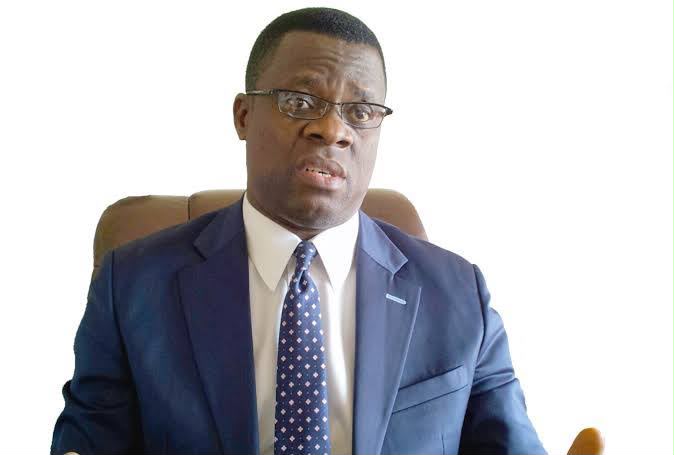
THE FALLACIES OF MIKE IGINI
“It is mean and cowardly and an evidence of weakness and utter demerit, for any group of people to attempt to commend themselves to the public by the negative process of belittling and condemning others.”_
- Chief Obafemi Awolowo, 28th April, 1951.
The attention of the Progressives Alliance for Justice, Unity and Democracy (PAJUD) has been drawn to the barrage of insults heaped by Mike Igini, former Resident Electoral Commissioner of the Independent National Electoral Commission (INEC), against every perceived and imaginary obstacle to his personal agenda.
We posit that since the return of democracy in 1999, the Nigerian political and electoral firmament has been overdosed with different genres of characters – the good, the bad and the ugly.
We state categorically and without fear of contradiction that President Bola Ahmed Tinubu is NOT responsible for the non-appointment of Mike Igini as either Chairman of INEC or National Commissioner since he left office in disgrace and engulfed in controversies in the South-South.
Igini must understand that such appointments are not done willy-nilly. They are based on several criteria. He has served two full terms as Resident Electoral Commissioner. For him to be nominated as National Commissioner, a vacancy must exist for his state. This is apart from the principle of rotation of the position among states in the geo-political zone.
Those who know President Bola Ahmed Tinubu closely know he is a leader who does not deliberately shut the door against competence and capacity. Anyone holding him in contempt on this matter is either being mischievous or acting out the script of the opposition, just like the present issue at stake.
It is unfortunate that Igini has allowed himself to be taken advantage of, dancing to the rhythm of anti-Tinubu and anti-Amupitan rogue agents.
We find it compelling to state unequivocally that Igini is blatantly scheming to discredit the present government and the Amupitan-led leadership of INEC in anticipation of reward by opposition elements and spent forces, if they ever win in the post-2027 general elections.
Over the years, we have watched the transformation of Igini from lawyer, to public affairs commentator, to agitator, until the PDP government appointed him Resident Electoral Commissioner.
We are amused at Igini’s feeble attempts at returning to public reckoning, using barefaced criticism, outright lies, mischief and fallacies against the Renewed Hope and reformative agenda as a springboard to relevance and prominence.
For an egocentric, self-seeking bigot and Mr. Know-All like Igini, he wants to remain relevant as a bride for any juicy INEC Election Management Committee headship or membership, which we know will never happen in this dispensation as a result of his antecedents while in office – an era marred by allegations of partisanship, disloyalty and endless controversies.
Your tenure as REC in Cross River State was characterised by mudslinging between you and a political party over unethical conduct unbecoming of an electoral officer. Similarly, your flexing of muscles and one-sided narratives during your tenure as REC of Akwa Ibom State is still very fresh in our memory. Till date, you are still spewing negative narratives against one of the politicians you fought in that state to high heavens.
Nigerians from all strata continue to wonder where the monies for the live telecast of Igini’s exit as Resident Electoral Commissioner of Akwa Ibom State originated from. In the history of INEC – from Dr. Ephraim Akpata, Alhaji Shehu Musa, Dr. Abel Guobadia, the much-vilified Prof. Maurice Iwu, Prof. Attahiru Jega reputed to be Igini’s benefactor, to Prof. Mahmood Yakubu – none of them had the temerity for such lavish display and grandeur during their exit. What was witnessed in the last days of Igini as REC in Akwa Ibom evokes serious questions about collective decency, decorum, moral rectitude and values.
Any argument in support of such an extravagant exit lacks integrity, for the simple reason that the pay slip of INEC Resident Electoral Commissioners and even National Commissioners is not a hidden document. It is known to the Nigerian public.
We believe that if we are sincere in this country, Igini should focus on more important non-partisan issues than chasing shadows. Igini should also address his own record, including the troubling episode of a Kenyan national engaged by INEC as a consultant some years ago, where the voter register fingerprints of Nigerians were allegedly compromised and handed to foreign interests. That despicable act is still fresh in our memory.
As overwhelming majority of Nigerians with voting rights are aware, there is an uncanny lust for power by desperate opposition politicians lurking on the horizon. They are deploying everything on earth just to grab power in 2027, and for no just cause but simply for selfish personal aggrandizement. They have recruited former staff, Directors, Resident Electoral Commissioners and National Commissioners to help execute their warped agenda and barefaced propaganda to deceive gullible Nigerians who will swallow every hook, line and sinker narrative framed by them.
We unreservedly agree with many who have suggested that as a believer in God, Igini should not allow his mind to be poisoned by the notion that any power outside the influence of God could have been responsible for the failure of his emergence as either National Commissioner or Chairman of the Commission.
Whatever it is, there seems to be more to it than meets the eye. The process of creating anarchy starts with incitement against the government, the electoral empire and security agencies. It often appears so smooth as to be imperceptible, hence those who engineer it enjoy the process at the initial stage, only to be consumed at the end of the day.
Elements in the class of Igini, who are acting out the script of falsehood purveyors and peddlers, will be put to shame at the end of the day. There is no doubt that Nigerians are going to have a well-deserved, credible, transparent, free and fair election in the 2027 general elections.
Above all, nobody can dispute the fact that President Bola Ahmed Tinubu nominated people with impeccable ability, capacity, loyalty, patriotism and honesty as members of the election management structure that will drive our democracy forward, in a manner that both Nigerians and the international community will be proud of like never before in our annals.
The focus of the Tinubu administration remains its much stronger determination to protect and respect the sanctity and fidelity of the ballot during the forthcoming elections.
We implore Mike Igini to stop the rabble-rousing, negative framing, mischief, mudslinging and casting of aspersions against the electoral umpire and Mr. President, and find something reasonable to do to earn a living just like other Nigerians, instead of going from one radio station to television stations across the country. His antics are already known to Nigerians who are far more sophisticated and politically savvy than before.
A word is enough for the wise… “WHEN YOU CONDEMN PEOPLE, YOU BRING JUDGEMENT ON YOURSELF.”
Signed:Comrade Yakubu Dan Abba
Country Representative, PAJUD.
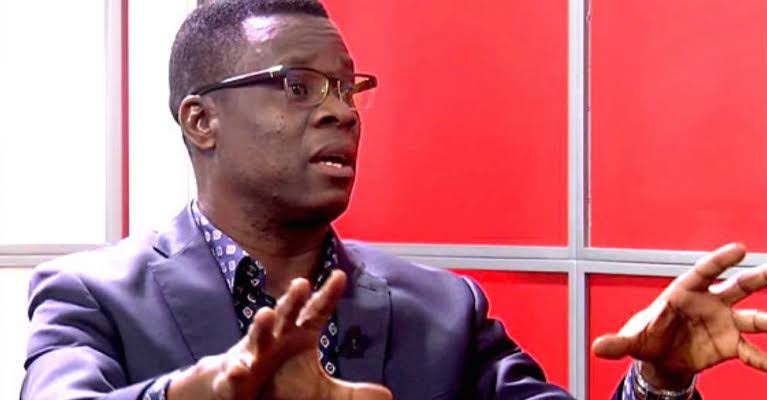
The Progressives Alliance for Justice, Unity and Democracy (PAJUD) has accused former Independent National Electoral Commission (INEC) Resident Electoral Commissioner, Mike Igini, of attempting to discredit President Bola Tinubu’s administration and the leadership of the electoral body, describing his criticisms as politically motivated.
The group, in a statement signed by its Country Representative, Comrade Yakubu Dan Abba, alleged that Igini was seeking to regain public relevance through persistent criticism of the government and the leadership of INEC under its current chairman, Prof. Joash Amupitan.
PAJUD, however, did not provide independent evidence to substantiate its allegations about Igini’s motives.
The group maintained that Tinubu was not responsible for Igini’s non-appointment as INEC chairman or national commissioner after completing his tenure as a Resident Electoral Commissioner, arguing that such appointments were subject to established criteria, vacancies and rotation arrangements among states within geopolitical zones.
“Those who know President Bola Ahmed Tinubu closely know he is a leader who does not deliberately shut the door against competence and capacity,” the statement said.
The group further alleged that Igini’s criticisms were intended to undermine the current administration and INEC’s leadership in anticipation of political rewards from opposition elements following the 2027 general elections.
PAJUD also questioned Igini’s record during his service as Resident Electoral Commissioner in Cross River and Akwa Ibom states, citing past disagreements with political actors and what it described as controversies surrounding his conduct in office.
It also raised questions about the cost and circumstances of the live television broadcast of Igini’s exit from office in Akwa Ibom State, comparing the event with the departures of previous INEC chairmen and other senior electoral officials.
The group did not provide documentary evidence to establish wrongdoing in connection with the broadcast.
In another allegation, PAJUD called on Igini to address what it described as concerns surrounding the engagement of a Kenyan national as an INEC consultant and the alleged compromise of Nigerian voters’ fingerprint data. The statement, however, did not present evidence establishing that Igini was personally responsible for any compromise of the data.
The alliance accused opposition politicians of attempting to discredit the electoral system ahead of the 2027 elections, alleging that some former electoral officials were being used to advance political interests. It did not identify the individuals allegedly involved or provide evidence supporting the claim.
PAJUD, meanwhile, expressed confidence in the ability of the current INEC leadership to conduct credible, transparent, free and fair elections in 2027.
It said the Tinubu administration remained committed to protecting the integrity of the ballot, adding that the president had nominated individuals it described as capable, patriotic and committed to the country’s democratic development.
The group urged Igini to refrain from what it characterised as inflammatory criticism of the president and the electoral commission, insisting that public discourse on electoral reform should be guided by responsibility and respect for democratic institutions.
Quoting former Premier of the Western Region, Chief Obafemi Awolowo, the alliance recalled his statement of April 28, 1951, that it was “mean and cowardly” for any group to seek public approval by belittling and condemning others.
PAJUD concluded by urging Nigerians to remain confident in the electoral process ahead of the 2027 general elections, while reiterating its support for the Tinubu administration and the current leadership of INEC.
The Freelance Journalist Federation (FJF) has expressed confidence in the committee investigating the reported deaths of 37 miners in Niger State, urging the public to allow the panel to conclude its assignment without undue pressure.
The federation’s position followed threats by the Nigeria Diaspora Organizations and Community for Human Rights (NDOCHR) to stage a protest at the headquarters of the Nigeria Security and Civil Defence Corps (NSCDC) in Abuja over alleged delays in releasing the investigation’s findings.
FJF in a statement issued on Friday and jointly signed by FJF conveners Ibrahim Ali, Jonathan Modi, Okpara Isaac and Christopher Abah, described the investigative process as transparent and thorough, insisting that sufficient time should be allowed for the committee to complete its work and establish the facts surrounding the incident.
The federation criticised the proposed demonstration, describing it as unnecessary and politically motivated, while warning against actions that could heighten tensions over an issue involving the loss of human lives.
It also commended the leadership of the NSCDC, the Minister of Interior and President Bola Ahmed Tinubu for what it described as their commitment to transparency, accountability and the rule of law.
According to the FJF, local civil society organisations monitoring the proceedings have expressed satisfaction with the panel’s conduct. However, the federation maintained that the investigation should be allowed to run its course before conclusions are drawn.
The group also rejected calls by the diaspora organisation for the immediate removal and prosecution of the NSCDC Commandant-General, Dr Ahmed Abubakar Audi, describing the demands as premature and inconsistent with the principle of fair hearing.
It argued that calls for sanctions before the conclusion of the investigation could undermine due process and prejudice public perception of the committee’s work.
The NDOCHR had also threatened to petition the International Criminal Court (ICC) in The Hague over the matter. In response, the FJF maintained that Nigeria’s domestic legal and investigative institutions should be allowed to address the allegations through established procedures.
The federation urged Nigerians in the diaspora to exercise restraint and avoid actions that could inflame political tensions or interfere with the ongoing investigation.
It urged members of the public to remain calm and await the committee’s official findings, stressing that a thorough investigation was necessary to establish the circumstances surrounding the reported deaths and determine any responsibility arising from the incident.
The committee’s final findings and any subsequent official actions are expected to be central to resolving the concerns surrounding the incident.
The statement further called on the Inspector-General of Police and other security agencies to take appropriate steps to maintain public order in the Federal Capital Territory.

WHO: Nigeria Records Zero Ebola Cases After Evacuation of Swiss Couple

Kwara celebrates Fela’s legacy with retrospective exhibition

2027: Ilorin West LG Boss Leads APC Mega Rally In Ubandawaki

-
 Uncategorized6 years ago
FG, states urged to harness flooding for ranching, others with technology – Agbaje
-
 Headlines11 years ago
Breaking: EFCC seals Borno House of Assembly, as Hon members take to their heels
-
 News12 years ago
Nigeria Security Operatives Stage Manhunt For Homosexual Perpetrator
-
 News10 years ago
How 21-year-old Girl fled community over accusation of lesbianism
-
 News11 years ago
Yobe Gov Moves Against Deputy
-
 Opinion7 years ago
7 signs she has friend zoned you
-
Technology5 years ago
Online job placement company headhunts women
-
 Headlines10 years ago
Borno Dep Gov Abducts Another Church Leader