
News
Ebonyi: EFCC’s Futile Misadventure vs Governor Umahi’s Financial Wizardry

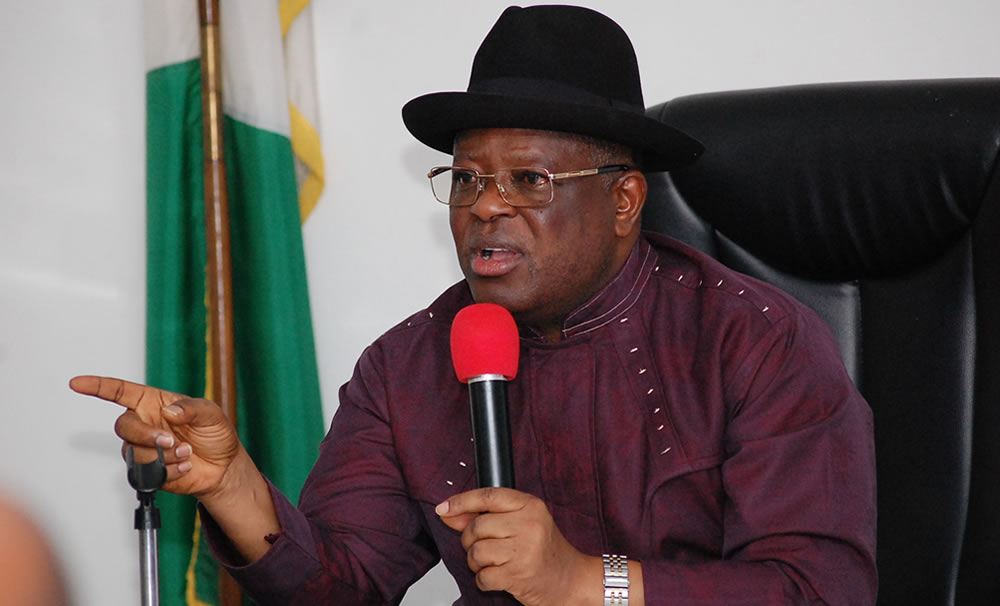
By Miss Monica ADA C. EZE
Agha Hasan Abedi also known
as Agha Sahab a Pakistani
banker and philanthropist
who founded the Bank
of Credit and Commerce
International in 1972 may have had Engr
Dave Umahi the action Governor of Ebonyi
State in mind when he stated and I quote,
“The conventional definition of management
is getting work done through people, but real
management is developing people through
work.” If one critically examine the revolution
currently going in Ebonyi State one can
easily conclude that Engr Umahi specializes
in developing people through assigning to
them tasks that go a long way in assisting in
developing Ebonyi State and her people.
On the other hand, President Barack
Obama of USA may also have Ebonyi State in
mind when he stated, “I put forward a budget
of what I called “middle-class economics” that
continues to be fiscally prudent but makes
necessary investments for us to continue the
economic momentum and job growth.” This
great quote by this outstanding leader of the
world aptly applies to Ebonyi State because
it is only the result of budget prudence and
financial wizardry of a leader like Engr Dave
Nweze Umahi could be embarking upon
the type of current infrastructure revolution
going on in the State that dwarfs the feats of all
the past administrations in Ebonyi State put
together and still decide to not only increase
the salaries and emolument of staff and
entitlements of Pensioners but to pay such on
15th of every month at a period of recession
when most States in Nigeria are owing their
staff months of unpaid salaries.
Before I divulge into the main issues
of this attempt and for avoidance of doubt
this treatise is not to praise the Ebonyi State
Government but strictly aimed to examine
critically the financial prudence of the
Umahi’s administration and the current
celebration in some quarters of the visit and
operation of EFCC in the State.
As a concerned daughter of Ebonyi state
not necessarily as the Technical Assistant on
Media to Governor Umahi, I decided to task
myself to unearth for you, the reader, the
public and our people in Diaspora the futility
or otherwise of the recent EFCC venture
into Ebonyi State at this particular time and
to appeal to Ebonyi State people not to be
disillusioned or disenchanted in any way
or feel intimidated by propagandists whose
Umahi’s pragmatic leadership have become a
source of misery to them and their sponsors.
On 9th November, 2016,I observed that
the main discussion going on in most parts
of Ebonyi State was the operation of the
Economic and Financial Crimes Commission
(EFCC) carried out in the state and reflected by
the Sun Newspaper and other dailies’ including
the Social Media of this day alleging that EFCC
has sealed Governor Umahi’s private properties.
Sadly, I also noticed with misgiving on this
fateful day, the wide jubilation and celebration
over this operation within the ranks and circles
of some misguided and disgruntled opposition
politicians whose disdain for the ongoing
revolution by the Umahi’s administration is
well known.
Having said all these, you can now
understand my goal in this treatise. Permit me
therefore to present to you the main issues of
this attempt.
John Milton (1608-1674) an English poet
defined prudence as “Prudence is the virtue by
which we discern what is proper to do under
various circumstances in time and place” and
this properly explains aptly the happenings in
Ebonyi state but to understand and appreciate
the mission of Governor Dave Nweze Umahi in
the politics of Ebonyi State, and Nigeria at large,
his mission statement must come to play. It
states: “My mission is to enhance the welfare
of our people, and empower all Ebonyians to
be self-reliant, through the compassionate
delivery of transparent and God-fearing
governance, based on integrity and dignity.”
With this, I will attempt to explain that
the venture of the Economic and Financial
Crimes Commission (EFCC) that deals with
criminality and misappropriation of public
funds into Ebonyi State, during the reign of
this God-fearing man must be a venture that
was misplaced.
In achieving a prudent management
of the scarce funds available to Ebonyi
State, a serious woman of God, Dr (Pastor)
Queen Agwu, was appointed as the State
Accountant-General, with Dr Dennis Ude
Ekumankama a very forthright fellow as the
Commissioner of Finance, and Dr Ignatius
Unah as the Permanent Secretary of the
Ministry. With these trio financial wizards,
Ebonyians can be rest-assured that their
funds are not only safe but will be utilised to
achieve the vision and mission of the David
of our time. Accordingly, the Vision of the
ministry is so explicitly on the vision of the
Governor. “The vision of the ministry is the
integration and implementation of fiscal and
developmental policies and programmes of
the state government.”
Under this administration, and to ensure
accountability, transparency and improved
revenue collection, the governor gave the
Board of Internal Revenue a full autonomy,
not minding that most states in Nigeria
can’t pay salaries because of the result of the
recession in Nigeria. But under the Umahi
regime the case in Ebonyi State is totally
different. The Ebonyi State workers’ salaries
are now paid on or before 15th of every
month, in line with His Excellency, the state
governor’s directive. Other genuine claims
like leave allowance of the workers are paid
regularly. Gratuities and pension benefits of
retired officers are now paid monthly along
side with the salaries.
The ministry’s in-built checks and
controls system through posting of internal
auditors and other mechanisms have made
the state government financial transaction
in ministries/ departments more in line
with budget provisions and financial laws.
This, no doubt, is the policy trust of the
present administration on transparency,
accountability and quality service delivery.
In budget implementation, we have ensured
that contractor’s certificates are paid timely
and that fund voted for a particular project
is strictly applied for the purpose. Over head
releases are on monthly basis and regular too.
That has given a boost to ministries and nonministerial
departments in carrying out their
recurrent activities. Financial reporting has
been improved upon. At present, there is no
arrears of the State Annual Accounts. The
Office of the Accountant-General introduced
e-revenue and salary in the state. This salary
automation ensures that each staff pays the
correct tax, because this has been factored
into the software.
Today, Ebonyi State is referred to as
one huge construction site with three solid
flyovers almost completed and to capture
what is happening in Ebonyi State more
aptly, Engr Babachir Lawal, a chieftain of
the ruling All Progressives Congress (APC)
and Secretary to the Government of the
Federation (SGF) said it all: “Well, I cannot
in all honesty understand how these works
have been achieved within this short time
and, indeed, in the climate of dire economic
shortages of government. I am impressed
that you (Dave Umahi) were able to do these
works within the cost you mentioned. I can,
in all honesty, tell you that the work is far
beyond the cost. Now, this is a standard for
other states and the Federal Government
to emulate. To me, Governor Umahi is one
of the few persons who believe that meagre
resources could be used to achieve much, if
we remove greed, which breeds corruption.
Without mincing words, Umahi, is better
than some governors in my own party, the
APC.”
Before going further on this treatise, let
me unequivocally and unambiguously state
that EFCC’s Establishment Act mandates
the EFCC to combat financial and economic
crimes. The commission is empowered to
prevent, investigate, prosecute and penalise
economic and financial crimes, and is
charged with the responsibility of enforcing
the provisions of other laws and regulations
relating to economic and financial crimes.
It is a fact that EFCC based on the above
definition of its operations and establishment
is free to visit and investigate any act they
perceive criminal or illegal which may have
caused they visit to Ebonyi State as reflected
in the Sun Newspaper and other dailies’
publication of 9th November, 2016 alleging
that EFCC has sealed Governor Umahi’s
private properties.
The above notwithstanding, i wish to
correct the erroneous impression as reflected
in some of these dailies that ‘EFCC has sealed
Governor Umahi’s private properties’. I
accept the fact that an “under investigation”
sign was placed on Orsbon La Palm Hotel
and Brass Filling stations, and some other
properties assumed to belong to Governor
Dave Umahi of Ebonyi State, because of the
alleged misappropriation of N400 million
released by Col Sambo Dasuki (retd),
National Security Adviser (NSA) to former
President Goodluck Jonathan, for the 2015
general elections in Ebonyi State but the
above notwithstanding, i wish to state clearly
that placing an ‘Investigation order’ on the
said properties is not the same as sealing the
properties. Sealing the properties in a lay
man’s language entails closing these business
outlets for business transactions with the
public, which is not the case in this regard.
I will like to reiterate, all the same, that
these properties under investigation were
acquired by Governor Umahi as a private
citizen, when he was outside the government
and have nothing to do with any release either
from Dasuki or any government source and,
therefore, it is erroneous on the side of EFCC
to place an investigation order on a property
duly acquired legally by Umahi when he was
not in government.
Third, and very importantly, the EFCC’s
action amounts to nothing since Engr
Dave Umahi resigned his directorship and
ownership of all his business empire since
assumption of office as deputy governor of
Ebonyi State in 2011. This act, therefore,
becomes laughable for some group of
people to assume that Umahi’s properties
were sealed by EFCC, as his office – both as
a one-time deputy governor and currently
as the Governor of Ebonyi State – does
not permit him to own or run any other
business, except that of government.
However, it is important to note that
Umahi, by the grace of God through the
mandate given to him by the great people
of Ebonyi State, is the incumbent executive
Governor of Ebonyi State. Therefore, he
enjoys immunity, as provided for in the
Constitution of the Federal Republic of
Nigeria and, as a result, can’t be under
probe while in office. Those celebrating of
the unwarranted attacks on our amiable and
performing governor are celebrating in vain,
as God who granted him this grace to serve
his people will surely protect him from every
visible and invisible attack.
Having said all these, let me reiterate
that as law-abiding citizens, and very
supportive of President Muhammadu
Buhari’s fight against corruption, which is
a major challenge to the development and
emancipation of our nation, the Umahi’s
administration will support the EFCC to the
best of her abilities to carry out its statutory
duties. Even so, we wish to appeal to them
to follow due process and respect the rights
of our people and not give in to the antics of
politicians who do not see any good in our
efforts to bring the dividends of democracy
to our people.
For us in the present administration
under Umahi, prudence and proper
distribution of the scarce funds at our
disposal is our hallmark; and we have no
skeleton in our cupboard. Our doors are
always open to the EFCC and any other
organ of government to beam its searchlight
on us at anytime.
To us, it makes no meaning that
the EFCC could paste information on
the properties they felt belonged to our
governor, because we are convinced that
at the end of the day both Umahi and his
associates will be vindicated.
Umahi doesn’t need any distraction but
support at this time to enable him focus on
his mission and vision for Ebonyi State
The Governor’s reaction to those
asking him to resign based on the EFCC’s
visit suffices here: “my government will not
be distracted from delivering democracy
dividends to Ebonyians. These elements
attacking me lack credibility in all fronts
to have the moral justification to beam a
searchlight on me and my administration
as their past is full of corruptive tendencies.
I am happy that the public know that these
elements have nothing positive to offer to
our state bur are agents whose primary
desire is to truncate the existing peace in our
State and discredit my government.
The good thing is that the people of
Ebonyi who gave their mandate to me to
exercise on their behalf would “never allow
agents of the devil to have their negative
desires come to pass.
These desperate agents were those
involved openly selling empowerment
forms to unemployed youths of Ohaukwu
LGA claiming that it was a Federal
Government directive. The good thing is
that my government had intervened by
empowering over 4,500 unemployed youths
and women of Ebonyi State and provided
the sum of N250,000 to them to embark on
business of their choice”.
Conclusion
Finally, let me appeal to our people in
Ebonyi and those in the Diaspora to continue
to exercise faith in this administration, as we
are determined to make a difference this time
around, and to make our state a reference
point in the annals of governance in Nigeria.
For those who are hell-bent on distracting
the governor by cooking up lies against him,
we appeal to them to exercise caution so that
posterity will not be too harsh on them.
… Eze is Technical Assistant (TA) on
Media to Governor Dave Nweze Umahi
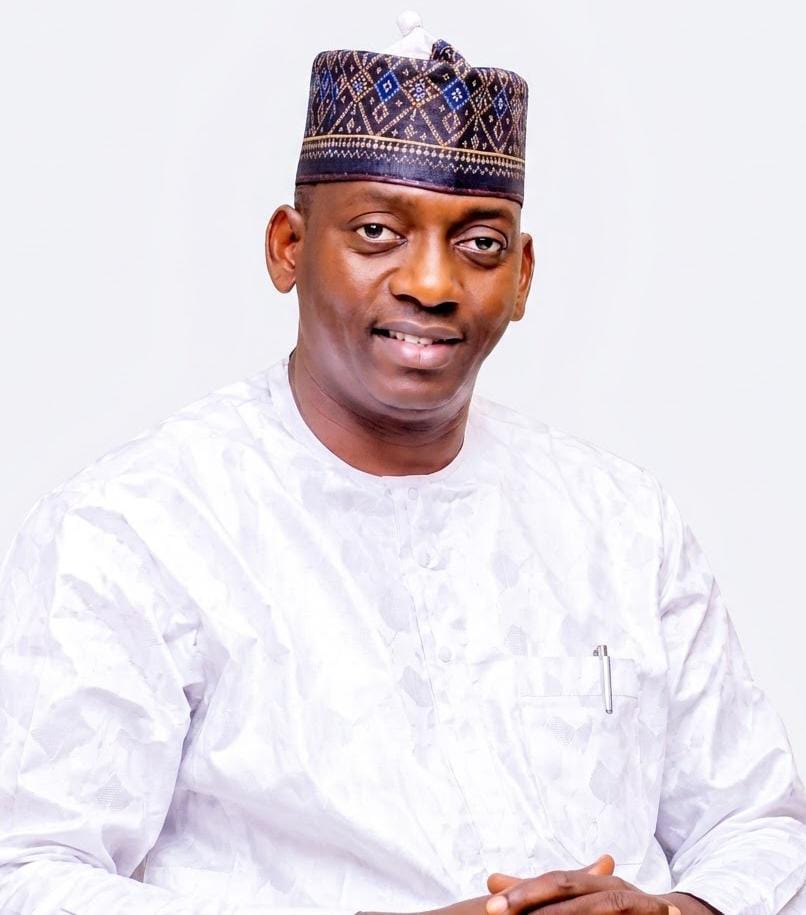
Chairman of the House of Representatives Committee on China-Nigeria Parliamentary Relations, Hon. Jaafaru Yakubu, has applauded the Chinese Government’s expanded zero-tariff policy for African countries, describing it as a catalyst for Nigeria’s economic transformation and a major opportunity for export growth, industrialisation and job creation.
In a statement, Yakubu said China’s decision to extend its zero-tariff policy to 53 African countries, including Nigeria, demonstrates Beijing’s commitment to supporting Africa’s economic development and strengthening South-South cooperation.
He noted that the policy offers Nigerian businesses unprecedented access to one of the world’s largest consumer markets and provides a platform for expanding exports, attracting investment and enhancing economic competitiveness.
“China’s zero-tariff initiative represents a strategic opportunity for Nigeria to accelerate economic growth, strengthen domestic industries and deepen our economic cooperation with one of the world’s most important trading partners,” Yakubu said.
According to the lawmaker, early indicators suggest that the policy is already producing positive outcomes. He disclosed that Chinese imports from Nigeria rose significantly during the first half of 2026, while total trade volume between both countries reached approximately $18 billion, reflecting growing economic engagement.
Yakubu said the encouraging figures demonstrate the enormous potential of the Nigeria-China partnership and highlight the importance of improved market access in driving economic prosperity.
He stressed that Nigeria must seize the opportunity by expanding production capacity, improving product quality and strengthening export-oriented industries capable of competing in the international marketplace.
The committee chairman noted that Nigerian products such as liquefied propane, sesame seeds, nuts, hides and skins are already benefiting from improved access to the Chinese market. However, he emphasized that the country’s long-term objective should be to move beyond the export of raw materials and focus on value-added products.
“We must leverage this opportunity to promote domestic manufacturing, industrialisation and job creation. Increased market access should translate into stronger local industries and greater economic opportunities for Nigerians,” he stated.
Yakubu urged Nigerian manufacturers and exporters to take advantage of the tariff-free regime by improving standards, certification processes, packaging and supply chain efficiency in order to meet the demands of Chinese consumers.
He also called on relevant government agencies to strengthen the infrastructure and institutional support necessary to help local businesses compete effectively in international markets.
The lawmaker further encouraged Chinese investors to expand their presence in Nigeria through investments in manufacturing, agro-processing, technology development and logistics infrastructure.
According to him, increased Chinese investment would support industrial growth, facilitate technology transfer and create much-needed employment opportunities for Nigeria’s growing youth population.
While welcoming the growth in trade relations, Yakubu acknowledged the need to address the trade imbalance between Nigeria and China, stressing that efforts must be made to increase the country’s export capacity and diversify its export basket.
“Our goal should not merely be to trade more, but to trade better. Nigeria must become a producer and exporter of more finished and semi-finished goods if we are to fully benefit from our relationship with China,” he said.
Yakubu also expressed appreciation to the Government of the People’s Republic of China for its RMB200 million grant to support Nigeria’s development projects, describing the gesture as further evidence of the strong friendship and cooperation between both nations.
He said the grant would contribute to efforts aimed at improving infrastructure, strengthening public services and advancing national development priorities.
The chairman commended China’s longstanding support for Nigeria through infrastructure cooperation, technical assistance, capacity building and other development initiatives, noting that such partnerships have contributed significantly to the country’s growth.
Looking ahead, Yakubu called for greater collaboration in key sectors including manufacturing, agriculture, technology, logistics and industrial development.
He reaffirmed his commitment to strengthening parliamentary engagement and promoting policies that will advance the mutual economic interests of Nigeria and China.
“As Nigeria and China continue to deepen their partnership, our focus must remain on translating opportunities into tangible economic benefits for our people. Together, we can build a relationship that is mutually beneficial, economically productive and supportive of sustainable development,” he added.
Yakubu concluded by expressing gratitude to the Chinese Government and the Chinese Ambassador to Nigeria, His Excellency Yu Dunhai, for their continued friendship, support and commitment to Nigeria’s development aspirations.
THE FALLACIES OF MIKE IGINI
“It is mean and cowardly and an evidence of weakness and utter demerit, for any group of people to attempt to commend themselves to the public by the negative process of belittling and condemning others.”_
- Chief Obafemi Awolowo, 28th April, 1951.
The attention of the Progressives Alliance for Justice, Unity and Democracy (PAJUD) has been drawn to the barrage of insults heaped by Mike Igini, former Resident Electoral Commissioner of the Independent National Electoral Commission (INEC), against every perceived and imaginary obstacle to his personal agenda.
We posit that since the return of democracy in 1999, the Nigerian political and electoral firmament has been overdosed with different genres of characters – the good, the bad and the ugly.
We state categorically and without fear of contradiction that President Bola Ahmed Tinubu is NOT responsible for the non-appointment of Mike Igini as either Chairman of INEC or National Commissioner since he left office in disgrace and engulfed in controversies in the South-South.
Igini must understand that such appointments are not done willy-nilly. They are based on several criteria. He has served two full terms as Resident Electoral Commissioner. For him to be nominated as National Commissioner, a vacancy must exist for his state. This is apart from the principle of rotation of the position among states in the geo-political zone.
Those who know President Bola Ahmed Tinubu closely know he is a leader who does not deliberately shut the door against competence and capacity. Anyone holding him in contempt on this matter is either being mischievous or acting out the script of the opposition, just like the present issue at stake.
It is unfortunate that Igini has allowed himself to be taken advantage of, dancing to the rhythm of anti-Tinubu and anti-Amupitan rogue agents.
We find it compelling to state unequivocally that Igini is blatantly scheming to discredit the present government and the Amupitan-led leadership of INEC in anticipation of reward by opposition elements and spent forces, if they ever win in the post-2027 general elections.
Over the years, we have watched the transformation of Igini from lawyer, to public affairs commentator, to agitator, until the PDP government appointed him Resident Electoral Commissioner.
We are amused at Igini’s feeble attempts at returning to public reckoning, using barefaced criticism, outright lies, mischief and fallacies against the Renewed Hope and reformative agenda as a springboard to relevance and prominence.
For an egocentric, self-seeking bigot and Mr. Know-All like Igini, he wants to remain relevant as a bride for any juicy INEC Election Management Committee headship or membership, which we know will never happen in this dispensation as a result of his antecedents while in office – an era marred by allegations of partisanship, disloyalty and endless controversies.
Your tenure as REC in Cross River State was characterised by mudslinging between you and a political party over unethical conduct unbecoming of an electoral officer. Similarly, your flexing of muscles and one-sided narratives during your tenure as REC of Akwa Ibom State is still very fresh in our memory. Till date, you are still spewing negative narratives against one of the politicians you fought in that state to high heavens.
Nigerians from all strata continue to wonder where the monies for the live telecast of Igini’s exit as Resident Electoral Commissioner of Akwa Ibom State originated from. In the history of INEC – from Dr. Ephraim Akpata, Alhaji Shehu Musa, Dr. Abel Guobadia, the much-vilified Prof. Maurice Iwu, Prof. Attahiru Jega reputed to be Igini’s benefactor, to Prof. Mahmood Yakubu – none of them had the temerity for such lavish display and grandeur during their exit. What was witnessed in the last days of Igini as REC in Akwa Ibom evokes serious questions about collective decency, decorum, moral rectitude and values.
Any argument in support of such an extravagant exit lacks integrity, for the simple reason that the pay slip of INEC Resident Electoral Commissioners and even National Commissioners is not a hidden document. It is known to the Nigerian public.
We believe that if we are sincere in this country, Igini should focus on more important non-partisan issues than chasing shadows. Igini should also address his own record, including the troubling episode of a Kenyan national engaged by INEC as a consultant some years ago, where the voter register fingerprints of Nigerians were allegedly compromised and handed to foreign interests. That despicable act is still fresh in our memory.
As overwhelming majority of Nigerians with voting rights are aware, there is an uncanny lust for power by desperate opposition politicians lurking on the horizon. They are deploying everything on earth just to grab power in 2027, and for no just cause but simply for selfish personal aggrandizement. They have recruited former staff, Directors, Resident Electoral Commissioners and National Commissioners to help execute their warped agenda and barefaced propaganda to deceive gullible Nigerians who will swallow every hook, line and sinker narrative framed by them.
We unreservedly agree with many who have suggested that as a believer in God, Igini should not allow his mind to be poisoned by the notion that any power outside the influence of God could have been responsible for the failure of his emergence as either National Commissioner or Chairman of the Commission.
Whatever it is, there seems to be more to it than meets the eye. The process of creating anarchy starts with incitement against the government, the electoral empire and security agencies. It often appears so smooth as to be imperceptible, hence those who engineer it enjoy the process at the initial stage, only to be consumed at the end of the day.
Elements in the class of Igini, who are acting out the script of falsehood purveyors and peddlers, will be put to shame at the end of the day. There is no doubt that Nigerians are going to have a well-deserved, credible, transparent, free and fair election in the 2027 general elections.
Above all, nobody can dispute the fact that President Bola Ahmed Tinubu nominated people with impeccable ability, capacity, loyalty, patriotism and honesty as members of the election management structure that will drive our democracy forward, in a manner that both Nigerians and the international community will be proud of like never before in our annals.
The focus of the Tinubu administration remains its much stronger determination to protect and respect the sanctity and fidelity of the ballot during the forthcoming elections.
We implore Mike Igini to stop the rabble-rousing, negative framing, mischief, mudslinging and casting of aspersions against the electoral umpire and Mr. President, and find something reasonable to do to earn a living just like other Nigerians, instead of going from one radio station to television stations across the country. His antics are already known to Nigerians who are far more sophisticated and politically savvy than before.
A word is enough for the wise… “WHEN YOU CONDEMN PEOPLE, YOU BRING JUDGEMENT ON YOURSELF.”
Signed:Comrade Yakubu Dan Abba
Country Representative, PAJUD.
The Progressives Alliance for Justice, Unity and Democracy (PAJUD) has accused former Independent National Electoral Commission (INEC) Resident Electoral Commissioner, Mike Igini, of attempting to discredit President Bola Tinubu’s administration and the leadership of the electoral body, describing his criticisms as politically motivated.
The group, in a statement signed by its Country Representative, Comrade Yakubu Dan Abba, alleged that Igini was seeking to regain public relevance through persistent criticism of the government and the leadership of INEC under its current chairman, Prof. Joash Amupitan.
PAJUD, however, did not provide independent evidence to substantiate its allegations about Igini’s motives.
The group maintained that Tinubu was not responsible for Igini’s non-appointment as INEC chairman or national commissioner after completing his tenure as a Resident Electoral Commissioner, arguing that such appointments were subject to established criteria, vacancies and rotation arrangements among states within geopolitical zones.
“Those who know President Bola Ahmed Tinubu closely know he is a leader who does not deliberately shut the door against competence and capacity,” the statement said.
The group further alleged that Igini’s criticisms were intended to undermine the current administration and INEC’s leadership in anticipation of political rewards from opposition elements following the 2027 general elections.
PAJUD also questioned Igini’s record during his service as Resident Electoral Commissioner in Cross River and Akwa Ibom states, citing past disagreements with political actors and what it described as controversies surrounding his conduct in office.
It also raised questions about the cost and circumstances of the live television broadcast of Igini’s exit from office in Akwa Ibom State, comparing the event with the departures of previous INEC chairmen and other senior electoral officials.
The group did not provide documentary evidence to establish wrongdoing in connection with the broadcast.
In another allegation, PAJUD called on Igini to address what it described as concerns surrounding the engagement of a Kenyan national as an INEC consultant and the alleged compromise of Nigerian voters’ fingerprint data. The statement, however, did not present evidence establishing that Igini was personally responsible for any compromise of the data.
The alliance accused opposition politicians of attempting to discredit the electoral system ahead of the 2027 elections, alleging that some former electoral officials were being used to advance political interests. It did not identify the individuals allegedly involved or provide evidence supporting the claim.
PAJUD, meanwhile, expressed confidence in the ability of the current INEC leadership to conduct credible, transparent, free and fair elections in 2027.
It said the Tinubu administration remained committed to protecting the integrity of the ballot, adding that the president had nominated individuals it described as capable, patriotic and committed to the country’s democratic development.
The group urged Igini to refrain from what it characterised as inflammatory criticism of the president and the electoral commission, insisting that public discourse on electoral reform should be guided by responsibility and respect for democratic institutions.
Quoting former Premier of the Western Region, Chief Obafemi Awolowo, the alliance recalled his statement of April 28, 1951, that it was “mean and cowardly” for any group to seek public approval by belittling and condemning others.
PAJUD concluded by urging Nigerians to remain confident in the electoral process ahead of the 2027 general elections, while reiterating its support for the Tinubu administration and the current leadership of INEC.


Yakubu Hails China’s Zero-Tariff Initiative as Catalyst for Economic Transformation
THE BOLD SHIFT:BETWEEN REFORMS ANDTHE REALITY OF THE BROKEN EGGS:
WHO: Nigeria Records Zero Ebola Cases After Evacuation of Swiss Couple

-
 Uncategorized6 years ago
FG, states urged to harness flooding for ranching, others with technology – Agbaje
-
 Headlines11 years ago
Breaking: EFCC seals Borno House of Assembly, as Hon members take to their heels
-
 News12 years ago
Nigeria Security Operatives Stage Manhunt For Homosexual Perpetrator
-
 News10 years ago
How 21-year-old Girl fled community over accusation of lesbianism
-
 News11 years ago
Yobe Gov Moves Against Deputy
-
 Opinion7 years ago
7 signs she has friend zoned you
-
Technology5 years ago
Online job placement company headhunts women
-
 Headlines10 years ago
Borno Dep Gov Abducts Another Church Leader