
Opinion
Femi Otedola, the Alleged serial business hijacker, using First Bank loans to steal other people’s businesses

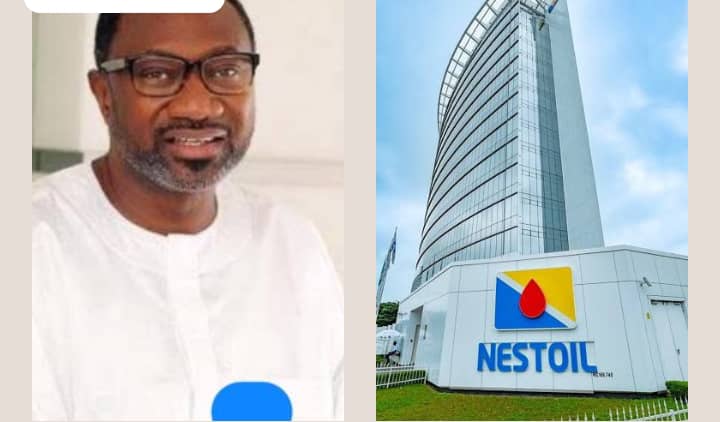
The Chairman of First Bank, Mr. Femi Otedola is presently facing huge criticism over his alleged usual ways to use bank loans to take over businesses of other people.
This is coming just as perceived hidden interests of a prominent lawyer, Mr. Koku whose dual roles in the Nestoil and FBNQuest case, which now threatens the integrity of the Nigeria Oil sector, have been unmasked by this newspaper.
During an exclusive investigation by Our correspondent over the alleged conflict of interest and potential
Regulatory capture of the NUPRC, in Nestoil and Neconde’s Legal
Battle with FBN Quest and First Trustees, it was gathered that in the corridors of Nigeria’s petroleum industry, a storm that could reshape perceptions of justice, transparency, and regulatory independence at the apex of the upstream sector is brewing.
Through months of document review and interviews with industry insiders,
told Our correspondent in its investigation uncovered troubling evidence that a top legal practitioner is at the heart of a clash between public interest and private gain, raising fresh questions about conflicts of interest and the spectre of regulatory capture.
Findings showed that the wrangle between Neconde Energy Limited, Nestoil Limited, and a consortium of financial institutions represented by FBN Quest Merchant Bank Limited and
First Trustees Limited, resembles a typical high-value debt dispute but, dig deeper and a more intricate web emerged.
This investigation revealed that Babajide Koku SAN, a personal lawyer to Mr. Femi Otedola, the chairman of First Bank, has simultaneously served as legal counsel for both the FBN Parties and the Nigerian Upstream Petroleum Regulatory Commission (NUPRC) in lawsuits
that could determine the fate of critical national oil assets.
This dual representation, spanning Suit No: FHC/L/CS/2127/2025 in Lagos and Suit No: FHC/ABJ/CS/2369/2025 in Abuja, goes far beyond a mere procedural oversight as legal documents obtained by this newspaper confirmed that Koku’s name appears on court filings for
multiple parties with directly competing interests, fuelling allegations that regulatory impartiality may be at risk.
According to legal experts who spoke with Our correspondent, the implications echo far beyond the courtroom—potentially shaking the very foundations of the sector’s governance
Meanwhile, our investigation reconstructed the timeline of this controversy, beginning on 20 October
2025, when FBN Parties, represented by Koku, SAN, sued Nestoil and Neconde over an alleged $1billion debt. But even before the gavel fell, FBN Trustees had petitioned the NUPRC on 9 September 2025, seeking consent to register a second charge over Oil Mining Lease (OML) 42, an asset in which Neconde holds a substantial stake.
It was also gathered that the NUPRC signalled its readiness
to approve the charge, prompting Neconde, wary of a hostile takeover, to launch its own legal offensive on 6 November 2025.
“When the NUPRC responded to Neconde’s lawsuit, challenging the validity of the very consent it had given, it too appeared in court represented by Koku” a document at the disposal of this newspaper stated..
Meanwhile, multiple sources confirmed to Our correspondent that Koku, SAN was present for both the FBN Parties and the regulator, a move that has left industry players and legal watchdogs questioning whether the independence of
Nigeria’s upstream regulator may have been fatally compromised.
Experts that were interviewed by Our correspondent warned that such brazen dual representation is more than a
technical breach of legal ethics, it is a flashing red light for regulatory capture, where public agencies risk being co-opted by the very entities they are meant to police.
One concerned stakeholder who spoke under the condition of anonymity described this as “akin to letting the fox guard the henhouse”, noting that the
same lawyer advancing private creditors’ interests is now shaping the regulator’s legal defence.
“The stakes are monumental: should NUPRC’s consent to FBN Trustees be upheld, it could set a perilous precedent, enabling further encroachment by powerful financiers at the expense of due process and fair regulatory oversight” he added.
Also, critics alleged that Koku’s close
affiliations with major stakeholders in the FBN entities call into question the motives behind the legal manoeuvring, stoking speculation about a well-orchestrated asset grab under the
veneer of judicial process.
Another expert told this newspaper state that lawyers must not act for conflicting interests without full, informed consent. He queried: “Assuming that all necessary disclosures have been made, is it appropriate for the NUPRC to appoint legal representatives who are currently acting on behalf of an interested party in the dispute.
“Furthermore, is it advisable for FBN Trustees to permit its retained counsel to also represent the NUPRC in litigation where FBN Trustees has a financial interest in the outcome”
Senior Nigeria legal analysts who offered to grant interviews on this issue cautioned that Koku’s actions could trigger motions for disqualification and expose both NUPRC and the FBN Parties to damaging reputational
fallout.
Meanwhile, some of the legal experts have called for an urgent review of how regulators appoint external counsel,
warning that public trust in Nigeria’s oil industry hangs in the balance.
One of them added that: “For Koku, the risks are professional as well as reputational, with the possibility of regulatory scrutiny or even sanctions if formal complaints are lodged, particularly where formal disclosures were not made and subsequent consent of the NUPRC obtained.
“For NUPRC, the crisis raises uncomfortable questions about its commitment to unbiased oversight and
whether it can withstand the corrosive influence of well-connected private interests”
Speaking on investor confidence which they said is already on the Line, legal experts noted that the fallout is already being felt beyond the courtroom.
However, Oil Industry veterans who spoke with Our correspondent noted that
uncertainty and perceptions of impropriety could scare off much-needed investment from
an already fragile upstream sector.
“Without transparency and clear ethical boundaries, you can’t have a credible investment climate,” one executive told Our correspondent, calling for sweeping reforms and tougher frameworks to safeguard regulatory processes from undue interference.
Legal experts are urging the government to overhaul consent procedures and demand full transparency in all dealings between regulators and their outside advisers.
Our correspondent gathered further that as the lawsuits wind their way through Nigeria’s federal courts, the spotlight remains fixed on Babajide Koku SAN, the NUPRC, and the banks pulling the strings behind the scenes.
It was also gathered that the case has become a litmus test for transparency, legal ethics, and the resilience of Nigeria’s regulatory institutions, and the final outcome may not only decide who controls a lucrative oil
lease but could also set a lasting benchmark for the country’s commitment to fairness and
the rule of law.
“In a sector too often shrouded in secrecy, only genuine accountability and unwavering ethical standards can restore faith in those entrusted with Nigeria’s most precious resources” another industry expert noted.
In a related development, Chairman of First Bank Holding, Mr. Femi Otedola has been accused of taking over businesses of First bank customers under the guise of debt default with the help of some corrupt judges.
According to finding, Otedola, as a result of his greed and love for other people’s business and properties would hide under the guise of giving loans to business owners to develop their businesses, inflate the loans, hide their loan documents and use the court to take over such businesses.
Apart from Nestoil/Neconde which would have been his latest victim if not for the vigilance of the legal team of Dr. Ernest Azudialu-Obiejesi, the chairman of First Bank had used the FBNQuest Merchant Bank Limited to fraudulently hijack several firms from their original owners.
However, officials of Neconde have lamented that for over three years, First bank has refused to release bank statements to the company.
The company alleged in several reports that First Bank has refused to provide bank statements, reconciliation documents, or loan records Nestoil which they need to use to verify whether any debt actually exists.
There are instances of Sahara Group and General Hydrocarbon which Otedola wickedly and cunningly used the loans which his bank gave to those two companies to hijack their lucrative businesses with the help of some corrupt judges.
Our correspondent’s independent investigation showed that Mr. Femi Otedola had earlier this year approached Neconde requesting to buy some 16 percent stake in the juicy Oml42 oil block.
For fears of what he has done to Sahara Group and General Hydrocarbon in the past, Otedola’s request was bluntly rejected by Neconde, and this led to First bank to drag Nestoil and Neconde in aggressive move to take over OML 42, citing an alleged $1billion dollar unverified debt.
“How can we owe what we cannot see?”
We cannot verify any debt because First Bank will not release the very documents that would confirm or disprove their claim.” one of the officials of Nestoil told this newspaper, insisting that without those statements, the bank’s attempts to enforce debt recovery actions amount to economic ambush and economic gangsterism.
Meanwhile, an expert in the Nigerian Petroleum business told Our correspondent that: “At the centre of the conflict is OML 42—one of the most promising onshore blocks in the Niger Delta Basin. Industry analysts estimate that the licence could generate hundreds of millions of dollars in revenue over its lifespan. At present OML42 accounts for approximately 5% of Nigeria’s crude oil production.
“There are claims that the subsidiaries of First Bank Holding under the Chairmanship of Mr Femi Otedola has shown “unusual, excessive interest” in taking over the OML42 through court orders, ex parte motions, and aggressive debt-recovery procedures that the company says lack documentary justification.
“It has become clear that the bank’s objective is not repayment—it is acquisition,”
Also, a legal expert who spoke with Our correspondent during our investigation said that the refusal of First bank to release bank statements, if true, raises serious questions about transparency and the integrity of the bank’s claims, saying that a creditor refusing to provide account statements is highly irregular.
He added that any enforcement action without documentary clarity could be challenged as predatory or abusive.
Opinion
THE PLANED PURPORTED PARALLEL ENDORSEMENT FOR TOMORROW IS NOT IN THE INTEREST OF EGGON BUT THE SELF FEW INDIVIDUALS INTEREST.

We wish to let the entire Eggon people both home and diaspora Know of a planned purported endorsement that is about to come up tomorrow being Saturday 3rd October 2026,by some individuals in the name of Eggon critical stakeholders, which is being championed by Hon. Ali Akpandom whom is an identified loyalist to an interested party in the whole of this game (HON. LABARAN MAKU),The same Ali Akpandom was among some selected personalities that went round the state some few weeks ago to make public appeal to APC Stakeholders to pick CHIEF EMMANUEL MICHEAL UMBUGADU as the running mate to the APC Governorship candidate Senator Ahmed Aliyu Wadada.
That singular act alone is not just an action against the interest and the agitation of the majority Eggon nation who clearly stated that we can’t settle for the position of deputy at this time.
Hon Kpandom who already knew clearly that a well respected Eggon arm (EGGON POLITICAL FORUM)That has membership across the three senatorial zones and diaspora already endorsed the Candidature of RT. HON. DR. DAVID EMMANUEL OMBUGADU that is widely celebrated not just among the Eggon but other ethnic nationalities,yet chose to undermine this popular position of the Eggon nation to do otherwise,without any consideration for the posable future negative consequences this act will have on the unity of the Eggon Nation, and by extension the other indigenous people of Nasarawa State looking up to us.
Notwithstanding I wish to call on the attention of all the Eggon sons and daughters both home and diaspora, other ethnic nationalities that are fully ready to support RT. HON. DR. DAVID EMMANUEL OMBUGADU Never to see the soon to be so called parallel endorsements as any form of confusion among the Eggon, but should see it as an attempt by some usual few selfish elites to disrupt Eggon chances of producing a Governor come 2027.
Eggon people have settled for Ombugadu not for any interest but is the most widely acceptable candidate among the six Candidates of Eggon extractions and has gain support and acceptability among other ethnic groups in the state, as such we can’t afford to miss out on this sellable candidate for any other one as it’s going to be an unwise and avoidable error of going to the market with an unsellable candidate while we already have the best at hand.
We wish to call on Elder Ali kpandom and his group to desist from engaging in any act that is capable of inserting serious confusion and lack of mutual consensus among the Eggon people this time because we equally understood that the fate of other ethnic nationalities in Nasarawa state to getting the natives into the seat of Governor lies in the unity and mutual consensus of the Eggon people at this time.
We wish to call on the Eggon people, both home and diaspora,the general public to disregard any form of parallel endorsements that will be done by any group in whatsoever disguise aside that which has already been done by the Eggon political forum this same forum has endorsed Hon Maku not once in the past even against Late Sen Ewuga , why this disruption now.
We are not in anyway against any candidate they still wanted to vote for, but we wish to declare categorically that it’s not in the interest of Eggon but the interest of the few.
THANK YOU FOR YOUR UNDERSTANDING AND USUALLY COOPERATION.
Courtesy:A concerned son of the land.
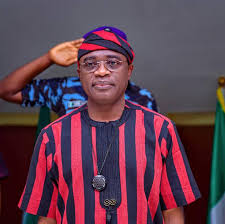
For nearly three years, the political crisis within the Benue State chapter of the All Progressives Congress (APC) has largely been portrayed as a power struggle between Governor Hyacinth Alia and the Secretary to the Government of the Federation (SGF), Senator George Akume.
However, recent developments suggest that the dispute over control of the party could have wider legal and political implications as the 2027 general elections approach.
The crisis intensified earlier this year when rival camps conducted parallel state congresses and produced separate chairmen for the APC in Benue.
The Akume-aligned faction returned Austin Agada as state chairman, while the faction loyal to Governor Alia elected Benjamin Omale.
The emergence of two chairmen and competing claims to control of the party has further exposed the depth of the internal division.
The dispute has also raised questions about the legal consequences of competing party structures, particularly following a Court of Appeal judgment delivered in June 2026.
The appellate court affirmed the Austin Agada-led State Executive Committee and upheld an earlier decision nullifying the dissolution of that executive by the APC National Working Committee.
The court also sustained an order declaring the activities of the Benjamin Omale-led caretaker committee “null, void and of no effect whatsoever.”
The judgment has since become a major reference point in the continuing struggle for control of the APC structure in Benue.
Political observers note that the significance of party structures extends beyond the office of state chairman. Party executives play important roles in organising congresses, managing delegate processes, supervising primaries and implementing decisions relating to the nomination of candidates.
This has brought the dispute into sharper focus ahead of the 2027 elections, particularly over the possible legal implications for candidates whose nominations may be linked to disputed party structures.
A group of APC stakeholders is reportedly examining the possible legal consequences of the judgment and the continued existence of rival structures within the party.
The concern, according to those familiar with the matter, is whether political processes conducted through structures subsequently found to lack legal validity could become the subject of litigation.
Candidates loyal to Governor Alia whose nominations were subsequently overturned by the APC National Working Committee are already challenging the party’s decisions in court. Among them is former Benue Governor, Senator Gabriel Suswam.
At the centre of the emerging debate is whether the invalidation of a party structure could affect subsequent political processes conducted through that structure.
No court has, however, ruled that Governor Alia is ineligible to contest the 2027 governorship election, and there is currently no judgment declaring him barred from seeking re-election.
The potential issue, rather, concerns the relationship between the legitimacy of party structures and the validity of nomination processes conducted under those structures.
Nigeria’s electoral history contains several instances in which internal party disputes over congresses, delegate lists, executives and primary elections eventually resulted in prolonged litigation over candidates and nominations.
Against this background, the continued crisis within the Benue APC could assume greater significance as political parties begin preparations for the 2027 electoral cycle.
The conduct of parallel congresses following a Court of Appeal judgment affirming one faction’s leadership could potentially generate further legal questions over authority, compliance with party rules and the validity of subsequent decisions.
For Governor Alia, the immediate reality is that no court has declared him ineligible to contest the next election. However, continued uncertainty over the party’s structure could expose his political camp to further litigation and create complications during the nomination process.
The governor has also faced allegations from political opponents that more than N100 billion in public funds has been expended in efforts to secure control of APC structures over the past three years. The allegation remains disputed and would require evidence to establish.
What is increasingly clear is that the struggle for control of the APC in Benue has moved beyond a conventional political disagreement. It is now playing out simultaneously across political, legal and party-administrative fronts.
As the 2027 electoral cycle draws closer, the unresolved questions surrounding the APC’s leadership and nomination processes could become increasingly consequential for the party and its candidates.
For now, there is no judicial pronouncement preventing Governor Alia from appearing on the 2027 ballot. But if the stakeholders reportedly considering legal action proceed with a challenge over the circumstances of his nomination, the governor could face another significant legal battle as the election approaches.
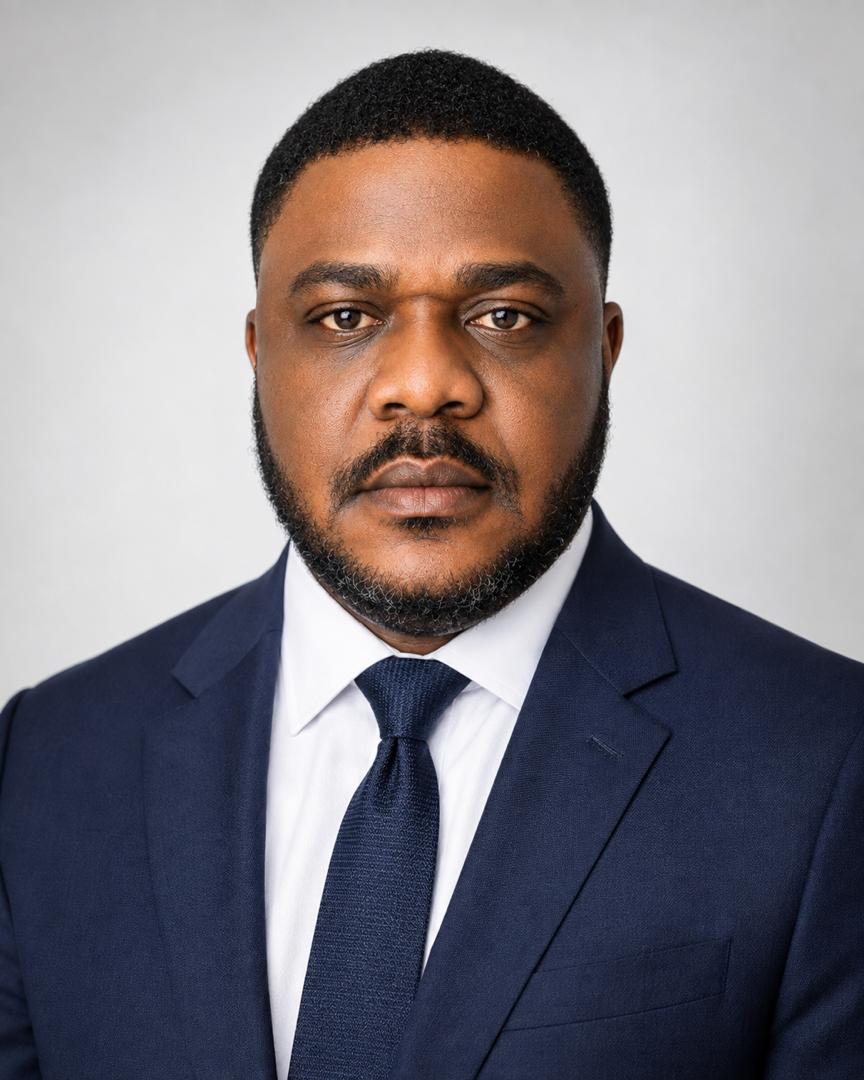
NIGERIA BELONGS TO ALL OF US
I have written this open letter to His Eminence, Alhaji Muhammad Sa’ad Abubakar III, CFR, mni, Sultan of Sokoto and President-General of the Nigerian Supreme Council for Islamic Affairs, with profound respect for his office and for the historic institution he represents.
This is not an attack on Islam, neither an attack on Christianity.
Also, It is not an attempt to diminish the historical importance of the Sultanate, rather, it is a sincere contribution to a conversation I believe Nigeria must have with greater honesty, courage and intellectual maturity:
What does equal citizenship mean in Nigeria?
Our country has a complex history involving kingdoms, caliphates, indigenous political systems, colonialism, amalgamation, independence, religion, ethnicity and competing political traditions.
But after all that history, one question remains fundamental:
Who does Nigeria belong to? My answer is simple:
Nigeria belongs to all Nigerians.
I am publishing this letter openly because I believe conversations of this magnitude should not be confined to private rooms.
I hope it reaches His Eminence.
More importantly, I hope it reaches Nigerians—Muslims and Christians alike—who believe that our future must be built on equal citizenship, mutual respect, constitutional democracy and a shared sense of belonging.
I invite people to read this letter in that spirit.
Not as a provocation or as a religious argument. But as an invitation to think.
AN OPEN LETTER TO HIS EMINENCE, ALHAJI MUHAMMAD SA’AD ABUBAKAR III, CFR, mni
SULTAN OF SOKOTO AND PRESIDENT-GENERAL, NIGERIAN SUPREME COUNCIL FOR ISLAMIC AFFAIRS
Your Eminence,
OUR HISTORY MUST BE REMEMBERED HONESTLY—BUT IT MUST NOT BECOME A CLAIM ON THE FUTURE
Nigeria’s history contains great Muslim civilisations and political institutions.
Kanem-Bornu, the Hausa states and the Sokoto Caliphate represent important chapters in the history of the territories that eventually became Nigeria.
The Sokoto Caliphate, in particular, became one of the most influential Islamic political formations in West Africa.
That history deserves recognition and respect.
But history presents us with an important question:
Does historical political authority confer permanent political ownership?
I believe the answer must be no.
The British colonial conquest and occupation of the territories that now constitute Nigeria occurred over decades, with the conquest of the Sokoto Caliphate culminating in 1903. The Northern and Southern Protectorates were subsequently amalgamated in 1914, and Nigeria achieved independence in 1960.
Whatever political arrangements existed before colonial consolidation, the Nigeria that emerged as a modern sovereign state ultimately became a constitutional republic in which citizenship could not legitimately be based upon the political history of one religion, ethnic group, kingdom or region.
Nigeria became something larger than all of those histories.
It became a country.
And that country belongs equally to the Muslim, the Christian, the adherent of another faith, and the citizen who professes no religion.
Your Eminence, Nigeria’s Constitution does not establish either Islam or Christianity as the religion of the Nigerian state.
Section 10 provides that:
“The Government of the Federation or of a State shall not adopt any religion as State Religion.”
Section 38 protects freedom of thought, conscience and religion.
Section 42 further provides constitutional protection against discrimination on the basis of religion, among other grounds.
These provisions are not merely legal technicalities. They represent an important national compact.
They establish principles of religious neutrality, religious freedom and equal citizenship.
They tell every Nigerian that his or her fundamental rights cannot legitimately depend upon belonging to the “right” religion.
That principle protects Muslims from Christian majoritarianism just as it protects Christians from Muslim majoritarianism.
And therefore, defending constitutional religious neutrality is not an attack on Islam neither an attack on Christianity.
It is protection for both.
THE DIFFICULT QUESTION OF POLITICAL SYMBOLISM
Your Eminence, this is where I believe our national conversation requires greater intellectual honesty.
A political arrangement can have two realities simultaneously:
its strategic reality and its symbolic reality.
Strategically, politicians may see a particular political ticket as an effective coalition, an electoral calculation, a mechanism for consolidating support or a means of improving political cohesion.
But citizens may interpret exactly the same arrangement symbolically.
They may ask:
Who is represented?
Who is included?
Who is excluded?
What does this say about the distribution of power?
What does this mean for people like me?
This distinction became particularly visible in Nigeria’s debate over the Muslim-Muslim presidential ticket.
Some citizens saw strategy while others saw symbolism.
Some saw political competence, Others saw the possibility of religious exclusion.
Both reactions can exist simultaneously.
A mature democracy must therefore be capable of understanding not only what a political arrangement is, but also what people believe that arrangement means.
This is not an argument against Muslims occupying political office nor should it be an argument against Christians occupying political office.
It is an argument for understanding the enormous responsibility that comes with political symbolism in a deeply religious society.
Political leaders must therefore understand that electoral strategy does not exist in a vacuum. Every political decision is interpreted through the lived experiences, fears, hopes and historical memories of the citizens who encounter it.
That is why responsible leadership requires both strategic intelligence and sensitivity to political meaning.
The Muslim citizen must not feel like a tolerated Nigerian, neither should the Christian.
This is perhaps the most important principle I wish to communicate.
A Christian should never have to feel that his citizenship is conditional upon political accommodation by Muslims. A Muslim should never have to feel that his citizenship is conditional upon political accommodation by Christians.
Neither should have to prove that his loyalty to Nigeria is greater than his loyalty to his faith.
Both should be able to say:
“Nigeria is my country, and nobody needs to give me permission to belong here.”
That is the Nigeria we should be building.
Your Eminence, traditional and religious leaders occupy a unique position in Nigerian society.
Political leaders come and go.
Governments change.
Political parties rise and fall.
But institutions such as the Sultanate carry historical memory.
That gives your words a different weight.
When a politician speaks about religion, Nigerians may suspect political calculation but when a respected religious leader speaks about coexistence, citizenship and national unity, the message can carry a moral authority that politics often cannot achieve.
This is why I believe the Sultanate has an extraordinary opportunity.
Not merely to speak for Muslims, But to speak to Nigeria.
To say clearly that the greatness of Islam in Nigeria does not require the political diminishment of Christianity. And equally, that the flourishing of Christianity in Nigeria does not require the political diminishment of Islam.
The strength of one faith should not require the weakness of another.
The security of one community should not depend upon the insecurity of another.
And the political advancement of one Nigerian should never require the political humiliation of another Nigerian simply because of religion.
WE SHOULD MOVE BEYOND THE COMPETITION FOR RELIGIOUS OWNERSHIP OF NIGERIA
There is a dangerous psychological temptation in deeply divided societies.
Each community begins to measure its security by the amount of power the other community possesses.
Then politics becomes a permanent struggle for religious arithmetic.
Who has the President?
Who has the Vice President?
Who controls the security institutions?
Who appoints judges?
Who controls the legislature?
Who controls the governors?
Who controls the economy?
And eventually, citizens stop asking the most important question:
Does the country work for everyone?
That is where we must break the cycle.
Nigeria cannot become great by producing a permanent contest between Muslim political power and Christian political power.
It can become great when both communities begin demanding something larger:
competent political power exercised for the common good.
The ultimate measure of political leadership should not be the religion of the person holding office.
It should be the quality of governance, the protection of citizens, the fairness of institutions, the security of communities and the opportunity available to every Nigerian.
PERHAPS OUR GREATEST NATIONAL TEST IS NOT RELIGIOUS DOMINANCE—BUT MUTUAL TRUST
Your Eminence, I believe Nigeria’s deepest problem is not simply that Muslims distrust Christians or Christians distrust Muslims.
It is that decades of political competition, violence, injustice, insecurity, corruption and unequal experiences of citizenship have created an enormous deficit of trust.
Religious suspicion is often the language through which that distrust expresses itself.
Therefore, if we want to defeat religious tension, we must do more than preach tolerance.
We must build institutions that make tolerance unnecessary as a condition of citizenship.
A Nigerian should not need to be tolerated.
He should simply be equal.
A Christian should not need a Muslim’s permission to belong.
A Muslim should not need a Christian’s permission to belong.
Our common citizenship should be the foundation upon which our religious differences are accommodated—not the other way around.
Your Eminence, I respectfully propose that Nigeria’s most respected Muslim and Christian leaders begin a different kind of conversation.
Not another conference where speeches are made and photographs taken.
But a serious national dialogue around five questions:
- What does equal citizenship actually mean in Nigeria?
- How should religious diversity influence political representation without becoming a mechanism for religious entitlement?
- How do we distinguish legitimate political strategy from symbolism that creates unnecessary fear or exclusion?
- How can traditional and religious institutions help rebuild trust between communities?
- What constitutional, institutional and political reforms are necessary to ensure that no Nigerian believes the country belongs more to another citizen than to himself?
These are difficult questions. But perhaps Nigeria has spent too many decades avoiding difficult questions because they are uncomfortable. And perhaps the price of that avoidance is becoming too high.
Your Eminence, history gives leaders a choice.
Every generation inherits history. But every generation also decides what to do with it.
We can use history as a weapon or wisdom
We can teach our children that Nigeria is a battlefield between religious communities.
Or we can teach them that Muslims and Christians inherited a complicated country together and have the responsibility to make it work together.
We can continue competing over who has the greater historical claim.
Or we can build a country where historical claims do not determine the value of a citizen.
I respectfully believe the latter is worthy of the office you occupy.
The greatest legacy of a historical institution is not merely that it preserves the memory of what once was.
It is that it helps a nation decide what it can become.
My final appeal Your Eminence, I do not ask you to abandon Islam.
I ask you to help Nigerians understand that Islam does not need Nigeria to belong exclusively to Muslims for Muslims to belong completely to Nigeria.
And I would say the same to Christian leaders:
Christianity does not need Nigeria to belong exclusively to Christians for Christians to belong completely to Nigeria.
The future must therefore be bigger than both arguments.
Nigeria must belong to Nigerians.
Not to Muslims.
Not to Christians.
Not to Hausa, Yoruba, Igbo, Tiv, Fulani, Igala, Idoma, Nupe, or any other ethnic nationality.
Not to the North.
Not to the South.
Not to one historical institution.
To all of us.
That, in my humble view, is the foundation upon which a truly united Nigeria can eventually be built.
I respectfully submit this thought to Your Eminence—not as an accusation, but as an invitation to a deeper national conversation.
May our religious differences become a source of moral strength rather than political division.
May our history become a source of wisdom rather than entitlement.
May our political differences never become a justification for denying one another’s citizenship.
And may the Nigeria we leave our children be a country in which neither Muslim nor Christian ever has to ask:
“Does this country belong to me?”
Because the answer should always be:“Yes. It is your country too.”
With profound respect,
Dr. Mike Achadu
A Nigerian Citizen

WHO: Nigeria Records Zero Ebola Cases After Evacuation of Swiss Couple

Kwara celebrates Fela’s legacy with retrospective exhibition

2027: Ilorin West LG Boss Leads APC Mega Rally In Ubandawaki

-
 Uncategorized6 years ago
FG, states urged to harness flooding for ranching, others with technology – Agbaje
-
 Headlines11 years ago
Breaking: EFCC seals Borno House of Assembly, as Hon members take to their heels
-
 News12 years ago
Nigeria Security Operatives Stage Manhunt For Homosexual Perpetrator
-
 News10 years ago
How 21-year-old Girl fled community over accusation of lesbianism
-
 News11 years ago
Yobe Gov Moves Against Deputy
-
 Opinion7 years ago
7 signs she has friend zoned you
-
Technology5 years ago
Online job placement company headhunts women
-
 Headlines10 years ago
Borno Dep Gov Abducts Another Church Leader