
News
Kwara targets 600,000 beneficiaries in fresh NG-CARES interventions

Stephen Olufemi Oni, Ilorin
Kwara State Governor AbdulRahman AbdulRazaq has launched the distribution of the fourth phase of agricultural and infrastructural assets under the Nigeria COVID-19 Action Recovery Stimulus (NG-CARES) programme, targeting over 600,000 beneficiaries across different categories in the 16 local government areas.
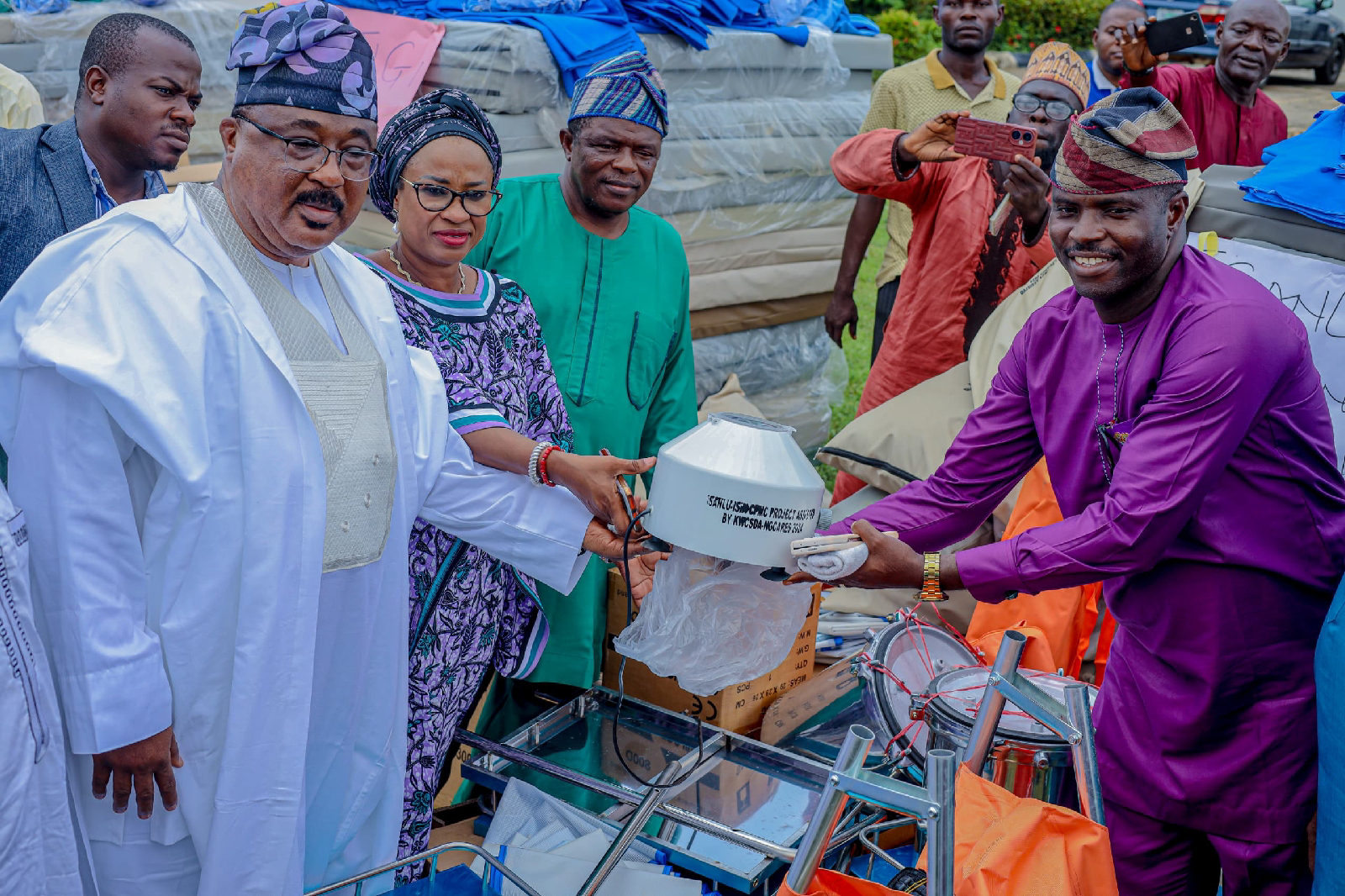
“The State Government is today taking another giant step forward towards supporting farmers and vulnerable agro-entrepreneurs with high-value assets such as fishing and passenger boats, hand tillers, grinding machines, and so on. This is in addition to the donation of various categories of hospital equipment to support vulnerable communities in health delivery and add to the stock of beneficiaries already recorded,” AbdulRazaq said at the launching held at the Government House Ilorin.
The Governor was represented at the event by the Deputy Governor Kayode Alabi.
“Today’s ceremony, therefore, attests to the commitment of the state government to full implementation of NG-CARES. This is geared towards improving the welfare of the people,” the Governor explained.
The 2-legged programme also had at least eleven (11) communities that benefited from the distributed hospital equipment support. They included Alanamu, Atiku-Apata,
Lade, Kajola, Kere, Patigi, Isanlu-isin, Araromi, Igbaja, Omoda; and Baba Dudu communities.
AbdulRazaq said no less than two million citizens across Kwara State have benefitted from the various programmes and interventions under the NG-CARES, including FADAMA, Social Cash Transfer, labour intensive public workforce, and social development agency.
“The State CARES Steering Committee was inaugurated on the 14th of December 2021. NG-CARES, being the first attempt to use the Programme for Result (P for R) approach to deliver goods and services to the most vulnerable in the State, has been very successful as it is making an impact in the lives of the citizens since its take-off.”
“This is made possible by the continuous and constant support of the State Government to ensure that poor and vulnerable individuals and businesses affected by economic crisis are supported through different initiatives.”
“Our gathering this afternoon is another phase in our continuous efforts to bring ease to the people through multifaceted interventions. At every stage of our journey so far, our administration has a record of deploying all available resources to make life easy for the people,” the Governor added.
AbdulRazaq urged the beneficiaries of these high-valued assets and equipment to consider these assets as their own and optimize the benefits.
The ceremony was well attended by some cabinet members and other officials of government, including Commissioner for Finance and Chairman, State Steering Committee for NG-CARES programme, Dr Hauwa Nuru; Commissioner for Communication Hon Bola Olukoju; Chief Press Secretary to the Governor Rafiu Ajakaye; State Coordinator for NG-CARES, Ibiyinka Olatunde; and dozens of beneficiaries, among others.
Dr Nuru, for her part, described the intervention as a beacon of hope that was designed and supported by the World Bank to cushion the effects of COVID-19 pandemic, and which complements the efforts of Governor AbdulRazaq in making life bearable for all the citizens.
“The objectives of NG-CARES programmes for results are clear and very impactful. This intervention would expand access to livelihood support and ensure food security and among other benefits,” she said, commending the World Bank and the Governor for the initiative.
Olatunde, in his remarks, appreciated the government for taking the bull by the horn by keying to the programme that he described as laudable and highly beneficial to the people of the state.
“NG-Care has been delivering goods and services to vulnerable members of our society. And it has always been like this. But this time around, I must sincerely commend the Governor for undertaking it in a new dimension. Because all of us can see some valuable items and equipment here which are going to different communities. This is highly commendable,” he said.
Beneficiaries, such as Alhaji Ahmed Ganiyu Adebayo from Alanamu community and Alhaji Sambo Magaji of the Lafiagi Emirate,
who spoke at the event on behalf of others, took turns to eulogize the administration for what they called a kind gesture.
“These items (hospital equipment) would go a long way in impacting the lives of our people. The gesture would specifically serve as a model for other states to emulate,” Adebayo said.
Magaji, who spoke on behalf of FADAMA beneficiaries, said the items provided will assist farmers a lot as they go about their farming activities and thanked the Governor for being passionate about their well-being.
Highlight of the programme was the presentation of NG-CARES items to beneficiaries by the Deputy Governor Kayode Alabi, who represented the Governor.
News
Hamma Adama Ali Kumo Celebrates Gov. Mai Mala Buni at 59, Lauds Transformational Leadership in Yobe

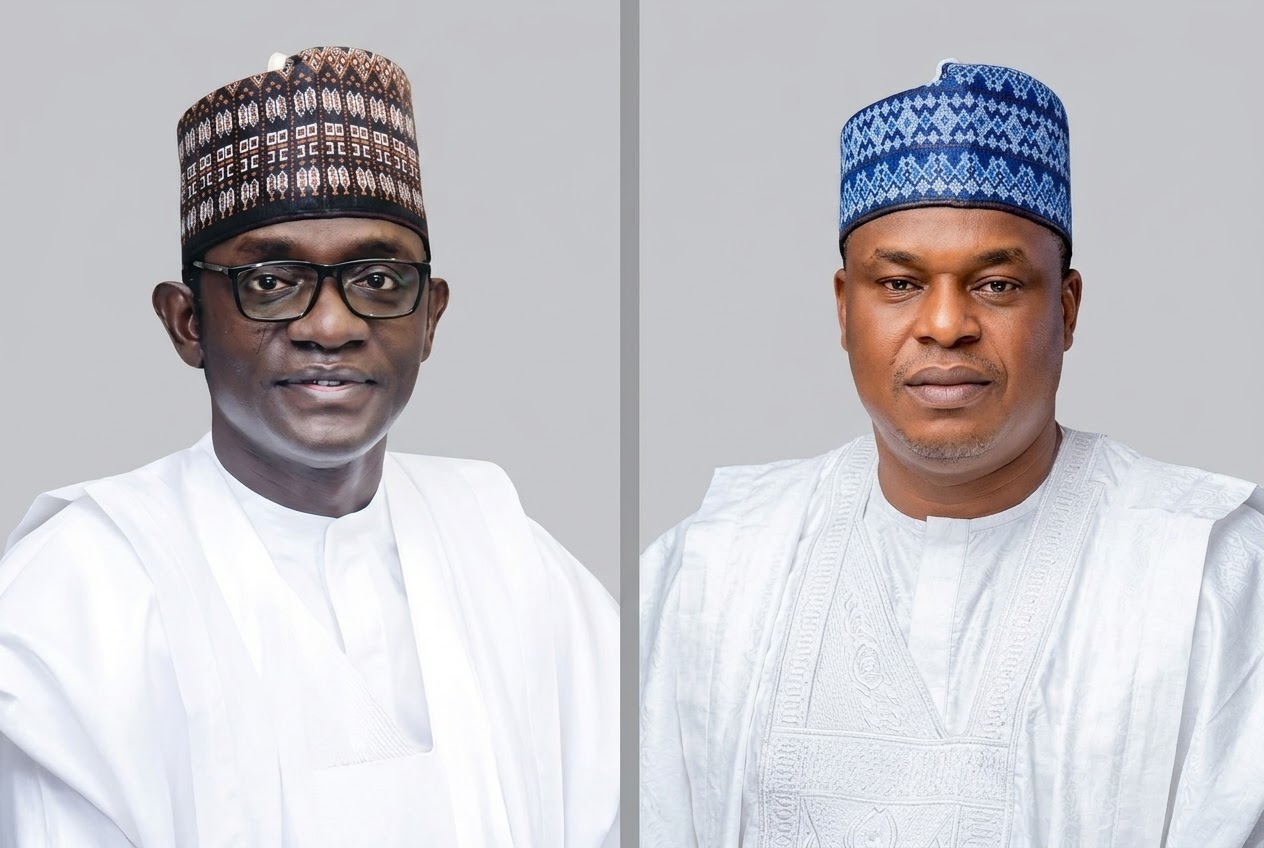
The Deputy National Financial Secretary of the All Progressives Congress (APC) and Chairman of the Board of Trustees of the Industrial Training Fund (ITF), Hon. Hamma Adama Ali Kumo (Dattuwa), has felicitated with the Governor of Yobe State, His Excellency Hon. (Dr.) Mai Mala Buni, CON, COM, on the occasion of his 59th birthday, describing him as a visionary leader whose commitment to peace, development, and good governance has continued to redefine the trajectory of Yobe State.
Governor Buni, who was born on November 19, 1967, and has served as Governor of Yobe State since May 2019, marked his 59th birthday amidst widespread goodwill messages from political leaders, associates, and admirers across the country.
In a statement made available to journalists, Hon. Kumo said the birthday celebration presents a fitting opportunity to reflect on Governor Buni’s contributions to governance, public service, and the advancement of Yobe State.
He noted that since assuming office, Governor Buni has remained steadfast in pursuing policies and programmes aimed at rebuilding communities, improving infrastructure, expanding access to education and healthcare, empowering youths and women, and creating an enabling environment for economic growth.
According to the APC chieftain, the Governor’s administration has distinguished itself through prudent management of resources, strategic investments in critical sectors, and a deliberate commitment to improving the quality of life of the people.
“His Excellency, Governor Mai Mala Buni, represents a rare breed of leaders whose actions are guided by service, vision, and a genuine passion for the welfare of the people. His leadership has brought renewed hope to communities across Yobe State and strengthened public confidence in government,” Kumo stated.
The prominent APC leader further praised the Governor’s role in promoting peace and stability in Yobe, stressing that his inclusive leadership style has helped foster unity among diverse groups while accelerating developmental projects across the state.
Kumo also recalled Governor Buni’s distinguished political journey, from grassroots politics to becoming National Secretary of the APC and subsequently Governor of Yobe State, noting that his rise reflects years of dedication, discipline, and commitment to nation-building.
“The Governor’s life story is a source of inspiration to young Nigerians. His humility, perseverance, and dedication to service demonstrate that leadership is ultimately about creating opportunities and making meaningful impact in the lives of others,” he added.
The APC Deputy National Financial Secretary further observed that Governor Buni’s administration has continued to earn recognition for its developmental agenda, particularly in the areas of post-insurgency recovery, infrastructure renewal, agricultural development, education, healthcare delivery, and human capital advancement.
He expressed confidence that the Governor would continue to build on the achievements recorded so far and sustain the momentum of progress for which his administration has become known.
As Governor Buni celebrates another milestone, Kumo prayed to Almighty Allah to bless him with robust health, greater wisdom, renewed strength, and many more years of productive service to Yobe State and Nigeria.
“On behalf of my family, political associates, supporters, and well-wishers, I heartily congratulate His Excellency, Hon. (Dr.) Mai Mala Buni, CON, COM, on the occasion of his 59th birthday. We celebrate your outstanding service, remarkable achievements, and unwavering commitment to the development of our dear state. May Almighty Allah continue to guide and strengthen you for even greater accomplishments in the years ahead,” he said.
He added that Governor Buni’s legacy of resilience, statesmanship, and developmental leadership would continue to inspire current and future generations of leaders committed to the ideals of service, integrity, and patriotism.
The statement concluded with prayers for continued peace, prosperity, and sustainable development in Yobe State under Governor Buni’s leadership.
“Happy 59th Birthday, Your Excellency.”
Signed:
Hon. Hamma Adama Ali Kumo (Dattuwa)
APC Deputy National Financial Secretary
Chairman, Board of Trustees, Industrial Training Fund (ITF).
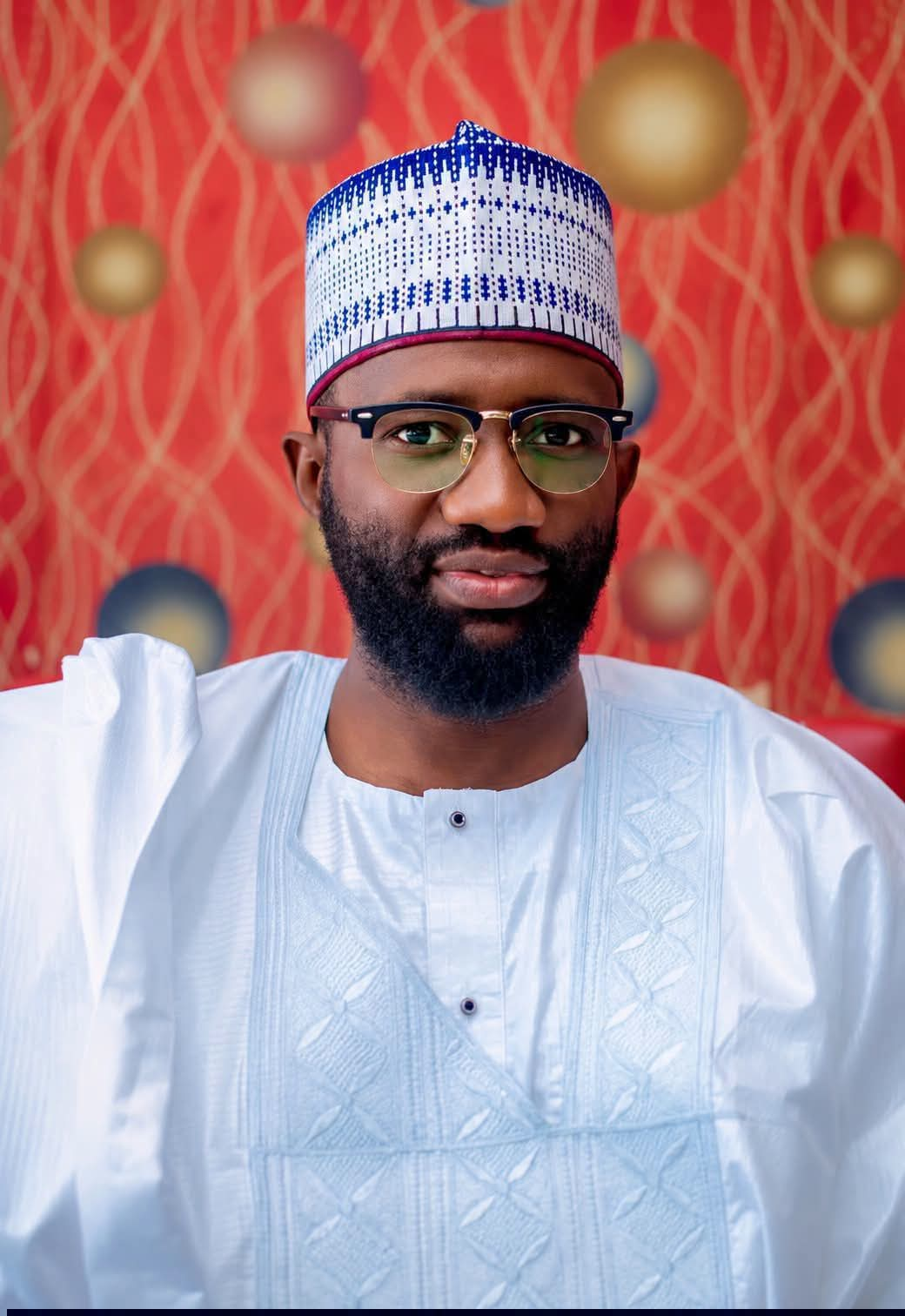
The political landscape in Kano Central Senatorial District is witnessing a gradual but noticeable shift as increasing numbers of young voters, professionals and community stakeholders rally behind the senatorial ambition of Dr. Nafiu Sankara ahead of the next election cycle.
Though the contest is expected to feature some of Kano’s most experienced political figures, discussions across the district are increasingly focused on the emergence of a new generation of leaders and what many describe as a growing demand for fresh ideas, innovation and people-oriented governance.
Dr. Sankara, a renowned development advocate and grassroots mobiliser, has continued to attract attention through his emphasis on youth empowerment, economic development and inclusive representation. Political observers note that his message is resonating strongly among first-time voters and younger residents who believe Kano Central requires a more dynamic approach to leadership.
Across several communities within the district, supporters say Dr. Sankara’s popularity stems from his accessibility and consistent engagement with ordinary citizens. Many argue that voters are becoming more interested in leaders who maintain close contact with their constituents and actively participate in addressing community challenges.
A youth leader in Tarauni Local Government Area described the current political atmosphere as one driven by changing expectations.
“Young people want leaders who understand today’s realities. Issues such as unemployment, digital innovation, education and economic empowerment are becoming major concerns, and many believe these areas require a new approach,” he said.
Analysts also suggest that demographic realities may play a significant role in shaping the upcoming contest. With youths constituting a large percentage of the voting population, candidates perceived as being closer to their aspirations are expected to gain considerable momentum.
Dr. Sankara has repeatedly identified job creation and economic opportunities as major priorities in his campaign. According to him, empowering young people through entrepreneurship support, vocational training and investment-friendly policies remains critical to sustainable development.
He has argued that economic growth can only be achieved when governments create environments that encourage innovation, small business growth and private-sector participation.
Beyond youth-focused policies, Dr. Sankara has also maintained a strong emphasis on infrastructure development. He believes improving roads, healthcare facilities, schools and electricity supply would not only improve living standards but also stimulate economic activities across the district.
Political commentators say this development-focused message is helping him attract support from a wide range of demographic groups, including women, traders, professionals and community leaders.
His campaign activities have also generated conversations about citizen-driven governance, transparency and accountability. Supporters believe these issues have become increasingly important as voters seek leaders they can hold responsible for campaign promises and public commitments.
While established political figures continue to command significant influence within Kano politics, observers note that the growing attention around Dr. Sankara demonstrates an increasing appetite for alternative leadership options among sections of the electorate.
As preparations for the next elections gather pace, the Kano Central Senatorial race is gradually evolving into a contest that may be defined not only by political structures and party affiliations but also by competing visions about the future direction of leadership in the district.
Whether the momentum currently surrounding Dr. Sankara will translate into electoral success remains uncertain. However, what is becoming evident is that conversations about youth participation, generational renewal and development-focused representation are steadily moving to the centre of political discourse in Kano Central.
For many voters, the election may ultimately be less about political history and more about which candidate can best articulate and deliver a vision for the future.
News
2027 PRESIDENCY: AVA WARNS AGAINST POLITICAL GIMMICKS, URGES NIGERIANS TO SCRUTINISE ATIKU’S RECORD
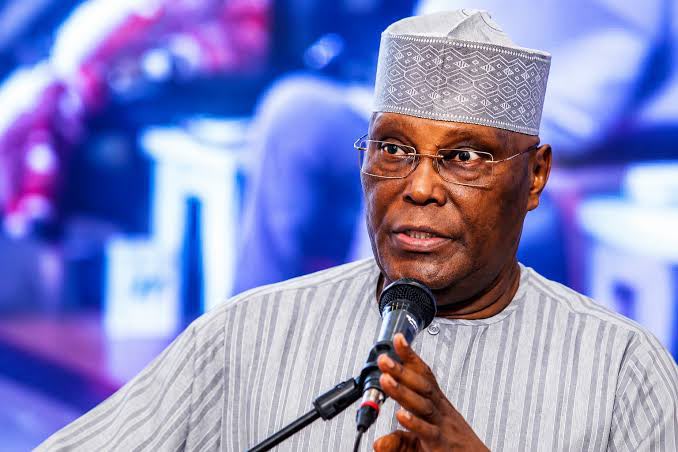
In contemporary Nigeria, the name Atiku Abubakar has become synonymous with relentless presidential ambition, political maneuvering and controversy. His career in the Nigeria Customs Service, where he rose to the rank of Deputy Comptroller-General before retiring, is well known. Equally well known is his transition from a wealthy former customs officer into the political arena through the late General Shehu Yar’Adua-led People’s Front (PF), a formidable political organisation that shaped the careers of several prominent Nigerian politicians.
During that period, Senator Bola Tinubu was also an influential member of the political movement and cut his political teeth within the same political family, although Atiku and Tinubu would later pursue different political paths.
With the return of democratic governance in 1999, their political paths crossed again. While Tinubu became Governor of Lagos State, Atiku emerged as Vice President of Nigeria under President Olusegun Obasanjo.
It was Obasanjo who took the political gamble of selecting Atiku as his running mate and entrusting him with the office of Vice President. However, their relationship deteriorated dramatically, culminating in a prolonged political feud that exposed serious disagreements within the administration and eventually turned into an open struggle for political supremacy.
Indeed, Nigerians witnessed a presidency characterised by internal conflict, political rivalry and a bitter power struggle between the President and his Vice President. Rather than consistently projecting unity and focusing on governance, the administration became embroiled in controversies that distracted from its responsibilities to the Nigerian people.
Atiku’s political trajectory has since been marked by repeated presidential contests against several political leaders and administrations, including Umaru Musa Yar’Adua, Goodluck Jonathan, Muhammadu Buhari and, more recently, Bola Ahmed Tinubu. His persistent pursuit of the presidency raises legitimate questions about whether his ambition is driven primarily by a commitment to national service or by an enduring quest for personal political power.
The problem with Nigeria is not merely that public officials make mistakes; it is the failure to hold political leaders accountable for their actions, decisions, abuse of public trust and alleged financial improprieties. Accountability, integrity and patriotism must be the defining standards of leadership, not political convenience, personal ambition or the manipulation of public sentiment.
Atiku’s association with the controversies surrounding Nigeria’s privatisation programme, particularly the handling of the Nigerian Telecommunications Limited (NITEL) and its eventual transfer to Pentascope, remains a matter of public debate and scrutiny. As a leading figure in the privatisation process during the Obasanjo administration, his role deserves honest examination.
The privatisation programme generated considerable controversy over the fate of public enterprises, workers’ welfare, transparency, accountability and the performance of some of the companies that were transferred to private operators. Nigerians have every right to demand explanations from those who occupied influential positions during that period.
The consequences of poorly executed privatisation exercises were felt by workers, families and communities. Job losses, industrial decline, the collapse or weakening of some enterprises, and concerns about the transparency of transactions became part of the national conversation. Those who presided over such policies cannot simply distance themselves from the outcomes or present themselves as though they had no responsibility for the decisions made.
We must, at this juncture, call a spade a spade. Nigerians cannot continue to be deceived by politicians whose presidential ambitions appear endless, while their records in public office remain subjects of controversy and unanswered questions.
No responsible citizen should ignore the need to scrutinise Atiku’s record, political antecedents, policy positions and past performance before considering entrusting him with the nation’s highest office in 2027.
THE HUSHPUPPI CONTROVERSY
In an episode that attracted widespread public attention, Atiku’s association with the Dubai meeting involving Ramon Abbas, popularly known as Hushpuppi, remains a subject of political controversy. Hushpuppi was subsequently convicted in the United States for his involvement in international fraud schemes.
Atiku, alongside political associates including Dino Melaye and Timi Frank, was publicly associated with the meeting involving Hushpuppi and other political figures, including Bukola Saraki and Yakubu Dogara who were deceived to be part of the meeting. The circumstances and political significance of that encounter attracted considerable criticism and questions from Nigerians.
Let us be clear: association or photographs with an individual do not, by themselves, establish criminal wrongdoing. However, public figures seeking the highest political office must be prepared to answer legitimate questions about their associations, judgment and the circumstances surrounding politically significant encounters.
Nigerians deserve leaders whose relationships, conduct and political engagements inspire confidence, not suspicion, controversy or endless explanations.
Atiku must also demonstrate that he has moved beyond the politics of personal ambition, identity-based mobilisation and political manoeuvring. Nigeria requires a leader with a clear, credible and practical agenda for national development—not another presidential campaign built around promises, political alliances and the assumption that power is a personal entitlement.
A WARNING TO NIGERIANS
We are concerned that Nigerians may once again be subjected to grand promises, political gimmicks and smooth-sailing campaign narratives without a corresponding examination of the candidate’s past record.
The electorate must not allow political propaganda, sentimental appeals or personality-driven campaigns to overshadow the critical questions of competence, accountability, integrity, economic policy, national security and the welfare of ordinary citizens.
A candidate’s record in public office is far more important than campaign rhetoric. Nigerians must examine what those seeking their votes have done when entrusted with power, the policies they supported, the controversies surrounding their tenure, and the lessons that can be drawn from their previous leadership experiences.
We therefore urge Nigerians, particularly young people and the voting public across all regions, to remain vigilant, politically conscious and discerning. The future of our country must not be surrendered to political desperation, empty promises or uncritical loyalty to individuals.
OUR POSITION
The Arewa Voters Assembly (AVA) maintains that Nigeria deserves purposeful, accountable, transparent and patriotic leadership. We reject politics driven solely by personal ambition, political opportunism and the pursuit of power without a demonstrable commitment to national development.
Atiku Abubakar must be judged by his political antecedents, his record as Vice President, his involvement in the policy decisions and controversies of the Obasanjo administration, and the credibility of his present promises—not merely by the sophistication of his campaign rhetoric.
We urge Nigerians to reject political gimmicks and demand accountability from every aspirant seeking their mandate.
Nigeria is too important to be treated as the personal political destination of any individual. The presidency is a public trust, not a birthright.
SIGNED:
Com Iliasu Musa
National Coordinator, AVA.
Com Paul Katuka
Secretary,
AREWA VOTERS ASSEMBLY (AVA).


Hamma Adama Ali Kumo Celebrates Gov. Mai Mala Buni at 59, Lauds Transformational Leadership in Yobe

SANKARA’S YOUTHFUL APPEAL RESHAPING KANO CENTRAL POLITICS

2027 PRESIDENCY: AVA WARNS AGAINST POLITICAL GIMMICKS, URGES NIGERIANS TO SCRUTINISE ATIKU’S RECORD

-
 Uncategorized6 years ago
FG, states urged to harness flooding for ranching, others with technology – Agbaje
-
 Headlines11 years ago
Breaking: EFCC seals Borno House of Assembly, as Hon members take to their heels
-
 News12 years ago
Nigeria Security Operatives Stage Manhunt For Homosexual Perpetrator
-
 News10 years ago
How 21-year-old Girl fled community over accusation of lesbianism
-
 News11 years ago
Yobe Gov Moves Against Deputy
-
 Opinion8 years ago
7 signs she has friend zoned you
-
Technology5 years ago
Online job placement company headhunts women
-
 Headlines11 years ago
Borno Dep Gov Abducts Another Church Leader