
News
Maikaya, Marketing Nasarawa State to the World Through Grassroots Development, Promise of Good Governance


In an era when sub national governments are increasingly competing for global attention, foreign direct investment, and strategic partnerships, development narratives have evolved beyond policy documents, official statistics, and ceremonial commissioning of projects.
Today, states are defined as much by how governance is felt at the grassroots as by how it is articulated in government circles. Investors, development partners, and even tourists are paying closer attention to social stability, community engagement, youth inclusion, and the everyday lived experiences of ordinary citizens.
Within this changing global and national context, Nasarawa State is gradually shaping a development narrative that emphasises peace, inclusion, and grassroots participation. Beyond government-led initiatives, individuals and community-based foundations are playing increasingly visible roles in projecting the state’s image.
One such figure is Alhaji Dr. Muhammed Musa Maikaya, philanthropist, grassroots mobiliser, and founder of the Maikaya Development Foundation, whose sustained humanitarian and community-driven interventions are contributing to how Nasarawa is perceived within and outside Nigeria.
From rural communities in Toto, Awe, Doma, and Karu Akwanga, Wamba, Obi, Kokona Nasarawa to urban centres such as Lafia, Maikaya’s activities reflect a consistent belief that development must begin with the people, align with their realities, and empower them to become stakeholders in progress.
Through sports development, youth empowerment, educational support, health interventions, renewable energy support, and continuous engagement with traditional and community institutions, his initiatives are gradually reinforcing Nasarawa’s image as a peaceful, organised, and people-oriented state.
For Maikaya, grassroots development is not a political catchphrase but a guiding philosophy shaped by lived experience. Speaking during the finals of a grassroots football tournament organised by the Maikaya Development Foundation in Toto Local Government Area, he articulated a principle that has come to define his engagements across the state.
“Development is more encompassing if it reaches the grassroots. When villages, youths, women, and the vulnerable are carried along, development becomes a lot more meaningful, inclusive, and sustainable,” he said.
This philosophy has translated into a steady stream of community-focused initiatives. Football tournaments, skills acquisition programmes, educational support schemes, medical and humanitarian outreaches, and youth engagement forums supported by the foundation have become recurring features across Nasarawa State.
While many of these interventions are modest in scale, their cumulative impact has been significant, building trust between communities, strengthening social cohesion, and projecting Nasarawa as a state where development is people-centred.
Among the various tools deployed by Maikaya, sports, particularly football, has emerged as a powerful platform for grassroots mobilisation and unity. Football competitions organised across local government areas often draw teams from diverse ethnic, religious, and political backgrounds, creating spaces for interaction, dialogue, and mutual respect.
Observers note that these tournaments help reduce youth restiveness, promote discipline and teamwork, and foster a shared sense of identity among young people. Beyond their immediate social benefits, the competitions attract visitors from neighbouring states, thereby subtly expanding Nasarawa’s visibility and reputation.
A community leader in Toto, Alhaji Sani Abdullahi, described the impact as far-reaching. “What Maikaya is doing through sports goes beyond entertainment. He is uniting communities, engaging our youths positively, and showing outsiders that Nasarawa is peaceful and organised. This is the kind of exposure money alone cannot buy,” he said.
Beyond sports and mobilisation, the humanitarian footprint of the Maikaya Development Foundation has expanded steadily in recent years, touching key sectors such as education, health, energy, and community infrastructure. These interventions reflect an understanding that development is multi-dimensional and that social welfare must go hand in hand with economic and physical infrastructure.
In the education sector, the foundation has provided financial support to over 2,000 tertiary students from Nasarawa State over some few years, easing the burden of tuition, accommodation, and learning materials for indigent students. Beneficiaries say the support has helped many of them remain in school at a time when economic pressures are forcing some students to drop out.
The foundation has also demonstrated a strong commitment to inclusion by extending scholarship support and learning materials to students living with disabilities. This intervention has been widely commended by education advocates as a step toward ensuring that vulnerable groups are not excluded from opportunities for personal and professional growth.
In the health sector, Maikaya’s foundation, working in collaboration with relevant state institutions, enrolled more than 700 vulnerable residents across the 13 local government areas of Nasarawa State into the State Health Insurance Scheme. The beneficiaries, largely women, children, and persons living with disabilities, now have access to basic healthcare services that would otherwise be beyond their reach.
Health professionals and community leaders note that such interventions reduce preventable deaths, improve productivity, and contribute to overall social stability, key indicators often assessed by development partners and investors.
Community infrastructure has equally benefited from the foundation’s interventions. In Toto Local Government Area, the donation of a 500KVA transformer significantly improved electricity supply, boosting small-scale businesses, artisanship, and household activities.
Residents say the improved power supply has enhanced commercial activities and reduced reliance on expensive alternatives.
Similarly, in Karu Local Government Area, Maikaya donated high-powered solar energy systems to the building materials market situated in Mararaba to support it’s community facilities. The intervention not only improved access to clean and reliable energy but also highlighted the growing relevance of renewable energy solutions in grassroots development.
Traders at the Mararaba Building Materials Market, including the market chairman, Sir Christopher Ibeh, expressed profound appreciation for the donation of high-powered solar energy systems by Alhaji Dr. Muhammed Maikaya.
Speaking during the commissioning of the project, Sir Ibeh highlighted the dramatic transformation the market has experienced since the installation of the solar-powered lights. According to him, areas that were once shrouded in darkness after sunset, making them unsafe and discouraging for traders and buyers alike, are now brightly illuminated.
“The lights have not only enhanced visibility but have also instilled a renewed sense of confidence and security among the traders and their customers. He said.
Many traders echoed Sir Ibeh’s sentiments, noting that the market, which previously became almost deserted in the evenings, now thrives late into the night.
The improved lighting has enabled vendors to extend their trading hours, attract more buyers, and significantly reduce incidents of theft and other security concerns that were common in the past.
Several traders emphasized that beyond the physical illumination, the gesture represents a broader commitment to community development and grassroots empowerment, explaining how targeted interventions like this can improve livelihoods and foster economic growth at the local level.
Analysts note that such projects, though community-based, contribute to a broader narrative of sustainability and innovation qualities increasingly associated with states seeking global relevance.
Acknowledging Government Efforts on Security and Infrastructure, at several public engagements, Maikaya has been deliberate in acknowledging the role of the state government in creating an enabling environment for grassroots initiatives.
He has openly commended Governor Abdullahi Sule for prioritising security across Nasarawa State, particularly noting the relative peace and improved security situation in the state.
According to him, sustained security efforts by the government have been critical in allowing community programmes, sporting events, and humanitarian outreaches to take place without disruption.
Maikaya has also praised the administration’s infrastructure drive across the three senatorial zones, citing landmark projects such as the Lafia, Akwanga, and Keffi flyovers, as well as ongoing efforts to connect rural communities through road construction and rehabilitation.
“These projects are opening up communities, improving mobility, and strengthening economic activities. When rural and urban areas are equally connected, development becomes more inclusive,” he noted.
One of the most striking elements of Maikaya’s grassroots engagement is his consistent focus on youth empowerment. In a state where young people constitute a significant proportion of the population, initiatives that promote skills development, sports, mentorship, and entrepreneurship are increasingly seen as strategic investments rather than short-term interventions.
Through organised sports, training programmes, mentorship platforms, and community engagement, youths are presented not as liabilities but as partners in development and future leaders.
Importantly, Maikaya has repeatedly emphasised that all interventions carried out through the Maikaya Development Foundation are funded entirely from his personal resources. He has never held any political office, nor occupied any public position of responsibility at the state or federal level.
He has also never executed government contracts or benefited from government patronage in any form. According to him, the Foundation’s activities are driven purely by a sense of civic duty and personal conviction that meaningful development should not wait for public office or political advantage.
“Everything we do is from personal sacrifice and commitment to the people,” he has stated on several occasions, stressing that service to humanity should stand independent of power, privilege, or access to government resources.
A Lafia-based political analyst, Dr. Emmanuel Tsoho, explained the broader implication, “When youths are empowered and meaningfully engaged, it sends a strong signal about the future of a state.
It reflects energy, innovation, and sustainability, qualities that investors and development partners look for.”
Several beneficiaries of Maikaya-supported initiatives have since become informal ambassadors of Nasarawa, sharing their experiences during inter-state competitions and on social media platforms.
A young footballer from Doma captured this shift in perception.“When teams come from other states and see our organisation and support, they respect Nasarawa. It changes how people see us,” he said.
Community elders argue that humanitarian interventions and youth engagement efforts contribute directly to social stability, an essential foundation for development and external engagement.
“Peace and care for the people are the strongest advertisements of any state,” a traditional ruler from Awe observed. “When communities are stable and people feel supported, outsiders feel confident to come, invest, and partner.”
Such sentiments align with Maikaya’s belief that development must be holistic, addressing social welfare alongside infrastructure, governance, and economic growth.
In today’s interconnected world, state branding is no longer the exclusive preserve of government institutions. Foundations, private citizens, and community leaders increasingly play complementary roles in shaping public perception.
Through sustained grassroots engagement, Maikaya has become one of several actors projecting Nasarawa’s story of peace, potential, and people-focused development. Social media posts, news reports, and word-of-mouth accounts of his initiatives are gradually shaping how the state is viewed beyond its borders.
A Lagos-based businessman who attended a football tournament in Toto reflected on this evolving image.
“I used to think Nasarawa was quiet and underdeveloped. What I saw here changed my mind. There is organisation, talent, and a strong sense of community. It made me see the state differently,” he said.
As conversations about development and leadership continue within Nasarawa State, observers note that grassroots-driven initiatives such as those championed by Maikaya complement broader government efforts. They help bridge gaps, strengthen community trust, and reinforce the idea that development is a shared responsibility.
By aligning humanitarian action with community needs and acknowledging existing government structures, such initiatives contribute to continuity rather than division, cooperation rather than competition.
In marketing Nasarawa State through action rather than rhetoric, Maikaya is strengthening community bonds while contributing to a broader narrative of a state steadily positioning itself for relevance on the globe.
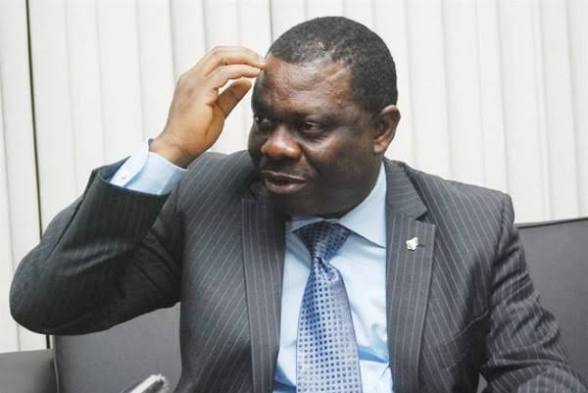
The Frontline runner of the Benue State governorship election come 2027 in Benue State under the platform of the Peoples Democratic Party, PDP and former Attorney General of the Federation, Chief Michael Kaase Aondoakaa, SAN has top the list of the final flagbearers to run for the poll come 2027.
The Benue State governor and candidate of the All Progressives Congress (APC), Rev. Fr. Hyacinth Alia and Prof. Terhemba Shija of the Nigeria Democratic Congress (NDC) have made the final list of governorship candidates released by the Independent National Electoral Commission (INEC) for the February 6, 2027, governorship election.
Other candidates on the list are Herman Iorwase Hembe of the African Democratic Congress (ADC), Nyibiam Kwaghshir of the Action Democratic Party (ADP), Adagba Iorhen of the Allied Peoples Movement (APM), Mercy Ujah Engole of the Action Peoples Party (APP), Dominic Ochenehi of the Democratic Leadership Alliance (DLA), Mathias Terwase Byuan of the Labour Party (LP), Terese Paul Wombo of the National Rescue Movement (NRM), Roseline Ada Chenge of the People’s Redemption Party (PRP), and Simon Ocheme Ogbe of the Zenith Labour Party (ZLP) respectively.
Chief Michael Aondoakaa, SAN, had promised to establish specialised geriatric units in hospitals across the state to provide free basic healthcare and minor surgical procedures for elderly citizens if elected governor in 2027.
He maintained that the the initiative would form part of his administration’s broader agenda on healthcare, security, pensioners’ welfare, infrastructure development and prudent management of public resources.
The PDP candidate said government had both a moral and constitutional responsibility to cater for citizens who had spent their productive years contributing to the development of the state.
According to him, the proposed geriatric units would be specially equipped to provide elderly people with quality and specialised medical care in a conducive environment.
He said basic healthcare services and minor surgical procedures would be provided free of charge to senior citizens under the proposed programme.
“We have a duty to care for our elderly people who are in their late 60s, 70s, 80s and older.
“Beyond government responsibility, it is part of our African culture to honour and support those who have worked hard and sacrificed for society. They deserve access to quality healthcare and dignity in old age,” Aondoakaa said.
He said his administration, if elected, would place healthcare and security among its foremost priorities, stressing that the two sectors were fundamental to the wellbeing and development of the state.
“Our healthcare system must be responsive to the needs of ordinary people, especially the vulnerable and the elderly.
“At the same time, government must take seriously its responsibility to protect lives and property because security is the foundation of development,” he stated.
On the recurring debate over livestock management and ranching in the state, Aondoakaa maintained that ranching should primarily remain a private business venture, with government creating the necessary environment for private investors and livestock owners to operate.
“Ranching is a private enterprise. Government’s role is to create an enabling environment, not to take over the business itself,” he said.
The PDP candidate also expressed concern over the hardship faced by retired civil servants in the state, particularly those affected by outstanding pensions and gratuities.
Aondoakaa argued that workers who dedicated several decades to the service of the state should not face hardship and uncertainty after retirement.
“Those who spent their productive years serving the state should not be abandoned in retirement.
“Pensioners are entitled to their benefits and should be treated with dignity and respect,” he said.
He further argued that the payment of salaries, pensions and gratuities should not be portrayed as extraordinary achievements by any government, describing them as fundamental obligations arising from the relationship between the state and its workforce.
“Salaries and pensions are not favours. They are obligations arising from the relationship between government and its workers.
“Fulfilling those obligations should be routine and not something that is celebrated as an extraordinary achievement,” Aondoakaa added.
On infrastructure, the PDP governorship candidate promised to adopt a more consultative, professionally driven approach to conceiving and executing major government projects.
He said his administration would subject major projects to rigorous scrutiny while involving relevant ministries, technical experts and other stakeholders to ensure that public funds were properly utilised.
“There will be proper consultation before major projects are undertaken. Our focus will be on infrastructure that improves the lives of the people and delivers measurable value for public funds,” he stated.
Aondoakaa also pledged to make greater use of the expertise and institutional knowledge available within the state’s civil service.
He described career civil servants as a reservoir of technical competence and institutional memory, saying their knowledge should be better utilised in government planning and project implementation.
“Our civil servants possess invaluable knowledge and experience. They understand how government works and should be actively involved in planning and implementing development projects. We must make better use of that expertise,” he said.
The former Attorney General said his administration would also prioritise policies capable of translating public resources into tangible improvements in the lives of residents.
News
ENGR. BELLO BABAYO BELLO CELEBRATES GOVERNOR INUWA YAHAYA AT 65, COMMENDS HIS LEGACY OF TRANSFORMATION

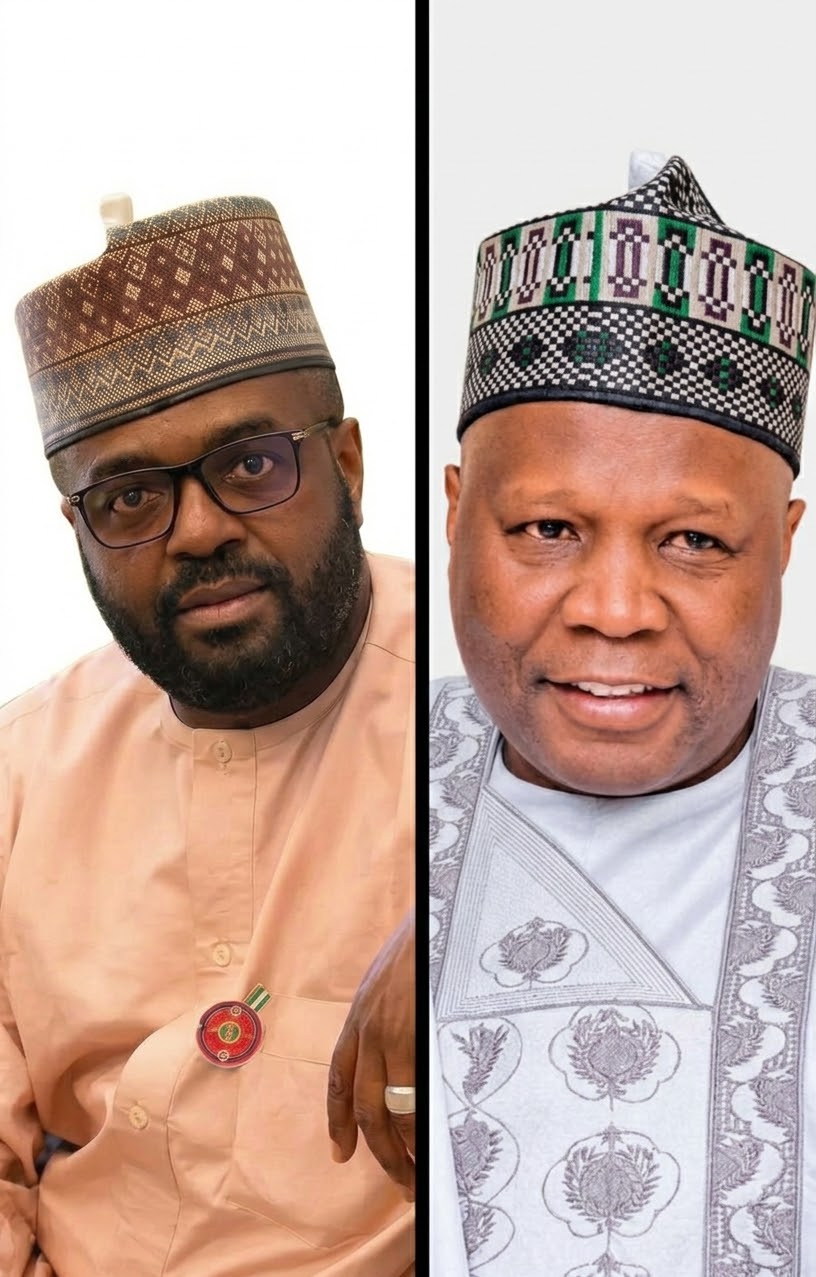
The Executive Director, Network, Niger Delta Power Holding Company (NDPHC), Engr. Bello Babayo Bello, has paid glowing tribute to the Governor of Gombe State, His Excellency Muhammadu Inuwa Yahaya, on the occasion of his 65th birthday, describing him as a visionary leader whose administration has redefined governance and accelerated development across the state.
Engr. Bello, in a congratulatory message made available to journalists, said Governor Inuwa Yahaya’s journey in public service has been marked by discipline, integrity, and an unwavering commitment to the progress of Gombe State and its people.
According to him, the Governor’s leadership has produced measurable improvements in critical sectors of the state’s economy while fostering a culture of transparency, accountability, and prudent resource management.
“As Governor Inuwa Yahaya celebrates his 65th birthday, Gombe State has every reason to celebrate a leader whose vision has continued to shape the future of the state. His commitment to good governance, infrastructural renewal, economic diversification, and human capital development has laid a strong foundation for sustainable growth and prosperity.”
Engr. Bello noted that beyond physical projects and policy achievements, the Governor’s greatest strength lies in his ability to inspire confidence, unite diverse interests, and build consensus around the collective aspirations of the people.
He described Governor Inuwa Yahaya as a statesman whose calm disposition, strategic thinking, and inclusive leadership style have earned him widespread respect across political, business, and community circles.
“The Governor represents a rare blend of experience, wisdom, humility, and courage. His leadership has demonstrated that genuine development is achieved not merely through promises but through deliberate actions and a clear sense of purpose. His accomplishments today stand as enduring testimony to his dedication to public service.”
The NDPHC Executive Director further stated that the Governor’s developmental strides have elevated the profile of Gombe State and strengthened the confidence of investors, development partners, and stakeholders in the state’s future.
He added that Governor Inuwa Yahaya’s administration has become a reference point for effective governance, with policies designed to create opportunities, improve livelihoods, and promote long-term economic stability.
“As he marks this remarkable milestone, we celebrate not only the years he has spent on earth but the positive impact he has made in the lives of countless people. His legacy is one of service, vision, and transformational leadership.”
Engr. Bello prayed for Almighty God to continue to bless the Governor with sound health, greater wisdom, and renewed strength as he continues to serve the people of Gombe State and contribute to Nigeria’s development.
“On behalf of my family, associates, and well-wishers, I extend heartfelt congratulations to His Excellency, Governor Muhammadu Inuwa Yahaya, on his 65th birthday. May the years ahead bring even greater accomplishments, fulfillment, and continued service to humanity.”
Signed:
Engr. Bello Babayo Bello
Executive Director, Network
Niger Delta Power Holding Company (NDPHC)
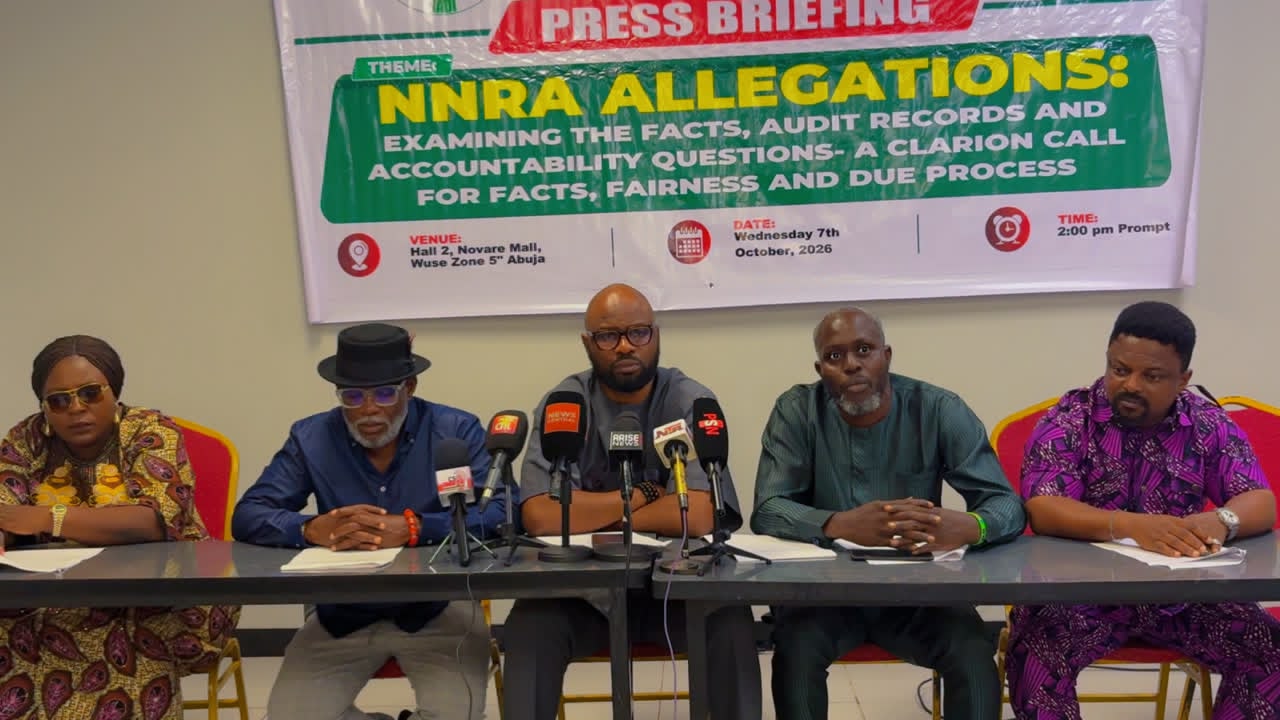
The Integrity Advocacy for Development Initiative (IADI) has called for a thorough, evidence-based examination of allegations of financial misconduct involving the Nigerian Nuclear Regulatory Authority (NNRA), warning against treating audit observations and media reports as established cases of fraud.
IADI Executive Director, Comrade Ofomhi Christopher, made the call on Wednesday at a press briefing in Abuja titled, “On the Allegations Concerning the Nigerian Nuclear Regulatory Authority (NNRA): Facts, Clarifications and the Need for Evidence-Based Accountability.”
The group was reacting to a publication by Secrets Reporters dated October 1, 2026, which alleged that about N6.69 billion was involved in contract fraud and misappropriation at the NNRA.
It also referred to a protest held on October 5 by Global Integrity Watch (GIW) at the NNRA headquarters, where the organisation demanded accountability, responses to audit observations and Freedom of Information requests, as well as changes in the leadership of the regulatory authority.
Christopher said while the allegations deserved scrutiny, they should not be treated as established facts without verification of the underlying records.
According to him, the public deserves to know the specific audit observations, periods and transactions involved, the nature of the contracts, the status of the projects or services, responses provided by the NNRA and whether the issues had been resolved or referred for further investigation.
“An audit observation is a serious matter requiring explanation and verification, but it is not, by itself, a judicial finding of fraud or personal misappropriation,” he said.
The IADI chief also referred to an explanation reportedly provided by the NNRA Director-General concerning the authority’s 2024 capital budget.
He said the explanation put the NNRA’s total 2024 capital budget at about N2.7 billion, comprising approximately N200 million belonging directly to the authority and about N2.5 billion for constituency projects, with an additional N200 million regional project bringing the figure referenced to about N2.9 billion.
Christopher, however, stressed that the explanation should not be regarded as conclusive, urging that it be tested against appropriation documents, budget releases, project records, procurement documents, payment records and audit reports.
“That is how responsible accountability should work: a claim is made, the response is heard, the records are examined, and the evidence determines the conclusion,” he said.
On allegations concerning unexecuted projects, the organisation called for physical verification of the specific projects, while allegations of inflated contract prices should be subjected to scrutiny of contracts, bills of quantities, procurement records and relevant price benchmarks.
It also urged that allegations concerning contractors be examined through relevant procurement and ownership records, while any claim of diversion or misappropriation should be established through the financial trail.
Christopher said where audit authorities had raised observations on expenditure, the public should be informed of the precise observations, the affected institution’s response and the current status of the issues.
The organisation also addressed the October 5 protest by GIW, acknowledging the constitutional right of civil society organisations to peaceful assembly and association under Section 40 of the Constitution.
It, however, urged CSOs to exercise such rights responsibly and within the law.
On Freedom of Information requests, IADI said there should be a distinction between the right to protest and the legal mechanism available where an FOI request is not answered.
The organisation noted that the Freedom of Information Act provides a judicial mechanism for applicants who have been denied access to information, adding that Section 20 allows an applicant to approach the court for a review.
IADI clarified that it was not suggesting that CSOs must obtain a court order before organising peaceful protests.
Rather, Christopher said, where non-compliance with an FOI request was the central grievance, the statutory and judicial mechanisms should be considered alongside legitimate civic action.
“An unanswered FOI request may justify further action to obtain the information. It does not, by itself, establish that fraud, misappropriation or any other wrongdoing has occurred,” he said.
The group also urged organisers of protests at government agencies to take public safety, access to government premises and the safety of protesters, workers and other citizens into consideration.
At the same time, it cautioned government institutions against using the possibility of confrontation as a justification for suppressing lawful civic expression.
“The answer to institutional disagreement should be law, evidence and due process, not intimidation or retaliation,” Christopher said.
He stressed that IADI was neither seeking to shield the NNRA from scrutiny nor dismiss legitimate questions concerning public expenditure at the authority.
He called on relevant audit and oversight bodies to state the status of the observations in question, the responses received from the NNRA and whether the matters had been resolved, sustained or referred for further investigation.
The organisation also encouraged CSOs pursuing accountability to make full use of available legal and institutional mechanisms while retaining their legitimate right to peaceful civic action.
“The public deserves accountability. But the public also deserves accuracy, fairness and evidence.
“A headline is not a verdict. An allegation is not evidence. An audit observation is not automatically a finding of personal guilt,” Christopher said.
He added that public institutions should not expect their expenditure to escape scrutiny merely because questions were raised through the media or civil society.
“Let the records be examined. Let the questions be answered. Let the evidence speak,” he said.

APC BLASTS ATIKU OVER ‘BOLA’ REMARK ABOUT TINUBU

2027: OPCI President Cautions Against Fake Prophesies

THE SLOW DEATH OF DEMOCRACY

-
 Uncategorized6 years ago
FG, states urged to harness flooding for ranching, others with technology – Agbaje
-
 Headlines11 years ago
Breaking: EFCC seals Borno House of Assembly, as Hon members take to their heels
-
 News12 years ago
Nigeria Security Operatives Stage Manhunt For Homosexual Perpetrator
-
 News10 years ago
How 21-year-old Girl fled community over accusation of lesbianism
-
 News11 years ago
Yobe Gov Moves Against Deputy
-
 Opinion7 years ago
7 signs she has friend zoned you
-
Technology5 years ago
Online job placement company headhunts women
-
 Headlines10 years ago
Borno Dep Gov Abducts Another Church Leader