
News
NASS Empowered To Alter, Amend Review Budget Bills – Dogara

By Aaron Ossai
Speaker of the House of Representatives, Hon Yakubu Dogara, has explained that the House is focused on using its oversight functions over the executive as a cooperative tool to bring development and better the lives of Nigerians, rather than as a tool of adversary.
He made this statement while delivering a keynote address at a 2-day summit on Intergovernmental/Party Relations and the Budget Reform Process for sustainable development in Nigeria in Abuja on Tuesday.
“Over the years, legislative oversight has been seen as more adversarial than cooperative. However, in conducting oversight, the principles of co-operative government and intergovernmental relations must be taken into consideration, including the separation of powers and the need for all spheres of government and all organs of State to exercise their powers and perform their functions in a manner that does not encroach on the functions of other arms. Seen in this light, the oversight function of the Legislature complements rather than hampers the effective delivery of services with which the executive is entrusted.”
He, therefore, called for a more cooperative government where the executive, the legislature and the judiciary, in their collective struggle to develop Nigeria and ensure better life for her citizens, will always adhere to a common loyalty to the Federal Republic of Nigeria by committing to securing the well-being of all the Nigerians and provide effective, transparent, accountable and coherent government for the country as a whole.
Dogara said the outcomes and recommendations of oversight undertaken by the legislature should be eagerly received, studied and implemented by the executive as a measure of accountability, citing an instance where the late President Umaru Musa Yar’Adua requested for the report of the probe carried out by the House Adhoc Committee on Customs and Excise in the 6th Assembly under his leadership and started implementing the recommendations even before the report was adopted.
“I can give personal testimony that as chairman, House Ad-Hoc Committee on Customs, the report of the House investigation we conducted was requested for by him personally and he started to implement the recommendations…” he recalled.
Going further, the Speaker added that for intergovernmental cooperation to function effectively to yield the desired outcomes, the distinctiveness of each arm must be safeguarded in that its constitutional status, institutions, powers and functions of each arm must be respected; each arm of government must remain within its constitutional powers; and when exercising those powers, it must not do so in a manner that encroaches on the institutional integrity of another. This means that checks and balances should be in place with mutual respect for the authority and powers of the other arms so as to achieve better cooperation.
“Each arm of government,” he continued, “must take concrete steps to realize cooperative government by fostering friendly relations, assisting and supporting one another, informing one another of, and consulting one another on, matters of common interest, co-coordinating their actions and legislation with one another; and adhering to agreed procedures.
“The various ministries, departments and agencies (MDAs) are constitutionally required to account to the legislature, and they should always avail parliament of the complete picture on performance of the functions assigned to them as the consideration of the annual report of the MDAs alone may not give the complete picture of the performance of the relevant functions.”
Going father, he said failure by these MDAs to adhere to resolutions of the legislature in accordance with constitutionally assigned powers, will lead to a high risk of zero budget allocation to them since appropriation is one of the tools it can use to enforce compliance.
He said, “on the issue of legislative resolutions, one of the tools available to parliament in enforcing its Resolutions is the power of the purse as provided for by the 1999 Constitution as amended.”
“Any MDA that persistently disrespects a well-informed Resolution of Parliament may confront the power of parliament over its budget.. Over the years, legislative resolutions have been taken as merely advisory and hence enjoy a low level of compliance by the executive branch. I wish to strongly make the point that whereas some resolutions of the legislature are expressions of the will and views of the legislature, they most often do have practical, political and legal consequences. Resolution is also a mechanism through which the executive obtain expressions of opinion of important stakeholders to assist it in framing its policies. In jurisdictions like the USA, UK and India, parliamentary resolutions are taken seriously and level of implementation reported back to parliament. We should consider adopting these models in Nigeria.”
He restated that the power of appropriation is vested in the legislature which means it can alter proposals by the executive in any manner it feels will be more beneficial to Nigerians, and shed light on reforms the House has done on the budget process, including a bill he sponsored on Budget Reforms.
“The budget is also a legitimate opportunity for the government to set its policy agenda and priorities. Thus, in almost all political systems, it is generally accepted that the Executive has the primary role in developing an annual budget and presenting it to the Legislature. However, the Legislature plays a more active role in shaping the outlines of the budget submitted to it by the Executive. In most presidential democracies, such as ours, the Legislature has the right to review, in some cases, amend, alter, approve or reject the spending plan proposed by the Executive.
“Suffice it to say that even in developed democracies, the Executive and legislative branches have traditionally struggled to find an equitable balance of power over financial matters.
“Over the years, the National Assembly and the Executive have often disagreed over basic and more fundamental issues ranging from the petroleum price benchmark for the budget and role of the National Assembly in amending or modifying budget proposals submitted by the Executive to reflect diverse national development requirements. Other subjects of contention include details of the Medium Term Expenditure Framework (MTEF) and the Fiscal Strategy Paper (FSP), timeline for budget presentation, implementation status and legislative oversight of budgets. While some see Legislature-Executive conflict as a necessary and beneficial precondition to limiting and controlling government, others view it as contributing to gridlock over major public policy decisions, thus making government ineffective. I see it however as a healthy constitutional exercise, for public good. However, cooperation between the Executive and the National Assembly is not only necessary but unavoidable.
“These conflicts often stem from weaknesses inherent in the different stages of our budget process. At the formulation stage, there is no adequate provision for a fixed and realistic budget calendar as well as public participation in the budget process. Also, the budgeting system is characterised by a weak link between development plans and annual budgets, resulting in poor development outcomes. Fundamentally too, there is neither a reliable and comprehensive database on the socio-economic conditions of the country nor a rigorous analytical framework for determining policy objectives.
“Happily, in the last Constitution Alteration exercise, the National Assembly passed an amendment to S.81 (1) of the Constitution which if ratified, will now require the President to prepare and lay the budget proposal before the National Assembly not later than 90 days before the end of each financial year rather than the current provision of laying it “at any time” in the financial year.
“Secondly, at the enactment stage, the process still appears haphazard with no definite timeline for the enactment of the Appropriation Bill”, he explained.
Finally, at the implementation stage, some of the weaknesses include the relatively low budgeted capital expenditure compared to recurrent expenditure. Capital budget implementation is still constrained by weak revenue base; untimely and irregular release of funds; preponderance of unplanned projects; weak implementation capacity on the part of MDAs; and weak budget monitoring by the Executive and sometimes weak legislative oversight.
“In the House of Representatives, we have shown our commitment to ensuring that the procedure and process of consideration and passage of the 2017 Budget was transparent, inclusive and professional. The details of the Budget was debated and passed in plenary to avoid unnecessary drawbacks that normally characterise the budget process, in Nigeria. That is why I personally sponsored a Budget Process Bill, to set out mandatory time-lines for all stakeholders in the budgetary process”, he added.
He also called for the inclusion of the ruling party in the budget preparation process in order for it to align with its agenda.

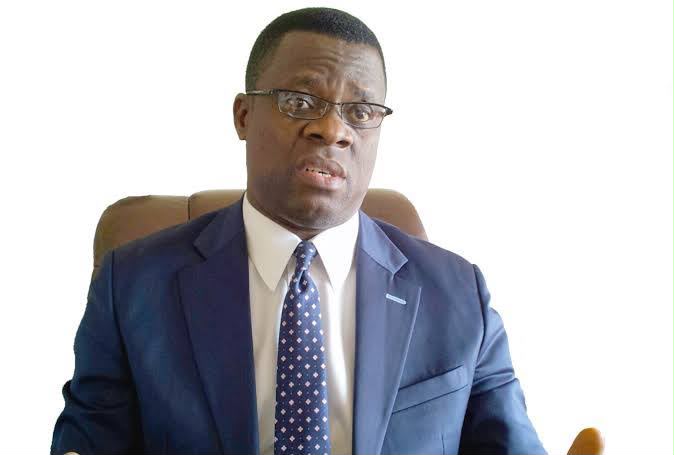
THE FALLACIES OF MIKE IGINI
“It is mean and cowardly and an evidence of weakness and utter demerit, for any group of people to attempt to commend themselves to the public by the negative process of belittling and condemning others.”_
- Chief Obafemi Awolowo, 28th April, 1951.
The attention of the Progressives Alliance for Justice, Unity and Democracy (PAJUD) has been drawn to the barrage of insults heaped by Mike Igini, former Resident Electoral Commissioner of the Independent National Electoral Commission (INEC), against every perceived and imaginary obstacle to his personal agenda.
We posit that since the return of democracy in 1999, the Nigerian political and electoral firmament has been overdosed with different genres of characters – the good, the bad and the ugly.
We state categorically and without fear of contradiction that President Bola Ahmed Tinubu is NOT responsible for the non-appointment of Mike Igini as either Chairman of INEC or National Commissioner since he left office in disgrace and engulfed in controversies in the South-South.
Igini must understand that such appointments are not done willy-nilly. They are based on several criteria. He has served two full terms as Resident Electoral Commissioner. For him to be nominated as National Commissioner, a vacancy must exist for his state. This is apart from the principle of rotation of the position among states in the geo-political zone.
Those who know President Bola Ahmed Tinubu closely know he is a leader who does not deliberately shut the door against competence and capacity. Anyone holding him in contempt on this matter is either being mischievous or acting out the script of the opposition, just like the present issue at stake.
It is unfortunate that Igini has allowed himself to be taken advantage of, dancing to the rhythm of anti-Tinubu and anti-Amupitan rogue agents.
We find it compelling to state unequivocally that Igini is blatantly scheming to discredit the present government and the Amupitan-led leadership of INEC in anticipation of reward by opposition elements and spent forces, if they ever win in the post-2027 general elections.
Over the years, we have watched the transformation of Igini from lawyer, to public affairs commentator, to agitator, until the PDP government appointed him Resident Electoral Commissioner.
We are amused at Igini’s feeble attempts at returning to public reckoning, using barefaced criticism, outright lies, mischief and fallacies against the Renewed Hope and reformative agenda as a springboard to relevance and prominence.
For an egocentric, self-seeking bigot and Mr. Know-All like Igini, he wants to remain relevant as a bride for any juicy INEC Election Management Committee headship or membership, which we know will never happen in this dispensation as a result of his antecedents while in office – an era marred by allegations of partisanship, disloyalty and endless controversies.
Your tenure as REC in Cross River State was characterised by mudslinging between you and a political party over unethical conduct unbecoming of an electoral officer. Similarly, your flexing of muscles and one-sided narratives during your tenure as REC of Akwa Ibom State is still very fresh in our memory. Till date, you are still spewing negative narratives against one of the politicians you fought in that state to high heavens.
Nigerians from all strata continue to wonder where the monies for the live telecast of Igini’s exit as Resident Electoral Commissioner of Akwa Ibom State originated from. In the history of INEC – from Dr. Ephraim Akpata, Alhaji Shehu Musa, Dr. Abel Guobadia, the much-vilified Prof. Maurice Iwu, Prof. Attahiru Jega reputed to be Igini’s benefactor, to Prof. Mahmood Yakubu – none of them had the temerity for such lavish display and grandeur during their exit. What was witnessed in the last days of Igini as REC in Akwa Ibom evokes serious questions about collective decency, decorum, moral rectitude and values.
Any argument in support of such an extravagant exit lacks integrity, for the simple reason that the pay slip of INEC Resident Electoral Commissioners and even National Commissioners is not a hidden document. It is known to the Nigerian public.
We believe that if we are sincere in this country, Igini should focus on more important non-partisan issues than chasing shadows. Igini should also address his own record, including the troubling episode of a Kenyan national engaged by INEC as a consultant some years ago, where the voter register fingerprints of Nigerians were allegedly compromised and handed to foreign interests. That despicable act is still fresh in our memory.
As overwhelming majority of Nigerians with voting rights are aware, there is an uncanny lust for power by desperate opposition politicians lurking on the horizon. They are deploying everything on earth just to grab power in 2027, and for no just cause but simply for selfish personal aggrandizement. They have recruited former staff, Directors, Resident Electoral Commissioners and National Commissioners to help execute their warped agenda and barefaced propaganda to deceive gullible Nigerians who will swallow every hook, line and sinker narrative framed by them.
We unreservedly agree with many who have suggested that as a believer in God, Igini should not allow his mind to be poisoned by the notion that any power outside the influence of God could have been responsible for the failure of his emergence as either National Commissioner or Chairman of the Commission.
Whatever it is, there seems to be more to it than meets the eye. The process of creating anarchy starts with incitement against the government, the electoral empire and security agencies. It often appears so smooth as to be imperceptible, hence those who engineer it enjoy the process at the initial stage, only to be consumed at the end of the day.
Elements in the class of Igini, who are acting out the script of falsehood purveyors and peddlers, will be put to shame at the end of the day. There is no doubt that Nigerians are going to have a well-deserved, credible, transparent, free and fair election in the 2027 general elections.
Above all, nobody can dispute the fact that President Bola Ahmed Tinubu nominated people with impeccable ability, capacity, loyalty, patriotism and honesty as members of the election management structure that will drive our democracy forward, in a manner that both Nigerians and the international community will be proud of like never before in our annals.
The focus of the Tinubu administration remains its much stronger determination to protect and respect the sanctity and fidelity of the ballot during the forthcoming elections.
We implore Mike Igini to stop the rabble-rousing, negative framing, mischief, mudslinging and casting of aspersions against the electoral umpire and Mr. President, and find something reasonable to do to earn a living just like other Nigerians, instead of going from one radio station to television stations across the country. His antics are already known to Nigerians who are far more sophisticated and politically savvy than before.
A word is enough for the wise… “WHEN YOU CONDEMN PEOPLE, YOU BRING JUDGEMENT ON YOURSELF.”
Signed:Comrade Yakubu Dan Abba
Country Representative, PAJUD.
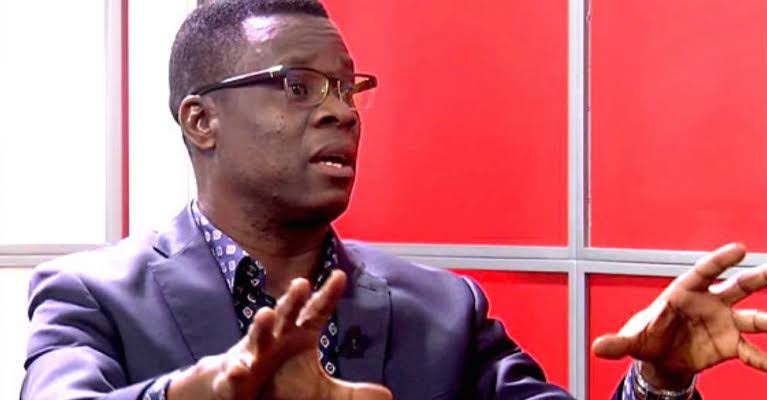
The Progressives Alliance for Justice, Unity and Democracy (PAJUD) has accused former Independent National Electoral Commission (INEC) Resident Electoral Commissioner, Mike Igini, of attempting to discredit President Bola Tinubu’s administration and the leadership of the electoral body, describing his criticisms as politically motivated.
The group, in a statement signed by its Country Representative, Comrade Yakubu Dan Abba, alleged that Igini was seeking to regain public relevance through persistent criticism of the government and the leadership of INEC under its current chairman, Prof. Joash Amupitan.
PAJUD, however, did not provide independent evidence to substantiate its allegations about Igini’s motives.
The group maintained that Tinubu was not responsible for Igini’s non-appointment as INEC chairman or national commissioner after completing his tenure as a Resident Electoral Commissioner, arguing that such appointments were subject to established criteria, vacancies and rotation arrangements among states within geopolitical zones.
“Those who know President Bola Ahmed Tinubu closely know he is a leader who does not deliberately shut the door against competence and capacity,” the statement said.
The group further alleged that Igini’s criticisms were intended to undermine the current administration and INEC’s leadership in anticipation of political rewards from opposition elements following the 2027 general elections.
PAJUD also questioned Igini’s record during his service as Resident Electoral Commissioner in Cross River and Akwa Ibom states, citing past disagreements with political actors and what it described as controversies surrounding his conduct in office.
It also raised questions about the cost and circumstances of the live television broadcast of Igini’s exit from office in Akwa Ibom State, comparing the event with the departures of previous INEC chairmen and other senior electoral officials.
The group did not provide documentary evidence to establish wrongdoing in connection with the broadcast.
In another allegation, PAJUD called on Igini to address what it described as concerns surrounding the engagement of a Kenyan national as an INEC consultant and the alleged compromise of Nigerian voters’ fingerprint data. The statement, however, did not present evidence establishing that Igini was personally responsible for any compromise of the data.
The alliance accused opposition politicians of attempting to discredit the electoral system ahead of the 2027 elections, alleging that some former electoral officials were being used to advance political interests. It did not identify the individuals allegedly involved or provide evidence supporting the claim.
PAJUD, meanwhile, expressed confidence in the ability of the current INEC leadership to conduct credible, transparent, free and fair elections in 2027.
It said the Tinubu administration remained committed to protecting the integrity of the ballot, adding that the president had nominated individuals it described as capable, patriotic and committed to the country’s democratic development.
The group urged Igini to refrain from what it characterised as inflammatory criticism of the president and the electoral commission, insisting that public discourse on electoral reform should be guided by responsibility and respect for democratic institutions.
Quoting former Premier of the Western Region, Chief Obafemi Awolowo, the alliance recalled his statement of April 28, 1951, that it was “mean and cowardly” for any group to seek public approval by belittling and condemning others.
PAJUD concluded by urging Nigerians to remain confident in the electoral process ahead of the 2027 general elections, while reiterating its support for the Tinubu administration and the current leadership of INEC.
The Freelance Journalist Federation (FJF) has expressed confidence in the committee investigating the reported deaths of 37 miners in Niger State, urging the public to allow the panel to conclude its assignment without undue pressure.
The federation’s position followed threats by the Nigeria Diaspora Organizations and Community for Human Rights (NDOCHR) to stage a protest at the headquarters of the Nigeria Security and Civil Defence Corps (NSCDC) in Abuja over alleged delays in releasing the investigation’s findings.
FJF in a statement issued on Friday and jointly signed by FJF conveners Ibrahim Ali, Jonathan Modi, Okpara Isaac and Christopher Abah, described the investigative process as transparent and thorough, insisting that sufficient time should be allowed for the committee to complete its work and establish the facts surrounding the incident.
The federation criticised the proposed demonstration, describing it as unnecessary and politically motivated, while warning against actions that could heighten tensions over an issue involving the loss of human lives.
It also commended the leadership of the NSCDC, the Minister of Interior and President Bola Ahmed Tinubu for what it described as their commitment to transparency, accountability and the rule of law.
According to the FJF, local civil society organisations monitoring the proceedings have expressed satisfaction with the panel’s conduct. However, the federation maintained that the investigation should be allowed to run its course before conclusions are drawn.
The group also rejected calls by the diaspora organisation for the immediate removal and prosecution of the NSCDC Commandant-General, Dr Ahmed Abubakar Audi, describing the demands as premature and inconsistent with the principle of fair hearing.
It argued that calls for sanctions before the conclusion of the investigation could undermine due process and prejudice public perception of the committee’s work.
The NDOCHR had also threatened to petition the International Criminal Court (ICC) in The Hague over the matter. In response, the FJF maintained that Nigeria’s domestic legal and investigative institutions should be allowed to address the allegations through established procedures.
The federation urged Nigerians in the diaspora to exercise restraint and avoid actions that could inflame political tensions or interfere with the ongoing investigation.
It urged members of the public to remain calm and await the committee’s official findings, stressing that a thorough investigation was necessary to establish the circumstances surrounding the reported deaths and determine any responsibility arising from the incident.
The committee’s final findings and any subsequent official actions are expected to be central to resolving the concerns surrounding the incident.
The statement further called on the Inspector-General of Police and other security agencies to take appropriate steps to maintain public order in the Federal Capital Territory.

WHO: Nigeria Records Zero Ebola Cases After Evacuation of Swiss Couple

Kwara celebrates Fela’s legacy with retrospective exhibition

2027: Ilorin West LG Boss Leads APC Mega Rally In Ubandawaki

-
 Uncategorized6 years ago
FG, states urged to harness flooding for ranching, others with technology – Agbaje
-
 Headlines11 years ago
Breaking: EFCC seals Borno House of Assembly, as Hon members take to their heels
-
 News12 years ago
Nigeria Security Operatives Stage Manhunt For Homosexual Perpetrator
-
 News10 years ago
How 21-year-old Girl fled community over accusation of lesbianism
-
 News11 years ago
Yobe Gov Moves Against Deputy
-
 Opinion7 years ago
7 signs she has friend zoned you
-
Technology5 years ago
Online job placement company headhunts women
-
 Headlines10 years ago
Borno Dep Gov Abducts Another Church Leader