
Uncategorized
OPINION

.
NIGERIA’S TROUBLING COLLECTIVE MENTALITY FAILURES
By: A G Abubakar
In the 1970s, it was fashionable to mount a spirited defence of sub-Saharan societies against any reference to governance failure, often dismissing such critiques as racist. Later, imperialism was added to the interpretive lens. Both explanations were seen as Western ploys to denigrate Africa, plunder its resources, and subjugate its people—a case of calling a dog a bad name in order to hang it. Half a century later, however, a rethink is unavoidable. While elements of those perceptions remain valid, African societies themselves have increasingly proven complicit in their developmental predicaments.
Nigerians, inclusive, appear to suffer either from inherent vulnerabilities of mentality or from historical experiences that have left indelible marks on the collective psyche. Both victim and perpetrator are therefore culpable. It is what the Hausa proverb captures succinctly: idan ɓera na da sata, daddawa ma na da wari—if the rat is accused of stealing, the locust-bean seasoning itself also emits a tempting smell.
The most damaging form of this complicity is a mentality that struggles to identify challenges, accept ownership, and act decisively. It is a mindset unable to internalise the truth that if you do not act for yourself, no one else will—not for you as an individual, not for you as a race, and not for you as a nation. The world owes no one relevance beyond statistics; only value confers identity.
Information and knowledge, it is often said, constitute that value and power. Whether secular or theological, societies that acquire and apply either tend to improve their well-being. They deploy them to overcome deprivation, ignorance, disease, and premature mortality. According to the UN, over the past half-century the world has reduced poverty, increased life expectancy, lowered illiteracy, and curbed major global conflicts.
Global extreme poverty—defined as living on $2.15 per day—fell from over 40 percent in 1986 to less than 10 percent by 2019. Global mortality rates have dropped by about 60 percent since 1950, while life expectancy rose by roughly 20 years by 2023. Adult literacy increased from 67 percent in 1976 to 86.36 percent in 2023. Major wars of a global nature have also declined since the Second World War in 1945; battle-related deaths, way back in the 90s has dropped to a third of the 1970s.
In Nigeria, these global gains remain largely illusory. Only last year, the country was described by the World Bank and IMF as the poverty capital of the world. Insurgency, terrorism, banditry, killer herdsmen, secessionist militias, and communal violence have turned life into a disposable commodity. Carnage has become routine, depressing life expectancy. The USA, has even accused Nigeria for doing little to stem the killings. With over 20 million children out of school, Nigeria’s literacy rate lags far behind the global average. Sadly, these grim indicators apply to much of sub-Saharan Africa (SSA) —even in the 21st century.
Rather than interrogate the form, content, and application of the knowledge that they consume, these societies have embraced an evasive escape—attributing their failures to the Almighty. Nigerians, in particular, have adopted a cloaked mindset that renders them oblivious to their relative and worsening backwardness. Innovation, manufacturing, maintenance culture, and orderly systems are subconsciously assigned to “other people.”
This debility is often explained through historical grievances—slavery, colonialism, neocolonialism, and even Marx and Engel’s “historical dialectical materialism” —while ignoring the rigidity of mentality. A mindset that unites intellectuals and the uninformed alike under a banner of perpetual victimhood, forgetting that other societies endured comparable traumas and yet transcended them.
China suffered imperial domination by the Mongols between the 14th and 18th centuries or even before; Korea endured Japanese imperialism. Much of the Indian subcontinent and Southeast Asia were victims of both domestic and international slavery before being colonised by European powers. Britain, Spain, Portugal, the Dutch, France, etc were in the forefront of the historically ignoble practices. The Jews experienced centuries of bondage in Egypt. Most have moved on since.
Some have voyaged into space and even gunning for the moon, while Nigerians—and much of sub-Saharan Africa—cannot safely access farms or village markets. The prospects of improvement grow dimmer as mindsets remain trapped in the search for scapegoats and divine intervention, instead of human agency.
In Nigeria, individuals routinely produce children beyond their capacity to care for, then lament behavioural problems and blame divine destiny. Evasion has become a lifestyle. A person beats traffic lights, gets knocked down, survives—and attributes it to divine ordination. Even death resulting from reckless behaviour is explained away as the will of God. Self-accountability is conspicuously absent. Waste is dumped into drains, waterways are blocked, floods and diseases follow—and prayers are offered for prevention. Government is blamed, even as perpetrators present themselves as victims. The irony is staggering.
Communities ignore early warning signs of insecurity until violence consumes them. Only then do leaders search for culprits and call for prayers. Denial precedes disaster; imagination flourishes afterward. Farmers fell trees indiscriminately, refuse sustainable practices, yet complain of poor yields and soil exhaustion—again blaming fate. Even, personal choices are made on impulse, devoid of vision or sustainable interests. The people, thus keep recycling politicians they love to curse for non performance, usually after appeals to premordial sentiments and gifting palliatives that could last few days. Thereafter, deprivations take over; as the politicians kept switching political camps in pursuit of material gains since democracy in Nigeria lacks ideological anchor.
The story is not different with the elite class. They can attend the best schools, excel academically, travel the world and get enlightened, speak queen’s English (blow big big grammar), but in the end hardly rise above the ordinary. The mindsets never change. Something akin to a well trained circus tiger, that remains what it is after a beautiful performance; a four-legged creature
The educated youth are not left of the mentality confusion too. Those searching for opportunities – jobs, businesses, spouses etc – cannot even link their constraints to such obvious factors as economic downturn and the need for a pragmatic way out. Instead, they resort to the metaphysical, by moving from one prayer house/cleric to another, making sacrifices and procuring anointing oil, white handkerchief and the likes for an elusive breakthrough .
Worse still, public functionaries in the sexagenerian bracket (60+) who steal public wealth to become emergency billionaires, knowing fully well that they have less than two decades of “active” life. Statistics has also shown that stollen wealth, unlike the institutional one, hardly thrives after well after the grandmaster thief. Yet Nigerians are helplessly trapped in this infamy.
Government mirrors this mentality, too. Infrastructure is built without maintenance culture. Industrialisation is preached while power generation is neglected. Saboteurs are blamed for predictable failures. When crises escalate, defence budgets balloon. Yet corruption drains resources, resulting in poor equipment, soldiers’ welfare and motivation; allowing violence to mutate and expand.
Existential threats then trigger national prayers. Mosques and churches mobilise. Phantom enemies are invented. The Almighty is summoned to fix self-inflicted chaos. Is this not strange?
Historical experiences matter, but something deeper is at work. Why this resistance to responsibility? Why the insistence that God should clean up messes deliberately created by humans endowed with reason? Why should the people resign themselves to being consumers of other people’s industrial outputs without questioning why they couldn’t do the same thing? Why feel mentally comfortable with it?
Nigeria and indeed the SSA must embark on sincere self-introspection. If education has failed, it must be reformed. If religion has been misapplied, lessons must be drawn from societies where faith, and culture coexists with progress.
The education system and intellectual class must reassess learning content. If mental colonisation persists, it must be dismantled, for a new and progressive mindsets to evolve. It is tragic for an entire people to reconcile themselves to permanent marginality. Certainly, not after dark peoples’ dark experiences in history right from the times of Noah, Egyptian Pharoahs, the slavery days, the colonial and neocolonial periods and down to the balkanisation of the continent.
Africa was partitioned at the Berlin Conference of 1884–85 and subjected to colonialism, followed by neocolonialism. Globalisation, the internet, and now artificial intelligence have completed a subtler chain of domination. The psychological impact has been profound—and escaping it may take generations. But this has to happen.
At some point, history stops sympathising and starts judging. No society can permanently outsource responsibility to slavery, colonialism, fate, or God without paying the price of irrelevance. Nations rise not because they pray harder, complain louder, or remember their wounds longer, but because they confront themselves honestly and act ruthlessly on that truth.
There comes a moment when a people’s suffering ceases to be tragic and becomes willful. God, having endowed humans with intellect, does not suspend causality for societies that locked their mindsets away. Nations that reject accountability do not collapse by conspiracy; they decay by choice. Nigeria’s crisis is therefore not metaphysical but moral—a rebellion against the discipline of cause and effect, and being obvious of it; consciously or otherwise.
Until this society accepts that progress is not a prayer point but a consequence of deliberate action, that faith without responsibility is superstition, and that victimhood is the most expensive ideology a nation can adopt, the future will remain a closed door—locked not by enemies, but from within. If Nigerian and indeed SSA societies have unique problems, which all nations have, they should accept it; work on it, and join the world in improving humanity.
If this obvious expectation sounds untenable then may be it is time to interrogate certain concepts that could help in understanding the people’s mindsets and how they may be influenced and shaped. Science has arguably tried to employ theories of epigenetics, niche construction, and cultural-historical model to shed light on the disposition of a people’s mindset. It would seem that while epigenetic factors shape predispositions of the mind, niche construction produces an environmental and institutional culture that discourages risk-taking and inquisitive inquiry, the two operating in a mutually reinforcing relationship.
Epigenetics, according to contemporary biological and behavioural science, refers to heritable changes in gene expression that do not alter DNA sequences but are influenced by sustained environmental pressures such as stress, deprivation, or social instability. Niche construction theory holds that humans actively modify their social and ecological environments, and these modified environments in turn reshape behavioural norms, incentives, and constraints across generations. The cultural-cognitive model further explains how shared beliefs, values, and learned heuristics become internalised as “common sense,” guiding perception, reasoning, and acceptable behaviour.
Taken together, these forces profoundly shape knowledge organisation, narrowing epistemic horizons, and entrenching cognitive biases that privilege conformity, risk-avoidance, and inherited assumptions over critical inquiry and innovation. Maybe it is time for a deeper introspection.
A.G.Abubakar agbarewa@gmail.com
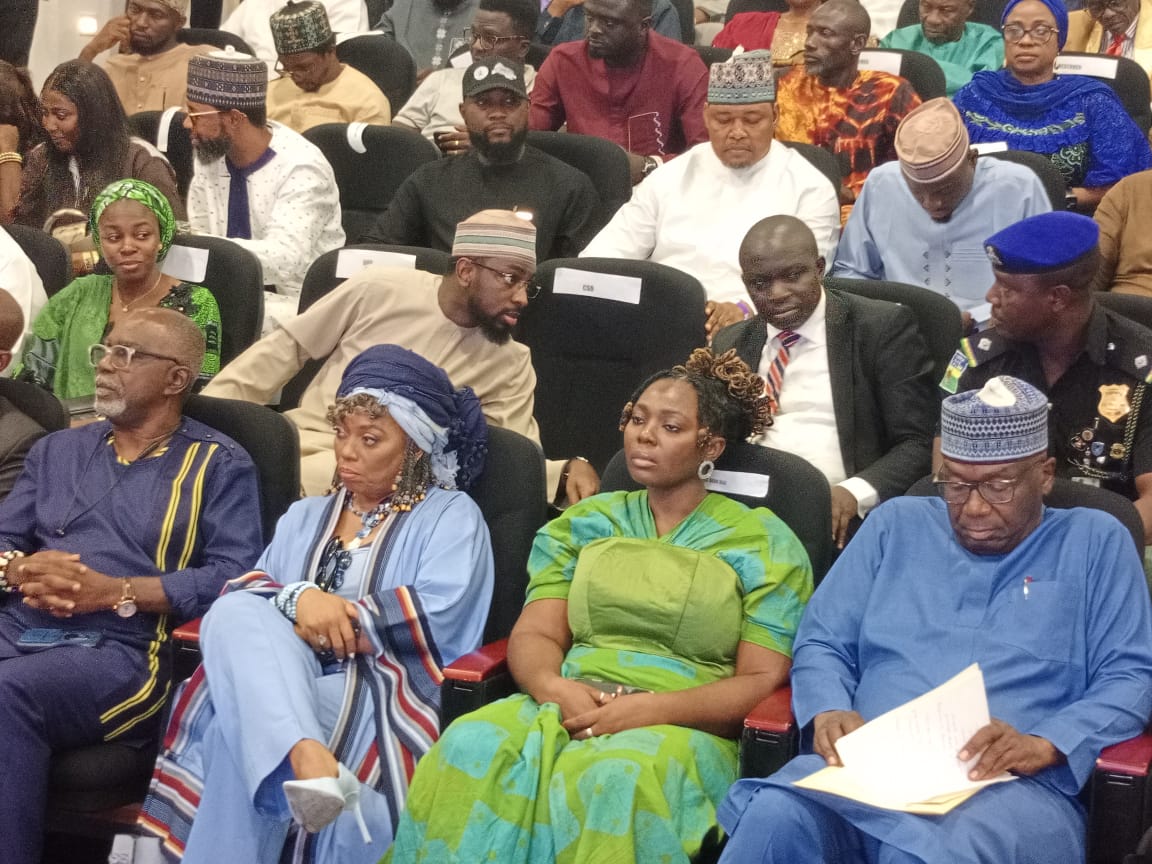
Stephen Olufemi Oni, Ilorin
The Kwara State Government has celebrated the life and enduring influence of Afrobeat legend, Fela Anikulapo-Kuti, with a retrospective exhibition aimed at preserving African cultural heritage and inspiring younger generations.
The exhibition, titled Fela Anikulapo-Kuti: A Retrospective, was opened by Governor AbdulRahman AbdulRazaq at the Institute of Contemporary African Art and Film in Ilorin on Monday.
The Governor said the establishment of the institute reflected his administration’s belief that development should extend beyond physical infrastructure to include spaces that promote creativity, knowledge and economic opportunities.
“When we established the Institute of Contemporary African Art & Film, our vision was clear: development must go beyond roads, bridges and buildings to create spaces for creativity, knowledge and opportunity,” AbdulRazaq said.
According to him, cultural infrastructure plays an important role in connecting people to their history, broadening their imagination and encouraging critical thinking.
“Physical infrastructure connects places; cultural infrastructure connects people to their history, expands their imagination and challenges their thinking,” the Governor said.
AbdulRazaq said the institute was established to preserve African stories, nurture talents and showcase the continent’s artists and thinkers to the world,
describing the decision to open the institution with an exhibition dedicated to Fela as significant, given the musician’s contribution to African music, social commentary and cultural expression.
“Fela was more than a musician. Through his music and artistic expression, he challenged conventions and confronted society with questions about power, freedom, identity and justice,” he added.
The Governor added that the late musician’s life demonstrated the capacity of artistic expression to influence public discourse and inspire social change.
The exhibition, curated by June Creative Art Advisory, led by its founder, Mrs Seun Alli, featured photography, archival materials, film, graphic works and other artistic expressions exploring Fela’s life, times and enduring influence.
AbdulRazaq commended the firm for bringing its curatorial expertise and creative vision to the project, while describing the exhibition as an opportunity for different categories of visitors to engage with the musician’s legacy.
He said the exhibition would provide students with learning opportunities beyond the classroom, inspire artists, support researchers and encourage young people to explore the creative industry.
“For students, this is a classroom beyond the classroom; for artists, inspiration; for researchers, an opportunity for deeper inquiry; and for young people, a reminder that creativity offers both self-expression and economic opportunity,” he said.
The Governor clarified that the state government was not claiming ownership of Fela’s story but was providing a platform for younger generations to encounter and learn from his legacy, adding that the state government is optimistic that the institute would promote cultural education, encourage creative enterprise, attract visitors and strengthen Kwara State’s position in Nigeria’s cultural and creative landscape.
According to him, the institution’s success would be measured by the talents it nurtured, the ideas it inspired and the opportunities it created.
“Governments change, but institutions should endure,” the Governor said, expressing the hope that the exhibition would mark the beginning of sustained cultural engagement at the institute.
“May this exhibition begin sustained cultural engagement at ICAAF and inspire our young people to create, question, discover and contribute to society,” he said.
AbdulRazaq added that the initiative reflected his administration’s commitment to building a state where cultural heritage, innovation and economic opportunities complemented one another.
In her address, the Commissioner for Communications, Hon. Bolanle Olukoju, said: “Today’s exhibition offers us an opportunity to revisit the life and works of Fela
Anikulapo-Kuti and appreciate how his music, ideas and artistic expression continue to influence generations.
“For the Ministry of Communications, this occasion speaks to an important part of our
mandate: promoting the stories, talents and creative expressions that shape our identity as a people.”
The Commissioner particularly noted that under Governor AbdulRazaq’s leadership, the State is creating opportunities for young people through investments in sectors such as film, fashion and technology.
She added: “Projects including
the Sugar Film Factory, the Garment Factory and the Ilorin Innovation Hub reflect the administration’s commitment to developing talent and supporting enterprise.
“The Institute of Contemporary African Art & Film, formerly the Ilorin Visual Arts Centre, adds an important dimension to this effort. It provides a platform for artistic expression, cultural learning and creative collaboration.
“We want young Kwarans who are passionate about painting, photography, filmmaking, fashion and design to see ICAAF as a place where they can explore their interests, learn from others and showcase their talents.
“We also encourage students to engage with art and history beyond the classroom. Fela’s story is a fitting subject for this exhibition. It demonstrates how creativity
can go beyond entertainment to shape cultural identity and influence public conversations. There is much for our young people to learn from his artistic journey and enduring impact.
“It might also interest you that kwara state was also part of Fela’s creative showcase during his lifetime.”
•••Says Ward stands with APC
Stephen Olufemi Oni, Ilorin
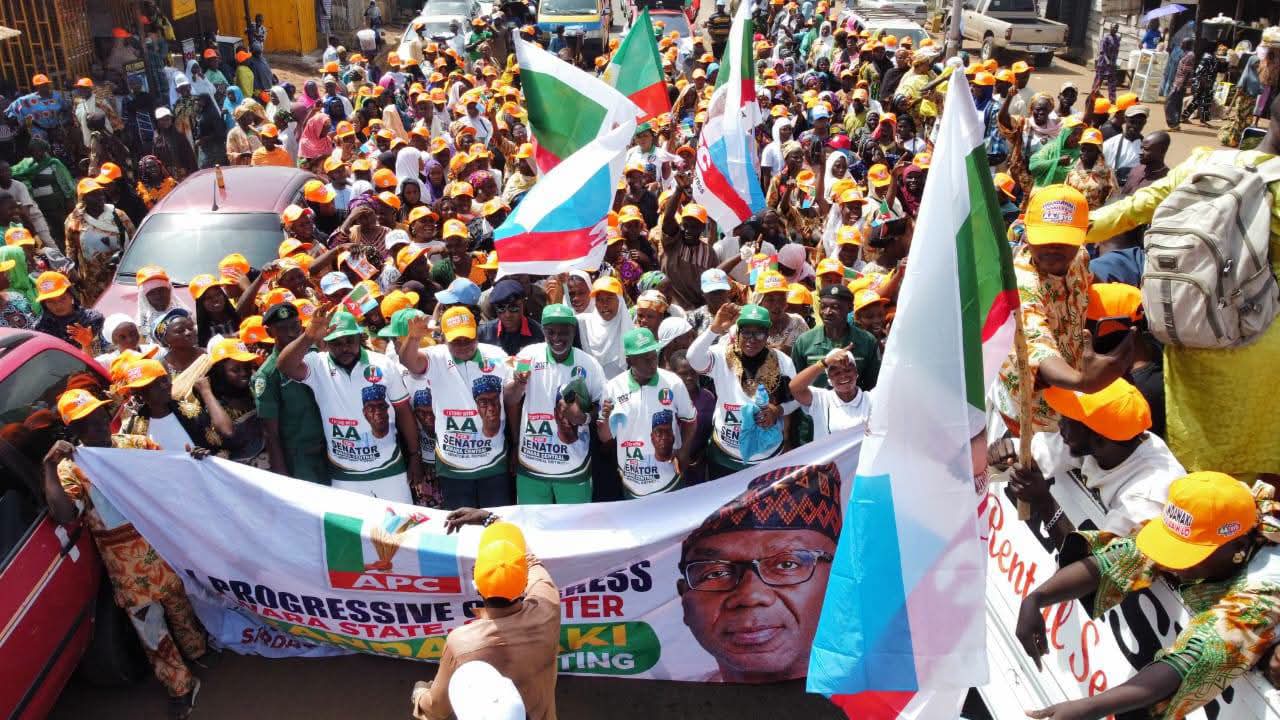
The Executive Chairman of the Ilorin West Local Government, Mallam Shehu AbdulRahman Babatunde Ladan, has led an All Progressives Congress (APC) mega rally in Ubandawaki Ward, reaffirming the commitment of party members and supporters to the APC ahead of the 2027 general elections.
The rally attracted party leaders, grassroots mobilisers, youths, women, and other stakeholders who gathered to demonstrate their support for the party.
Addressing the gathering, Chairman Ladan declared that Ubandawaki Ward remains committed to the APC and its political leadership, expressing support for President Bola Ahmed Tinubu’s Renewed Hope Agenda, Kwara State Governor AbdulRahman AbdulRazaq, and the APC governorship candidate, Rt. Hon. Engr. Yakubu Danladi-Salihu (SYD), alongside other party candidates for the 2027 general elections.
The Chairman emphasised the importance of unity, peaceful political engagement, and sustained grassroots mobilisation in strengthening the party’s structure ahead of the forthcoming elections, urging party faithful to remain united, engage constructively with residents, and work collectively towards the party’s political objectives.
Ladan also acknowledged the importance of Ubandawaki Ward in the political landscape of Ilorin West, encouraging party leaders and supporters to maintain cordial relationships, promote inclusive participation, and sustain engagement with the electorate. He stressed that a united party structure would help strengthen internal cooperation and effective grassroots coordination.
The mega rally renewed calls for unity, loyalty, and peaceful political participation among APC members and supporters, underscoring commitment by participants to mobilising support for the party’s candidates ahead of the 2027 general elections, while promoting peace, development, and responsible democratic engagement across Ilorin West Local Government Area.

- Mgt Accuses Union Of Dishing Out False Staff Remuneration Scale
Stephen Olufemi Oni, Ilorin
The staff of the Kwara State Internal Revenue Service (KWIRS) have lamented poor welfare conditions, rising living costs and stagnant salaries they have been subjected to, despite their contributions to the state’s revenue generation.
In a statement issued by the KWIRS chapter of the Association of Senior Civil Servants of Nigeria (ASCSN), the workers lamented that their sacrifice and professionalism, which have helped to place Kwara State among the more self-reliant states in the country, have not been matched with corresponding improvement in their welfare.
The workers questioned the disparity between their contributions to the state’s revenue and their welfare, saying many of them are battling financial hardship.
“We block leakages. We are posted to hospitals and other MDAs to secure government revenue. We work under pressure day and night but we continue to struggle to meet basic needs due to poor salaries.”
The association further expressed concern that personnel costs had remained unchanged for years while other expenditure heads had continued to increase.
It also cited a salary negotiation agreement dated October 11, 2022, which reportedly stated that the adjustment would be implemented “as soon as it can be accommodated in the budget.”
According to the workers, nearly four years after the agreement, there had been no implementation or clear indication of when the adjustment would take effect, despite the rising cost of living.
The staff said expenses on school fees, house rent, transportation and food had increased significantly while their salaries remained unchanged. “We smile outside but the majority of us are bleeding inside. We cannot continue to generate wealth for the state while we wallow in abject poverty,” they declared.
Urging their colleagues to remain united and resolute in pursuing improved welfare, the association said the workers should not expect better conditions without collectively standing up for their interests.
It called on members to remain calm, vigilant and prayerful as a 14-day period beginning October 15, 2026, counts down, without specifying further details in the statement about the expected action at its conclusion.
Reacting to the KW-IRS staff allegations, the Management, while
reaffirm its commitment to professionalism, political neutrality and its statutory mandate, expressed dismay over public speculation on staff remuneration and attempts to politicise unverified internal administrative communications.
“Management is concerned by attempts to exploit unverified internal administrative communications for political purposes, create unnecessary tension and distract the Service from its responsibilities. KWIRS will not be distracted from its mandate by such narratives,” said the Management.
It added: “The isolated salary figures being circulated on social media do not represent the full remuneration structure or total emoluments of KWIRS staff. Staff compensation extends beyond regular monthly salaries and includes the following benefits, in accordance with applicable policies and approved arrangements:
“Annual and Performance-Related Bonuses: Annual, festive, and situational bonuses linked to revenue performance milestones and staff performance and situational economic palliatives are paid periodically to staff members
“Annual Leave Allowance: A separate annual payment in addition to regular monthly remuneration.
Staff Welfare and Operational Support: Structured measures designed to support staff welfare and professional development throughout their careers.
“Accordingly, assessing staff remuneration solely on selectively circulated salary figures presents an incomplete picture of the Service’s compensation and welfare structure.
“Management remains committed to staff welfare, motivation and professional development. The Service will continue to strengthen policies and operational processes that support staff well-being and performance, within government-approved resource allocations and applicable administrative frameworks. The Service remains one of the Government Institutions with the most recruitment requests and this is a testament of Management’s commitment to staff welfare.
“KWIRS urges members of the public, taxpayers and other stakeholders to disregard unverified and misleading narratives, verify information before sharing it, and rely on official Service communications for accurate information about its operations and staff policies.
“All stakeholders are encouraged to refrain from politicising internal administrative matters or spreading claims capable of undermining institutional harmony and public confidence.
“KWIRS remains focused on its statutory responsibilities and committed to mobilising revenue for the economic growth and sustainable development of Kwara State.”


Yakubu Hails China’s Zero-Tariff Initiative as Catalyst for Economic Transformation
THE BOLD SHIFT:BETWEEN REFORMS ANDTHE REALITY OF THE BROKEN EGGS:
WHO: Nigeria Records Zero Ebola Cases After Evacuation of Swiss Couple

-
 Uncategorized6 years ago
FG, states urged to harness flooding for ranching, others with technology – Agbaje
-
 Headlines11 years ago
Breaking: EFCC seals Borno House of Assembly, as Hon members take to their heels
-
 News12 years ago
Nigeria Security Operatives Stage Manhunt For Homosexual Perpetrator
-
 News10 years ago
How 21-year-old Girl fled community over accusation of lesbianism
-
 News11 years ago
Yobe Gov Moves Against Deputy
-
 Opinion7 years ago
7 signs she has friend zoned you
-
Technology5 years ago
Online job placement company headhunts women
-
 Headlines10 years ago
Borno Dep Gov Abducts Another Church Leader