
Uncategorized
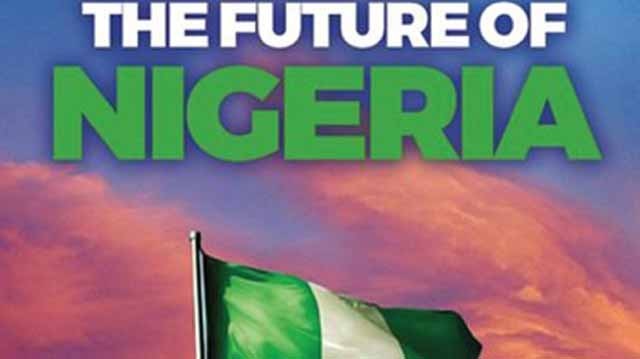
Opinion: NIGERIA’S LABYRINTHIAN FUTURE AND THE POLITICS OF RESTRUCTURING

.
BY: A G Abubakar
Nigeria has a long and complicated history of stepping back from the brink. From the constitutional conferences of the 1940s and 1950s that birthed the country, to the Western Region crisis dubbed “Operation Wetie” or “Wild Wild West,” which peaked in 1964, the military coup of 1966, and the devastating three-year civil war, the nation has repeatedly endured moments that threatened its continued existence.
The cycle did not end there. The fierce debates over Sharia during the 1979 constitutional process, the Maitatsine uprisings in Northern Nigeria in the early 80s, the proclamation of Shari’a law by 12 Northern states in 2000/2001, the recurring ethno-religious crises in the Middle Belt, the Niger Delta militancy, and the current insurgency and banditry ravaging large parts of the North have all tested the resilience of the Nigerian state. Yet, despite these storms, Nigeria somehow endured. A case of a cat with nine lives.
Today, however, the situation appears fundamentally different. The danger lies not merely in the complexity of the crisis, but in the perceived sincerity of the government in power. A government with a regional agenda inherited a vulnerable country confronted by deep political, economic, and social fractures, with its security architecture weaker than at any other point in recent history. Years of declining combat effectiveness, institutional decay, corruption, poor coordination, and political interference have significantly weakened both the military and paramilitary establishments. Across vast stretches of the country, citizens increasingly feel abandoned to terrorists, kidnappers, bandits, separatists, and violent criminal networks. This is as the government seemingly looks on helplessly.
What once appeared impossible now seems conceivable: maybe a welcome development for advocates of restructuring, and/or what separatist movements failed to achieve through decades of conferences, negotiations, constitutional advocacy, and political bargaining may now emerge naturally through the weakening of the federation itself. And maybe, too, a welcome opportunity for a national implosion for those who have been yearning for a nation of their own to have their way.
Since independence, Nigeria’s fragile unity has rested on the invisible hands of regional comparative advantage. The South, particularly the South West, dominated the economy, bureaucracy, commerce, and educational advancement, while the North — owing largely to its demographic strength and military influence — maintained some form of higher political visibility, aside from constituting a huge consumer base for industrial production mostly based in the South.
Whether that advantage was effectively utilised is another debate entirely. What remains undeniable is that it generated deep resentment in parts of Southern Nigeria. Over time, demands for restructuring, resource control, regional autonomy, and even outright secession became recurring political themes.
The agitation intensified dramatically after General Ibrahim Babangida annulled the June 12, 1993 presidential election widely believed to have been won by Chief MKO Abiola. From that moment onward, the campaign against what many perceived as “Northern domination” became more coordinated, ideological, and relentless. Successive political actors adopted different strategies to weaken the North’s traditional hold on national power.
President Olusegun Obasanjo arguably initiated the first major institutional attrition against the Northern political establishment. Under the guise of professionalising the military and preventing future coups, many senior Northern military officers with political influence were systematically retired or sidelined.
That process significantly weakened the military-political network that had historically sustained Northern influence within the federation. It was followed by economic reforms and policy shifts — whether deliberate or incidental — that contributed to the erosion of the North’s, and indeed the nation’s, agriculture and agro-industrial base. Textile industries collapsed. Rural poverty deepened. Unemployment exploded. Social frustration intensified. The consequences soon manifested in rising criminality, religious extremism, insurgency, banditry, kidnapping, and communal violence across Northern Nigeria.
President Umaru Musa Yar’Adua, due to prolonged ill health, could not substantially reverse the trend. His successor, Goodluck Jonathan, spent much of his six years in office (2010–2015) struggling for political legitimacy after assuming office under the “Doctrine of Necessity.” Large portions of his tenure were devoted to balancing competing political interests through patronage and elite appeasement.
Then came Muhammadu Buhari — a man in whom many Northerners invested enormous hope. To millions, Buhari represented the possibility of restoring Northern political confidence, rebuilding institutional discipline, fighting corruption, and stabilising the economy. Instead, disappointment followed. Critics argue that Buhari lacked both the strategic vision and the competent support structure required for national transformation. Unlike his earlier military administration, where he worked alongside the highly disciplined and efficient Brigadier Tunde Idiagbon, or his tenure as Petroleum Trust Fund (PTF) chairman under General Sani Abacha, where technocrats such as Dr. Tayo Akpata provided administrative strength, Buhari’s civilian presidency appeared increasingly directionless.
Over time, the administration became associated with weak leadership, policy inconsistency, growing insecurity, and allegations that powerful unelected interests had effectively taken control of governance. Meanwhile, corruption flourished across critical institutions. The Central Bank of Nigeria (CBN), the Nigerian National Petroleum Company Limited (NNPCL), the power sector, and even parts of the judiciary faced repeated allegations of financial recklessness and abuse of public trust. The economy deteriorated sharply. Inflation rose. Poverty deepened. Insecurity expanded.
By the time Buhari left office in 2023, many believed the North had emerged politically weaker, economically poorer, and socially more unstable than at any point in recent decades, when Obasanjo and Jonathan from the South, and Yar’Adua and Buhari, both of Northern extraction, were in charge at various times.
Into this environment stepped President Bola Ahmed Tinubu on May 29, 2023. But then, instead of using the opportunity to improve the dire national condition for the benefit of all, he may have chosen to see it as a historic opportunity to pursue a regional agenda. The restructuring advocacy that could not be secured through constitutional means might now be achieved through the political manipulation of the exhausted North; the very region and peoples that gave him over 60% of the votes that got him elected in 2023 became his first set of victims. And, like a shark that smelled blood, he went for the political kill in earnest. It was an opportunity handed to him literally on a platter of gold.
And the strategy? Simple. Set morality and a sense of proportion aside. After all, it is often asserted that there is no morality in politics; that in politics all is fair, just like in war or love. Wisdom, however, accepts this adage only up to a point, if the endgame is not to ultimately destroy the object or issue at stake. To achieve the objectives, certain areas have to be targeted to weaken the system as a whole. These include occupying the commanding positions of critical federal ministries, departments, and agencies (MDAs), taking control of the nation’s security architecture, and applying national policy instruments in a self-serving fashion. After four or eight years in office, the perceived dominant region would have been reduced to a mere statistical base.
At the governance level, critical appointments across strategic ministries, agencies, and security institutions have gone to cronies. Key federal establishments — finance, security, revenue, customs, NNPC, etc. — are increasingly concentrated in the hands of individuals who are politically and ethnically aligned with the President.
Perhaps more dangerous than political appointments is the growing and encouraging posture of the powers that be to fragment the North itself, with far-reaching existential implications for the nation at large. Historically, Northern Nigeria maintained political relevance through collective bargaining and regional solidarity despite its internal ethnic and religious diversity. Today, however, old fault lines are re-emerging with alarming intensity. The embers of ethnic suspicion are being fanned among Hausa, Fulani, Kanuri, Tiv, Jukun, Nupe, Igala, Babur, and numerous other groups to see themselves as incompatible. Religious identities are increasingly being made to shape political interpretation. The Middle Belt and the far North are being influenced to peel apart. Old grievances — real and imaginary — are resurfacing and being harnessed for short-term political gains.
On the economic front, but for the putative possibility of working towards a self-serving goal, not all policies introduced by the Tinubu administration are fundamentally misguided. The removal of fuel subsidy was economically inevitable. The floating of the naira addressed long-standing distortions within the foreign exchange market. The system was thoroughly abused under Buhari through the existence of multiple poorly managed windows. Tax reforms are necessary in a country where public revenue remains dangerously low relative to population size. Tax evasion and avoidance have made the nation’s tax-to-GDP ratio one of the lowest globally.
The problem lies largely in implementation. Firstly, the composition of the reform teams has been too skewed to engender trust and public buy-in, which is critical in reform exercises. Secondly, major economic reforms require trust, social cushioning, and carefully designed transition mechanisms. Nigerians were asked to absorb severe economic pain without adequate safety nets. Food inflation skyrocketed. The government tried to address the situation through short-term massive imports, but without adequate consideration for their impact on domestic production.
In an economy heavily dependent on agriculture, many expected a fine balance to be simultaneously struck between massive importation and investments in food production, rural infrastructure, fertiliser access, irrigation, and agricultural security. It never was. Instead, large sections of the agrarian North feel neglected and economically uncared for.
Another gap in the Tinubu policy lies in the distribution of physical infrastructure. The lopsidedness has become politically contentious. It is estimated that about 60% of the nation’s budget is channelled to the South West. Projects such as the alleged N15 trillion Lagos-Calabar Coastal Highway come to mind. Forget about the afterthought, the Lagos-Badagry-Sokoto corridor. Insecurity would not allow it to commence, at least not from the Sokoto end. Then there is the massive rehabilitation of Lagos ports and airports, along with the establishment and/or extension of a military academy in Osogbo and a police academy project in Ogun State. Many in the North believe the President is being driven by ethnic considerations.
There is nothing inherently wrong with expanding infrastructure in the South West. Every region deserves development. Yet, in a country as sensitive as Nigeria, federal balance matters enormously. Development experts generally agree that a balanced approach to development remains the best model.
In the words of Ragnar Nurkse, a famous 20th-century economist, et al., developing nations must make simultaneous, large-scale investments across various industries to break the vicious circle of poverty and spur faster and greater socioeconomic transformation. As a consequence, some of the institutions and projects should have gone to the South-South or the South-East, for that matter. The North should not complain because it housed most of the nation’s security outfits, so others could have them too in the name of equity.
However, if every region begins to view federal power as an opportunity for regional compensation or historical revenge, then the federation itself becomes unstable. If the South West is perceived as consolidating power today, the North may attempt retaliation tomorrow. If the South East eventually gains power after decades of political exclusion, it too may pursue accelerated regional balancing. The cycle would continue endlessly. That is the true danger seen in the current moment: not merely Tinubu’s presidency itself, but the precedent it may establish.
President Bola Ahmed Tinubu may ultimately complete both his first and second terms successfully. But unless mother luck smiles on the country, the federation may fall apart, as others may use their “turn” to lock others out too. Every cycle weakens the national fabric further through sowing more distrust, exclusion, bitterness, inequality, and the loss of shared national purpose, and maybe eventual dissolution.
Maybe as Plan B, the Odu’a Republic would have been perfected by then — a realisation of a long-held dream by many in the South West. Actually, many perceive the perennial agitation for sovereign national conferences as representing a crucial step towards the Odu’a aspiration. The same vision exists with IPOB, differing only in modus operandi. While the latter uses violence, the former adopts a non-violent approach.
One can only hope that the fears expressed by many Nigerians today ultimately prove unfounded. For if they do not, the country may be approaching one of the most dangerous crossroads in its history: a no-Nigeria era after the Tinubu presidency.
The call here, therefore, is for the President to come into the open and call for the organisation of a summit to pull Nigeria away from the current confusion and stagnation. Literally, no one is enjoying the state of affairs. People deserve a Nigeria that works.
Except for courage, in general, he has everything working in his favour. These include a conscience lacking even a modicum of proportionality; a puppet leadership in both chambers of the legislature; an injudicious judiciary dominated by homeboys; an ethnically skewed national security architecture; and a vision that generally does not go beyond ethnic horizons.
Since the President could not rise above his predecessors in terms of governance, the environment, therefore, is conducive to convening a restructuring process and/or a sovereign national conference. There are no serious encumbrances standing in the way. Restructuring a nation is too serious a business to be handled through manoeuvres and deception. He should set fear aside and do it in order to save the nation from some unintended outcomes.
A.G. Abubakar
agbarewa@gmail.com
Stephen Olufemi Oni, Ilorin
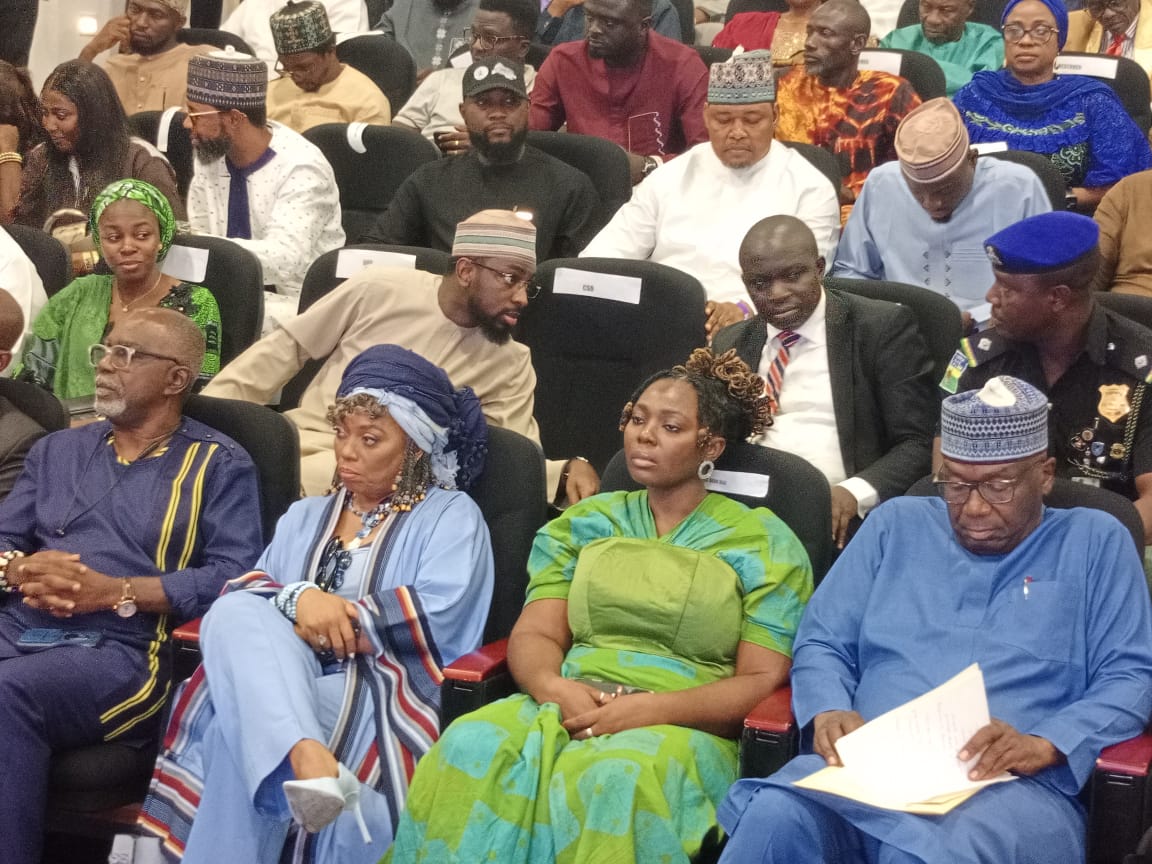
The Kwara State Government has celebrated the life and enduring influence of Afrobeat legend, Fela Anikulapo-Kuti, with a retrospective exhibition aimed at preserving African cultural heritage and inspiring younger generations.
The exhibition, titled Fela Anikulapo-Kuti: A Retrospective, was opened by Governor AbdulRahman AbdulRazaq at the Institute of Contemporary African Art and Film in Ilorin on Monday.
The Governor said the establishment of the institute reflected his administration’s belief that development should extend beyond physical infrastructure to include spaces that promote creativity, knowledge and economic opportunities.
“When we established the Institute of Contemporary African Art & Film, our vision was clear: development must go beyond roads, bridges and buildings to create spaces for creativity, knowledge and opportunity,” AbdulRazaq said.
According to him, cultural infrastructure plays an important role in connecting people to their history, broadening their imagination and encouraging critical thinking.
“Physical infrastructure connects places; cultural infrastructure connects people to their history, expands their imagination and challenges their thinking,” the Governor said.
AbdulRazaq said the institute was established to preserve African stories, nurture talents and showcase the continent’s artists and thinkers to the world,
describing the decision to open the institution with an exhibition dedicated to Fela as significant, given the musician’s contribution to African music, social commentary and cultural expression.
“Fela was more than a musician. Through his music and artistic expression, he challenged conventions and confronted society with questions about power, freedom, identity and justice,” he added.
The Governor added that the late musician’s life demonstrated the capacity of artistic expression to influence public discourse and inspire social change.
The exhibition, curated by June Creative Art Advisory, led by its founder, Mrs Seun Alli, featured photography, archival materials, film, graphic works and other artistic expressions exploring Fela’s life, times and enduring influence.
AbdulRazaq commended the firm for bringing its curatorial expertise and creative vision to the project, while describing the exhibition as an opportunity for different categories of visitors to engage with the musician’s legacy.
He said the exhibition would provide students with learning opportunities beyond the classroom, inspire artists, support researchers and encourage young people to explore the creative industry.
“For students, this is a classroom beyond the classroom; for artists, inspiration; for researchers, an opportunity for deeper inquiry; and for young people, a reminder that creativity offers both self-expression and economic opportunity,” he said.
The Governor clarified that the state government was not claiming ownership of Fela’s story but was providing a platform for younger generations to encounter and learn from his legacy, adding that the state government is optimistic that the institute would promote cultural education, encourage creative enterprise, attract visitors and strengthen Kwara State’s position in Nigeria’s cultural and creative landscape.
According to him, the institution’s success would be measured by the talents it nurtured, the ideas it inspired and the opportunities it created.
“Governments change, but institutions should endure,” the Governor said, expressing the hope that the exhibition would mark the beginning of sustained cultural engagement at the institute.
“May this exhibition begin sustained cultural engagement at ICAAF and inspire our young people to create, question, discover and contribute to society,” he said.
AbdulRazaq added that the initiative reflected his administration’s commitment to building a state where cultural heritage, innovation and economic opportunities complemented one another.
In her address, the Commissioner for Communications, Hon. Bolanle Olukoju, said: “Today’s exhibition offers us an opportunity to revisit the life and works of Fela
Anikulapo-Kuti and appreciate how his music, ideas and artistic expression continue to influence generations.
“For the Ministry of Communications, this occasion speaks to an important part of our
mandate: promoting the stories, talents and creative expressions that shape our identity as a people.”
The Commissioner particularly noted that under Governor AbdulRazaq’s leadership, the State is creating opportunities for young people through investments in sectors such as film, fashion and technology.
She added: “Projects including
the Sugar Film Factory, the Garment Factory and the Ilorin Innovation Hub reflect the administration’s commitment to developing talent and supporting enterprise.
“The Institute of Contemporary African Art & Film, formerly the Ilorin Visual Arts Centre, adds an important dimension to this effort. It provides a platform for artistic expression, cultural learning and creative collaboration.
“We want young Kwarans who are passionate about painting, photography, filmmaking, fashion and design to see ICAAF as a place where they can explore their interests, learn from others and showcase their talents.
“We also encourage students to engage with art and history beyond the classroom. Fela’s story is a fitting subject for this exhibition. It demonstrates how creativity
can go beyond entertainment to shape cultural identity and influence public conversations. There is much for our young people to learn from his artistic journey and enduring impact.
“It might also interest you that kwara state was also part of Fela’s creative showcase during his lifetime.”
•••Says Ward stands with APC
Stephen Olufemi Oni, Ilorin
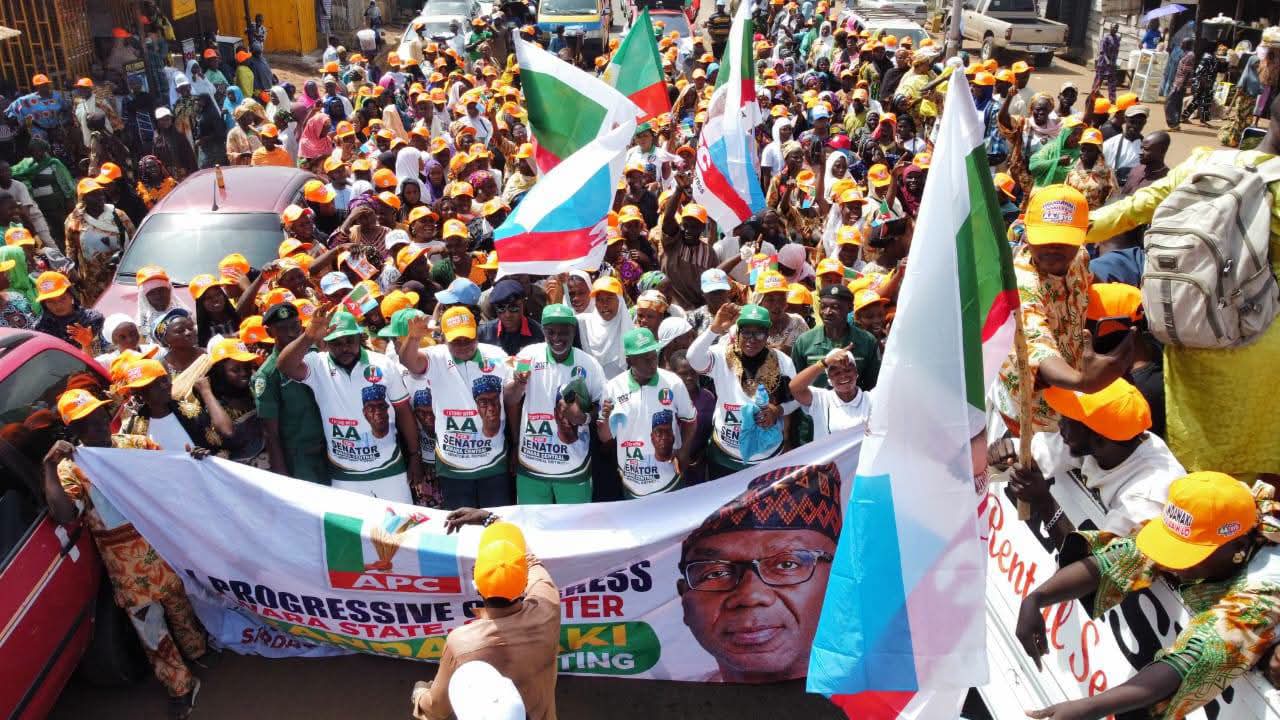
The Executive Chairman of the Ilorin West Local Government, Mallam Shehu AbdulRahman Babatunde Ladan, has led an All Progressives Congress (APC) mega rally in Ubandawaki Ward, reaffirming the commitment of party members and supporters to the APC ahead of the 2027 general elections.
The rally attracted party leaders, grassroots mobilisers, youths, women, and other stakeholders who gathered to demonstrate their support for the party.
Addressing the gathering, Chairman Ladan declared that Ubandawaki Ward remains committed to the APC and its political leadership, expressing support for President Bola Ahmed Tinubu’s Renewed Hope Agenda, Kwara State Governor AbdulRahman AbdulRazaq, and the APC governorship candidate, Rt. Hon. Engr. Yakubu Danladi-Salihu (SYD), alongside other party candidates for the 2027 general elections.
The Chairman emphasised the importance of unity, peaceful political engagement, and sustained grassroots mobilisation in strengthening the party’s structure ahead of the forthcoming elections, urging party faithful to remain united, engage constructively with residents, and work collectively towards the party’s political objectives.
Ladan also acknowledged the importance of Ubandawaki Ward in the political landscape of Ilorin West, encouraging party leaders and supporters to maintain cordial relationships, promote inclusive participation, and sustain engagement with the electorate. He stressed that a united party structure would help strengthen internal cooperation and effective grassroots coordination.
The mega rally renewed calls for unity, loyalty, and peaceful political participation among APC members and supporters, underscoring commitment by participants to mobilising support for the party’s candidates ahead of the 2027 general elections, while promoting peace, development, and responsible democratic engagement across Ilorin West Local Government Area.
- Mgt Accuses Union Of Dishing Out False Staff Remuneration Scale
Stephen Olufemi Oni, Ilorin
The staff of the Kwara State Internal Revenue Service (KWIRS) have lamented poor welfare conditions, rising living costs and stagnant salaries they have been subjected to, despite their contributions to the state’s revenue generation.
In a statement issued by the KWIRS chapter of the Association of Senior Civil Servants of Nigeria (ASCSN), the workers lamented that their sacrifice and professionalism, which have helped to place Kwara State among the more self-reliant states in the country, have not been matched with corresponding improvement in their welfare.
The workers questioned the disparity between their contributions to the state’s revenue and their welfare, saying many of them are battling financial hardship.
“We block leakages. We are posted to hospitals and other MDAs to secure government revenue. We work under pressure day and night but we continue to struggle to meet basic needs due to poor salaries.”
The association further expressed concern that personnel costs had remained unchanged for years while other expenditure heads had continued to increase.
It also cited a salary negotiation agreement dated October 11, 2022, which reportedly stated that the adjustment would be implemented “as soon as it can be accommodated in the budget.”
According to the workers, nearly four years after the agreement, there had been no implementation or clear indication of when the adjustment would take effect, despite the rising cost of living.
The staff said expenses on school fees, house rent, transportation and food had increased significantly while their salaries remained unchanged. “We smile outside but the majority of us are bleeding inside. We cannot continue to generate wealth for the state while we wallow in abject poverty,” they declared.
Urging their colleagues to remain united and resolute in pursuing improved welfare, the association said the workers should not expect better conditions without collectively standing up for their interests.
It called on members to remain calm, vigilant and prayerful as a 14-day period beginning October 15, 2026, counts down, without specifying further details in the statement about the expected action at its conclusion.
Reacting to the KW-IRS staff allegations, the Management, while
reaffirm its commitment to professionalism, political neutrality and its statutory mandate, expressed dismay over public speculation on staff remuneration and attempts to politicise unverified internal administrative communications.
“Management is concerned by attempts to exploit unverified internal administrative communications for political purposes, create unnecessary tension and distract the Service from its responsibilities. KWIRS will not be distracted from its mandate by such narratives,” said the Management.
It added: “The isolated salary figures being circulated on social media do not represent the full remuneration structure or total emoluments of KWIRS staff. Staff compensation extends beyond regular monthly salaries and includes the following benefits, in accordance with applicable policies and approved arrangements:
“Annual and Performance-Related Bonuses: Annual, festive, and situational bonuses linked to revenue performance milestones and staff performance and situational economic palliatives are paid periodically to staff members
“Annual Leave Allowance: A separate annual payment in addition to regular monthly remuneration.
Staff Welfare and Operational Support: Structured measures designed to support staff welfare and professional development throughout their careers.
“Accordingly, assessing staff remuneration solely on selectively circulated salary figures presents an incomplete picture of the Service’s compensation and welfare structure.
“Management remains committed to staff welfare, motivation and professional development. The Service will continue to strengthen policies and operational processes that support staff well-being and performance, within government-approved resource allocations and applicable administrative frameworks. The Service remains one of the Government Institutions with the most recruitment requests and this is a testament of Management’s commitment to staff welfare.
“KWIRS urges members of the public, taxpayers and other stakeholders to disregard unverified and misleading narratives, verify information before sharing it, and rely on official Service communications for accurate information about its operations and staff policies.
“All stakeholders are encouraged to refrain from politicising internal administrative matters or spreading claims capable of undermining institutional harmony and public confidence.
“KWIRS remains focused on its statutory responsibilities and committed to mobilising revenue for the economic growth and sustainable development of Kwara State.”

WHO: Nigeria Records Zero Ebola Cases After Evacuation of Swiss Couple

Kwara celebrates Fela’s legacy with retrospective exhibition

2027: Ilorin West LG Boss Leads APC Mega Rally In Ubandawaki

-
 Uncategorized6 years ago
FG, states urged to harness flooding for ranching, others with technology – Agbaje
-
 Headlines11 years ago
Breaking: EFCC seals Borno House of Assembly, as Hon members take to their heels
-
 News12 years ago
Nigeria Security Operatives Stage Manhunt For Homosexual Perpetrator
-
 News10 years ago
How 21-year-old Girl fled community over accusation of lesbianism
-
 News11 years ago
Yobe Gov Moves Against Deputy
-
 Opinion7 years ago
7 signs she has friend zoned you
-
Technology5 years ago
Online job placement company headhunts women
-
 Headlines10 years ago
Borno Dep Gov Abducts Another Church Leader