
Uncategorized
OPINION: Of Religion and Partisan Politics: Between The Minbar The Pulpit And Siren.


By: A G Abubakar
A new conversation appears to be gathering momentum in Nigeria: Should religious leaders—Christian and Muslim clerics alike—come forward and actively seek political power? The question is neither strange nor unconstitutional. Indeed, it is as old as organised religion and political authority itself. Throughout history, religious figures have played political, social and even military roles.
It is true that the patriarchs of the Abrahamic religious traditions—Judaism, Christianity and Islam—namely Moses (Musa, A.S.), Jesus (Isa, A.S.) and Muhammad (PBUH), played both spiritual and political roles in discharging their messages to mankind. It is also true that, despite bearing divine messages, they still faced persecution at the hands of tyrants and adversaries such as Pharaoh, Emperor Tiberius/Pontius Pilate, and Abu Jahl/Abu Lahab, respectively. Fortunately, they all prevailed and bequeathed valuable lessons.
In the 20th century, religious leaders were also at the forefront of movements for social justice and political emancipation. The various strands of Liberation Theology, particularly in Latin America, demonstrated how religious convictions could be mobilised against poverty, dictatorship, oppression and social injustice. Figures such as the Brazilian Archbishop Dom Hélder Câmara, the Peruvian priest Gustavo Gutiérrez, and Archbishop Óscar Romero of El Salvador became symbols of the intersection between faith and social activism.
Within Africa, people such as Desmond Tutu played a key role in the liberation struggle of South Africa, while Bishop John Onaiyekan of Nigeria played an important role in the promotion of the public good. Most of them maintained their evangelical lanes, away from elective political positions.
There is therefore nothing inherently undemocratic about a cleric becoming a politician. The more important question is: Does aspiring to be like the religious patriarchs without their divine powers necessarily equip a person to govern a complex, plural and secular constitutional democracy such as Nigeria? What additional capacities do clerics possess that set them apart politically? That is where the debate becomes more complicated. Under Nigeria’s 1999 Constitution, there is no general prohibition against a cleric contesting for political office because of his or her profession or religious calling.
Consequently, a Nigerian cleric has every democratic right to vote, campaign, belong to a political party and seek elective office, provided the constitutional and statutory requirements are met. The debate, therefore, should not be framed around whether clerics have a right to participate in politics. They do.
Those advocating a greater political role for religious leaders often point to countries such as Saudi Arabia and Iran. The comparisons, however, require considerable caution, bearing in mind that local environmental factors and political systems are of essence.
Saudi Arabia is not a conventional constitutional democracy. It is an absolute monarchy, formally governed under the Basic Law of Governance, promulgated in 1992. It’s explicitly based on Islamic Sharia, where Article 1 declares the Qur’an as the official constitution. The King combines extensive executive authority with a political system deeply influenced by Islamic traditions and institutions. The religious scholars serve as interpreters of the laws and also provide spiritual guidance under some form of Ulama and Umara partnership.
Saudi Arabia is also not simply an economy sustained by clerics or religious governance. It has leveraged its oil resources; Vision 2030 reform; small population of less than 40 million; and tourism to build a $1 trillion nominal GDP.
The religious economy is also significant. Millions of Muslims travel to Saudi Arabia annually for Hajj and Umrah, generating substantial economic activity. But the country’s development is principally financed by its vast hydrocarbon resources and the investment of decades of oil revenues—not merely by religious leadership. Saudi Arabia’s experience, therefore, cannot simply be transplanted to Nigeria.
Iran presents another, and perhaps more intriguing, example. Following the 1979 Islamic Revolution, Iran became an Islamic Republic in which religious authority is constitutionally embedded in the political structure. Ayatollah Ruhollah Khomeini became the Supreme Leader, and the doctrine of Velayat-e Faqih—the guardianship of the Islamic jurist—became a central organising principle.
Despite decades of international sanctions, Iran has maintained universities, research institutions, a substantial industrial base, domestic pharmaceutical production, an extensive energy system, and significant capabilities in aerospace, missiles, drones and other defence technologies.
Its scientific and technological achievements are products of scientists, engineers, universities, industrialists, administrators and technocrats operating within a political system shaped by religion.
This distinction is important. The fact that Iran has religious political leadership does not establish that religious leadership caused Iran’s scientific or economic achievements.
This brings us to the more uncomfortable question. If Nigerian religious leaders are to seek political power, what developmental model do they bring with them? Nigeria has millions of highly respected Christian and Muslim clerics. They command enormous followership. Their sermons influence attitudes, voting behaviour, family decisions and social relationships. Some possess considerable organisational and financial networks.
Yet religious influence has not always translated into a corresponding capacity for solving Nigeria’s developmental problems. Despite being described as the second most prayerful nation on earth, Nigeria remains a country of more than 230 million people, with enormous deficits in education, healthcare, infrastructure, electricity, employment, security and human capital. The efficacy of these “prayers” has not translated into the emergence of good leadership and governance. Something must really be amiss.
The question is therefore straightforward: If our religious leaders have not sufficiently mobilised their enormous influence to address these problems outside government, why should we assume that putting them inside government would automatically solve them?
There is another problem. Across Nigeria, both Christian and Muslim communities sometimes explain fundamentally socioeconomic problems primarily through spiritual or religious lenses.
A poor man may be encouraged to pray for prosperity when what he urgently needs is a job, vocational training, access to credit or a functioning market. A woman battling cancer may be encouraged to seek spiritual intervention when she also needs early diagnosis, and oncology services.
A young person who cannot find employment may be told that his breakthrough is around the corner when what he requires is education, technical skills and access to productive opportunities. Marriage problems, business failures, unemployment, poverty and social insecurity are sometimes treated principally as spiritual afflictions. Prayer is important to believers. But prayer cannot substitute for public policy.
A society cannot pray its way out of a collapsed education system without rebuilding its schools. It cannot exorcise unemployment without creating productive enterprises. It cannot defeat cancer without hospitals, laboratories, doctors and medicines. And it cannot eliminate insecurity without intelligence, policing, military capability, justice and economic opportunity.
The same concern applies to the Muslim community. The promotion of mass weddings, for instance, may provide short-term social relief, but it cannot substitute for a comprehensive strategy addressing poverty, education, employment, reproductive health and family welfare.
Likewise, the Almajiri system, in its traditional form, cannot be romanticised simply because it has religious roots. Any system that leaves millions of children without adequate literacy, numeracy, vocational competence and civic education cannot provide the foundation for a modern economy. The real challenge is not whether these children are religious. It is whether they are being prepared to become productive, dignified and self-reliant citizens.
There is an even deeper problem. When governance fails, societies naturally search for explanations. Unfortunately, religious and ethnic identities can become convenient substitutes for examining the institutional causes of failure.
But bad roads are not caused by Christianity or Islam. Poor electricity is not caused by ethnicity. Youth unemployment is not caused by tribe. Corruption is not the exclusive property of one religion. The collapse of public schools is not a theological problem.
Insecurity is not solved by accusing an entire religious or ethnic community. These are fundamentally governance, institutional, economic and security problems. That is where their greatest political opportunity may actually lie.
Nigeria’s political history also provides useful evidence. Several religious figures have occupied major elective offices. In Taraba State, Reverend Jolly Nyame, a Christian cleric, served as governor from 1999 to 2007.
In Benue State, Reverend Moses Adasu, a Catholic priest, served as governor from January 1992 to November 1993 during the transition programme of the Babangida era.
In Zamfara State, Ahmed Yerima, a politician with leaning towards strong Islamic credentials, served as governor from 1999 to 2007 and became particularly associated with the implementation of Sharia law in the state beginning in 1999.
In Jigawa State, Badaru Abubakar served as governor from 2015 to 2023; his administration was also strongly identified with his self-professed Islamic inclinations. On the contrary, Taraba, Benue, Zamfara and Jigawa have not fared better than others. Even Sheikh Pantami’s tenure at NITDA and subsequently as a Minister of Communications and Digital Economy has not set him apart. He ended up being just regular. The differences have not really been clear.
These examples do not establish that religious people cannot govern. Neither do they demonstrate that clerics are necessarily better governors, judging by their legacies. What they show is that religious identity or clerical background, by itself, does not produce dramatically different developmental outcomes. The ultimate test of a governor is not only how often he quotes scripture, wears religious attire, attends religious gatherings or invokes God, but service delivery.
Perhaps the most useful lesson for Nigerian religious leaders is not that they should become politicians, but that they should become agents of knowledge, productivity and social transformation. Look at countries such as Turkey, Malaysia and the United Arab Emirates. Their development cannot simply be attributed to the presence of Muslim political leaders. Their progress has been driven by a combination of education, science, technology, infrastructure, entrepreneurship, industrial policy, competent administration and strategic investment.
The UAE, particularly Dubai, provides an extraordinary example of how a Muslim society can transform itself through trade, logistics, aviation, tourism, finance, technology and infrastructure. Malaysia demonstrated how investment in education, manufacturing, technology and human capital could transform a predominantly Muslim society. Turkey’s modern development story likewise contains lessons in industrialisation, education, infrastructure and state capacity.
The same principle applies to Christian communities. Christian-majority countries such as Australia, Brazil (2nd most populous Christian nation on earth after the USA), and many European countries demonstrate that religious faith can coexist with science, technology, modern institutions and economic development. The lesson for Nigerian Christians should be that churche infrastructures can become powerful institutions for education, healthcare, vocational training, entrepreneurship, social welfare, and civic responsibility. Prayers should go beyond asking for success to acquiring the capacity to create it.
They should preach education and scientific curiosity.
They should preach hard work and entrepreneurship.
They should preach integrity and respect for the law and public institutions.
They should preach responsible parenthood.
They should preach the dignity of labour and peaceful coexistence.
They should challenge corruption and demand accountability from elected officials.
And, above all, they should encourage their followers to use their God-given intellectual and material capacities to improve their circumstances. This is not a departure from religion. It may actually be one of its most practical expressions. It is ungodly to keep defending and rationalising evils of deprivations and inequity in society for self-serving reasons.
The Muslim world has a rich history of scholarship that Nigerian Muslims can rediscover—not merely through theological studies, but through the achievements of scientists and scholars such as Ibn al-Haytham, Al-Khwarizmi, Ibn Sina and Al-Biruni Similarly, Christian communities can draw inspiration from the long traditions of Christian engagement with education, science, medicine, and social welfare. The challenge is for religious leaders to become more effective advocates for these ideals and good governance.
Imagine every major mosque and church demanding that governments publish budgets and account for expenditure. Imagine religious institutions systematically monitoring school attendance. Imagine clerics campaigning against child marriage, out-of-school children, and drug abuse.
Imagine religious leaders insisting that elected representatives account for their stewardship. Imagine them telling their followers that voting is a responsibility and that selling a vote for money is morally indefensible. Imagine them demanding competence rather than merely religious or ethnic representation. That would be politics of a much higher order.
This is perhaps why the immediate task for Nigerian religious leaders should not necessarily be to capture political power. It should be to prepare themselves, their institutions, and their followers for responsible citizenship and competent leadership. Before asking for the presidency, governorship or other high offices, they should demonstrate their capacity to transform the institutions already under their influence, including accepting the responsibility to reform the Almajiri system, encourage child education, advocate youth self-reliance and curb divisive preaching.
These are unique privileges clerics already possess—advantages that go beyond the usual claims of knowledge, competence, capacity, and a workable philosophy for delivering results expected of anyone seeking elective office. For now, they have more than enough on their plate: guidance, moral leadership, and advocacy. It is more honorable to face them than throwing their hats (turbans/rawani and clerical collars) into the messy political ring.
A.G.Abubakar
agbarewa@gmail.com
Stephen Olufemi Oni, Ilorin
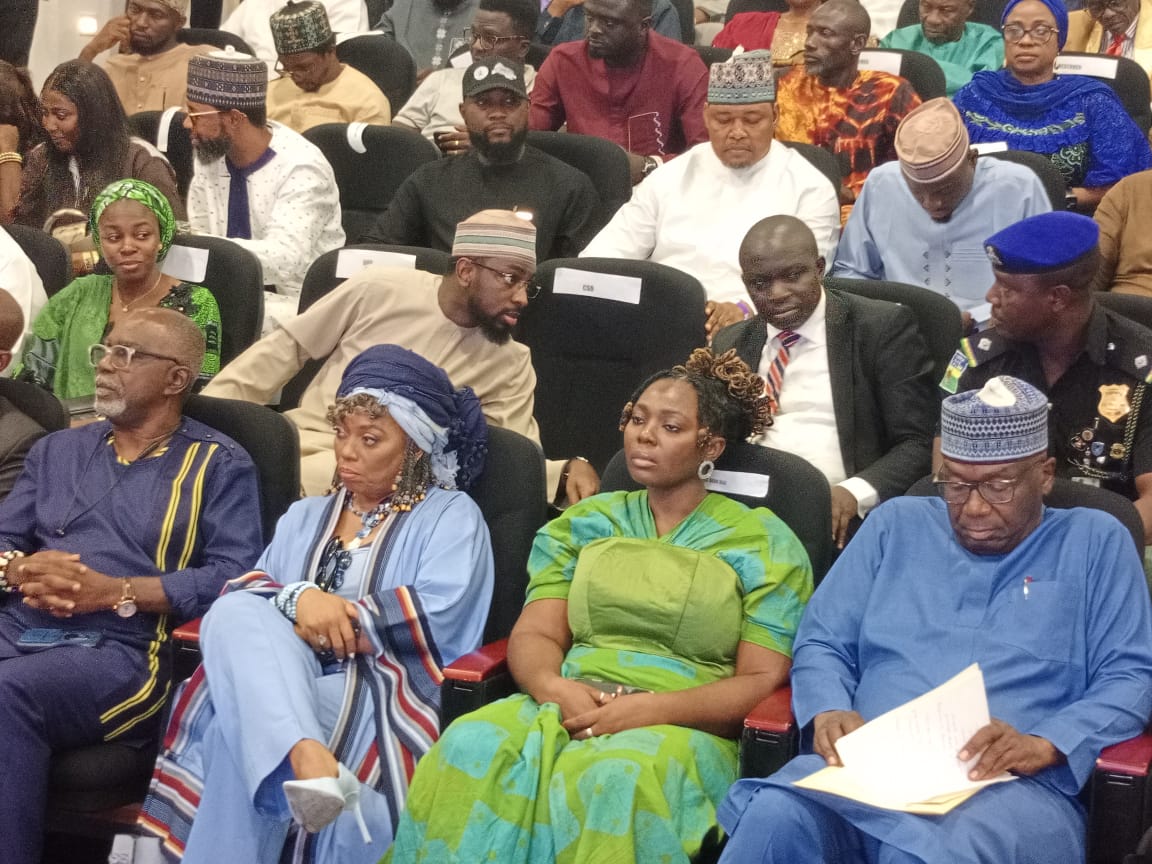
The Kwara State Government has celebrated the life and enduring influence of Afrobeat legend, Fela Anikulapo-Kuti, with a retrospective exhibition aimed at preserving African cultural heritage and inspiring younger generations.
The exhibition, titled Fela Anikulapo-Kuti: A Retrospective, was opened by Governor AbdulRahman AbdulRazaq at the Institute of Contemporary African Art and Film in Ilorin on Monday.
The Governor said the establishment of the institute reflected his administration’s belief that development should extend beyond physical infrastructure to include spaces that promote creativity, knowledge and economic opportunities.
“When we established the Institute of Contemporary African Art & Film, our vision was clear: development must go beyond roads, bridges and buildings to create spaces for creativity, knowledge and opportunity,” AbdulRazaq said.
According to him, cultural infrastructure plays an important role in connecting people to their history, broadening their imagination and encouraging critical thinking.
“Physical infrastructure connects places; cultural infrastructure connects people to their history, expands their imagination and challenges their thinking,” the Governor said.
AbdulRazaq said the institute was established to preserve African stories, nurture talents and showcase the continent’s artists and thinkers to the world,
describing the decision to open the institution with an exhibition dedicated to Fela as significant, given the musician’s contribution to African music, social commentary and cultural expression.
“Fela was more than a musician. Through his music and artistic expression, he challenged conventions and confronted society with questions about power, freedom, identity and justice,” he added.
The Governor added that the late musician’s life demonstrated the capacity of artistic expression to influence public discourse and inspire social change.
The exhibition, curated by June Creative Art Advisory, led by its founder, Mrs Seun Alli, featured photography, archival materials, film, graphic works and other artistic expressions exploring Fela’s life, times and enduring influence.
AbdulRazaq commended the firm for bringing its curatorial expertise and creative vision to the project, while describing the exhibition as an opportunity for different categories of visitors to engage with the musician’s legacy.
He said the exhibition would provide students with learning opportunities beyond the classroom, inspire artists, support researchers and encourage young people to explore the creative industry.
“For students, this is a classroom beyond the classroom; for artists, inspiration; for researchers, an opportunity for deeper inquiry; and for young people, a reminder that creativity offers both self-expression and economic opportunity,” he said.
The Governor clarified that the state government was not claiming ownership of Fela’s story but was providing a platform for younger generations to encounter and learn from his legacy, adding that the state government is optimistic that the institute would promote cultural education, encourage creative enterprise, attract visitors and strengthen Kwara State’s position in Nigeria’s cultural and creative landscape.
According to him, the institution’s success would be measured by the talents it nurtured, the ideas it inspired and the opportunities it created.
“Governments change, but institutions should endure,” the Governor said, expressing the hope that the exhibition would mark the beginning of sustained cultural engagement at the institute.
“May this exhibition begin sustained cultural engagement at ICAAF and inspire our young people to create, question, discover and contribute to society,” he said.
AbdulRazaq added that the initiative reflected his administration’s commitment to building a state where cultural heritage, innovation and economic opportunities complemented one another.
In her address, the Commissioner for Communications, Hon. Bolanle Olukoju, said: “Today’s exhibition offers us an opportunity to revisit the life and works of Fela
Anikulapo-Kuti and appreciate how his music, ideas and artistic expression continue to influence generations.
“For the Ministry of Communications, this occasion speaks to an important part of our
mandate: promoting the stories, talents and creative expressions that shape our identity as a people.”
The Commissioner particularly noted that under Governor AbdulRazaq’s leadership, the State is creating opportunities for young people through investments in sectors such as film, fashion and technology.
She added: “Projects including
the Sugar Film Factory, the Garment Factory and the Ilorin Innovation Hub reflect the administration’s commitment to developing talent and supporting enterprise.
“The Institute of Contemporary African Art & Film, formerly the Ilorin Visual Arts Centre, adds an important dimension to this effort. It provides a platform for artistic expression, cultural learning and creative collaboration.
“We want young Kwarans who are passionate about painting, photography, filmmaking, fashion and design to see ICAAF as a place where they can explore their interests, learn from others and showcase their talents.
“We also encourage students to engage with art and history beyond the classroom. Fela’s story is a fitting subject for this exhibition. It demonstrates how creativity
can go beyond entertainment to shape cultural identity and influence public conversations. There is much for our young people to learn from his artistic journey and enduring impact.
“It might also interest you that kwara state was also part of Fela’s creative showcase during his lifetime.”
•••Says Ward stands with APC
Stephen Olufemi Oni, Ilorin
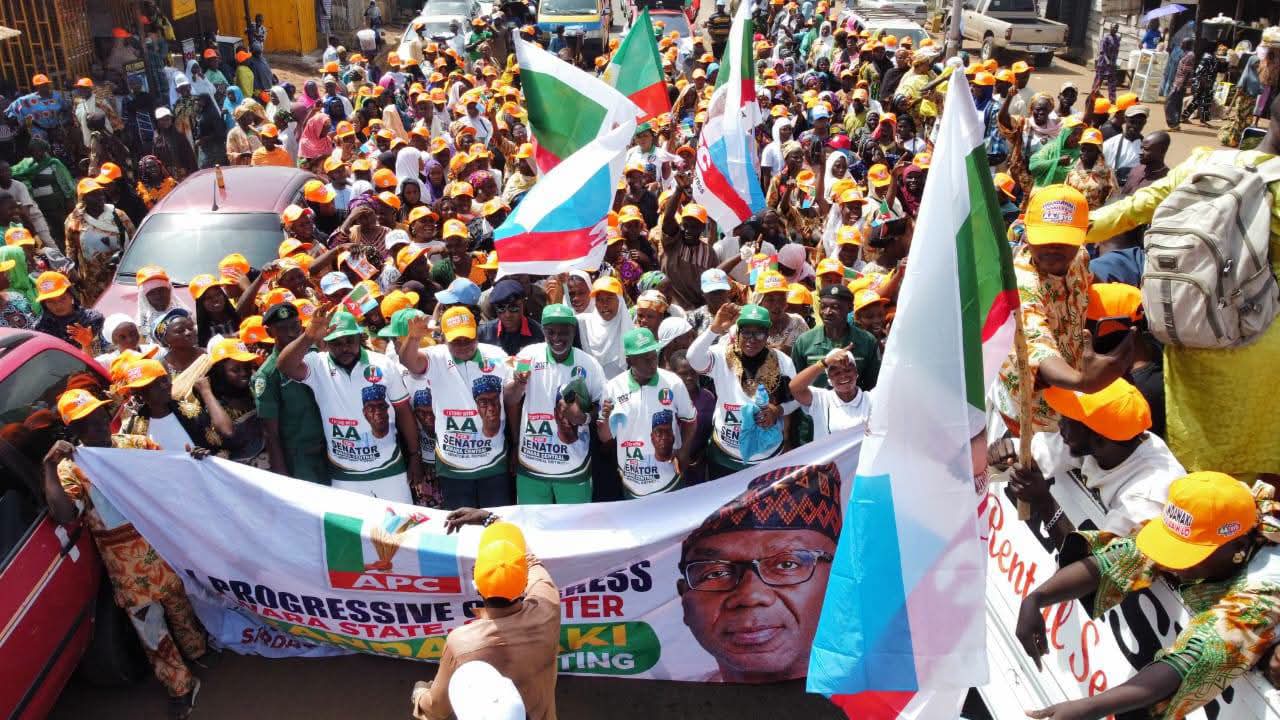
The Executive Chairman of the Ilorin West Local Government, Mallam Shehu AbdulRahman Babatunde Ladan, has led an All Progressives Congress (APC) mega rally in Ubandawaki Ward, reaffirming the commitment of party members and supporters to the APC ahead of the 2027 general elections.
The rally attracted party leaders, grassroots mobilisers, youths, women, and other stakeholders who gathered to demonstrate their support for the party.
Addressing the gathering, Chairman Ladan declared that Ubandawaki Ward remains committed to the APC and its political leadership, expressing support for President Bola Ahmed Tinubu’s Renewed Hope Agenda, Kwara State Governor AbdulRahman AbdulRazaq, and the APC governorship candidate, Rt. Hon. Engr. Yakubu Danladi-Salihu (SYD), alongside other party candidates for the 2027 general elections.
The Chairman emphasised the importance of unity, peaceful political engagement, and sustained grassroots mobilisation in strengthening the party’s structure ahead of the forthcoming elections, urging party faithful to remain united, engage constructively with residents, and work collectively towards the party’s political objectives.
Ladan also acknowledged the importance of Ubandawaki Ward in the political landscape of Ilorin West, encouraging party leaders and supporters to maintain cordial relationships, promote inclusive participation, and sustain engagement with the electorate. He stressed that a united party structure would help strengthen internal cooperation and effective grassroots coordination.
The mega rally renewed calls for unity, loyalty, and peaceful political participation among APC members and supporters, underscoring commitment by participants to mobilising support for the party’s candidates ahead of the 2027 general elections, while promoting peace, development, and responsible democratic engagement across Ilorin West Local Government Area.

- Mgt Accuses Union Of Dishing Out False Staff Remuneration Scale
Stephen Olufemi Oni, Ilorin
The staff of the Kwara State Internal Revenue Service (KWIRS) have lamented poor welfare conditions, rising living costs and stagnant salaries they have been subjected to, despite their contributions to the state’s revenue generation.
In a statement issued by the KWIRS chapter of the Association of Senior Civil Servants of Nigeria (ASCSN), the workers lamented that their sacrifice and professionalism, which have helped to place Kwara State among the more self-reliant states in the country, have not been matched with corresponding improvement in their welfare.
The workers questioned the disparity between their contributions to the state’s revenue and their welfare, saying many of them are battling financial hardship.
“We block leakages. We are posted to hospitals and other MDAs to secure government revenue. We work under pressure day and night but we continue to struggle to meet basic needs due to poor salaries.”
The association further expressed concern that personnel costs had remained unchanged for years while other expenditure heads had continued to increase.
It also cited a salary negotiation agreement dated October 11, 2022, which reportedly stated that the adjustment would be implemented “as soon as it can be accommodated in the budget.”
According to the workers, nearly four years after the agreement, there had been no implementation or clear indication of when the adjustment would take effect, despite the rising cost of living.
The staff said expenses on school fees, house rent, transportation and food had increased significantly while their salaries remained unchanged. “We smile outside but the majority of us are bleeding inside. We cannot continue to generate wealth for the state while we wallow in abject poverty,” they declared.
Urging their colleagues to remain united and resolute in pursuing improved welfare, the association said the workers should not expect better conditions without collectively standing up for their interests.
It called on members to remain calm, vigilant and prayerful as a 14-day period beginning October 15, 2026, counts down, without specifying further details in the statement about the expected action at its conclusion.
Reacting to the KW-IRS staff allegations, the Management, while
reaffirm its commitment to professionalism, political neutrality and its statutory mandate, expressed dismay over public speculation on staff remuneration and attempts to politicise unverified internal administrative communications.
“Management is concerned by attempts to exploit unverified internal administrative communications for political purposes, create unnecessary tension and distract the Service from its responsibilities. KWIRS will not be distracted from its mandate by such narratives,” said the Management.
It added: “The isolated salary figures being circulated on social media do not represent the full remuneration structure or total emoluments of KWIRS staff. Staff compensation extends beyond regular monthly salaries and includes the following benefits, in accordance with applicable policies and approved arrangements:
“Annual and Performance-Related Bonuses: Annual, festive, and situational bonuses linked to revenue performance milestones and staff performance and situational economic palliatives are paid periodically to staff members
“Annual Leave Allowance: A separate annual payment in addition to regular monthly remuneration.
Staff Welfare and Operational Support: Structured measures designed to support staff welfare and professional development throughout their careers.
“Accordingly, assessing staff remuneration solely on selectively circulated salary figures presents an incomplete picture of the Service’s compensation and welfare structure.
“Management remains committed to staff welfare, motivation and professional development. The Service will continue to strengthen policies and operational processes that support staff well-being and performance, within government-approved resource allocations and applicable administrative frameworks. The Service remains one of the Government Institutions with the most recruitment requests and this is a testament of Management’s commitment to staff welfare.
“KWIRS urges members of the public, taxpayers and other stakeholders to disregard unverified and misleading narratives, verify information before sharing it, and rely on official Service communications for accurate information about its operations and staff policies.
“All stakeholders are encouraged to refrain from politicising internal administrative matters or spreading claims capable of undermining institutional harmony and public confidence.
“KWIRS remains focused on its statutory responsibilities and committed to mobilising revenue for the economic growth and sustainable development of Kwara State.”

WHO: Nigeria Records Zero Ebola Cases After Evacuation of Swiss Couple

Kwara celebrates Fela’s legacy with retrospective exhibition

2027: Ilorin West LG Boss Leads APC Mega Rally In Ubandawaki

-
 Uncategorized6 years ago
FG, states urged to harness flooding for ranching, others with technology – Agbaje
-
 Headlines11 years ago
Breaking: EFCC seals Borno House of Assembly, as Hon members take to their heels
-
 News12 years ago
Nigeria Security Operatives Stage Manhunt For Homosexual Perpetrator
-
 News10 years ago
How 21-year-old Girl fled community over accusation of lesbianism
-
 News11 years ago
Yobe Gov Moves Against Deputy
-
 Opinion7 years ago
7 signs she has friend zoned you
-
Technology5 years ago
Online job placement company headhunts women
-
 Headlines10 years ago
Borno Dep Gov Abducts Another Church Leader