
Uncategorized
OPINION: THE CONCEPT OF CONSTITUENCY PROJECTS: WHO BEWITCHED NIGERIA WITH IT?

By: A G Abubakar
Of all the attractive virtues of Western liberal democracy, the aspect that appears to appeal most to Nigerian legislators is the concept of Constituency Projects (CPs). Known in the United States as the pork-barrel system—where Nigeria borrowed the idea—it refers to the practice of lawmakers inserting funding for localised projects into larger national budgets, often bypassing rigorous congressional scrutiny and oversight. These projects typically serve limited populations or special interests, and critics have long likened the scheme to a slush fund because of its opaque nature. The concept originated from 19th century USA, where slaves were gifted salted pork as a reward.
In adapting the system, Nigerian legislators did not merely copy it; they expanded and distorted it, adding another costly layer with severe economic and political consequences. Beyond budget padding and insertions, legislators are now granted periodic direct allocations in the name of constituency projects. Unsurprisingly, the scheme has become a major conduit for self-enrichment. And, for development pundits, a barometer of a ridiculous understanding of the concept of empowerment by some elected officials in parts of the country. For instance, it is a common happening in parts of the North to see the concept of CPs reduced to public gifting where wheelbarrows, prayer mats/plastic kettles, bales of sugarcane, burial items, mass weddings, etc, are paraded as CPs.
When this is combined with the exorbitant cost of running the National Assembly, the grim picture becomes unmistakable: Nigeria can hardly afford the legislature in its present form. For instance, in the 2025 budget, BudgIT, a civic-tech organisation promoting transparency in public finance, uncovered 11,122 projects valued at ₦6.93 trillion inserted by the National Assembly into a ₦54.99 trillion federal budget—representing roughly 12.6 per cent of total expenditure. The trend may continue in 2026, unless otherwise.
In the same fiscal year, members of the House of Representatives and the Senate were reportedly allocated ₦1 billion and ₦2 billion respectively each to directly execute constituency projects—separate from what had already been inserted into the budget. This is in addition to reported monthly total perks of about ₦19 million for Representatives and ₦21 million for senators. These three streams of resources have turned politics into not just a lucrative enterprise but a do-or-die affair and a major driver of systemic corruption.
Until the advent of President Olusegun Obasanjo in the Fourth Republic—and particularly his controversial third-term agenda in 2006—the Nigerian democratic lexicon scarcely featureterm constituency project. If it existed at all, it was never central. The three arms of government—the executive, legislature, and judiciary—largely confined themselves to their constitutional mandates. The legislature made laws and conducted oversight; the executive formulated and implemented policies; and the judiciary adjudicated disputes. Each arm guarded its territory jealously.
Today, those lines have blurred. The legislature has melted into the executive, while the judiciary increasingly appears entangled with both. The system now operates like an unholy trinity—father, son, and holy spirit in one—with checks and balances effectively neutralised.
The journey toward this distortion began with the adoption of the American pork-barrel system and its deployment as a tool of lobbying—or more bluntly, executive corruption—to curry legislative favour. In the United States, pork-barrel spending was originally justified as a means for lawmakers to address isolated and critical local needs. Even there, it has faced intense criticism and restrictions.
In Nigeria, however, the Obasanjo administration amplified the scheme, elevating it into a prominent budget line and weaponising it during the infamous third-term project. Through generous constituency allocations and other unorthodox inducements—popularly dubbed “Ghana-must-go”—the administration nearly succeeded in extending presidential tenure beyond constitutional limits.
Subsequent administrations did not only retain the scheme; they entrenched it as one of the largest cost centres in government spending. What began as quid-pro-quo politics soon degenerated into brazen abuse of public resources. Budget padding, insertions, and manipulations became the defining features of appropriation processes, as legislators competed to corner the largest possible allocations under the guise of constituency projects.
Because the legislature lacks implementing institutions, most CPs are grafted onto executive agencies—ministries, departments, and agencies (MDAs). Tracking these funds has now become a full-time preoccupation for many lawmakers, accompanied by relentless wheeling and dealing. Chief executives of MDAs have been reduced to errand boys, often coerced under threats of budgetary retaliation. In many cases, funds are simply siphoned through proxy contractors and vanish without trace. Thus, a class of “politipreneur billionaires” has emerged almost overnight.
Constituency projects have therefore evolved into a fast-growing corruption industry and one of the principal engines of Nigeria’s destructive, zero-sum politics. Literally, chasing and following up on “proxy contractors” of CPs by elected members have become a full-time job. They have little time to spare on burning national issues like the ubiquitous insecurity across the land, systemic corruption, nepotism, and cronyism in governance, poverty, and massive youth joblessness These issues require appropriate legislation and/or oversight and should ordinarily be a major concern for the honourable men and women in the legislature. So far, this doesn’t seem to be the case; as the issues have invariably been pushed to the back burner.
Two disturbing outcomes stand out among legislators who attempt to show goodwill by “doing something” with CP funds. First, CPs have effectively dwarfed Nigeria’s local government system—a constitutionally recognised tier that has been suffocated by state governments, aided by a complicit federal system that pays lip service to autonomy.
This remains a grave constitutional breach, even after the Supreme Court’s 2024 ruling affirming local government autonomy—financially, administratively, and electorally. Today, very few local governments can afford to build classrooms, health centres, motor parks, drainage systems, or small dams because they are starved of funds. The joint-account system has crippled grassroots governance in an unprecedented manner.
Ironically, even the Native Authorities of the colonial era and First Republic performed better than today’s emasculated local councils. In this context, any legislator who executes what should ordinarily be a local government project instantly assumes the status of a one-man government. Public loyalty shifts from institutions to individuals—an aberration that deepens corruption, impunity, and bad governance.
The second concern is definitional, particularly in Northern Nigeria. Constituency projects were never intended to be routine programmes or substitutes for government. They were meant to be one-off, strategic interventions addressing critical and catalytic needs. Where CPs dominate service delivery, it is a loud indictment of governance failure.
Add to this the phenomenon of governors’ wives’ projects, and the misapplication of scarce resources becomes even clearer. The poverty of ideas—and the embarrassing extent to which public officials play to the gallery—betrays a shallow understanding of development. While participatory approaches such as bottom-up planning have merit, prioritisation and strategic vision remain indispensable. It is the duty of enlightened leadership to chart a roadmap to the future, not to be imprisoned by local, short-term horizons.
Sadly, this dwarf vision has characterised many Northern politicians. In Kebbi, bundles of sugarcane were distributed to unemployed youths amid fanfare. Somewhere in Kano or Jigawa, a legislator procured burial materials for constituents. Another supplied plastic kettles and prayer mats. In Maiduguri, wheelbarrows were handed out as economic “empowerment” starter packs. Others sponsored mass weddings and also pilgrimages to either Makka or Jerusalem.
One is forced to ask: were people unable to pray before these interventions? Were burials impossible without legislative charity? What becomes of scale-up and sustainability in wheelbarrow empowerment? As for mass weddings, common sense dictates that sustaining a family is far more challenging than organising a ceremony. Of the 3Ps in marriage – provision, protection, and reprocration – mass weddings can only basically guarantee the reprocration aspect successfully. And, the North, knows the danger of producing kids without requisite care.
Even if these initiatives were effective, where are their multiplier effects? This is occurring in a country with over 16 million out-of-school children and millions of unemployed youths. Ironically, we live in an age where ICT, agriculture, livestock management, environmental remediation, carpentry, metalwork, and electrical repairs offer scalable empowerment opportunities requiring little formal education.
Some legislators do execute capital projects—schools, clinics, roads, water, and power facilities—using CP funds, often branding them as legacy projects. While commendable on the surface, such interventions frequently foster unhealthy rivalries. In a fragile democracy like Nigeria’s, constituency projects remain a budgetary distortion and a serious threat to the principle of separation of powers.
The practice must be reviewed. Ending or radically reforming constituency projects will reduce leakages, de-monetise politics, and restore public service as the essence of governance. Democracy in Nigeria has been so bastardised that instead of catalysing development, it now undermines it. Even the US had cause to abolish the practice.
The Supreme Court nullified Congregational Pork Barrel laws, including the 2013 PDAF, the 1990 Countrywide Development Fund (CDF), and the various Congregational Insertions that let lawmakers to take part in execution of projects, because of transparency challenges. Congressmen can only lobby for critical and strategic projects that have both local and general essence. If the US, where accountability and due process are professed hallmarks of governance, could discard CP, then Nigeria, should have no business embracing it.
Let each arm of government return to its constitutional role: the executive to govern, the legislature to legislate and oversee, and the judiciary to dispense justice. Constituency projects—and their attendant corruption—must not be allowed to define liberal democracy, an otherwise noble system of governance.
In the final analysis, constituency projects have become the clearest symbol of how Nigeria’s democracy was hijacked and hollowed out from within: a system designed for representation has been converted into an auction house of public funds, where oversight is traded for patronage and governance is replaced by personal charity. By collapsing the boundaries between lawmaking, execution, and adjudication, the scheme has destroyed the logic of separation of powers, weakened institutions, corrupted incentives, and turned politics into a violent scramble for access to state resources.
What parades as empowerment is often nothing more than organised waste, short-term appeasement, and the recycling of poverty in ceremonial form. Until Nigeria dismantles this distortion and forces each arm of government back into its constitutional lane, democracy will remain expensive, performative, and fundamentally hostile to development—an elaborate ritual of elections masking a system that eats the future to feed the present. Nigerian politics shall be saner, and less cut-throat without the concept of Constituency Projects (CPs).
A.G.Abubakar agbarewa@gmail.com

Fabian Apechihin
Yamada has blamed recent attacks on the children of so-called repentant bandits and armed groups that refused to embrace ongoing peace accords, warning that the violence is being driven by factions outside the agreement.
According to him, the situation exposes the shortcomings of peace deals that are neither comprehensive nor inclusive. He explained that when certain armed groups or splinter factions are excluded—or deliberately opt out—such accords fail to deliver lasting peace.
Yamada cautioned that without a mechanism to identify, include, and closely monitor all armed elements, insecurity will continue to re-emerge in different forms. He stressed that violence will persist as long as some groups operate beyond the reach of peace agreements and accountability structures.
Fabian Apechihin
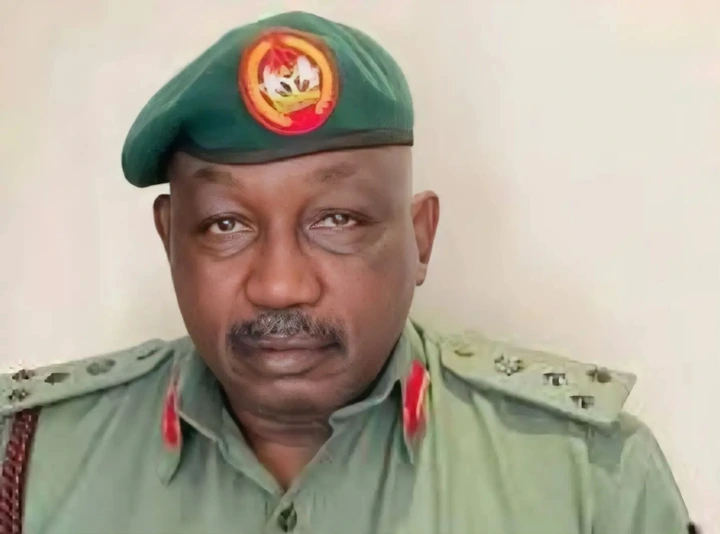
Retired Major Galma of the Nigerian Army has raised concerns over political interference in the country’s military recruitment process, warning that it has allowed unqualified individuals into the armed forces and weakened national security.
Speaking in a report published by DAILY POST on Wednesday, January 7, 2025, Galma described the Nigerian Army’s ongoing call for applications into the Direct Short Service Commission (DSSC) Course 29/2026 as a positive development. However, he cautioned that the exercise would only be effective if recruitment is conducted strictly on merit.
According to Galma, candidates imposed on the military through political influence often lack commitment and discipline. He said many of them either abandon their duties after training or become internal security threats by collaborating with criminal elements.
“I appeal to politicians to allow only qualified and willing individuals to be recruited. Many of those who are forced into the system end up deserting after training or becoming security liabilities, including aiding criminal elements,” he said.
The retired officer stressed that safeguarding the integrity of military recruitment is crucial to strengthening the armed forces and improving Nigeria’s overall security situation.
Fabian Apechihin
The Federal Government has reacted to reports alleging that Nigerian scholarship beneficiaries have been abandoned in Morocco, dismissing the claims as misleading.
According to the government, affected students will be given the option of returning to Nigeria, where they will be seamlessly reintegrated into suitable tertiary institutions of their choice. The Federal Government, it added, will fully cover the cost of their return travel.
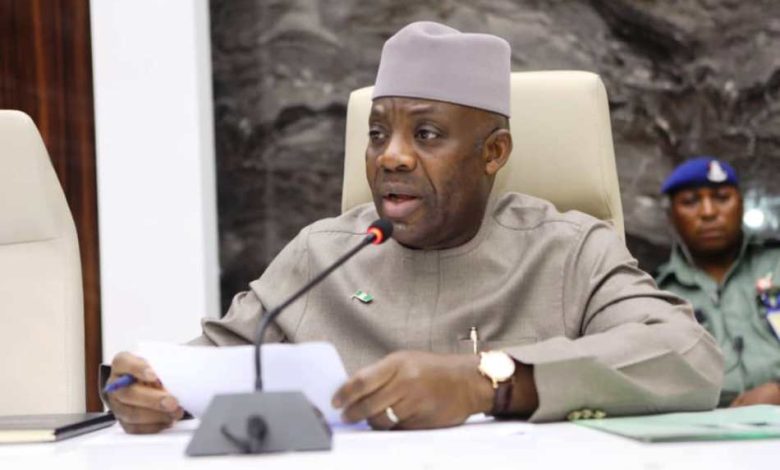
The Minister of Education, Dr. Tunji Alausa, said the current administration is committed to reforming the scholarship system to ensure efficiency and sustainability. He explained that previous practices—such as sponsoring overseas programmes that are already available in Nigerian institutions—placed unnecessary pressure on public finances.
Alausa noted that the reforms are designed to redirect resources toward strengthening local capacity while still prioritising the welfare of Nigerian students.
The statement further emphasised that the government’s actions are guided by transparency, accountability, and prudent management of public funds. It reaffirmed the administration’s commitment to supporting students and rejected what it described as “misinformation, blackmail, or any attempt to undermine policies aimed at improving the education sector and protecting national interests.”


Energy governance group faults ADC, says Tinubu’s approval of NNPC legacy balance reconciliation restores fiscal transparency, not revenue loss

China shares AI-based early warning solutions to strengthen global climate resilience
No country has the right to act as the world policemen

-
 Uncategorized5 years ago
FG, states urged to harness flooding for ranching, others with technology – Agbaje
-
 Headlines10 years ago
Breaking: EFCC seals Borno House of Assembly, as Hon members take to their heels
-
 News11 years ago
Nigeria Security Operatives Stage Manhunt For Homosexual Perpetrator
-
 News9 years ago
How 21-year-old Girl fled community over accusation of lesbianism
-
 News10 years ago
Yobe Gov Moves Against Deputy
-
 Opinion7 years ago
7 signs she has friend zoned you
-
Technology4 years ago
Online job placement company headhunts women
-
 Headlines10 years ago
Borno Dep Gov Abducts Another Church Leader