
Uncategorized
OPINION: THE CONCEPT OF CONSTITUENCY PROJECTS: WHO BEWITCHED NIGERIA WITH IT?

By: A G Abubakar
Of all the attractive virtues of Western liberal democracy, the aspect that appears to appeal most to Nigerian legislators is the concept of Constituency Projects (CPs). Known in the United States as the pork-barrel system—where Nigeria borrowed the idea—it refers to the practice of lawmakers inserting funding for localised projects into larger national budgets, often bypassing rigorous congressional scrutiny and oversight. These projects typically serve limited populations or special interests, and critics have long likened the scheme to a slush fund because of its opaque nature. The concept originated from 19th century USA, where slaves were gifted salted pork as a reward.
In adapting the system, Nigerian legislators did not merely copy it; they expanded and distorted it, adding another costly layer with severe economic and political consequences. Beyond budget padding and insertions, legislators are now granted periodic direct allocations in the name of constituency projects. Unsurprisingly, the scheme has become a major conduit for self-enrichment. And, for development pundits, a barometer of a ridiculous understanding of the concept of empowerment by some elected officials in parts of the country. For instance, it is a common happening in parts of the North to see the concept of CPs reduced to public gifting where wheelbarrows, prayer mats/plastic kettles, bales of sugarcane, burial items, mass weddings, etc, are paraded as CPs.
When this is combined with the exorbitant cost of running the National Assembly, the grim picture becomes unmistakable: Nigeria can hardly afford the legislature in its present form. For instance, in the 2025 budget, BudgIT, a civic-tech organisation promoting transparency in public finance, uncovered 11,122 projects valued at ₦6.93 trillion inserted by the National Assembly into a ₦54.99 trillion federal budget—representing roughly 12.6 per cent of total expenditure. The trend may continue in 2026, unless otherwise.
In the same fiscal year, members of the House of Representatives and the Senate were reportedly allocated ₦1 billion and ₦2 billion respectively each to directly execute constituency projects—separate from what had already been inserted into the budget. This is in addition to reported monthly total perks of about ₦19 million for Representatives and ₦21 million for senators. These three streams of resources have turned politics into not just a lucrative enterprise but a do-or-die affair and a major driver of systemic corruption.
Until the advent of President Olusegun Obasanjo in the Fourth Republic—and particularly his controversial third-term agenda in 2006—the Nigerian democratic lexicon scarcely featureterm constituency project. If it existed at all, it was never central. The three arms of government—the executive, legislature, and judiciary—largely confined themselves to their constitutional mandates. The legislature made laws and conducted oversight; the executive formulated and implemented policies; and the judiciary adjudicated disputes. Each arm guarded its territory jealously.
Today, those lines have blurred. The legislature has melted into the executive, while the judiciary increasingly appears entangled with both. The system now operates like an unholy trinity—father, son, and holy spirit in one—with checks and balances effectively neutralised.
The journey toward this distortion began with the adoption of the American pork-barrel system and its deployment as a tool of lobbying—or more bluntly, executive corruption—to curry legislative favour. In the United States, pork-barrel spending was originally justified as a means for lawmakers to address isolated and critical local needs. Even there, it has faced intense criticism and restrictions.
In Nigeria, however, the Obasanjo administration amplified the scheme, elevating it into a prominent budget line and weaponising it during the infamous third-term project. Through generous constituency allocations and other unorthodox inducements—popularly dubbed “Ghana-must-go”—the administration nearly succeeded in extending presidential tenure beyond constitutional limits.
Subsequent administrations did not only retain the scheme; they entrenched it as one of the largest cost centres in government spending. What began as quid-pro-quo politics soon degenerated into brazen abuse of public resources. Budget padding, insertions, and manipulations became the defining features of appropriation processes, as legislators competed to corner the largest possible allocations under the guise of constituency projects.
Because the legislature lacks implementing institutions, most CPs are grafted onto executive agencies—ministries, departments, and agencies (MDAs). Tracking these funds has now become a full-time preoccupation for many lawmakers, accompanied by relentless wheeling and dealing. Chief executives of MDAs have been reduced to errand boys, often coerced under threats of budgetary retaliation. In many cases, funds are simply siphoned through proxy contractors and vanish without trace. Thus, a class of “politipreneur billionaires” has emerged almost overnight.
Constituency projects have therefore evolved into a fast-growing corruption industry and one of the principal engines of Nigeria’s destructive, zero-sum politics. Literally, chasing and following up on “proxy contractors” of CPs by elected members have become a full-time job. They have little time to spare on burning national issues like the ubiquitous insecurity across the land, systemic corruption, nepotism, and cronyism in governance, poverty, and massive youth joblessness These issues require appropriate legislation and/or oversight and should ordinarily be a major concern for the honourable men and women in the legislature. So far, this doesn’t seem to be the case; as the issues have invariably been pushed to the back burner.
Two disturbing outcomes stand out among legislators who attempt to show goodwill by “doing something” with CP funds. First, CPs have effectively dwarfed Nigeria’s local government system—a constitutionally recognised tier that has been suffocated by state governments, aided by a complicit federal system that pays lip service to autonomy.
This remains a grave constitutional breach, even after the Supreme Court’s 2024 ruling affirming local government autonomy—financially, administratively, and electorally. Today, very few local governments can afford to build classrooms, health centres, motor parks, drainage systems, or small dams because they are starved of funds. The joint-account system has crippled grassroots governance in an unprecedented manner.
Ironically, even the Native Authorities of the colonial era and First Republic performed better than today’s emasculated local councils. In this context, any legislator who executes what should ordinarily be a local government project instantly assumes the status of a one-man government. Public loyalty shifts from institutions to individuals—an aberration that deepens corruption, impunity, and bad governance.
The second concern is definitional, particularly in Northern Nigeria. Constituency projects were never intended to be routine programmes or substitutes for government. They were meant to be one-off, strategic interventions addressing critical and catalytic needs. Where CPs dominate service delivery, it is a loud indictment of governance failure.
Add to this the phenomenon of governors’ wives’ projects, and the misapplication of scarce resources becomes even clearer. The poverty of ideas—and the embarrassing extent to which public officials play to the gallery—betrays a shallow understanding of development. While participatory approaches such as bottom-up planning have merit, prioritisation and strategic vision remain indispensable. It is the duty of enlightened leadership to chart a roadmap to the future, not to be imprisoned by local, short-term horizons.
Sadly, this dwarf vision has characterised many Northern politicians. In Kebbi, bundles of sugarcane were distributed to unemployed youths amid fanfare. Somewhere in Kano or Jigawa, a legislator procured burial materials for constituents. Another supplied plastic kettles and prayer mats. In Maiduguri, wheelbarrows were handed out as economic “empowerment” starter packs. Others sponsored mass weddings and also pilgrimages to either Makka or Jerusalem.
One is forced to ask: were people unable to pray before these interventions? Were burials impossible without legislative charity? What becomes of scale-up and sustainability in wheelbarrow empowerment? As for mass weddings, common sense dictates that sustaining a family is far more challenging than organising a ceremony. Of the 3Ps in marriage – provision, protection, and reprocration – mass weddings can only basically guarantee the reprocration aspect successfully. And, the North, knows the danger of producing kids without requisite care.
Even if these initiatives were effective, where are their multiplier effects? This is occurring in a country with over 16 million out-of-school children and millions of unemployed youths. Ironically, we live in an age where ICT, agriculture, livestock management, environmental remediation, carpentry, metalwork, and electrical repairs offer scalable empowerment opportunities requiring little formal education.
Some legislators do execute capital projects—schools, clinics, roads, water, and power facilities—using CP funds, often branding them as legacy projects. While commendable on the surface, such interventions frequently foster unhealthy rivalries. In a fragile democracy like Nigeria’s, constituency projects remain a budgetary distortion and a serious threat to the principle of separation of powers.
The practice must be reviewed. Ending or radically reforming constituency projects will reduce leakages, de-monetise politics, and restore public service as the essence of governance. Democracy in Nigeria has been so bastardised that instead of catalysing development, it now undermines it. Even the US had cause to abolish the practice.
The Supreme Court nullified Congregational Pork Barrel laws, including the 2013 PDAF, the 1990 Countrywide Development Fund (CDF), and the various Congregational Insertions that let lawmakers to take part in execution of projects, because of transparency challenges. Congressmen can only lobby for critical and strategic projects that have both local and general essence. If the US, where accountability and due process are professed hallmarks of governance, could discard CP, then Nigeria, should have no business embracing it.
Let each arm of government return to its constitutional role: the executive to govern, the legislature to legislate and oversee, and the judiciary to dispense justice. Constituency projects—and their attendant corruption—must not be allowed to define liberal democracy, an otherwise noble system of governance.
In the final analysis, constituency projects have become the clearest symbol of how Nigeria’s democracy was hijacked and hollowed out from within: a system designed for representation has been converted into an auction house of public funds, where oversight is traded for patronage and governance is replaced by personal charity. By collapsing the boundaries between lawmaking, execution, and adjudication, the scheme has destroyed the logic of separation of powers, weakened institutions, corrupted incentives, and turned politics into a violent scramble for access to state resources.
What parades as empowerment is often nothing more than organised waste, short-term appeasement, and the recycling of poverty in ceremonial form. Until Nigeria dismantles this distortion and forces each arm of government back into its constitutional lane, democracy will remain expensive, performative, and fundamentally hostile to development—an elaborate ritual of elections masking a system that eats the future to feed the present. Nigerian politics shall be saner, and less cut-throat without the concept of Constituency Projects (CPs).
A.G.Abubakar agbarewa@gmail.com
Stephen Olufemi Oni, Ilorin
The Kwara State Government has celebrated the life and enduring influence of Afrobeat legend, Fela Anikulapo-Kuti, with a retrospective exhibition aimed at preserving African cultural heritage and inspiring younger generations.
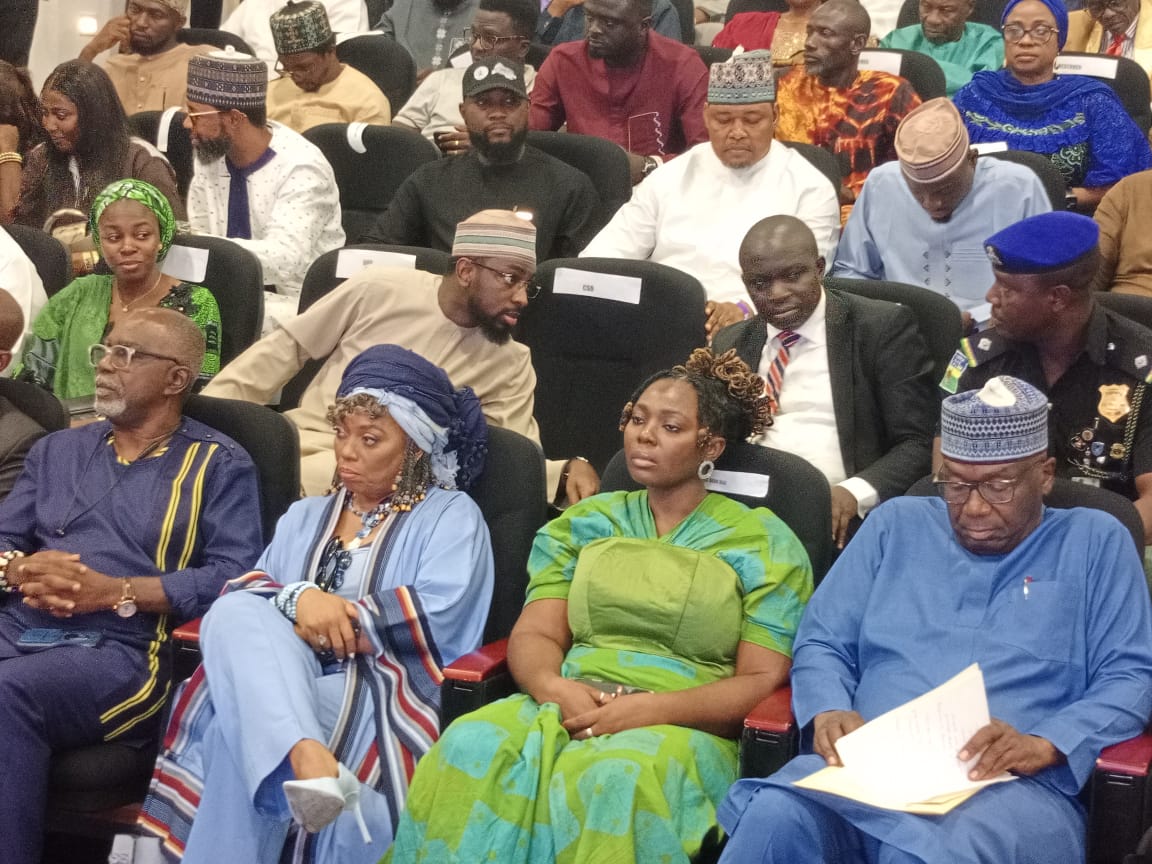
The exhibition, titled Fela Anikulapo-Kuti: A Retrospective, was opened by Governor AbdulRahman AbdulRazaq at the Institute of Contemporary African Art and Film in Ilorin on Monday.
The Governor said the establishment of the institute reflected his administration’s belief that development should extend beyond physical infrastructure to include spaces that promote creativity, knowledge and economic opportunities.
“When we established the Institute of Contemporary African Art & Film, our vision was clear: development must go beyond roads, bridges and buildings to create spaces for creativity, knowledge and opportunity,” AbdulRazaq said.
According to him, cultural infrastructure plays an important role in connecting people to their history, broadening their imagination and encouraging critical thinking.
“Physical infrastructure connects places; cultural infrastructure connects people to their history, expands their imagination and challenges their thinking,” the Governor said.
AbdulRazaq said the institute was established to preserve African stories, nurture talents and showcase the continent’s artists and thinkers to the world,
describing the decision to open the institution with an exhibition dedicated to Fela as significant, given the musician’s contribution to African music, social commentary and cultural expression.
“Fela was more than a musician. Through his music and artistic expression, he challenged conventions and confronted society with questions about power, freedom, identity and justice,” he added.
The Governor added that the late musician’s life demonstrated the capacity of artistic expression to influence public discourse and inspire social change.
The exhibition, curated by June Creative Art Advisory, led by its founder, Mrs Seun Alli, featured photography, archival materials, film, graphic works and other artistic expressions exploring Fela’s life, times and enduring influence.
AbdulRazaq commended the firm for bringing its curatorial expertise and creative vision to the project, while describing the exhibition as an opportunity for different categories of visitors to engage with the musician’s legacy.
He said the exhibition would provide students with learning opportunities beyond the classroom, inspire artists, support researchers and encourage young people to explore the creative industry.
“For students, this is a classroom beyond the classroom; for artists, inspiration; for researchers, an opportunity for deeper inquiry; and for young people, a reminder that creativity offers both self-expression and economic opportunity,” he said.
The Governor clarified that the state government was not claiming ownership of Fela’s story but was providing a platform for younger generations to encounter and learn from his legacy, adding that the state government is optimistic that the institute would promote cultural education, encourage creative enterprise, attract visitors and strengthen Kwara State’s position in Nigeria’s cultural and creative landscape.
According to him, the institution’s success would be measured by the talents it nurtured, the ideas it inspired and the opportunities it created.
“Governments change, but institutions should endure,” the Governor said, expressing the hope that the exhibition would mark the beginning of sustained cultural engagement at the institute.
“May this exhibition begin sustained cultural engagement at ICAAF and inspire our young people to create, question, discover and contribute to society,” he said.
AbdulRazaq added that the initiative reflected his administration’s commitment to building a state where cultural heritage, innovation and economic opportunities complemented one another.
In her address, the Commissioner for Communications, Hon. Bolanle Olukoju, said: “Today’s exhibition offers us an opportunity to revisit the life and works of Fela
Anikulapo-Kuti and appreciate how his music, ideas and artistic expression continue to influence generations.
“For the Ministry of Communications, this occasion speaks to an important part of our
mandate: promoting the stories, talents and creative expressions that shape our identity as a people.”
The Commissioner particularly noted that under Governor AbdulRazaq’s leadership, the State is creating opportunities for young people through investments in sectors such as film, fashion and technology.
She added: “Projects including
the Sugar Film Factory, the Garment Factory and the Ilorin Innovation Hub reflect the administration’s commitment to developing talent and supporting enterprise.
“The Institute of Contemporary African Art & Film, formerly the Ilorin Visual Arts Centre, adds an important dimension to this effort. It provides a platform for artistic expression, cultural learning and creative collaboration.
“We want young Kwarans who are passionate about painting, photography, filmmaking, fashion and design to see ICAAF as a place where they can explore their interests, learn from others and showcase their talents.
“We also encourage students to engage with art and history beyond the classroom. Fela’s story is a fitting subject for this exhibition. It demonstrates how creativity
can go beyond entertainment to shape cultural identity and influence public conversations. There is much for our young people to learn from his artistic journey and enduring impact.
“It might also interest you that kwara state was also part of Fela’s creative showcase during his lifetime.”
•••Says Ward stands with APC
Stephen Olufemi Oni, Ilorin
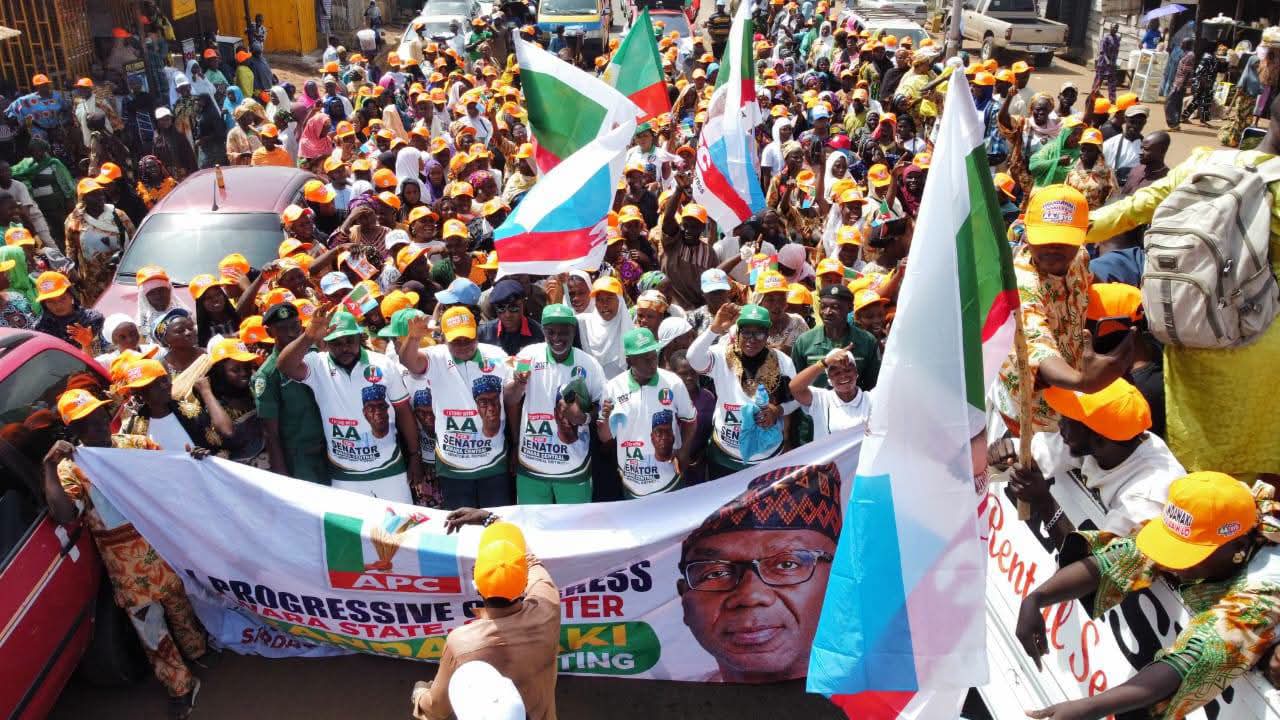
The Executive Chairman of the Ilorin West Local Government, Mallam Shehu AbdulRahman Babatunde Ladan, has led an All Progressives Congress (APC) mega rally in Ubandawaki Ward, reaffirming the commitment of party members and supporters to the APC ahead of the 2027 general elections.
The rally attracted party leaders, grassroots mobilisers, youths, women, and other stakeholders who gathered to demonstrate their support for the party.
Addressing the gathering, Chairman Ladan declared that Ubandawaki Ward remains committed to the APC and its political leadership, expressing support for President Bola Ahmed Tinubu’s Renewed Hope Agenda, Kwara State Governor AbdulRahman AbdulRazaq, and the APC governorship candidate, Rt. Hon. Engr. Yakubu Danladi-Salihu (SYD), alongside other party candidates for the 2027 general elections.
The Chairman emphasised the importance of unity, peaceful political engagement, and sustained grassroots mobilisation in strengthening the party’s structure ahead of the forthcoming elections, urging party faithful to remain united, engage constructively with residents, and work collectively towards the party’s political objectives.
Ladan also acknowledged the importance of Ubandawaki Ward in the political landscape of Ilorin West, encouraging party leaders and supporters to maintain cordial relationships, promote inclusive participation, and sustain engagement with the electorate. He stressed that a united party structure would help strengthen internal cooperation and effective grassroots coordination.
The mega rally renewed calls for unity, loyalty, and peaceful political participation among APC members and supporters, underscoring commitment by participants to mobilising support for the party’s candidates ahead of the 2027 general elections, while promoting peace, development, and responsible democratic engagement across Ilorin West Local Government Area.
- Mgt Accuses Union Of Dishing Out False Staff Remuneration Scale
Stephen Olufemi Oni, Ilorin
The staff of the Kwara State Internal Revenue Service (KWIRS) have lamented poor welfare conditions, rising living costs and stagnant salaries they have been subjected to, despite their contributions to the state’s revenue generation.
In a statement issued by the KWIRS chapter of the Association of Senior Civil Servants of Nigeria (ASCSN), the workers lamented that their sacrifice and professionalism, which have helped to place Kwara State among the more self-reliant states in the country, have not been matched with corresponding improvement in their welfare.
The workers questioned the disparity between their contributions to the state’s revenue and their welfare, saying many of them are battling financial hardship.
“We block leakages. We are posted to hospitals and other MDAs to secure government revenue. We work under pressure day and night but we continue to struggle to meet basic needs due to poor salaries.”
The association further expressed concern that personnel costs had remained unchanged for years while other expenditure heads had continued to increase.
It also cited a salary negotiation agreement dated October 11, 2022, which reportedly stated that the adjustment would be implemented “as soon as it can be accommodated in the budget.”
According to the workers, nearly four years after the agreement, there had been no implementation or clear indication of when the adjustment would take effect, despite the rising cost of living.
The staff said expenses on school fees, house rent, transportation and food had increased significantly while their salaries remained unchanged. “We smile outside but the majority of us are bleeding inside. We cannot continue to generate wealth for the state while we wallow in abject poverty,” they declared.
Urging their colleagues to remain united and resolute in pursuing improved welfare, the association said the workers should not expect better conditions without collectively standing up for their interests.
It called on members to remain calm, vigilant and prayerful as a 14-day period beginning October 15, 2026, counts down, without specifying further details in the statement about the expected action at its conclusion.
Reacting to the KW-IRS staff allegations, the Management, while
reaffirm its commitment to professionalism, political neutrality and its statutory mandate, expressed dismay over public speculation on staff remuneration and attempts to politicise unverified internal administrative communications.
“Management is concerned by attempts to exploit unverified internal administrative communications for political purposes, create unnecessary tension and distract the Service from its responsibilities. KWIRS will not be distracted from its mandate by such narratives,” said the Management.
It added: “The isolated salary figures being circulated on social media do not represent the full remuneration structure or total emoluments of KWIRS staff. Staff compensation extends beyond regular monthly salaries and includes the following benefits, in accordance with applicable policies and approved arrangements:
“Annual and Performance-Related Bonuses: Annual, festive, and situational bonuses linked to revenue performance milestones and staff performance and situational economic palliatives are paid periodically to staff members
“Annual Leave Allowance: A separate annual payment in addition to regular monthly remuneration.
Staff Welfare and Operational Support: Structured measures designed to support staff welfare and professional development throughout their careers.
“Accordingly, assessing staff remuneration solely on selectively circulated salary figures presents an incomplete picture of the Service’s compensation and welfare structure.
“Management remains committed to staff welfare, motivation and professional development. The Service will continue to strengthen policies and operational processes that support staff well-being and performance, within government-approved resource allocations and applicable administrative frameworks. The Service remains one of the Government Institutions with the most recruitment requests and this is a testament of Management’s commitment to staff welfare.
“KWIRS urges members of the public, taxpayers and other stakeholders to disregard unverified and misleading narratives, verify information before sharing it, and rely on official Service communications for accurate information about its operations and staff policies.
“All stakeholders are encouraged to refrain from politicising internal administrative matters or spreading claims capable of undermining institutional harmony and public confidence.
“KWIRS remains focused on its statutory responsibilities and committed to mobilising revenue for the economic growth and sustainable development of Kwara State.”


Yakubu Hails China’s Zero-Tariff Initiative as Catalyst for Economic Transformation
THE BOLD SHIFT:BETWEEN REFORMS ANDTHE REALITY OF THE BROKEN EGGS:
WHO: Nigeria Records Zero Ebola Cases After Evacuation of Swiss Couple

-
 Uncategorized6 years ago
FG, states urged to harness flooding for ranching, others with technology – Agbaje
-
 Headlines11 years ago
Breaking: EFCC seals Borno House of Assembly, as Hon members take to their heels
-
 News12 years ago
Nigeria Security Operatives Stage Manhunt For Homosexual Perpetrator
-
 News10 years ago
How 21-year-old Girl fled community over accusation of lesbianism
-
 News11 years ago
Yobe Gov Moves Against Deputy
-
 Opinion7 years ago
7 signs she has friend zoned you
-
Technology5 years ago
Online job placement company headhunts women
-
 Headlines10 years ago
Borno Dep Gov Abducts Another Church Leader